
REVISION NEWTONS LAW NEWTONS UNIVERSAL GRAVITATION LAW Each
- Slides: 42
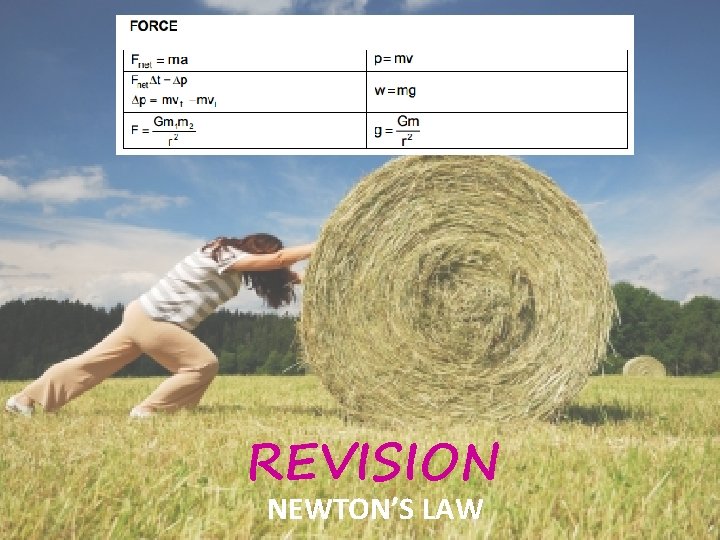
REVISION NEWTON’S LAW
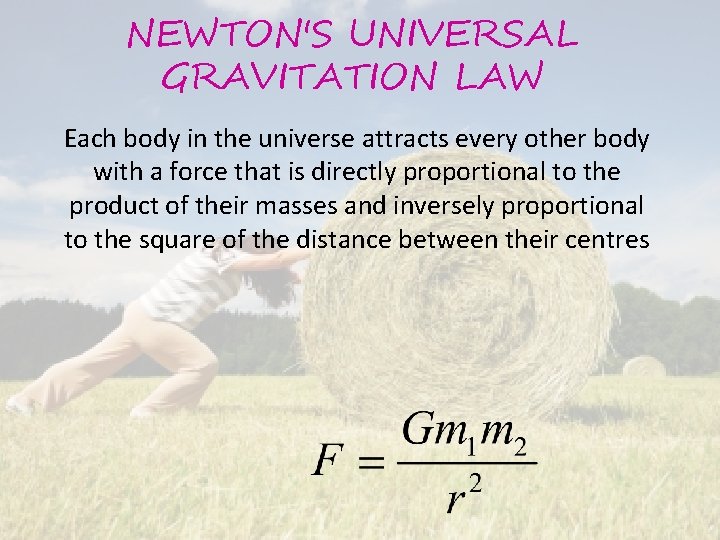
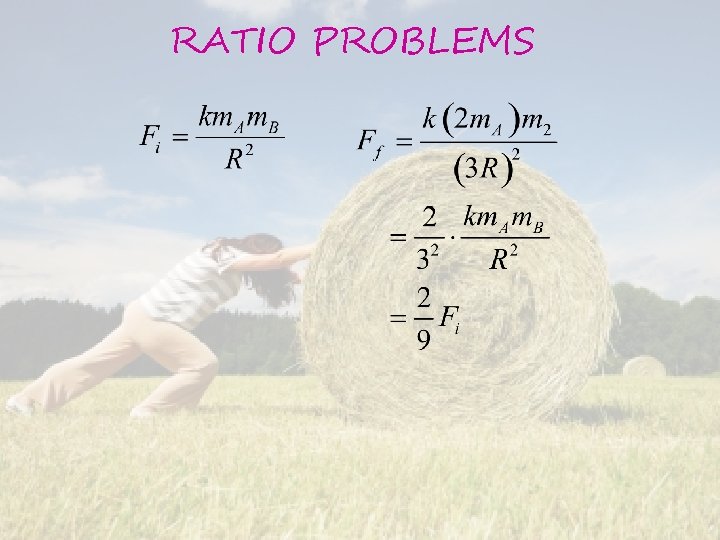
NEWTON'S UNIVERSAL GRAVITATION LAW Each body in the universe attracts every other body with a force that is directly proportional to the product of their masses and inversely proportional to the square of the distance between their centres
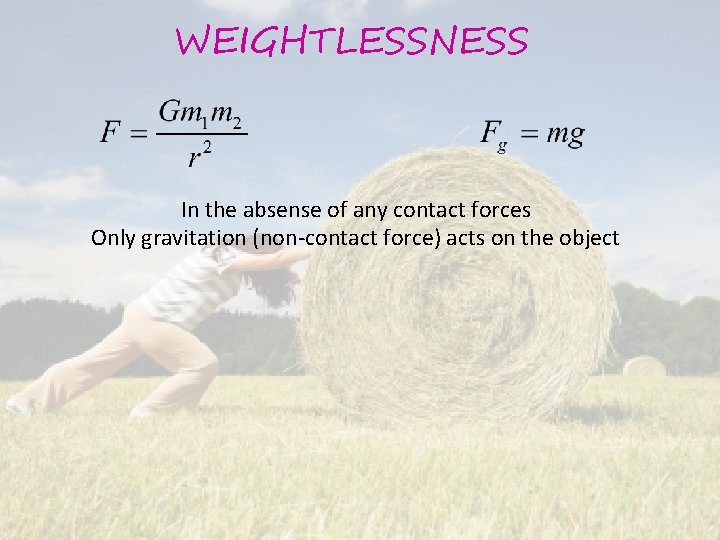
WEIGHTLESSNESS In the absense of any contact forces Only gravitation (non-contact force) acts on the object
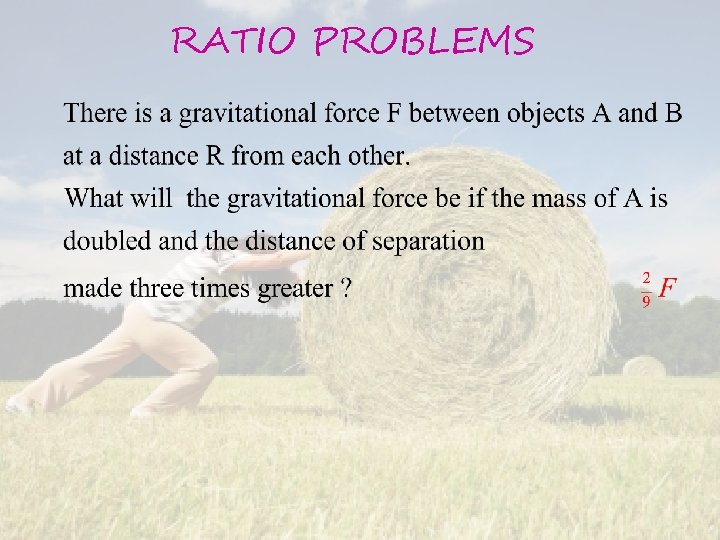
RATIO PROBLEMS
RATIO PROBLEMS
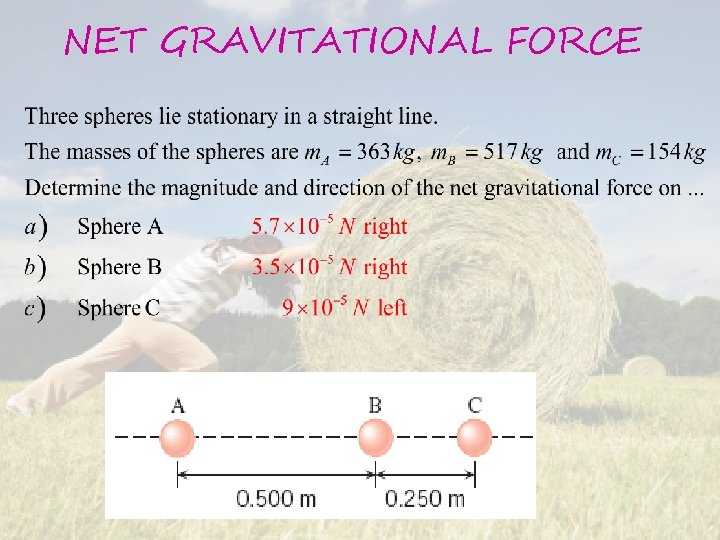
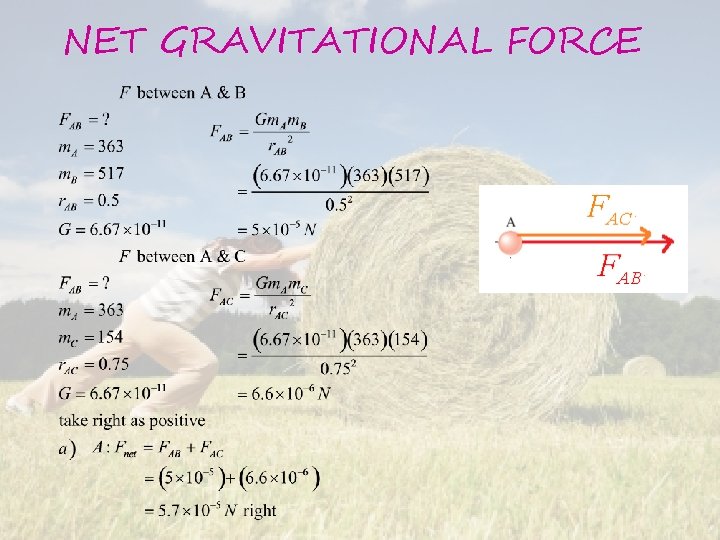
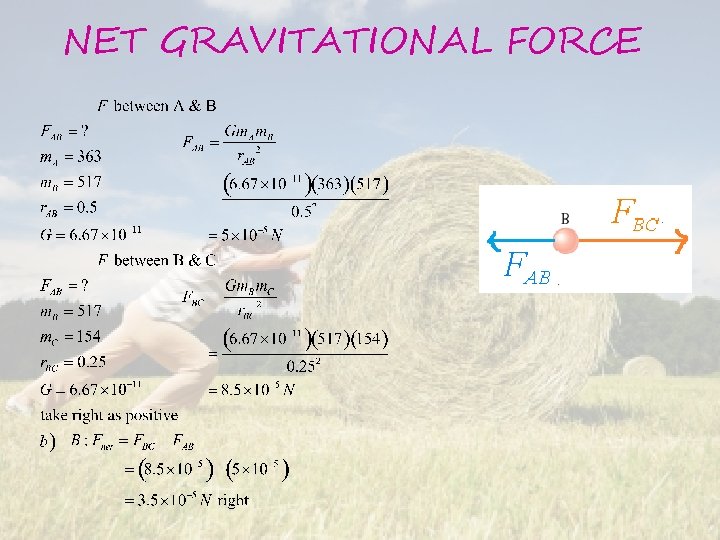
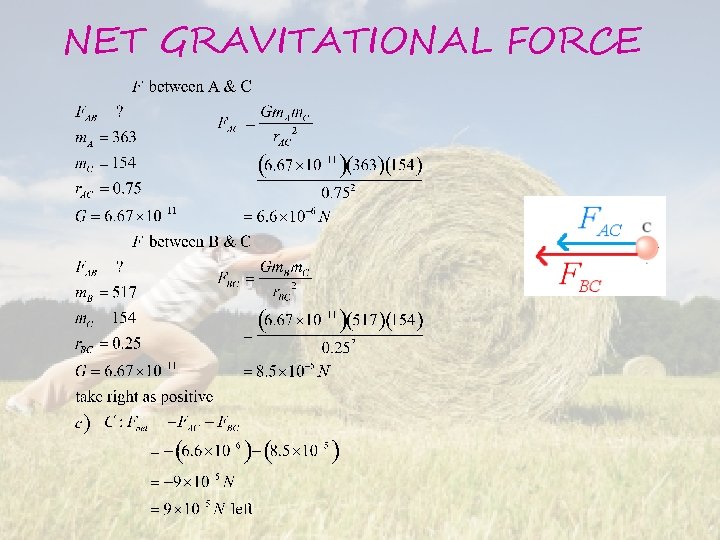
NET GRAVITATIONAL FORCE
NET GRAVITATIONAL FORCE
NET GRAVITATIONAL FORCE
NET GRAVITATIONAL FORCE
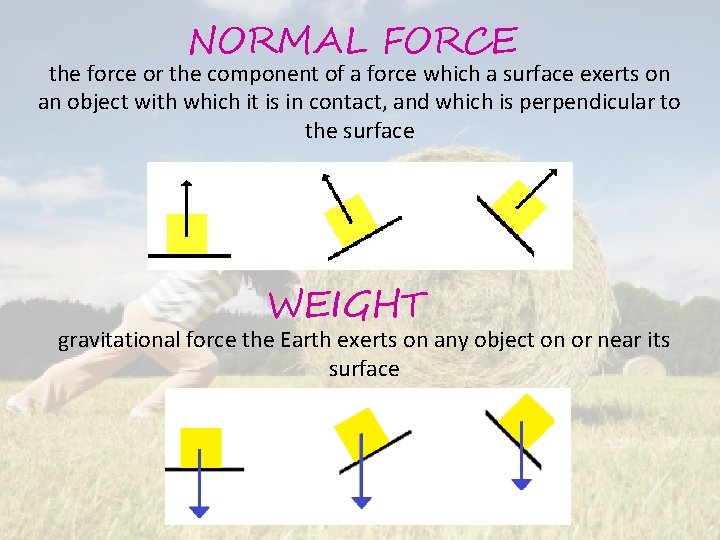
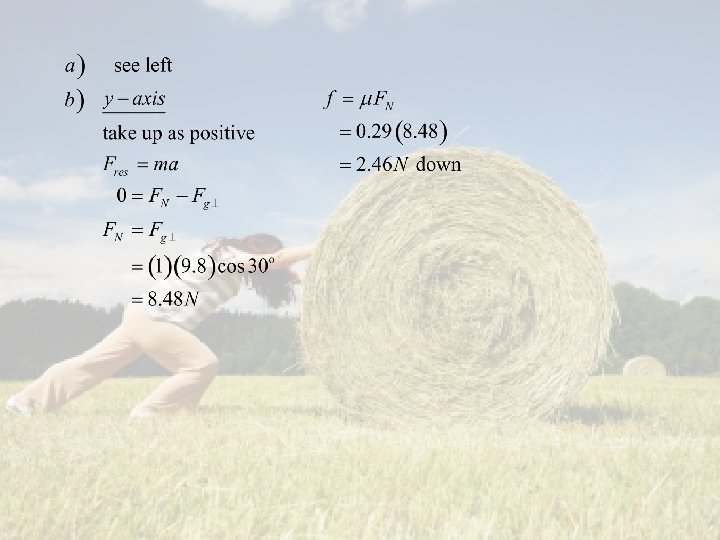
NORMAL FORCE the force or the component of a force which a surface exerts on an object with which it is in contact, and which is perpendicular to the surface WEIGHT gravitational force the Earth exerts on any object on or near its surface
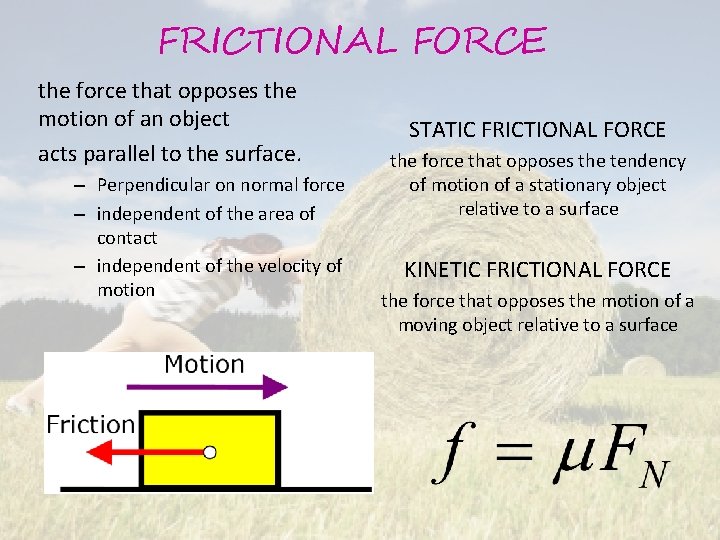
FRICTIONAL FORCE the force that opposes the motion of an object acts parallel to the surface. – Perpendicular on normal force – independent of the area of contact – independent of the velocity of motion STATIC FRICTIONAL FORCE the force that opposes the tendency of motion of a stationary object relative to a surface KINETIC FRICTIONAL FORCE the force that opposes the motion of a moving object relative to a surface
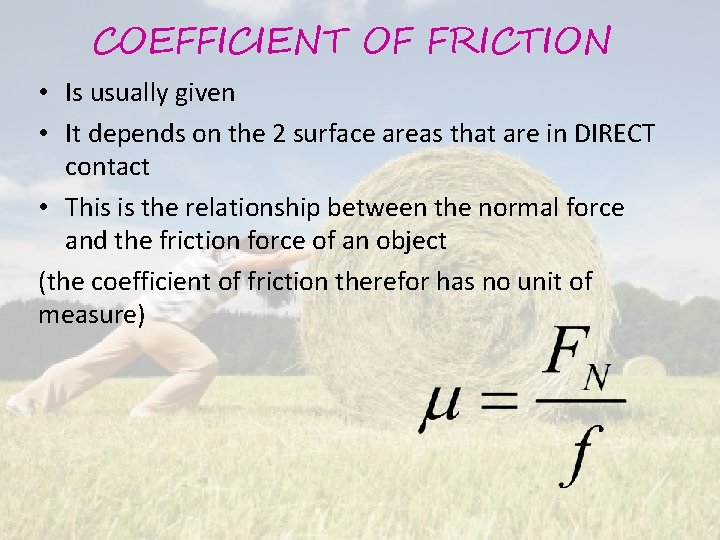
COEFFICIENT OF FRICTION • Is usually given • It depends on the 2 surface areas that are in DIRECT contact • This is the relationship between the normal force and the friction force of an object (the coefficient of friction therefor has no unit of measure)
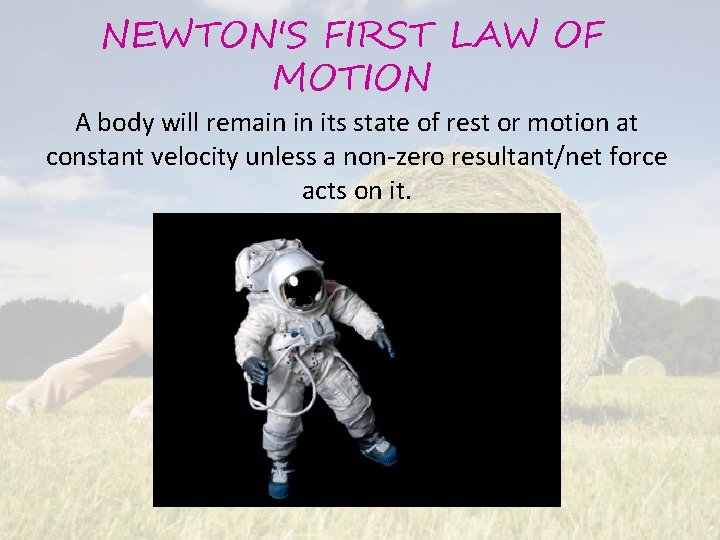
NEWTON'S FIRST LAW OF MOTION A body will remain in its state of rest or motion at constant velocity unless a non-zero resultant/net force acts on it.
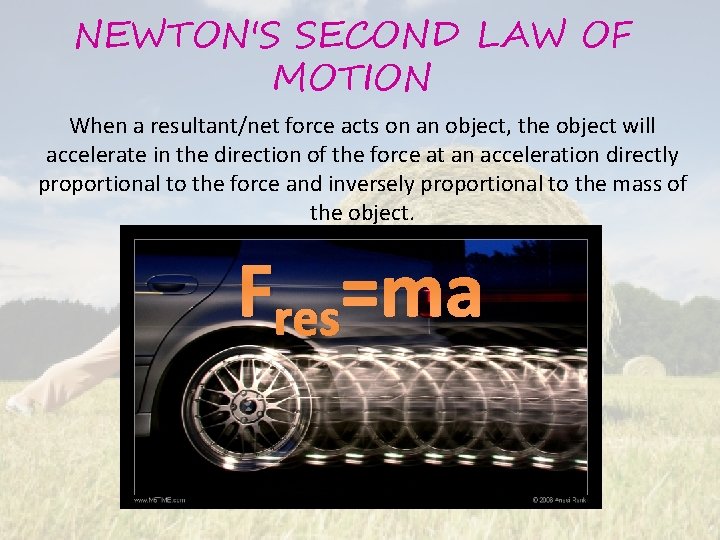
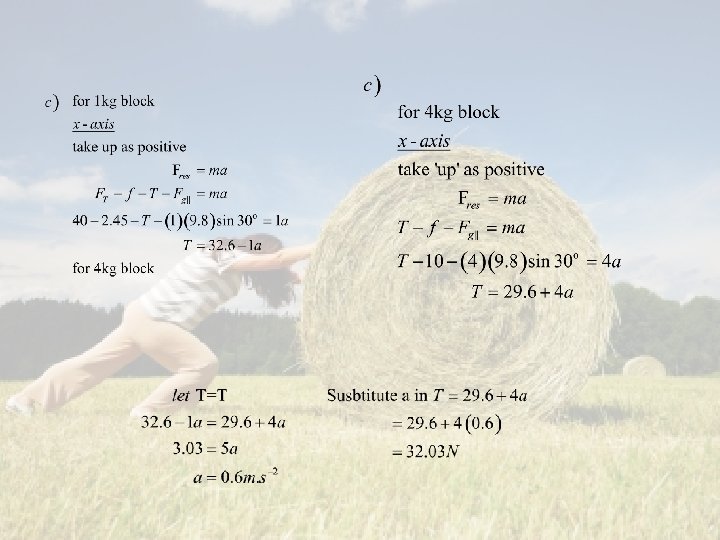
NEWTON'S SECOND LAW OF MOTION When a resultant/net force acts on an object, the object will accelerate in the direction of the force at an acceleration directly proportional to the force and inversely proportional to the mass of the object. Fres=ma
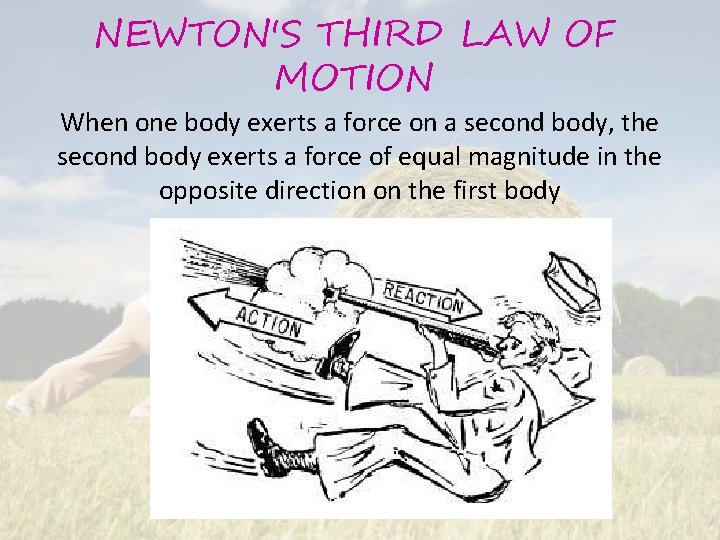
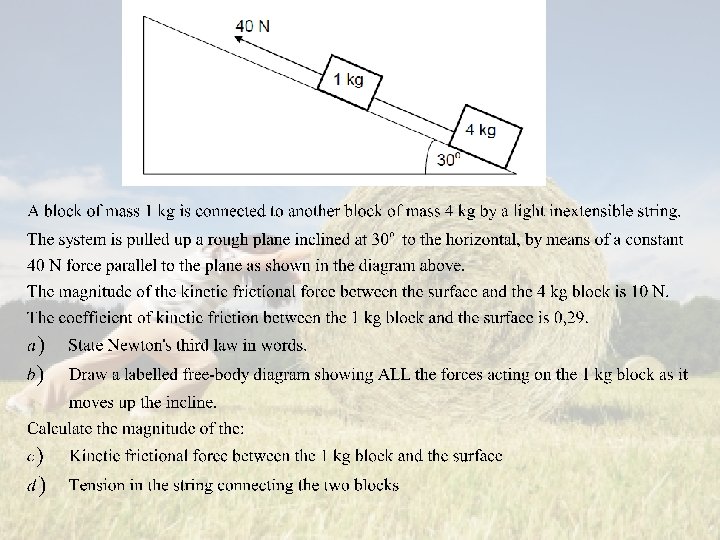
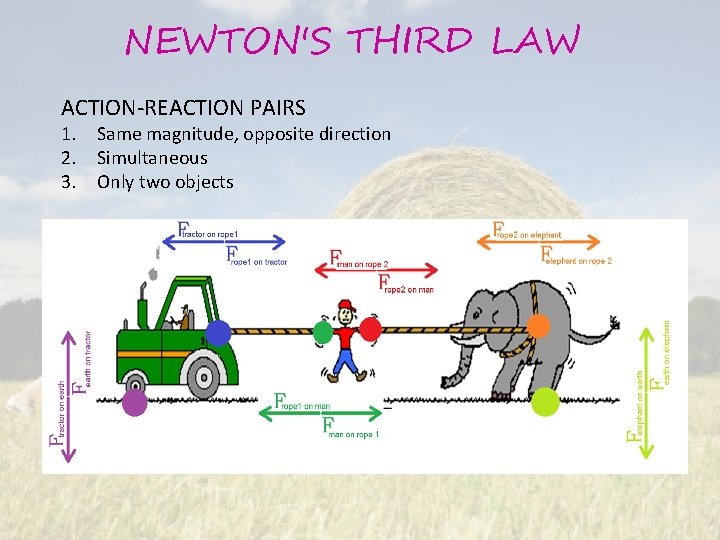
NEWTON'S THIRD LAW OF MOTION When one body exerts a force on a second body, the second body exerts a force of equal magnitude in the opposite direction on the first body
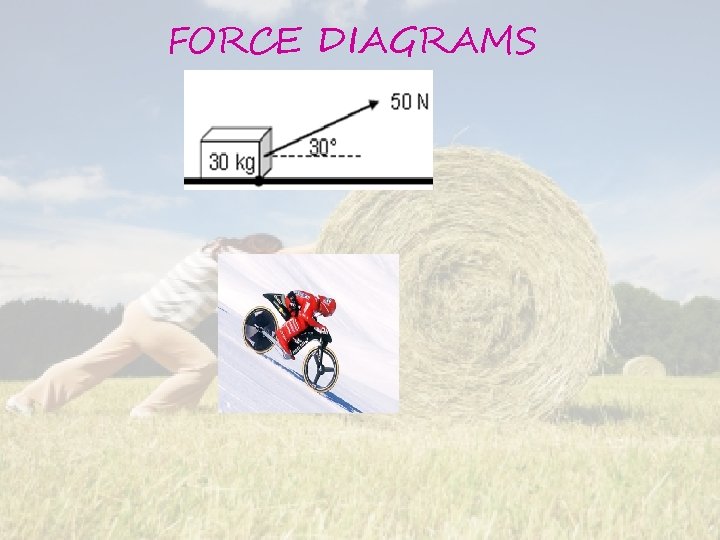
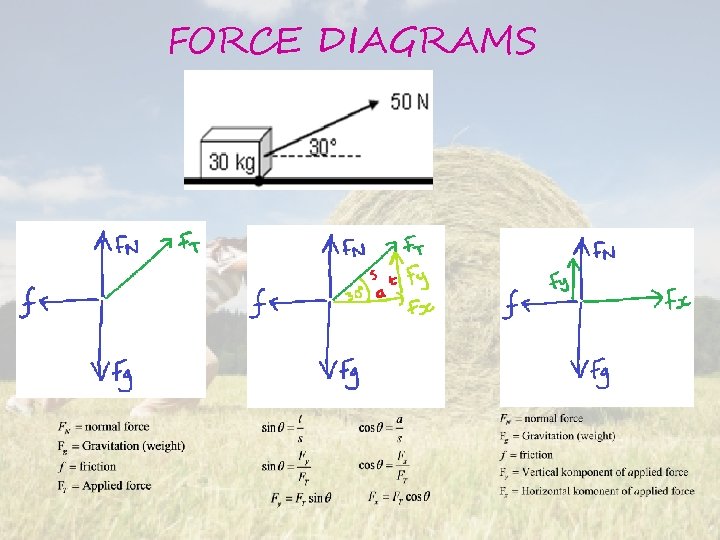
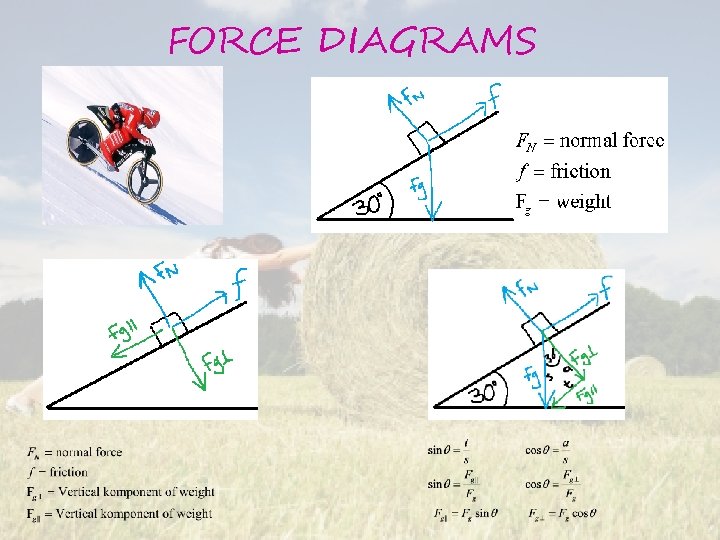
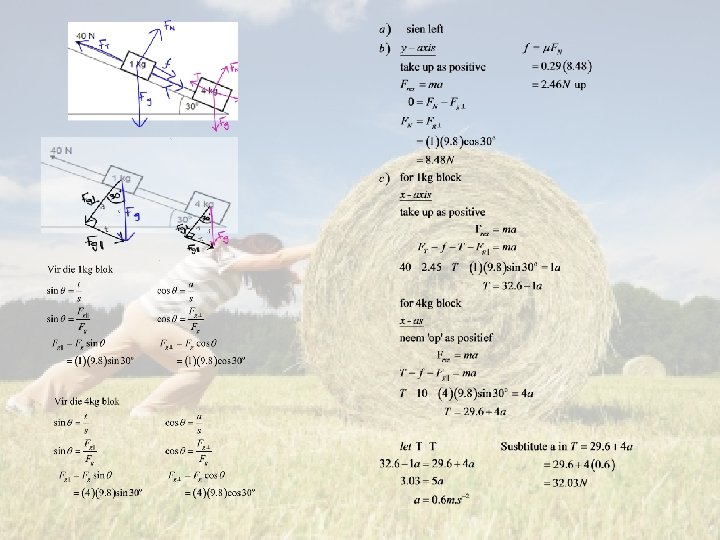
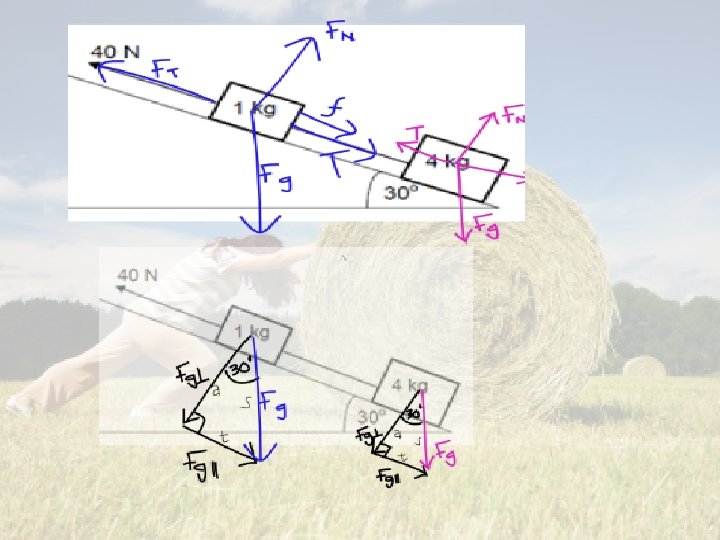
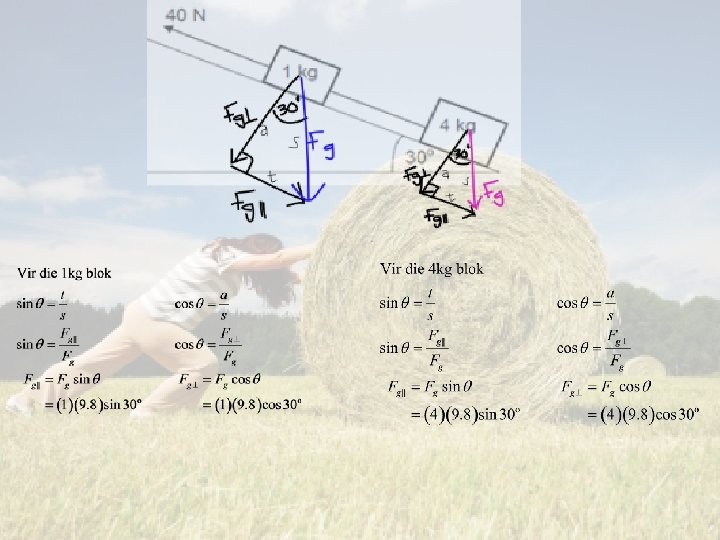
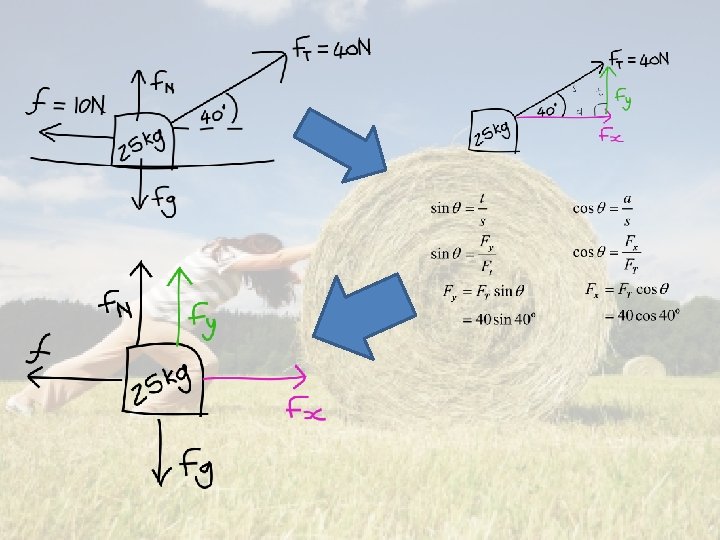
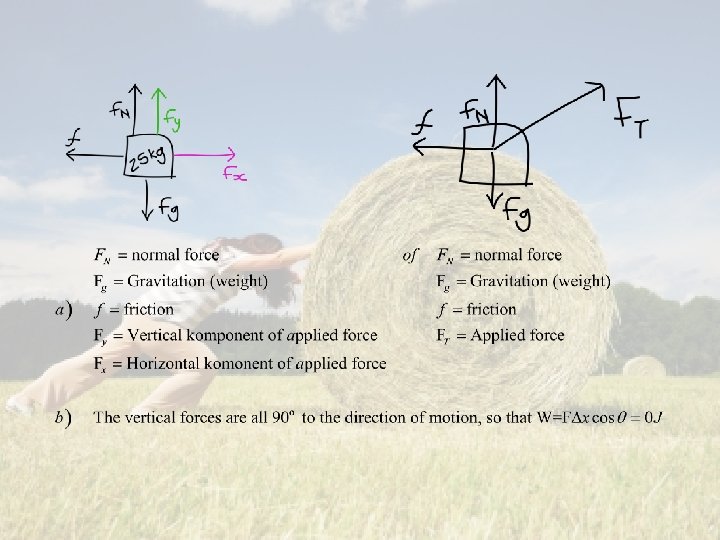
FORCE DIAGRAMS
FORCE DIAGRAMS
FORCE DIAGRAMS
NEWTON'S THIRD LAW ACTION-REACTION PAIRS 1. Same magnitude, opposite direction 2. Simultaneous 3. Only two objects
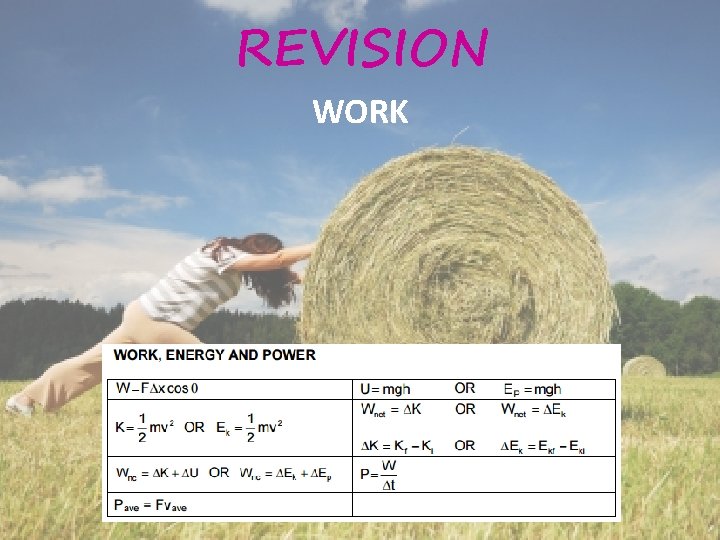
REVISION WORK
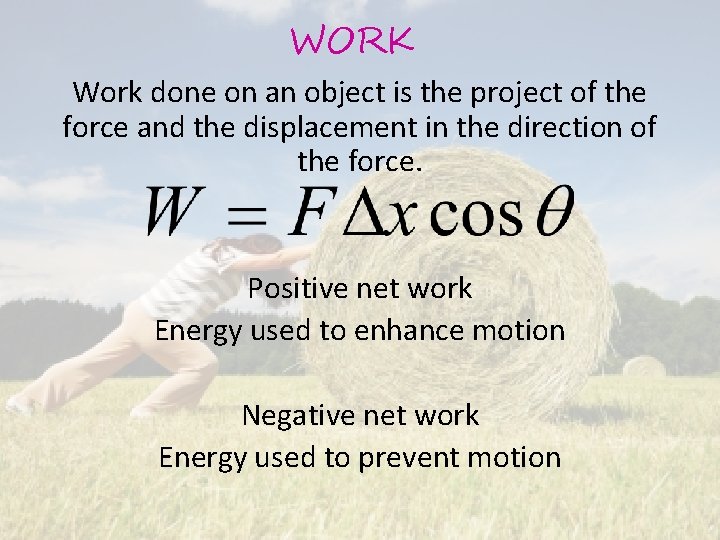
WORK Work done on an object is the project of the force and the displacement in the direction of the force. Positive net work Energy used to enhance motion Negative net work Energy used to prevent motion
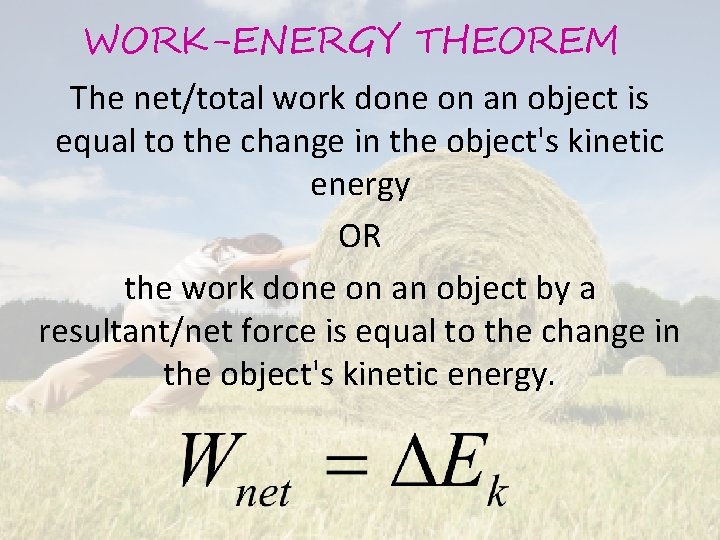
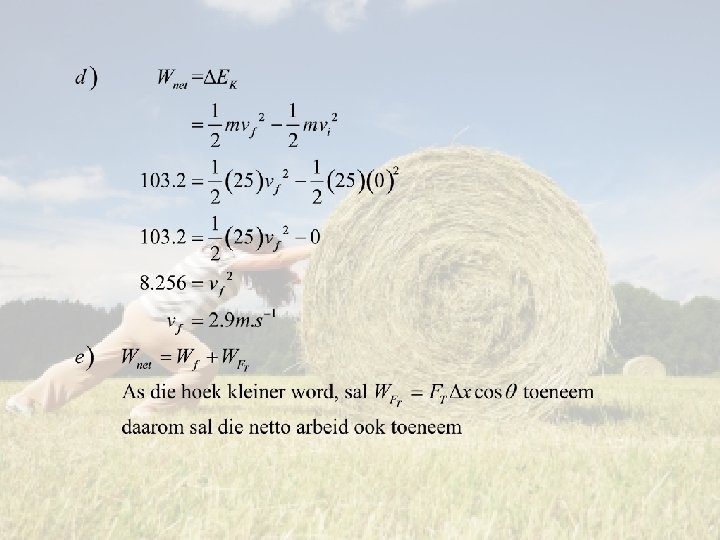
WORK-ENERGY THEOREM The net/total work done on an object is equal to the change in the object's kinetic energy OR the work done on an object by a resultant/net force is equal to the change in the object's kinetic energy.
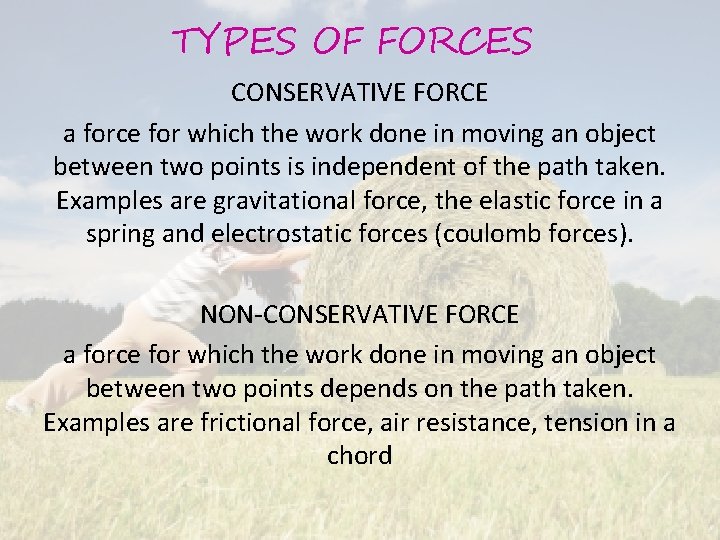
TYPES OF FORCES CONSERVATIVE FORCE a force for which the work done in moving an object between two points is independent of the path taken. Examples are gravitational force, the elastic force in a spring and electrostatic forces (coulomb forces). NON-CONSERVATIVE FORCE a force for which the work done in moving an object between two points depends on the path taken. Examples are frictional force, air resistance, tension in a chord
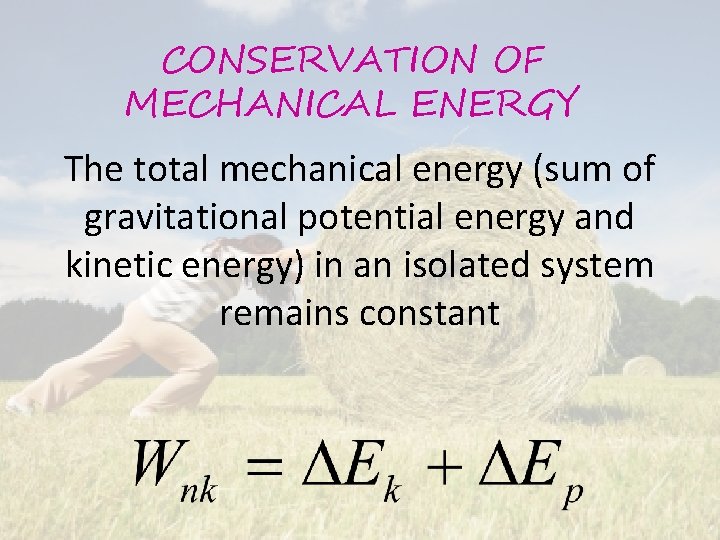
CONSERVATION OF MECHANICAL ENERGY The total mechanical energy (sum of gravitational potential energy and kinetic energy) in an isolated system remains constant
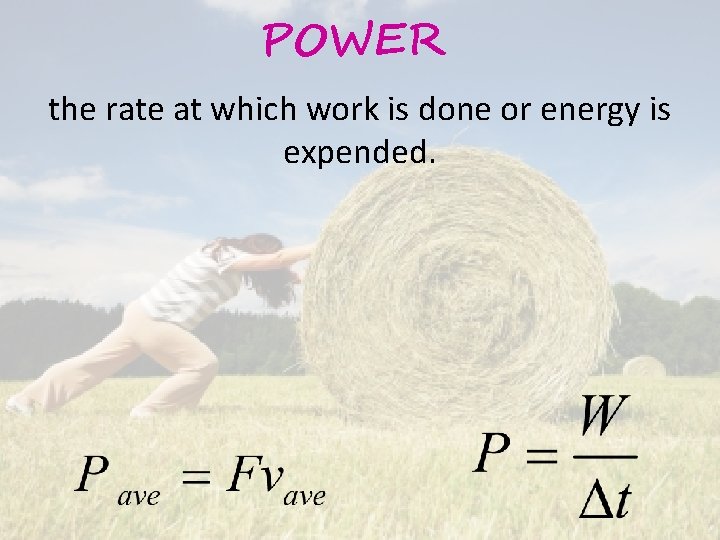
POWER the rate at which work is done or energy is expended.
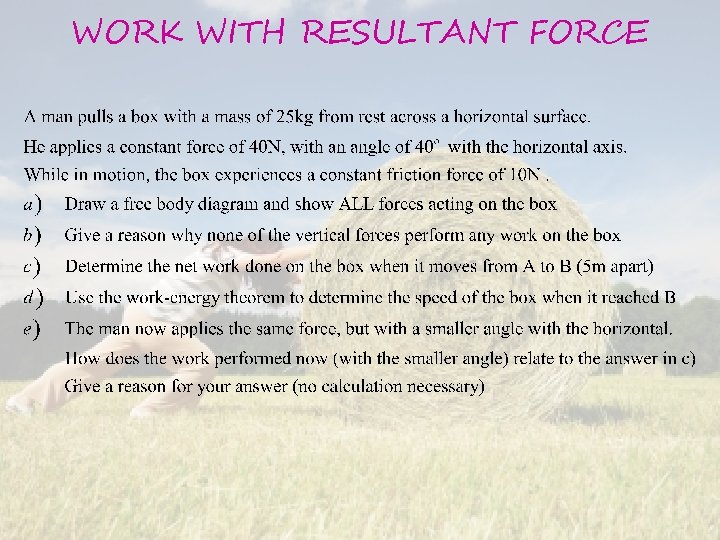
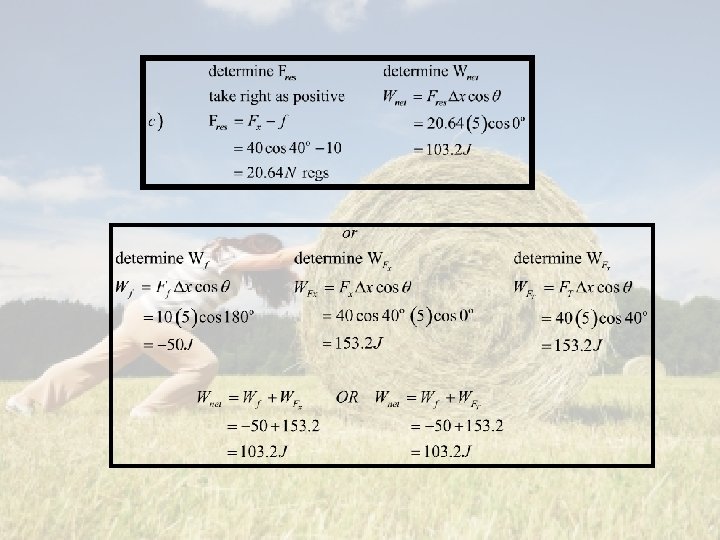
WORK WITH RESULTANT FORCE
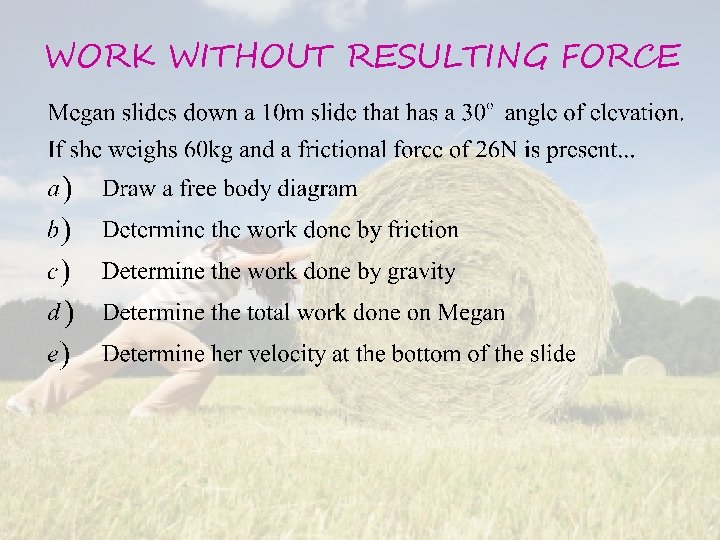
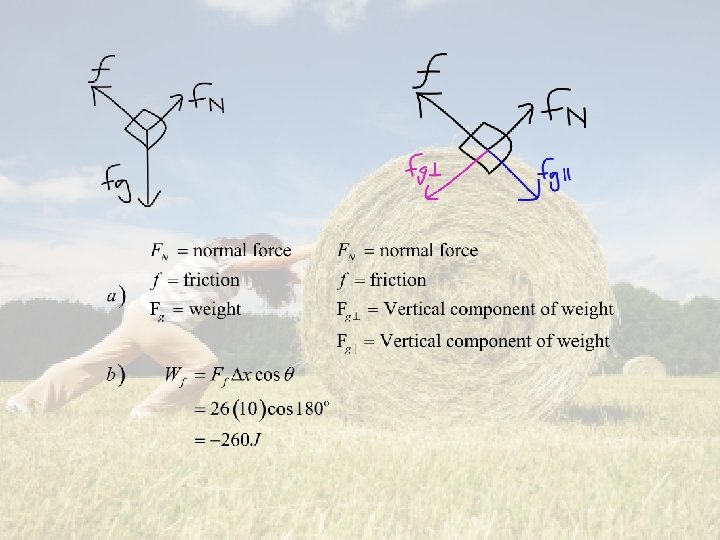
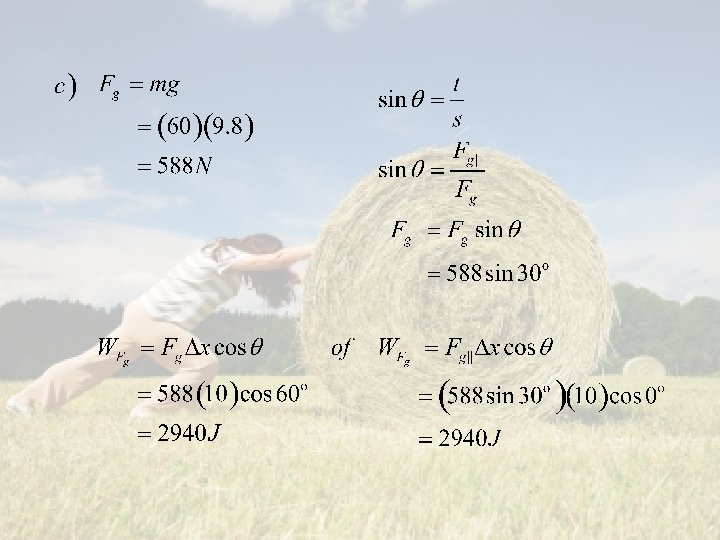
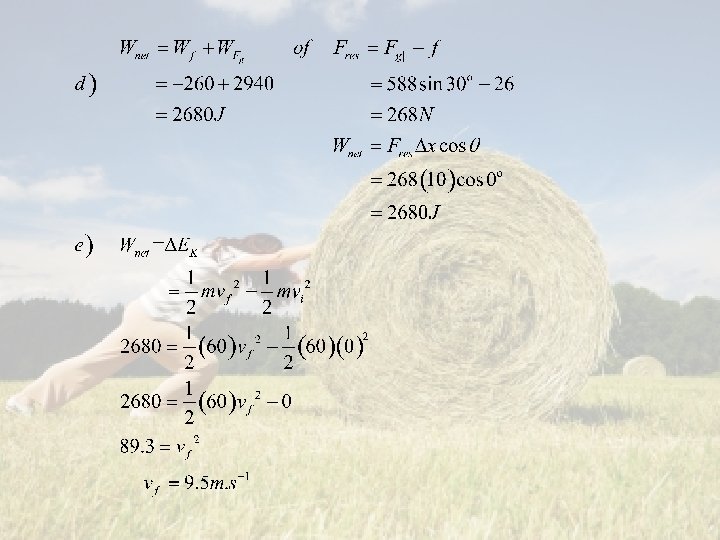
WORK WITHOUT RESULTING FORCE
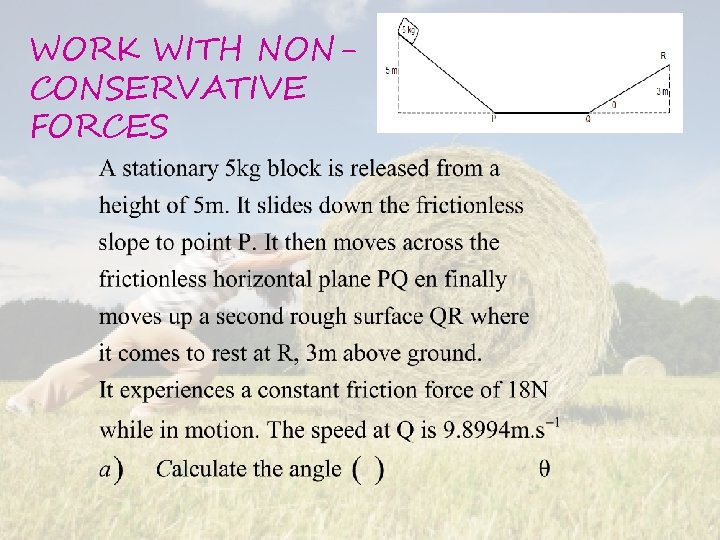
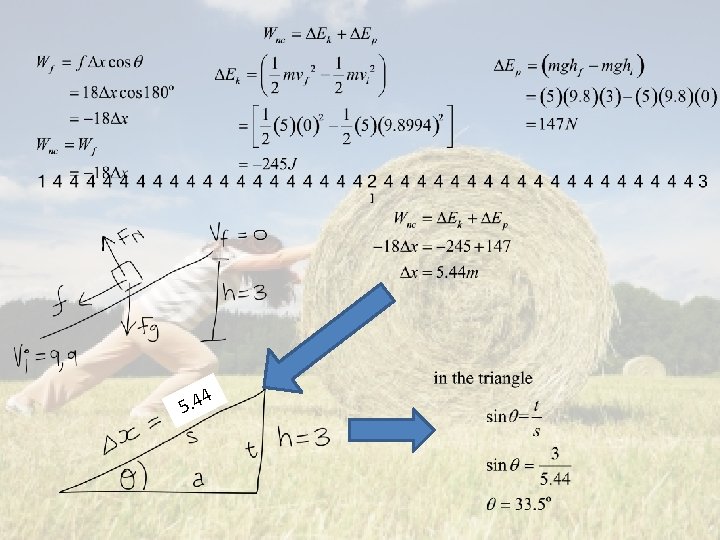
WORK WITH NONCONSERVATIVE FORCES
4 5. 4