
Revision for Modal Verbs March 2004 1 The
Revision for Modal Verbs March, 2004 1
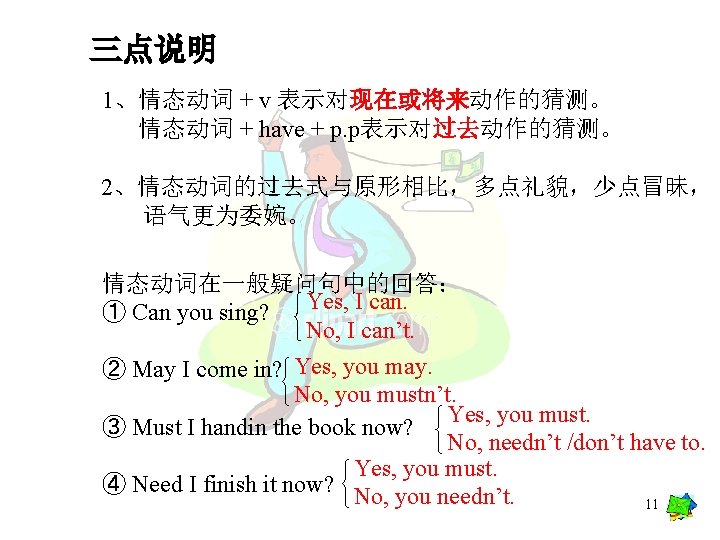
●The basic uses of Modal Verbs 1、Can / could 6、Dare 2、May / might 7、Need 3、Must 8、ought to 4、Shall / should 9、三点说明 5、will / would 10、典型错误 2
1. Can 1. 2. 3. 表示能力 The parrot can speak three languages. 表示允许 Can I borrow the book from the library. 表示可能性 Shanghai can be very cold in March. Could 过去式;语气更委婉 2. Can 与 be able to 3. can. /could + have +p. p 1. Can 表示习惯能力, 而be able to表示经过那里而做成了某事。 2. 在否定结构中,二者可以互换。 1. 在否定、疑问句中表示“对过去发生行为 的可能性猜测。 2. 在肯定句中表示“本来可以做而未做” 1. The door was lacked. She couldn’t have been at home. 2. You could have been more careful. 3
1. May 1. 2. 3. 表示可能性 表示允许 表示祝愿 Might 过去式;语气更委婉 Eg. 1. She may be still waiting for us. 2. May I come in? 3. May you have a happy holiday. 2. may/might + have +p. p Eg. 1. 在否定、肯定句中表示对过去动作的推测 “也许是……” 2. Might+have+p. p表示虚拟,表“劝告、责备之意。” 1. He might have spoken to her yesterday. 2. You might have told me earlier. 4
1. Must 1. 2. 表示肯定的猜测, 但只用于肯定句, 而mustn’t 表示“禁止、不准” 2. Must 、have to 与have got to 3. must + have +p. p 1. Must表示主观 2. Have to表示客观需求 3. Have got to 多见于口语 对过去事情的肯定猜测。 Eg. The road id wet. It must have rained last night. 5


Will/ would 1、表示意愿 I’ll try my best to overcome the difficulty. 2、表示意图 What will you do? 3、表示请示 Will you halp me to put these books in order? 4、表示习惯动作 She will sit for hours without saying a word. 1、Would 后只能接表示动作的动词。 Would 与 used to 2、used to 则还可以接表示状态的动词。 Eg. He used to be a worker. 7
Dare / dared 1、情态动词用于否定、疑问句;条件从句中。 eg. 1. Dare you go here alone? 2. How dare you do such follish things? 3. I won’t allow you to swim in the river, even if you dare do it. 2 、做实意动词后加不定式。 eg. I have never dared to tell him about it. 8
Ought to 1、其否定式为ought not to 2、ought to + have + p. p 表示本来应该做而没有做到。 Eg. You ought not to have cut away the trees around the old building. 10
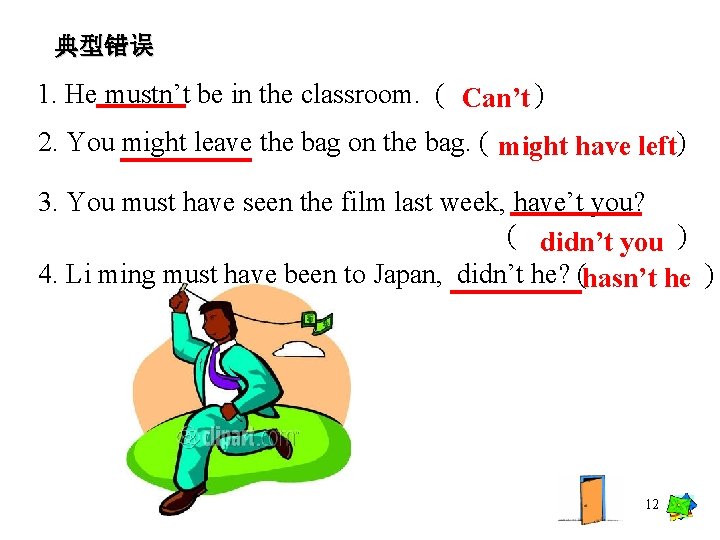
典型错误 1. He mustn’t be in the classroom. ( Can’t ) 2. You might leave the bag on the bag. ( might have left) 3. You must have seen the film last week, have’t you? ( didn’t you ) 4. Li ming must have been to Japan, didn’t he? (hasn’t he ) 12

13
- Slides: 13