
Reviewing Using the Instructional Materials Evaluation Tool ELA

- Slides: 22
Reviewing Using the Instructional Materials Evaluation Tool: ELA Module 104: Foundational Skills (K-2) www. achievethecore. org
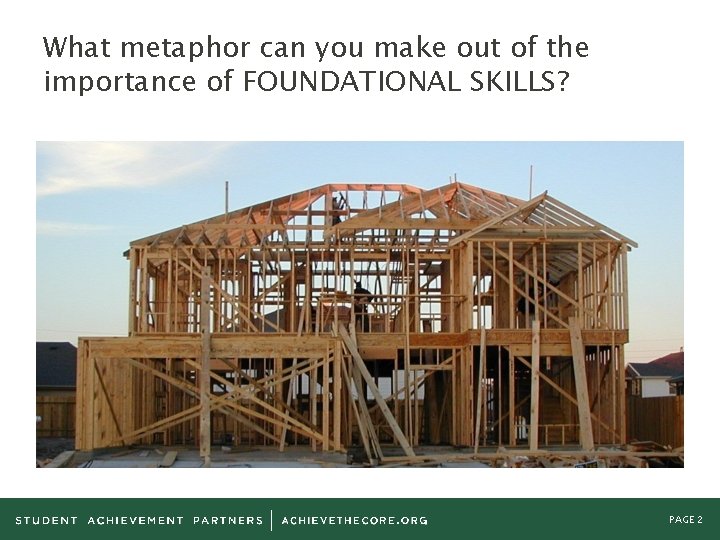
What metaphor can you make out of the importance of FOUNDATIONAL SKILLS? PAGE 2
Essential Questions • How does the Instructional Materials Evaluation Tool (IMET)reflect the major features of the Standards and the Shifts? • What understandings support high-quality, accurate application of the IMET metrics? PAGE 3
Goals • Understand how aligned materials embody the shifts inherent in the Common Core State Standards • Understand the precise meaning of each metric • Recognize examples and non-examples related to each IMET criteria metric PAGE 4
The quality of instructional materials in our classrooms has a large impact on student learning. “There is strong evidence that the choice of instructional materials has large effects on student learning – effects that rival in size those that are associated with differences in teacher effectiveness. ” Chingos & Whitehurst, Choosing Blindly: Instructional Materials, Teacher Effectiveness, and the Common Core PAGE 5
Agenda • Non-Negotiable 4: Foundational Skills PAGE 6
Norms for Our Work • Consider two norms you’d like to see us adhere to for the next two days. • Discuss your thoughts with your shoulder partner. • Be ready to share. PAGE 7
Non-Negotiable 4: Foundational Skills
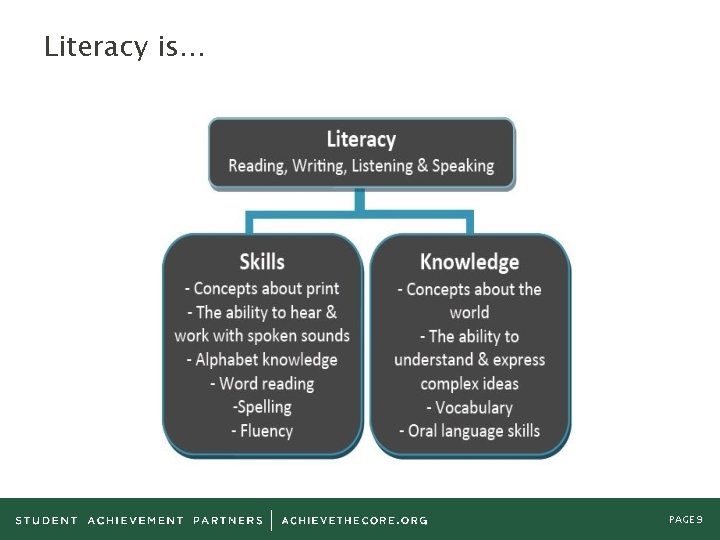
Literacy is… PAGE 9
Foundational Skills Non-Negotiable 4: Materials develop foundational reading skills systematically, using research-based and transparent methods. This means materials provide explicit and systematic instruction and diagnostic support in: concepts of print, letter recognition, phonemic awareness, phonics, word awareness and vocabulary development, syntax, and fluency. IMET p. 17 PAGE 10
Foundational Skills NN Metric 4 A: Provides instruction in concepts of print, letter recognition, phonemic awareness, phonics, word awareness, vocabulary development, syntax, and reading fluency NN Metric 4 B: Variety of student reading material and activities that allows for frequent practice of all foundational skills. NN Metric 4 C: Provides clear, well-structured diagnostic assessment protocols and materials for all foundational skills to guide instruction and remediation. NN Metric 4 D: Materials guide students to read with purpose and understanding. NN Metric 4 E: Grade 2 materials provide opportunities for students to engage in a range and volume of reading to achieve reading fluency. IMET p. 17 PAGE 11
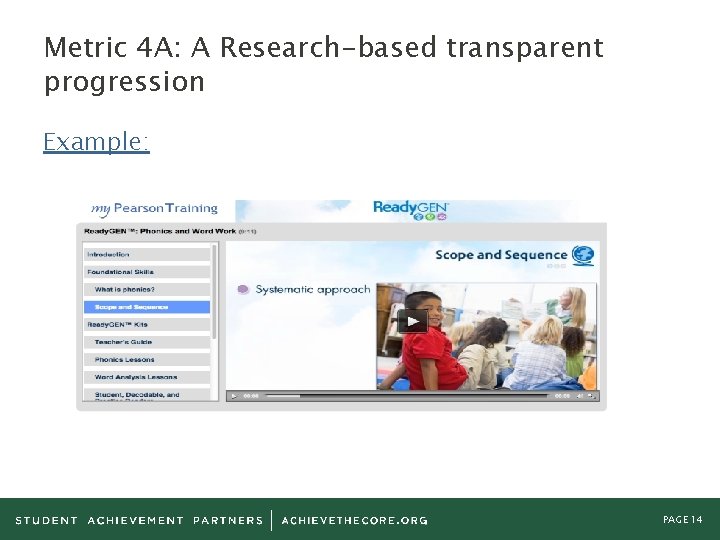
Foundational Skills NN Metric 4 A: Submissions address grade-level CCSS for foundational skills by providing instruction in concepts of print, letter recognition, phonemic awareness, phonics, word awareness, vocabulary development, syntax, and reading fluency in a research -based and transparent progression in each grade level. IMET p. 18 PAGE 12
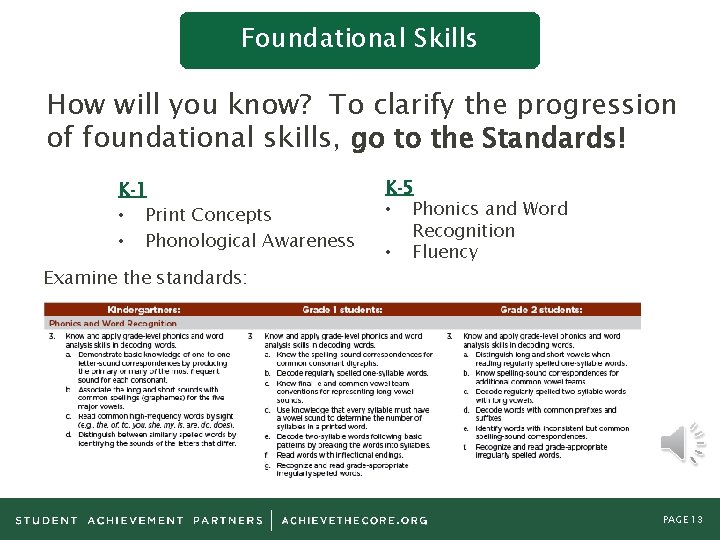
Foundational Skills How will you know? To clarify the progression of foundational skills, go to the Standards! K-1 • Print Concepts • Phonological Awareness Examine the standards: K-5 • Phonics and Word Recognition • Fluency PAGE 13
Metric 4 A: A Research-based transparent progression Example: PAGE 14
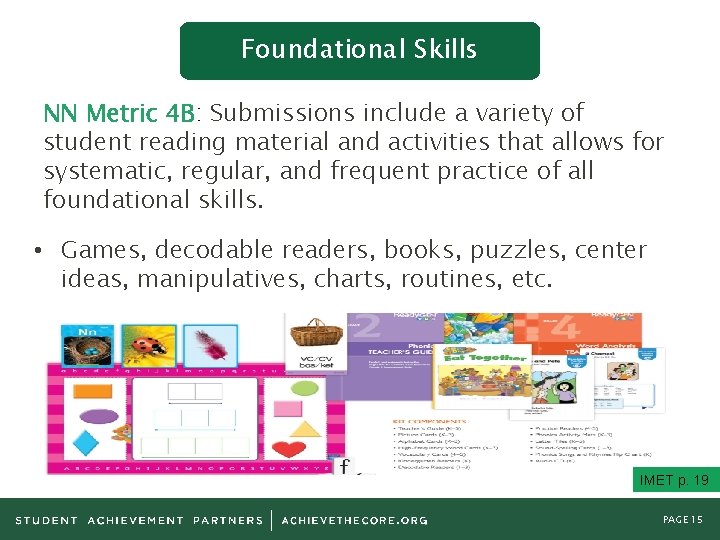
Foundational Skills NN Metric 4 B: Submissions include a variety of student reading material and activities that allows for systematic, regular, and frequent practice of all foundational skills. • Games, decodable readers, books, puzzles, center ideas, manipulatives, charts, routines, etc. IMET p. 19 PAGE 15
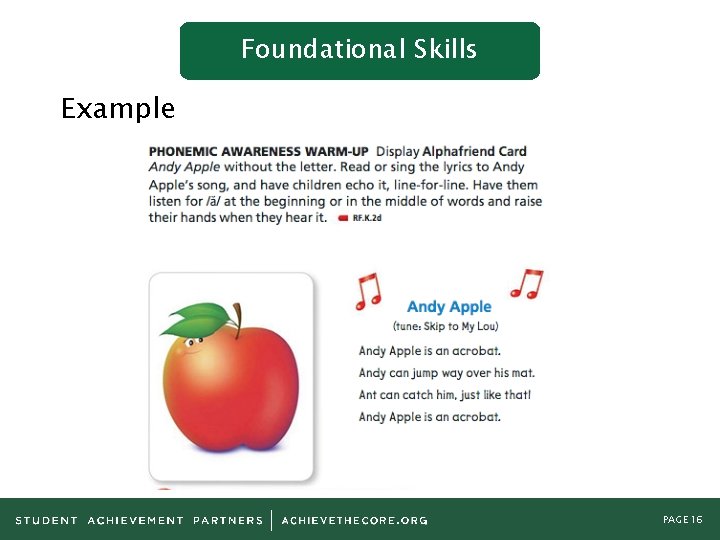
Foundational Skills Example PAGE 16
Foundational Skills NN Metric 4 C: Submissions provide clear, wellstructured diagnostic assessment protocols and materials for all foundational skills to guide instruction and remediation. Discuss: How frequently should progress monitoring take place when teaching foundational skills in grades K-2? IMET p. 20 PAGE 17
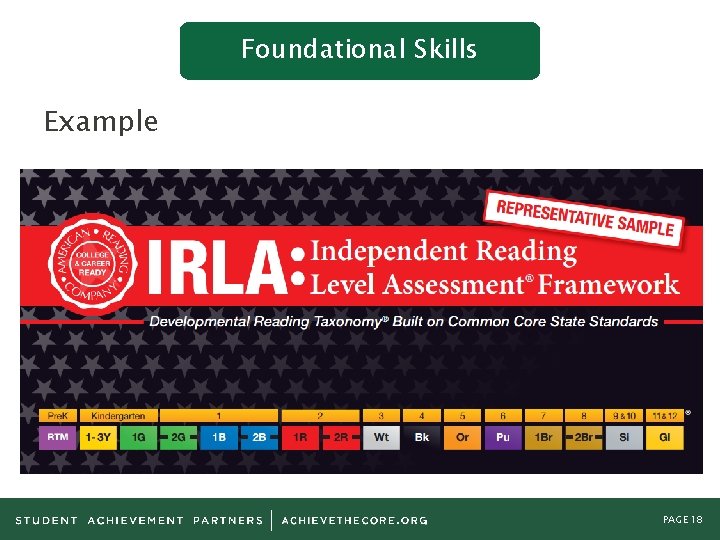
Foundational Skills Example PAGE 18
Foundational Skills NN Metric 4 D: Materials guide students to read with purpose and understanding and to make frequent connection between acquisition of foundational skills and making meaning from reading. • “These foundational skills are not an end in and of themselves; rather they are necessary and important components of an effective, comprehensive reading program designed to develop proficient readers with the capacity to comprehend texts across a range of types and disciplines. ” – Common Core State Standards, p. 15 IMET p. 21 PAGE 19
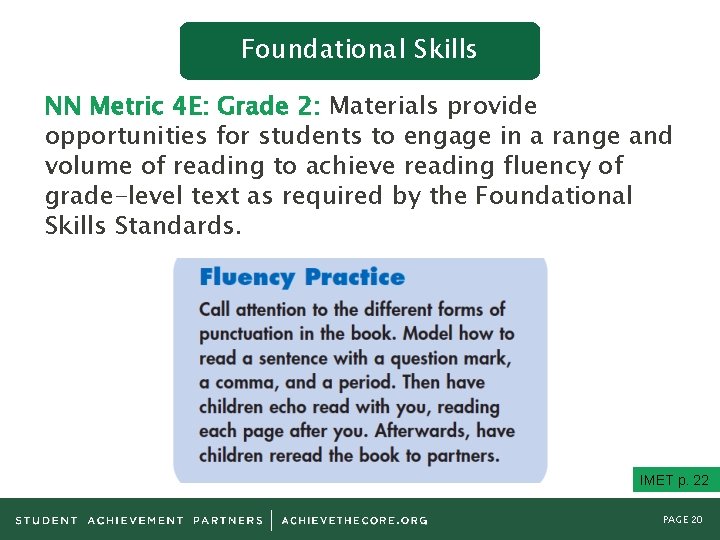
Foundational Skills NN Metric 4 E: Grade 2: Materials provide opportunities for students to engage in a range and volume of reading to achieve reading fluency of grade-level text as required by the Foundational Skills Standards. IMET p. 22 PAGE 20
Foundational Skills Practice: Foundational Skills • Consider the attached sample lesson from the Core Knowledge Skills Strand, Grade 1, through the lens of Non-Negotiable 4. What evidence for the metrics do you see? Individually write your findings on the IMET. • Then read the Louisiana Believes excerpted review of the program. What do you notice? • What other program components would you want to investigate? PAGE 21
Essential Questions • How does the Instructional Materials Evaluation Tool (IMET) allow reviewers to evaluate whether instructional materials are aligned to the major features of the Common Core State Standards and the Shifts? • What understandings support high-quality, accurate reviews? PAGE 22