
Review What are our major fuel sources What

- Slides: 30
Review • What are our major fuel sources? • What are your energy sources besides already made ATP? (How do you make ATP? ) • In what situations does one fuel source dominate over the other? • Anaerobic? • Aerobic?
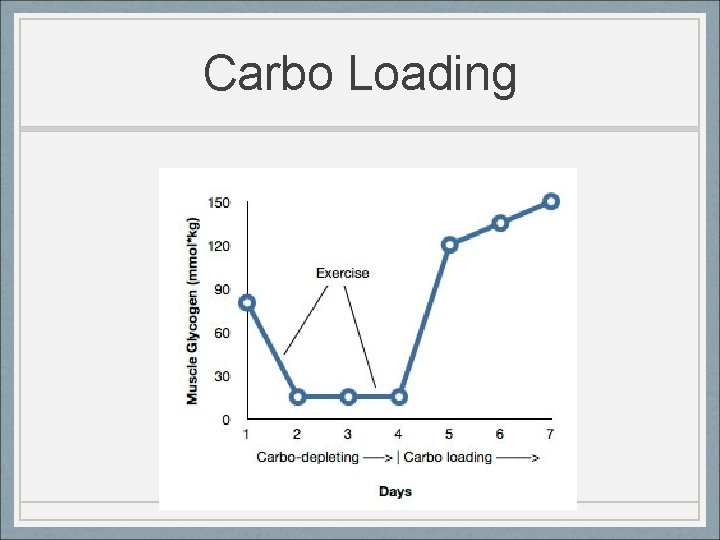
Carbo Loading
Fat • Provides energy for low to moderate intensity exercises • Aim for a diet containing 20% to 30% of energy from fat. • Low fat diets can lead to nutrient deficiencies. • Limit intake of saturated fat • Healthy sources of fat: fish, nuts, nut oils, seeds, vegetable oil.
Protein • Lean muscle mass (fat free mass) • Adult RDA: 0. 8 g/kg a day • Heavy training athletes: 1. 2 to 1. 4 g/kg a day. • Lance Armstrong might need 2 g/kg • Athlete consuming 1. 4 g/kg of protein synthesize more body protein than someone consuming 0. 9 grams • However, study have shown that when intake was increased to 2. 4, there was no increase in protein synthesis. • Do not need protein powder and supplements • High quality protein food: legumes, low-fat dairy products, egg whites, lean beef and pork, chicken, turkey, and fish • Vegetarians: grains, nuts, and beans (amount consumed must be higher)
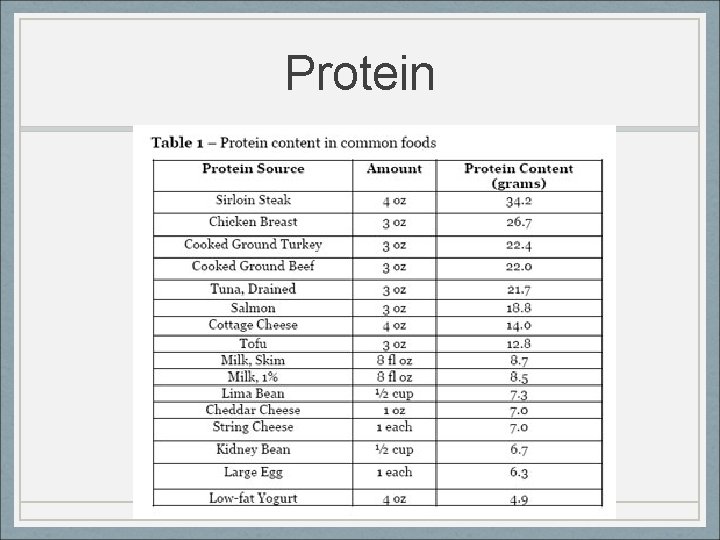
Protein
Protein Intake • When is the best time for protein intake? • After exercise (immediately after or within 1 hour) • Protein with CHO helps with glycogen resynthesis • 1: 3 ratio of protein to CHO • Stimulate muscle growth via insulin and growth hormones
Excessive Protein Intake • Excess protein is excreted in the urine. • Dangerous! • Enhances diuresis • Body excretes excess nitrogen through urine • Dehydration • Mineral Deficiencies
Fluids • Exercise: generate heat => increases heat production => triggers body to sweat (cool the body) • To prevent body from overheating: blood must flow to skin, sweat can dissipate heat. • During exercise, demand for blood flow can compete with cardiovascular demand for blood to deliver fuel to muscles. • Important to keep hydrated during heavy exercise. • Fluid requirements are variable • Intensity of exercise • Climate • Intrinsic sweat rate
Electrolyte Balance • Sodium and Potassium • Sweating (loss of water) disrupts electrolyte balance • Loss of sodium and chloride • Electrolytes are needed for long duration exercise • If not replaced through sports drinks, then must be replaced through the diet.
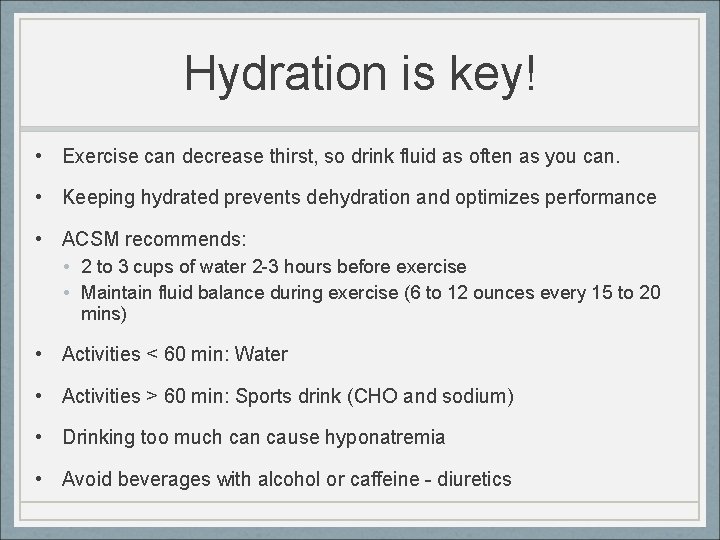
Hydration is key! • Exercise can decrease thirst, so drink fluid as often as you can. • Keeping hydrated prevents dehydration and optimizes performance • ACSM recommends: • 2 to 3 cups of water 2 -3 hours before exercise • Maintain fluid balance during exercise (6 to 12 ounces every 15 to 20 mins) • Activities < 60 min: Water • Activities > 60 min: Sports drink (CHO and sodium) • Drinking too much can cause hyponatremia • Avoid beverages with alcohol or caffeine - diuretics
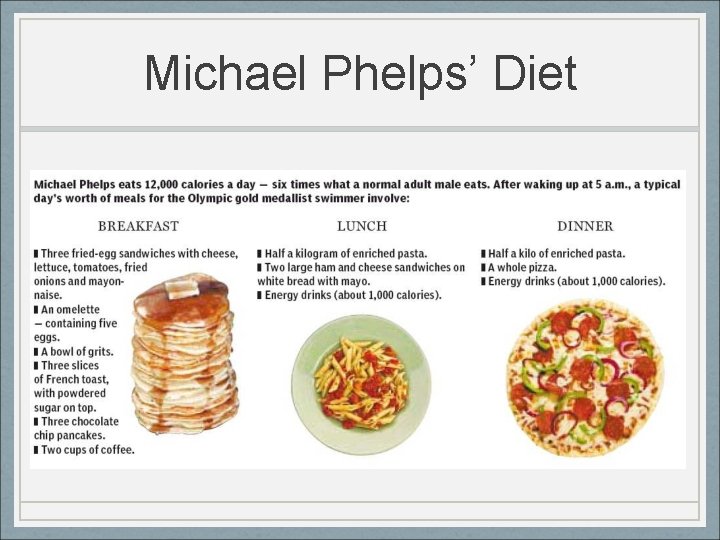
Michael Phelps’ Diet
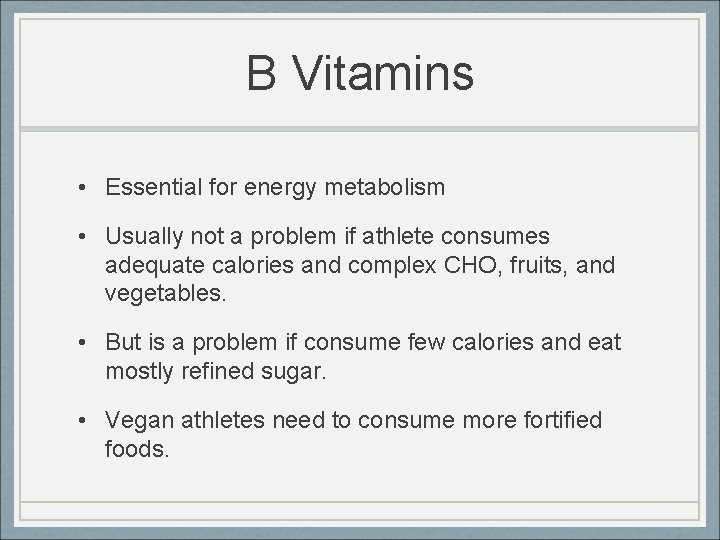
B Vitamins • Essential for energy metabolism • Usually not a problem if athlete consumes adequate calories and complex CHO, fruits, and vegetables. • But is a problem if consume few calories and eat mostly refined sugar. • Vegan athletes need to consume more fortified foods.
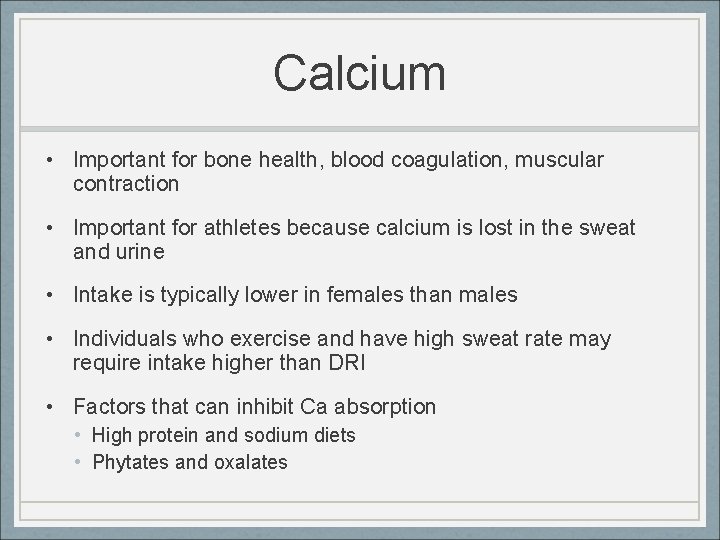
Calcium • Important for bone health, blood coagulation, muscular contraction • Important for athletes because calcium is lost in the sweat and urine • Intake is typically lower in females than males • Individuals who exercise and have high sweat rate may require intake higher than DRI • Factors that can inhibit Ca absorption • High protein and sodium diets • Phytates and oxalates
Iron • Important for oxygen delivery (hemoglobin) and energy production. • Oxygen delivery to muscle cells • Female athletes are at greatest risk of iron deficiency. • Heavy training athletes may need 30 to 70 percent more iron than nonathletes. • Sports anemia • Lower concentration of hemoglobin in the blood. • Increased plasma volume. • Anemia can impair physical activity, but mild iron deficiency has little effect on performance. • Few athletes are anemic but many have mild iron deficiency.
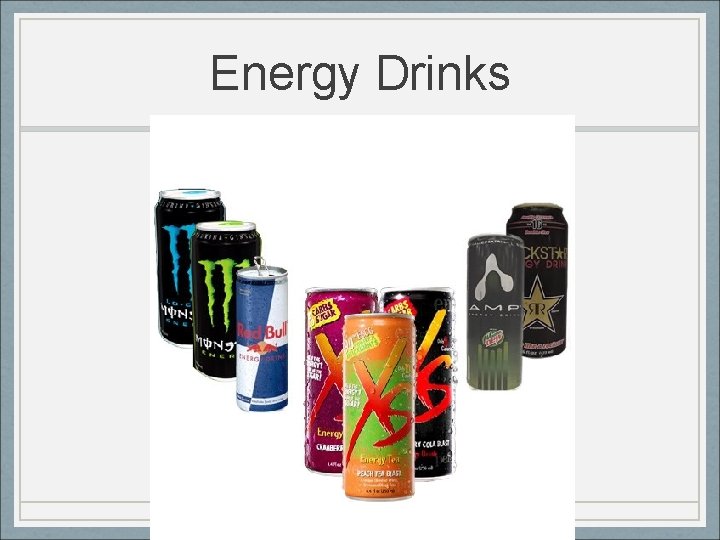
Energy Drinks
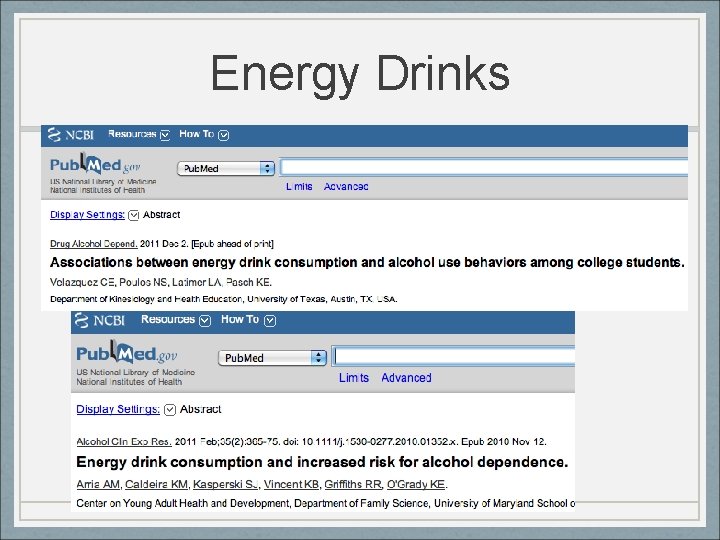
Energy Drinks • Adolescent and Middle aged population consumption from 2001 to 2008: • Estimated about 24% to 56% • Conflicting data on impact of energy drink on weight loss • Ingestion of energy drinks before or during training causes restlessness, raises blood pressure, and can promote dehydration. • Dependence? • Study on sprinters showed that Red Bull had no adverse or beneficial effects. • Combination of energy drink with alcohol is a safety concern.
Energy Drinks
Sports Drinks • Hydration for athletes • Electrolytes and Carbohydrates • Isotonic – salt and sugar concentrations are similar to what’s in the human body. • Prevents water intoxication • Recommended for sports > 1 hour • Hot and humid conditions
Gatorade • First developed in 1965 by researchers in University of Florida • Named after the Florida Gators • Salt, sugar, water • 1990 s and early 2000 s, Gatorade was sweetened using high fructose corn syrup • 2011 – sweetened with sucrosedextrose • Lower calories option – Pure. Via • Recommended that Gatorade be diluted with water due to sugar content.
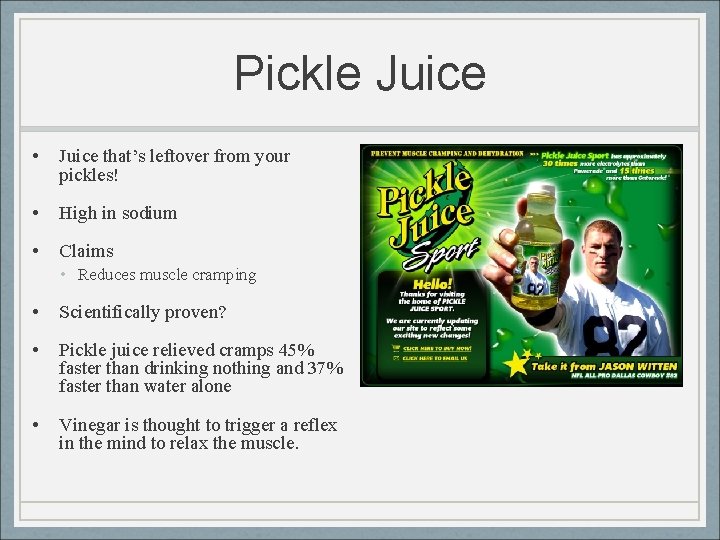
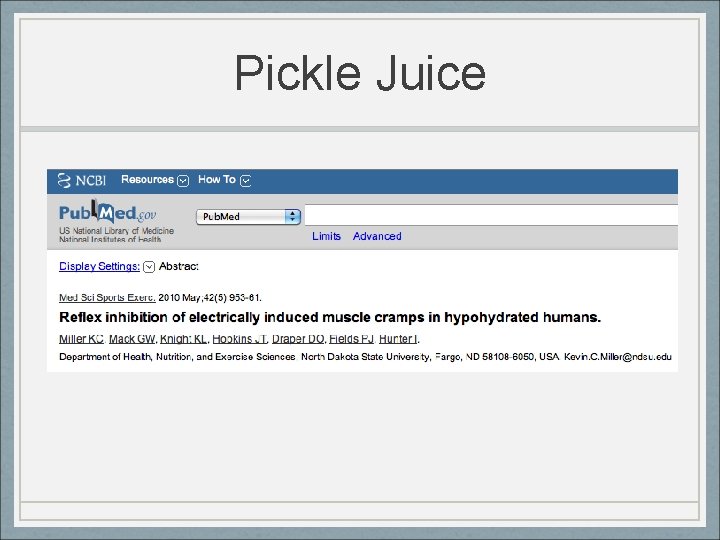
Pickle Juice • Juice that’s leftover from your pickles! • High in sodium • Claims • Reduces muscle cramping • Scientifically proven? • Pickle juice relieved cramps 45% faster than drinking nothing and 37% faster than water alone • Vinegar is thought to trigger a reflex in the mind to relax the muscle.
Pickle Juice
Caffeine • Natural stimulant • Increase fat break down for energy • One study showed subjects with high caffeine intake one hour before exercise used less glycogen. • Lower levels of caffeine intake (5 -6 mg/kg) have ergogenic effects and produce urine levels less than IOC limits.
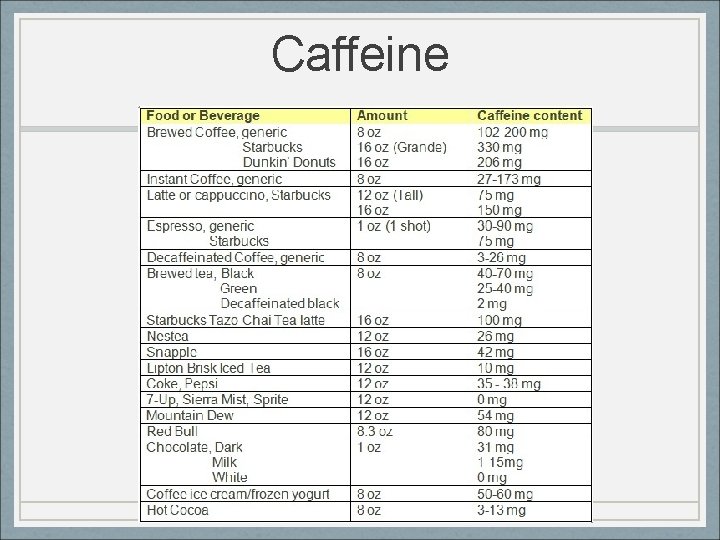
Caffeine
Energy Bars • Bars that contain cereal and energy • Provide quick food energy • Typical energy bar supplies about 200300 calories • 20 -30 g of carbs, 8 -10 g of protein
Carnitine • Natural compound in food • Synthesized in liver and kidney from lysine and methionine. • Transport long-chain fatty acids into the mitochondria. • Claims: • Increases use of fatty acids for fuel • Decrease body fat • Increase endurance • Studies have shown that carnitine supplementation does not alter muscle use of fatty acids. • Exercise increases carnitine excretion in the urine, but supplemental carnitine does not benefit athletes.
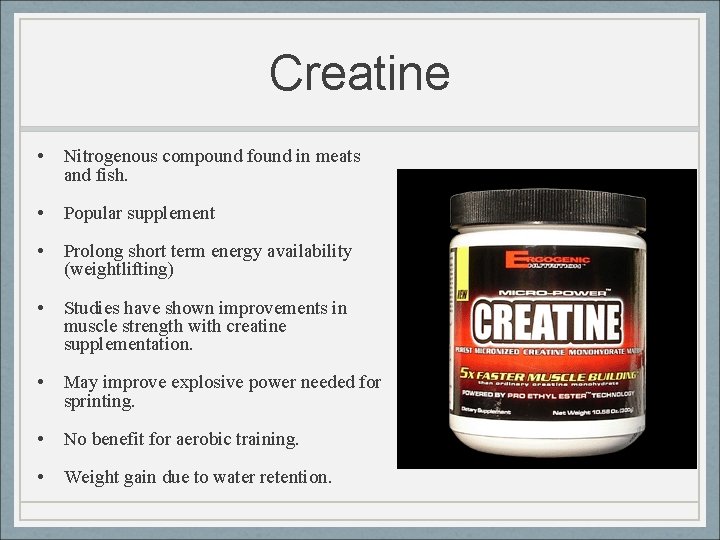
Creatine • Nitrogenous compound found in meats and fish. • Popular supplement • Prolong short term energy availability (weightlifting) • Studies have shown improvements in muscle strength with creatine supplementation. • May improve explosive power needed for sprinting. • No benefit for aerobic training. • Weight gain due to water retention.
Whey Protein • By product of cheese • Increases nitrogen retention, promotes positive nitrogen balance. • Claims: • Greater nitrogen retention • Greater muscular gains • Increases glutathione level • Does not appear to increase muscle mass in athletes
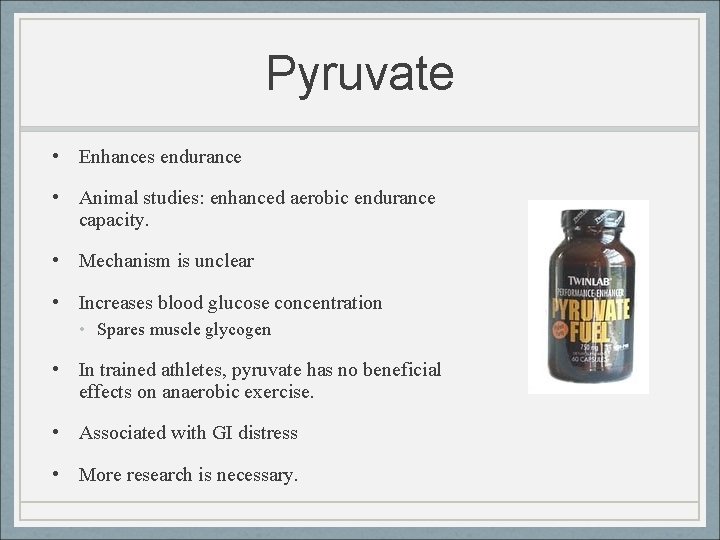
Pyruvate • Enhances endurance • Animal studies: enhanced aerobic endurance capacity. • Mechanism is unclear • Increases blood glucose concentration • Spares muscle glycogen • In trained athletes, pyruvate has no beneficial effects on anaerobic exercise. • Associated with GI distress • More research is necessary.
Ephedra • Ma Huang – herb used in Chinese medicine for 5, 000 years. • Originally for nasal decongestant and treatment of bronchial asthma. • Active ingredients: • Ephedrine and pseudoephedrine • Claims: • Improves athletic performance • Promotes weight loss • Banned by IOC and NCAA
Resources • http: //www. uhs. wisc. edu/docs/uwhealth_sportsnut rition_176. pdf • American Dietetic Association • http: //www. eatright. org/public/content. aspx? id=7055