
Review The Sun Solar Prominence photo by SOHO
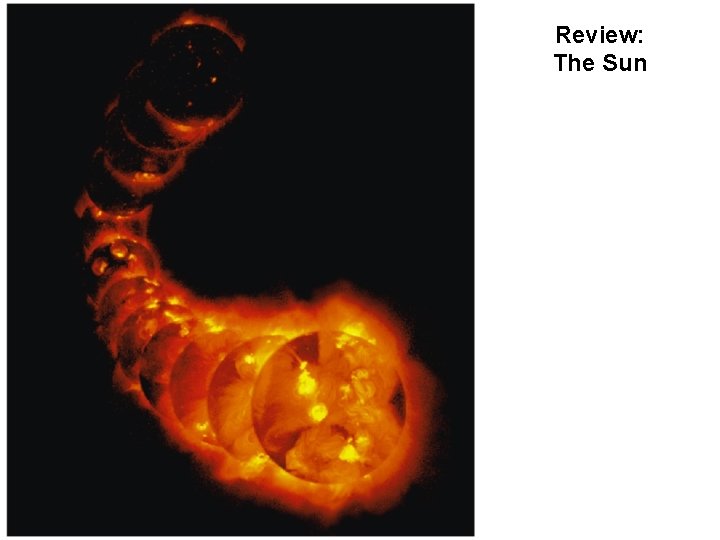
Review: The Sun
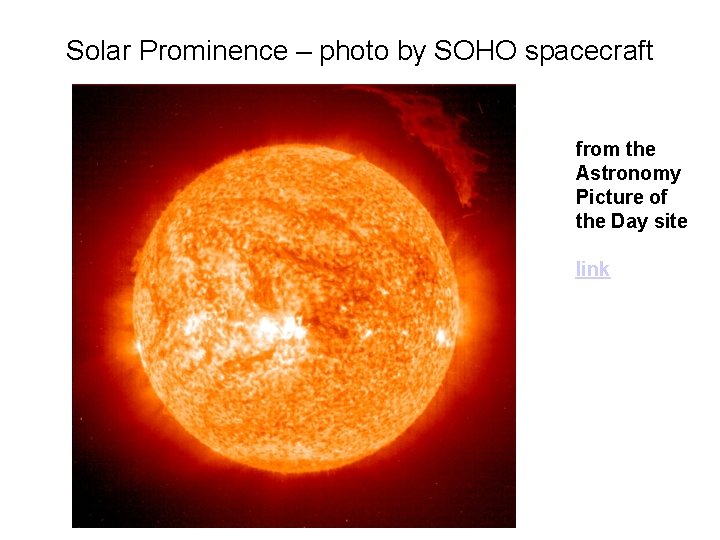
Solar Prominence – photo by SOHO spacecraft from the Astronomy Picture of the Day site link
In addition to SOHO, there is the STEREO mission – two spacecraft on opposite sides of the Sun • Each is in an orbit similar to Earth’s orbit, but one moves ahead of Earth, and the other trails behind Earth. • The purpose of having three spacecraft is to continuously monitor the entire surface of the Sun, to help predict space weather (solar winds). • http: //www. nasa. gov/mission_pages/stereo/main/index. html • We also showed some pictures from the Solar Dynamics Observatory (SDO), another satellite watching the Sun.
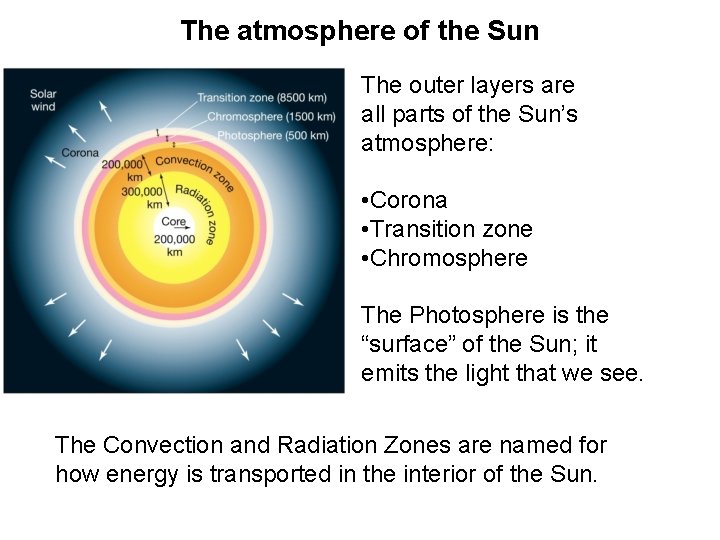
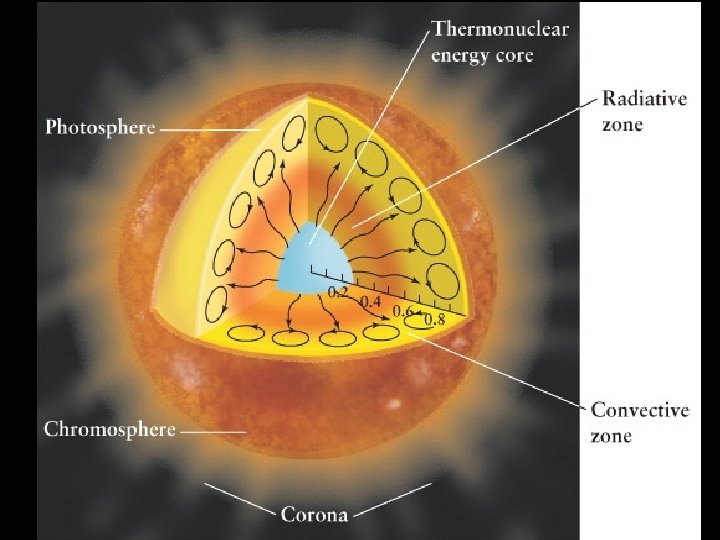
The atmosphere of the Sun The outer layers are all parts of the Sun’s atmosphere: • Corona • Transition zone • Chromosphere The Photosphere is the “surface” of the Sun; it emits the light that we see. The Convection and Radiation Zones are named for how energy is transported in the interior of the Sun.
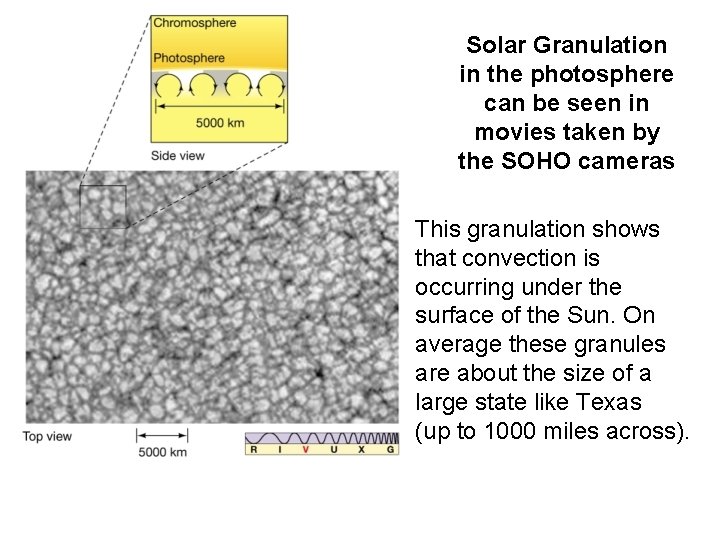
Solar Granulation in the photosphere can be seen in movies taken by the SOHO cameras This granulation shows that convection is occurring under the surface of the Sun. On average these granules are about the size of a large state like Texas (up to 1000 miles across).
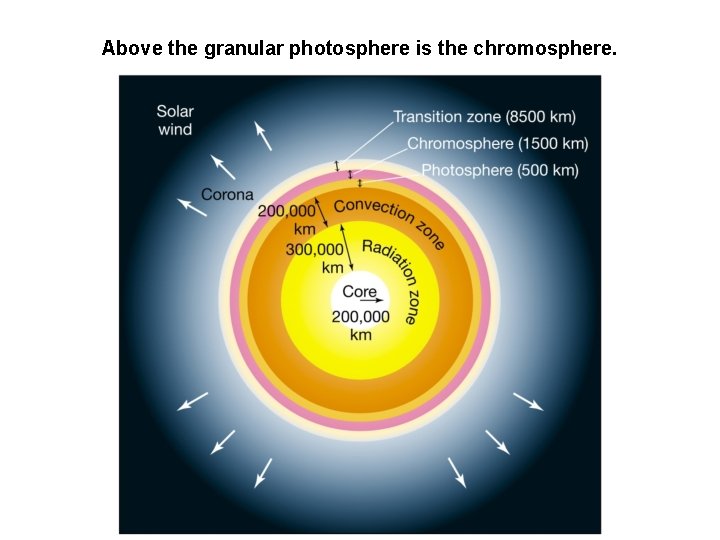
Above the granular photosphere is the chromosphere.
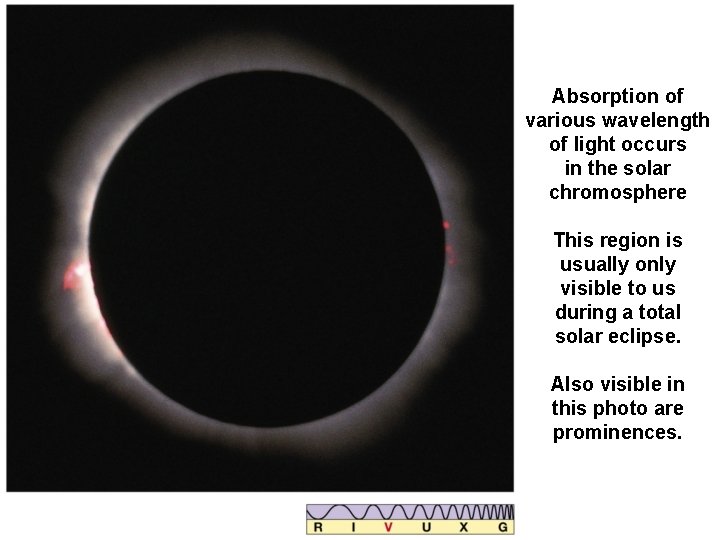
Absorption of various wavelength of light occurs in the solar chromosphere This region is usually only visible to us during a total solar eclipse. Also visible in this photo are prominences.
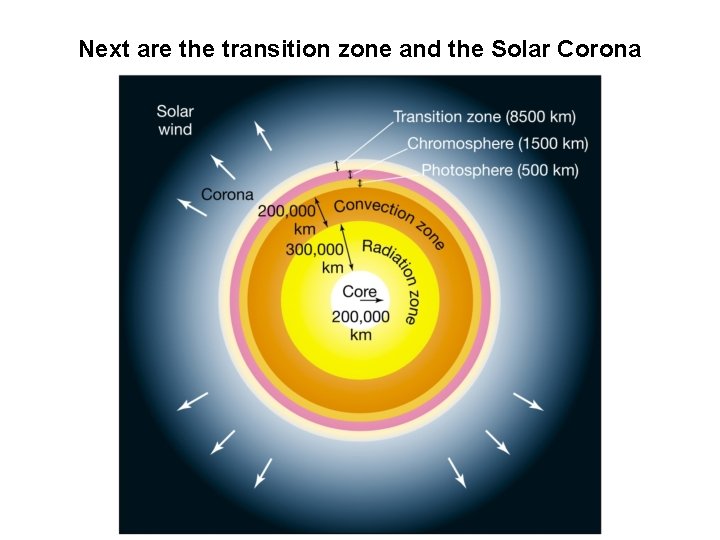
Next are the transition zone and the Solar Corona
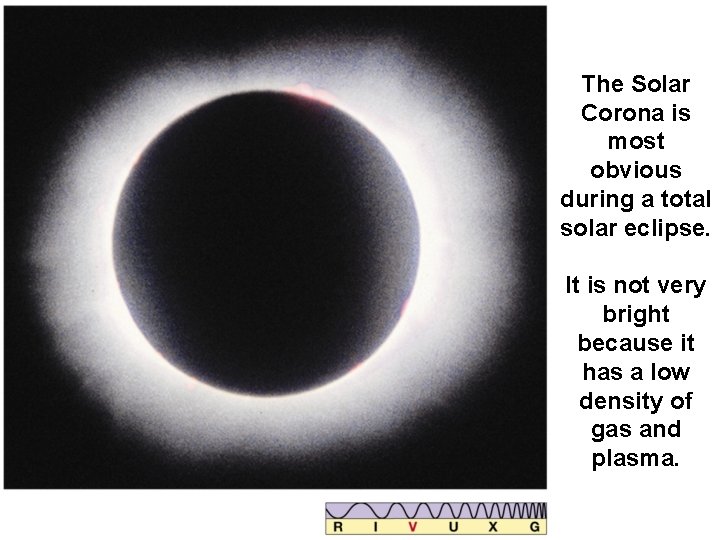
The Solar Corona is most obvious during a total solar eclipse. It is not very bright because it has a low density of gas and plasma.
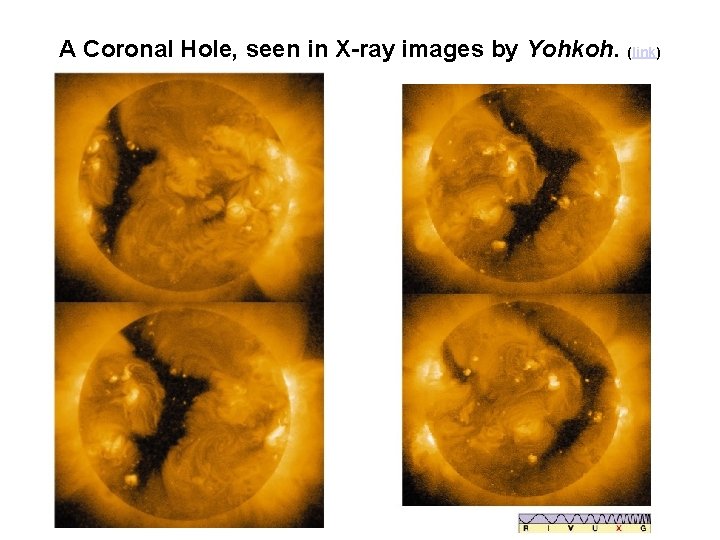
A Coronal Hole, seen in X-ray images by Yohkoh. (link)
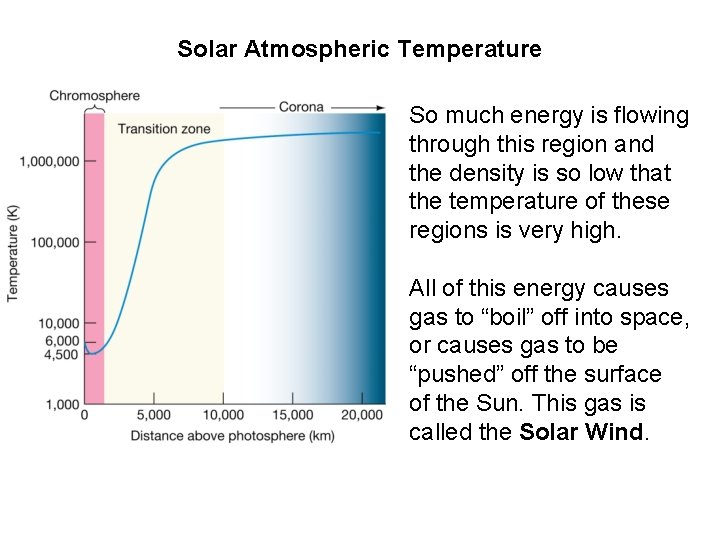
Solar Atmospheric Temperature So much energy is flowing through this region and the density is so low that the temperature of these regions is very high. All of this energy causes gas to “boil” off into space, or causes gas to be “pushed” off the surface of the Sun. This gas is called the Solar Wind.
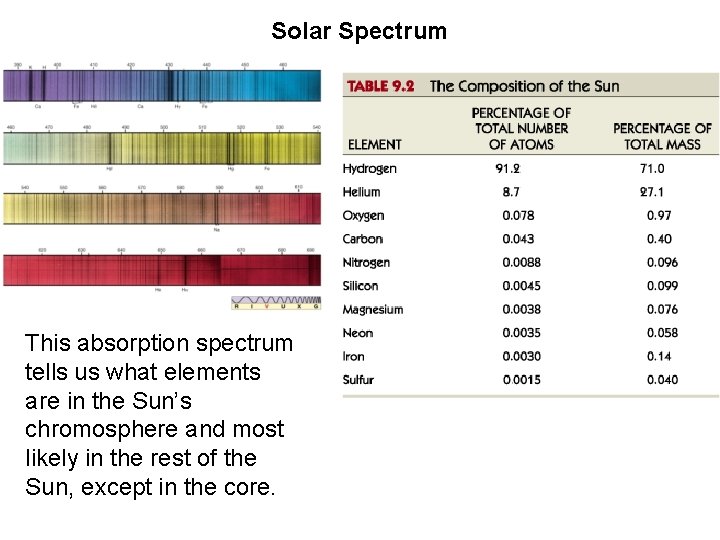
Solar Spectrum This absorption spectrum tells us what elements are in the Sun’s chromosphere and most likely in the rest of the Sun, except in the core.
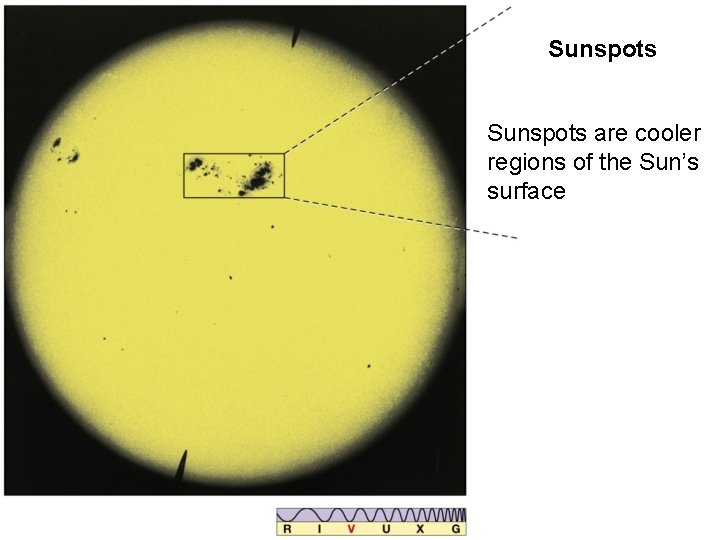
Sunspots are cooler regions of the Sun’s surface
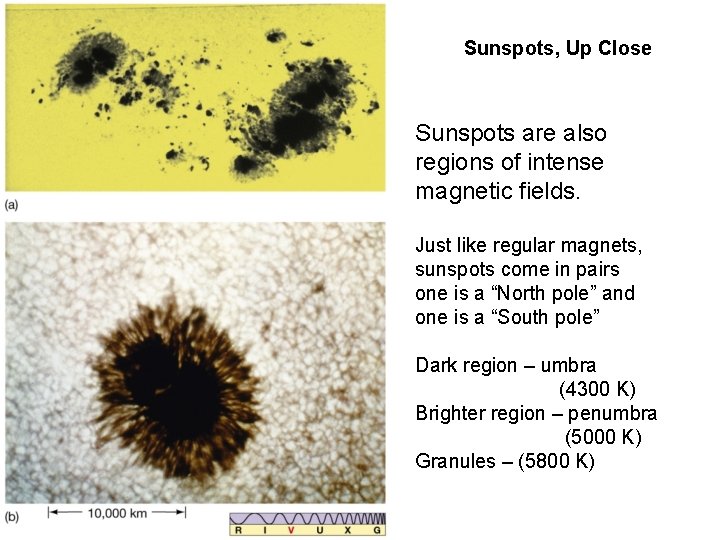
Sunspots, Up Close Sunspots are also regions of intense magnetic fields. Just like regular magnets, sunspots come in pairs one is a “North pole” and one is a “South pole” Dark region – umbra (4300 K) Brighter region – penumbra (5000 K) Granules – (5800 K)
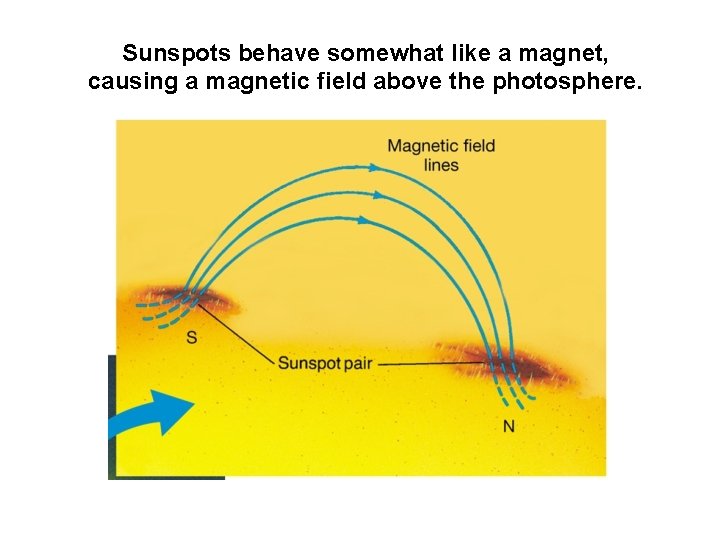
Sunspots behave somewhat like a magnet, causing a magnetic field above the photosphere.
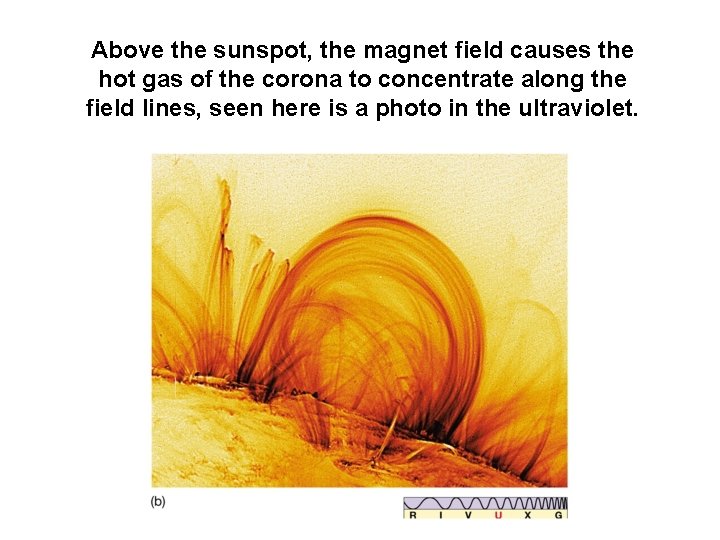
Above the sunspot, the magnet field causes the hot gas of the corona to concentrate along the field lines, seen here is a photo in the ultraviolet.
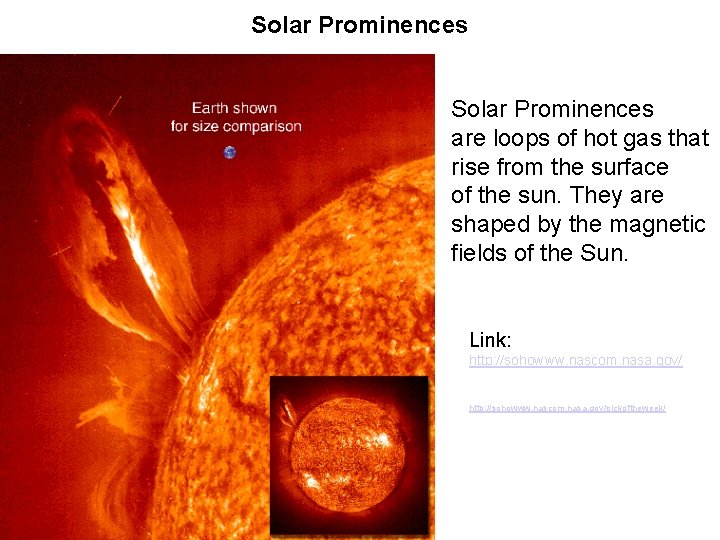
Solar Prominences are loops of hot gas that rise from the surface of the sun. They are shaped by the magnetic fields of the Sun. Link: http: //sohowww. nascom. nasa. gov/pickoftheweek/
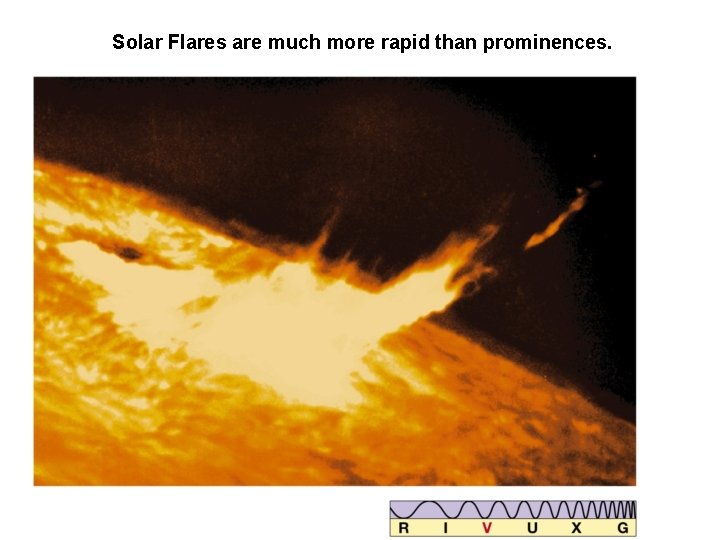
Solar Flares are much more rapid than prominences.
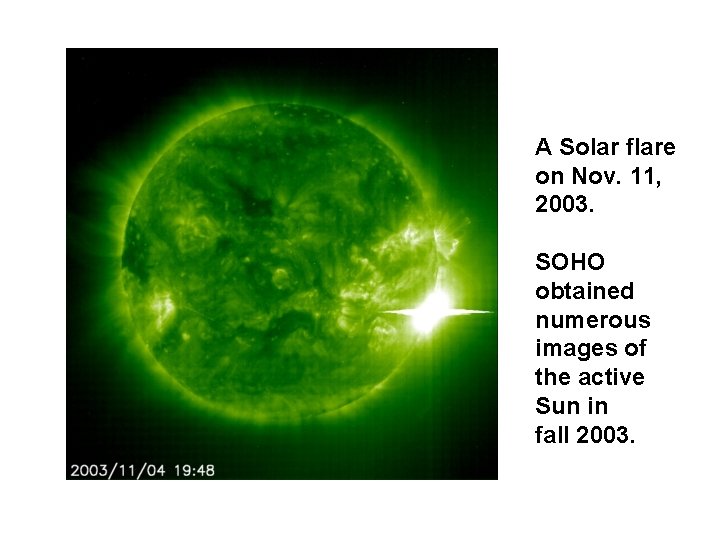
A Solar flare on Nov. 11, 2003. SOHO obtained numerous images of the active Sun in fall 2003.
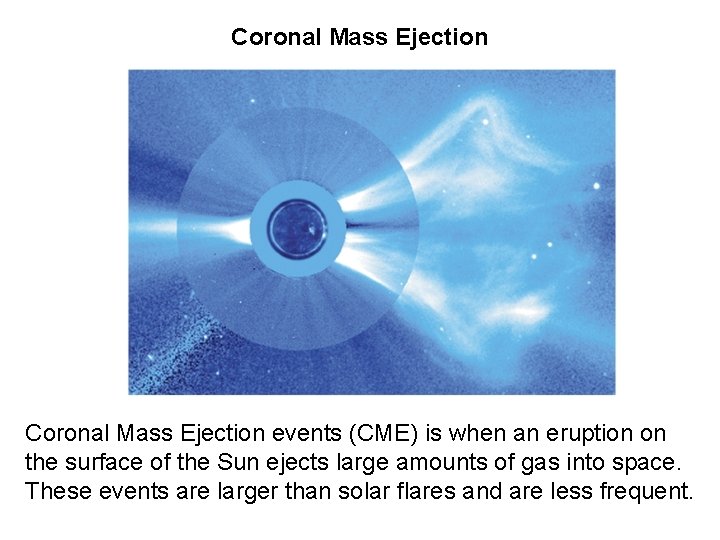
Coronal Mass Ejection events (CME) is when an eruption on the surface of the Sun ejects large amounts of gas into space. These events are larger than solar flares and are less frequent.
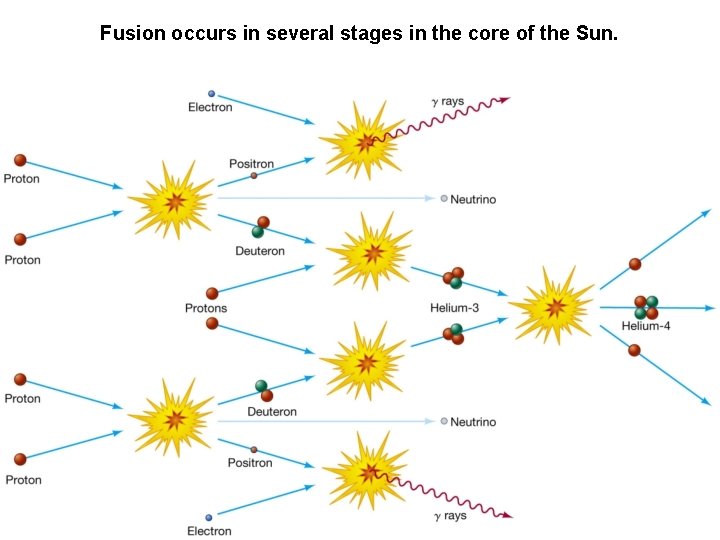
Fusion occurs in several stages in the core of the Sun.
- Slides: 22