
REVIEW Species organisms that are able to reproduce
REVIEW � Species: organisms that are able to reproduce viable, fertile, offspring � Population: the number of organisms in one species in a specific area � Community: the collection of populations of different species in an area
BIOMASS � � Biomass is the total mass of all living things in a given area. � Biomass is generally measured in g/m 2 or kg/m 2. Within an organism’s niche, the organism interacts with the ecosystem by: 1. Obtaining food from the ecosystem 2. Contributing energy to the ecosystem � Plants are called producers because they produce carbohydrates from carbon dioxide, water, and the Sun’s energy.
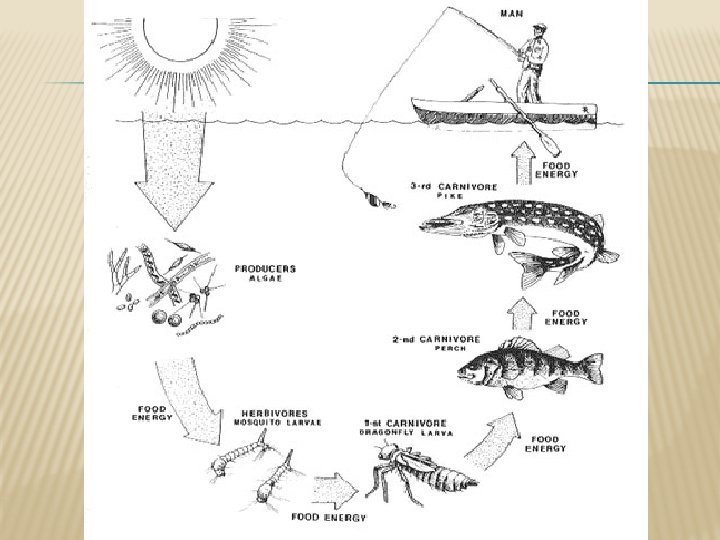
FOOD CHAINS � Scientists use different methods to represent energy moving through ecosystems. �Food chains �Food webs �Food pyramids � Food chains show the flow of energy in an ecosystem.
TROPHIC LEVELS � Each level step in a food chain is a trophic �Producers = 1 st trophic level �Primary consumers = 2 nd trophic level �Secondary consumers = 3 rd trophic level �Tertiary consumers = 4 th trophic level

FOOD CHAINS � All food chains start with the sun � Arrow always points to who is doing the eating � (Note that the sun isn’t eating the flower!)
NEW TERMINOLOGY � Primary producer: makes their own food � Primary consumer: eats the producer (aka: the herbivore) � Secondary consumer: eats the primary consumer (aka: a carnivore) � Tertiary consumer: eats the secondary consumer (aka: a carnivore)

Detrivores: - Organisms that gain their energy from eating dead organisms or animals wastes Decomposers : - Organisms that break down organic matter into useable nutrients
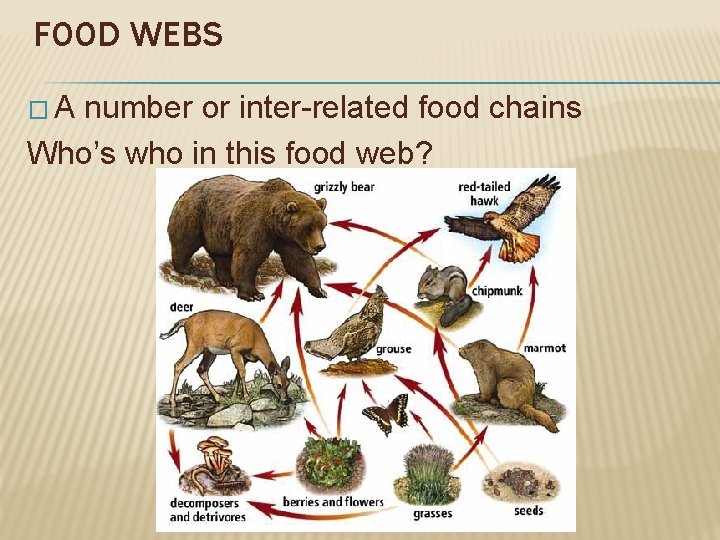
FOOD WEBS �A number or inter-related food chains Who’s who in this food web?
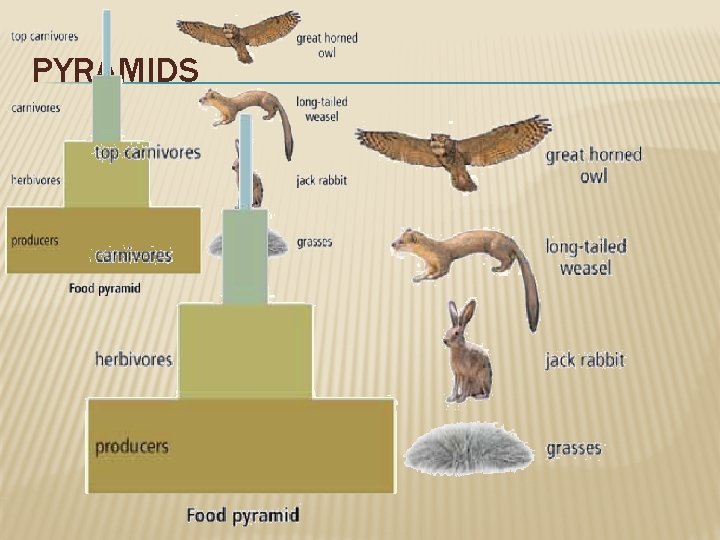
ECOLOGICAL PYRAMIDS � There are 3 types of pyramids: 1. Pyramid of numbers 2. Pyramid of biomass 3. Pyramid of energy � Food pyramids show the changes in available energy from one trophic level to another in a food chain.
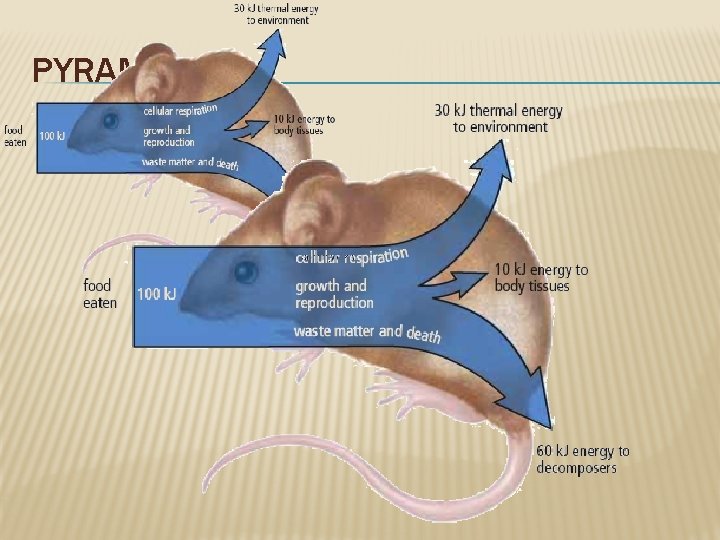
PYRAMIDS �Energy enters at the first trophic level (producers), where there is a large amount of biomass and therefore much energy. �It takes large quantities of organisms in one trophic level to meet the energy needs of the next trophic level. �Each level loses large amounts of energy � 80 – 90 percent of energy taken in by consumers is used in chemical reactions in the body and is lost as thermal energy.
PYRAMIDS
PYRAMIDS � Food pyramids are also known as ecological pyramids. �Ecological pyramids may show biomass, population, or energy numbers. �The amount of life an ecosystem can contain is based on the bottom level of the ecological pyramid, where producers capture energy from the Sun. �Each level in the energy pyramid = a loss of 90 percent of total energy available.
PYRAMIDS
- Slides: 14