
Review Session 6 Geologic History RELATIVE DATING Putting

- Slides: 21
Review Session 6 Geologic History
RELATIVE DATING: Putting rock layers in order of what came first, then second, etc. In order to RELATIVELY DATE rocks a number of rules have to be followed: 1. LAW OF SUPERPOSITIONNormally, the oldest layer in a series of sedimentary rocks is the bottom layer. Each overlying layer is younger, so that the top layer is the youngest.
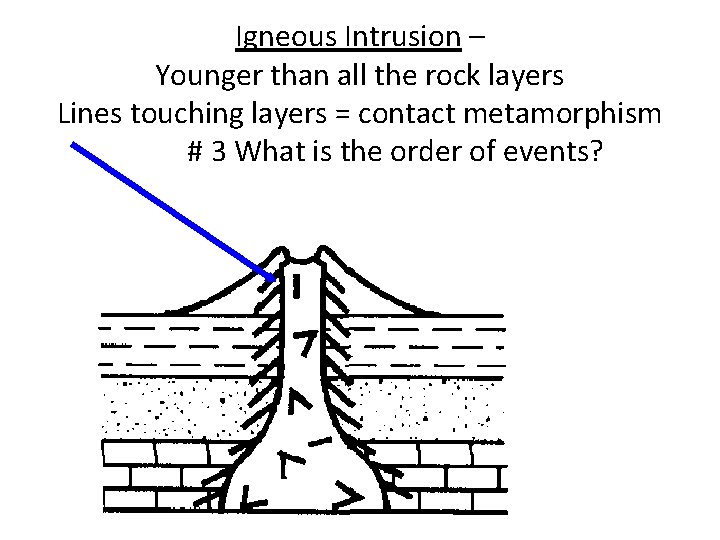
2. ORIGINAL HORIZONTALITY: Sedimentary rocks and lava flows are originally deposited in horizontal layers 3. IGNEOUS INTRUSIONS AND EXTRUSIONSContact metamorphism occurs when magma or lava burns a rock. Therefore: An intrusion is younger than the rock it cuts through. An extrusion (lava flow) is younger than rocks below it, but older than any rocks above it.
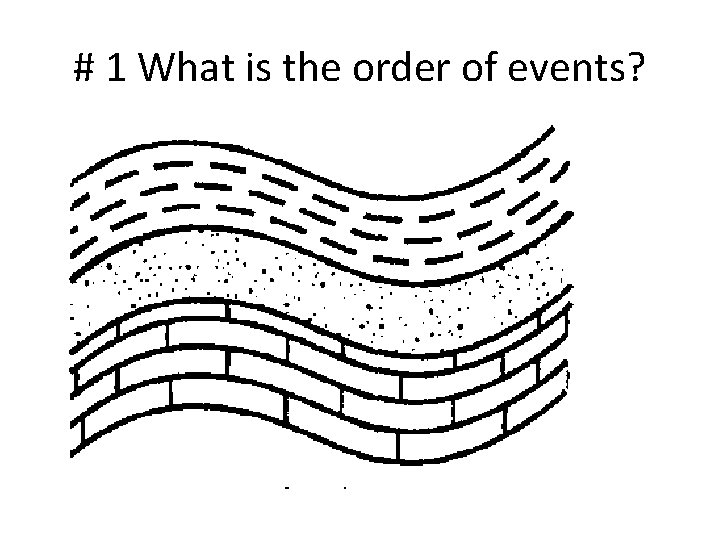
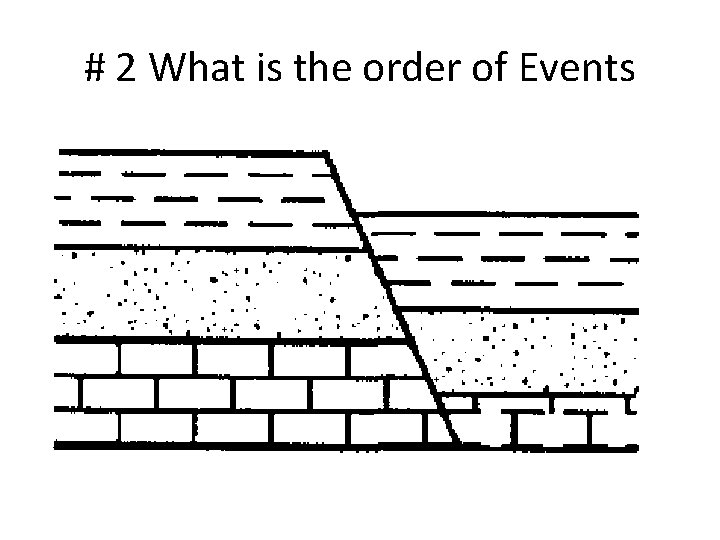
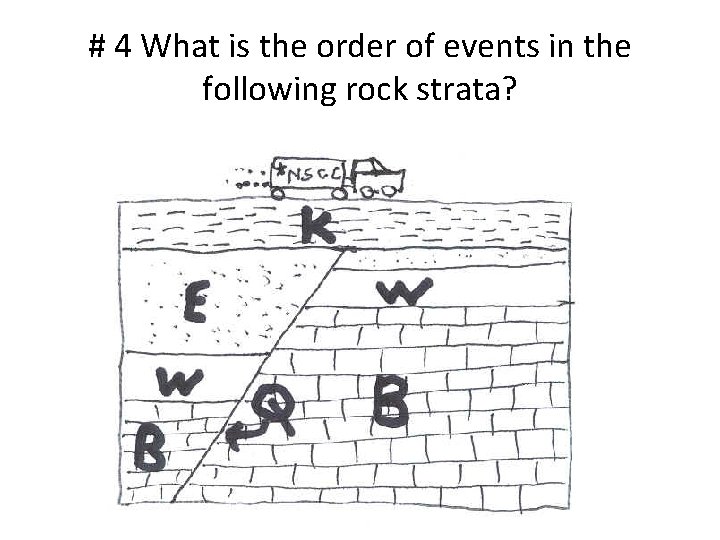
4. FOLD- A rock is older than folding. Sometimes folding can overturn rock strata so that older rocks lie on top and younger rocks are on bottom. 5. FAULT- The rock layers are older than the fault. Sometimes extreme faulting can push older rocks from below over younger rocks on top. 6. The sediment in a sedimentary rock is older than the rock.
# 1 What is the order of events?
# 2 What is the order of Events
Igneous Intrusion – Younger than all the rock layers Lines touching layers = contact metamorphism # 3 What is the order of events?
# 4 What is the order of events in the following rock strata?
Fossils
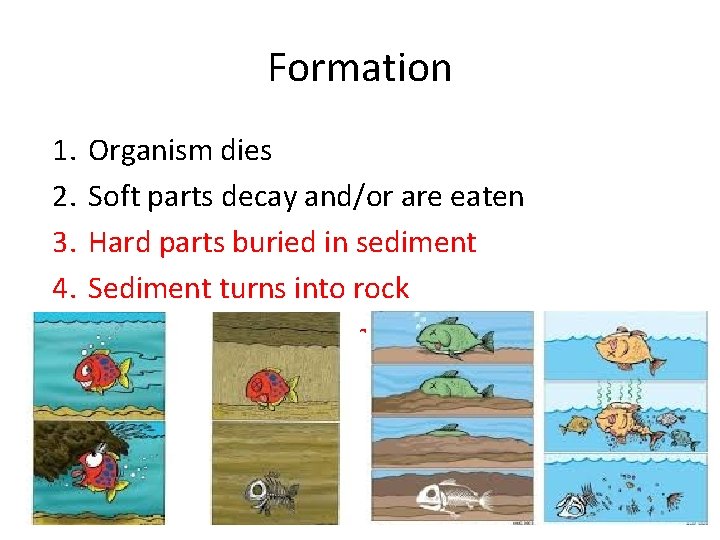
Formation 1. 2. 3. 4. 5. Organism dies Soft parts decay and/or are eaten Hard parts buried in sediment Sediment turns into rock Uplift, weathering, and erosion expose the fossil
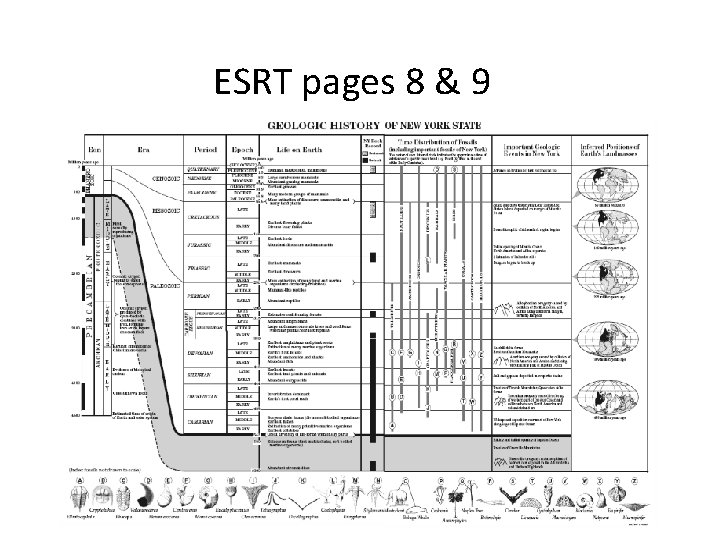
ESRT pages 8 & 9
Radioactive Dating
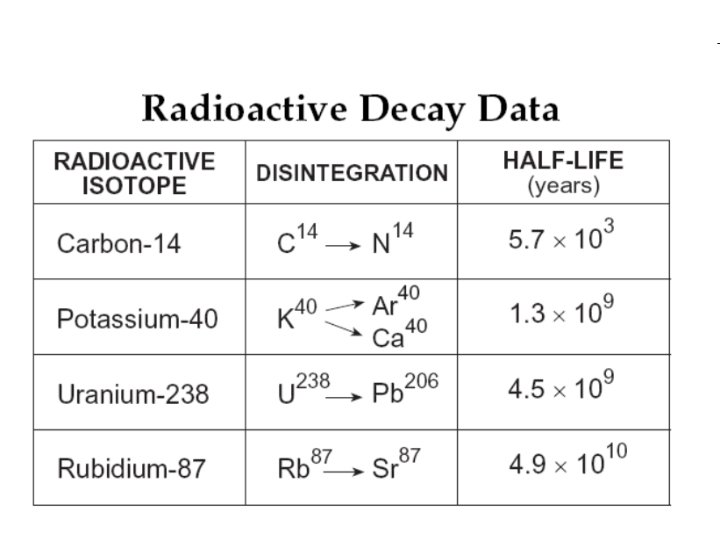
Radioactive Dating • Radioactive ISOTOPES in rocks DECAY away at a predictable rate.
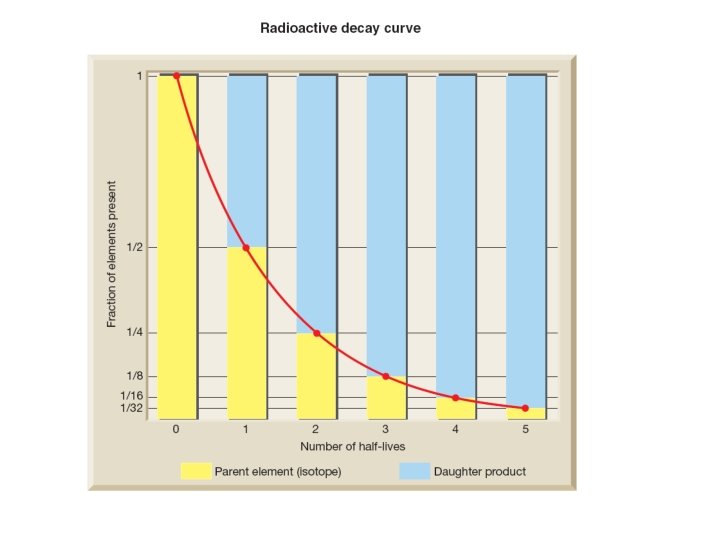
Half Life • The amount of time it takes for HALF of the radioactive isotope to DECAY is called its HALF LIFE. • Half life DOES NOT CHANGE. (That’s why it’s on the ESRT!)
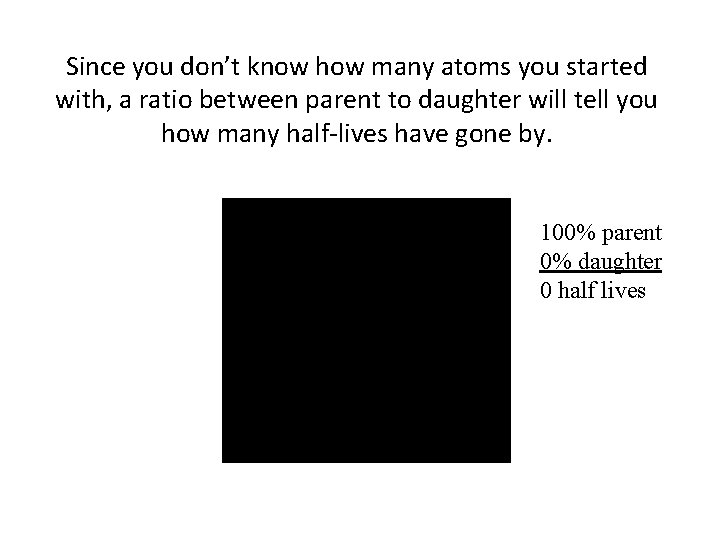
Since you don’t know how many atoms you started with, a ratio between parent to daughter will tell you how many half-lives have gone by. 100% parent 0% daughter 0 half lives
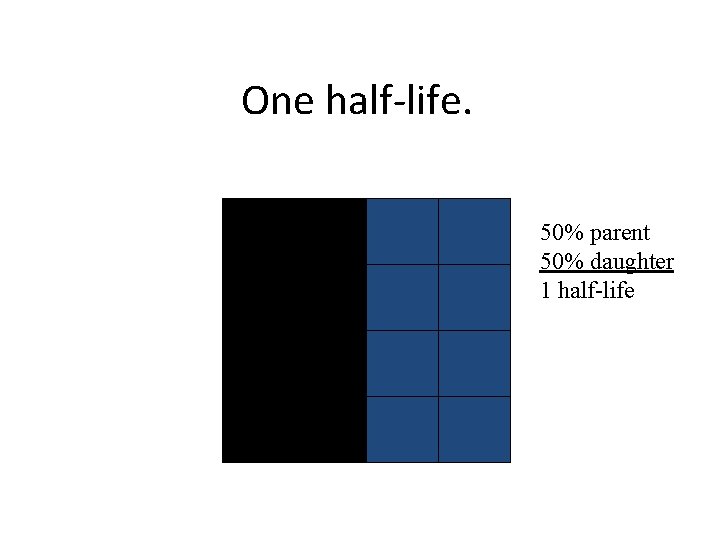
One half-life. 50% parent 50% daughter 1 half-life
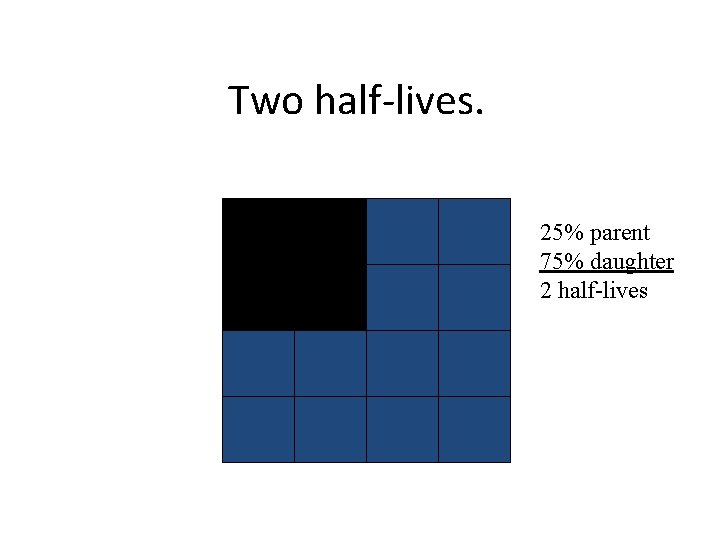
Two half-lives. 25% parent 75% daughter 2 half-lives
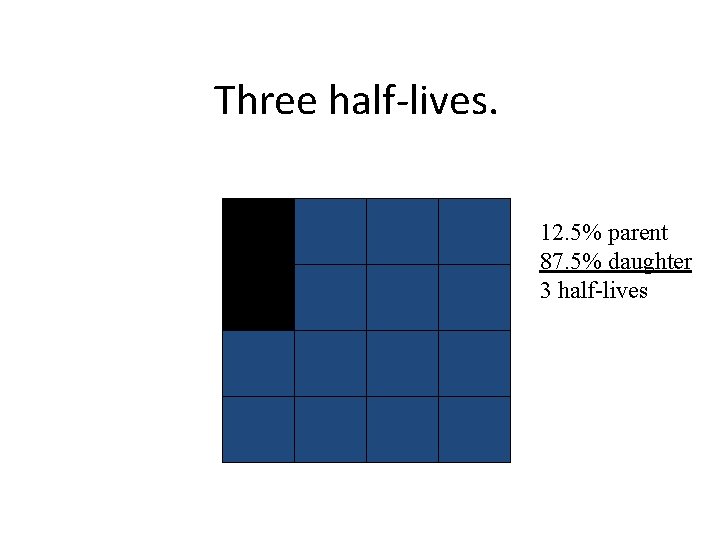
Three half-lives. 12. 5% parent 87. 5% daughter 3 half-lives
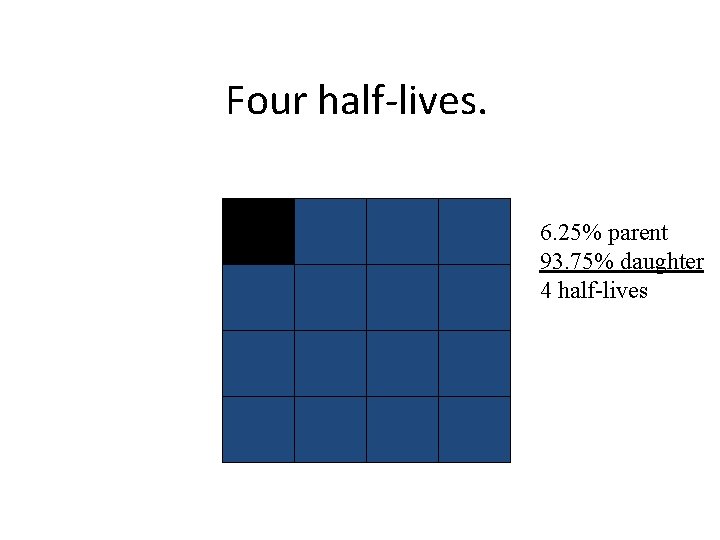
Four half-lives. 6. 25% parent 93. 75% daughter 4 half-lives