
Review Session 2 What is a mineral 1

- Slides: 16
Review Session 2
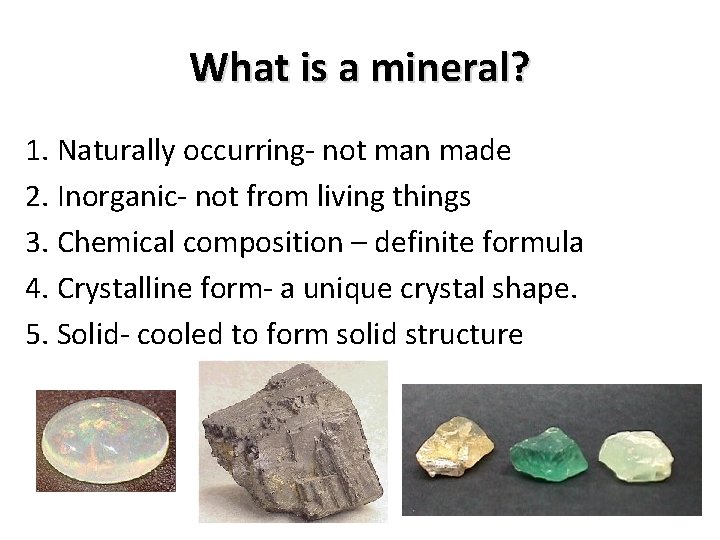
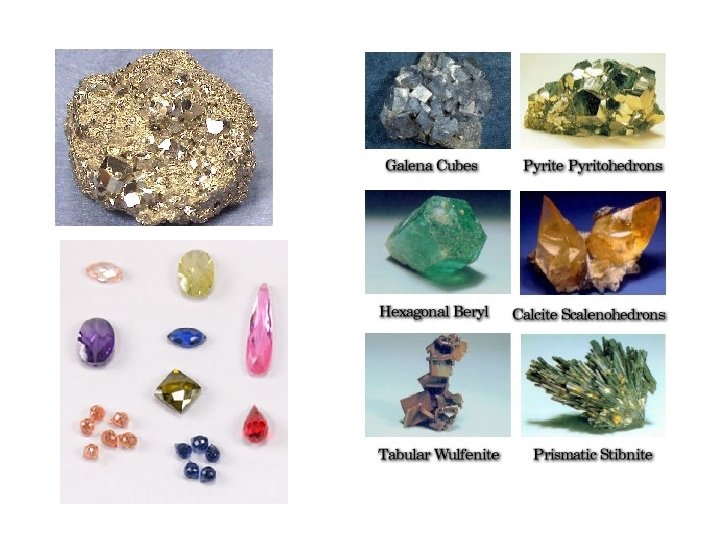
What is a mineral? 1. Naturally occurring- not man made 2. Inorganic- not from living things 3. Chemical composition – definite formula 4. Crystalline form- a unique crystal shape. 5. Solid- cooled to form solid structure
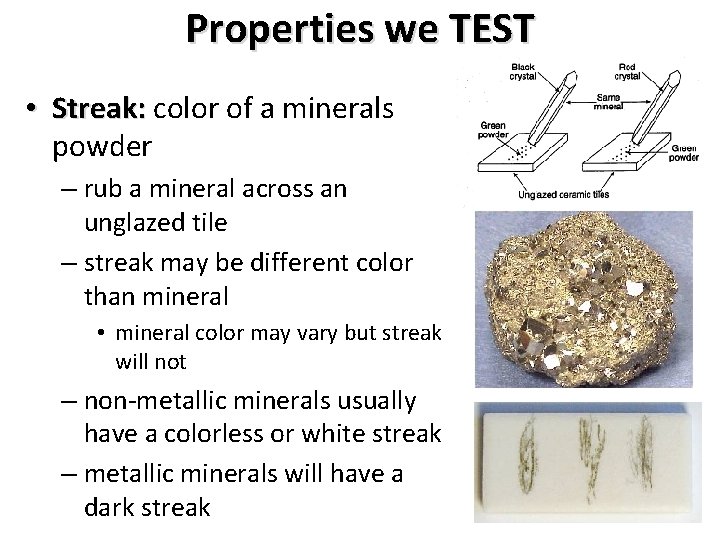
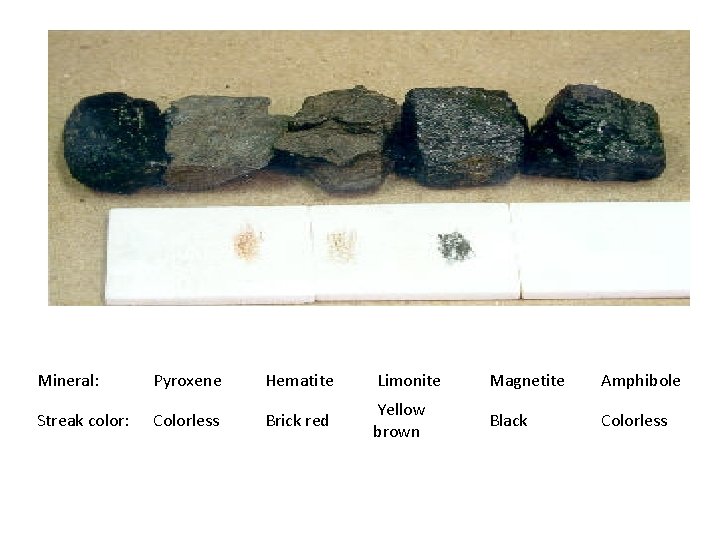
Properties we TEST • Streak: color of a minerals powder – rub a mineral across an unglazed tile – streak may be different color than mineral • mineral color may vary but streak will not – non-metallic minerals usually have a colorless or white streak – metallic minerals will have a dark streak
Mineral: Pyroxene Hematite Limonite Magnetite Amphibole Streak color: Colorless Brick red Yellow brown Black Colorless
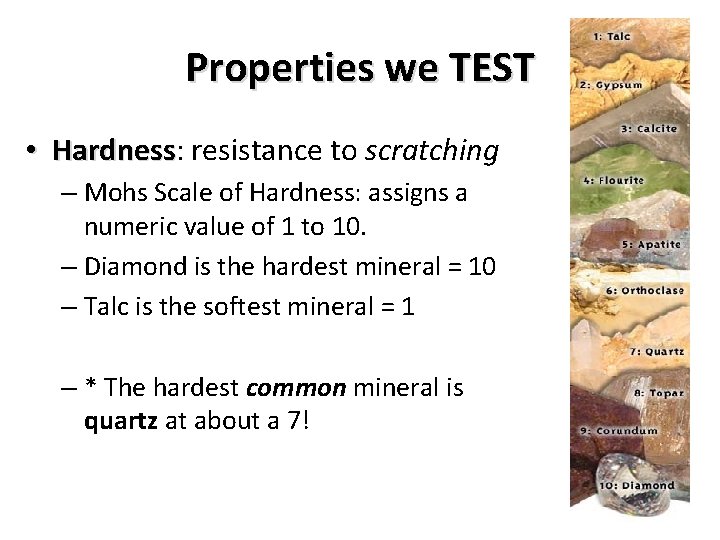
Properties we TEST • Hardness: Hardness resistance to scratching – Mohs Scale of Hardness: assigns a numeric value of 1 to 10. – Diamond is the hardest mineral = 10 – Talc is the softest mineral = 1 – * The hardest common mineral is quartz at about a 7!
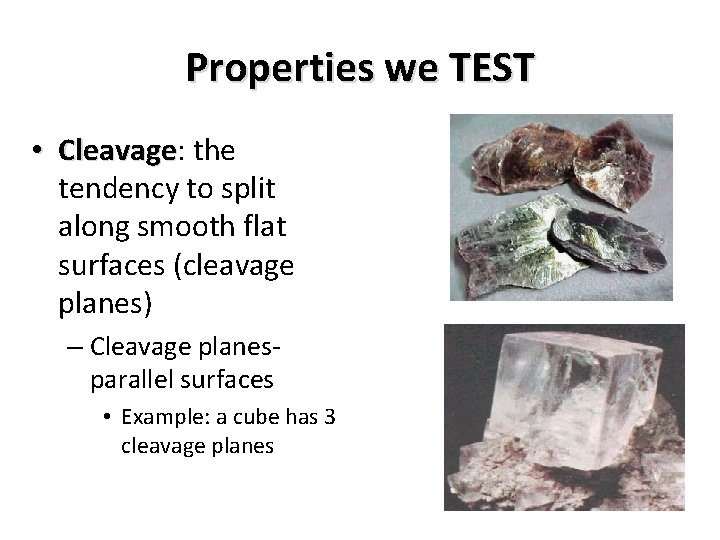
Properties we TEST • Cleavage: Cleavage the tendency to split along smooth flat surfaces (cleavage planes) – Cleavage planesparallel surfaces • Example: a cube has 3 cleavage planes
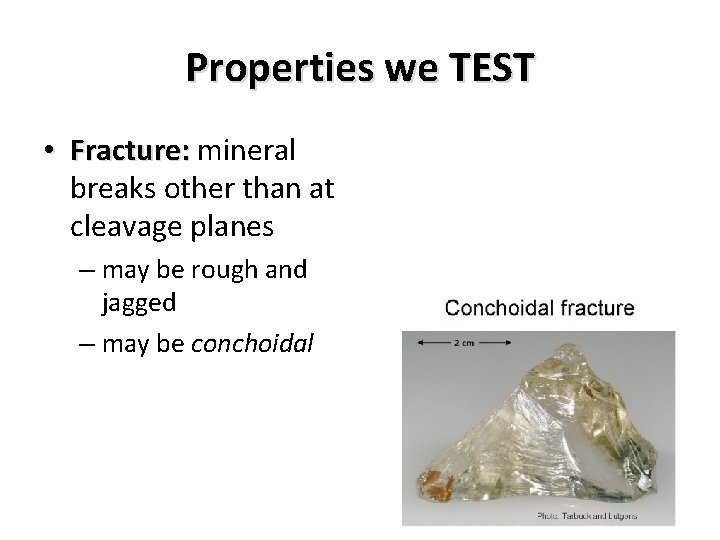
Properties we TEST • Fracture: mineral breaks other than at cleavage planes – may be rough and jagged – may be conchoidal
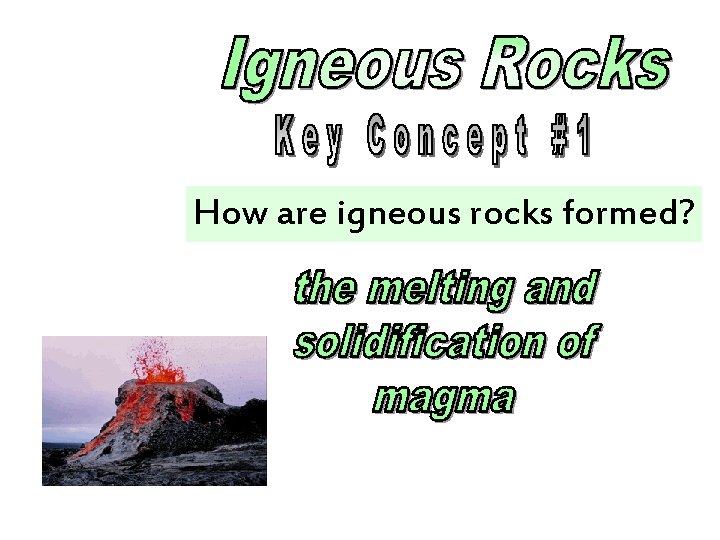
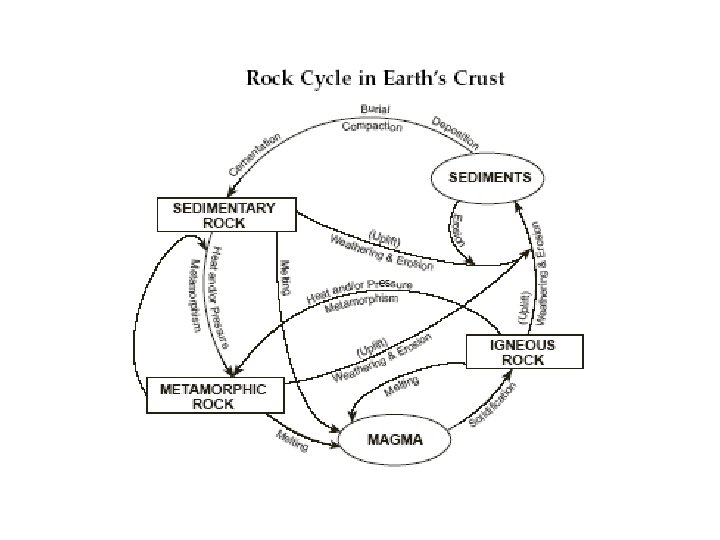
There are THREE Major Types of Rocks 1. Igneous: Rocks formed by the cooling and solidification of lava 2. Sedimentary: Rocks formed by the deposition and compaction of layers of sediment 3. Metamorphic: Rocks formed by intense heat and pressure changing them from previously existing rocks into something else
How are igneous rocks formed?
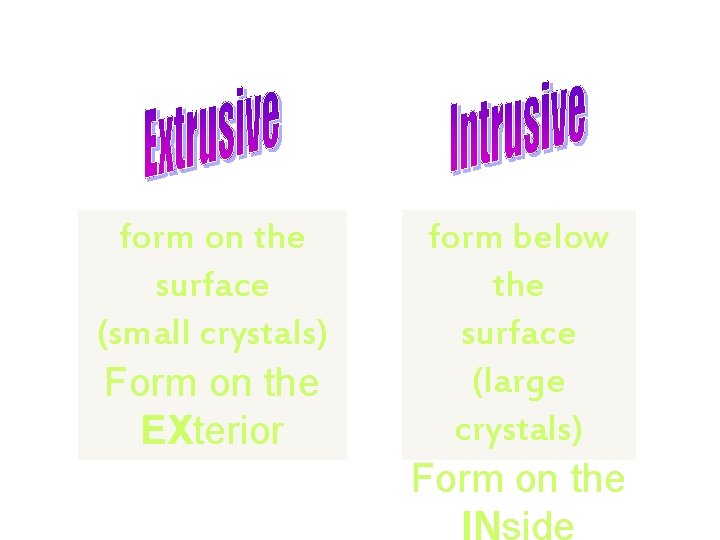
form on the surface (small crystals) Form on the EXterior form below the surface (large crystals) Form on the
Features of Sedimentary Rocks
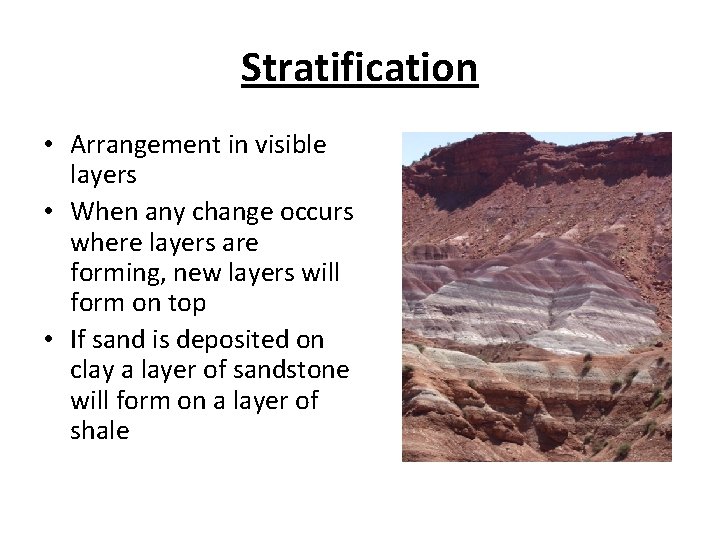
Stratification • Arrangement in visible layers • When any change occurs where layers are forming, new layers will form on top • If sand is deposited on clay a layer of sandstone will form on a layer of shale
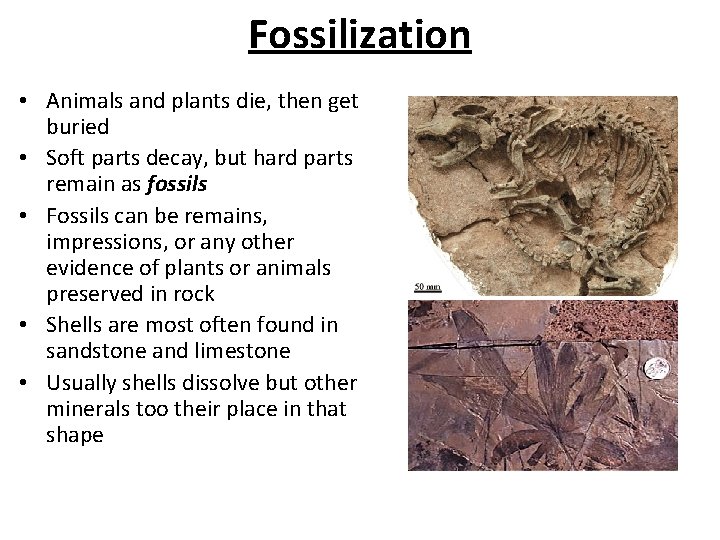
Fossilization • Animals and plants die, then get buried • Soft parts decay, but hard parts remain as fossils • Fossils can be remains, impressions, or any other evidence of plants or animals preserved in rock • Shells are most often found in sandstone and limestone • Usually shells dissolve but other minerals too their place in that shape
The Rock Cycle Diagram on Page 6 • ONE BIG CIRCLE. • Words with rectangles = types of rock • Words with ovals = states of rock • Arrows = Actions taken to change/make rocks.