
Review Separating Mixtures and States of Matter KIPP


- Slides: 35
Review: Separating Mixtures and States of Matter KIPP INSPIRE ACADEMY 5 th Grade Science
Separating Mixtures- Main Idea! Pure substances are made of 1 kind of material; cannot be separated into other parts Mixtures are made of 2 or more materials; CAN be separated back into individual components
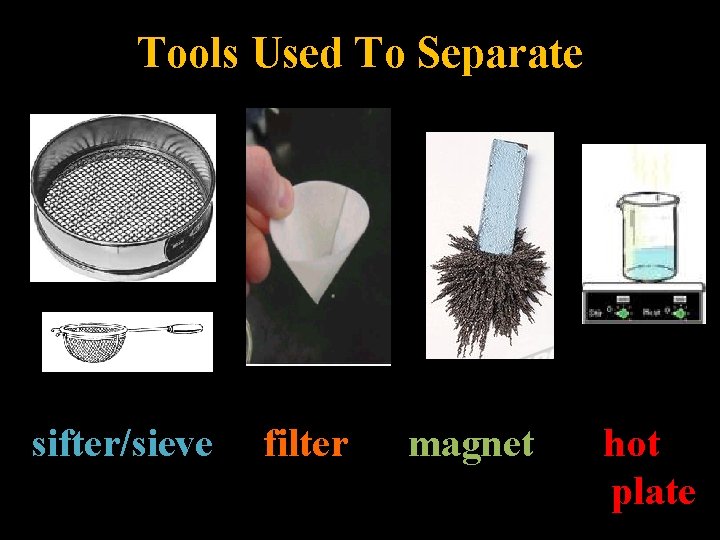
Tools Used To Separate sifter/sieve filter magnet hot plate
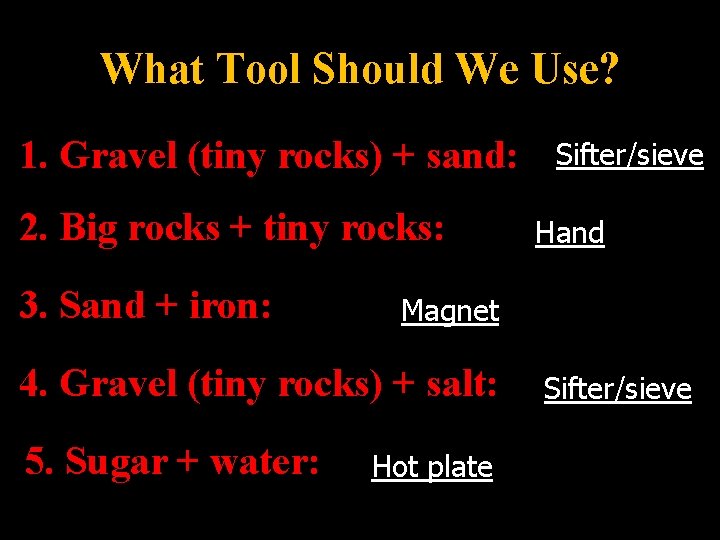
What Tool Should We Use? 1. Gravel (tiny rocks) + sand: 2. Big rocks + tiny rocks: 3. Sand + iron: Hand Magnet 4. Gravel (tiny rocks) + salt: 5. Sugar + water: Sifter/sieve Hot plate Sifter/sieve
States of Matter- Main Idea! We can decide what state of matter an object is in by looking at its volume and shape. Volume = the amount of space something takes up
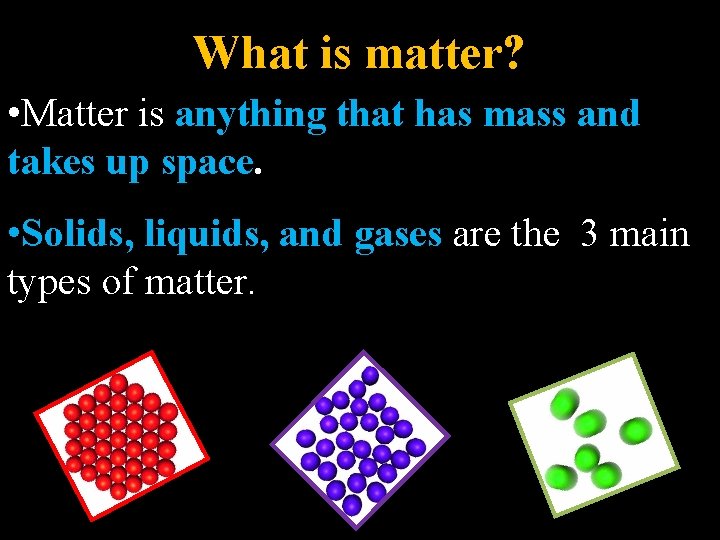
What is matter? • Matter is anything that has mass and takes up space. • Solids, liquids, and gases are the 3 main types of matter.
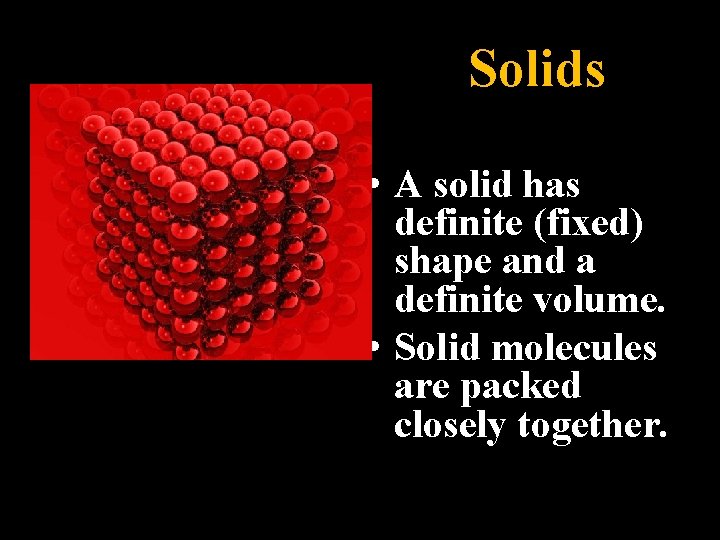
Solids • A solid has definite (fixed) shape and a definite volume. • Solid molecules are packed closely together.
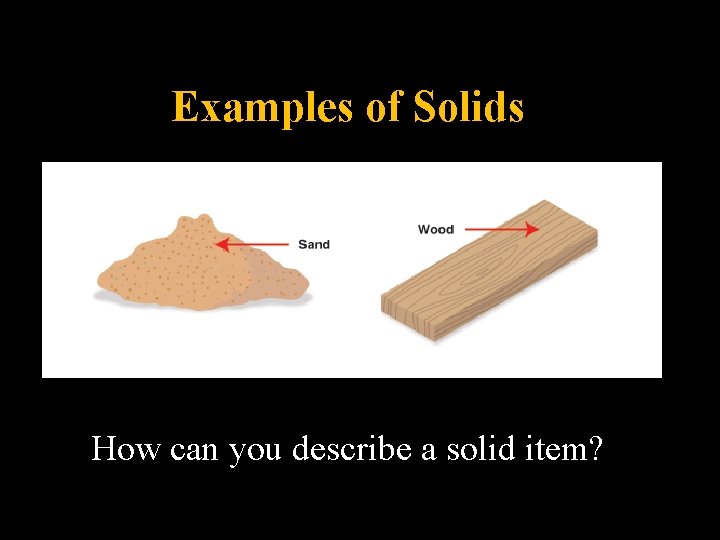
Examples of Solids How can you describe a solid item?
Liquids • A liquid has a definite (fixed) volume but no shape of its own. • Liquids take the shape of their containers • Liquid molecules move loosely. Liquids can flow or be poured easily. Liquids change their shape depending on the container they are in.
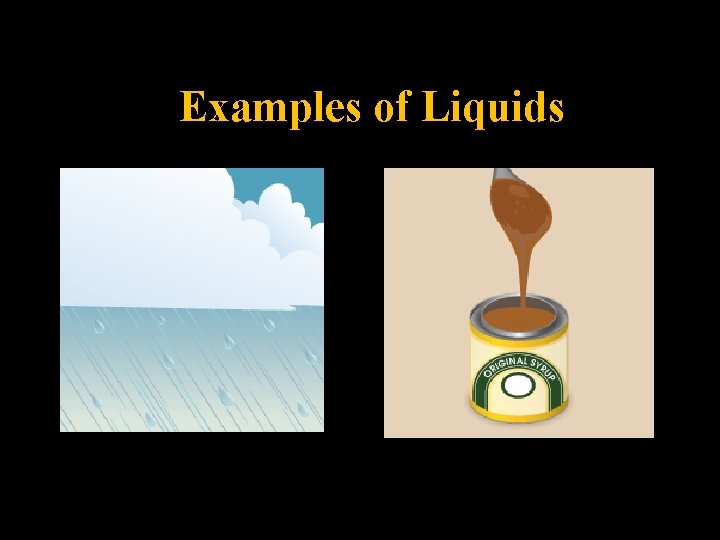
Examples of Liquids
Gases • Gases don’t have definite volume or shape. • Gas molecules can move around freely. • Gases spread out and change their shape to fill up whatever container they are in.
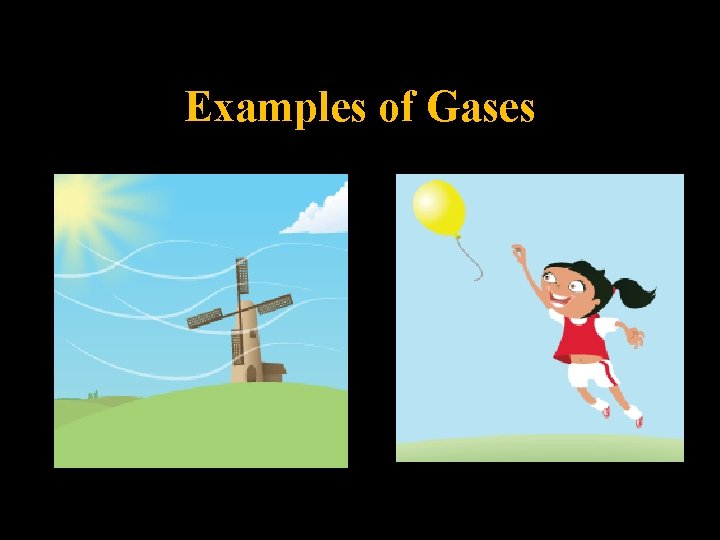
Examples of Gases
Do You Get It?
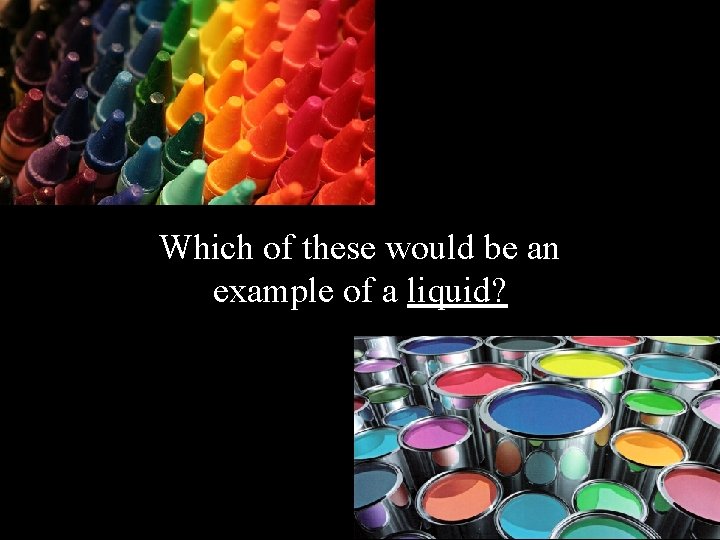
Which of these would be an example of a liquid?
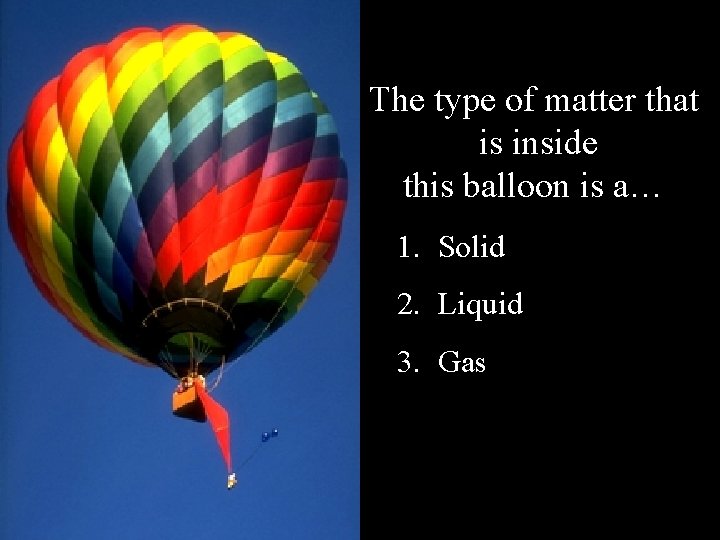
The type of matter that is inside this balloon is a… 1. Solid 2. Liquid 3. Gas
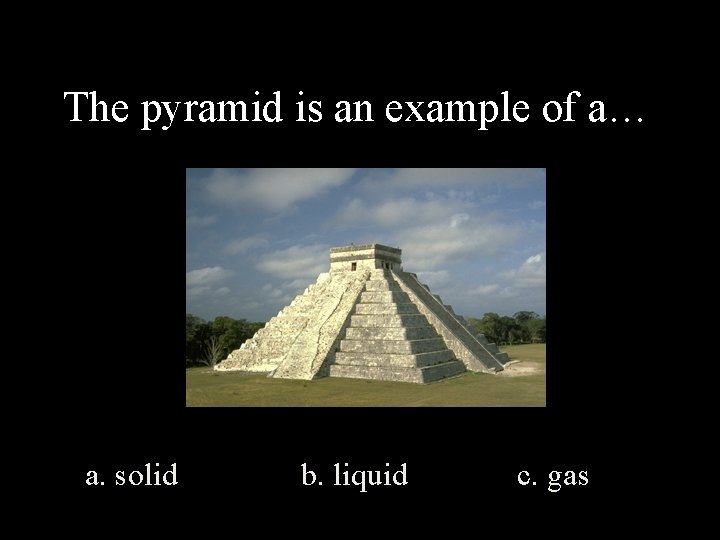
The pyramid is an example of a… a. solid b. liquid c. gas
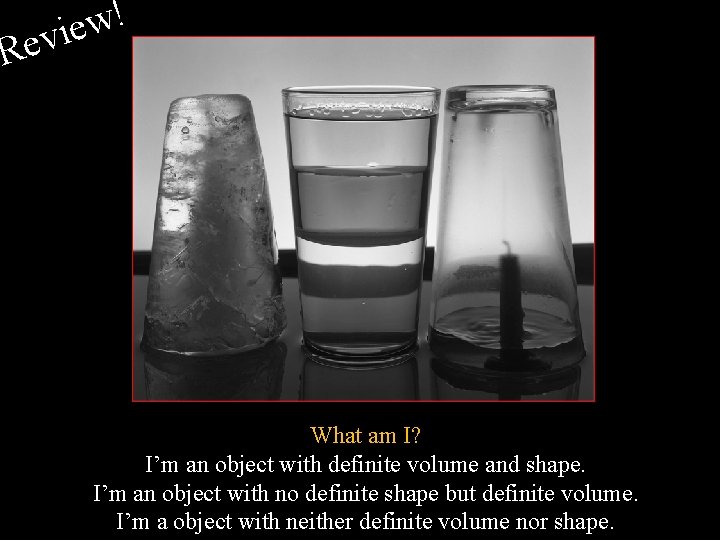
! w vie Re What am I? I’m an object with definite volume and shape. I’m an object with no definite shape but definite volume. I’m a object with neither definite volume nor shape.
Now, some new stuff before the quiz…
QUIZ Name: Harry Potter Subject: ME Quiz 2 Period: “D” for Dayton Bubble in your ID number!
Properties of Waves February 4 th, 2011 5 th Grade Science KIPP: Inspire Academy
The 5 Properties of Waves…? Why do we care about WAVES in our Matter and Energy unit? Light and sound energy travel in waves.
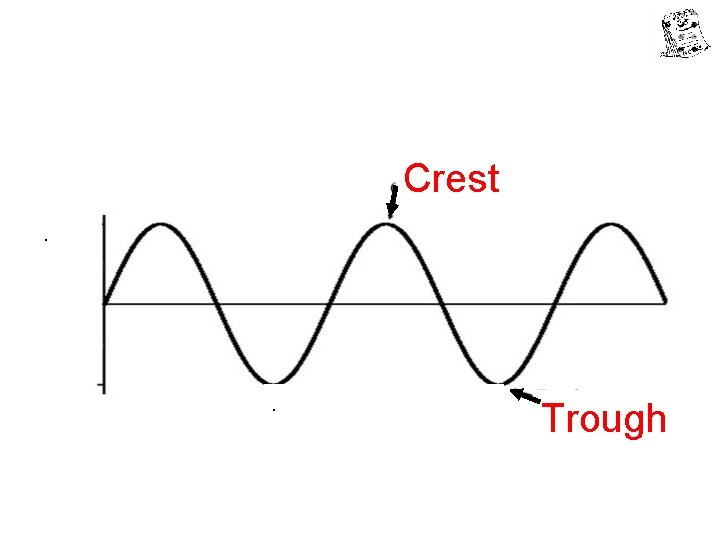
5 Properties of Waves • Crest • Trough • Wavelength • Frequency • Energy
Crest. . Trough
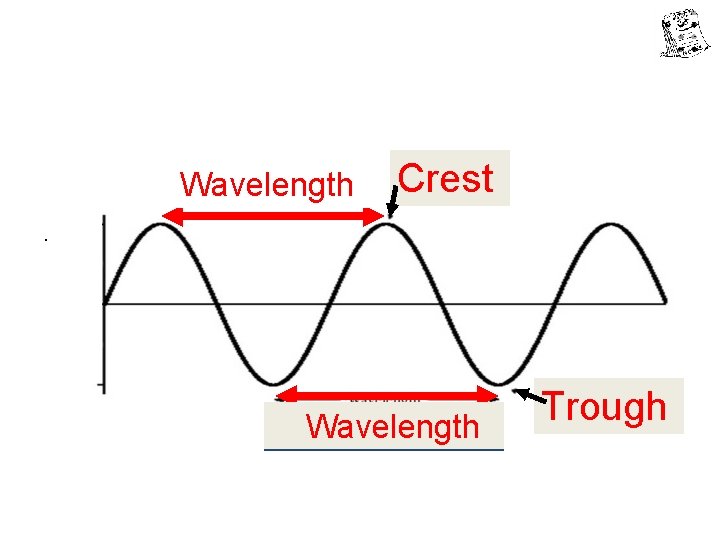
Wavelength is the distance between any two crests or any two troughs (the length of a wave).
Wavelength Crest . . Wavelength Trough
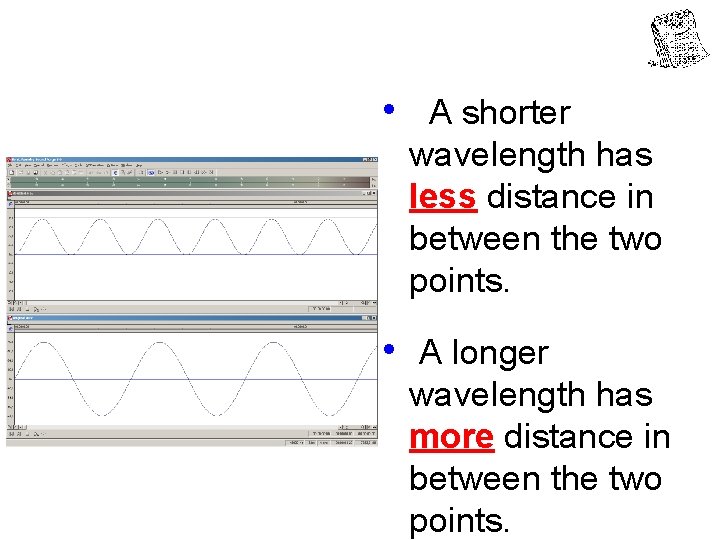
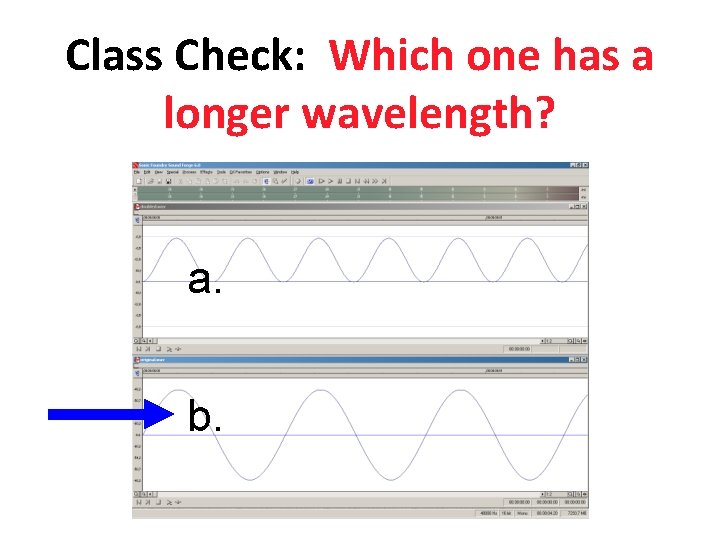
• A shorter wavelength has less distance in between the two points. • A longer wavelength has more distance in between the two points.
Class Check: Which one has a longer wavelength? a. b.
Frequency is the speed of a wave. • measured by the number of wavelengths that pass through a point in one second.
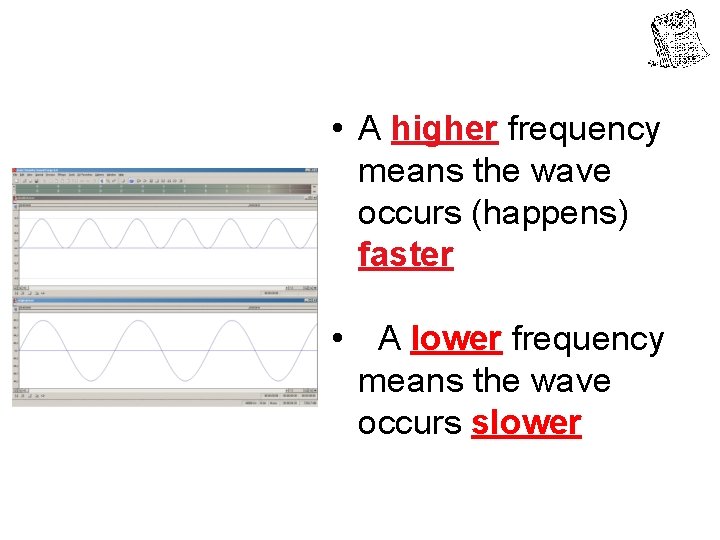
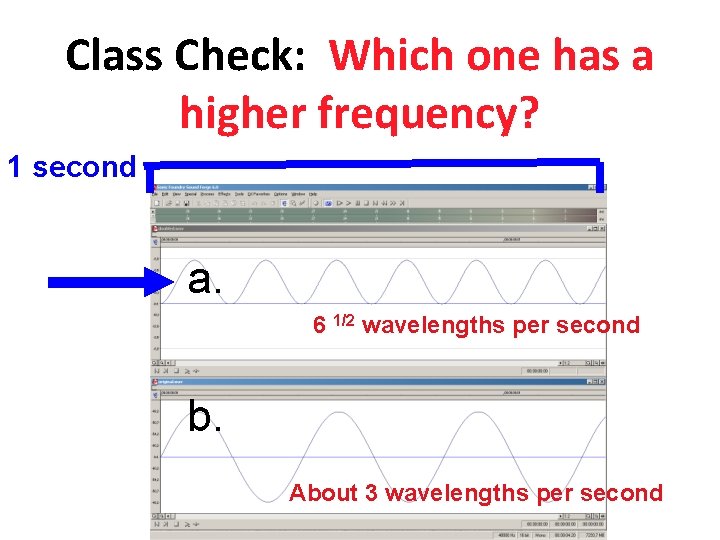
• A higher frequency means the wave occurs (happens) faster • A lower frequency means the wave occurs slower
Class Check: Which one has a higher frequency? 1 second a. 6 1/2 wavelengths per second b. About 3 wavelengths per second
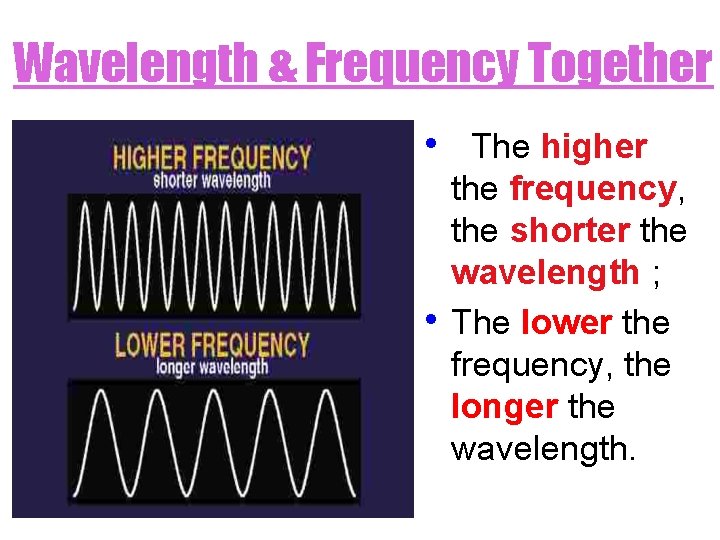
Wavelength & Frequency Together • The higher • the frequency, the shorter the wavelength ; The lower the frequency, the longer the wavelength.
Energy • High frequency waves have high energy • Low frequency waves have low energy.
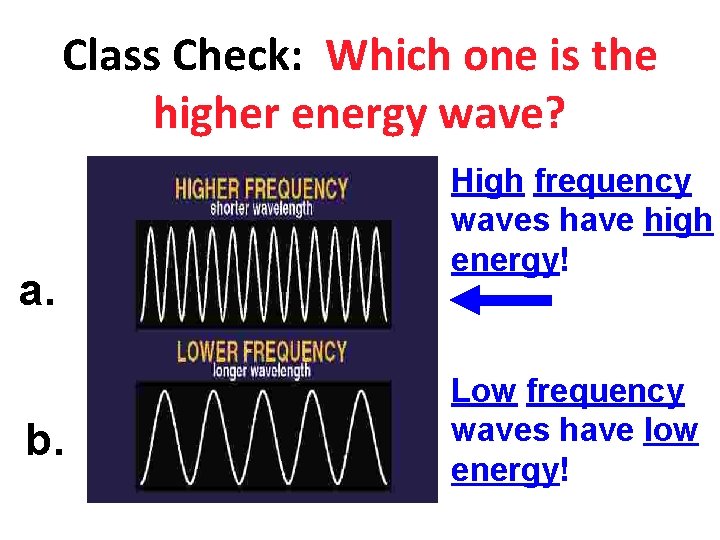
Class Check: Which one is the higher energy wave? a. b. High frequency waves have high energy! Low frequency waves have low energy!
Video Clip • Brain. Pop – Waves
Exit Question Draw a diagram of a wave and label the crest, trough, and wavelength.