
Review Power Point Stages 3 4 1 st
- Slides: 44
Review Power. Point Stages 3 & 4
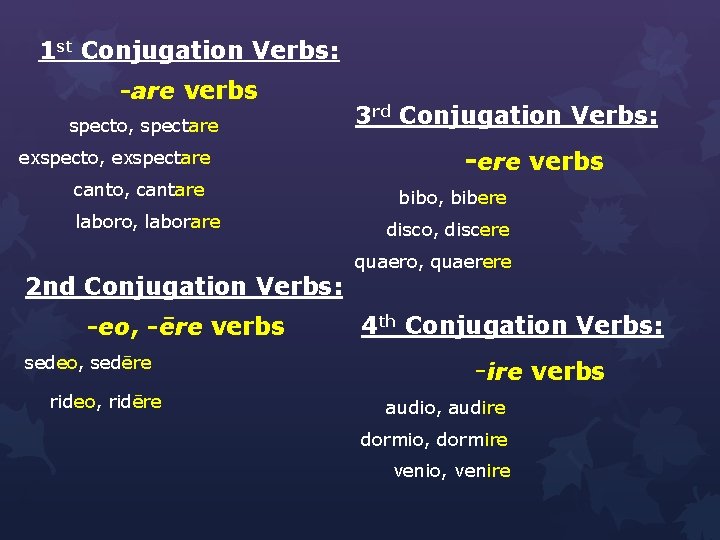
1 st Conjugation Verbs: -are verbs specto, spectare exspecto, exspectare canto, cantare laboro, laborare 2 nd Conjugation Verbs: -eo, -ēre verbs sedeo, sedēre rideo, ridēre 3 rd Conjugation Verbs: -ere verbs bibo, bibere disco, discere quaero, quaerere 4 th Conjugation Verbs: -ire verbs audio, audire dormio, dormire venio, venire
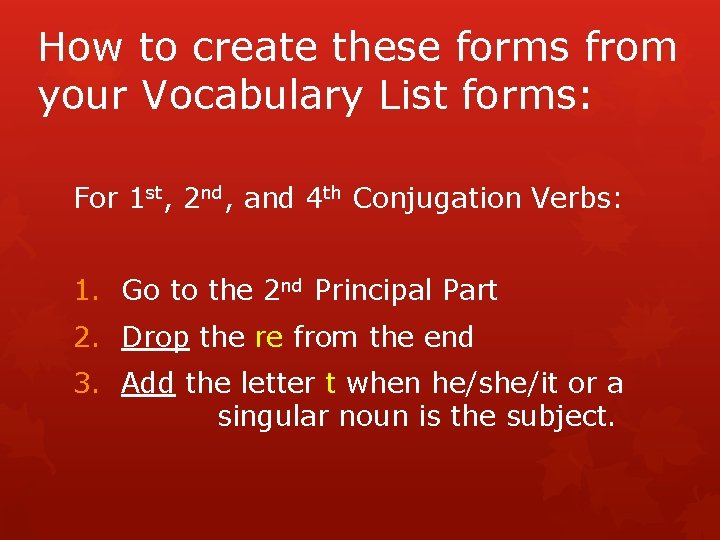
How to create these forms from your Vocabulary List forms: For 1 st, 2 nd, and 4 th Conjugation Verbs: 1. Go to the 2 nd Principal Part 2. Drop the re from the end 3. Add the letter t when he/she/it or a singular noun is the subject.
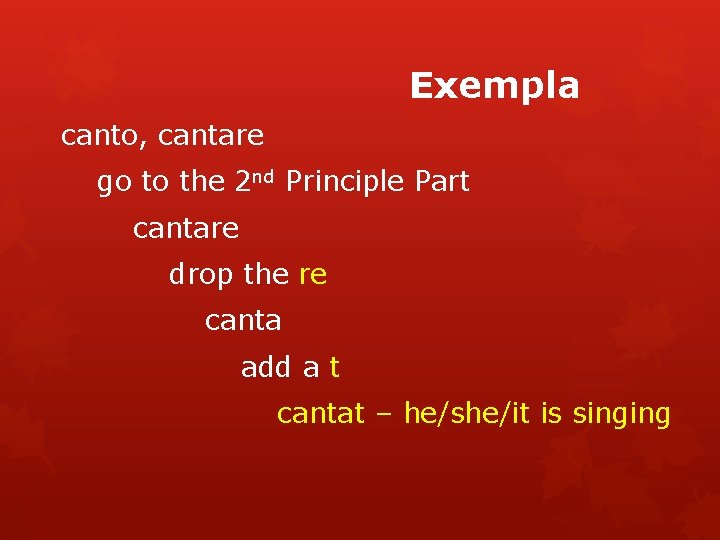
Exempla canto, cantare go to the 2 nd Principle Part cantare drop the re canta add a t cantat – he/she/it is singing
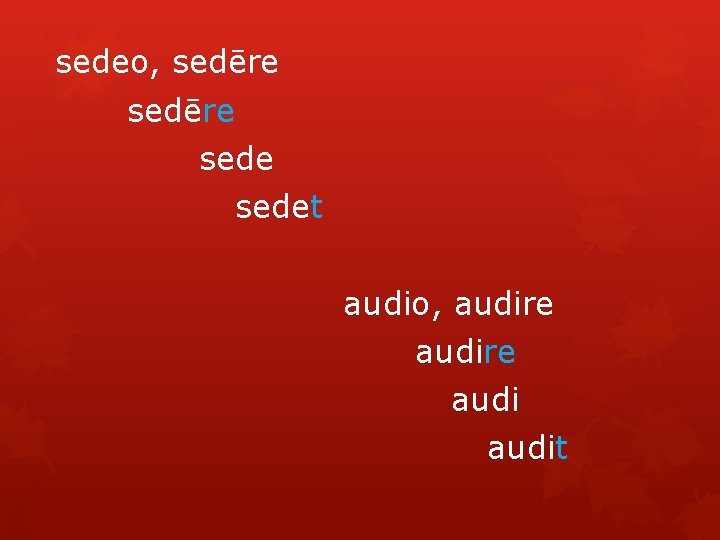
sedeo, sedēre sedet audio, audire audit
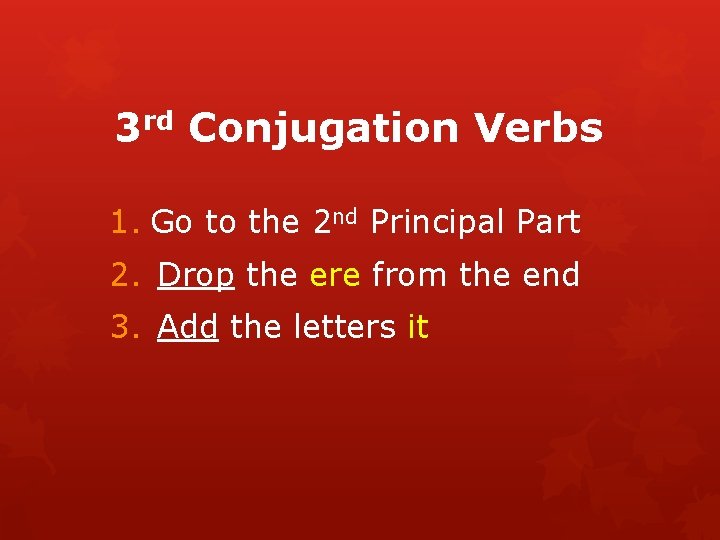
3 rd Conjugation Verbs 1. Go to the 2 nd Principal Part 2. Drop the ere from the end 3. Add the letters it
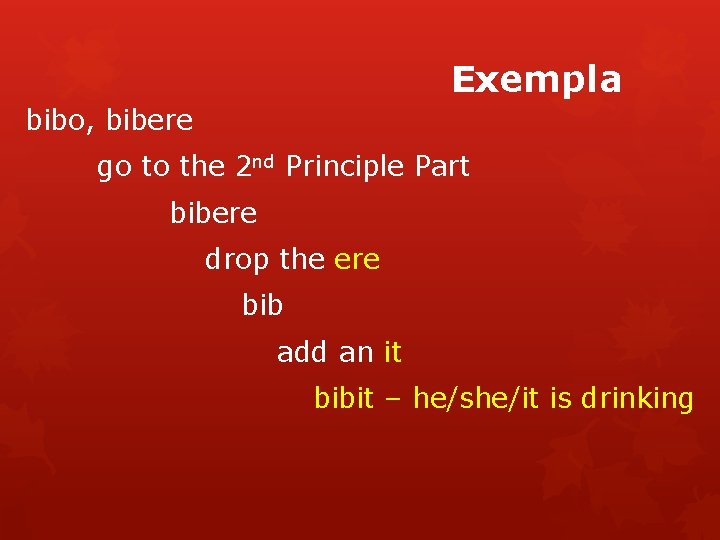
Exempla bibo, bibere go to the 2 nd Principle Part bibere drop the ere bib add an it bibit – he/she/it is drinking
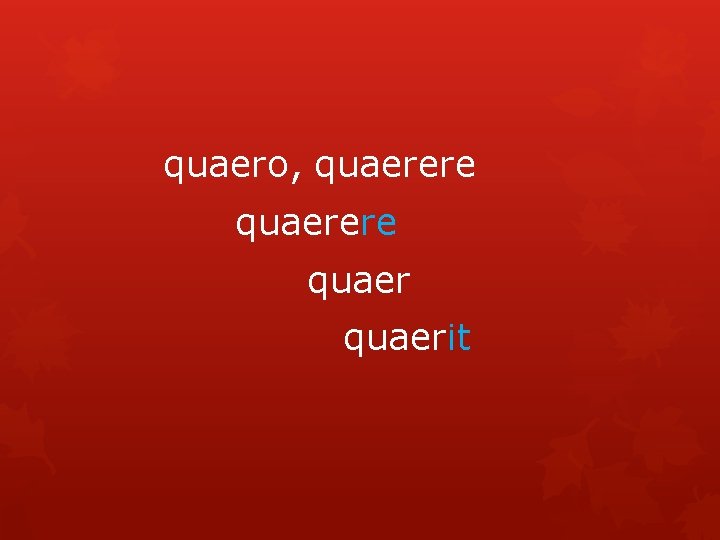
quaero, quaerere quaerit
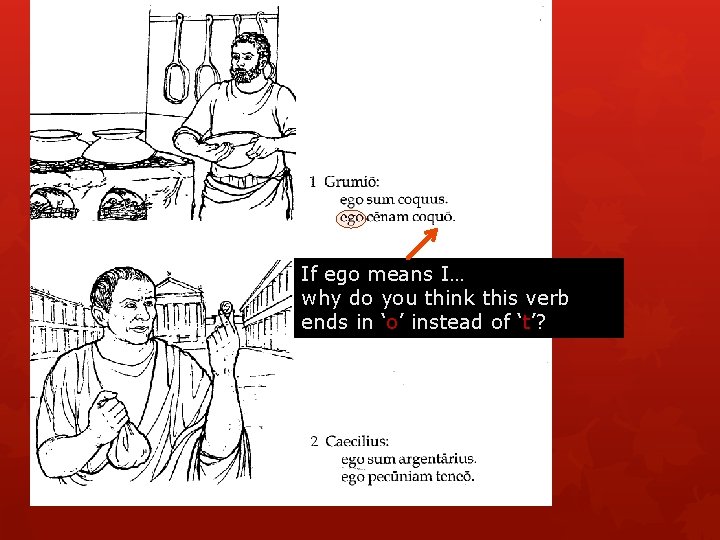
If ego means I… why do you think this verb ends in ‘o’ instead of ‘t’?
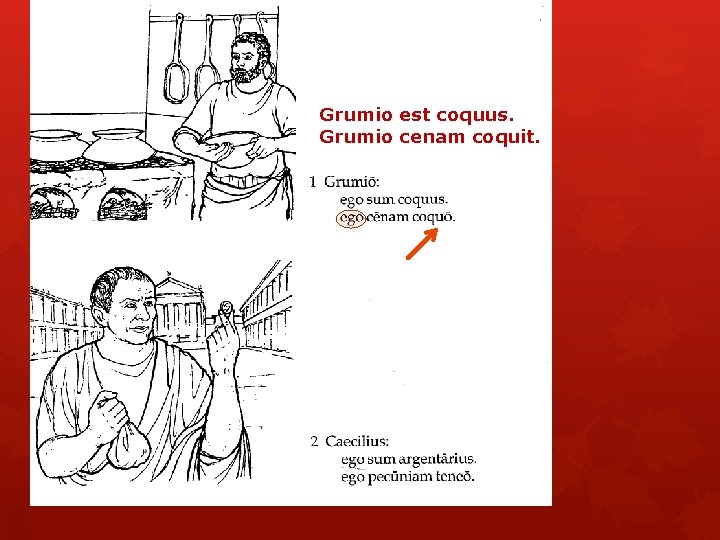
Grumio est coquus. Grumio cenam coquit.
Why did this verb change occur? Grumio est coquus. Grumio inquit: “ego sum coquus. ” Grumio in culina laborat. Grumio inquit: “ego in culina laboro. ”
If ego means I, what do you think ‘tu’ means?
What happens to the verb ending when ‘you’ are the subject?
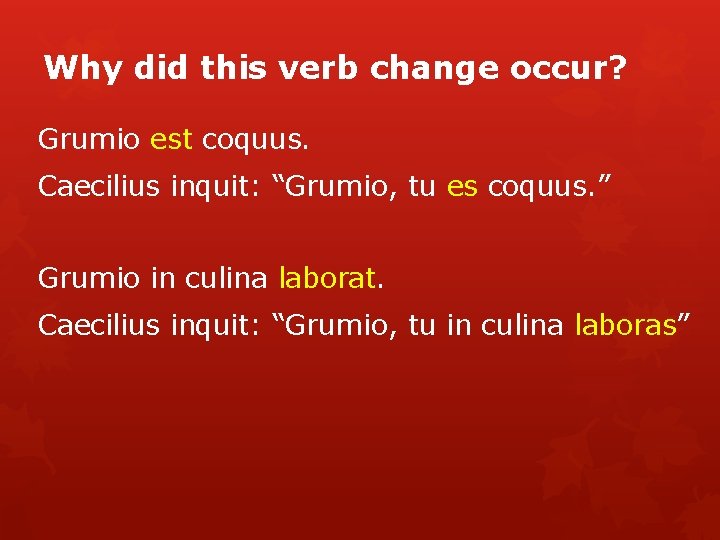
Why did this verb change occur? Grumio est coquus. Caecilius inquit: “Grumio, tu es coquus. ” Grumio in culina laborat. Caecilius inquit: “Grumio, tu in culina laboras”
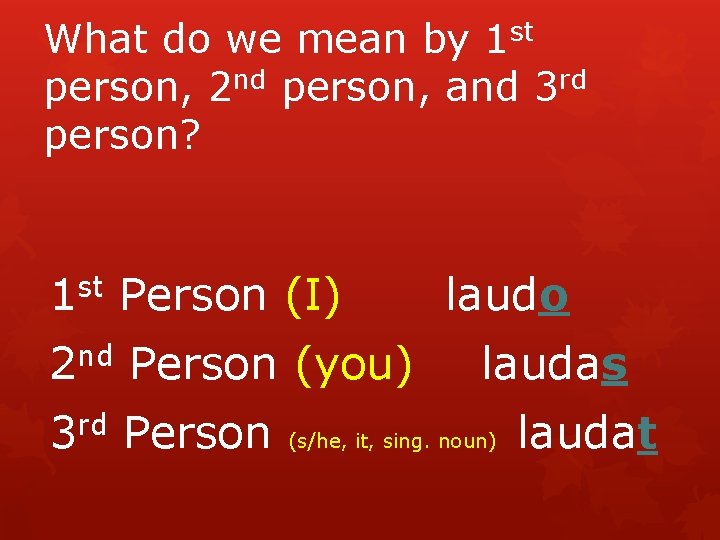
What do we mean by 1 st person, 2 nd person, and 3 rd person? 1 st Person (I) 2 nd Person (you) rd 3 Person laudo laudas (s/he, it, sing. noun) laudat
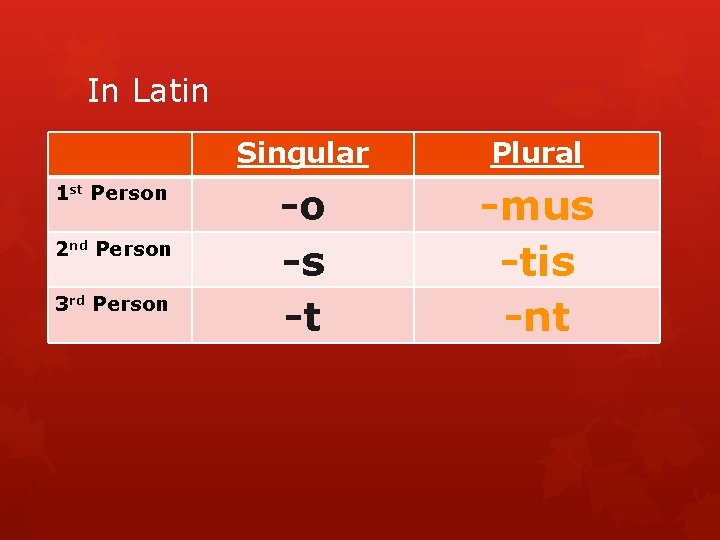
In Latin 1 st Person 2 nd Person 3 rd Person Singular Plural -o -s -t -mus -tis -nt
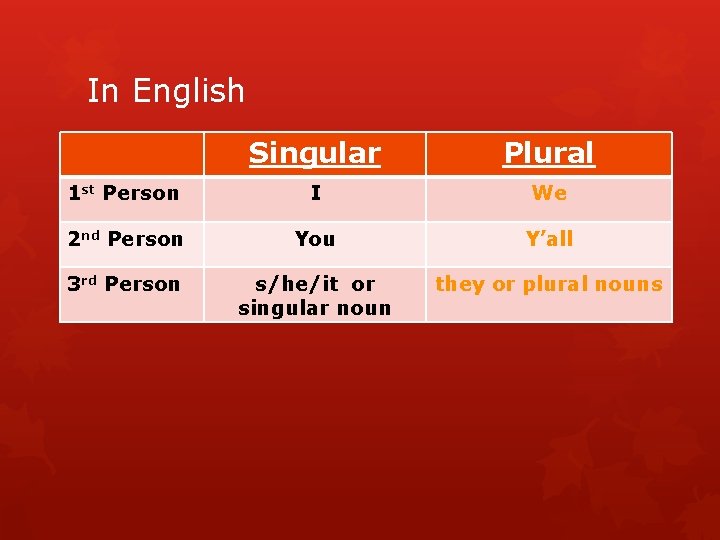
In English Singular Plural 1 st Person I We 2 nd Person You Y’all 3 rd Person s/he/it or singular noun they or plural nouns
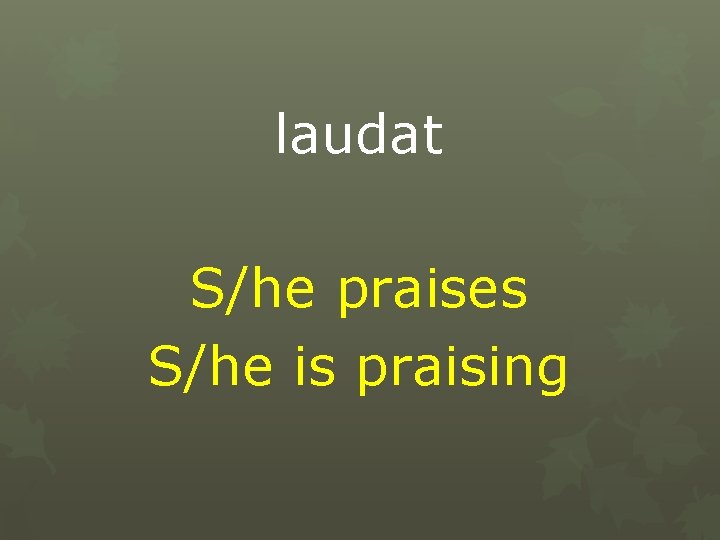
laudat S/he praises S/he is praising
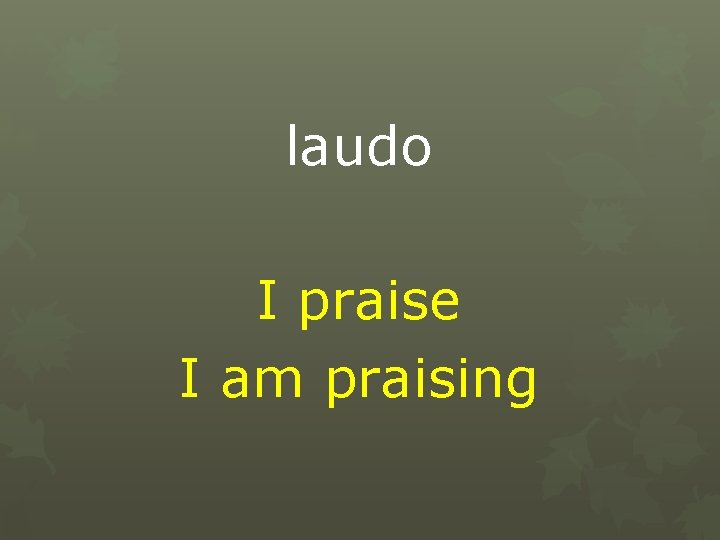
laudo I praise I am praising
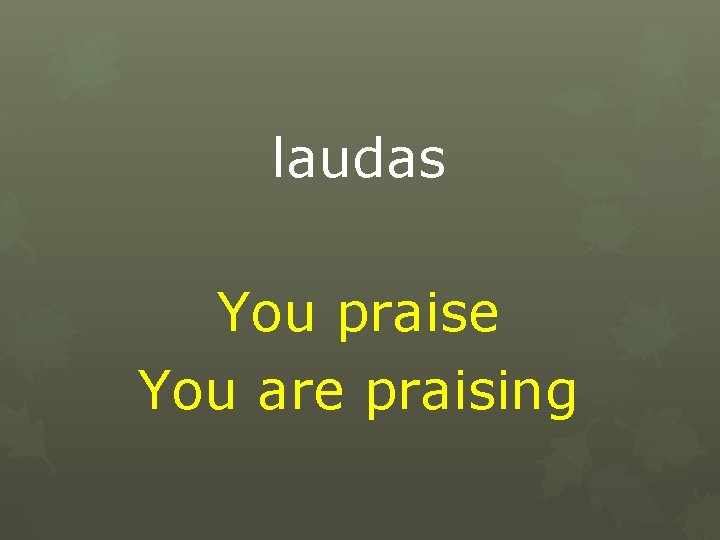
laudas You praise You are praising
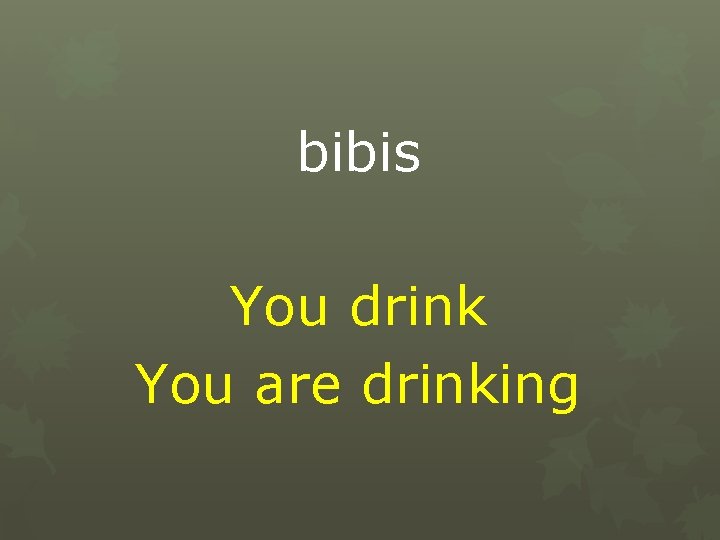
bibis You drink You are drinking
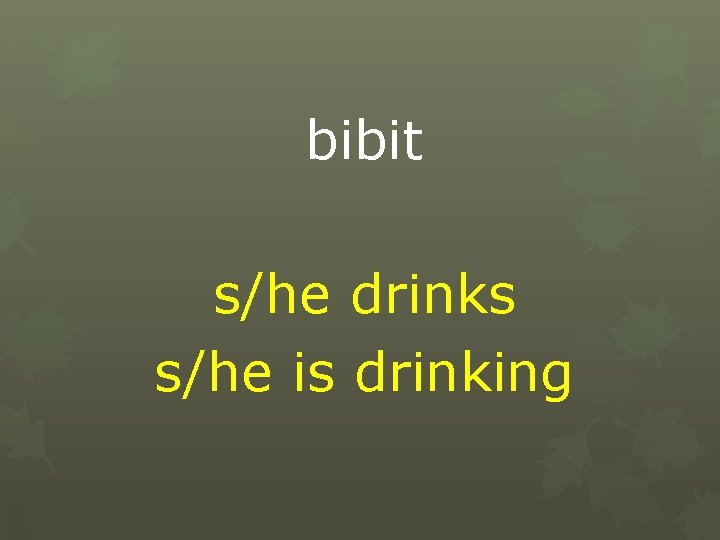
bibit s/he drinks s/he is drinking
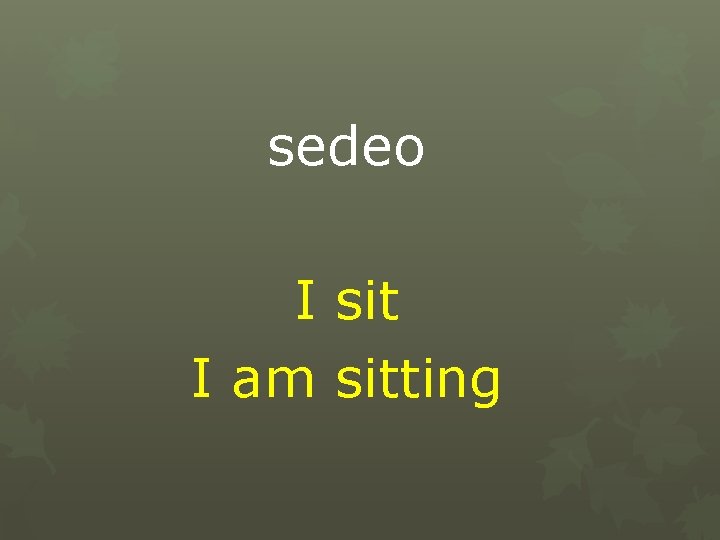
sedeo I sit I am sitting
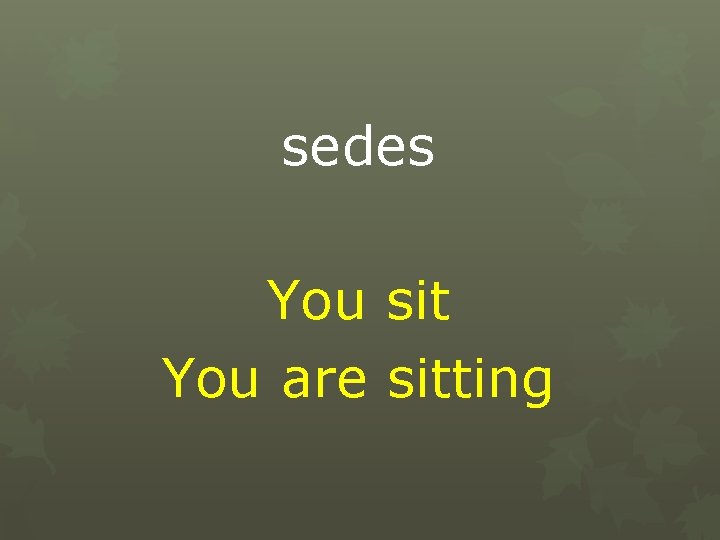
sedes You sit You are sitting
disco I learn I am learning
discis You learn You are learning
curris You run You are running
clamo I shout I am shouting
clamat s/he shouts s/he is shouting
dormis You sleep You are sleeping
est s/he is
es You are
sum I am
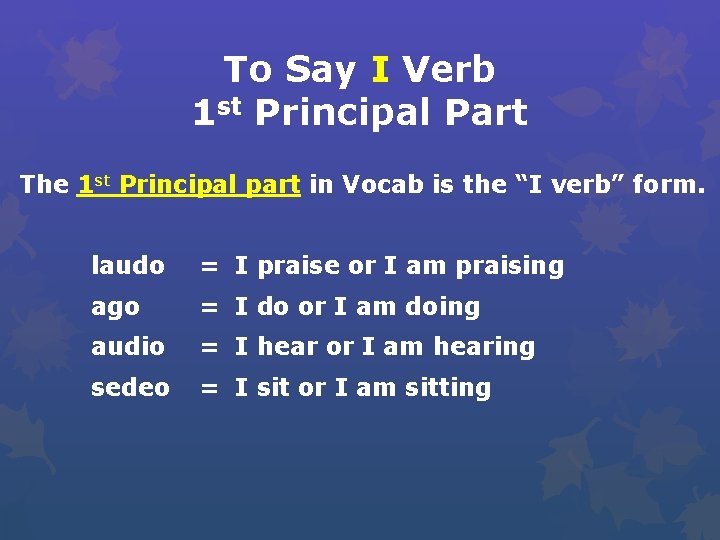
To Say I Verb 1 st Principal Part The 1 st Principal part in Vocab is the “I verb” form. laudo = I praise or I am praising ago = I do or I am doing audio = I hear or I am hearing sedeo = I sit or I am sitting
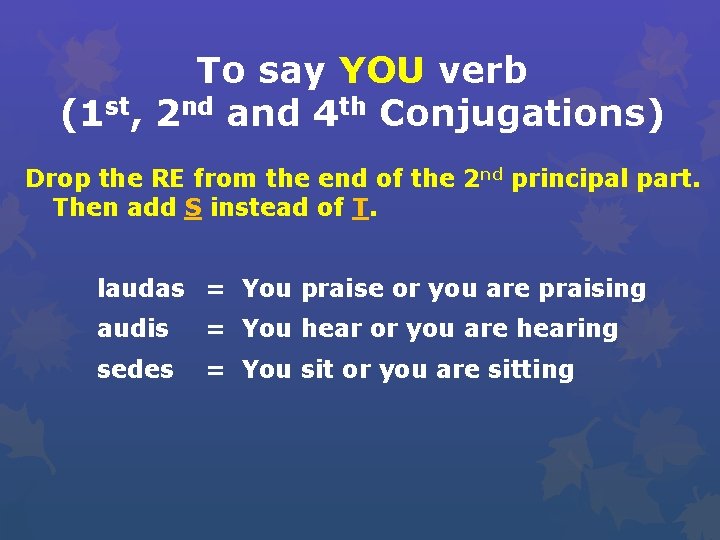
To say YOU verb (1 st, 2 nd and 4 th Conjugations) Drop the RE from the end of the 2 nd principal part. Then add S instead of T. laudas = You praise or you are praising audis = You hear or you are hearing sedes = You sit or you are sitting
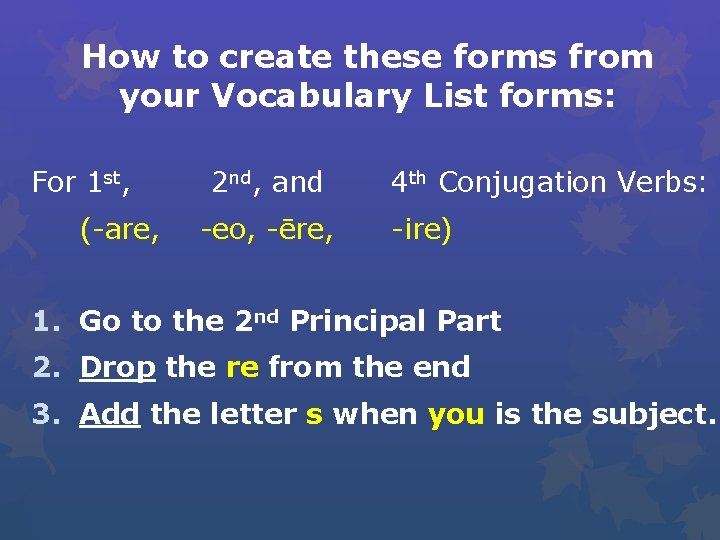
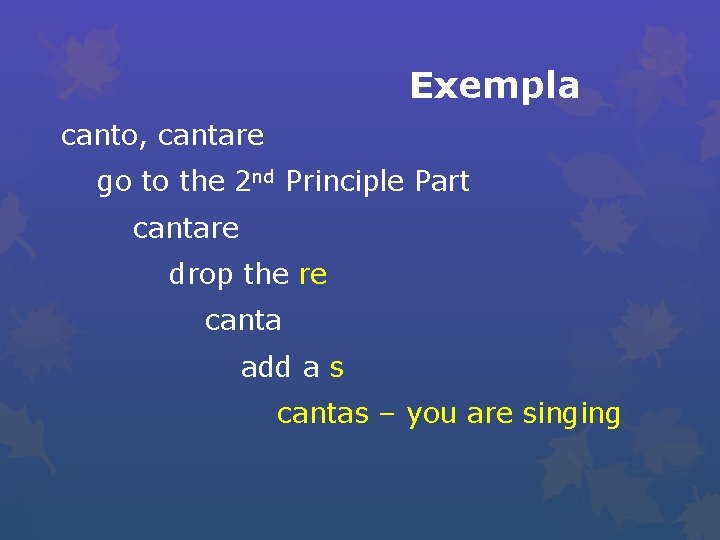
How to create these forms from your Vocabulary List forms: For 1 st, (-are, 2 nd, and -eo, -ēre, 4 th Conjugation Verbs: -ire) 1. Go to the 2 nd Principal Part 2. Drop the re from the end 3. Add the letter s when you is the subject.
Exempla canto, cantare go to the 2 nd Principle Part cantare drop the re canta add a s cantas – you are singing
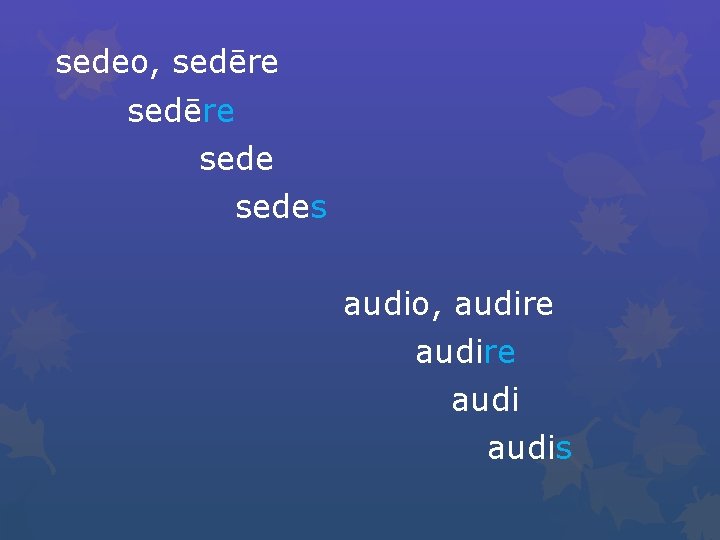
sedeo, sedēre sedes audio, audire audis
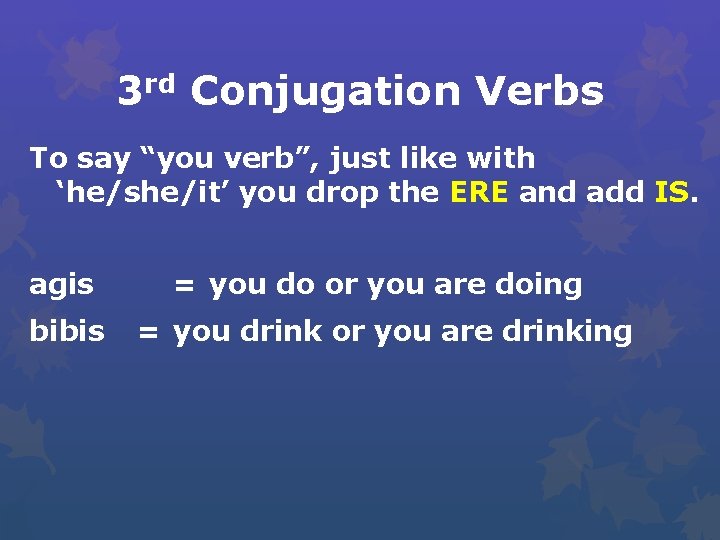
3 rd Conjugation Verbs To say “you verb”, just like with ‘he/she/it’ you drop the ERE and add IS. agis = you do or you are doing bibis = you drink or you are drinking
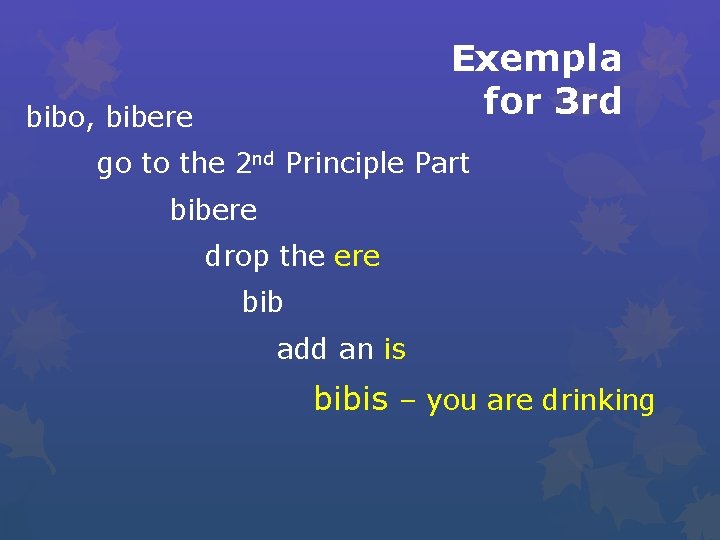
Exempla for 3 rd bibo, bibere go to the 2 nd Principle Part bibere drop the ere bib add an is bibis – you are drinking
What kinds of words are ego and tu?
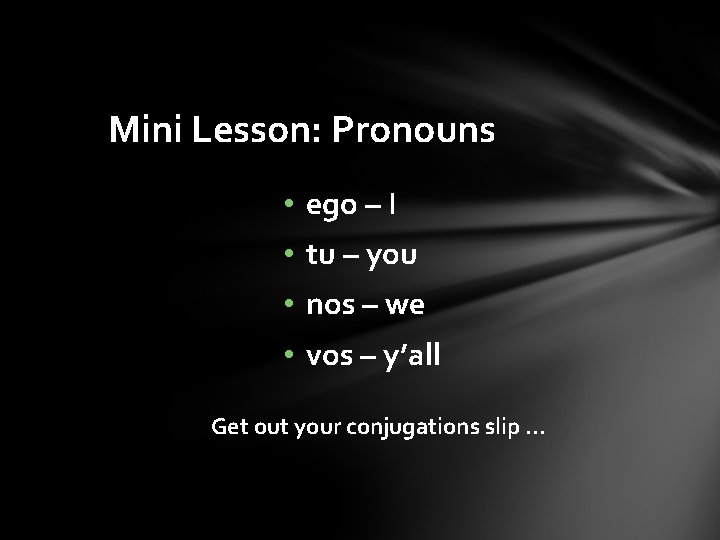
Mini Lesson: Pronouns • ego – I • tu – you • nos – we • vos – y’all Get out your conjugations slip …
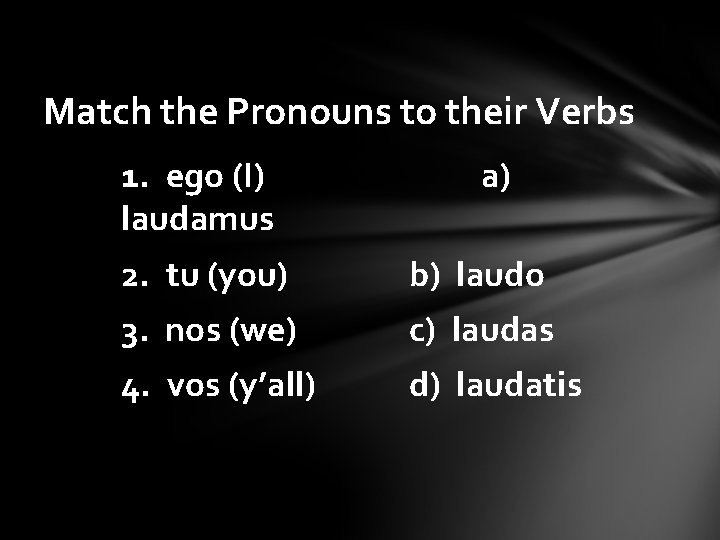
Match the Pronouns to their Verbs 1. ego (I) laudamus a) 2. tu (you) b) laudo 3. nos (we) c) laudas 4. vos (y’all) d) laudatis
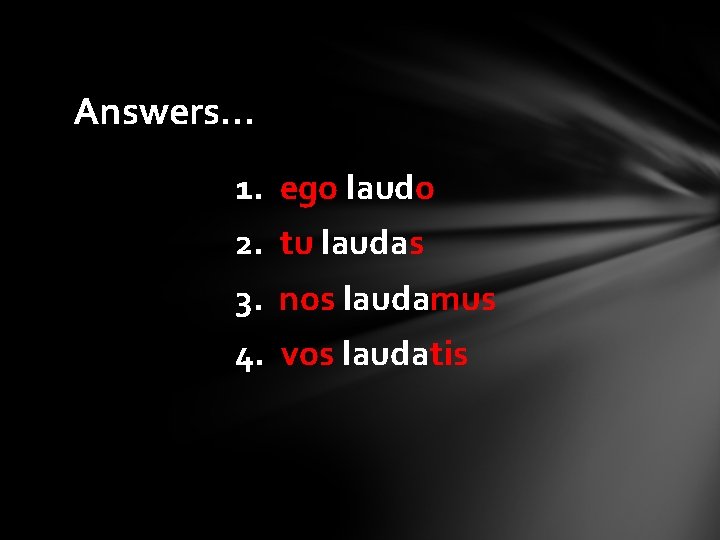
Answers… 1. ego laudo 2. tu laudas 3. nos laudamus 4. vos laudatis