
Review on Rectal Carcinoid Joint Hospital Surgical Grand




- Slides: 24
Review on Rectal Carcinoid Joint Hospital Surgical Grand Round 15/10/2016
Review on Rectal Neuroendocrine Tumor Joint Hospital Surgical Grand Round 15/10/2016
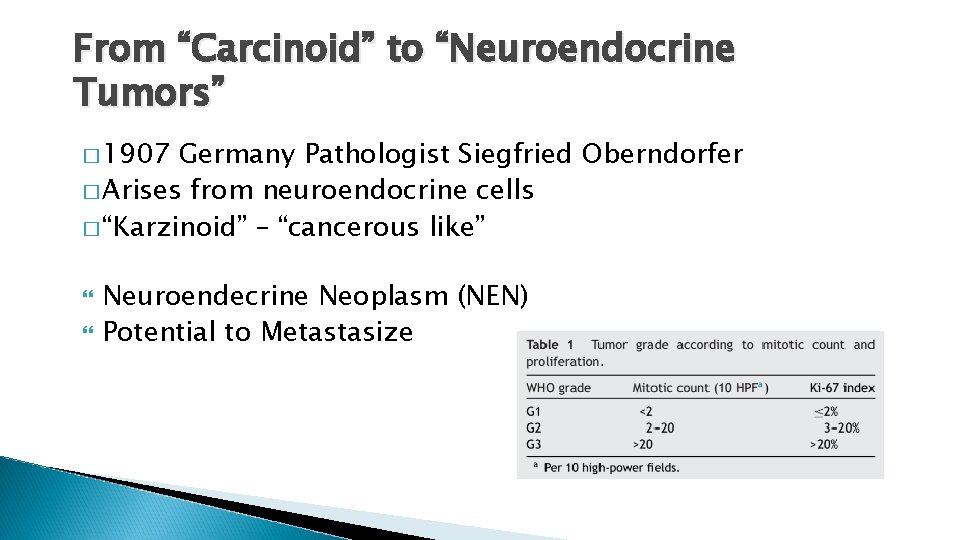
From “Carcinoid” to “Neuroendocrine Tumors” � 1907 Germany Pathologist Siegfried Oberndorfer � Arises from neuroendocrine cells � “Karzinoid” – “cancerous like” Neuroendecrine Neoplasm (NEN) Potential to Metastasize
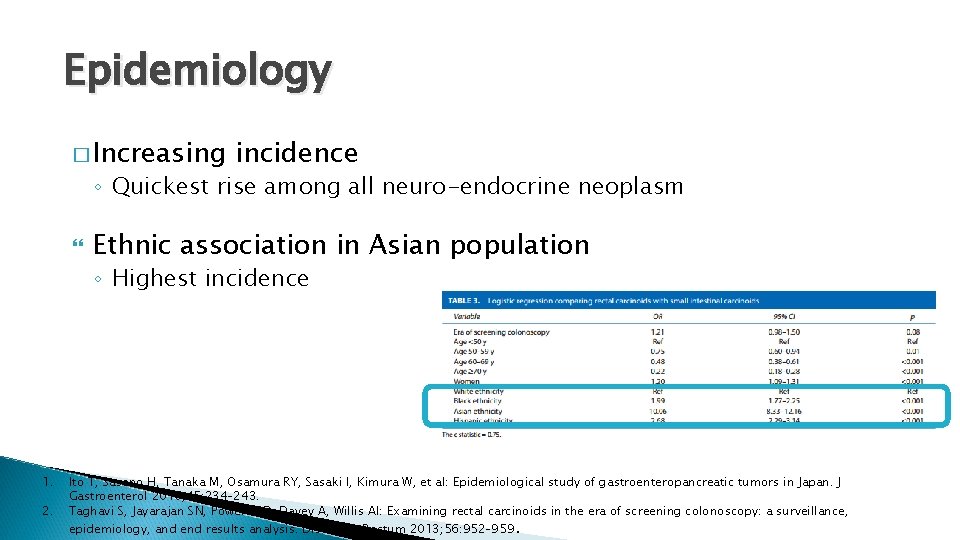
Epidemiology � Increasing incidence ◦ Quickest rise among all neuro-endocrine neoplasm Ethnic association in Asian population ◦ Highest incidence 1. 2. Ito T, Sasano H, Tanaka M, Osamura RY, Sasaki I, Kimura W, et al: Epidemiological study of gastroenteropancreatic tumors in Japan. J Gastroenterol 2010; 45: 234– 243. Taghavi S, Jayarajan SN, Powers BD, Davey A, Willis AI: Examining rectal carcinoids in the era of screening colonoscopy: a surveillance, epidemiology, and end results analysis. Dis Colon Rectum 2013; 56: 952– 959.
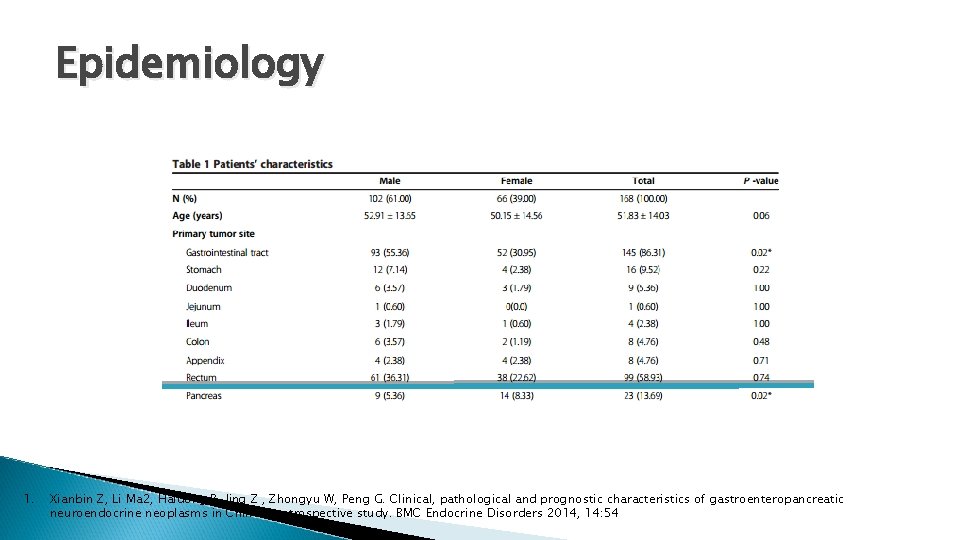
Epidemiology 1. Xianbin Z, Li Ma 2, Haidong B, Jing Z , Zhongyu W, Peng G. Clinical, pathological and prognostic characteristics of gastroenteropancreatic neuroendocrine neoplasms in China: a retrospective study. BMC Endocrine Disorders 2014, 14: 54
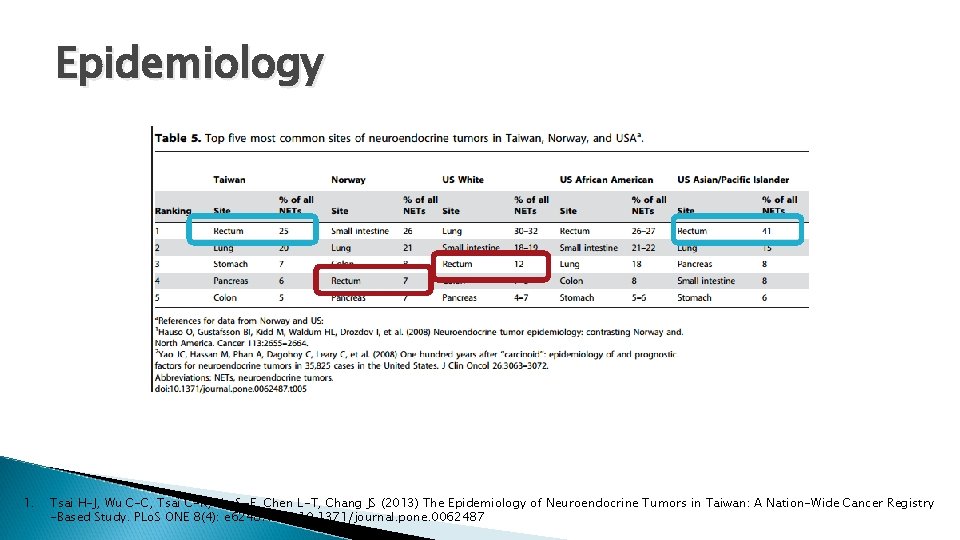
Epidemiology 1. Tsai H-J, Wu C-C, Tsai C-R, Lin S-F, Chen L-T, Chang JS (2013) The Epidemiology of Neuroendocrine Tumors in Taiwan: A Nation-Wide Cancer Registry -Based Study. PLo. S ONE 8(4): e 62487. doi: 10. 1371/journal. pone. 0062487
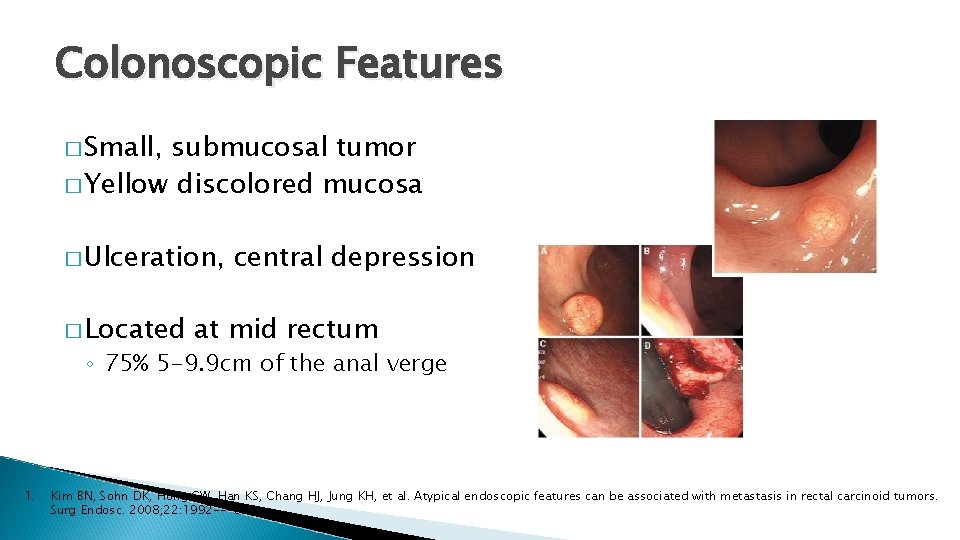
Colonoscopic Features � Small, submucosal tumor � Yellow discolored mucosa � Ulceration, � Located central depression at mid rectum ◦ 75% 5 -9. 9 cm of the anal verge 1. Kim BN, Sohn DK, Hong CW, Han KS, Chang HJ, Jung KH, et al. Atypical endoscopic features can be associated with metastasis in rectal carcinoid tumors. Surg Endosc. 2008; 22: 1992 ---6.
Management – Questions to Answer Assessment Treatment Surveillance
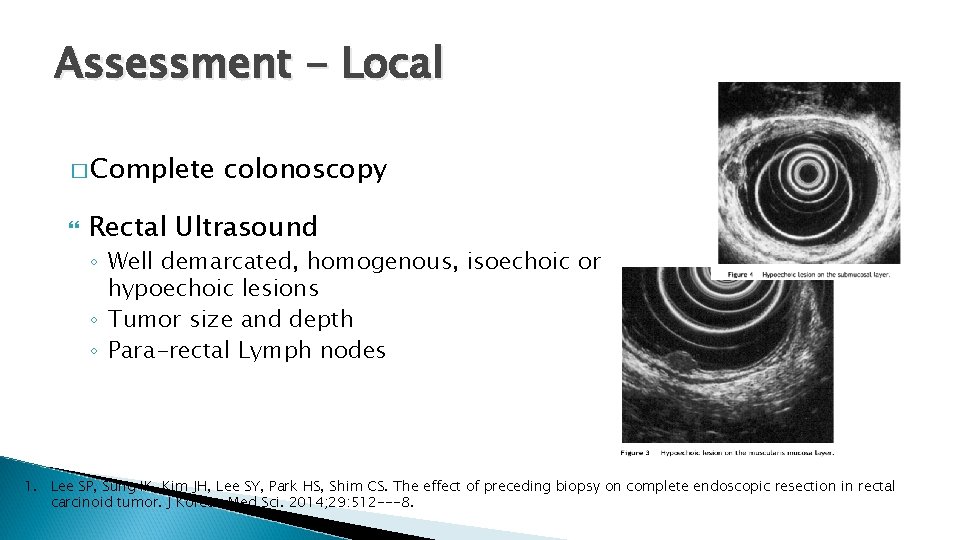
Assessment - Local � Complete colonoscopy Rectal Ultrasound ◦ Well demarcated, homogenous, isoechoic or hypoechoic lesions ◦ Tumor size and depth ◦ Para-rectal Lymph nodes 1. Lee SP, Sung IK, Kim JH, Lee SY, Park HS, Shim CS. The effect of preceding biopsy on complete endoscopic resection in rectal carcinoid tumor. J Korean Med Sci. 2014; 29: 512 ---8.
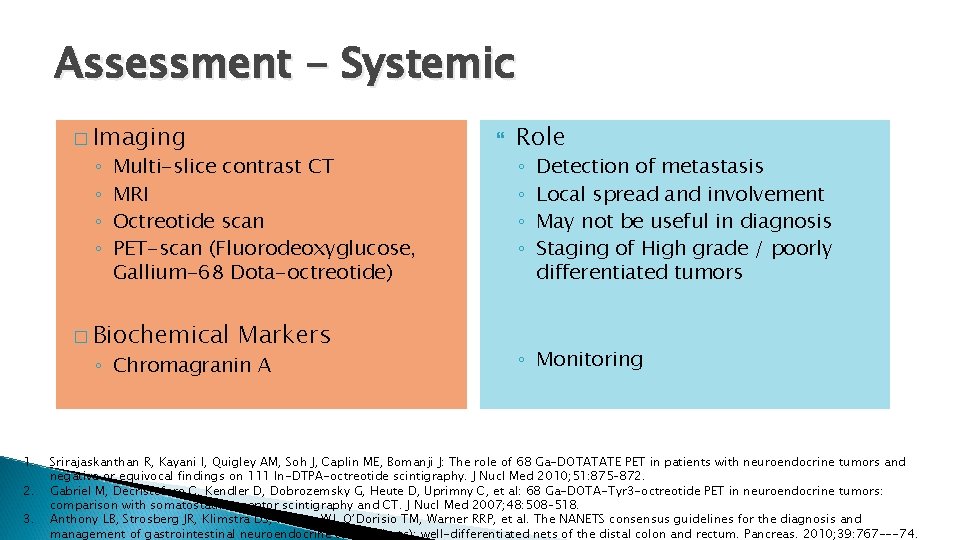
Assessment - Systemic � Imaging ◦ ◦ Multi-slice contrast CT MRI Octreotide scan PET-scan (Fluorodeoxyglucose, Gallium-68 Dota-octreotide) � Biochemical Markers ◦ Chromagranin A 1. 2. 3. Role ◦ ◦ Detection of metastasis Local spread and involvement May not be useful in diagnosis Staging of High grade / poorly differentiated tumors ◦ Monitoring Srirajaskanthan R, Kayani I, Quigley AM, Soh J, Caplin ME, Bomanji J: The role of 68 Ga-DOTATATE PET in patients with neuroendocrine tumors and negative or equivocal findings on 111 In-DTPA-octreotide scintigraphy. J Nucl Med 2010; 51: 875– 872. Gabriel M, Decristoforo C, Kendler D, Dobrozemsky G, Heute D, Uprimny C, et al: 68 Ga-DOTA-Tyr 3 -octreotide PET in neuroendocrine tumors: comparison with somatostatin receptor scintigraphy and CT. J Nucl Med 2007; 48: 508– 518. Anthony LB, Strosberg JR, Klimstra DS, Maples WJ, O’Dorisio TM, Warner RRP, et al. The NANETS consensus guidelines for the diagnosis and management of gastrointestinal neuroendocrine tumors (nets): well-differentiated nets of the distal colon and rectum. Pancreas. 2010; 39: 767 ---74.
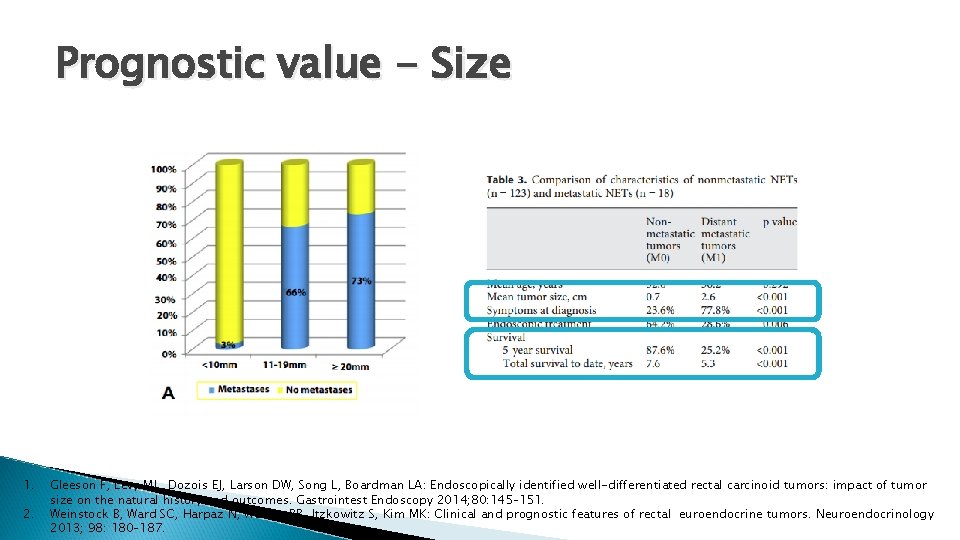
Prognostic value - Size 1. 2. Gleeson F, Levy ML, Dozois EJ, Larson DW, Song L, Boardman LA: Endoscopically identified well-differentiated rectal carcinoid tumors: impact of tumor size on the natural history and outcomes. Gastrointest Endoscopy 2014; 80: 145– 151. Weinstock B, Ward SC, Harpaz N, Warner RR, Itzkowitz S, Kim MK: Clinical and prognostic features of rectal euroendocrine tumors. Neuroendocrinology 2013; 98: 180– 187.
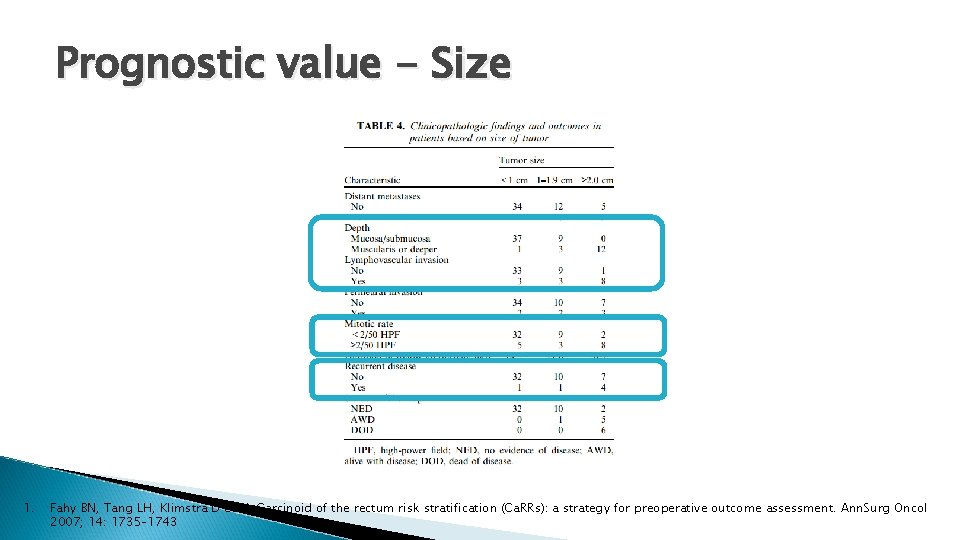
Prognostic value - Size 1. Fahy BN, Tang LH, Klimstra D et al. Carcinoid of the rectum risk stratification (Ca. RRs): a strategy for preoperative outcome assessment. Ann. Surg Oncol 2007; 14: 1735– 1743
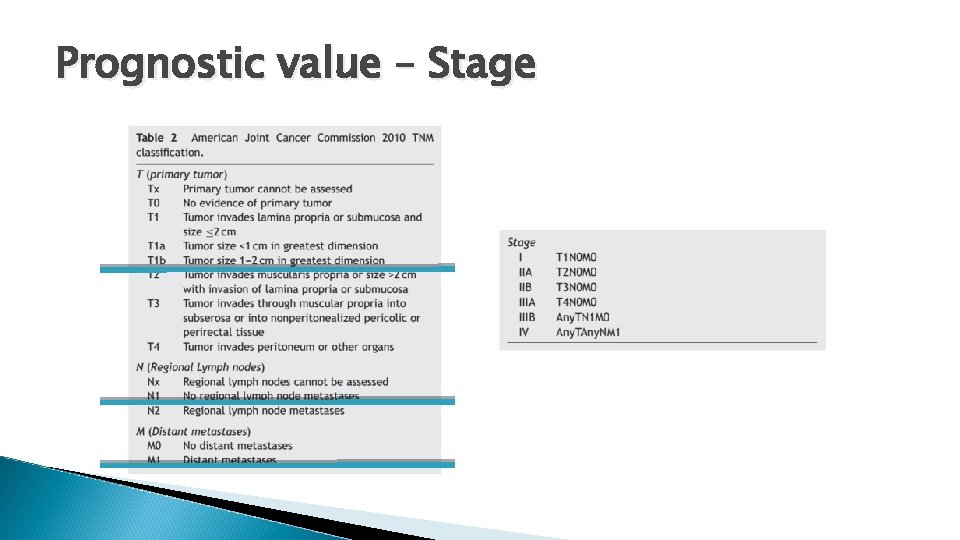
Prognostic value – Stage
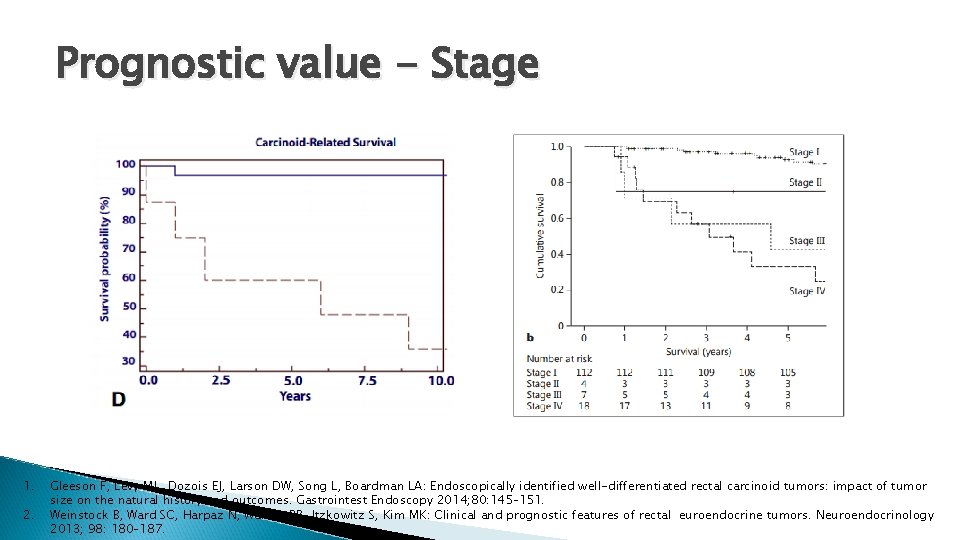
Prognostic value - Stage 1. 2. Gleeson F, Levy ML, Dozois EJ, Larson DW, Song L, Boardman LA: Endoscopically identified well-differentiated rectal carcinoid tumors: impact of tumor size on the natural history and outcomes. Gastrointest Endoscopy 2014; 80: 145– 151. Weinstock B, Ward SC, Harpaz N, Warner RR, Itzkowitz S, Kim MK: Clinical and prognostic features of rectal euroendocrine tumors. Neuroendocrinology 2013; 98: 180– 187.
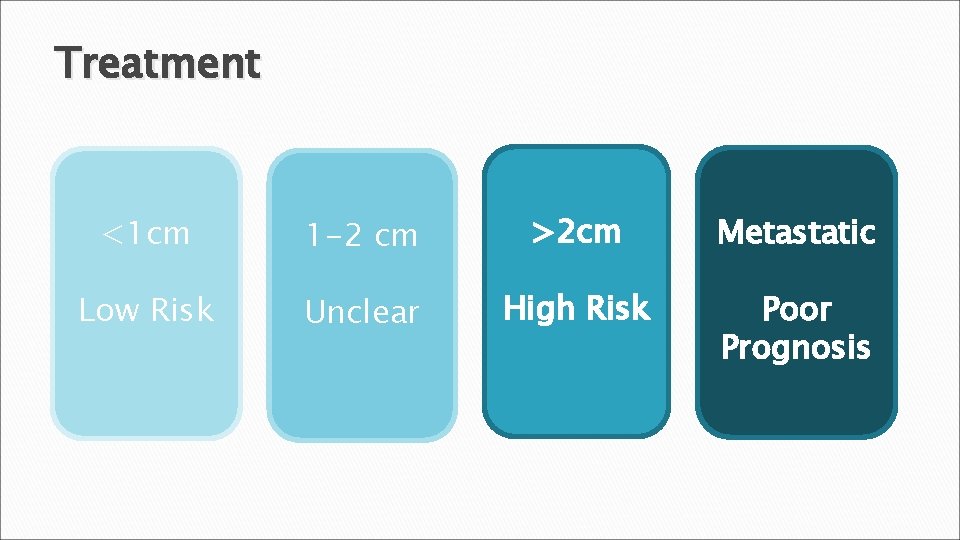
Treatment <1 cm 1 -2 cm >2 cm Metastatic Low Risk Unclear High Risk Poor Prognosis
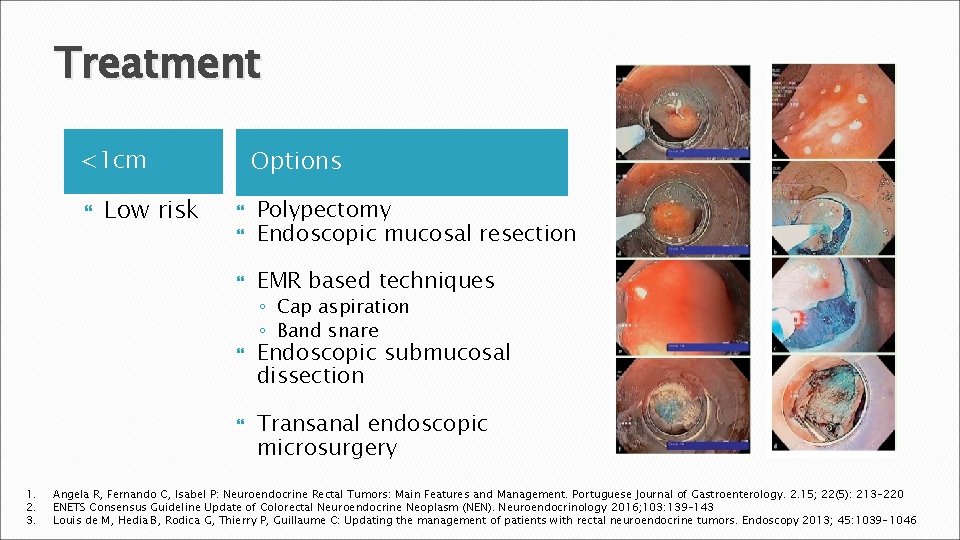
Treatment <1 cm Low risk Options Polypectomy Endoscopic mucosal resection EMR based techniques ◦ Cap aspiration ◦ Band snare 1. 2. 3. Endoscopic submucosal dissection Transanal endoscopic microsurgery Angela R, Fernando C, Isabel P: Neuroendocrine Rectal Tumors: Main Features and Management. Portuguese Journal of Gastroenterology. 2. 15; 22(5): 213 -220 ENETS Consensus Guideline Update of Colorectal Neuroendocrine Neoplasm (NEN). Neuroendocrinology 2016; 103: 139– 143 Louis de M, Hedia B, Rodica G, Thierry P, Guillaume C: Updating the management of patients with rectal neuroendocrine tumors. Endoscopy 2013; 45: 1039 -1046
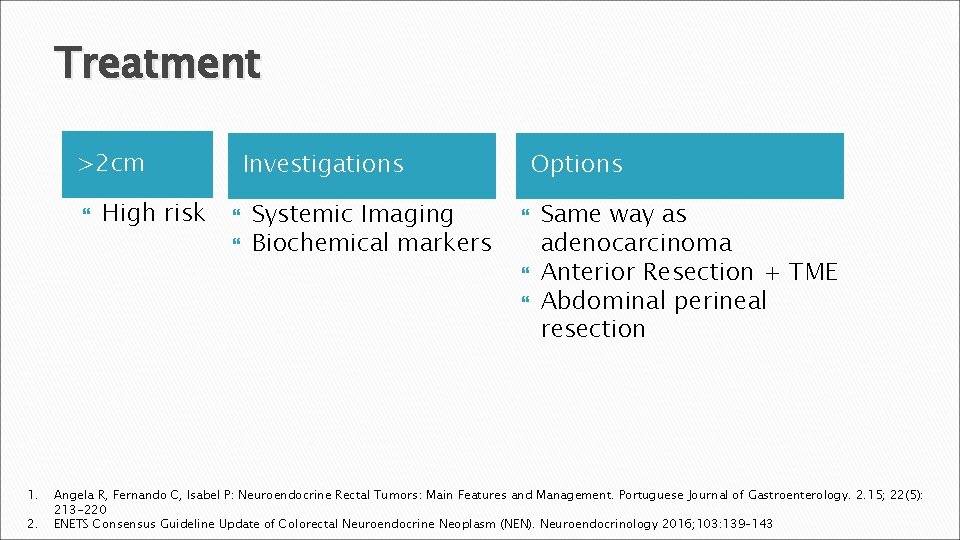
Treatment >2 cm High risk Investigations Systemic Imaging Biochemical markers Options 1. 2. Same way as adenocarcinoma Anterior Resection + TME Abdominal perineal resection Angela R, Fernando C, Isabel P: Neuroendocrine Rectal Tumors: Main Features and Management. Portuguese Journal of Gastroenterology. 2. 15; 22(5): 213 -220 ENETS Consensus Guideline Update of Colorectal Neuroendocrine Neoplasm (NEN). Neuroendocrinology 2016; 103: 139– 143
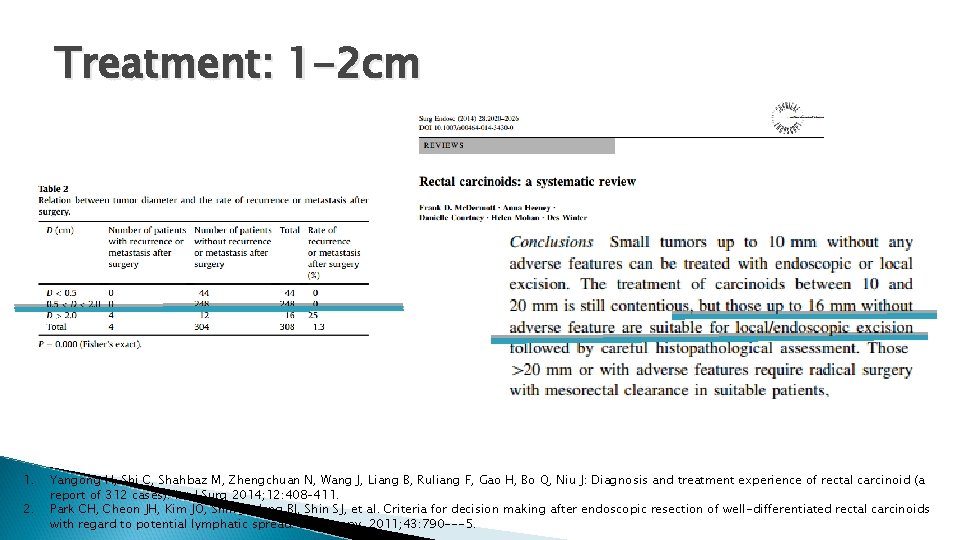
Treatment: 1 -2 cm 1. 2. Yangong H, Shi C, Shahbaz M, Zhengchuan N, Wang J, Liang B, Ruliang F, Gao H, Bo Q, Niu J: Diagnosis and treatment experience of rectal carcinoid (a report of 312 cases). Int J Surg 2014; 12: 408– 411. Park CH, Cheon JH, Kim JO, Shin JE, Jang BI, Shin SJ, et al. Criteria for decision making after endoscopic resection of well-differentiated rectal carcinoids with regard to potential lymphatic spread. Endoscopy. 2011; 43: 790 ---5.
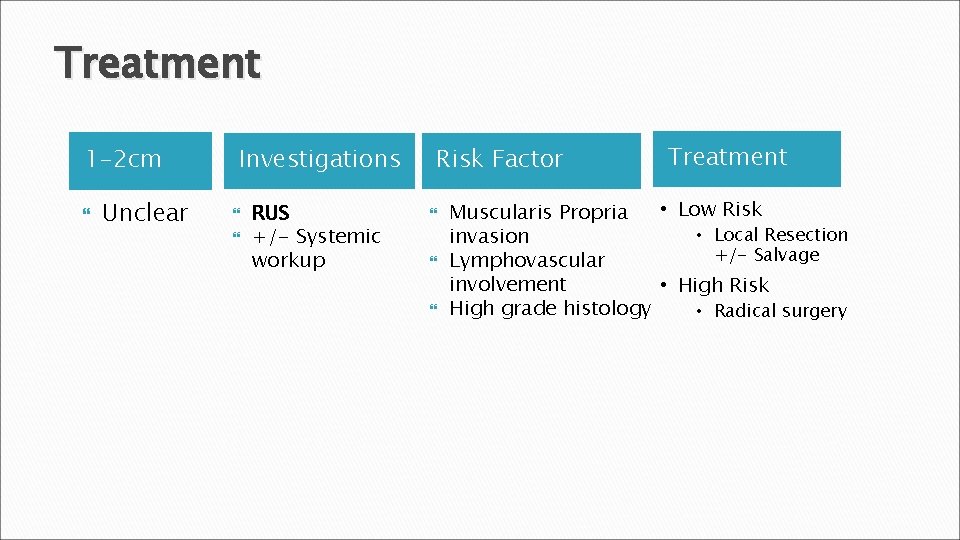
Treatment 1 -2 cm Unclear Investigations RUS +/- Systemic workup Risk Factor Treatment • Low Risk Muscularis Propria • Local Resection invasion +/- Salvage Lymphovascular involvement • High Risk High grade histology • Radical surgery
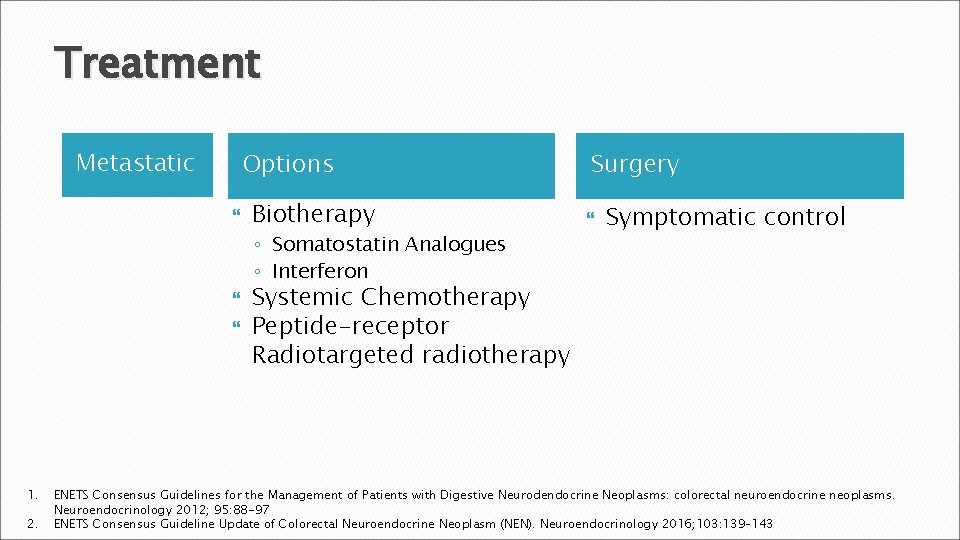
Treatment Metastatic Options Biotherapy ◦ Somatostatin Analogues ◦ Interferon 1. 2. Surgery Symptomatic control Systemic Chemotherapy Peptide-receptor Radiotargeted radiotherapy ENETS Consensus Guidelines for the Management of Patients with Digestive Neurodendocrine Neoplasms: colorectal neuroendocrine neoplasms. Neuroendocrinology 2012; 95: 88 -97 ENETS Consensus Guideline Update of Colorectal Neuroendocrine Neoplasm (NEN). Neuroendocrinology 2016; 103: 139– 143
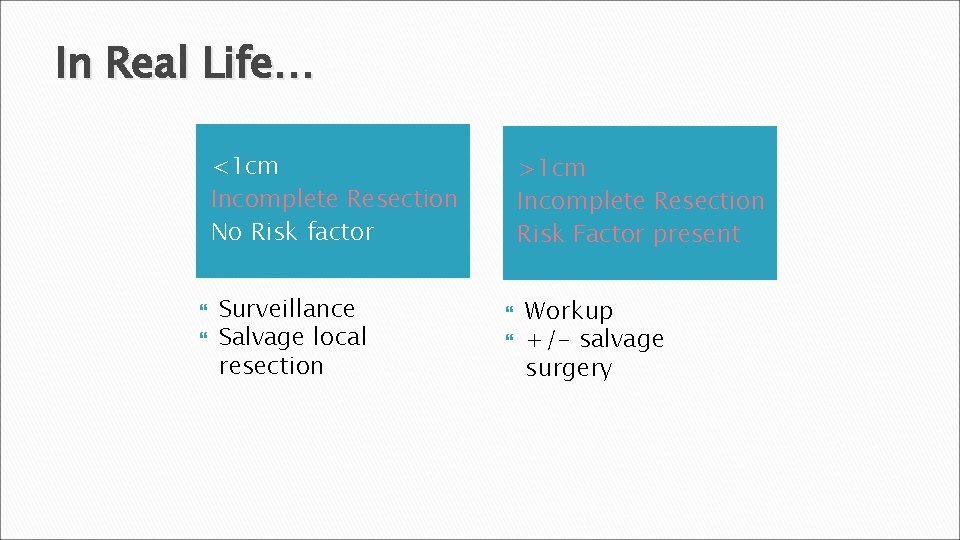
In Real Life… <1 cm Incomplete Resection No Risk factor Surveillance Salvage local resection >1 cm Incomplete Resection Risk Factor present Workup +/- salvage surgery
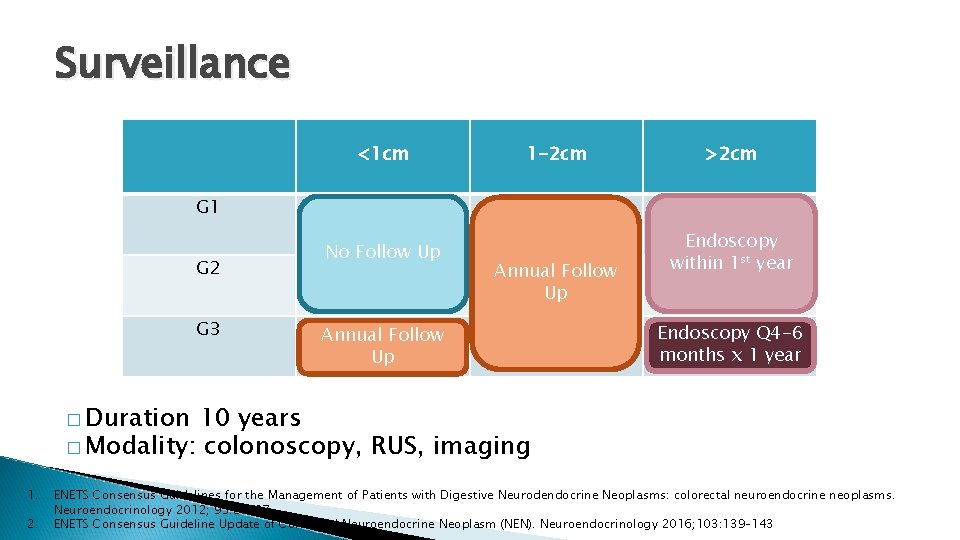
Surveillance <1 cm 1 -2 cm >2 cm G 1 G 2 G 3 No Follow Up Annual Follow Up Endoscopy within 1 st year Endoscopy Q 4 -6 months x 1 year � Duration 10 years � Modality: colonoscopy, RUS, imaging 1. 2. ENETS Consensus Guidelines for the Management of Patients with Digestive Neurodendocrine Neoplasms: colorectal neuroendocrine neoplasms. Neuroendocrinology 2012; 95: 88 -97 ENETS Consensus Guideline Update of Colorectal Neuroendocrine Neoplasm (NEN). Neuroendocrinology 2016; 103: 139– 143
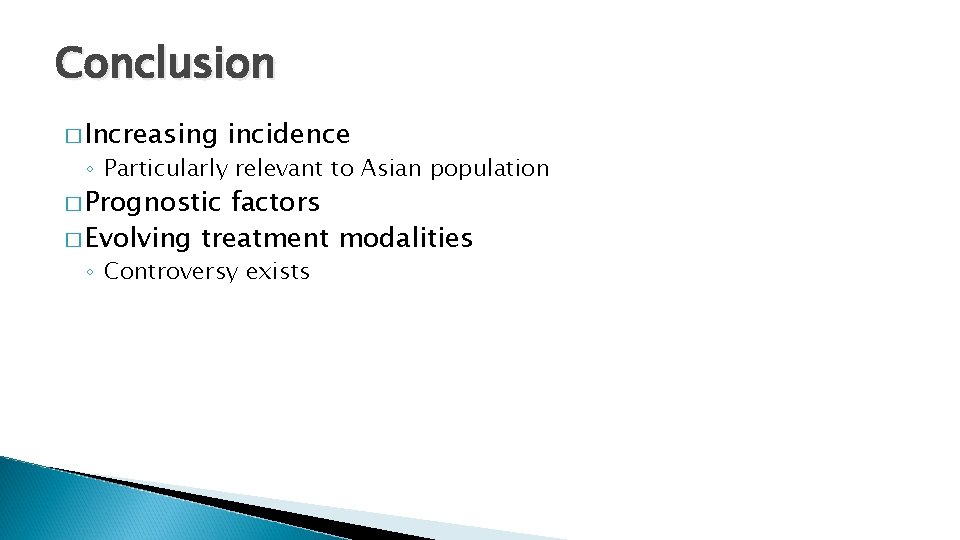
Conclusion � Increasing incidence ◦ Particularly relevant to Asian population � Prognostic factors � Evolving treatment modalities ◦ Controversy exists
Thank you!