
Review on Avian Mycoplasma gallisepticum Research in Egypt





- Slides: 62
Review on Avian Mycoplasma gallisepticum Research in Egypt Hany Ellakany Professor of Poultry Diseases, Dean, Faculty of Veterinary Medicine, Damanhour University Mohy Sabry Professor Emiratus & and Ex. President of the General Poultry Company
Mycoplasma membranes are composed of lipid bi-layer with numerous embedded integral and peripheral anchored proteins called variable lipoprotein hemagglutinins (Vlh. A) Vlh. A are strong inflammatory RAZIN et al. 1998 q Without attachment, MG will not infect the tissue NDIKOVÁ et al. 2013, MUCH et al. 2002 q
In MG 2 molecules were found to be associated with gliding motility on solid surfaces and attachment n Gap. A (mgc 1) Primary cytadhesion molecule mediates attachment n Crm. A Secondary molecule facilitates attachment n Pvp. A (phase-variable putative adhesin), n Plp. A (pneumoniae-like protein A) (and in MS) n Hlp 3 (high molecular mass protein) n Triose phosphate isomerase (Tpi) is a glycolytic enzyme for efficient energy production, it is also displayed on the exterior of the mycoplasma cell membrane, where it plays a role in cytadherence n α-Enolase bind to the host ECM extracellular matrix protein, fibronectin, plasminogen
Surface antigenic variation Mechanisms of Mycoplasmas for surface variable expression of major antigenic lipoprotein 1. Spontaneous mutation by nucleotide insertion or deletion in short repeat sequences 2. DNA rearrangements and gene conversion
Antigenic diversity-generating mechanism (Phenotypic plasticity - mimicry) Evasion of host antibodies by antigenic variation or mutation or switching • When mycoplasmas leave the cells they elaborate spontaneous alternative forms of surface lipoproteins epitopes similar to some host cell membrane epitopes
• In vivo • a distinct dominant Vlh. A is believed to be predominantly expressed in a population of bacterial cells, • when a host humoral response is mounted against it, another bacterial population express different alternative Vlh. A, thereby evading the host immune response, survive in host tissues and establishing a chronic infection
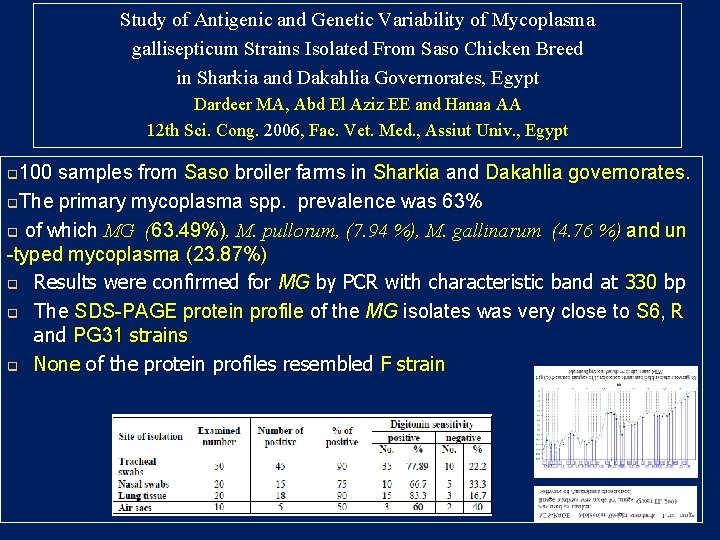
Study of Antigenic and Genetic Variability of Mycoplasma gallisepticum Strains Isolated From Saso Chicken Breed in Sharkia and Dakahlia Governorates, Egypt Dardeer MA, Abd El Aziz EE and Hanaa AA 12 th Sci. Cong. 2006, Fac. Vet. Med. , Assiut Univ. , Egypt q 100 samples from Saso broiler farms in Sharkia and Dakahlia governorates. q. The primary mycoplasma spp. prevalence was 63% q of which MG (63. 49%), M. pullorum, (7. 94 %), M. gallinarum (4. 76 %) and un -typed mycoplasma (23. 87%) q Results were confirmed for MG by PCR with characteristic band at 330 bp q The SDS-PAGE protein profile of the MG isolates was very close to S 6, R and PG 31 strains q None of the protein profiles resembled F strain
Molecular characterization of Mycoplasma gallisepticum isolated from Chicken and Turkey Eissa SI, Hasan AM, Metwally AM, Yousreya H Mohamed, Abd Elaziz AE Veterinary Medical Journal, 2011, Vol. 59 July N. 3 183 -195. n n The authors made a survey for MG from turkeys and chickens and studied the mgc 2 The authors used the primers mg. C 2 gene: MG-F: 5’-CGC AAT TTG GTC CTA ATC CCC AAC A-3’ MG-R: 5’-TAA ACC CAC CTC CAG CTT TAT TTC C -3’ q They noted a characteristic amino acid mutations which resulted in specific changes in region of the mgc 2 8
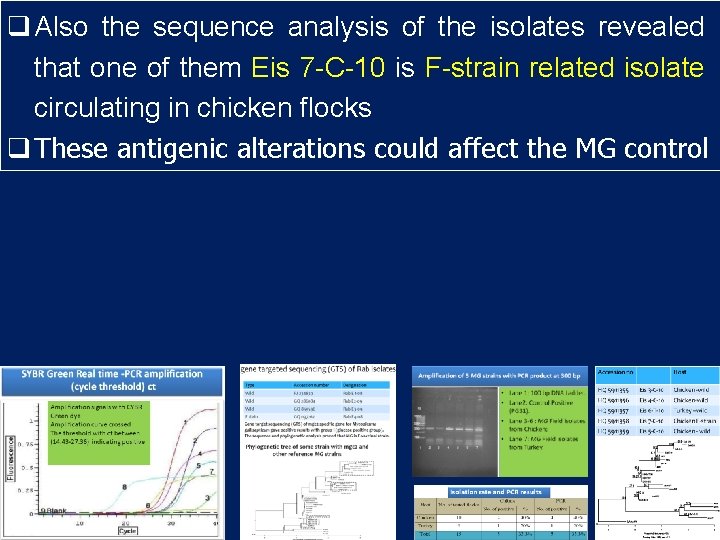
q Also the sequence analysis of the isolates revealed that one of them Eis 7 -C-10 is F-strain related isolate circulating in chicken flocks q These antigenic alterations could affect the MG control
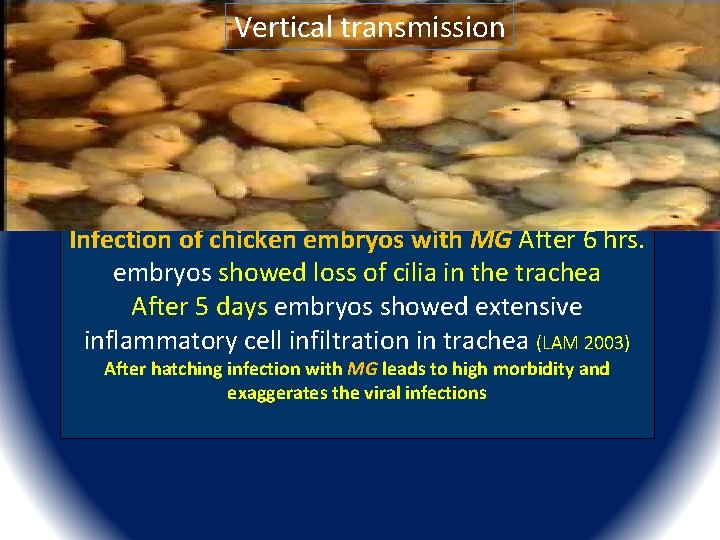
Vertical transmission of MG in non diseased condition is <5% But in active infection Vertical transmission can reach up to 30% Infection of chicken embryos with MG After 6 hrs. embryos showed loss of cilia in the trachea After 5 days embryos showed extensive inflammatory cell infiltration in trachea (LAM 2003) After hatching infection with MG leads to high morbidity and exaggerates the viral infections
Detection of Mycoplasma gallisepticum Infection in Day-Old Chicks Using Molecular Characterization Eissa SI, El-Shater SA, Dardeer MA, Abd El. Aziz EE, Hanaa AA and Anne Gautier. Bouchardon The 5 th International Poultry Conference, 10 -13 March, 2009 Taba – Egypt 1357 üThe authors documented that PCR was more sensitive than culture as it detected MG in 33. 3% of the samples while the culture detected MG in only 20% of the samples ü 5 isolates were subjected to Arbitrarily Primed- (AP)PCR üThe 5 isolates shared only 2 common fragments of 325 and 370 bp with the MG reference strains
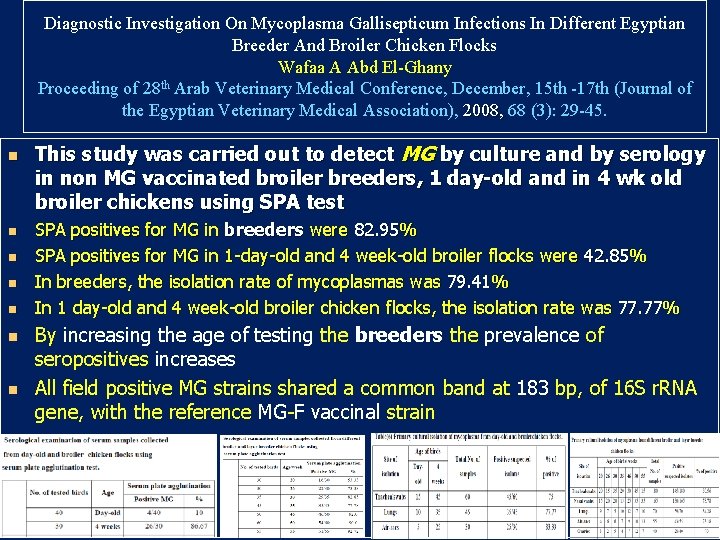
Diagnostic Investigation On Mycoplasma Gallisepticum Infections In Different Egyptian Breeder And Broiler Chicken Flocks Wafaa A Abd El-Ghany Proceeding of 28 th Arab Veterinary Medical Conference, December, 15 th -17 th (Journal of the Egyptian Veterinary Medical Association), 2008, 68 (3): 29 -45. 2008, n n n n This study was carried out to detect MG by culture and by serology in non MG vaccinated broiler breeders, 1 day-old and in 4 wk old broiler chickens using SPA test SPA positives for MG in breeders were 82. 95% SPA positives for MG in 1 -day-old and 4 week-old broiler flocks were 42. 85% In breeders, the isolation rate of mycoplasmas was 79. 41% In 1 day-old and 4 week-old broiler chicken flocks, the isolation rate was 77. 77% By increasing the age of testing the breeders the prevalence of seropositives increases All field positive MG strains shared a common band at 183 bp, of 16 S r. RNA gene, with the reference MG-F vaccinal strain
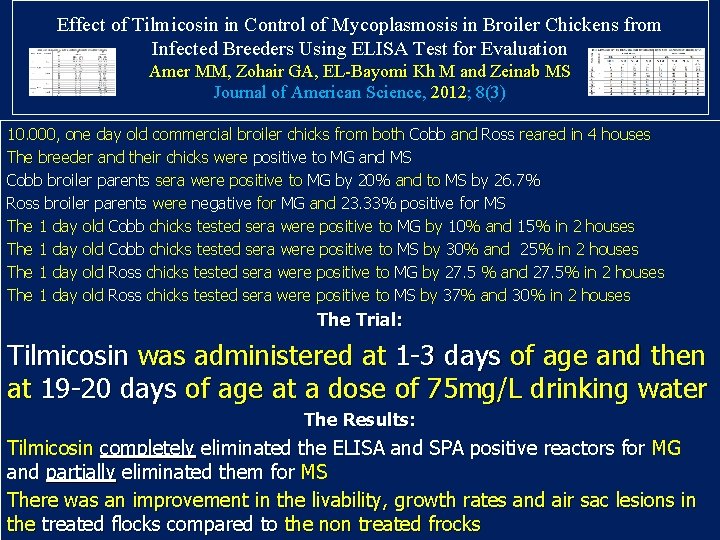
Effect of Tilmicosin in Control of Mycoplasmosis in Broiler Chickens from Infected Breeders Using ELISA Test for Evaluation Amer MM, Zohair GA, EL-Bayomi Kh M and Zeinab MS Journal of American Science, 2012; 8(3) 10. 000, one day old commercial broiler chicks from both Cobb and Ross reared in 4 houses The breeder and their chicks were positive to MG and MS Cobb broiler parents sera were positive to MG by 20% and to MS by 26. 7% Ross broiler parents were negative for MG and 23. 33% positive for MS The 1 day old Cobb chicks tested sera were positive to MG by 10% and 15% in 2 houses The 1 day old Cobb chicks tested sera were positive to MS by 30% and 25% in 2 houses The 1 day old Ross chicks tested sera were positive to MG by 27. 5 % and 27. 5% in 2 houses The 1 day old Ross chicks tested sera were positive to MS by 37% and 30% in 2 houses The Trial: Tilmicosin was administered at 1 -3 days of age and then at 19 -20 days of age at a dose of 75 mg/L drinking water The Results: Tilmicosin completely eliminated the ELISA and SPA positive reactors for MG and partially eliminated them for MS There was an improvement in the livability, growth rates and air sac lesions in the treated flocks compared to the non treated frocks
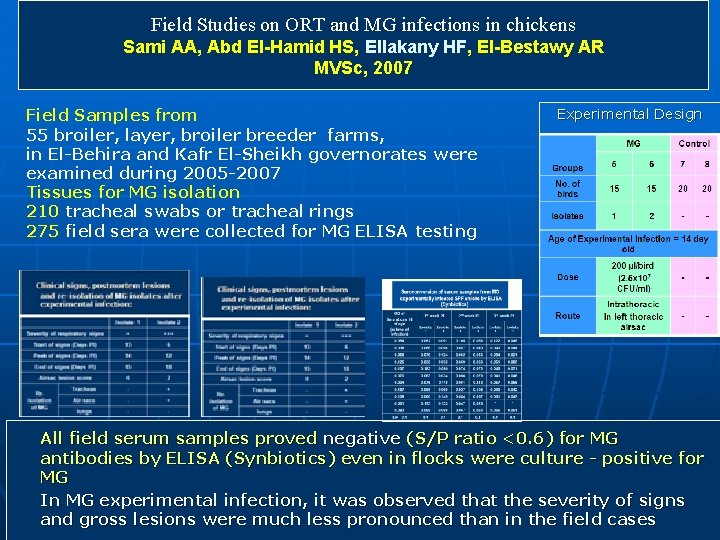
Field Studies on ORT and MG infections in chickens Sami AA, Abd El-Hamid HS, Ellakany HF, El-Bestawy AR MVSc, 2007 Field Samples from 55 broiler, layer, broiler breeder farms, in El-Behira and Kafr El-Sheikh governorates were examined during 2005 -2007 Tissues for MG isolation 210 tracheal swabs or tracheal rings 275 field sera were collected for MG ELISA testing Experimental Design All field serum samples proved negative (S/P ratio <0. 6) for MG antibodies by ELISA (Synbiotics) even in flocks were culture - positive for MG In MG experimental infection, it was observed that the severity of signs and gross lesions were much less pronounced than in the field cases
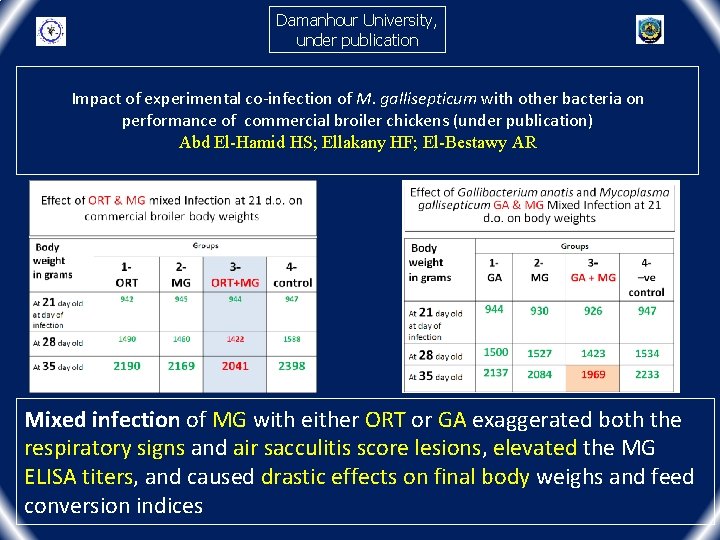
Damanhour University, under publication Impact of experimental co-infection of M. gallisepticum with other bacteria on performance of commercial broiler chickens (under publication) Abd El-Hamid HS; Ellakany HF; El-Bestawy AR Mixed infection of MG with either ORT or GA exaggerated both the respiratory signs and air sacculitis score lesions, elevated the MG ELISA titers, and caused drastic effects on final body weighs and feed conversion indices
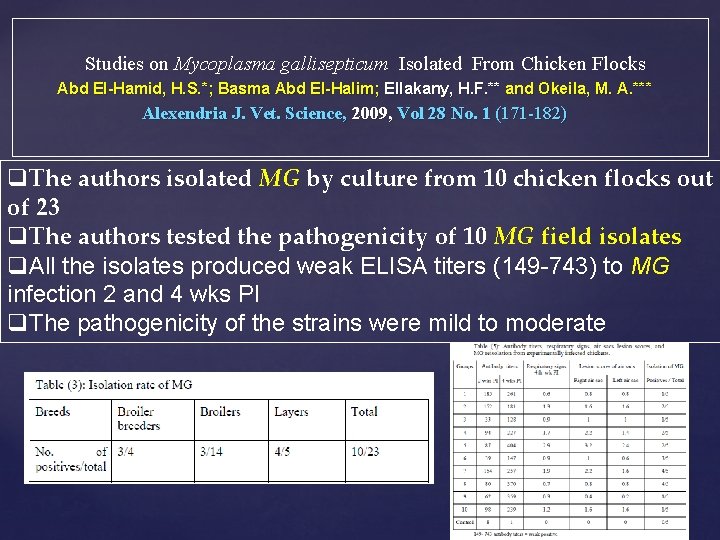
Studies on Mycoplasma gallisepticum Isolated From Chicken Flocks Abd El-Hamid, H. S. *; Basma Abd El-Halim; Ellakany, H. F. ** and Okeila, M. A. *** Alexendria J. Vet. Science, 2009, Vol 28 No. 1 (171 -182) q. The authors isolated MG by culture from 10 chicken flocks out of 23 q. The authors tested the pathogenicity of 10 MG field isolates q. All the isolates produced weak ELISA titers (149 -743) to MG infection 2 and 4 wks PI q. The pathogenicity of the strains were mild to moderate
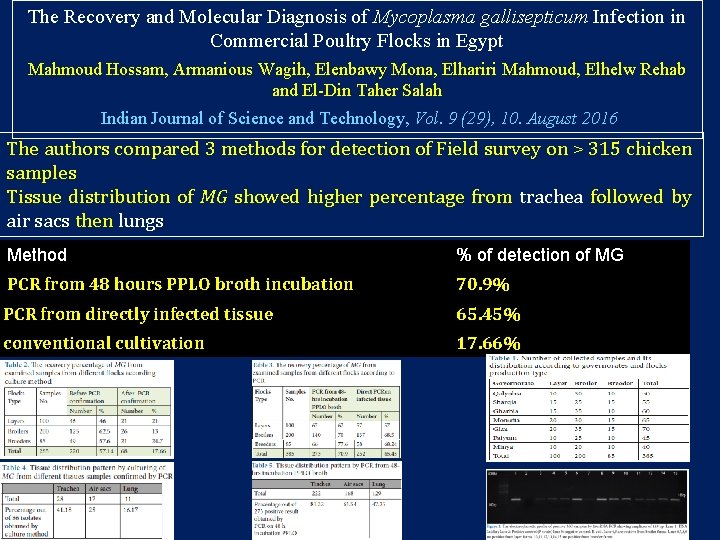
The Recovery and Molecular Diagnosis of Mycoplasma gallisepticum Infection in Commercial Poultry Flocks in Egypt Mahmoud Hossam, Armanious Wagih, Elenbawy Mona, Elhariri Mahmoud, Elhelw Rehab and El-Din Taher Salah Indian Journal of Science and Technology, Vol. 9 (29), 10. August 2016 The authors compared 3 methods for detection of Field survey on > 315 chicken samples Tissue distribution of MG showed higher percentage from trachea followed by air sacs then lungs Method % of detection of MG PCR from 48 hours PPLO broth incubation 70. 9% PCR from directly infected tissue 65. 45% conventional cultivation 17. 66%
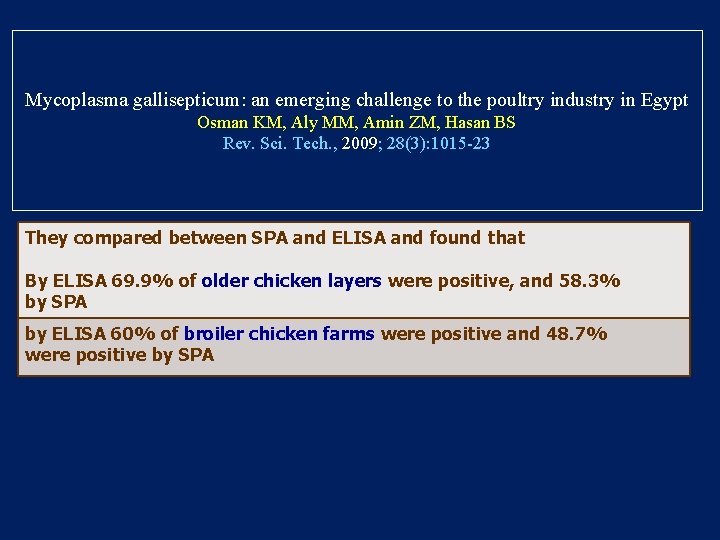
Mycoplasma gallisepticum: an emerging challenge to the poultry industry in Egypt Osman KM, Aly MM, Amin ZM, Hasan BS Rev. Sci. Tech. , 2009; 28(3): 1015 -23 They compared between SPA and ELISA and found that By ELISA 69. 9% of older chicken layers were positive, and 58. 3% by SPA by ELISA 60% of broiler chicken farms were positive and 48. 7% were positive by SPA
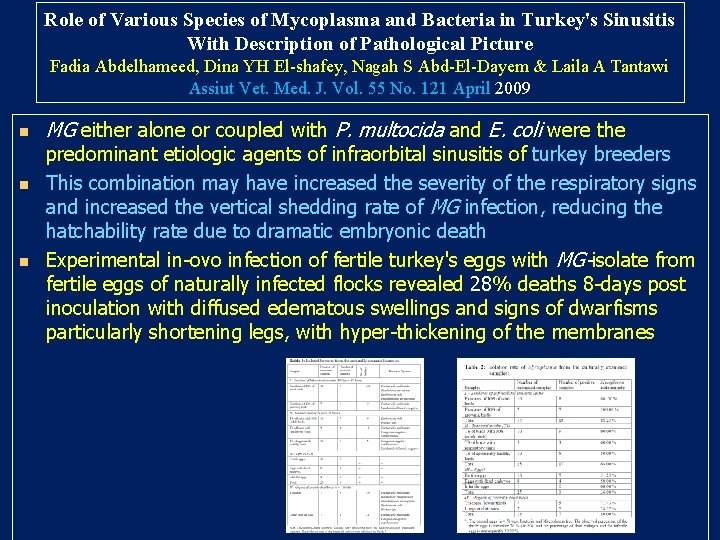
Role of Various Species of Mycoplasma and Bacteria in Turkey's Sinusitis With Description of Pathological Picture Fadia Abdelhameed, Dina YH El-shafey, Nagah S Abd-El-Dayem & Laila A Tantawi Assiut Vet. Med. J. Vol. 55 No. 121 April 2009 n n n MG either alone or coupled with P. multocida and E. coli were the predominant etiologic agents of infraorbital sinusitis of turkey breeders This combination may have increased the severity of the respiratory signs and increased the vertical shedding rate of MG infection, reducing the hatchability rate due to dramatic embryonic death Experimental in-ovo infection of fertile turkey's eggs with MG-isolate from fertile eggs of naturally infected flocks revealed 28% deaths 8 -days post inoculation with diffused edematous swellings and signs of dwarfisms particularly shortening legs, with hyper-thickening of the membranes
Detection of F- like strains
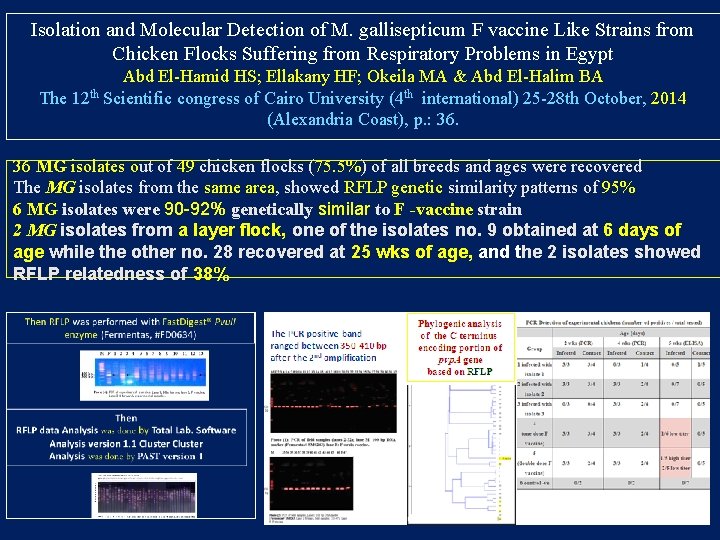
Isolation and Molecular Detection of M. gallisepticum F vaccine Like Strains from Chicken Flocks Suffering from Respiratory Problems in Egypt Abd El-Hamid HS; Ellakany HF; Okeila MA & Abd El-Halim BA The 12 th Scientific congress of Cairo University (4 th international) 25 -28 th October, 2014 (Alexandria Coast), p. : 36. 36 MG isolates out of 49 chicken flocks (75. 5%) of all breeds and ages were recovered The MG isolates from the same area, showed RFLP genetic similarity patterns of 95% 6 MG isolates were 90 -92% genetically similar to F -vaccine strain 2 MG isolates from a layer flock, one of the isolates no. 9 obtained at 6 days of age while the other no. 28 recovered at 25 wks of age, and the 2 isolates showed RFLP relatedness of 38%
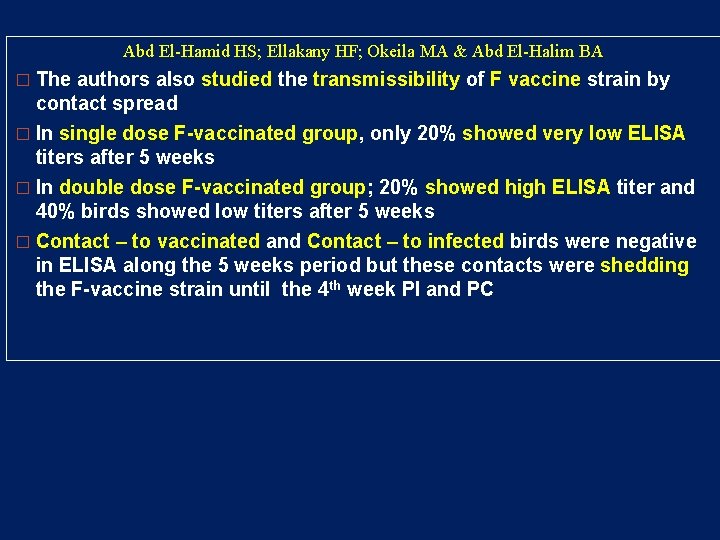
Abd El-Hamid HS; Ellakany HF; Okeila MA & Abd El-Halim BA � The authors also studied the transmissibility of F vaccine strain by contact spread � In single dose F-vaccinated group, only 20% showed very low ELISA titers after 5 weeks � In double dose F-vaccinated group; 20% showed high ELISA titer and 40% birds showed low titers after 5 weeks � Contact – to vaccinated and Contact – to infected birds were negative in ELISA along the 5 weeks period but these contacts were shedding the F-vaccine strain until the 4 th week PI and PC
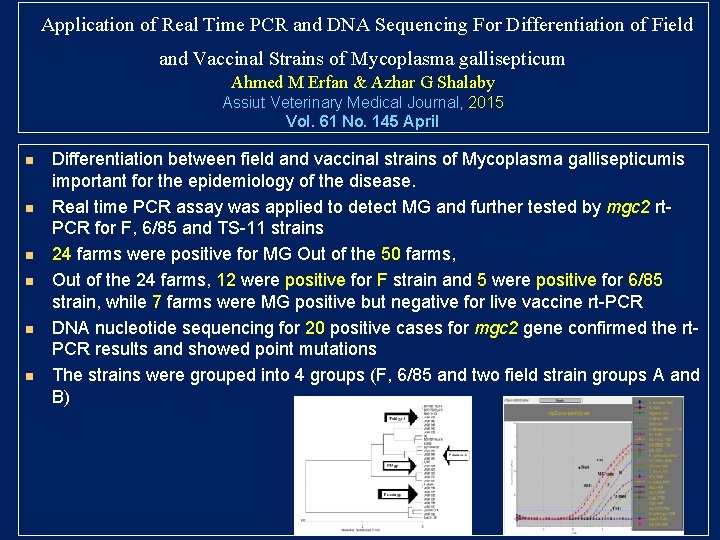
Application of Real Time PCR and DNA Sequencing For Differentiation of Field and Vaccinal Strains of Mycoplasma gallisepticum Ahmed M Erfan & Azhar G Shalaby Assiut Veterinary Medical Journal, 2015 Vol. 61 No. 145 April n n n Differentiation between field and vaccinal strains of Mycoplasma gallisepticumis important for the epidemiology of the disease. Real time PCR assay was applied to detect MG and further tested by mgc 2 rt. PCR for F, 6/85 and TS-11 strains 24 farms were positive for MG Out of the 50 farms, Out of the 24 farms, 12 were positive for F strain and 5 were positive for 6/85 strain, while 7 farms were MG positive but negative for live vaccine rt-PCR DNA nucleotide sequencing for 20 positive cases for mgc 2 gene confirmed the rt. PCR results and showed point mutations The strains were grouped into 4 groups (F, 6/85 and two field strain groups A and B)
Sequencing Analysis of Mycoplasma gallisepticum Wild Strains in Vaccinated Chicken Breeder Flocks Khalifa R, Eissa S, El-Hariri M, Refai M Mol Microbiol Biotechnol, 2014; 24: 98 -104 n n n The present study was concerned with 15 broiler breeder flocks of different ages (5 -51 weeks). 3 flocks were apparently healthy and 12 flocks were diseased. The aim of the study was to characterize the MG strains recovered from tracheal swabs. Four positive MG DNA extracts identified by rt-PCR and confirmed by isolation were subjected to sequencing of the mgc 2 gene and intergenic spacer region (IGSR). The current molecular study demonstrated the presence of 3 different wild-type MG strains (Rab. E 1 -08, Rab. E 2 -09 and Rab. E 3 -09) in vaccinated diseased flocks, while the fourth strain (Rab. E 4 -08), which was isolated from a nonvaccinated apparently healthy breeder flock, scored 100% of homology and similarity to the F-strain vaccine by the sequence analysis of mgc 2 and IGSR. It can be assumed that the vaccine F strain, which is supposed to replace field strains not only failed to do that, but also infected non vaccinated flocks. Accordingly, there is a need to revise the control program including vaccine strategy in parallel with biosecurity measures.
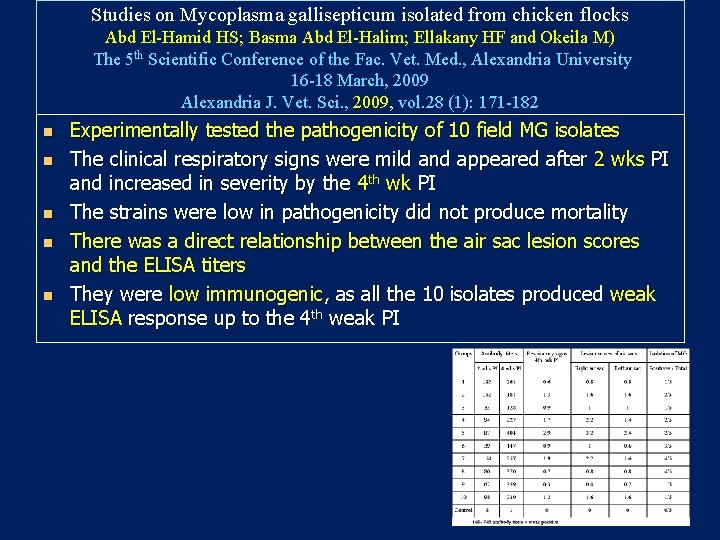
Studies on Mycoplasma gallisepticum isolated from chicken flocks Abd El-Hamid HS; Basma Abd El-Halim; Ellakany HF and Okeila M) The 5 th Scientific Conference of the Fac. Vet. Med. , Alexandria University 16 -18 March, 2009 Alexandria J. Vet. Sci. , 2009, vol. 28 (1): 171 -182 n n n Experimentally tested the pathogenicity of 10 field MG isolates The clinical respiratory signs were mild and appeared after 2 wks PI and increased in severity by the 4 th wk PI The strains were low in pathogenicity did not produce mortality There was a direct relationship between the air sac lesion scores and the ELISA titers They were low immunogenic, as all the 10 isolates produced weak ELISA response up to the 4 th weak PI
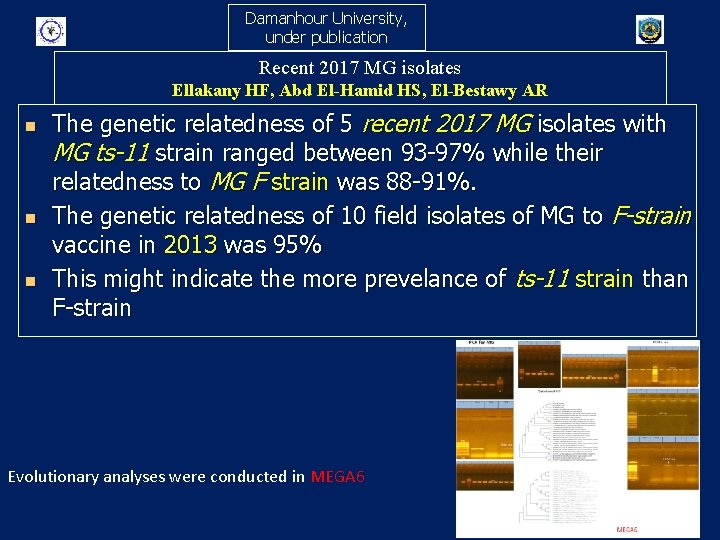
Damanhour University, under publication Recent 2017 MG isolates Ellakany HF, Abd El-Hamid HS, El-Bestawy AR n n n The genetic relatedness of 5 recent 2017 MG isolates with MG ts-11 strain ranged between 93 -97% while their relatedness to MG F strain was 88 -91%. The genetic relatedness of 10 field isolates of MG to F-strain vaccine in 2013 was 95% This might indicate the more prevelance of ts-11 strain than F-strain Evolutionary analyses were conducted in MEGA 6
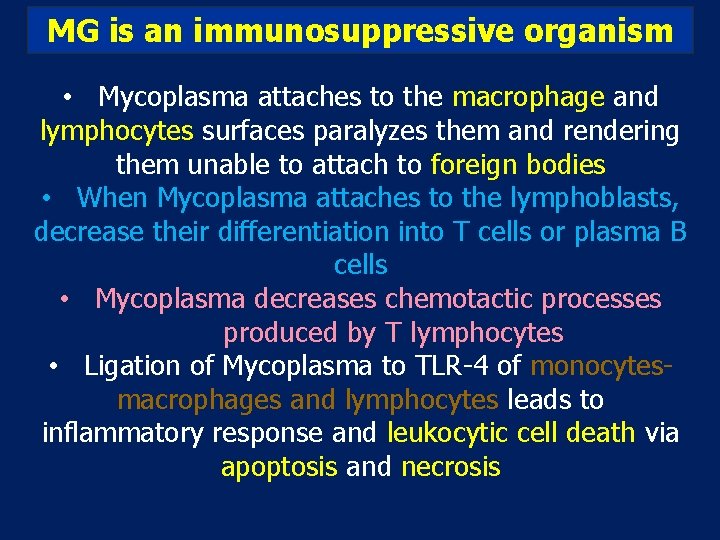
MG is an immunosuppressive organism • Mycoplasma attaches to the macrophage and lymphocytes surfaces paralyzes them and rendering them unable to attach to foreign bodies • When Mycoplasma attaches to the lymphoblasts, decrease their differentiation into T cells or plasma B cells • Mycoplasma decreases chemotactic processes produced by T lymphocytes • Ligation of Mycoplasma to TLR-4 of monocytesmacrophages and lymphocytes leads to inflammatory response and leukocytic cell death via apoptosis and necrosis
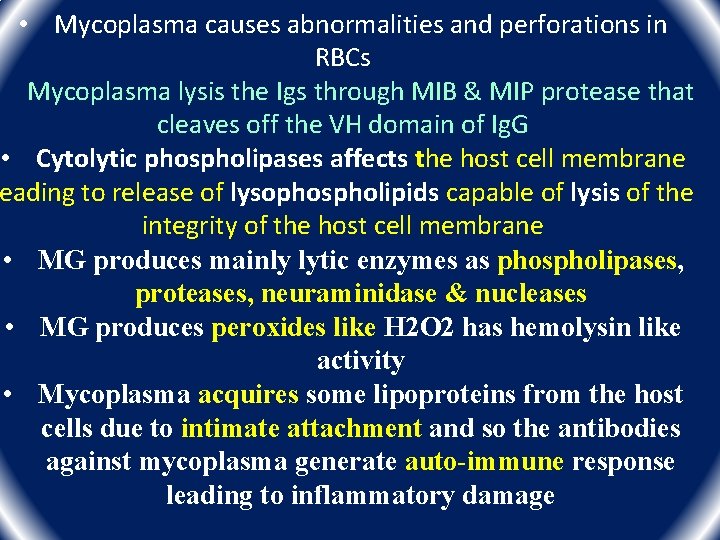
• Mycoplasma causes abnormalities and perforations in RBCs • Mycoplasma lysis the Igs through MIB & MIP protease that cleaves off the VH domain of Ig. G • Cytolytic phospholipases affects the host cell membrane eading to release of lysophospholipids capable of lysis of the integrity of the host cell membrane • MG produces mainly lytic enzymes as phospholipases, proteases, neuraminidase & nucleases • MG produces peroxides like H 2 O 2 has hemolysin like activity • Mycoplasma acquires some lipoproteins from the host cells due to intimate attachment and so the antibodies against mycoplasma generate auto-immune response leading to inflammatory damage
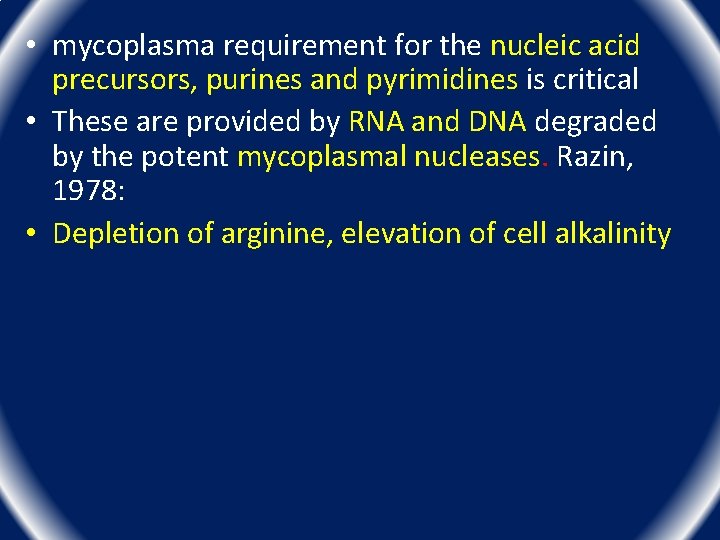
• mycoplasma requirement for the nucleic acid precursors, purines and pyrimidines is critical • These are provided by RNA and DNA degraded by the potent mycoplasmal nucleases. Razin, 1978: • Depletion of arginine, elevation of cell alkalinity
Treatment and Control of Avian Mycoplasmas and Field Trials
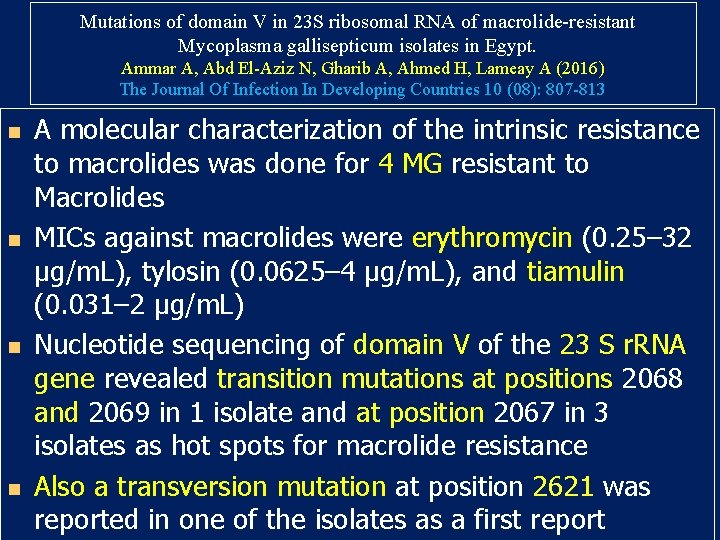
Mutations of domain V in 23 S ribosomal RNA of macrolide-resistant Mycoplasma gallisepticum isolates in Egypt. Ammar A, Abd El-Aziz N, Gharib A, Ahmed H, Lameay A (2016) The Journal Of Infection In Developing Countries 10 (08): 807 -813 n n A molecular characterization of the intrinsic resistance to macrolides was done for 4 MG resistant to Macrolides MICs against macrolides were erythromycin (0. 25– 32 µg/m. L), tylosin (0. 0625– 4 µg/m. L), and tiamulin (0. 031– 2 µg/m. L) Nucleotide sequencing of domain V of the 23 S r. RNA gene revealed transition mutations at positions 2068 and 2069 in 1 isolate and at position 2067 in 3 isolates as hot spots for macrolide resistance Also a transversion mutation at position 2621 was reported in one of the isolates as a first report
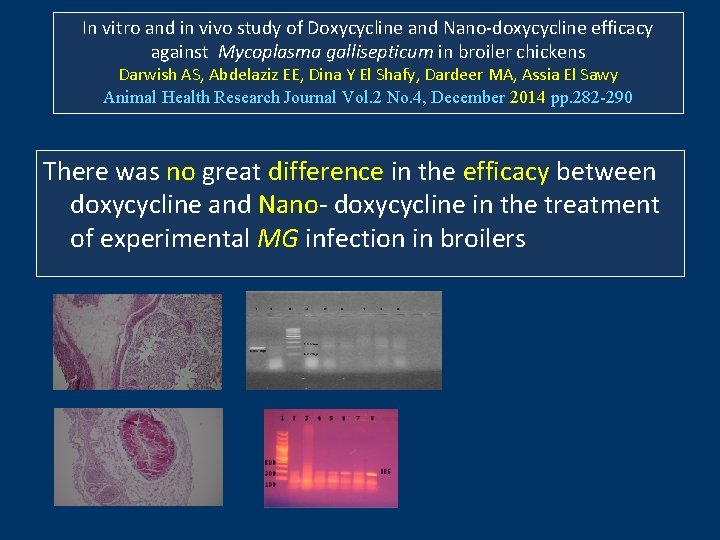
In vitro and in vivo study of Doxycycline and Nano-doxycycline efficacy against Mycoplasma gallisepticum in broiler chickens Darwish AS, Abdelaziz EE, Dina Y El Shafy, Dardeer MA, Assia El Sawy Animal Health Research Journal Vol. 2 No. 4, December 2014 pp. 282 -290 There was no great difference in the efficacy between doxycycline and Nano- doxycycline in the treatment of experimental MG infection in broilers
Sami AA, Abd El-Hamid HS, Ellakany HF, El-Bestawy AR 2007 MVSc MG isolates were highly susceptible to tiamutin and doxycyclin, MG isolates were moderately susceptible to tylosin, lincomycin, ciprofloxacin and enrofloxacin The isolates were resistant to erythromycin
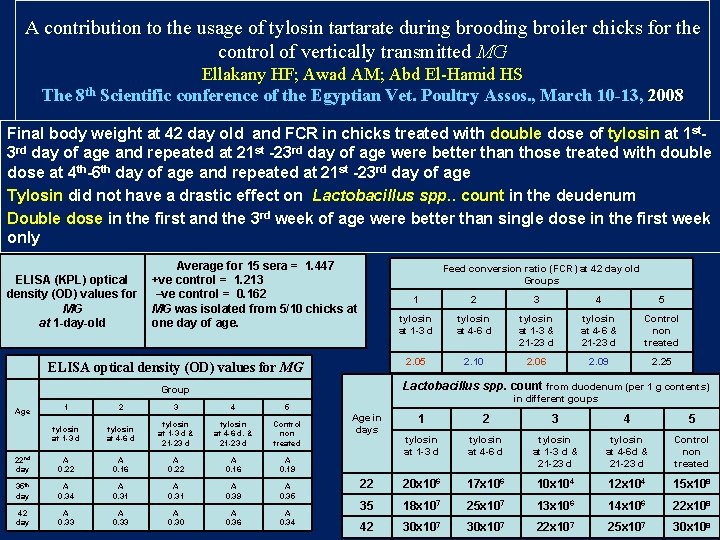
A contribution to the usage of tylosin tartarate during brooding broiler chicks for the control of vertically transmitted MG Ellakany HF; Awad AM; Abd El-Hamid HS The 8 th Scientific conference of the Egyptian Vet. Poultry Assos. , March 10 -13, 2008 Final body weight at 42 day old and FCR in chicks treated with double dose of tylosin at 1 st 3 rd day of age and repeated at 21 st -23 rd day of age were better than those treated with double dose at 4 th-6 th day of age and repeated at 21 st -23 rd day of age Tylosin did not have a drastic effect on Lactobacillus spp. . count in the deudenum Double dose in the first and the 3 rd week of age were better than single dose in the first week only Average for 15 sera = 1. 447 +ve control = 1. 213 ELISA (KPL) optical density (OD) values for –ve control = 0. 162 MG MG was isolated from 5/10 chicks at at 1 -day-old one day of age. ELISA optical density (OD) values for MG 1 2 3 4 5 tylosin at 1 -3 d tylosin at 4 -6 d tylosin at 1 -3 & 21 -23 d tylosin at 4 -6 & 21 -23 d Control non treated 2. 05 2. 10 2. 06 2. 09 2. 25 Lactobacillus spp. count from duodenum (per 1 g contents) Group 1 2 3 4 5 tylosin at 1 -3 d tylosin at 4 -6 d tylosin at 1 -3 d & 21 -23 d tylosin at 4 -6 d. & 21 -23 d Control non treated 22 nd day A 0. 22 A 0. 16 A 0. 19 35 th day A 0. 34 A 0. 31 A 0. 39 A 0. 35 42 day A 0. 33 A 0. 30 A 0. 36 A 0. 34 Age Feed conversion ratio (FCR) at 42 day old Groups in different goups Age in days 1 2 3 4 5 tylosin at 1 -3 d tylosin at 4 -6 d tylosin at 1 -3 d & 21 -23 d tylosin at 4 -6 d & 21 -23 d Control non treated 22 20 x 106 17 x 106 10 x 104 12 x 104 15 x 108 35 18 x 107 25 x 107 13 x 106 14 x 106 22 x 108 42 30 x 107 22 x 107 25 x 107 30 x 108
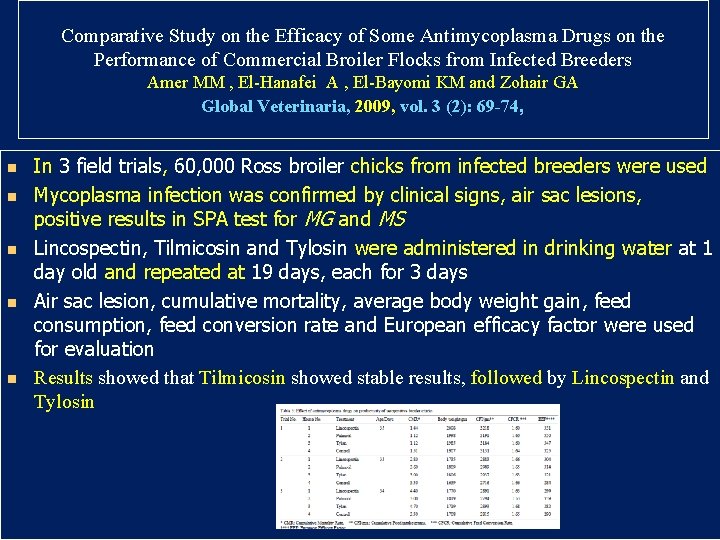
Comparative Study on the Efficacy of Some Antimycoplasma Drugs on the Performance of Commercial Broiler Flocks from Infected Breeders Amer MM , El-Hanafei A , El-Bayomi KM and Zohair GA Global Veterinaria, 2009, vol. 3 (2): 69 -74, n n n In 3 field trials, 60, 000 Ross broiler chicks from infected breeders were used Mycoplasma infection was confirmed by clinical signs, air sac lesions, positive results in SPA test for MG and MS Lincospectin, Tilmicosin and Tylosin were administered in drinking water at 1 day old and repeated at 19 days, each for 3 days Air sac lesion, cumulative mortality, average body weight gain, feed consumption, feed conversion rate and European efficacy factor were used for evaluation Results showed that Tilmicosin showed stable results, followed by Lincospectin and Tylosin
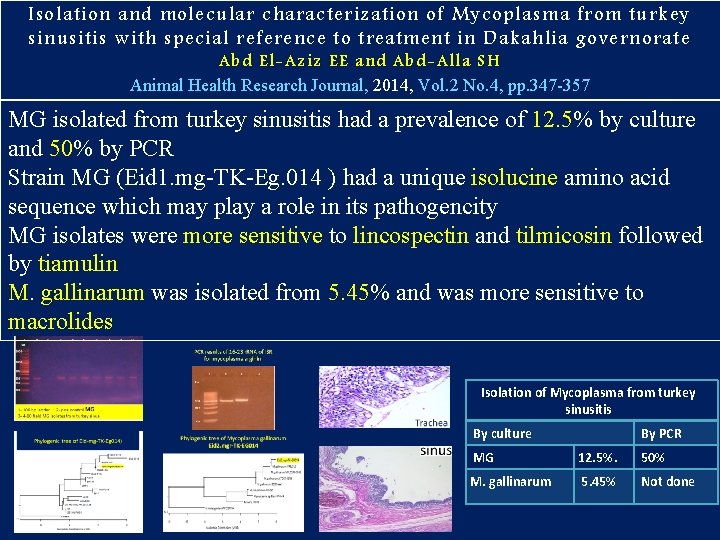
Isolation and molecular characterization of Mycoplasma from turkey sinusitis with special reference to treatment in Dakahlia governorate Abd El-Aziz EE and Abd-Alla SH Animal Health Research Journal, 2014, Vol. 2 No. 4, pp. 347 -357 MG isolated from turkey sinusitis had a prevalence of 12. 5% by culture and 50% by PCR Strain MG (Eid 1. mg-TK-Eg. 014 ) had a unique isolucine amino acid sequence which may play a role in its pathogencity MG isolates were more sensitive to lincospectin and tilmicosin followed by tiamulin M. gallinarum was isolated from 5. 45% and was more sensitive to macrolides Isolation of Mycoplasma from turkey sinusitis By culture By PCR MG 12. 5%. 50% M. gallinarum 5. 45% Not done
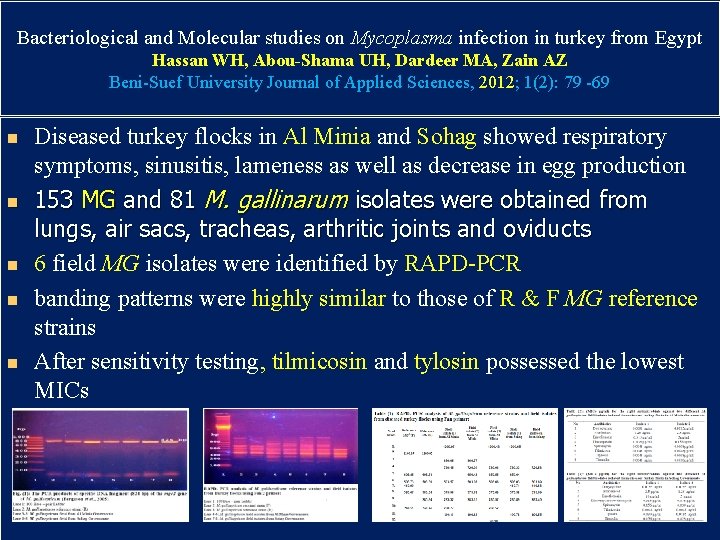
Bacteriological and Molecular studies on Mycoplasma infection in turkey from Egypt Hassan WH, Abou-Shama UH, Dardeer MA, Zain AZ Beni-Suef University Journal of Applied Sciences, 2012; 1(2): 79 -69 n n n Diseased turkey flocks in Al Minia and Sohag showed respiratory symptoms, sinusitis, lameness as well as decrease in egg production 153 MG and 81 M. gallinarum isolates were obtained from lungs, air sacs, tracheas, arthritic joints and oviducts 6 field MG isolates were identified by RAPD-PCR banding patterns were highly similar to those of R & F MG reference strains After sensitivity testing, tilmicosin and tylosin possessed the lowest MICs
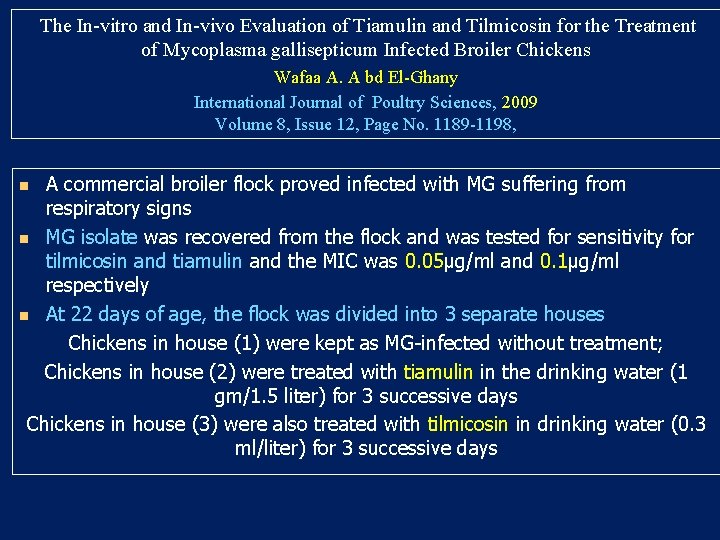
The In-vitro and In-vivo Evaluation of Tiamulin and Tilmicosin for the Treatment of Mycoplasma gallisepticum Infected Broiler Chickens Wafaa A. A bd El-Ghany International Journal of Poultry Sciences, 2009 Volume 8, Issue 12, Page No. 1189 -1198, A commercial broiler flock proved infected with MG suffering from respiratory signs n MG isolate was recovered from the flock and was tested for sensitivity for tilmicosin and tiamulin and the MIC was 0. 05μg/ml and 0. 1μg/ml respectively n At 22 days of age, the flock was divided into 3 separate houses Chickens in house (1) were kept as MG-infected without treatment; Chickens in house (2) were treated with tiamulin in the drinking water (1 gm/1. 5 liter) for 3 successive days Chickens in house (3) were also treated with tilmicosin in drinking water (0. 3 ml/liter) for 3 successive days n
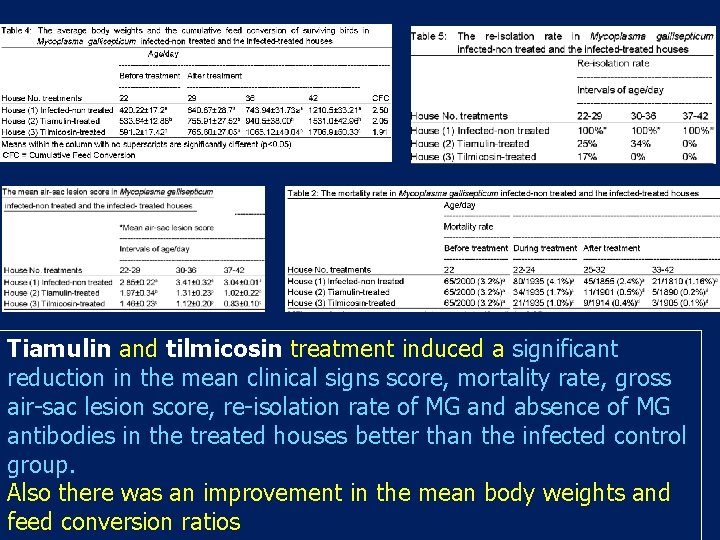
Tiamulin and tilmicosin treatment induced a significant reduction in the mean clinical signs score, mortality rate, gross air-sac lesion score, re-isolation rate of MG and absence of MG antibodies in the treated houses better than the infected control group. Also there was an improvement in the mean body weights and feed conversion ratios
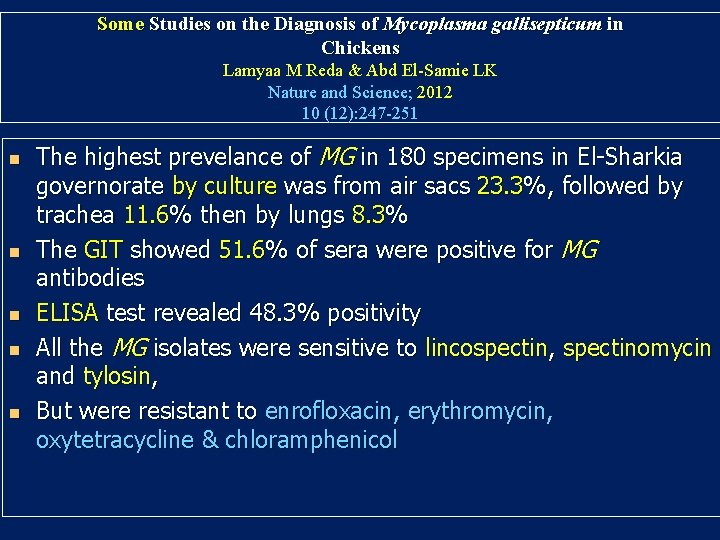
Some Studies on the Diagnosis of Mycoplasma gallisepticum in Chickens Lamyaa M Reda & Abd El-Samie LK Nature and Science; 2012 10 (12): 247 -251 n n n The highest prevelance of MG in 180 specimens in El-Sharkia governorate by culture was from air sacs 23. 3%, followed by trachea 11. 6% then by lungs 8. 3% The GIT showed 51. 6% of sera were positive for MG antibodies ELISA test revealed 48. 3% positivity All the MG isolates were sensitive to lincospectin, spectinomycin and tylosin, But were resistant to enrofloxacin, erythromycin, oxytetracycline & chloramphenicol
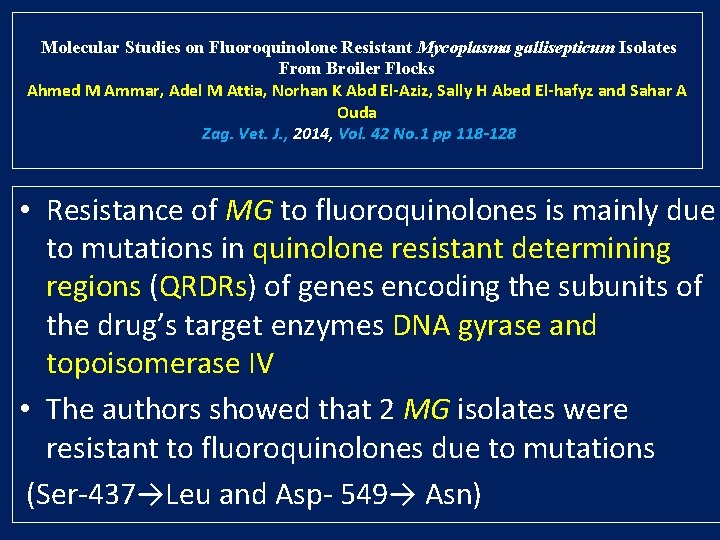
Molecular Studies on Fluoroquinolone Resistant Mycoplasma gallisepticum Isolates From Broiler Flocks Ahmed M Ammar, Adel M Attia, Norhan K Abd El-Aziz, Sally H Abed El-hafyz and Sahar A Ouda Zag. Vet. J. , 2014, Vol. 42 No. 1 pp 118 -128 • Resistance of MG to fluoroquinolones is mainly due to mutations in quinolone resistant determining regions (QRDRs) of genes encoding the subunits of the drug’s target enzymes DNA gyrase and topoisomerase IV • The authors showed that 2 MG isolates were resistant to fluoroquinolones due to mutations (Ser-437→Leu and Asp- 549→ Asn)
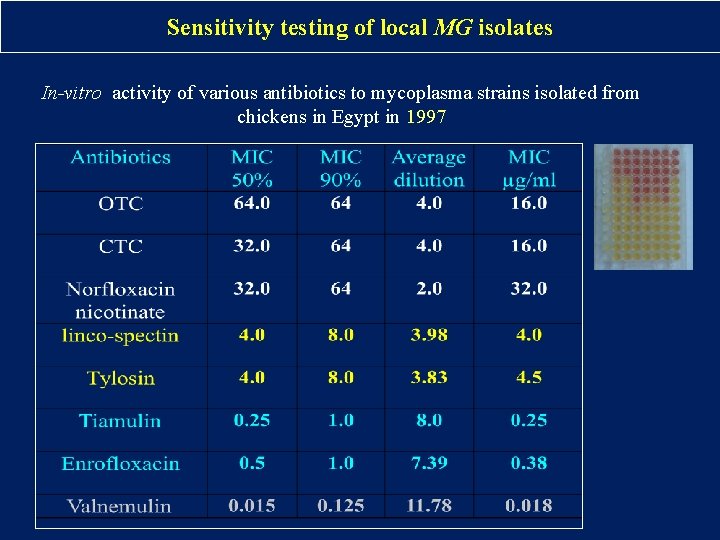
Sensitivity testing of local MG isolates In-vitro activity of various antibiotics to mycoplasma strains isolated from chickens in Egypt in 1997
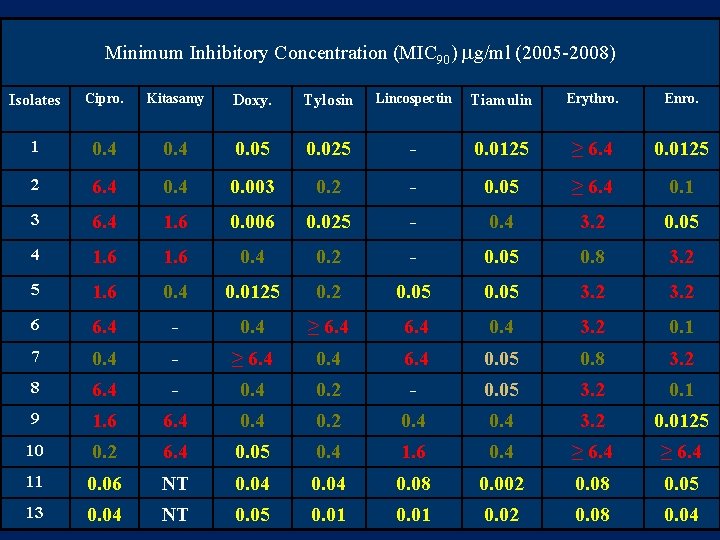
Minimum Inhibitory Concentration (MIC 90) g/ml (2005 -2008) Isolates Cipro. Kitasamy Doxy. Tylosin Lincospectin Tiamulin Erythro. Enro. 1 0. 4 0. 05 0. 025 - 0. 0125 ≥ 6. 4 0. 0125 2 6. 4 0. 003 0. 2 - 0. 05 ≥ 6. 4 0. 1 3 6. 4 1. 6 0. 006 0. 025 - 0. 4 3. 2 0. 05 4 1. 6 0. 4 0. 2 - 0. 05 0. 8 3. 2 5 1. 6 0. 4 0. 0125 0. 2 0. 05 3. 2 6 6. 4 - 0. 4 ≥ 6. 4 0. 4 3. 2 0. 1 7 0. 4 - ≥ 6. 4 0. 4 6. 4 0. 05 0. 8 3. 2 8 6. 4 - 0. 4 0. 2 - 0. 05 3. 2 0. 1 9 1. 6 6. 4 0. 2 0. 4 3. 2 0. 0125 10 0. 2 6. 4 0. 05 0. 4 1. 6 0. 4 ≥ 6. 4 11 0. 06 NT 0. 04 0. 08 0. 002 0. 08 0. 05 13 0. 04 NT 0. 05 0. 01 0. 02 0. 08 0. 04
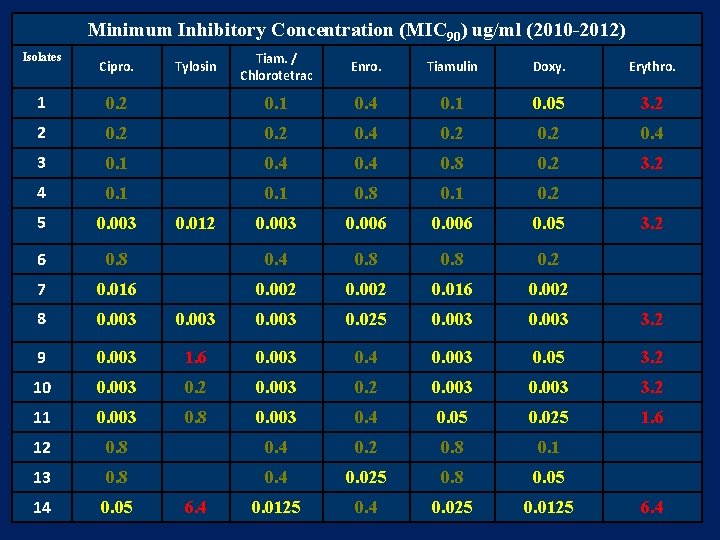
Minimum Inhibitory Concentration (MIC 90) ug/ml (2010 -2012) Isolates Cipro. Tylosin Tiam. / Chlorotetrac Enro. Tiamulin Doxy. Erythro. 1 0. 2 0. 1 0. 4 0. 1 0. 05 3. 2 2 0. 4 0. 2 0. 4 3 0. 1 0. 4 0. 8 0. 2 3. 2 4 0. 1 0. 8 0. 1 0. 2 5 0. 003 0. 006 0. 05 6 0. 8 0. 4 0. 8 0. 2 7 0. 016 0. 002 8 0. 003 0. 025 0. 003 3. 2 9 0. 003 1. 6 0. 003 0. 4 0. 003 0. 05 3. 2 10 0. 003 0. 2 0. 003 3. 2 11 0. 003 0. 8 0. 003 0. 4 0. 05 0. 025 1. 6 12 0. 8 0. 4 0. 2 0. 8 0. 1 13 0. 8 0. 4 0. 025 0. 8 0. 05 14 0. 05 0. 0125 0. 4 0. 025 0. 012 6. 4 3. 2 6. 4
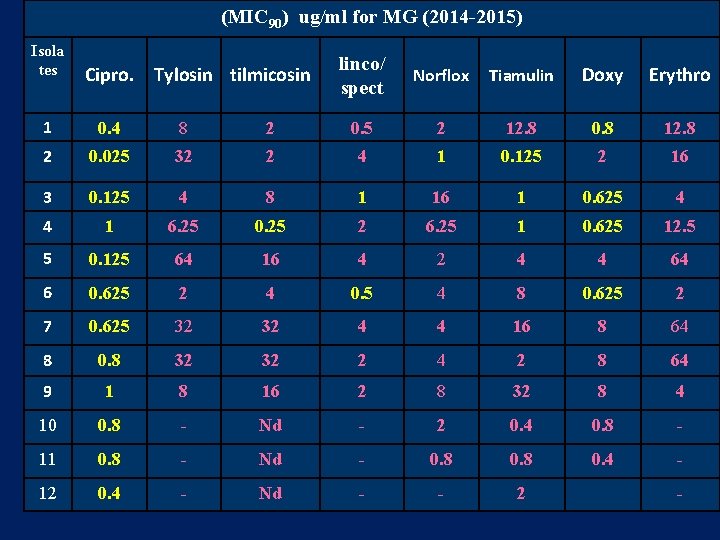
(MIC 90) ug/ml for MG (2014 -2015) Isola tes Cipro. Tylosin tilmicosin linco/ spect Norflox Tiamulin Doxy Erythro 1 0. 4 8 2 0. 5 2 12. 8 0. 8 12. 8 2 0. 025 32 2 4 1 0. 125 2 16 3 0. 125 4 8 1 16 1 0. 625 4 4 1 6. 25 0. 25 2 6. 25 1 0. 625 12. 5 5 0. 125 64 16 4 2 4 4 64 6 0. 625 2 4 0. 5 4 8 0. 625 2 7 0. 625 32 32 4 4 16 8 64 8 0. 8 32 32 2 4 2 8 64 9 1 8 16 2 8 32 8 4 10 0. 8 - Nd - 2 0. 4 0. 8 - 11 0. 8 - Nd - 0. 8 0. 4 - 12 0. 4 - Nd - - 2 -
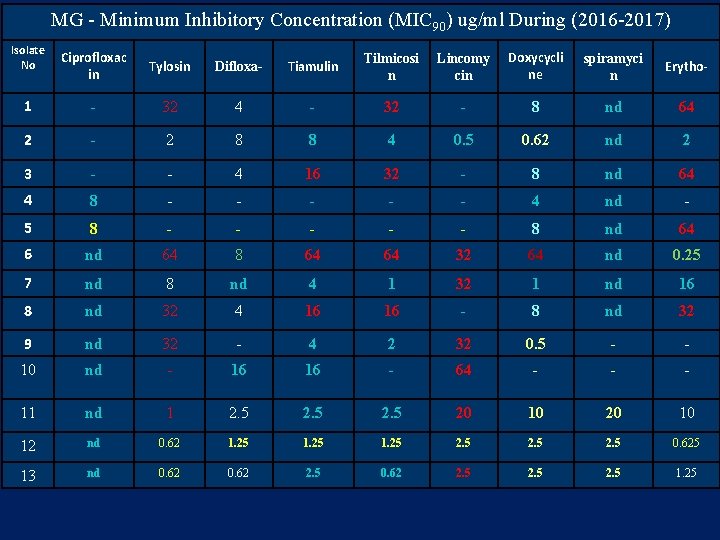
MG - Minimum Inhibitory Concentration (MIC 90) ug/ml During (2016 -2017) Isolate No Ciprofloxac in Tylosin Difloxa- Tiamulin Tilmicosi n Lincomy cin Doxycycli ne spiramyci n Erytho- 1 - 32 4 - 32 - 8 nd 64 2 - 2 8 8 4 0. 5 0. 62 nd 2 3 - - 4 16 32 - 8 nd 64 4 8 - - - 4 nd - 5 8 - - - 8 nd 64 6 nd 64 8 64 64 32 64 nd 0. 25 7 nd 8 nd 4 1 32 1 nd 16 8 nd 32 4 16 16 - 8 nd 32 9 nd 32 - 4 2 32 0. 5 - - 10 nd - 16 16 - 64 - - - 11 nd 1 2. 5 20 10 12 nd 0. 62 1. 25 2. 5 0. 625 13 nd 0. 62 2. 5 2. 5 1. 25
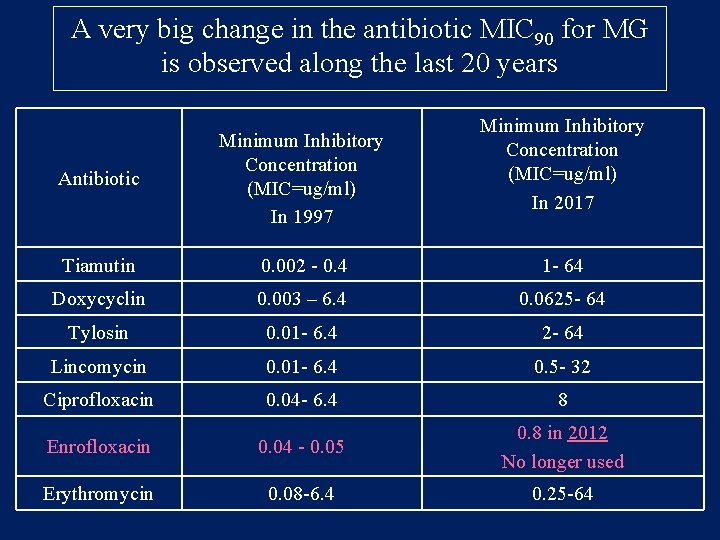
A very big change in the antibiotic MIC 90 for MG is observed along the last 20 years Minimum Inhibitory Concentration (MIC=ug/ml) In 2017 Antibiotic Minimum Inhibitory Concentration (MIC=ug/ml) In 1997 Tiamutin 0. 002 - 0. 4 1 - 64 Doxycyclin 0. 003 – 6. 4 0. 0625 - 64 Tylosin 0. 01 - 6. 4 2 - 64 Lincomycin 0. 01 - 6. 4 0. 5 - 32 Ciprofloxacin 0. 04 - 6. 4 8 Enrofloxacin 0. 04 - 0. 05 0. 8 in 2012 No longer used Erythromycin 0. 08 -6. 4 0. 25 -64
Protective immune response of Mycoplasma gallisepticum vaccines in poultry Hussein Ael-D, El-Shaib TM, Saoud SM, Shalaby NA, Sultan H, Ragab AM Egypt J Immunol. 2007; 14(2): 93 -9. n n n n The authors compared between 3 types of inactivated MG adjuvant vaccines The binary ethyleneimine, saponin- and formalin inactivated vaccines The highest antibodies ELISA titers were recorded in the group of binary ethyleneimine that peaked 2 weeks post-vaccination and remained elevated till the end of experiment The saponin-inactivated vaccine elicited a similar immune response to binary ethyleneimine, The least immunizing effect was observed in the formalin inactivated MG bacterin Intrasinus injection of 1 x 10⁹ colony forming units of virulent "R" strain of MG of vaccinated birds was performed A similar degree of protection was afforded by binary ethyleneimine and saponin inactivated bacterins as well as the live "F" strain vaccine The formalin-inactivated MG bacterin showed lower degree of protection
Sales of different Mycoplasma vaccines in Egypt in 2017 Non official data - personal communication about 10 million doses annually as a total 4. 5 million broiler breeders were vaccinated by TS -11 and MSH strain n 0. 5 million layers were vaccinated by both vaccines n 1. 5 -2 million broiler breeders and layers were vaccinated by Fstrain vaccine (majority is breeders) 2 million broiler breeders were vaccinated by oil inactivated MG n vaccine (80% were vaccinated by oil inactivated alone, either one shot, some twice, and 20% were vaccinated by both live Fstrain and oil inactivated vaccine) 1 million breeders were vaccinated with Recombinant fowlpox n virus vaccine expressing M. gallisepticum r. FPMG n
Mycoplasma Dept. of the Animal Health Research Institute Mohy Sabry, Ali El Ebeedy, Laila El- Shaabeiny, El-Shater SA, Sabry Ismail Eissa, Manal AM, Mona MS, Dardeer MA, Zeinab RM, Hasan AM, Sahar AO, Eid El-Said Abd Elaziz, Dina YE, Hanaa AA, Yousreya HM, Rania HA et al
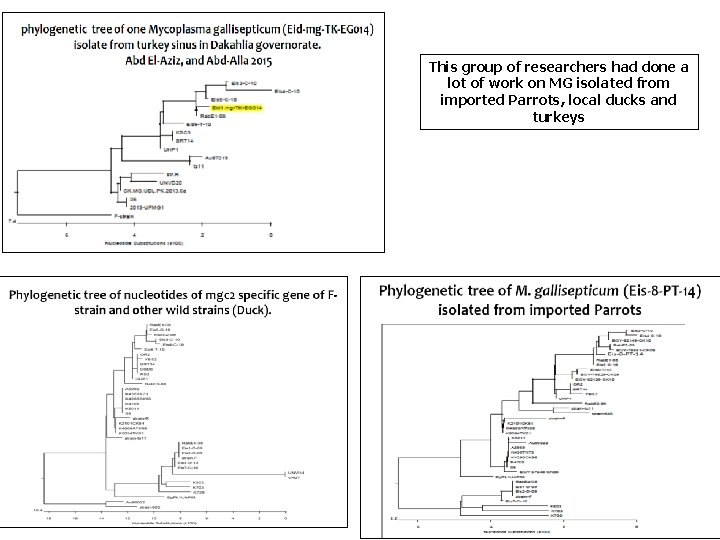
This group of researchers had done a lot of work on MG isolated from imported Parrots, local ducks and turkeys
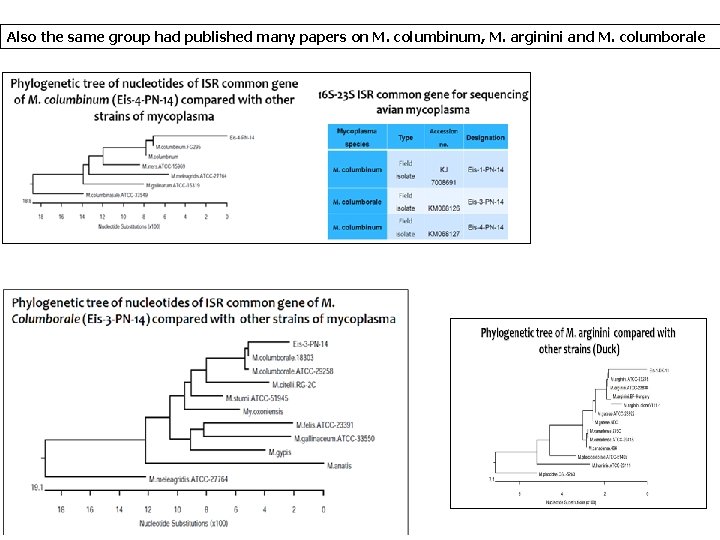
Also the same group had published many papers on M. columbinum, M. arginini and M. columborale
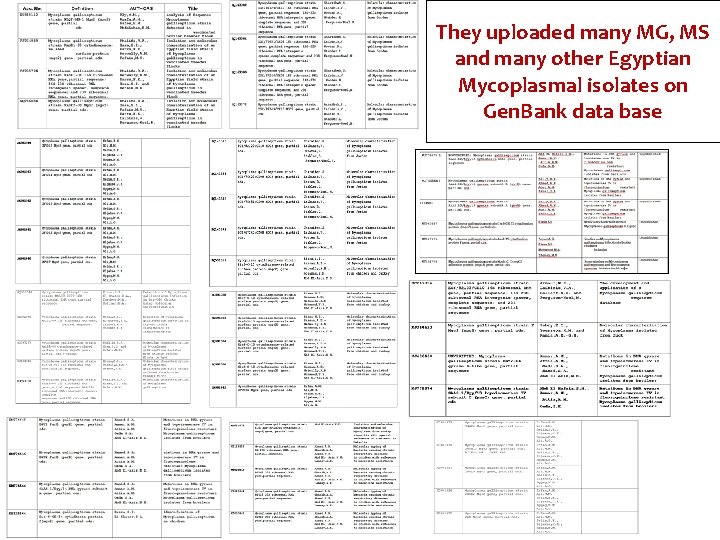
They uploaded many MG, MS and many other Egyptian Mycoplasmal isolates on Gen. Bank data base
sequence of vlh. A gene of ﺍﻟﺤﻤﺪ ﻟﻠﻪ ﺭﺏ ﺍﻟﻌﺎﻟﻤﻴﻦ Phylogenetic tree based on the partial M. synoviae. Thank You The sequences were obtained from the 9 isolates in this study and sequence from AF 464936. 1 (MS-H strain) and other sequencing of other strain from gene bank q There was 92. 9% similarity between joint M. synoviae isolates ﻟﻠﺴﺎﺪﺓ ﺷﻜﺮﺍ vaccine and MS-H ﺍﻟﺤﻀﻮﺭ q There was 89. 5% similarity between respiratory M. synoviae isolates and MS-H vaccine q There was 85. 5% similarity between joint M. synoviae isolates and respiratory M. synoviae isolates q All joint samples showed complete similarity to each other
Mycoplasma synoviae
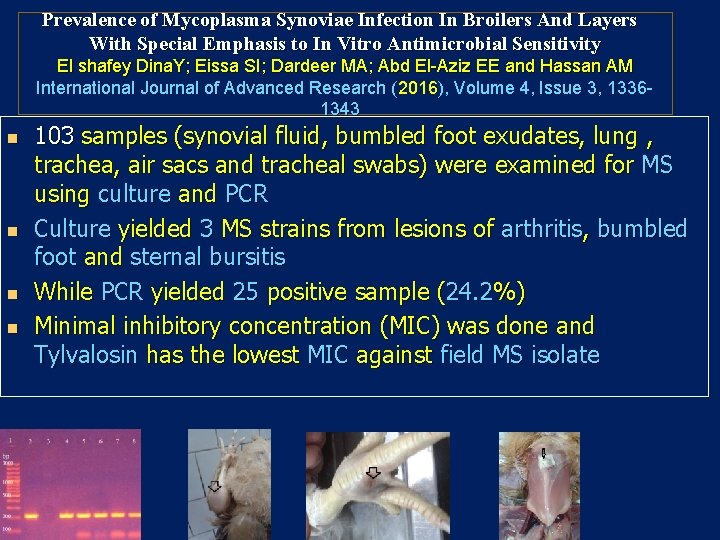
Prevalence of Mycoplasma Synoviae Infection In Broilers And Layers With Special Emphasis to In Vitro Antimicrobial Sensitivity El shafey Dina. Y; Eissa SI; Dardeer MA; Abd El-Aziz EE and Hassan AM International Journal of Advanced Research (2016), Volume 4, Issue 3, 13361343 n n 103 samples (synovial fluid, bumbled foot exudates, lung , trachea, air sacs and tracheal swabs) were examined for MS using culture and PCR Culture yielded 3 MS strains from lesions of arthritis, bumbled foot and sternal bursitis While PCR yielded 25 positive sample (24. 2%) Minimal inhibitory concentration (MIC) was done and Tylvalosin has the lowest MIC against field MS isolate
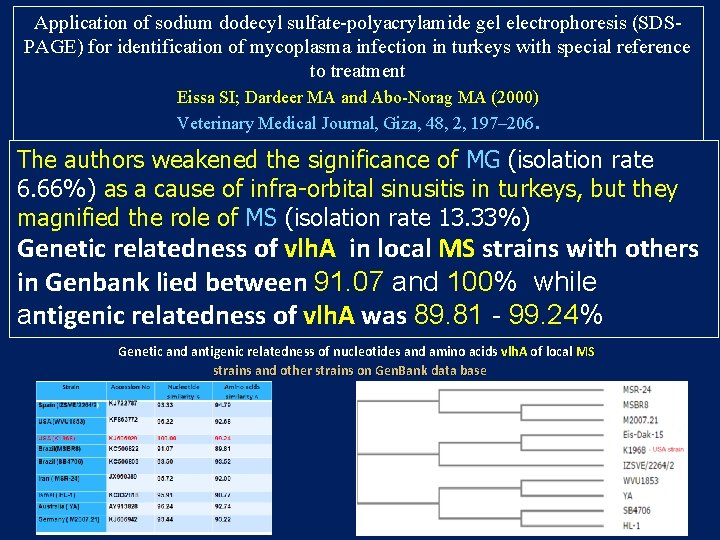
Application of sodium dodecyl sulfate-polyacrylamide gel electrophoresis (SDSPAGE) for identification of mycoplasma infection in turkeys with special reference to treatment Eissa SI; Dardeer MA and Abo-Norag MA (2000) Veterinary Medical Journal, Giza, 48, 2, 197– 206. The authors weakened the significance of MG (isolation rate 6. 66%) as a cause of infra-orbital sinusitis in turkeys, but they magnified the role of MS (isolation rate 13. 33%) Genetic relatedness of vlh. A in local MS strains with others in Genbank lied between 91. 07 and 100% while antigenic relatedness of vlh. A was 89. 81 - 99. 24% Genetic and antigenic relatedness of nucleotides and amino acids vlh. A of local MS strains and other strains on Gen. Bank data base
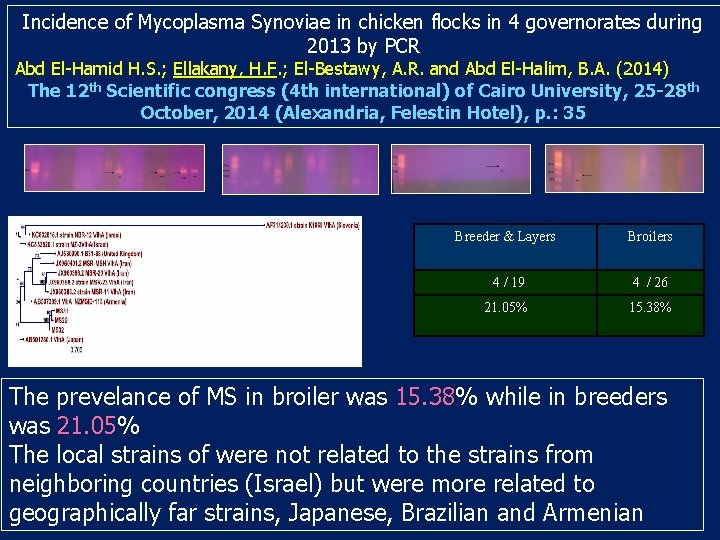
Incidence of Mycoplasma Synoviae in chicken flocks in 4 governorates during 2013 by PCR Abd El-Hamid H. S. ; Ellakany, H. F. ; El-Bestawy, A. R. and Abd El-Halim, B. A. (2014) The 12 th Scientific congress (4 th international) of Cairo University, 25 -28 th October, 2014 (Alexandria, Felestin Hotel), p. : 35 Breeder & Layers Broilers 4 / 19 4 / 26 21. 05% 15. 38% The prevelance of MS in broiler was 15. 38% while in breeders was 21. 05% The local strains of were not related to the strains from neighboring countries (Israel) but were more related to geographically far strains, Japanese, Brazilian and Armenian
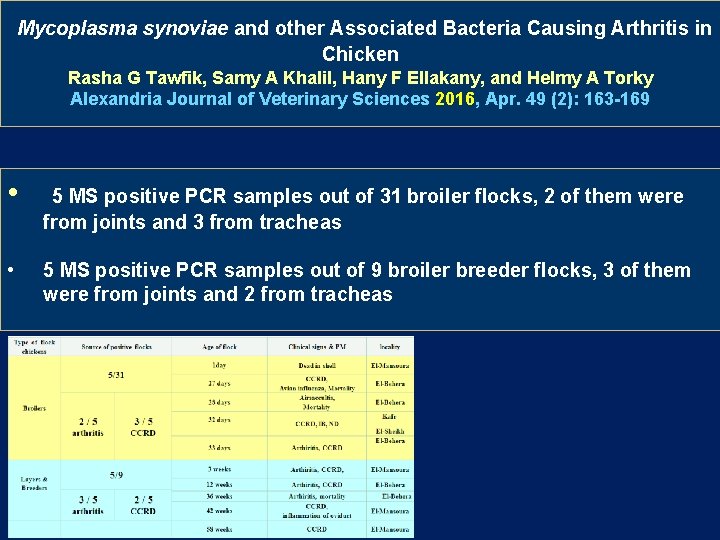
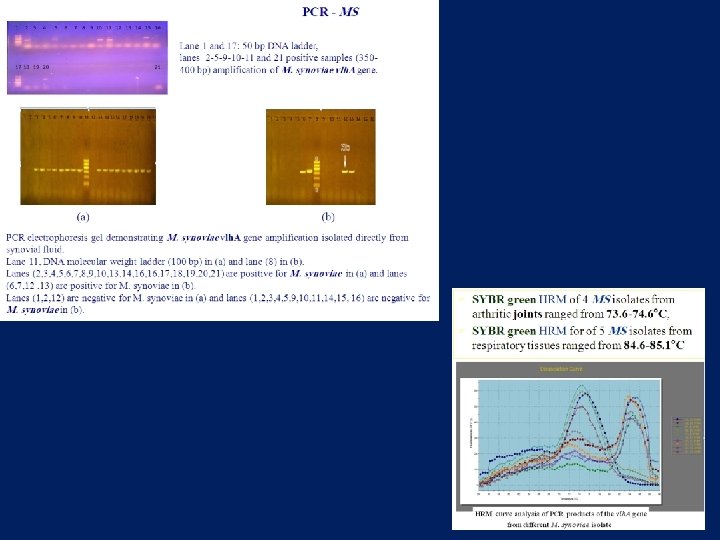
Mycoplasma synoviae and other Associated Bacteria Causing Arthritis in Chicken Rasha G Tawfik, Samy A Khalil, Hany F Ellakany, and Helmy A Torky Alexandria Journal of Veterinary Sciences 2016, Apr. 49 (2): 163 -169 • • 5 MS positive PCR samples out of 31 broiler flocks, 2 of them were from joints and 3 from tracheas 5 MS positive PCR samples out of 9 broiler breeder flocks, 3 of them were from joints and 2 from tracheas
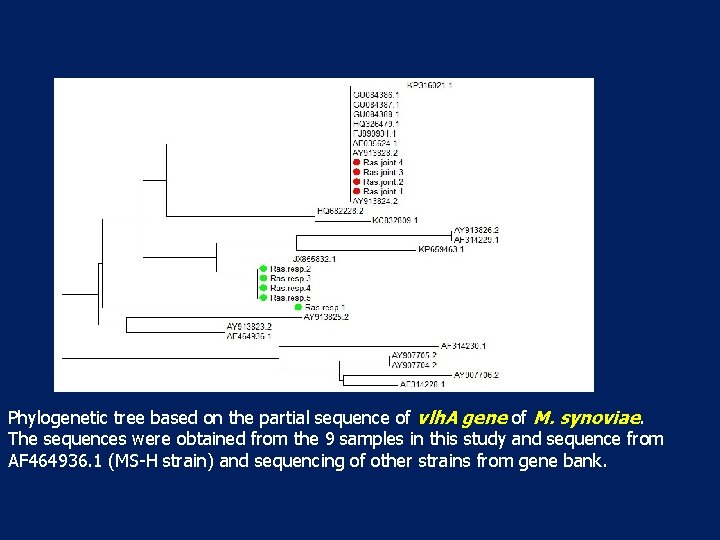
Regarding the partial vlh. A gene sequences All joint samples showed complete similarity among themselves. There was 92. 9% similarity between vaccine MS-H and joint M. synoviae isolates There was 89. 5% similarity between vaccine MS-H and respiratory M. synoviae isolates. There was 85. 5% similarity between joint M. synoviae isolates and respiratory M. synoviae isolates.
Phylogenetic tree based on the partial sequence of vlh. A gene of M. synoviae. The sequences were obtained from the 9 samples in this study and sequence from AF 464936. 1 (MS-H strain) and sequencing of other strains from gene bank.