
Review of the Autonomic Nervous System Part 1

- Slides: 29
Review of the Autonomic Nervous System Part 1 Thomas E. Tenner, Jr. , Ph. D. Dept. of Medical Education Dept. Pharmacology & Neuroscience tom. tenner@ttuhsc. edu 743 -7169 1
Recommended Background Reading : Chapter 6 “Introduction to Autonomic Pharmacology” Basic and Clinical Pharmacology Bertram Katzung (13 th Edition) 2
Learning Objectives: Be able to: 1) Describe the functions of the sympathoadrenal (SAS) and parasympathetic (PNS) systems of the Autonomic Nervous system, and their interactions. 2) Name the major cholinoceptors and adrenoceptors of the Autonomic Nervous System and identify their important receptor subtypes. 3) Associate the actions of membrane receptor subtypes with appropriate “second messenger” systems. 4) Describe the interplay of SAS and PNS 5) Explain Autonomic control of Blood Pressure 3
FUNCTION OF THE ANS 4
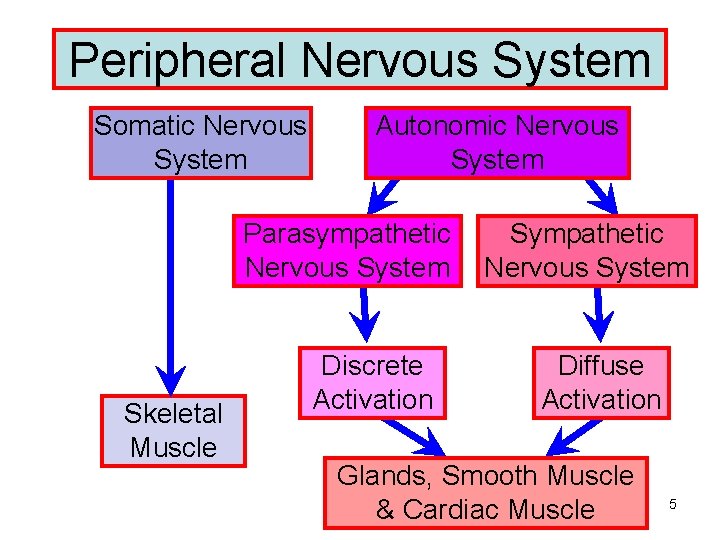
Peripheral Nervous System Somatic Nervous System Autonomic Nervous System Parasympathetic Nervous System Skeletal Muscle Discrete Activation Sympathetic Nervous System Diffuse Activation Glands, Smooth Muscle & Cardiac Muscle 5
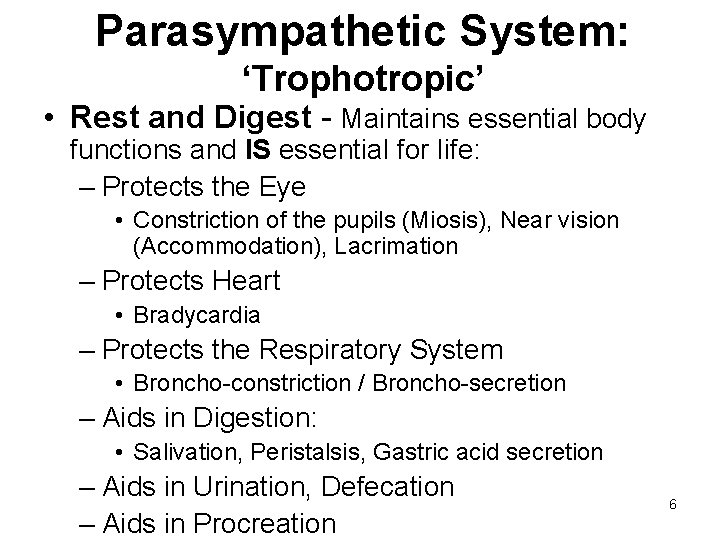
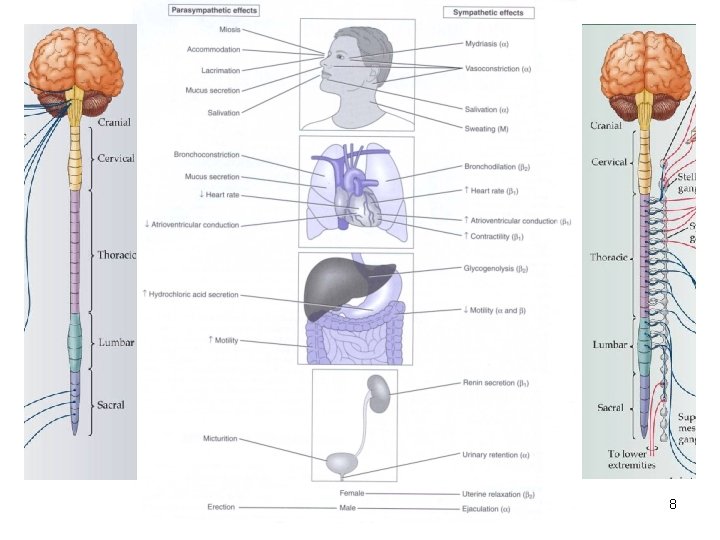
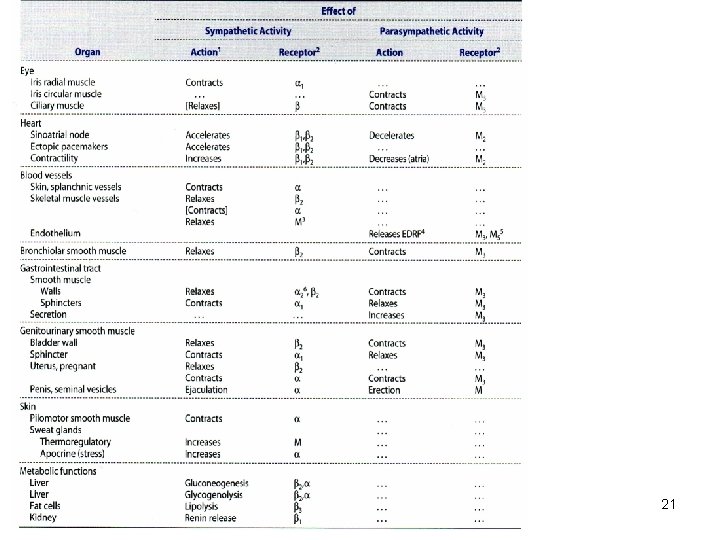
Parasympathetic System: ‘Trophotropic’ • Rest and Digest - Maintains essential body functions and IS essential for life: – Protects the Eye • Constriction of the pupils (Miosis), Near vision (Accommodation), Lacrimation – Protects Heart • Bradycardia – Protects the Respiratory System • Broncho-constriction / Broncho-secretion – Aids in Digestion: • Salivation, Peristalsis, Gastric acid secretion – Aids in Urination, Defecation – Aids in Procreation 6
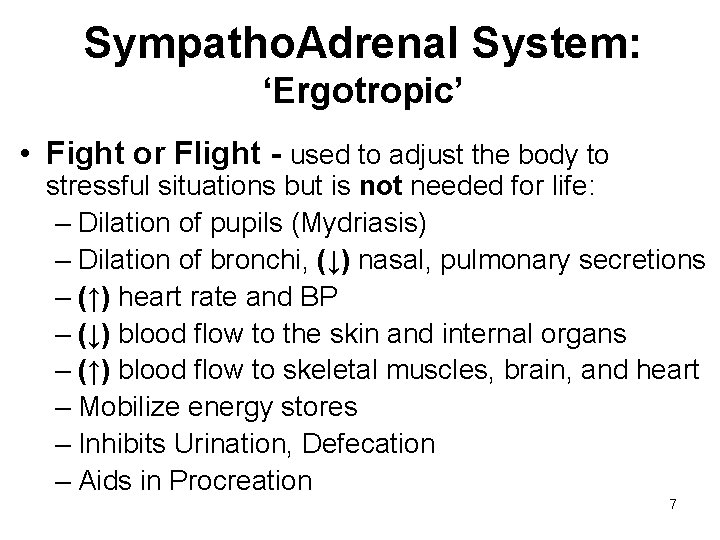
Sympatho. Adrenal System: ‘Ergotropic’ • Fight or Flight - used to adjust the body to stressful situations but is not needed for life: – Dilation of pupils (Mydriasis) – Dilation of bronchi, (↓) nasal, pulmonary secretions – (↑) heart rate and BP – (↓) blood flow to the skin and internal organs – (↑) blood flow to skeletal muscles, brain, and heart – Mobilize energy stores – Inhibits Urination, Defecation – Aids in Procreation 7
8
DESCRIBE THE NEUROCHEMISTRY OF ACETYLCHOLINE, NOREPINEPHRINE, AND EPINEPHRINE 9
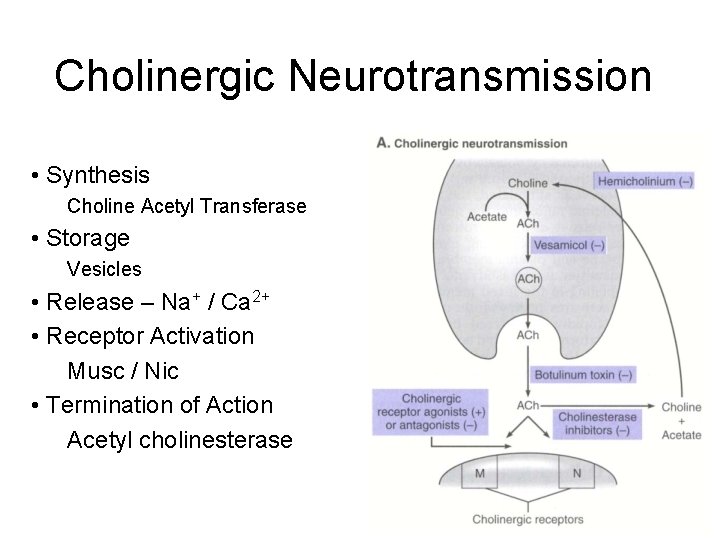
Cholinergic Neurotransmission • Synthesis Choline Acetyl Transferase • Storage Vesicles • Release – Na+ / Ca 2+ • Receptor Activation Musc / Nic • Termination of Action Acetyl cholinesterase 10
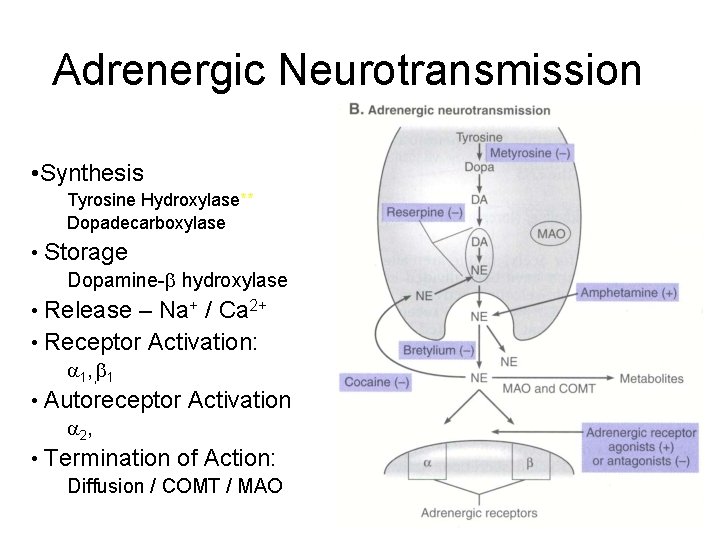
Adrenergic Neurotransmission • Synthesis Tyrosine Hydroxylase** Dopadecarboxylase • Storage Dopamine- hydroxylase • Release – Na+ / Ca 2+ • Receptor Activation: 1, , 1 • Autoreceptor Activation 2 , • Termination of Action: Diffusion / COMT / MAO 11
AUTONOMIC RECEPTORS AND SIGNAL TRANSDUCTION MECHANISMS 12
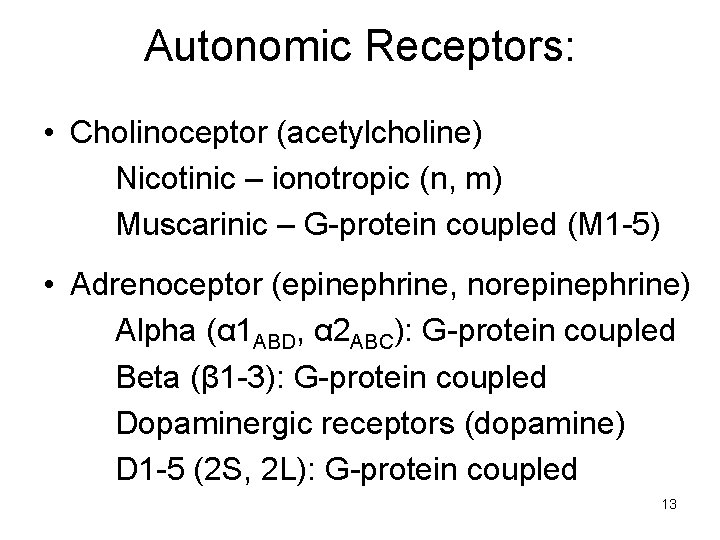
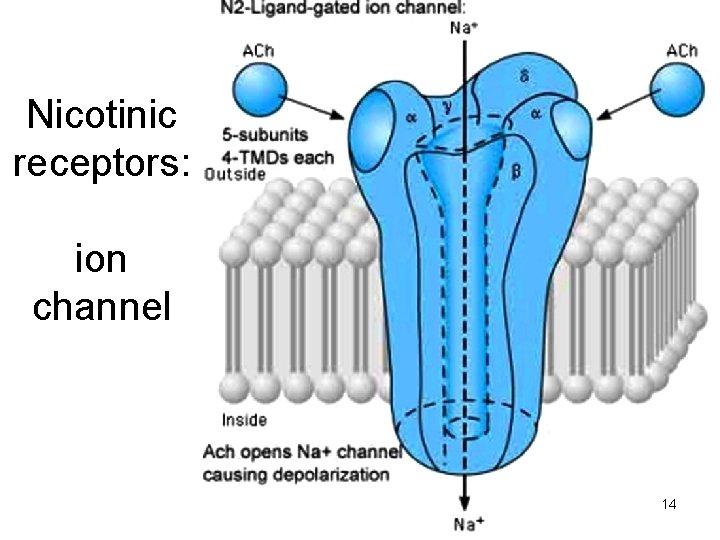
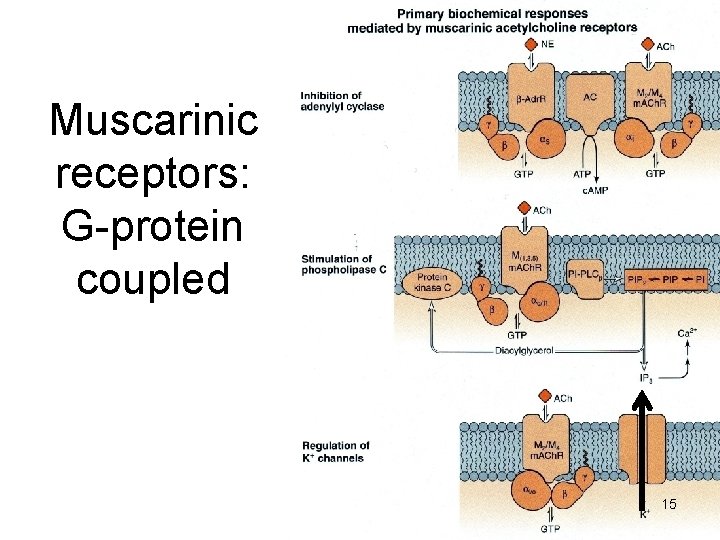
Autonomic Receptors: • Cholinoceptor (acetylcholine) Nicotinic – ionotropic (n, m) Muscarinic – G-protein coupled (M 1 -5) • Adrenoceptor (epinephrine, norepinephrine) Alpha (α 1 ABD, α 2 ABC): G-protein coupled Beta (β 1 -3): G-protein coupled Dopaminergic receptors (dopamine) D 1 -5 (2 S, 2 L): G-protein coupled 13
Nicotinic receptors: ion channel 14
Muscarinic receptors: G-protein coupled 15
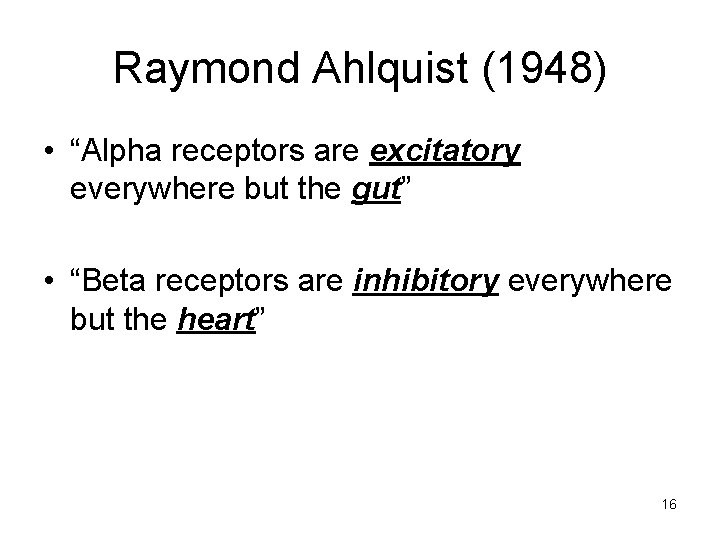
Raymond Ahlquist (1948) • “Alpha receptors are excitatory everywhere but the gut” • “Beta receptors are inhibitory everywhere but the heart” 16
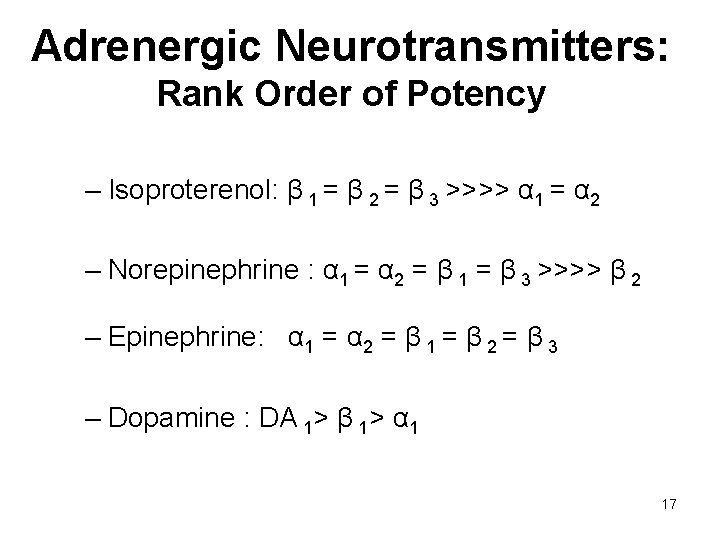
Adrenergic Neurotransmitters: Rank Order of Potency – Isoproterenol: β 1 = β 2 = β 3 >>>> α 1 = α 2 – Norepinephrine : α 1 = α 2 = β 1 = β 3 >>>> β 2 – Epinephrine: α 1 = α 2 = β 1 = β 2 = β 3 – Dopamine : DA 1> β 1> α 1 17
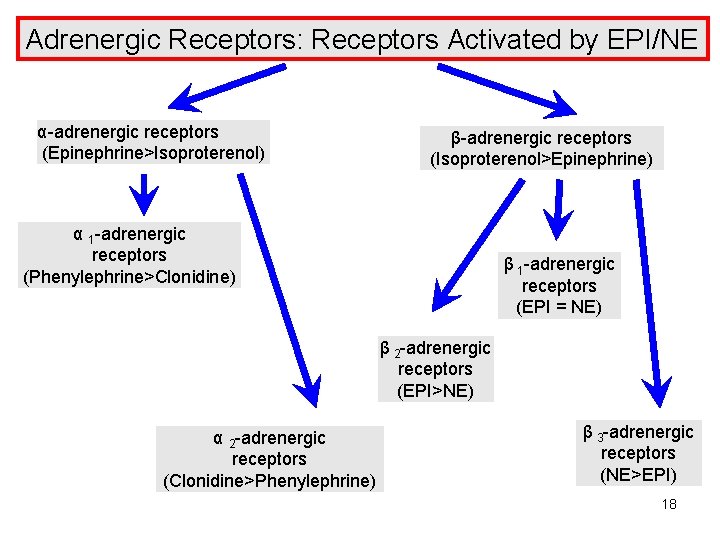
Adrenergic Receptors: Receptors Activated by EPI/NE α-adrenergic receptors (Epinephrine>Isoproterenol) β-adrenergic receptors (Isoproterenol>Epinephrine) α 1 -adrenergic receptors (Phenylephrine>Clonidine) β 1 -adrenergic receptors (EPI = NE) β 2 -adrenergic receptors (EPI>NE) α 2 -adrenergic receptors (Clonidine>Phenylephrine) β 3 -adrenergic receptors (NE>EPI) 18
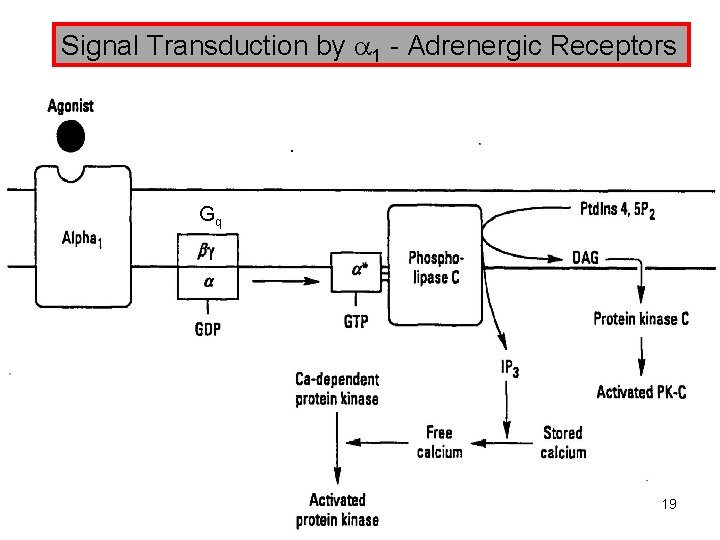
Signal Transduction by 1 - Adrenergic Receptors Gq 19
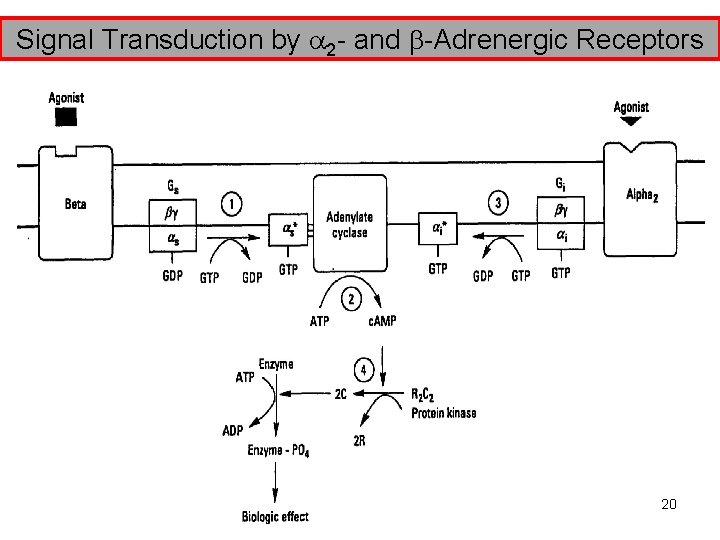
Signal Transduction by 2 - and -Adrenergic Receptors 20
21
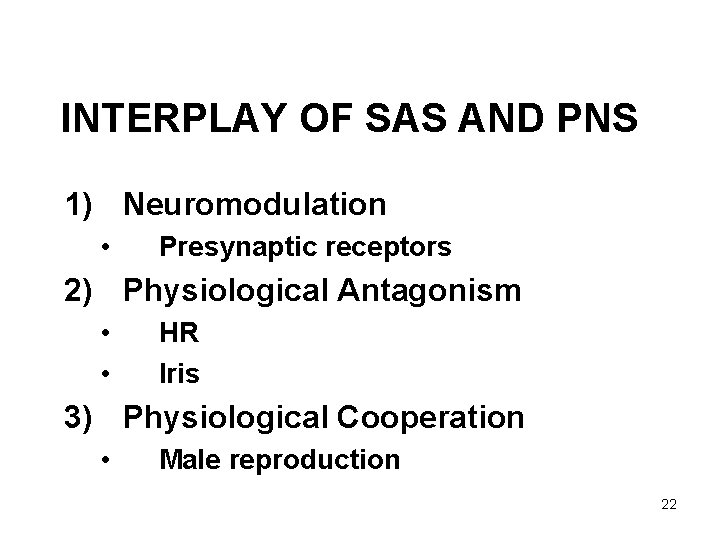
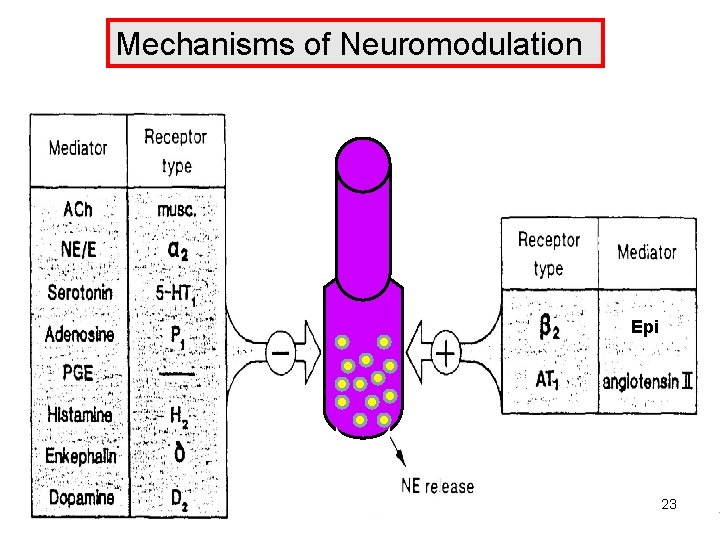
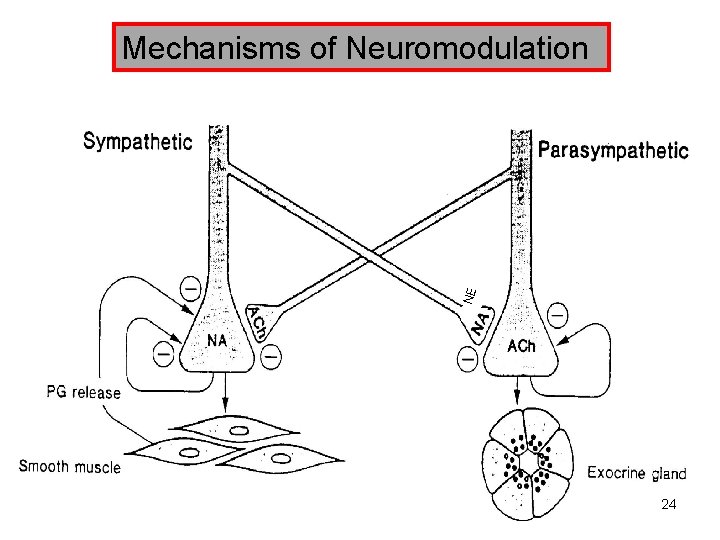
INTERPLAY OF SAS AND PNS 1) Neuromodulation • Presynaptic receptors 2) Physiological Antagonism • • HR Iris 3) Physiological Cooperation • Male reproduction 22
Mechanisms of Neuromodulation Epi 23
NE Mechanisms of Neuromodulation 24
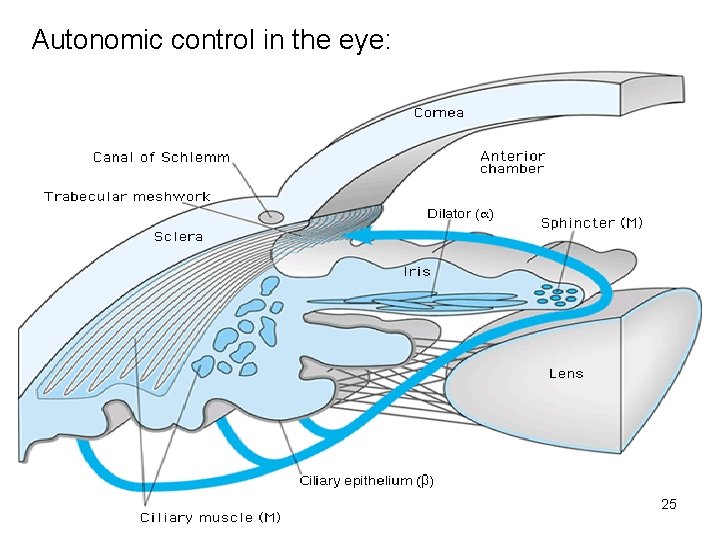
Autonomic control in the eye: 25
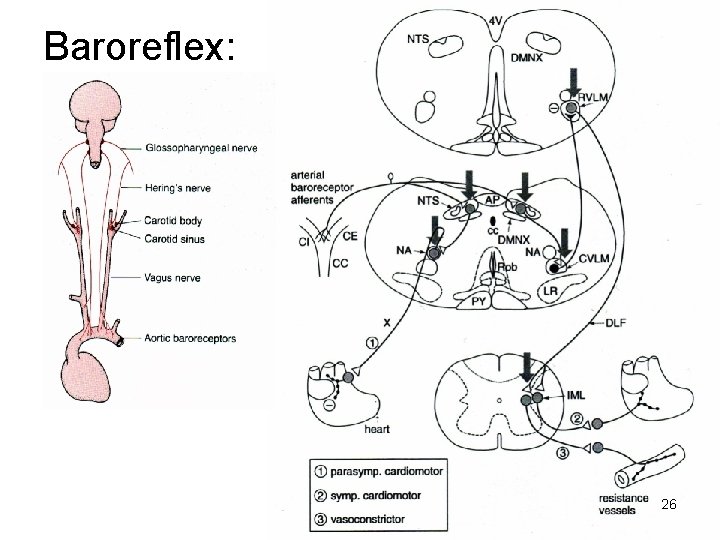
Baroreflex: 26
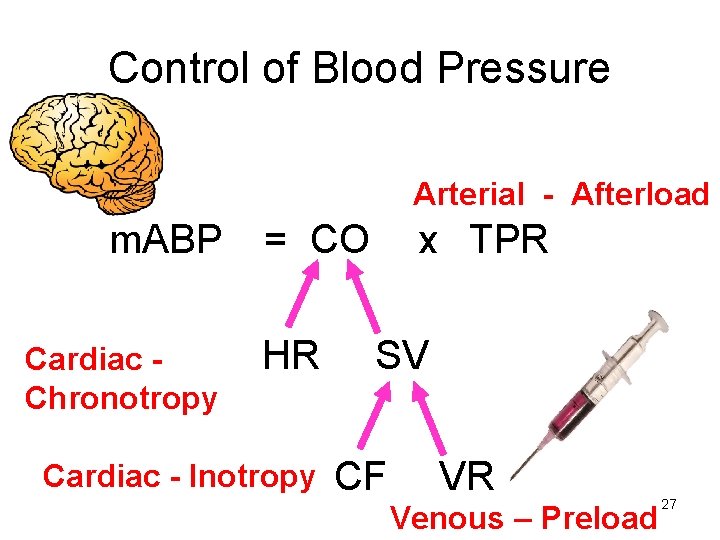
Control of Blood Pressure Arterial - Afterload m. ABP Cardiac Chronotropy = CO HR Cardiac - Inotropy x TPR SV CF VR Venous – Preload 27
Drugs to know… 28
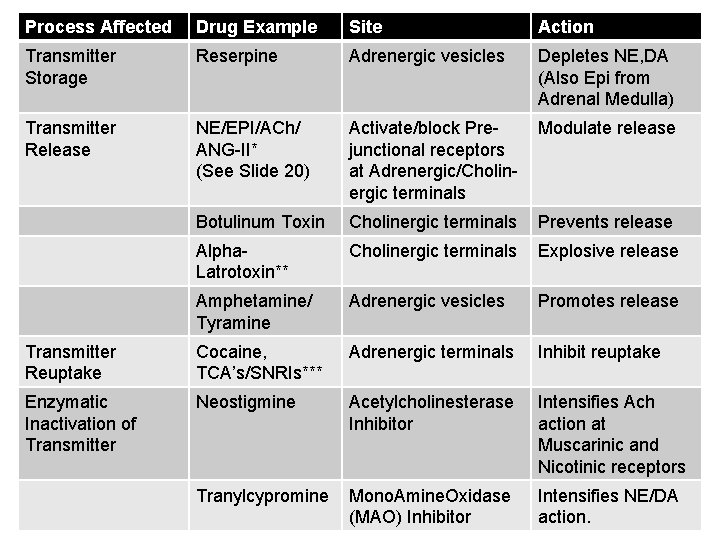
Process Affected Drug Example Site Action Transmitter Storage Reserpine Adrenergic vesicles Depletes NE, DA (Also Epi from Adrenal Medulla) Transmitter Release NE/EPI/ACh/ ANG-II* (See Slide 20) Activate/block Prejunctional receptors at Adrenergic/Cholinergic terminals Modulate release Botulinum Toxin Cholinergic terminals Prevents release Alpha. Latrotoxin** Cholinergic terminals Explosive release Amphetamine/ Tyramine Adrenergic vesicles Promotes release Transmitter Reuptake Cocaine, TCA’s/SNRIs*** Adrenergic terminals Inhibit reuptake Enzymatic Inactivation of Transmitter Neostigmine Acetylcholinesterase Inhibitor Intensifies Ach action at Muscarinic and Nicotinic receptors Tranylcypromine Mono. Amine. Oxidase (MAO) Inhibitor Intensifies NE/DA 29 action.