
Review of Pronouns words which take the place
- Slides: 6
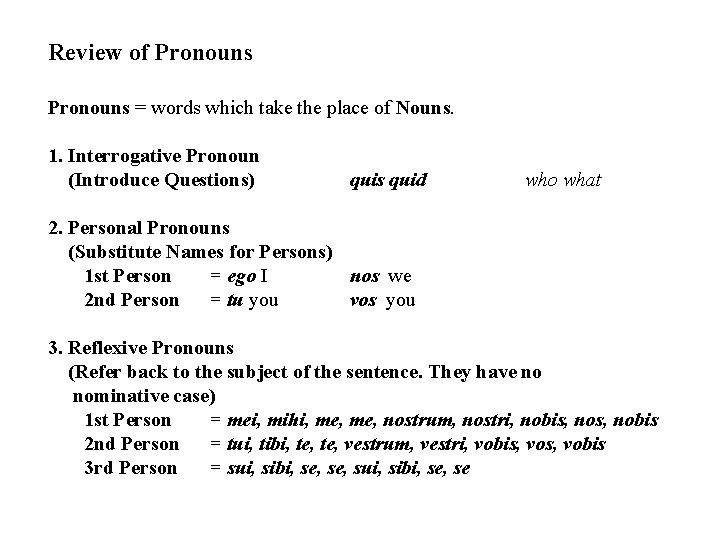
Review of Pronouns = words which take the place of Nouns. 1. Interrogative Pronoun (Introduce Questions) quis quid who what 2. Personal Pronouns (Substitute Names for Persons) 1 st Person = ego I nos we 2 nd Person = tu you vos you 3. Reflexive Pronouns (Refer back to the subject of the sentence. They have no nominative case) 1 st Person = mei, mihi, me, nostrum, nostri, nobis, nobis 2 nd Person = tui, tibi, te, vestrum, vestri, vobis, vobis 3 rd Person = sui, sibi, se, sui, sibi, se
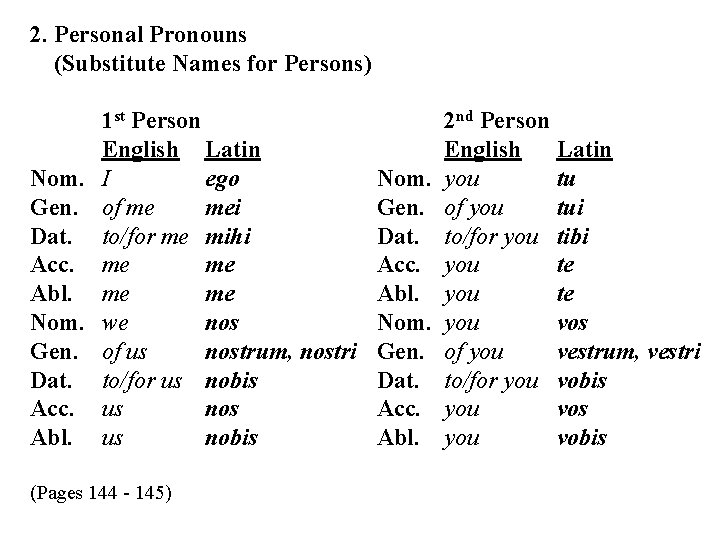
2. Personal Pronouns (Substitute Names for Persons) Nom. Gen. Dat. Acc. Abl. 1 st Person English Latin I ego of me mei to/for me mihi me me we nos of us nostrum, nostri to/for us nobis (Pages 144 - 145) Nom. Gen. Dat. Acc. Abl. 2 nd Person English Latin you tu of you tui to/for you tibi you te you vos of you vestrum, vestri to/for you vobis
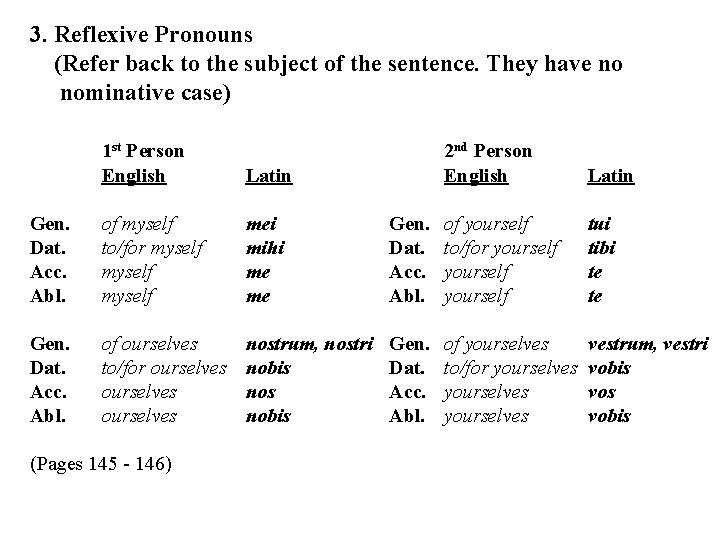
3. Reflexive Pronouns (Refer back to the subject of the sentence. They have no nominative case) 1 st Person English Latin Gen. Dat. Acc. Abl. of myself to/for myself mei mihi me me Gen. Dat. Acc. Abl. of ourselves to/for ourselves nostrum, nostri nobis (Pages 145 - 146) 2 nd Person English Latin Gen. Dat. Acc. Abl. of yourself to/for yourself tui tibi te te Gen. Dat. Acc. Abl. of yourselves to/for yourselves vestrum, vestri vobis
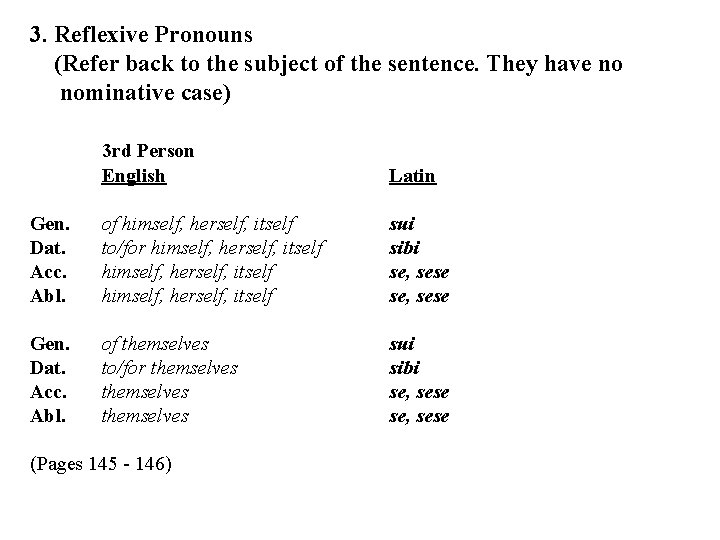
3. Reflexive Pronouns (Refer back to the subject of the sentence. They have no nominative case) 3 rd Person English Latin Gen. Dat. Acc. Abl. of himself, herself, itself to/for himself, herself, itself sui sibi se, sese Gen. Dat. Acc. Abl. of themselves to/for themselves sui sibi se, sese (Pages 145 - 146)
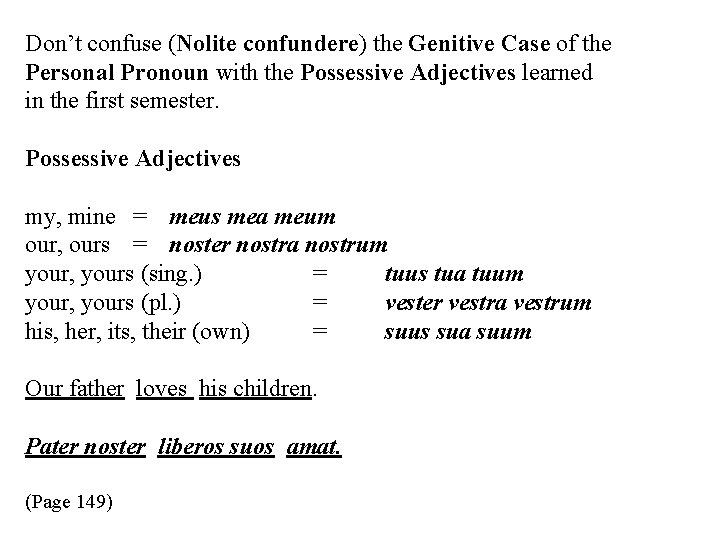
Don’t confuse (Nolite confundere) the Genitive Case of the Personal Pronoun with the Possessive Adjectives learned in the first semester. Possessive Adjectives my, mine = meus mea meum our, ours = noster nostra nostrum your, yours (sing. ) = tuus tua tuum your, yours (pl. ) = vester vestra vestrum his, her, its, their (own) = suus sua suum Our father loves his children. Pater noster liberos suos amat. (Page 149)
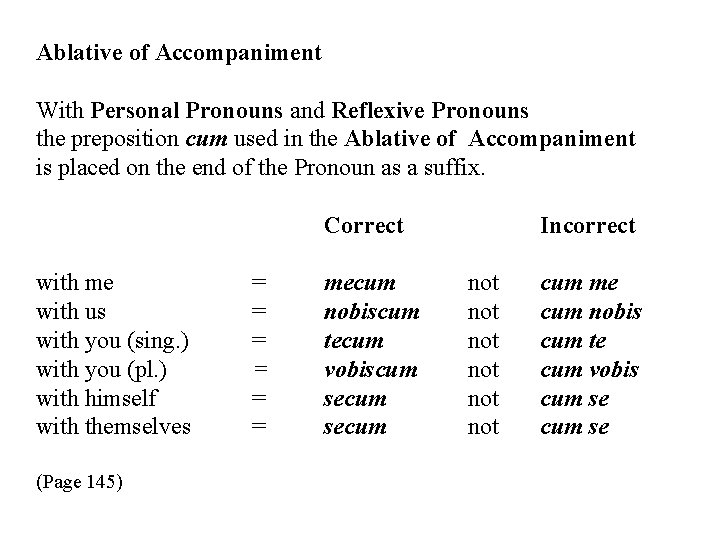
Ablative of Accompaniment With Personal Pronouns and Reflexive Pronouns the preposition cum used in the Ablative of Accompaniment is placed on the end of the Pronoun as a suffix. Correct with me with us with you (sing. ) with you (pl. ) with himself with themselves (Page 145) = = = mecum nobiscum tecum vobiscum secum Incorrect not not not cum me cum nobis cum te cum vobis cum se