
Review of Matter Introduction to Periodic Table matter

Review of Matter Introduction to Periodic Table
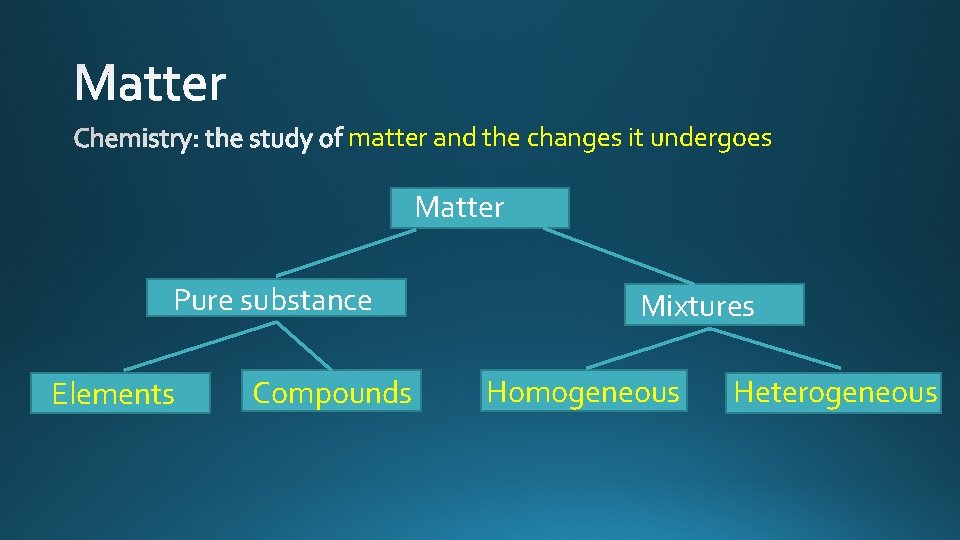
matter and the changes it undergoes Matter Pure substance Elements Compounds Mixtures Homogeneous Heterogeneous
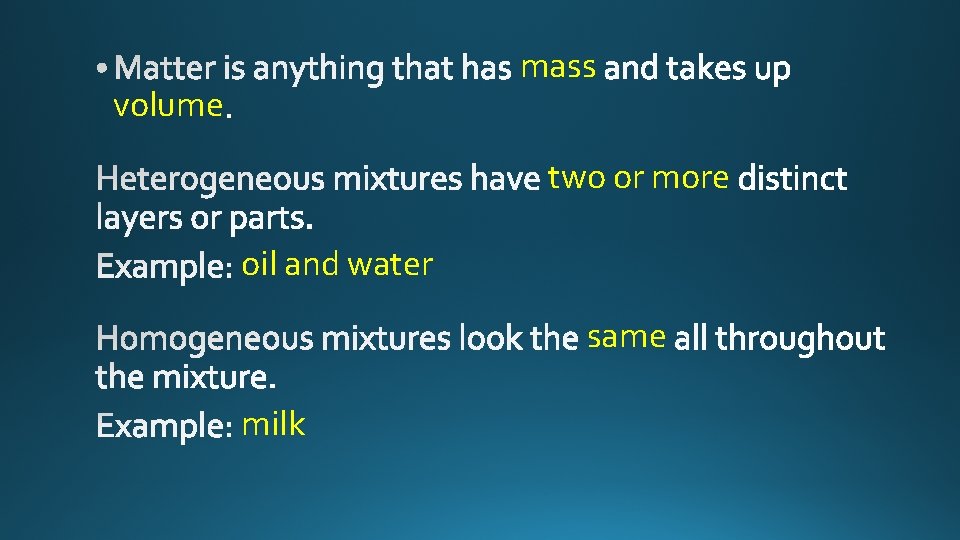
mass volume two or more oil and water same milk
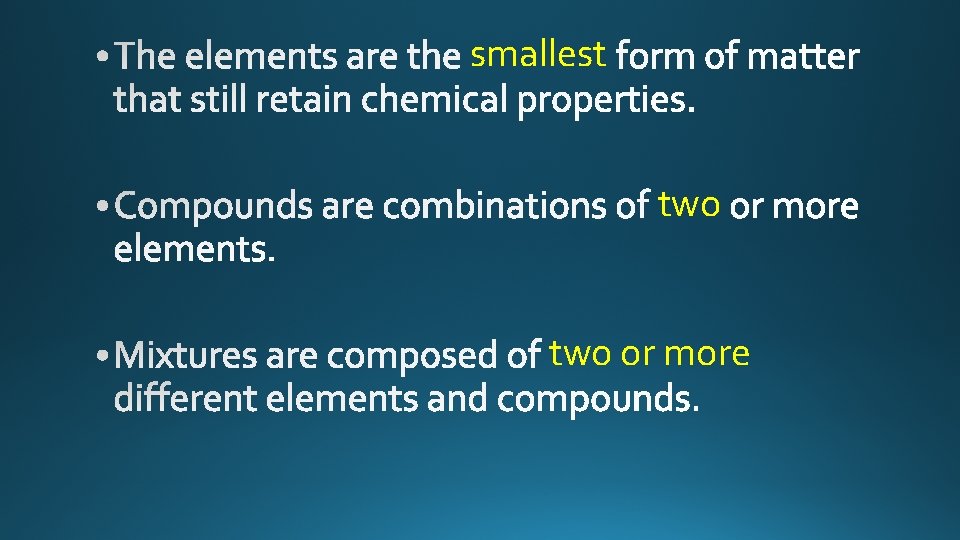
smallest two or more
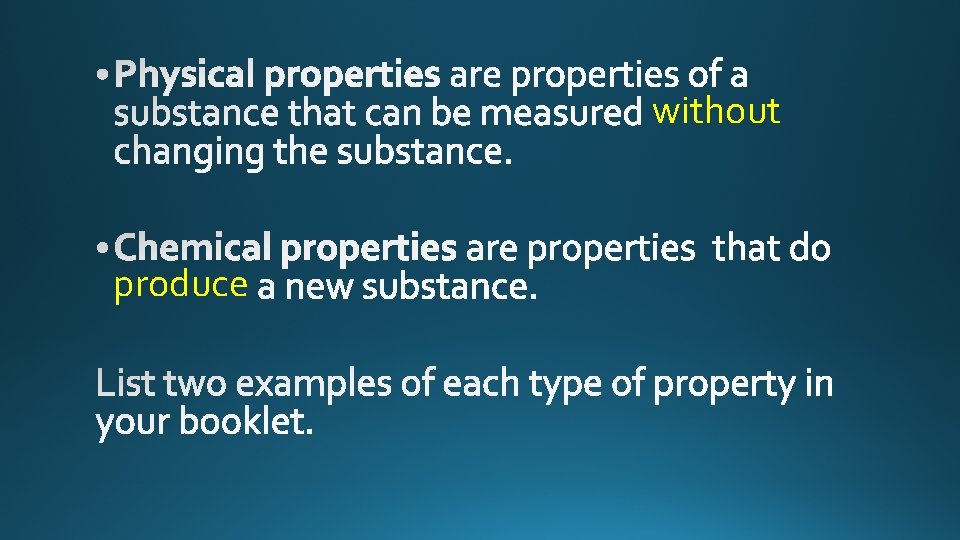
without produce
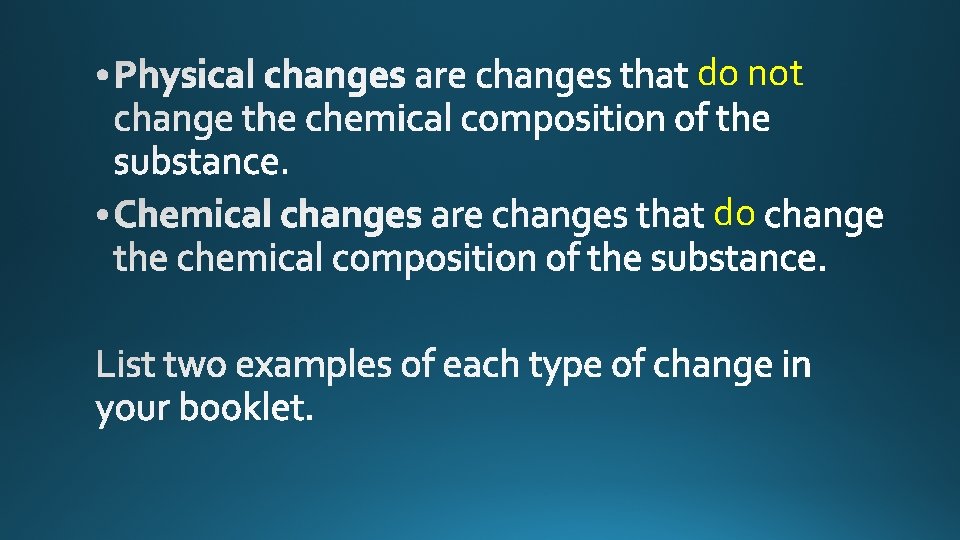
do not do
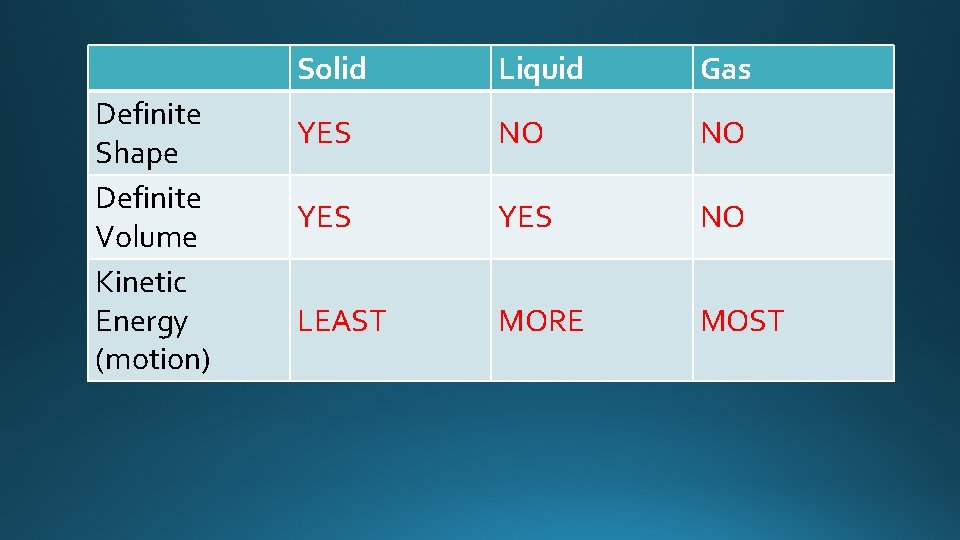
Definite Shape Definite Volume Kinetic Energy (motion) Solid Liquid Gas YES NO NO YES NO LEAST MORE MOST
The History of the Modern Periodic Table
During the nineteenth century, chemists began to categorize the elements according to similarities in their physical and chemical properties. The end result of these studies was our modern periodic table.
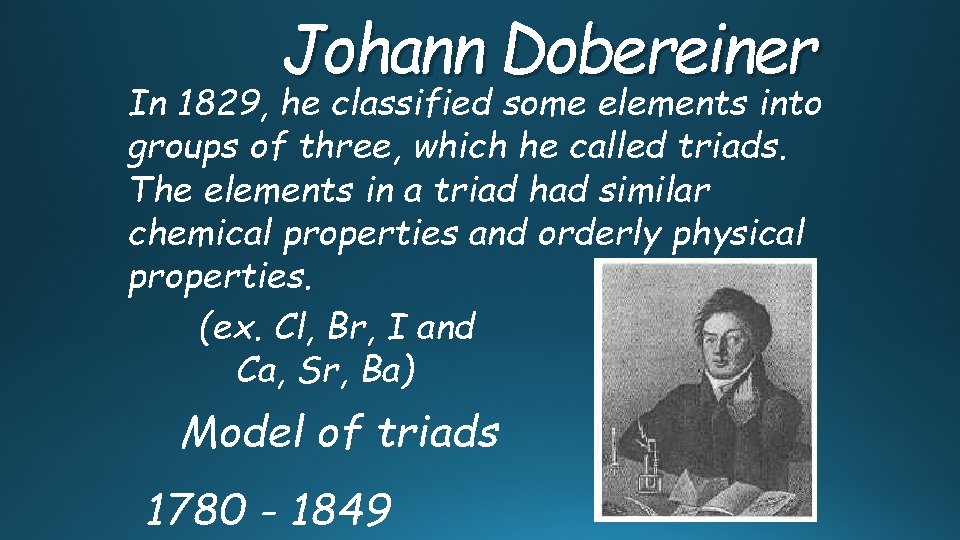
Johann Dobereiner In 1829, he classified some elements into groups of three, which he called triads. The elements in a triad had similar chemical properties and orderly physical properties. (ex. Cl, Br, I and Ca, Sr, Ba) Model of triads 1780 - 1849
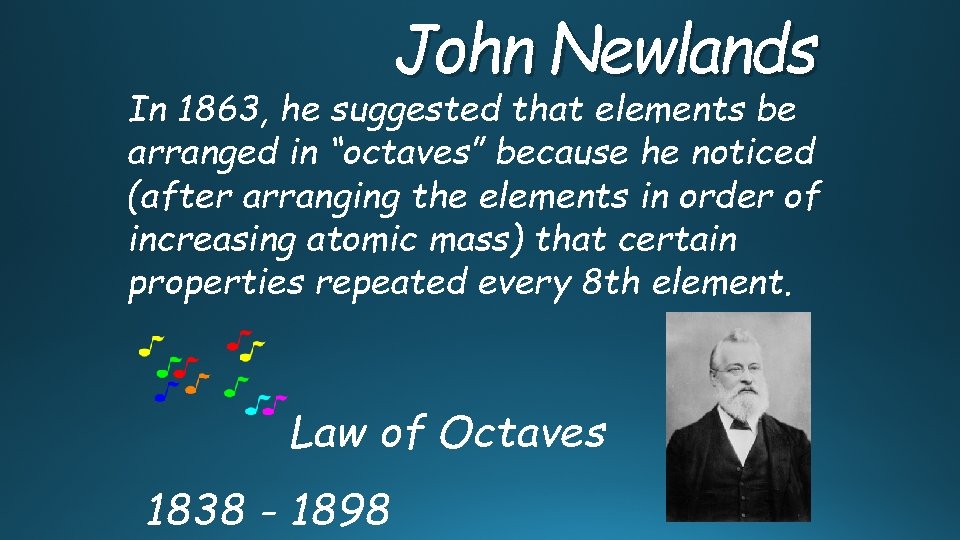
John Newlands In 1863, he suggested that elements be arranged in “octaves” because he noticed (after arranging the elements in order of increasing atomic mass) that certain properties repeated every 8 th element. Law of Octaves 1838 - 1898
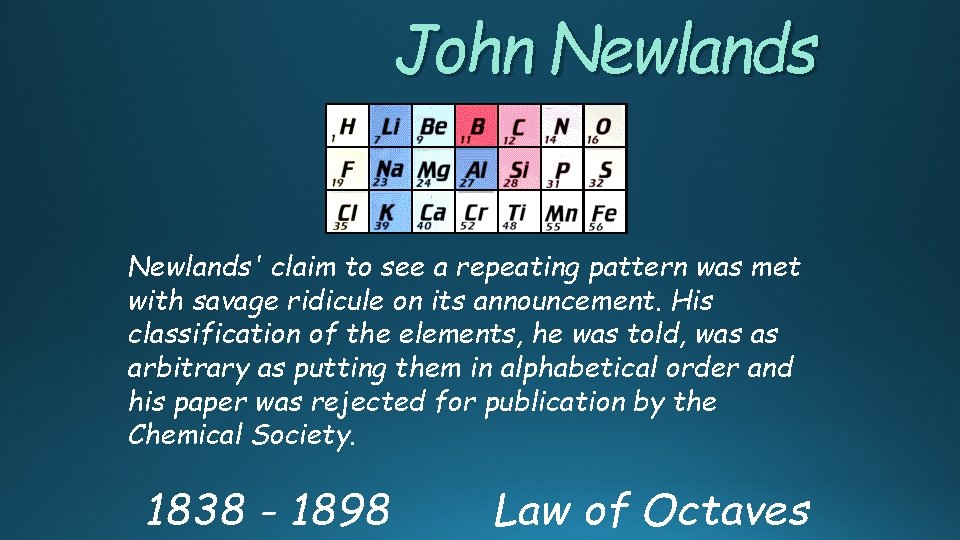
John Newlands' claim to see a repeating pattern was met with savage ridicule on its announcement. His classification of the elements, he was told, was as arbitrary as putting them in alphabetical order and his paper was rejected for publication by the Chemical Society. 1838 - 1898 Law of Octaves
John Newlands His law of octaves failed beyond the WHY? element calcium. Would his law of octaves work today with the first 20 elements? The law of octaves failed after calcium because of the way that electrons fill in the orbitals after that element. The law of octaves would not work with hydrogen, but it would work for elements 2 -19. 1838 - 1898 Law of Octaves
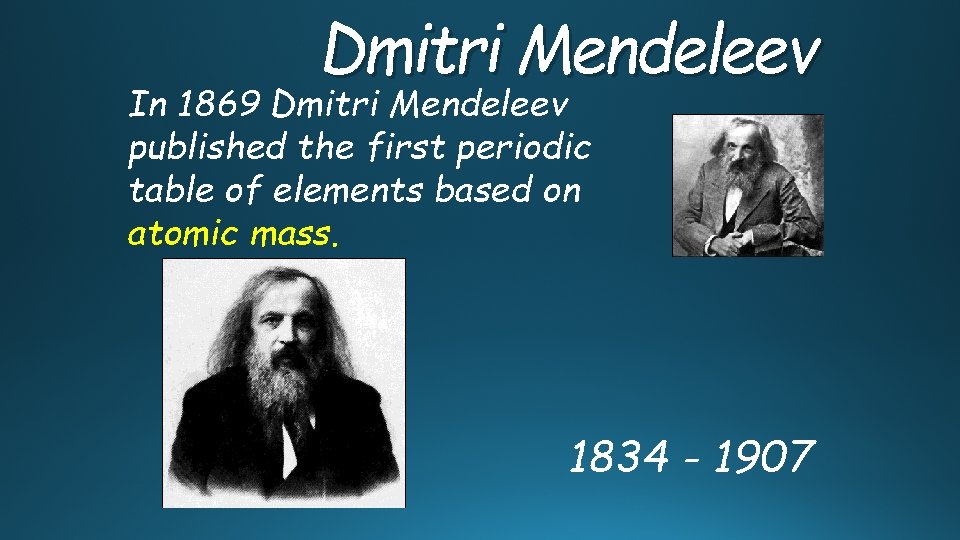
Dmitri Mendeleev In 1869 Dmitri Mendeleev published the first periodic table of elements based on atomic mass. 1834 - 1907
• Average atomic mass protons neutrons
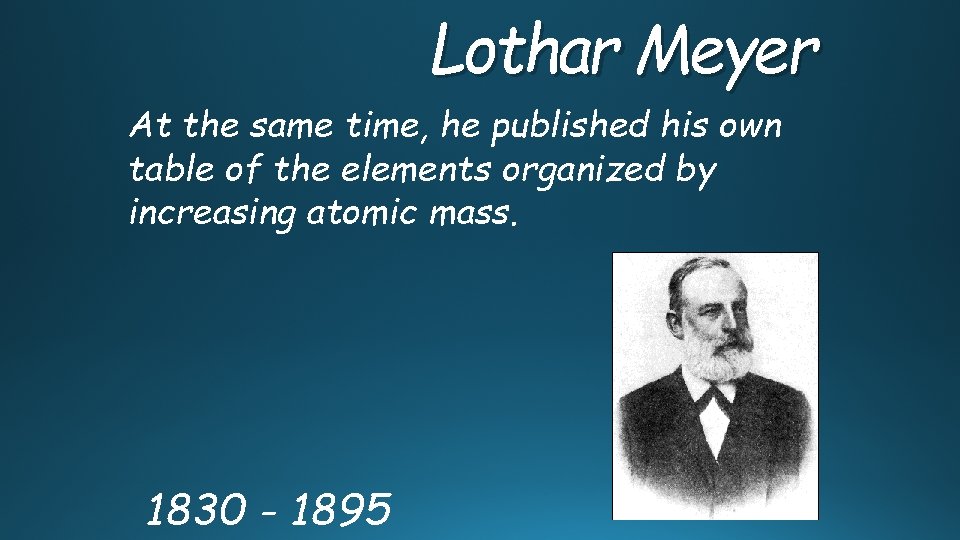
Lothar Meyer At the same time, he published his own table of the elements organized by increasing atomic mass. 1830 - 1895
• Both Mendeleev and Meyer arranged the elements in order of increasing atomic mass. • Both left vacant spaces where unknown elements should fit. So why is Mendeleev called the “father of the modern periodic table” and not Meyer, or both?
Mendeleev. . . • stated that if the atomic weight of an element caused it to be placed in the wrong group, then the weight must be wrong. (He corrected the atomic masses of Be, In, and U) • was so confident in his table that he used it to predict the physical properties of three elements that were yet unknown.
After the discovery of these unknown elements between 1874 and 1885, and the fact that Mendeleev’s predictions for Sc, Ga, and Ge were amazingly close to the actual values, his table was generally accepted.
However, in spite of Mendeleev’s great achievement, problems arose when new elements were discovered and more accurate atomic weights determined. By looking at our modern periodic table, can you identify what problems might have caused chemists a headache? Ar and K Co and Ni Te and I Th and Pa
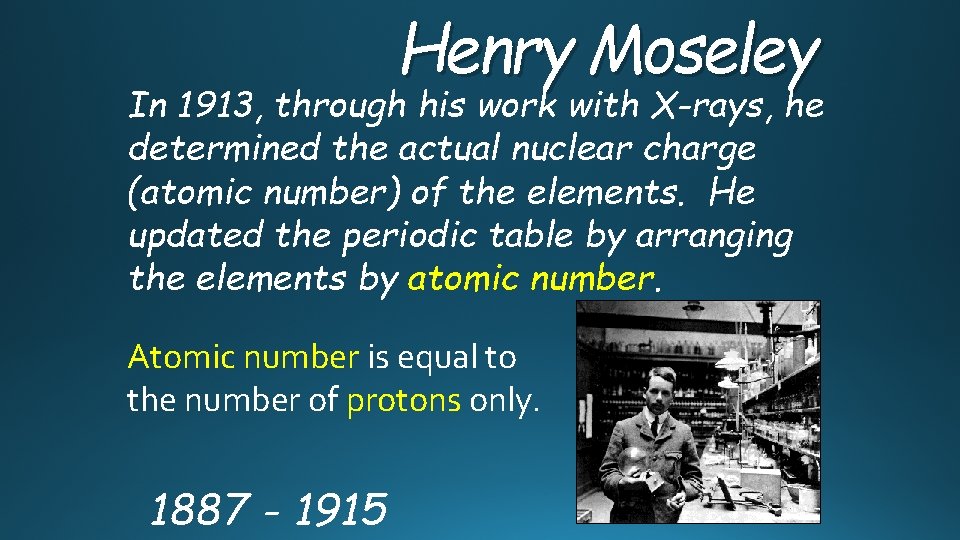
Henry Moseley In 1913, through his work with X-rays, he determined the actual nuclear charge (atomic number) of the elements. He updated the periodic table by arranging the elements by atomic number. Atomic number is equal to the number of protons only. 1887 - 1915
Henry Moseley His research was halted when the British government sent him to serve as a foot soldier in WWI. He was killed in the fighting in Gallipoli by a sniper’s bullet, at the age of 28. Because of this loss, the British government later restricted its scientists to noncombatant duties during WWII.
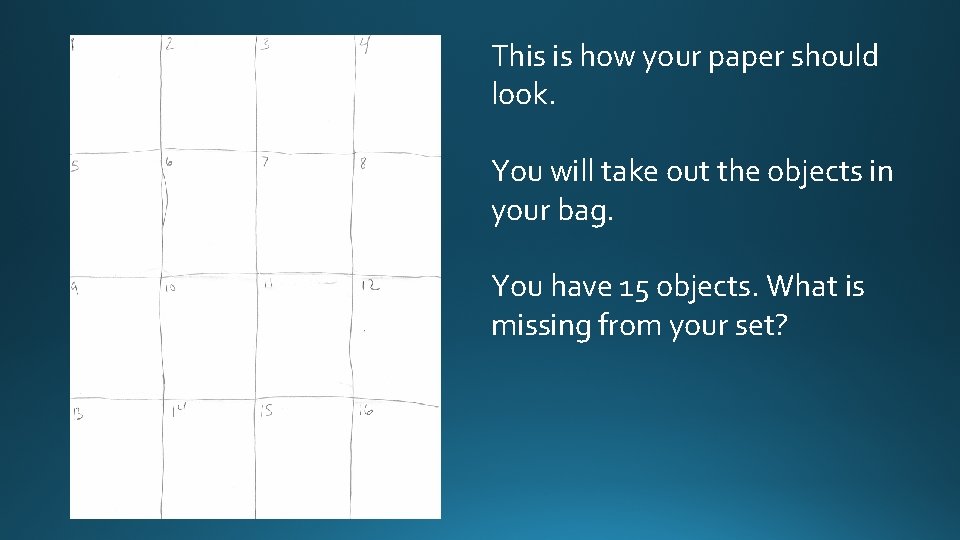
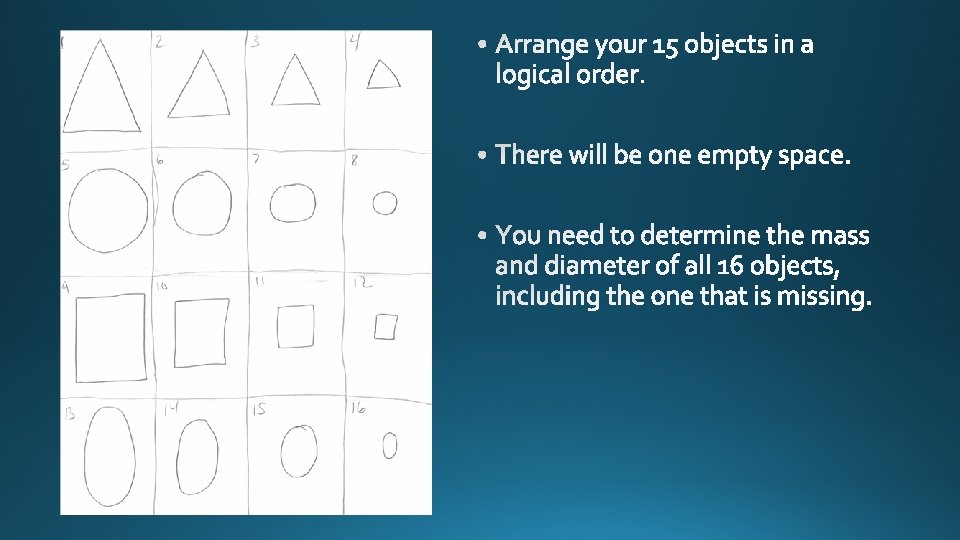
This is how your paper should look. You will take out the objects in your bag. You have 15 objects. What is missing from your set?
- Slides: 28