
Review of Fundamentals Nuclear Reactions IAEA Day 1
- Slides: 30
Review of Fundamentals Nuclear Reactions IAEA Day 1 – Lecture 6 1
Objective • To learn various kinds of nuclear reactions • To discuss health physics significance and energy considerations of nuclear reactions IAEA 2
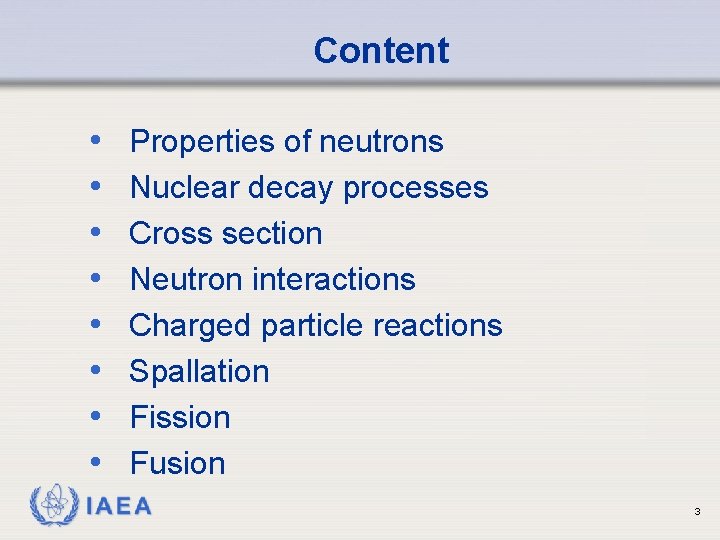
Content • • Properties of neutrons Nuclear decay processes Cross section Neutron interactions Charged particle reactions Spallation Fission Fusion IAEA 3
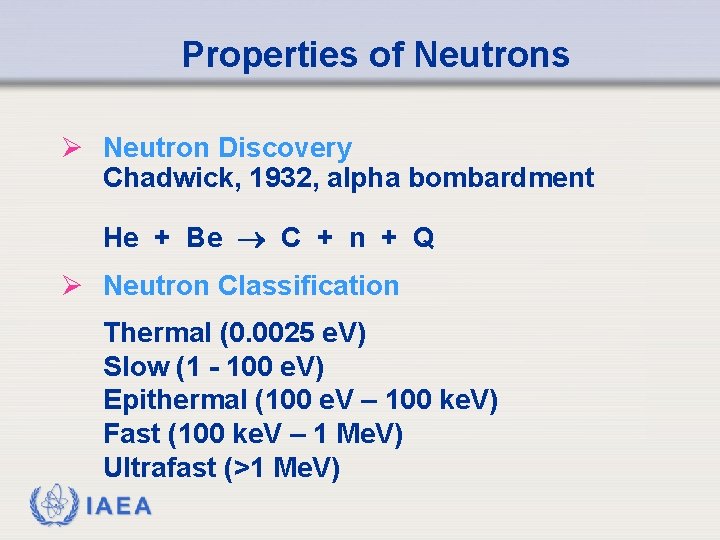
Properties of Neutrons Ø Neutron Discovery Chadwick, 1932, alpha bombardment He + Be C + n + Q Ø Neutron Classification Thermal (0. 0025 e. V) Slow (1 - 100 e. V) Epithermal (100 e. V – 100 ke. V) Fast (100 ke. V – 1 Me. V) Ultrafast (>1 Me. V) IAEA
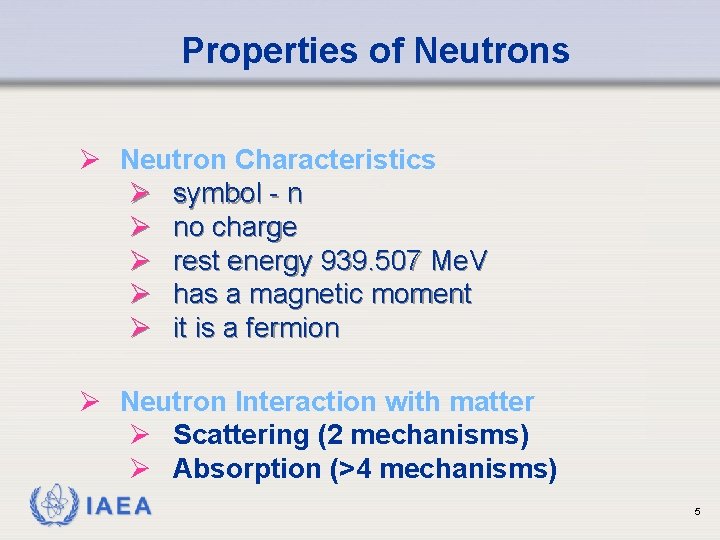
Properties of Neutrons Ø Neutron Characteristics Ø symbol - n Ø no charge Ø rest energy 939. 507 Me. V Ø has a magnetic moment Ø it is a fermion Ø Neutron Interaction with matter Ø Scattering (2 mechanisms) Ø Absorption (>4 mechanisms) IAEA 5
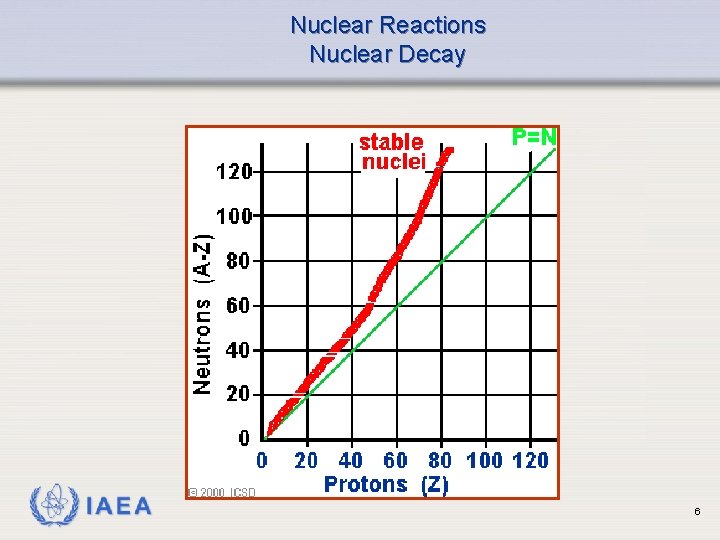
Nuclear Reactions Nuclear Decay IAEA 6
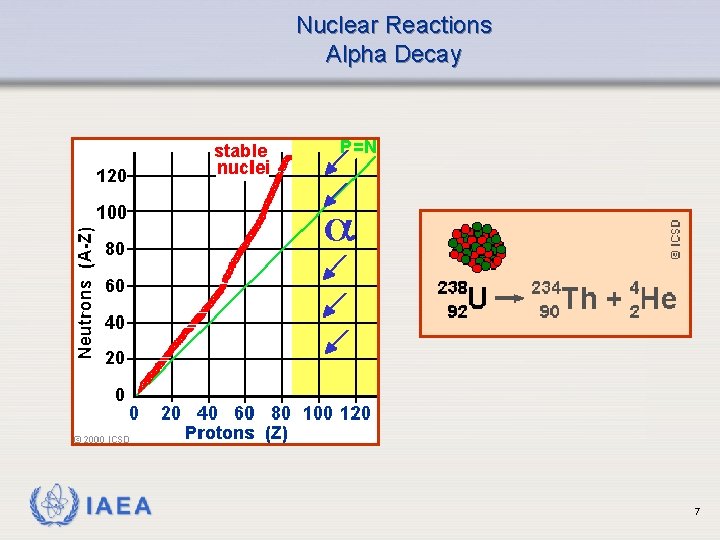
Nuclear Reactions Alpha Decay IAEA 7
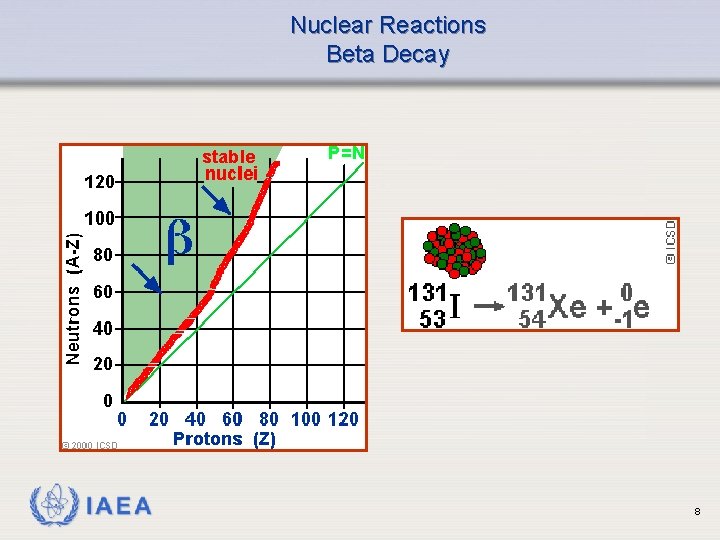
Nuclear Reactions Beta Decay IAEA 8
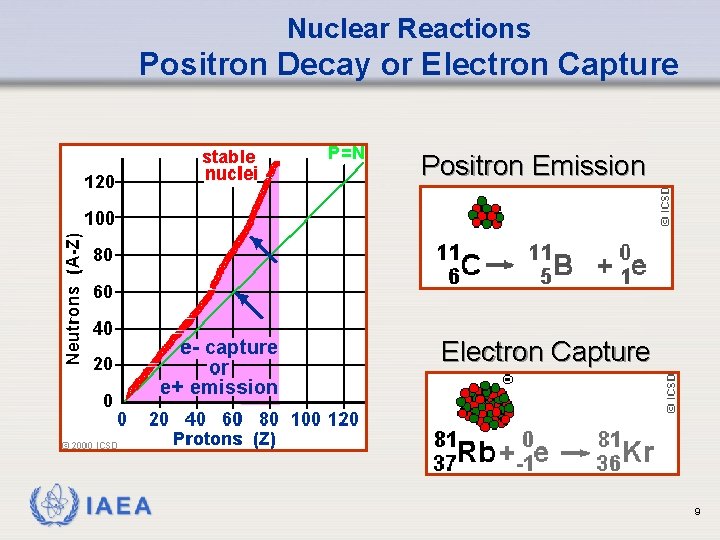
Nuclear Reactions Positron Decay or Electron Capture Positron Emission Electron Capture IAEA 9
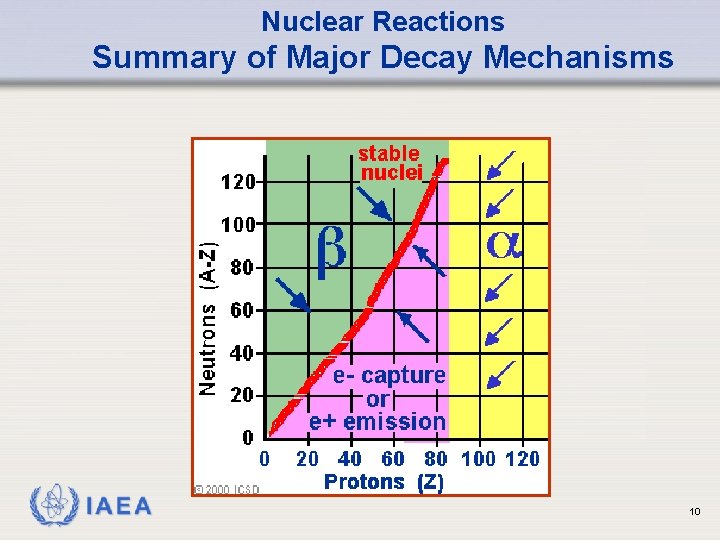
Nuclear Reactions Summary of Major Decay Mechanisms IAEA 10
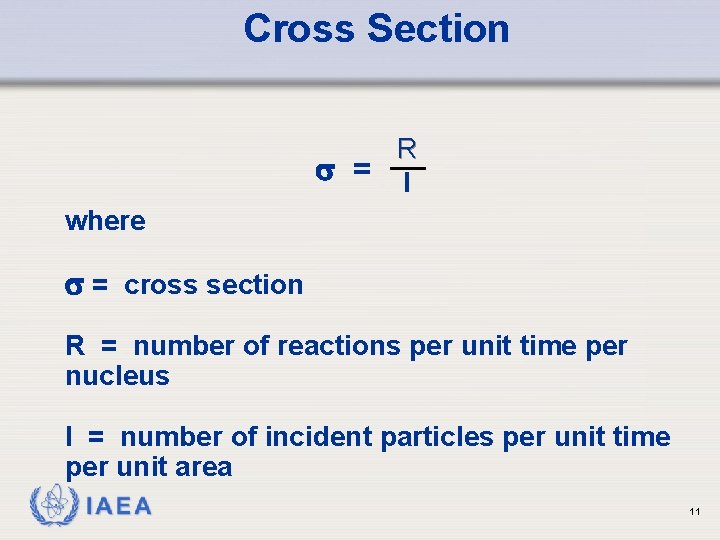
Cross Section R = I where = cross section R = number of reactions per unit time per nucleus I = number of incident particles per unit time per unit area IAEA 11
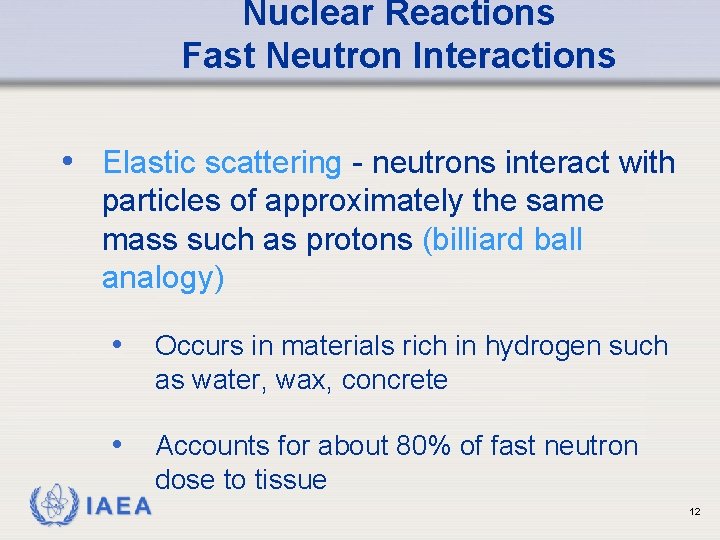
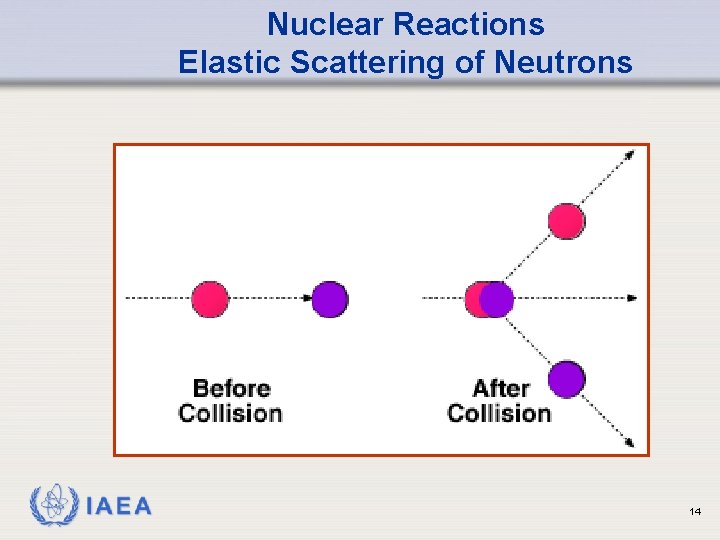
Nuclear Reactions Fast Neutron Interactions • Elastic scattering - neutrons interact with particles of approximately the same mass such as protons (billiard ball analogy) • Occurs in materials rich in hydrogen such as water, wax, concrete • Accounts for about 80% of fast neutron dose to tissue IAEA 12
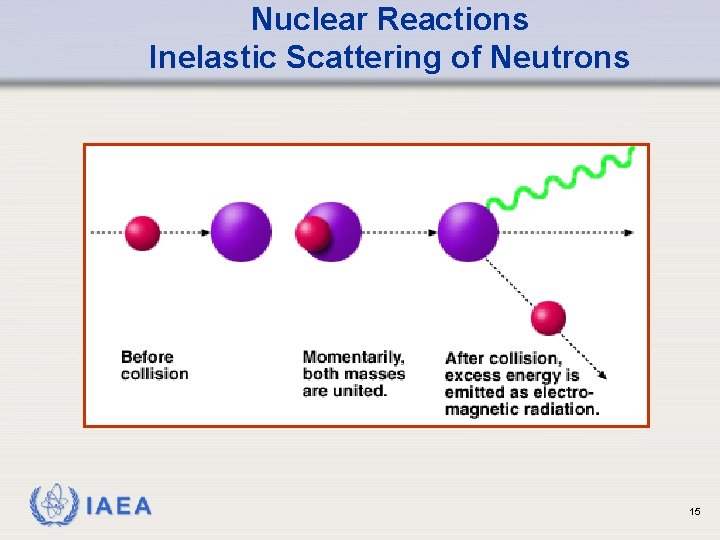
Nuclear Reactions Fast Neutron Interactions Ø Inelastic scattering – neutrons interact with particles of much greater mass, for example, iron (table tennis ball vs bowling ball analogy) IAEA 13
Nuclear Reactions Elastic Scattering of Neutrons IAEA 14
Nuclear Reactions Inelastic Scattering of Neutrons IAEA 15
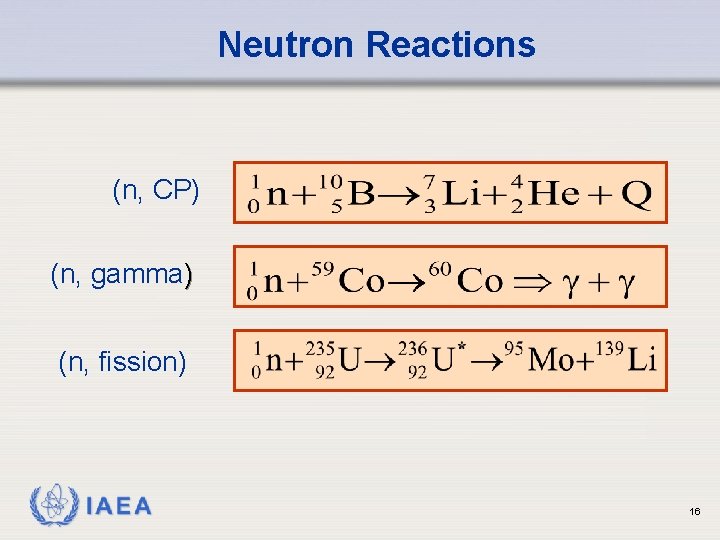
Neutron Reactions (n, CP) (n, gamma) (n, fission) IAEA 16
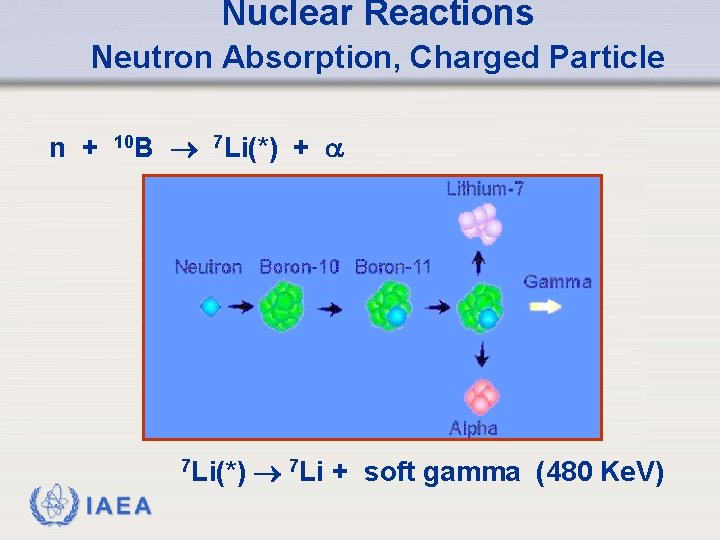
Nuclear Reactions Neutron Absorption, Charged Particle n + 10 B 7 Li(*) + 7 Li(*) IAEA 7 Li + soft gamma (480 Ke. V)
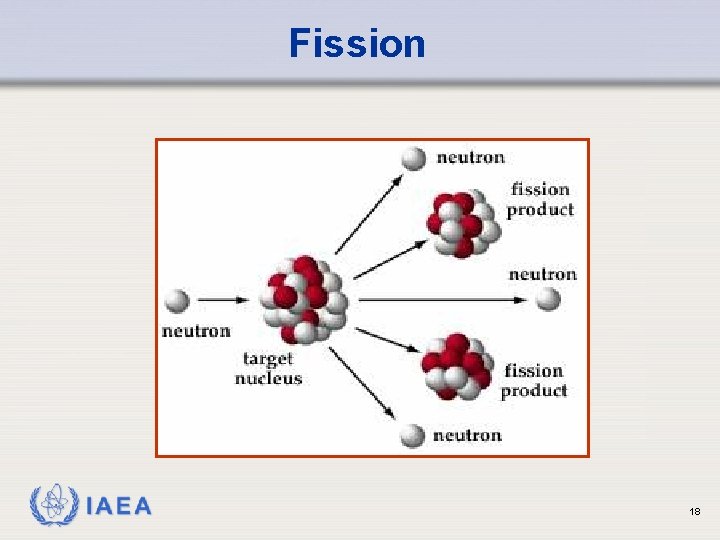
Fission IAEA 18
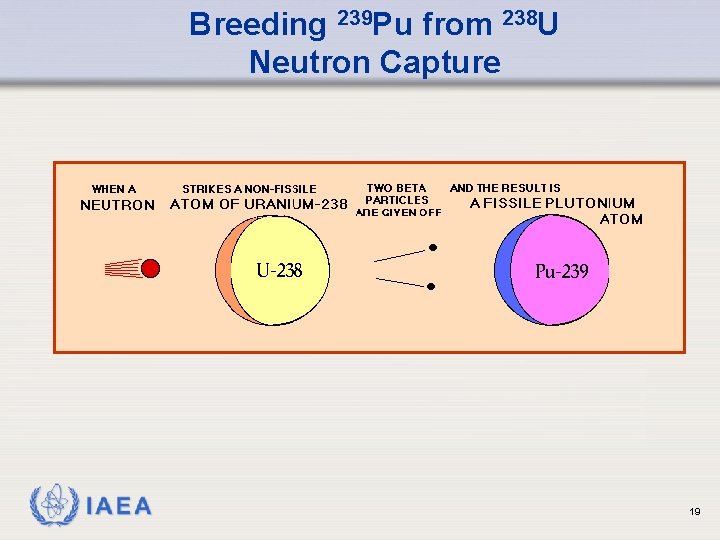
Breeding 239 Pu from 238 U Neutron Capture IAEA 19
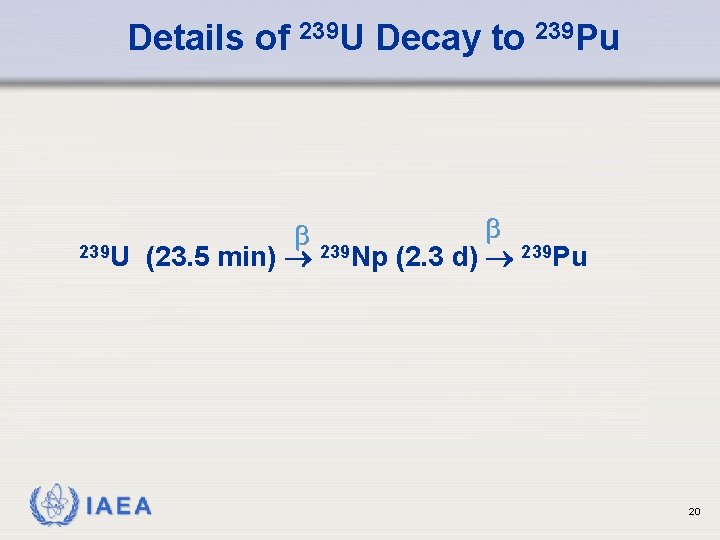
Details of 239 U Decay to 239 Pu 239 U (23. 5 min) 239 Np (2. 3 d) 239 Pu IAEA 20
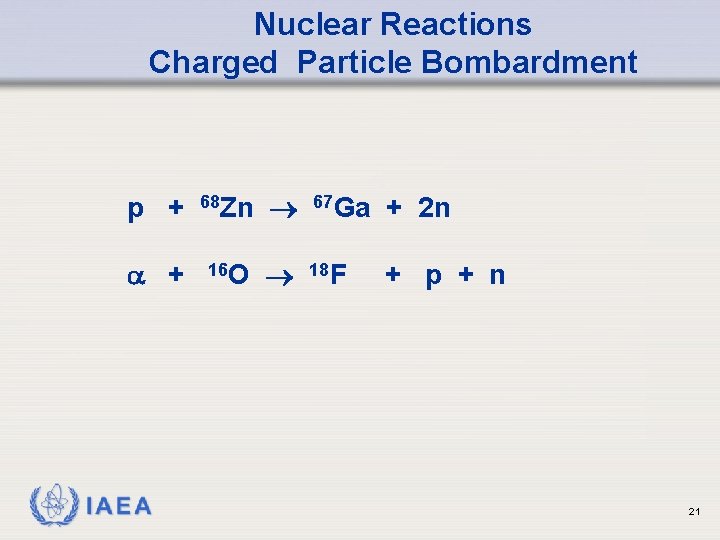
Nuclear Reactions Charged Particle Bombardment p + 68 Zn 67 Ga + 2 n + 16 O 18 F + p + n IAEA 21
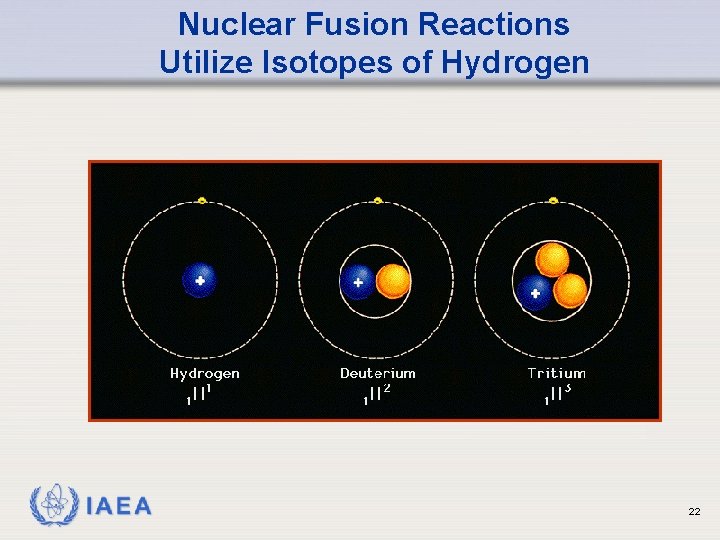
Nuclear Fusion Reactions Utilize Isotopes of Hydrogen IAEA 22
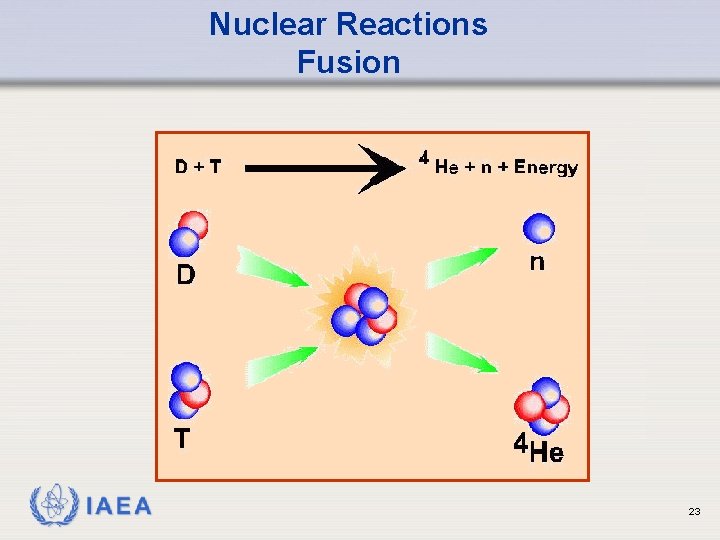
Nuclear Reactions Fusion IAEA 23
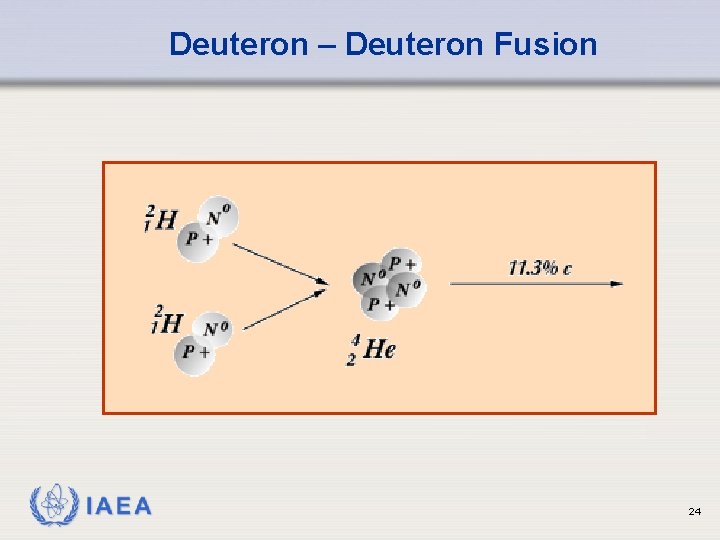
Deuteron – Deuteron Fusion IAEA 24
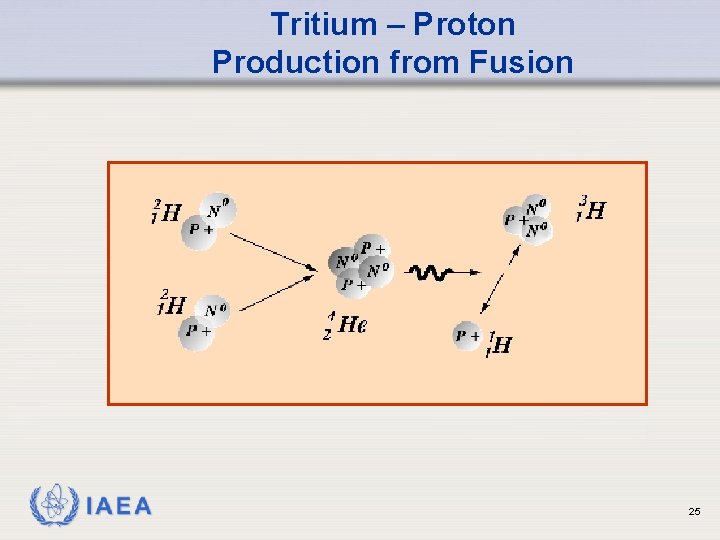
Tritium – Proton Production from Fusion IAEA 25
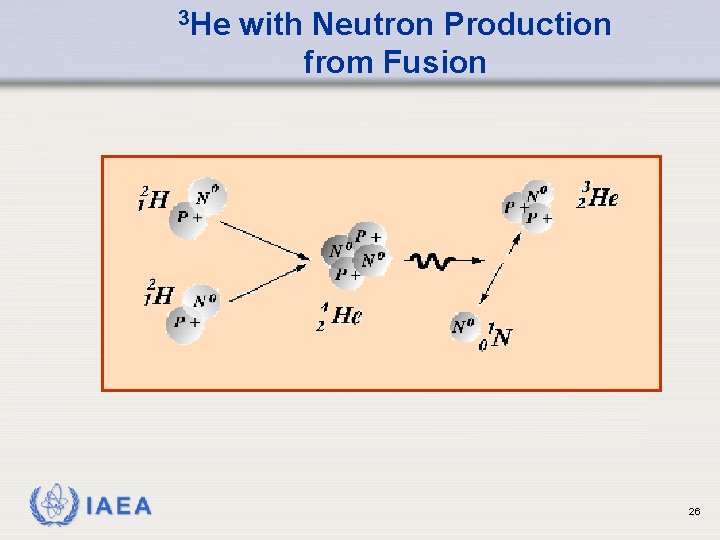
3 He IAEA with Neutron Production from Fusion 26
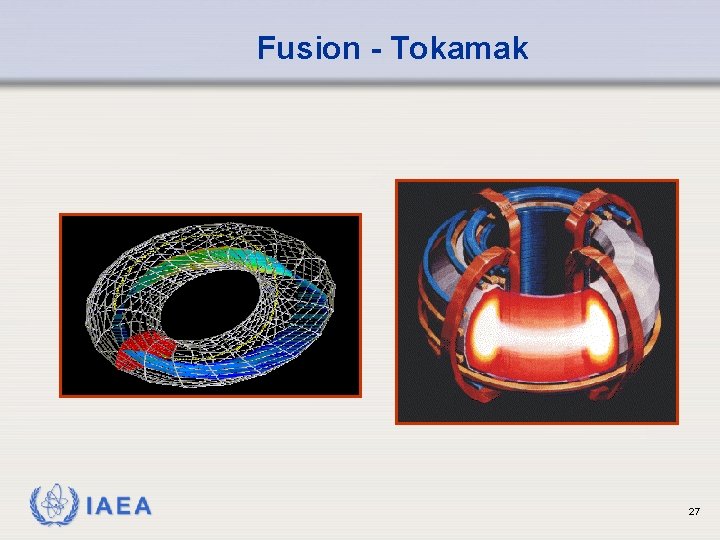
Fusion - Tokamak IAEA 27
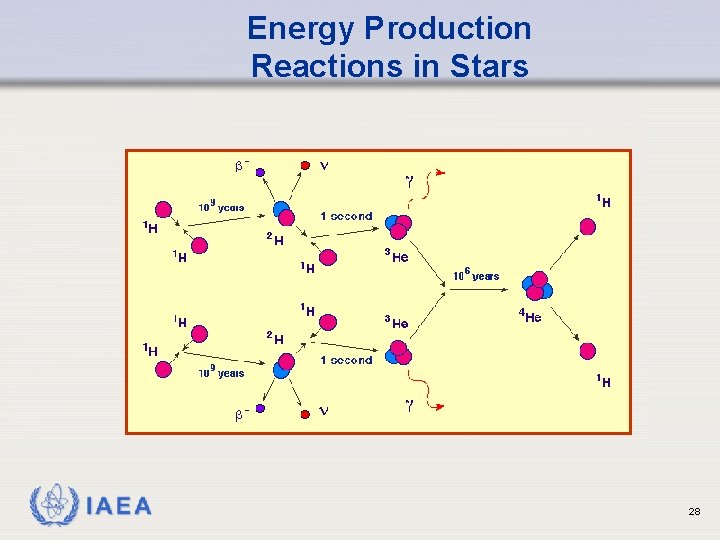
Energy Production Reactions in Stars IAEA 28
Summary • Various examples of nuclear reactions were discussed • Students learned about properties of neutrons, nuclear decay processes, cross section, neutron interactions, and various kinds of nuclear reactions including charged particle reactions, spallation, fission and fusion IAEA 29
Where to Get More Information Ø Cember, H. , Johnson, T. E, Introduction to Health Physics, 4 th Edition, Mc. Graw-Hill, New York (2009) Ø International Atomic Energy Agency, Postgraduate Educational Course in Radiation Protection and the Safety of Radiation Sources (PGEC), Training Course Series 18, IAEA, Vienna (2002) IAEA 30