
Review of female and male anatomy Stages of

- Slides: 45
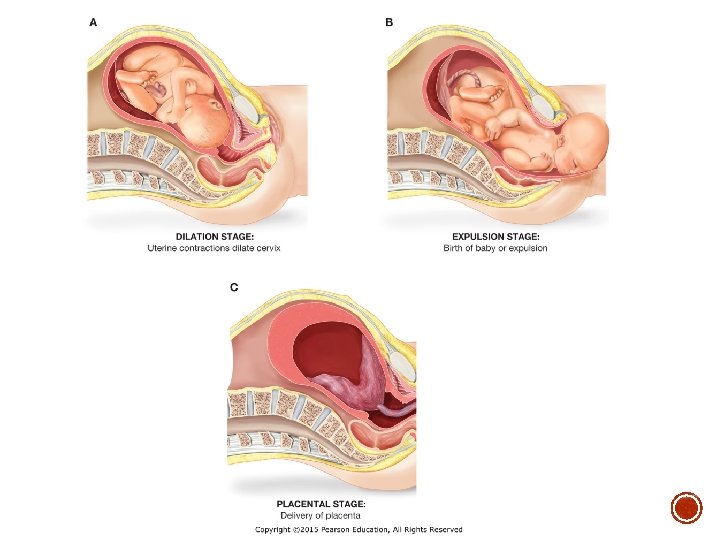
§ Review of female and male anatomy § Stages of Sperm and Egg § Rating contraceptives § Stages of labor § APGAR scale § Med. Terms
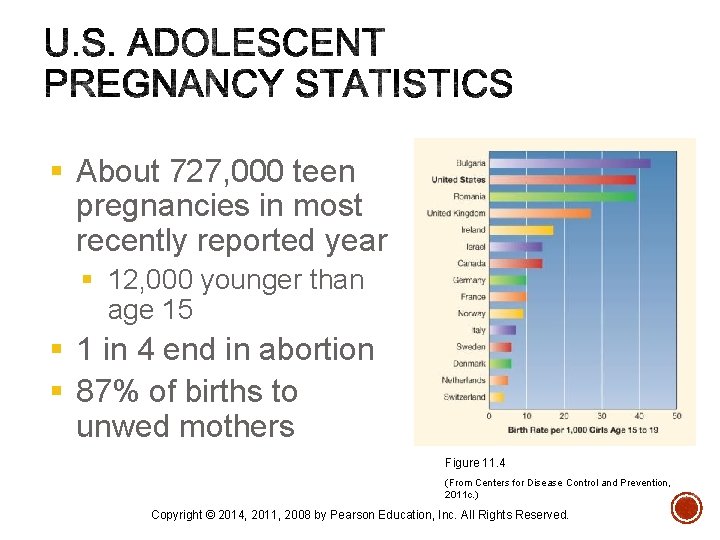
§ About 727, 000 teen pregnancies in most recently reported year § 12, 000 younger than age 15 § 1 in 4 end in abortion § 87% of births to unwed mothers Figure 11. 4 (From Centers for Disease Control and Prevention, 2011 c. ) Copyright © 2014, 2011, 2008 by Pearson Education, Inc. All Rights Reserved.
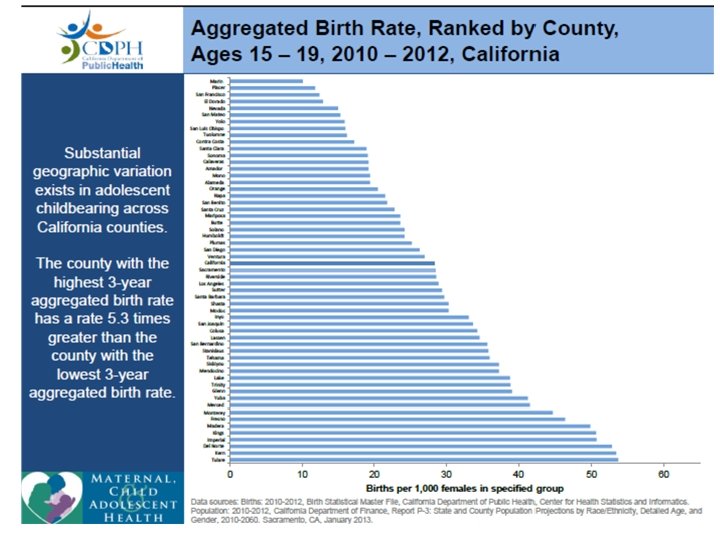
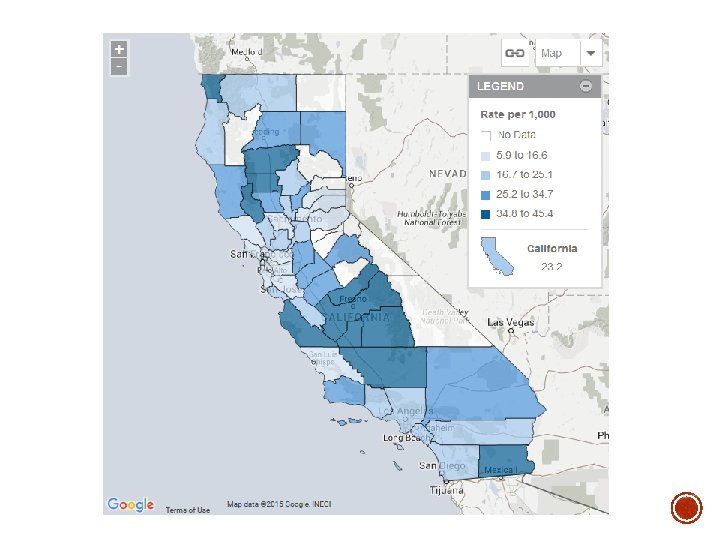
Of the following counties, who has the two highest teen birth rates in the State: A) Kern B) San Francisco C) LA D) Tulare
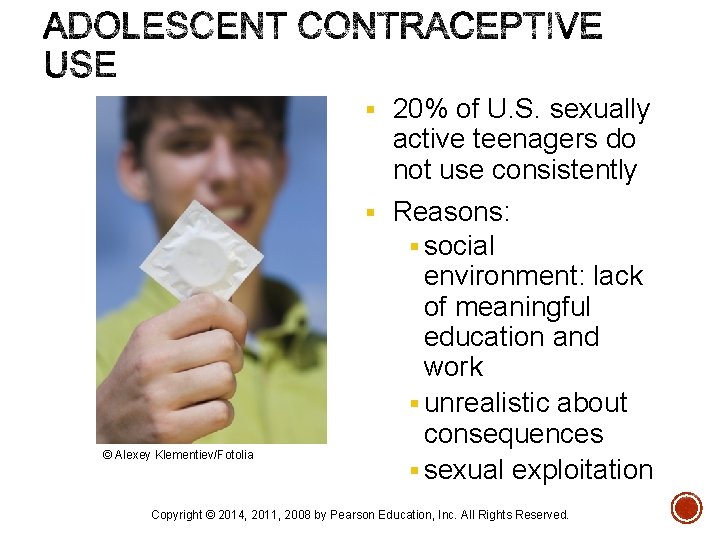
§ 20% of U. S. sexually active teenagers do not use consistently § Reasons: § social © Alexey Klementiev/Fotolia environment: lack of meaningful education and work § unrealistic about consequences § sexual exploitation Copyright © 2014, 2011, 2008 by Pearson Education, Inc. All Rights Reserved.
§ STI rates highest in adolescence: § especially high in United States § 1 out of 5 to 6 sexually active teens affected § AIDS most serious: § manifests 8– 10 years later § often infected during adolescence § Females more easily infected § STD education improving Copyright © 2014, 2011, 2008 by Pearson Education, Inc. All Rights Reserved.
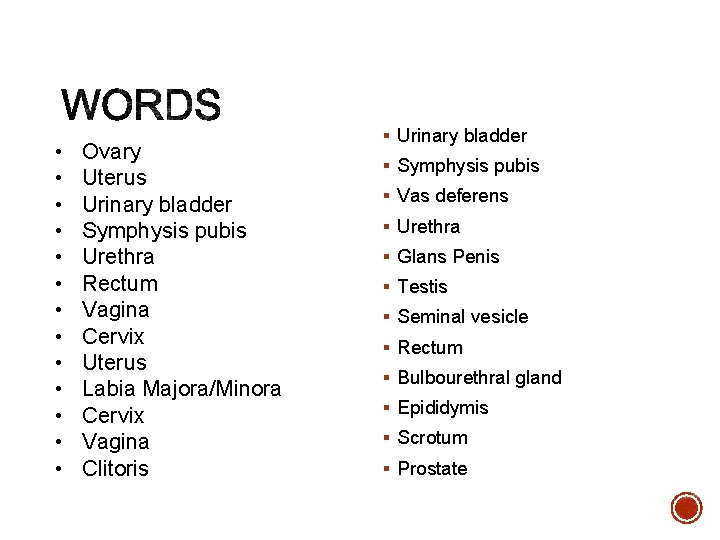
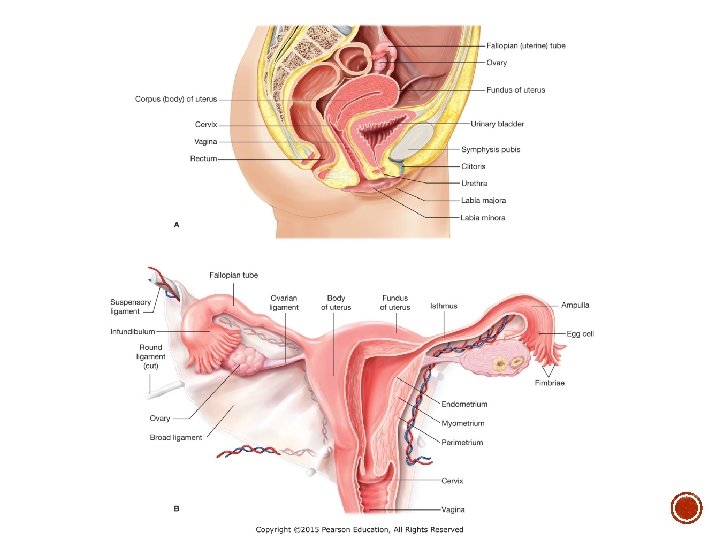
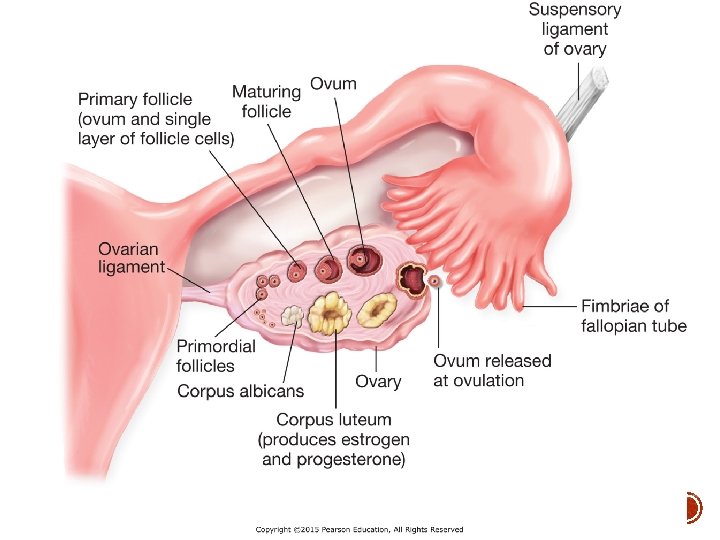
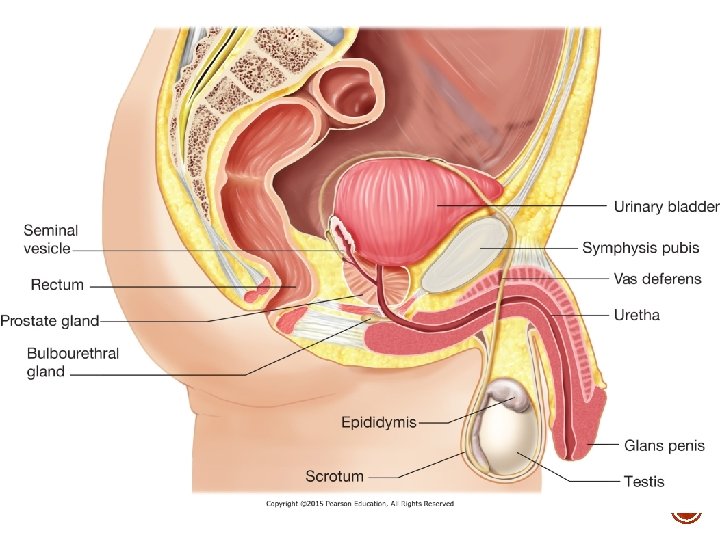
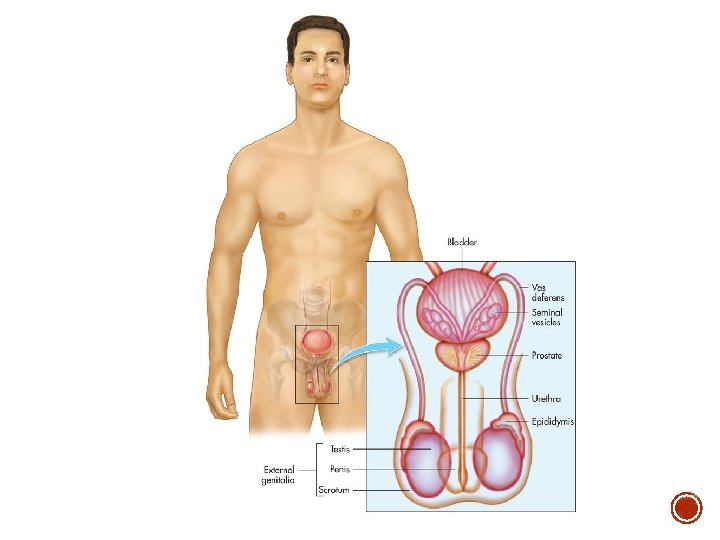
• • • • Ovary Uterus Urinary bladder Symphysis pubis Urethra Rectum Vagina Cervix Uterus Labia Majora/Minora Cervix Vagina Clitoris § Urinary bladder § Symphysis pubis § Vas deferens § Urethra § Glans Penis § Testis § Seminal vesicle § Rectum § Bulbourethral gland § Epididymis § Scrotum § Prostate
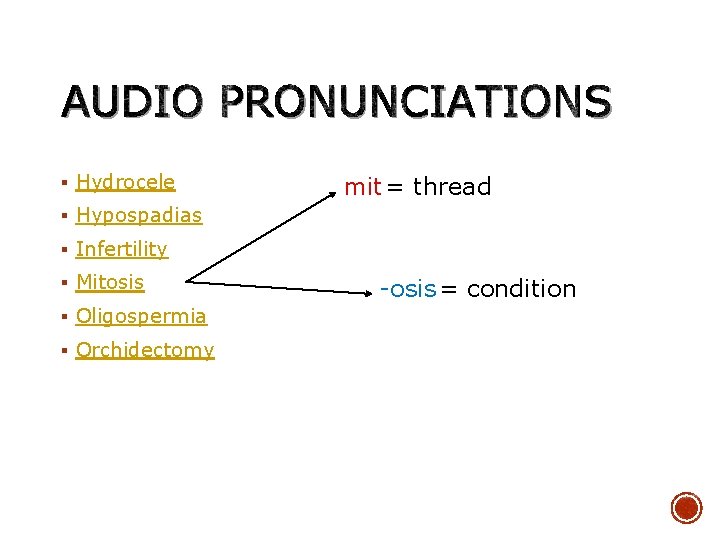
AUDIO PRONUNCIATIONS § Hydrocele mit = thread § Hypospadias § Infertility § Mitosis § Oligospermia § Orchidectomy -osis = condition
AUDIO PRONUNCIATIONS § Orchiditis § Orchidotomy § Parenchyma § Phimosis § Prepuce § Prostate cancer
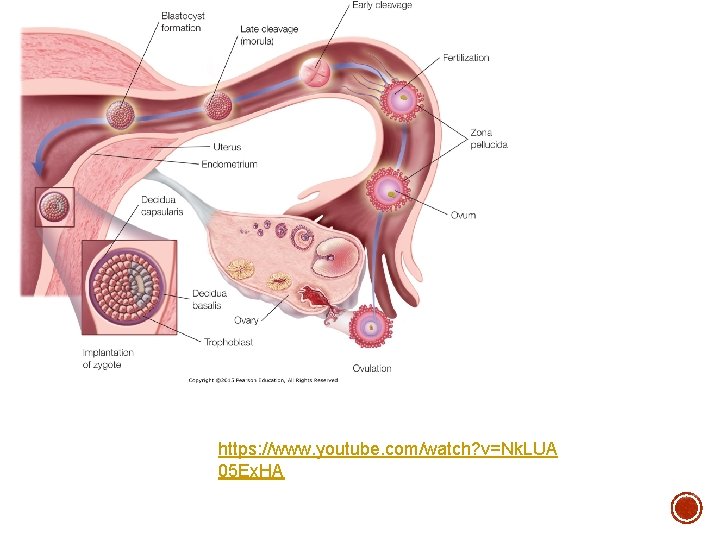
https: //www. youtube. com/watch? v=Nk. LUA 05 Ex. HA
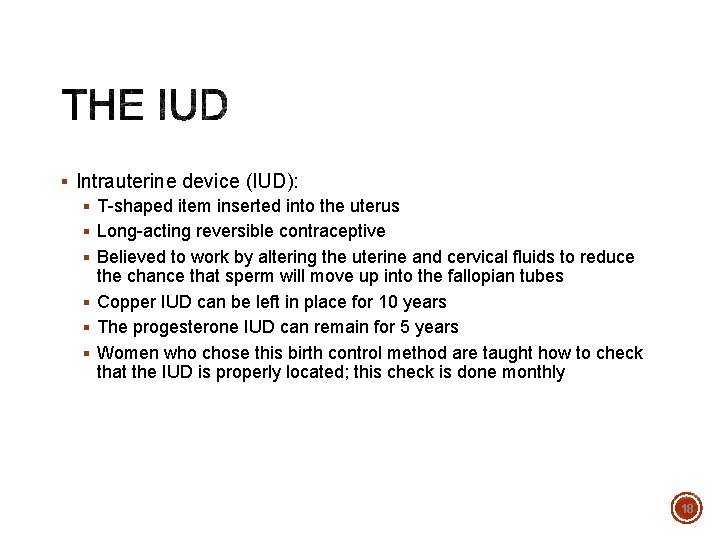
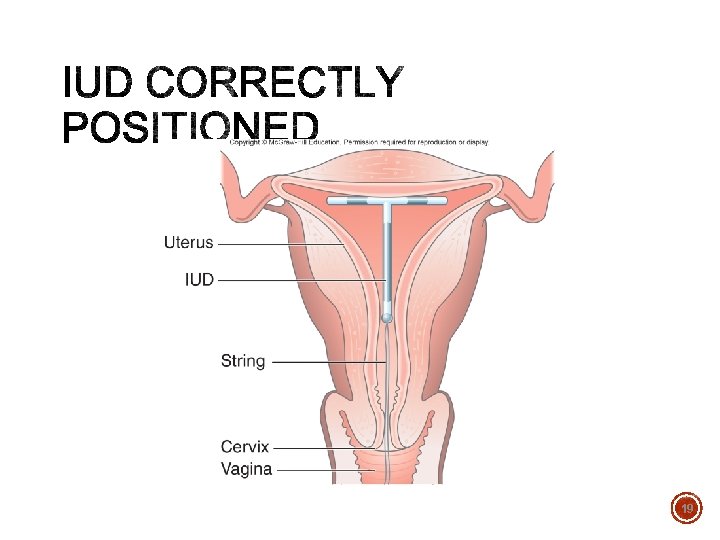
§ Intrauterine device (IUD): § T-shaped item inserted into the uterus § Long-acting reversible contraceptive § Believed to work by altering the uterine and cervical fluids to reduce the chance that sperm will move up into the fallopian tubes § Copper IUD can be left in place for 10 years § The progesterone IUD can remain for 5 years § Women who chose this birth control method are taught how to check that the IUD is properly located; this check is done monthly 18
19
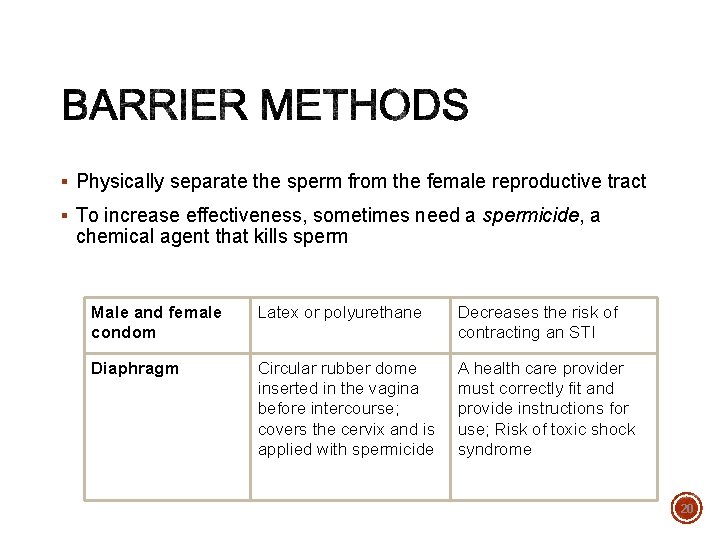
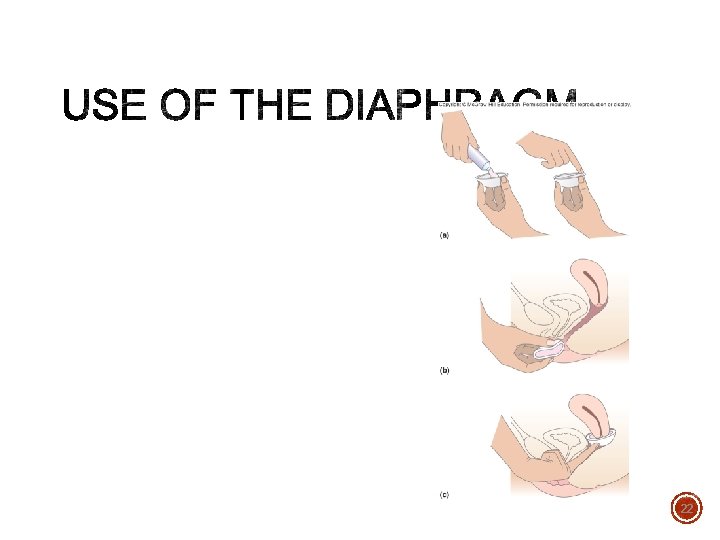
§ Physically separate the sperm from the female reproductive tract § To increase effectiveness, sometimes need a spermicide, a chemical agent that kills sperm Male and female condom Latex or polyurethane Decreases the risk of contracting an STI Diaphragm Circular rubber dome inserted in the vagina before intercourse; covers the cervix and is applied with spermicide A health care provider must correctly fit and provide instructions for use; Risk of toxic shock syndrome 20
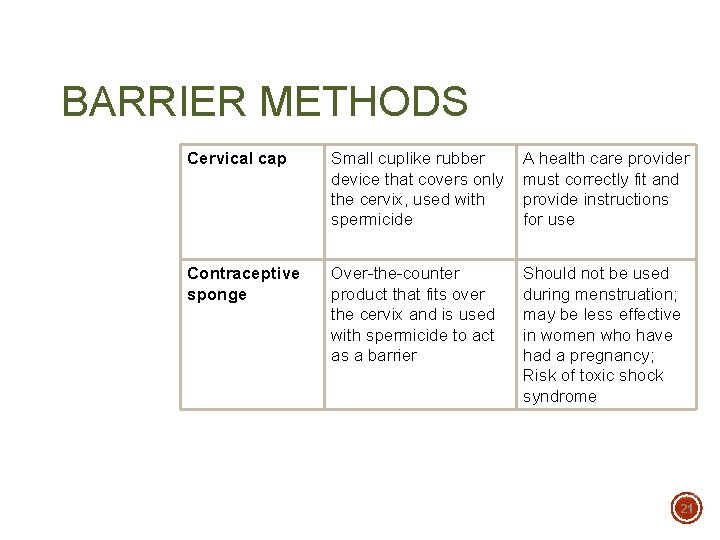
BARRIER METHODS Cervical cap Small cuplike rubber device that covers only the cervix, used with spermicide A health care provider must correctly fit and provide instructions for use Contraceptive sponge Over-the-counter product that fits over the cervix and is used with spermicide to act as a barrier Should not be used during menstruation; may be less effective in women who have had a pregnancy; Risk of toxic shock syndrome 21
22
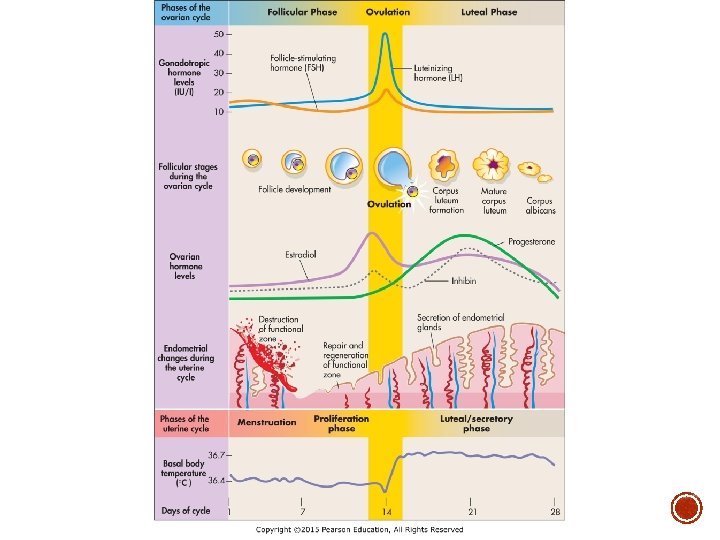
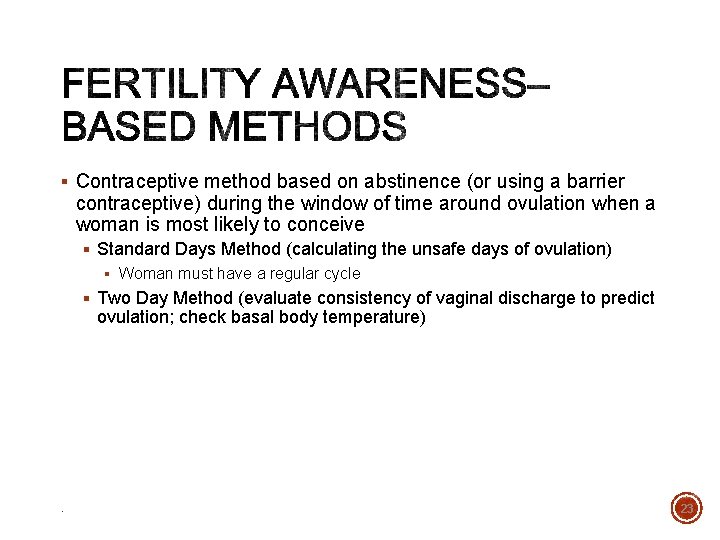
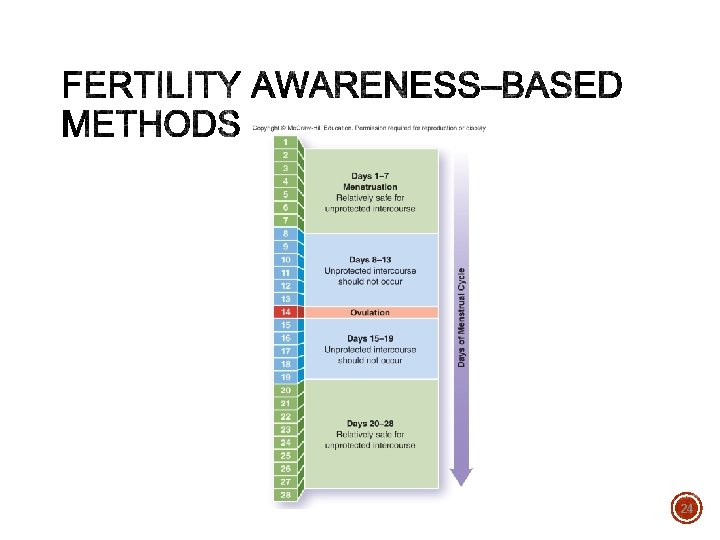
§ Contraceptive method based on abstinence (or using a barrier contraceptive) during the window of time around ovulation when a woman is most likely to conceive § Standard Days Method (calculating the unsafe days of ovulation) § Woman must have a regular cycle § Two Day Method (evaluate consistency of vaginal discharge to predict ovulation; check basal body temperature) . 23
24
§ Withdrawal: a contraceptive method in which the man removes his penis from the vagina before ejaculating § Success is dependent on a man’s ability to tell when he is about to ejaculate and to have the self-control to withdraw with impending orgasm § The American College of Obstetrics and Gynecology do not recommend this method § Approximately 18 to 27 percent of women will become pregnant in a year 25
• The morning-after pill or backup birth control • Reduces chance of pregnancy by preventing ovulation and fertilization • Most effective if taken within 48– 72 hours and must be taken within 5 days of unprotected intercourse • Useful when another method fails (condom breaks, or diaphragm or cervical cap slips) • Will not cause the termination of an existing pregnancy and is not an abortogenic (not abortion-causing) • Useful in cases of forced sex—rape and incest 26
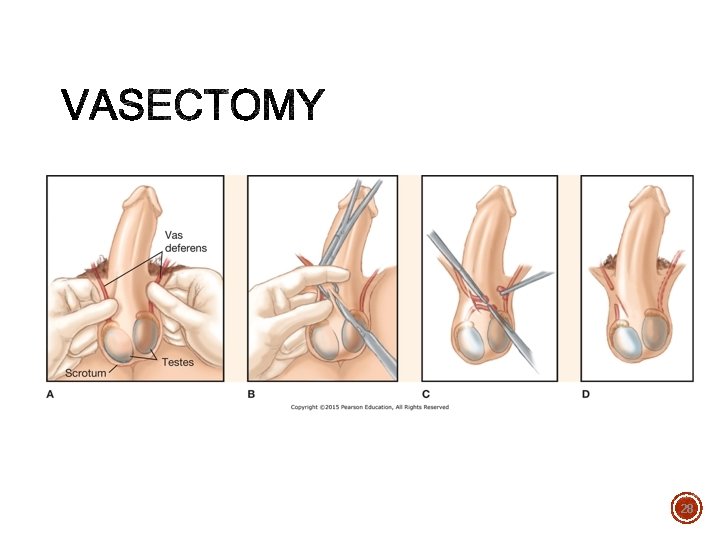
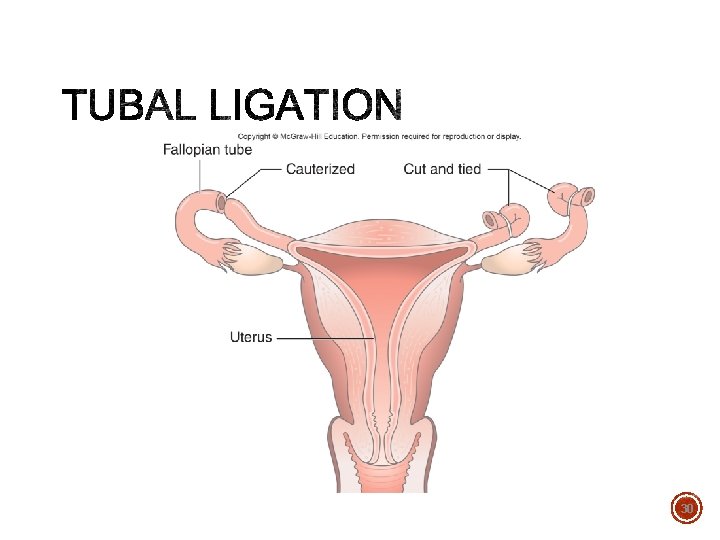
STERILIZATION § A surgical procedure that permanently prevents future pregnancies § Vasectomy: male sterilization procedure, involving tying off and severing the vas deferens to prevent sperm from reaching the semen § Tubal ligation: female sterilization procedure involving severing and tying off or sealing the fallopian tubes to prevent ova from reaching the uterus 27
28
FYI § Vasectomy § Does not affect a man's ability to achieve orgasm or erection § After 4– 6 weeks, sperm no longer present in semen. § Semen specimen must be examined to confirm absence of semen.
30
§ Will pass out different contraceptives § Use CDC guide to determine effectiveness § Will give you 5 minutes and then ask you to come up and get in order of effectiveness.
§ Will pass out different contraceptives § Use CDC guide to determine effectiveness § Will give you 5 minutes and then ask you to come up and get in order of effectiveness.
§ http: //visual. ly/how-build-human
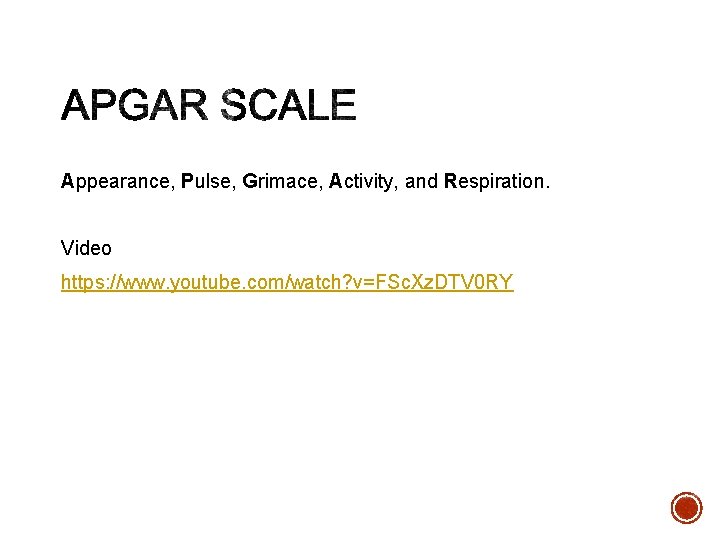
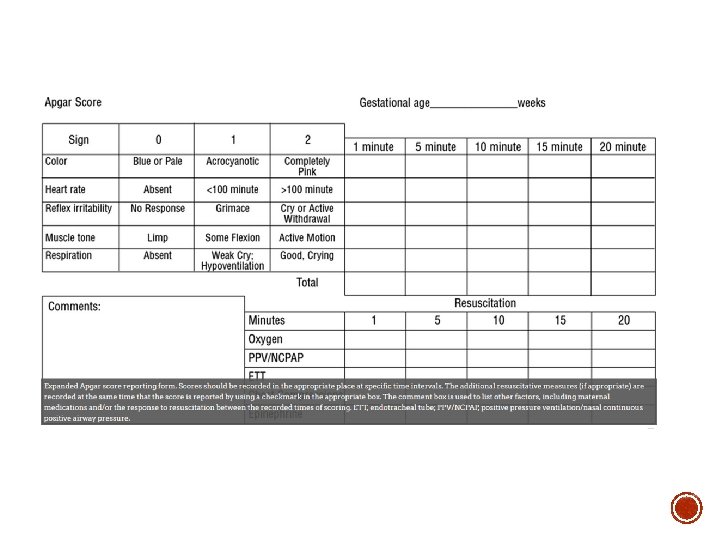
Appearance, Pulse, Grimace, Activity, and Respiration. Video https: //www. youtube. com/watch? v=FSc. Xz. DTV 0 RY
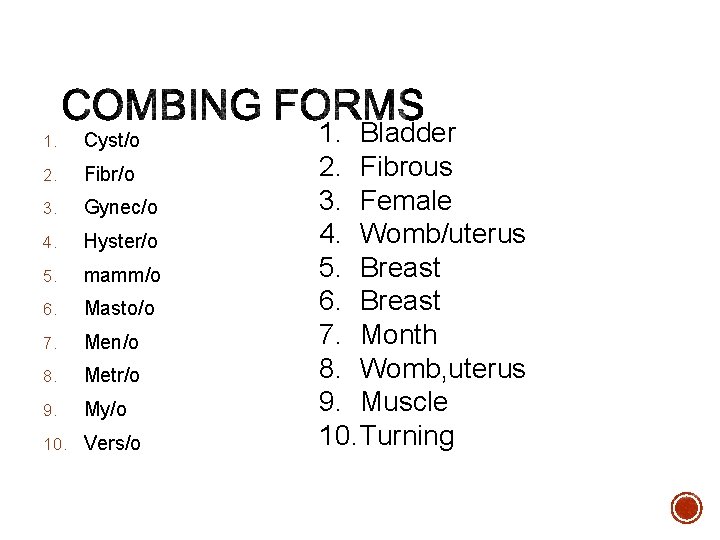
1. Cyst/o 2. Fibr/o 3. Gynec/o 4. Hyster/o 5. mamm/o 6. Masto/o 7. Men/o 8. Metr/o 9. My/o 10. Vers/o 1. Bladder 2. Fibrous 3. Female 4. Womb/uterus 5. Breast 6. Breast 7. Month 8. Womb, uterus 9. Muscle 10. Turning
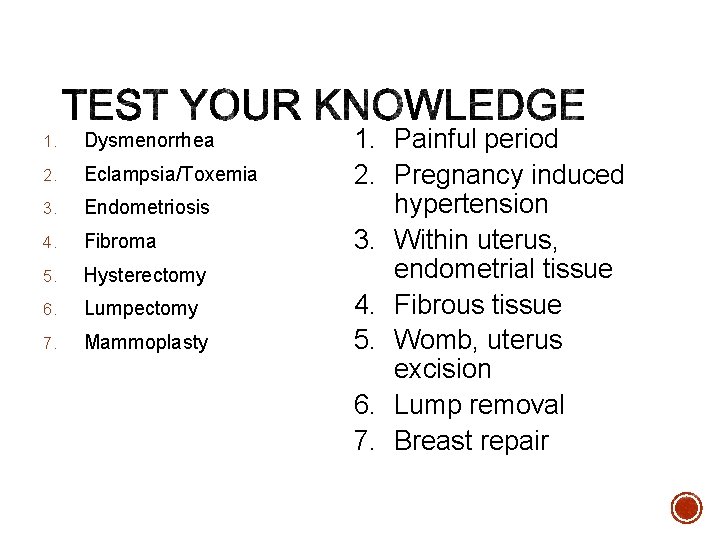
1. Dysmenorrhea 2. Eclampsia/Toxemia 3. Endometriosis 4. Fibroma 5. Hysterectomy 6. Lumpectomy 7. Mammoplasty 1. Painful period 2. Pregnancy induced hypertension 3. Within uterus, endometrial tissue 4. Fibrous tissue 5. Womb, uterus excision 6. Lump removal 7. Breast repair
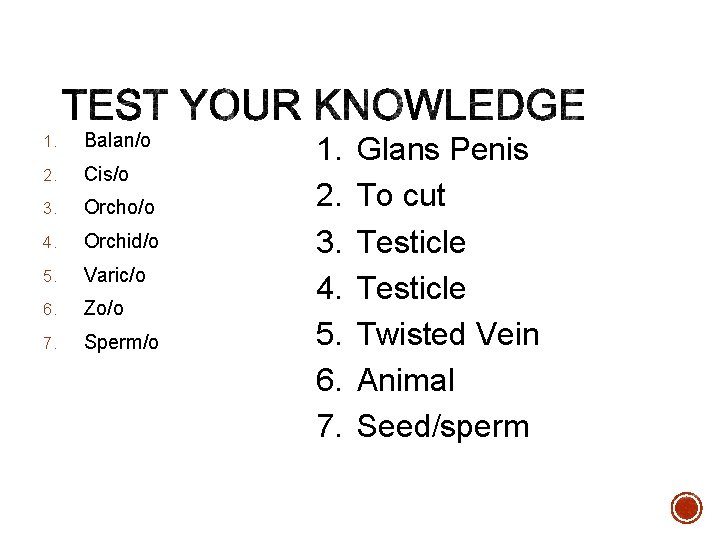
1. Balan/o 2. Cis/o 3. Orcho/o 4. Orchid/o 5. Varic/o 6. Zo/o 7. Sperm/o 1. 2. 3. 4. 5. 6. 7. Glans Penis To cut Testicle Twisted Vein Animal Seed/sperm
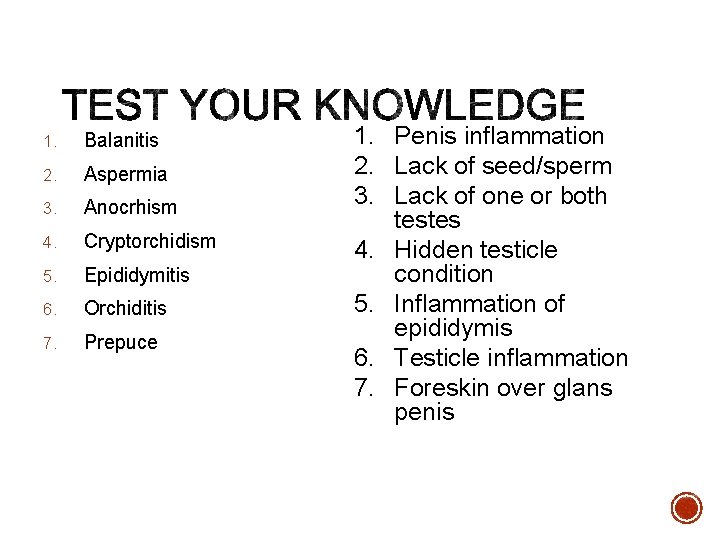
1. Balanitis 2. Aspermia 3. Anocrhism 4. Cryptorchidism 5. Epididymitis 6. Orchiditis 7. Prepuce 1. Penis inflammation 2. Lack of seed/sperm 3. Lack of one or both testes 4. Hidden testicle condition 5. Inflammation of epididymis 6. Testicle inflammation 7. Foreskin over glans penis
AUDIO PRONUNCIATIONS § Hydrocele mit = thread § Hypospadias § Infertility § Mitosis § Oligospermia § Orchidectomy -osis = condition
AUDIO PRONUNCIATIONS § Orchiditis § Orchidotomy § Parenchyma § Phimosis § Prepuce § Prostate cancer
§ Review of female and male anatomy § Stages of Sperm and Egg § Rating contraceptives § Stages of labor § Diseases on Wednesday
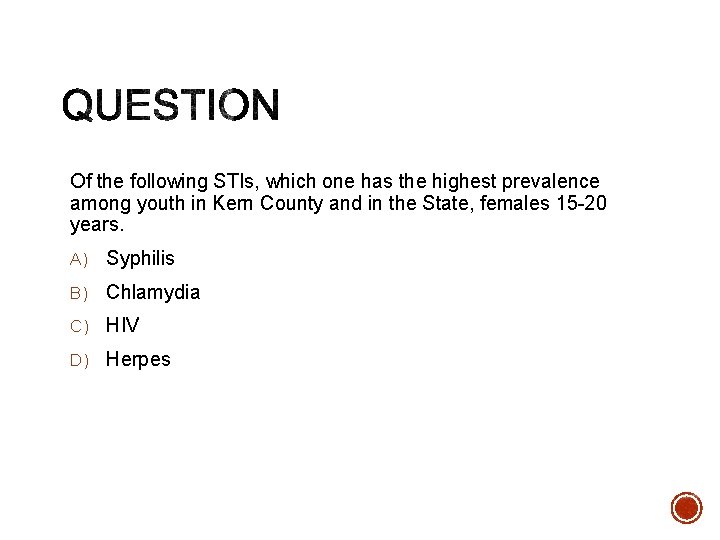
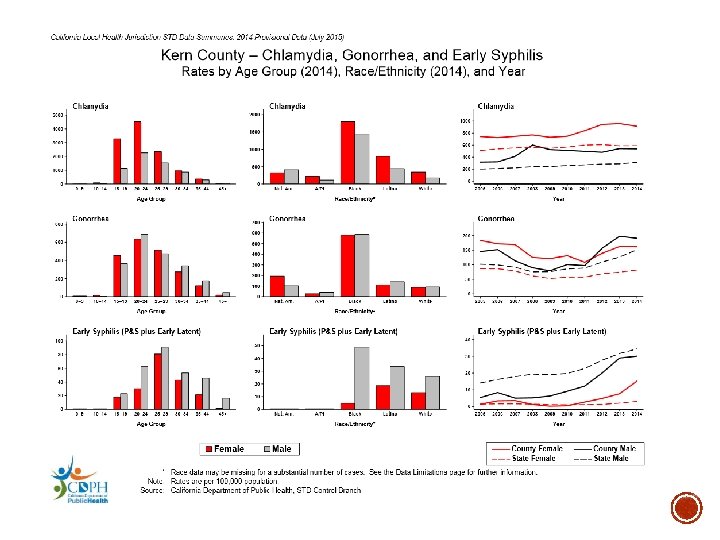
Of the following STIs, which one has the highest prevalence among youth in Kern County and in the State, females 15 -20 years. A) Syphilis B) Chlamydia C) HIV D) Herpes