
Review of existing numerical methods and validation procedure
- Slides: 20
Review of existing numerical methods and validation procedure available for bird strike modelling 14 th ICCES Conference, Jan 3 -8 2007, Miami, USA Marie-Anne Lavoie Augustin Gakwaya - Laval University David G. Zimcik M. Nejad Ensan – NRC-IAR
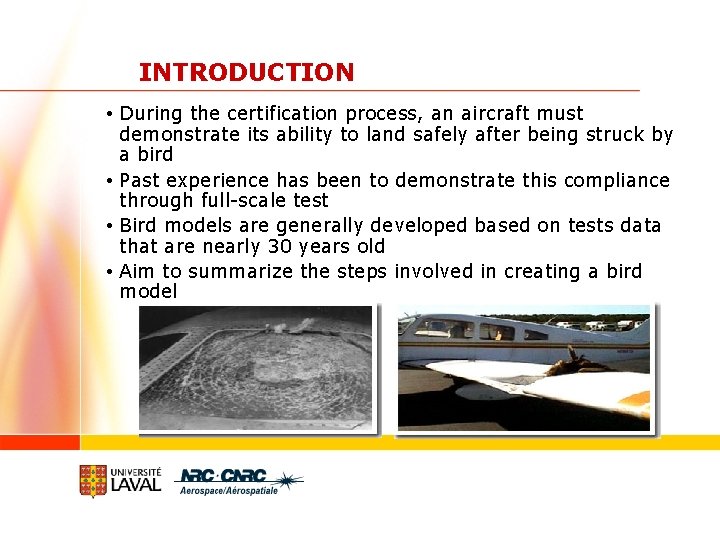
INTRODUCTION • During the certification process, an aircraft must demonstrate its ability to land safely after being struck by a bird • Past experience has been to demonstrate this compliance through full-scale test • Bird models are generally developed based on tests data that are nearly 30 years old • Aim to summarize the steps involved in creating a bird model
INTRODUCTION • THEORY of bird strikes and an analytical evaluation of the expected results • EXPERIMENTAL DATA that are currently available • Description of the three NUMERICAL BIRD MODELS one can use • Analysis of the RESULTS • Recommendations are made in the CONCLUSION regarding the best suitable method
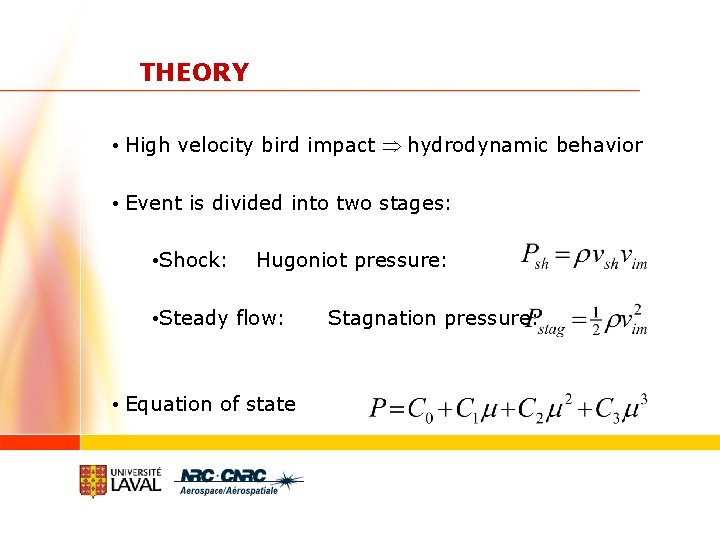
THEORY • High velocity bird impact Þ hydrodynamic behavior • Event is divided into two stages: • Shock: Hugoniot pressure: • Steady flow: • Equation of state Stagnation pressure:
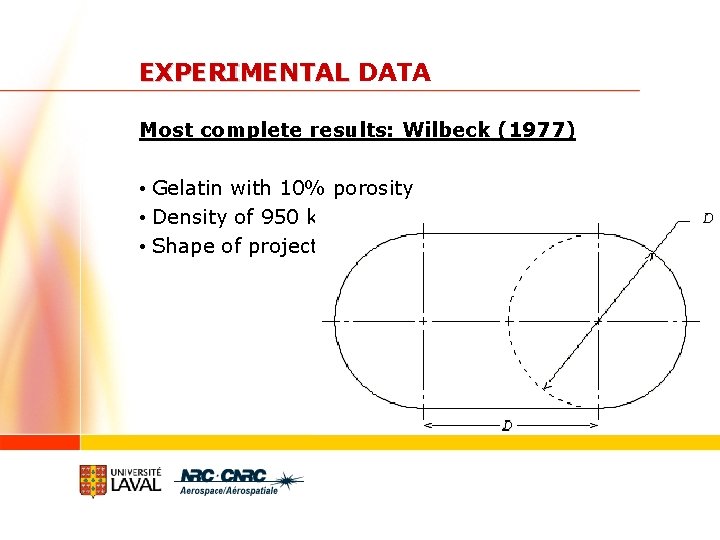
EXPERIMENTAL DATA Most complete results: Wilbeck (1977) • Gelatin with 10% porosity • Density of 950 kg/m 3 • Shape of projectile
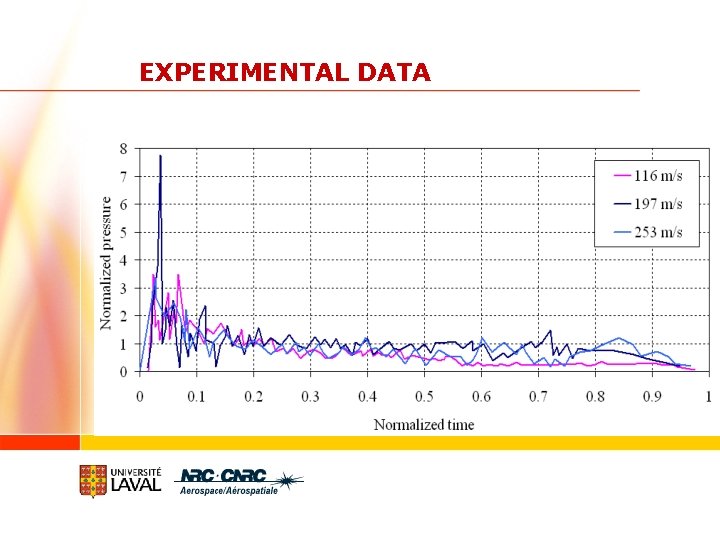
EXPERIMENTAL DATA
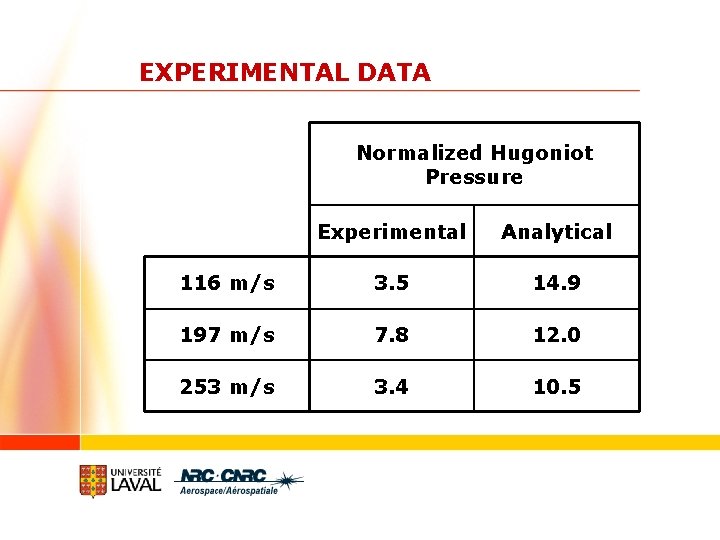
EXPERIMENTAL DATA Normalized Hugoniot Pressure Experimental Analytical 116 m/s 3. 5 14. 9 197 m/s 7. 8 12. 0 253 m/s 3. 4 10. 5
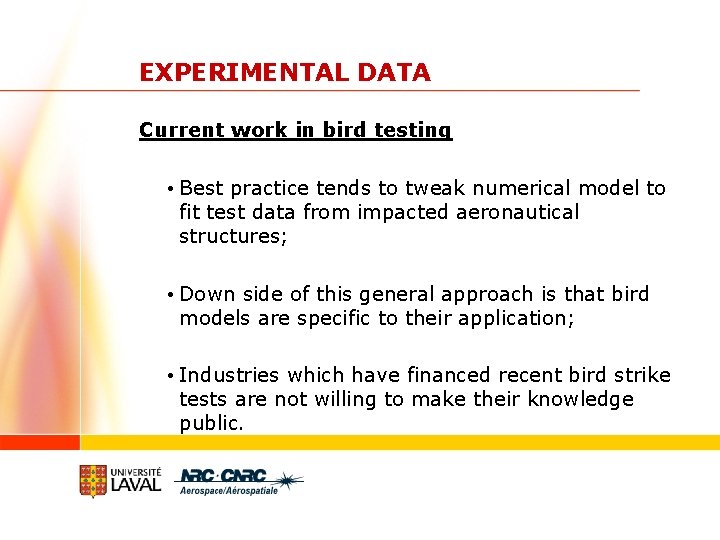
EXPERIMENTAL DATA Current work in bird testing • Best practice tends to tweak numerical model to fit test data from impacted aeronautical structures; • Down side of this general approach is that bird models are specific to their application; • Industries which have financed recent bird strike tests are not willing to make their knowledge public.
NUMERICAL BIRD MODELS • Early stages of bird impact simulations, the bird was represented by a pressure pulse on the structure. • Three main modelling methods are currently available. They are: • the Lagrangian mesh; • the arbitrary Lagrangian-Euler (ALE) mesh; • the smooth particle hydrodynamics (SPH) method. • 1 kg bird travelling at 116 m/s impacts on a 0. 5 m rigid square plate.
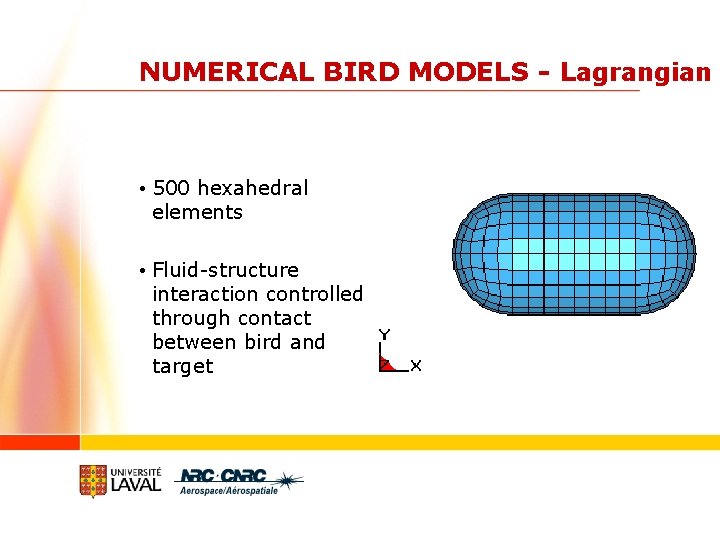
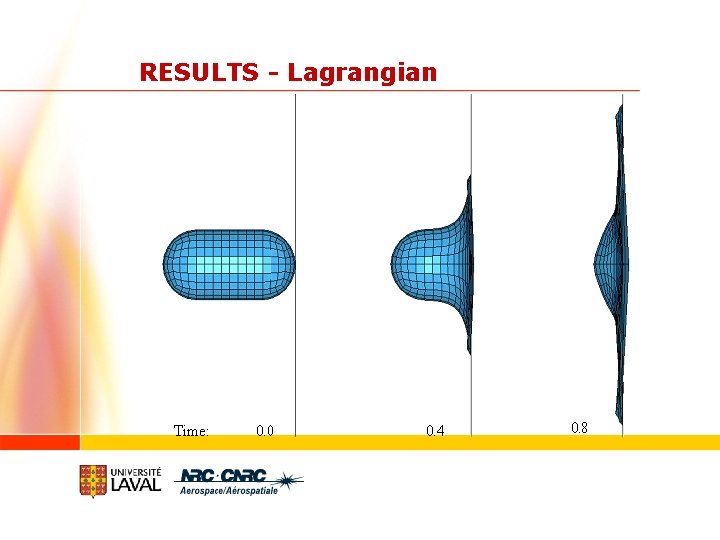
NUMERICAL BIRD MODELS - Lagrangian • 500 hexahedral elements • Fluid-structure interaction controlled through contact between bird and target
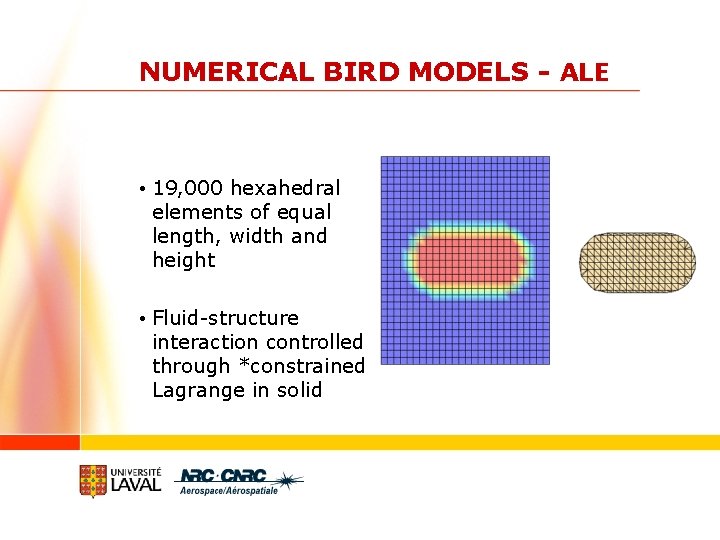
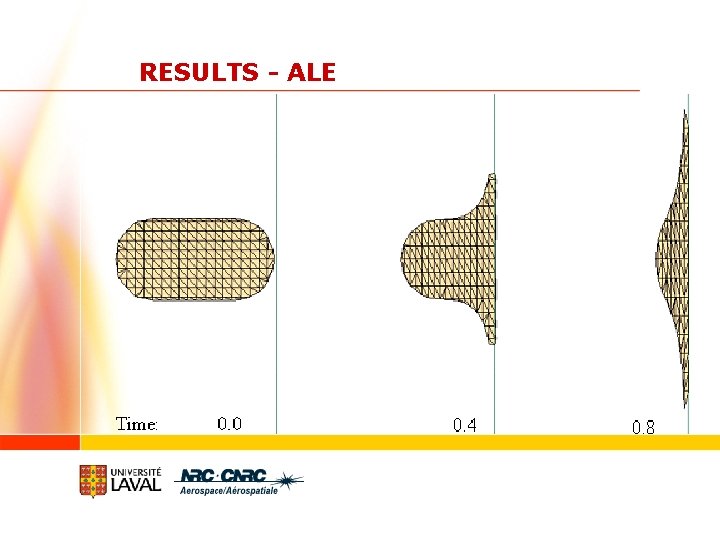
NUMERICAL BIRD MODELS - ALE • 19, 000 hexahedral elements of equal length, width and height • Fluid-structure interaction controlled through *constrained Lagrange in solid
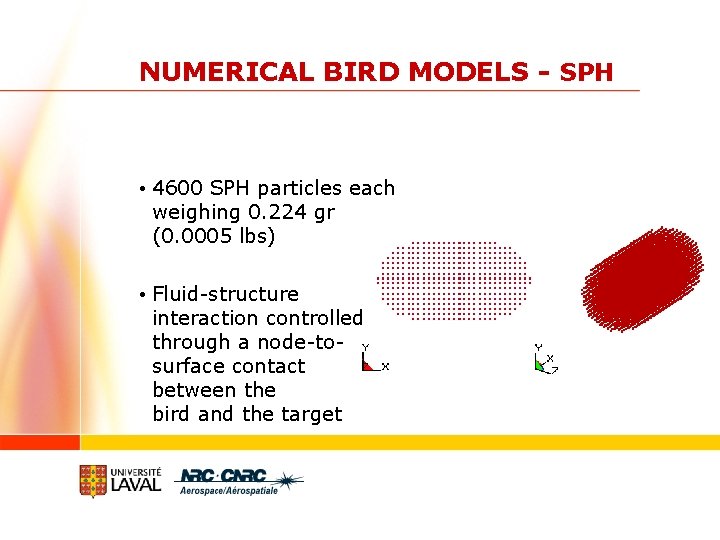
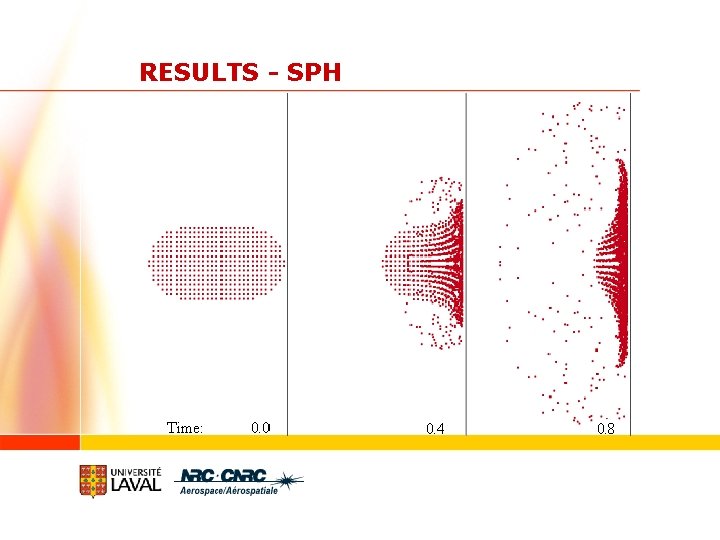
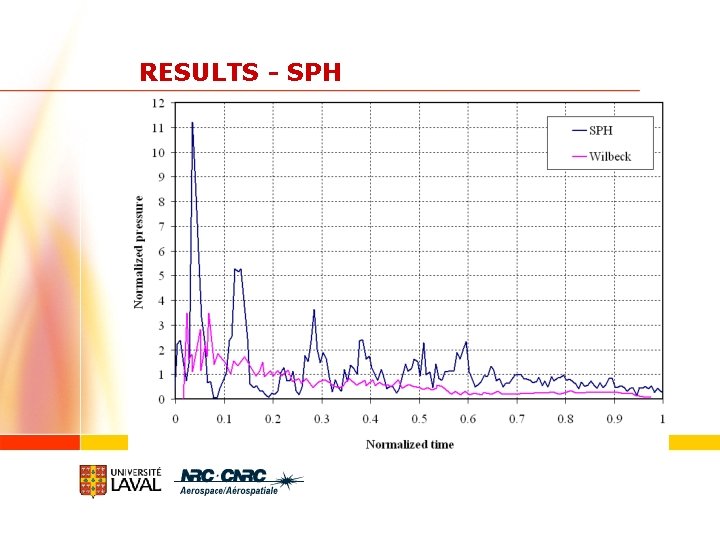
NUMERICAL BIRD MODELS - SPH • 4600 SPH particles each weighing 0. 224 gr (0. 0005 lbs) • Fluid-structure interaction controlled through a node-tosurface contact between the bird and the target
RESULTS - Lagrangian
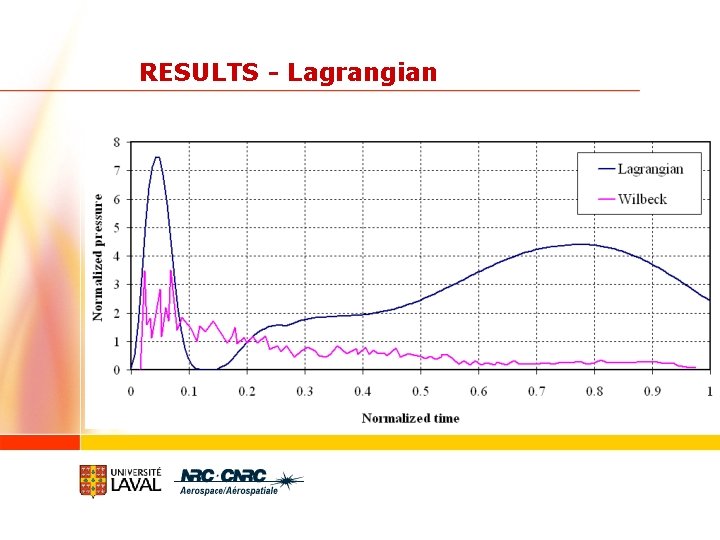
RESULTS - Lagrangian
RESULTS - ALE
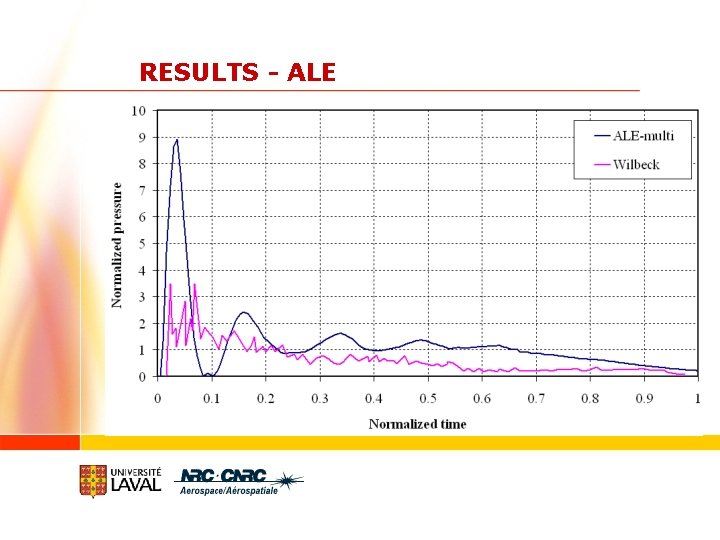
RESULTS - ALE
RESULTS - SPH
RESULTS - SPH
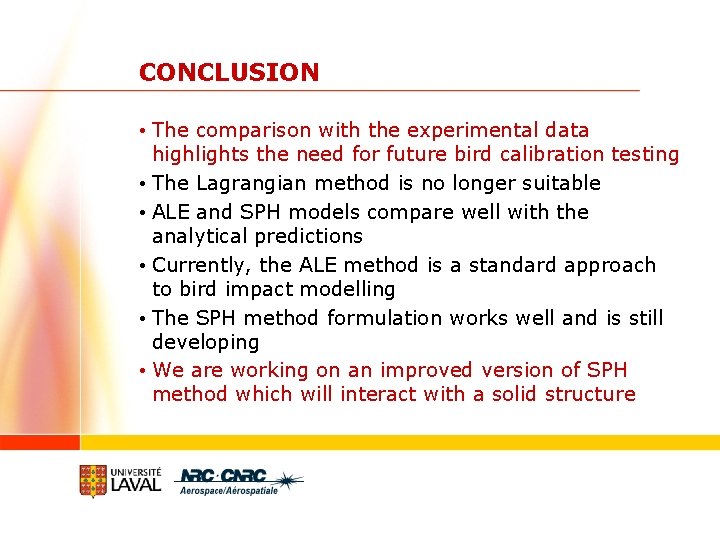
CONCLUSION • The comparison with the experimental data highlights the need for future bird calibration testing • The Lagrangian method is no longer suitable • ALE and SPH models compare well with the analytical predictions • Currently, the ALE method is a standard approach to bird impact modelling • The SPH method formulation works well and is still developing • We are working on an improved version of SPH method which will interact with a solid structure
ACKNOWLEGMENTS • Laval University • National Research Council of Canada (NRC) • Consortium for Research and Innovation in Aerospace in Quebec (CRIAQ)