
REVIEW OF DEFINITIONS CULTURE a socially constructed and
- Slides: 9
REVIEW OF DEFINITIONS CULTURE: “a socially constructed and historically transmitted system of symbols and meanings pertaining to communication” (Philipsen in Willis. Rivera 1) INTERCULTURAL COMMUNICATION: “communication with or about people of different cultural groups” (Willis-Rivera 6) PERCEPTION: “how we interpret and understand a message” (Willis-Rivera 7) SOCIAL IDENTITY: the ways we are distinguished socially within a culture (Allen 11)
SOCIAL IDENTITIES Gender Race Social Class Age Ability Sexuality Ethnicity Religion
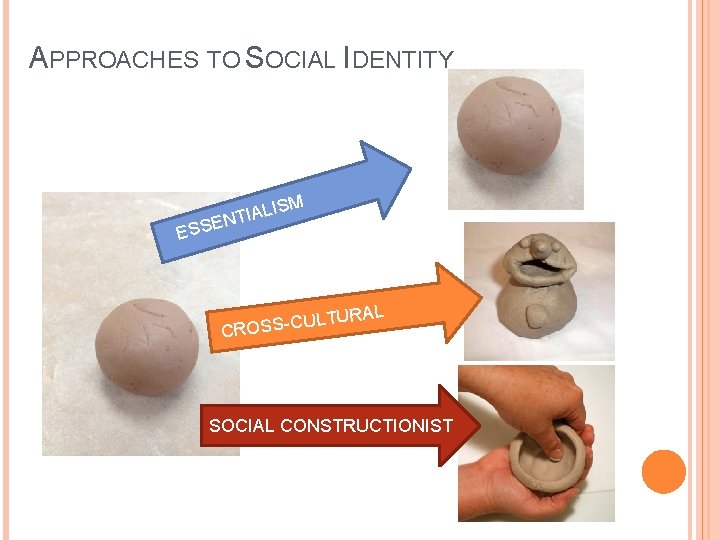
APPROACHES TO SOCIAL IDENTITY ISM IAL ENT ESS URAL T L U C S CROS SOCIAL CONSTRUCTIONIST
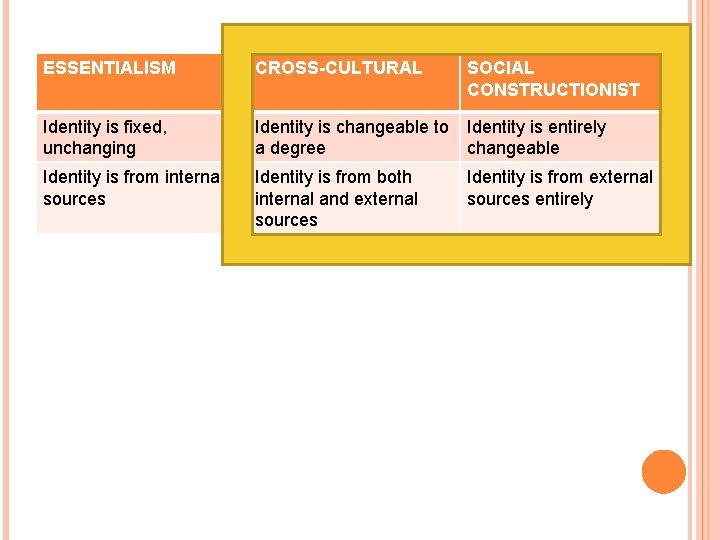
ESSENTIALISM CROSS-CULTURAL SOCIAL CONSTRUCTIONIST Identity is fixed, unchanging Identity is changeable to Identity is entirely a degree changeable Identity is from internal sources Identity is from both internal and external sources Identity is from external sources entirely
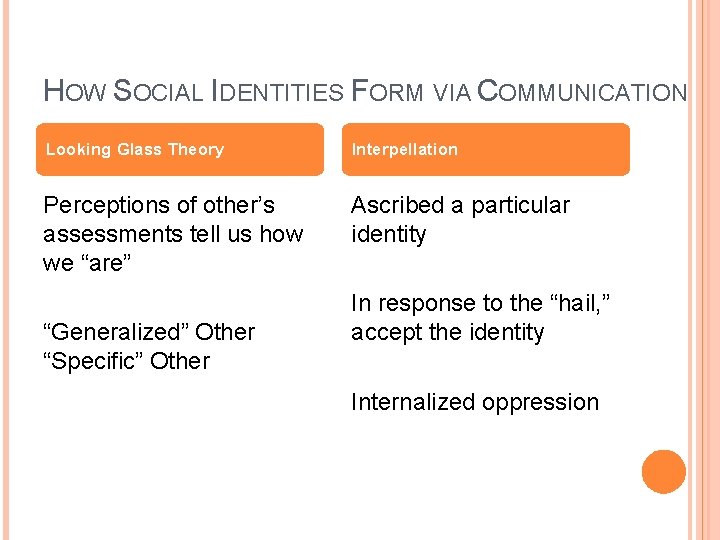
HOW SOCIAL IDENTITIES FORM VIA COMMUNICATION Looking Glass Theory Interpellation Perceptions of other’s assessments tell us how we “are” Ascribed a particular identity “Generalized” Other “Specific” Other In response to the “hail, ” accept the identity Internalized oppression
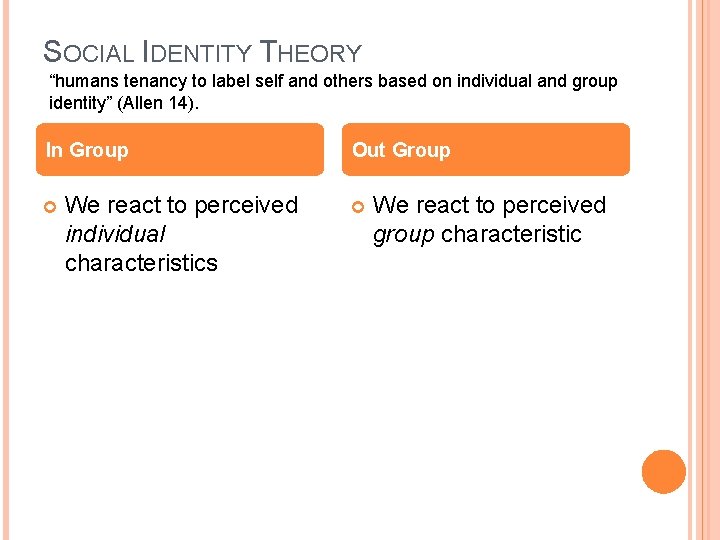
SOCIAL IDENTITY THEORY “humans tenancy to label self and others based on individual and group identity” (Allen 14). In Group We react to perceived individual characteristics Out Group We react to perceived group characteristic
The combination of culture, communication, perception and social identity cause you to identify DIFFERENCE “my sense of myself is built on my ability to distinguish myself from you; therefore I value the ways in which I am different from you; therefore I devalue the traits that make you distinct from me” (Gentile in Allen 7).
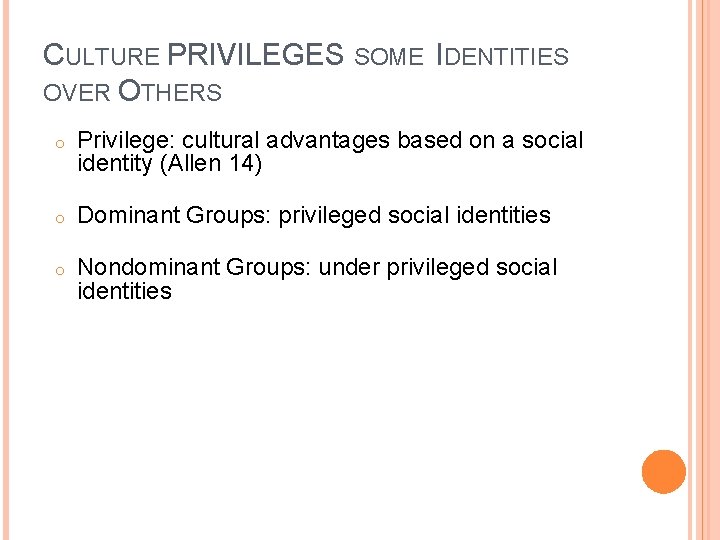
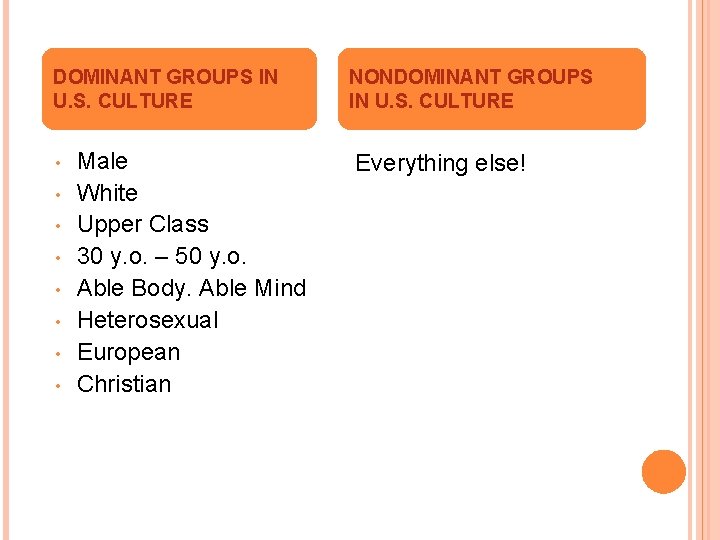
CULTURE PRIVILEGES SOME IDENTITIES OVER OTHERS o Privilege: cultural advantages based on a social identity (Allen 14) o Dominant Groups: privileged social identities o Nondominant Groups: under privileged social identities
DOMINANT GROUPS IN U. S. CULTURE • • Male White Upper Class 30 y. o. – 50 y. o. Able Body. Able Mind Heterosexual European Christian NONDOMINANT GROUPS IN U. S. CULTURE Everything else!