
Review of anatomy physiology of the Retina Dr

- Slides: 36
Review of anatomy & physiology of the Retina Dr. Ayesha Abdullah 21. 10. 2016
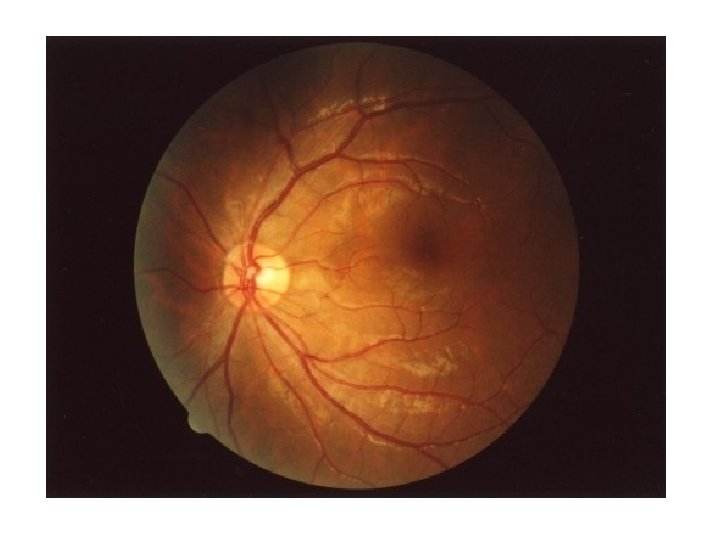
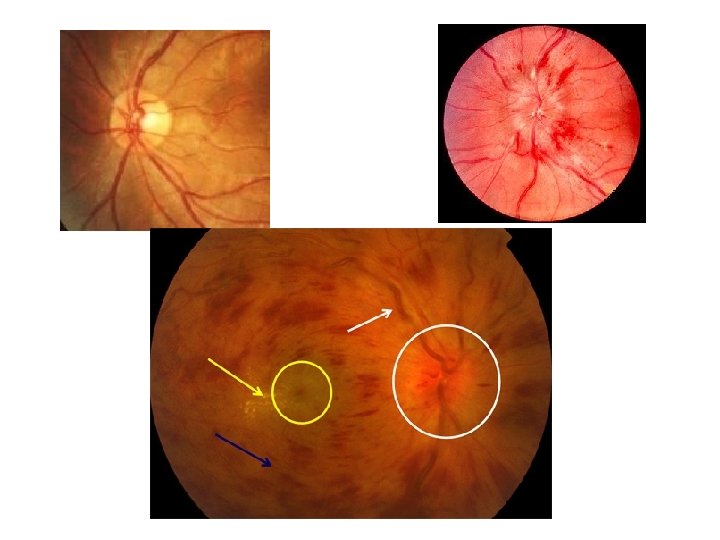
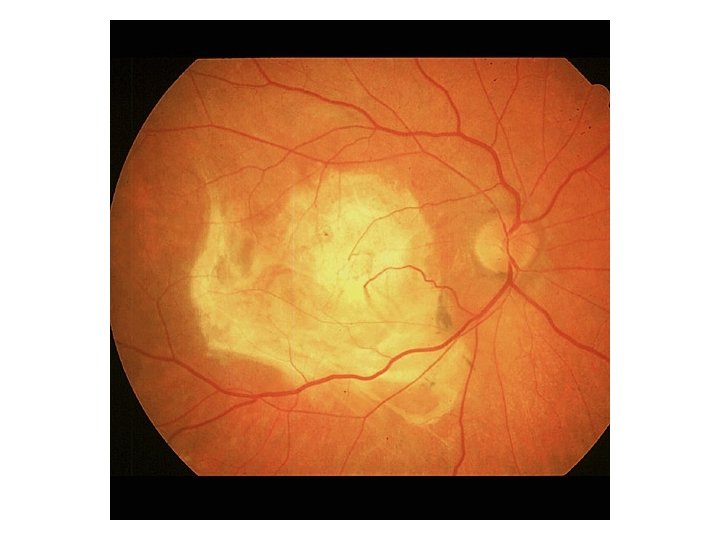
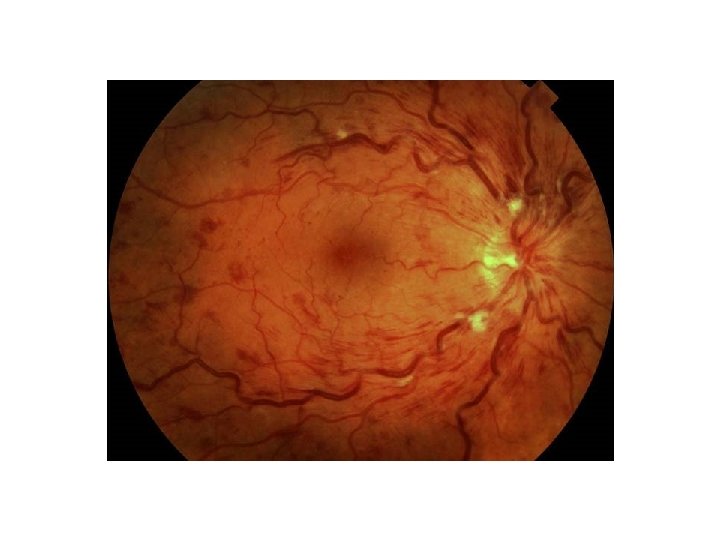
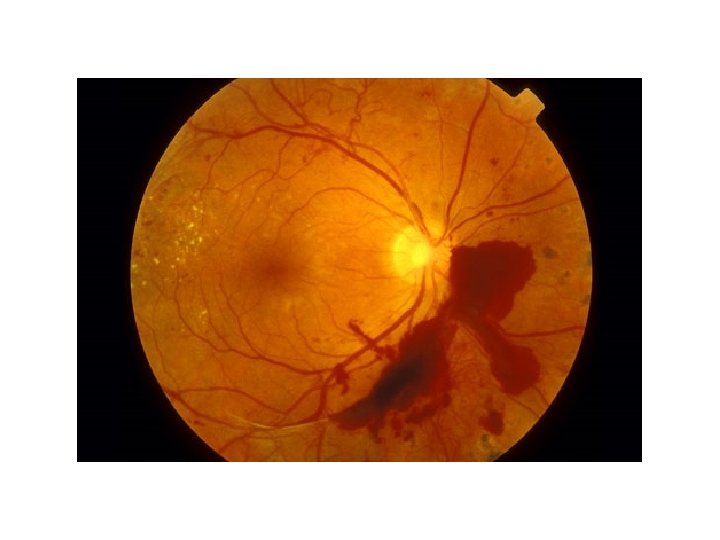
Learning outcomes By the end of this lecture the students would be able to; • Correlate the structural organization of the retina with its functions and development. • Identify structural landmarks on retinal photographs. • Name the investigations commonly employed for the assessment of various categories of retinal disorders.
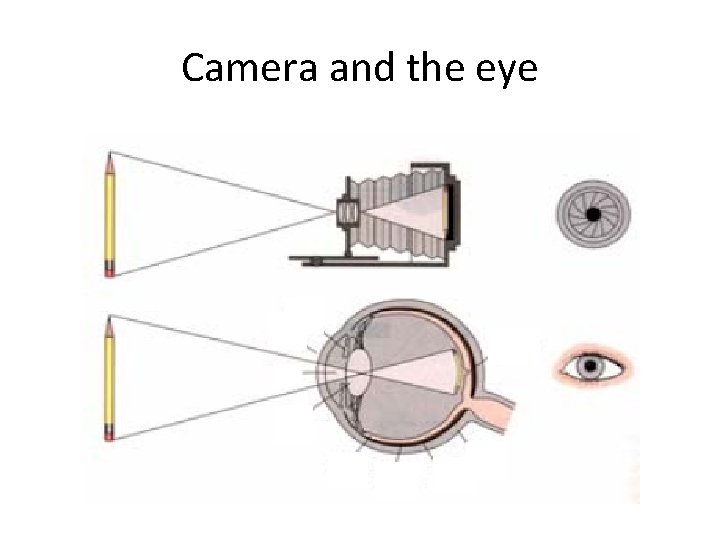
Camera and the eye
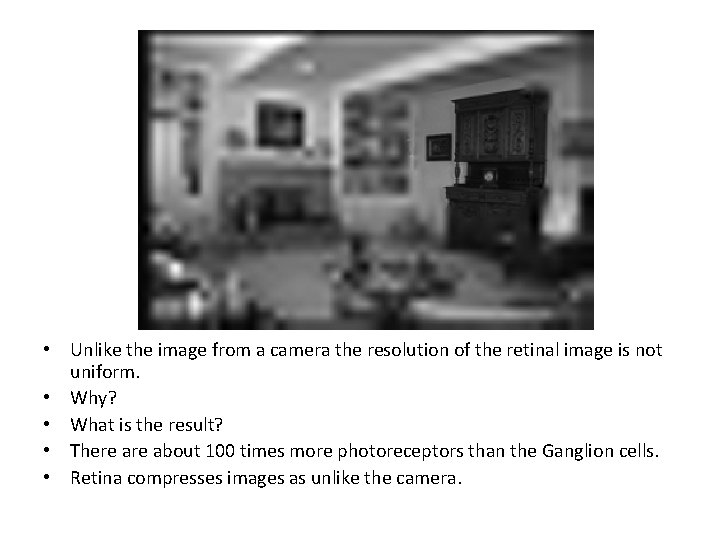
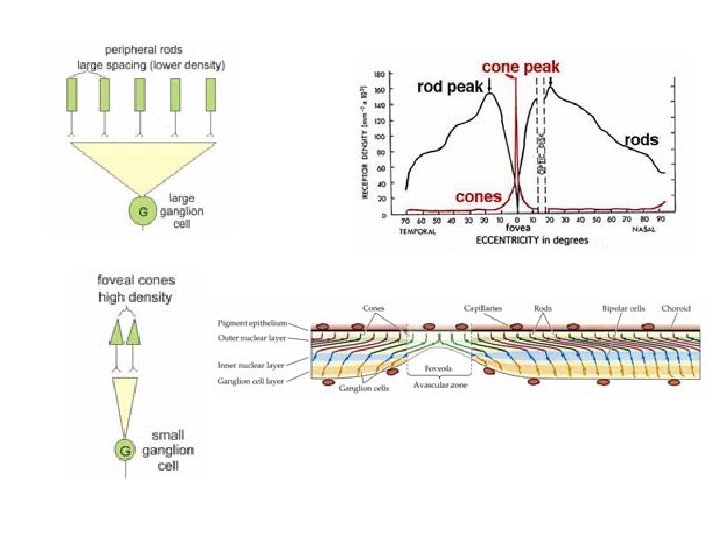
• Unlike the image from a camera the resolution of the retinal image is not uniform. • Why? • What is the result? • There about 100 times more photoreceptors than the Ganglion cells. • Retina compresses images as unlike the camera.
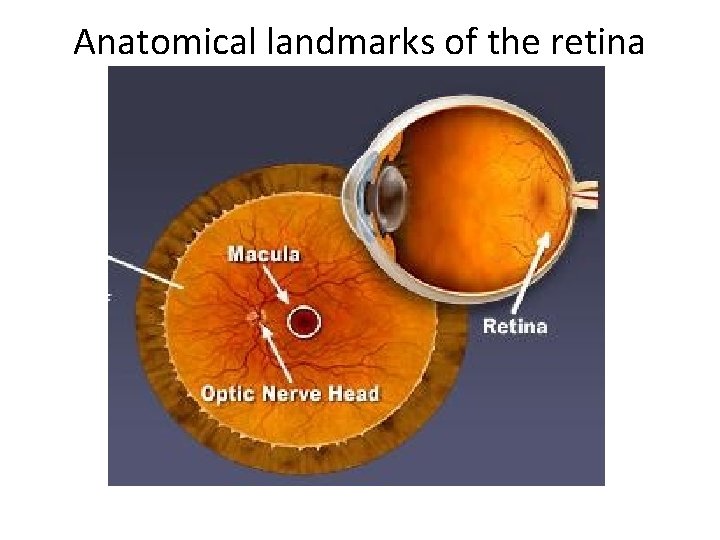
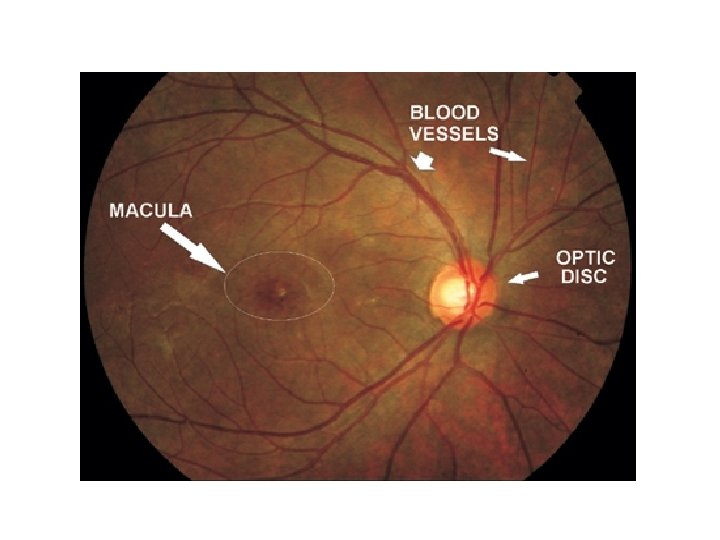
Anatomical landmarks of the retina
Normal dimensions Anatomical characteristics Clinically Observable characteristics Optic disc Place where the optic nerve fibers leave the retina. It is devoid of rods and cones hence the blind spot. Contains the central retinal artery and vein It’s a pale disc like structure with vessels emerging out of its center called the cup. Its about 1. 5 mm in size. Macula It is the area where the ganglion cells are two layered. Contains the xanthophyl pigment giving it the pigmented look. It is about 5. 5 mm in diameter (3. 5 disc diameter/ 180 of visual angle). Roughly the area between the arterial arcades. Fovea A depression in the inner retinal surface. It contains cones only. The inner nuclear layer and the ganglion cell layer is absent. A concave central retinal depression about the same size as the disc (1. 5 mm) The thickest part of the retina Area surrounding the fovea Foveola Parafovea
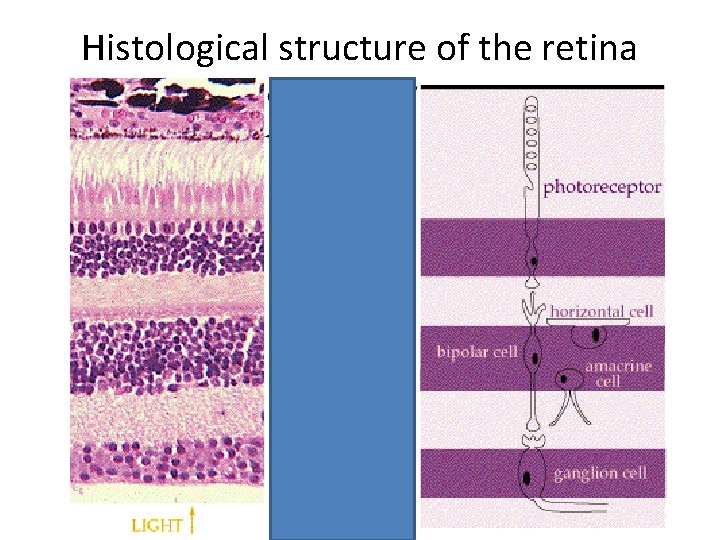
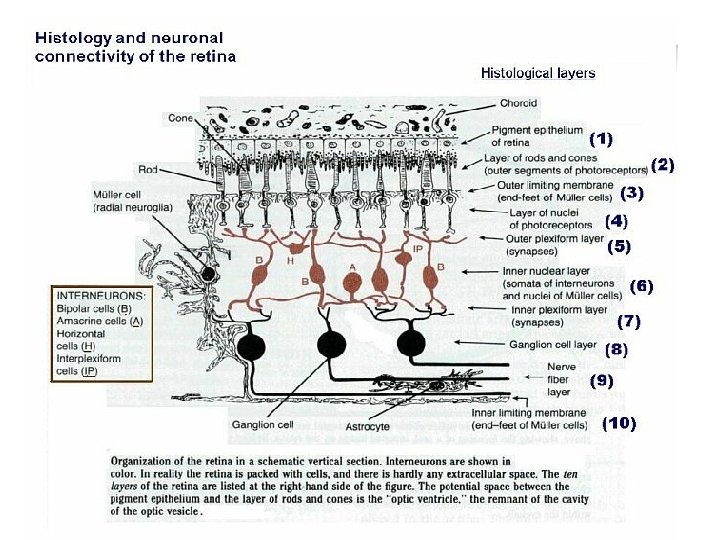
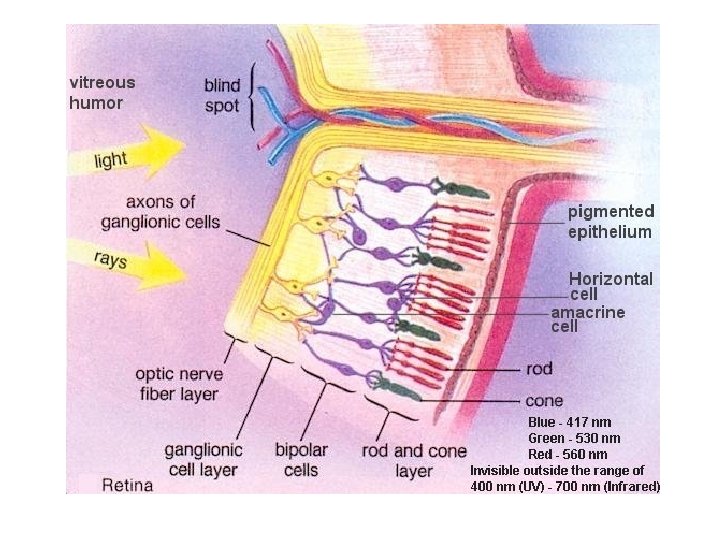
Histological structure of the retina
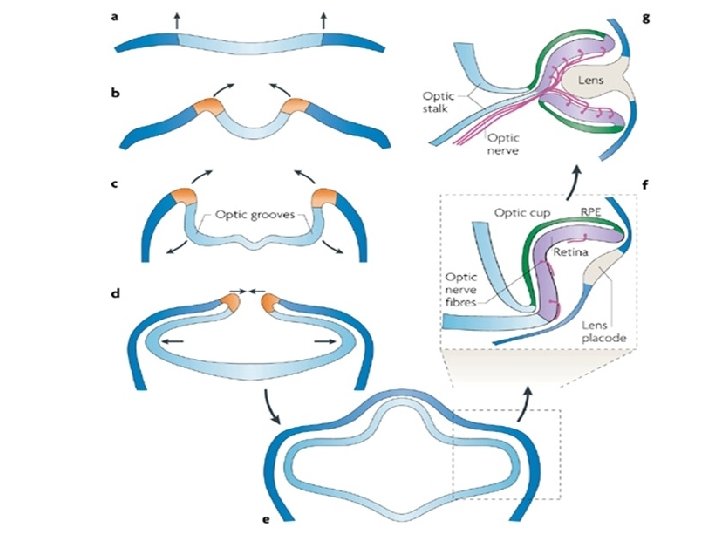
Development of the retina
Functions of the retina Light perception Brightness appreciation Contrast sensitivity Two point discrimination and appreciation of details • Colour perception • Light and dark adaptation • Circadian rhythms & hormonal balance • •
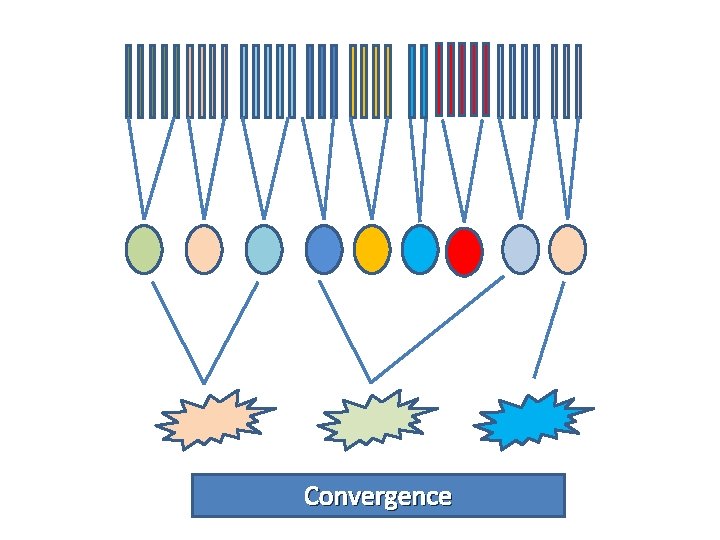
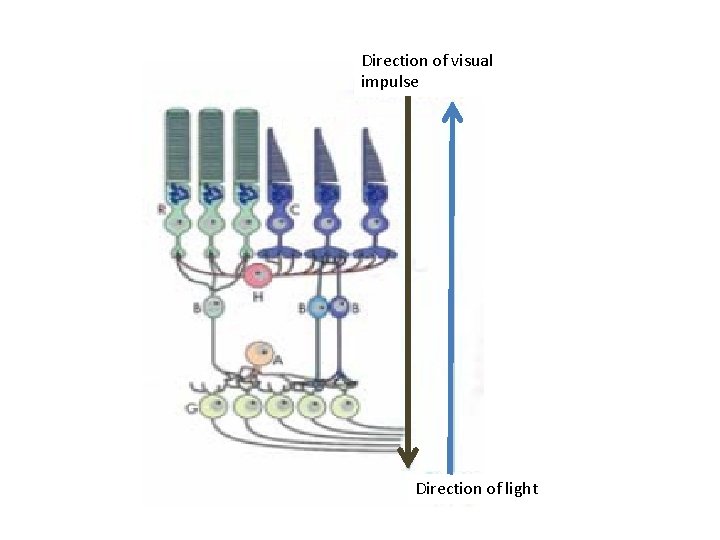
Some important facts 1. 150 million receptors & 1 million optic nerveconvergence and mixing of visual signals 2. The horizontal action of the horizontal and amacrine cells can allow one area of the retina to control another (e. g. , one stimulus inhibiting another). 3. The response of cones to various wavelengths of light is called their spectral sensitivity 4. There are blue, green, and red cones but more accurately short, medium, and long wavelength sensitive cone subgroups- trichromatic vision
Some important facts 5. The receptive field of a sensory neuron is a region of space in which the presence of a stimulus will alter the firing of that neuron
Convergence
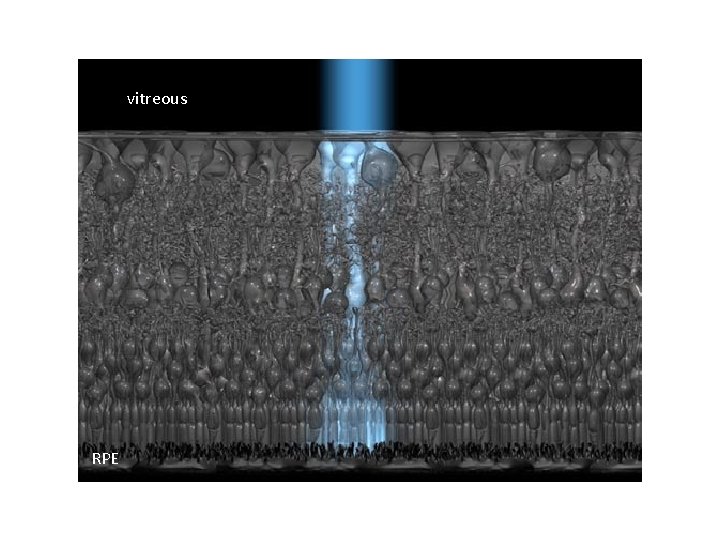
vitreous RPE
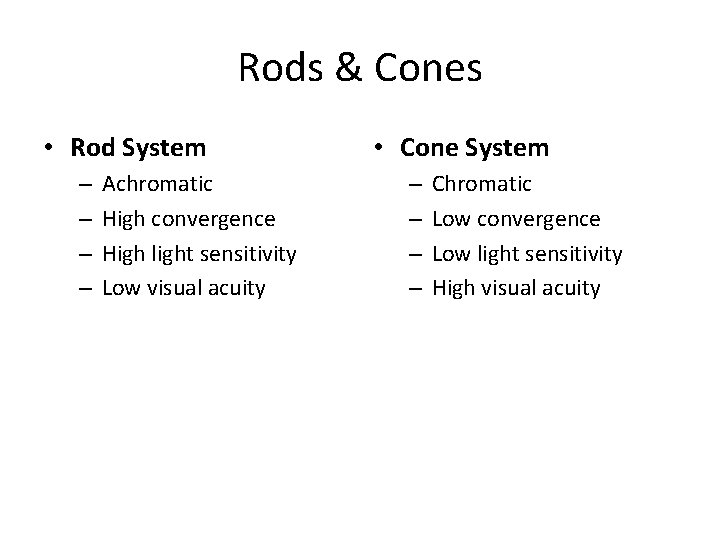
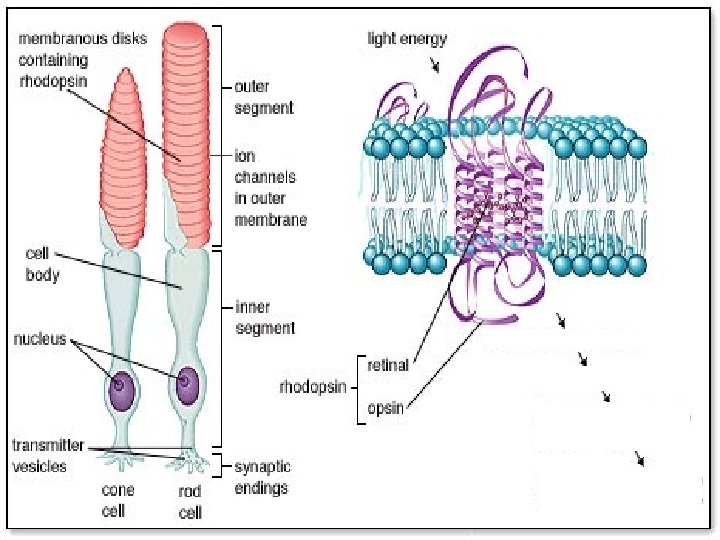
Rods & Cones • Rod System – – Achromatic High convergence High light sensitivity Low visual acuity • Cone System – – Chromatic Low convergence Low light sensitivity High visual acuity
Direction of visual impulse Direction of light
27
28
29
30
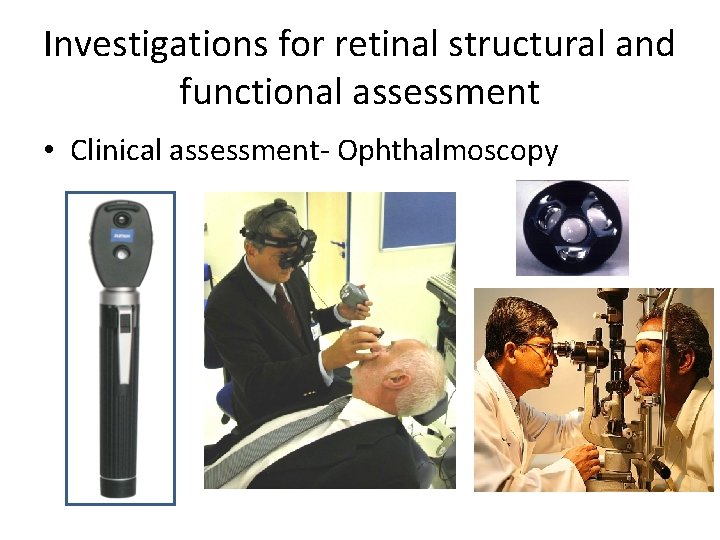
Investigations for retinal structural and functional assessment • Clinical assessment- Ophthalmoscopy
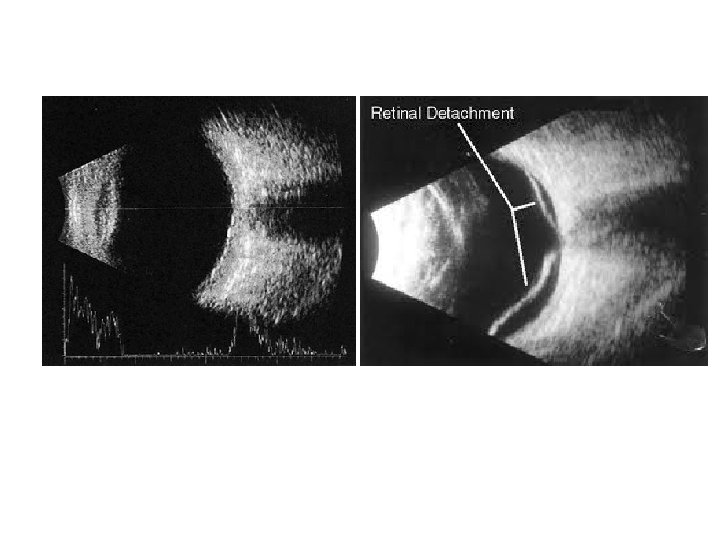
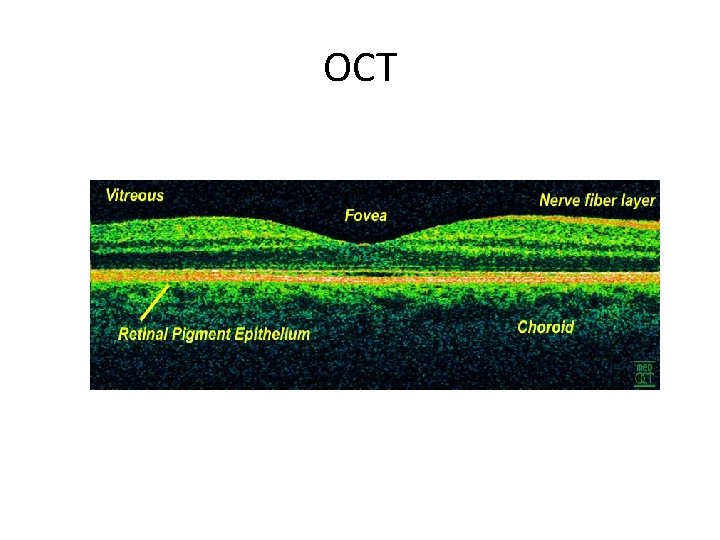
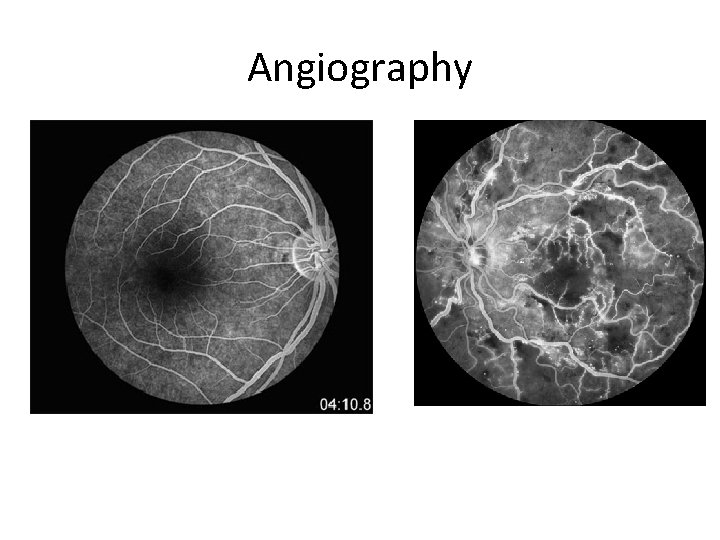
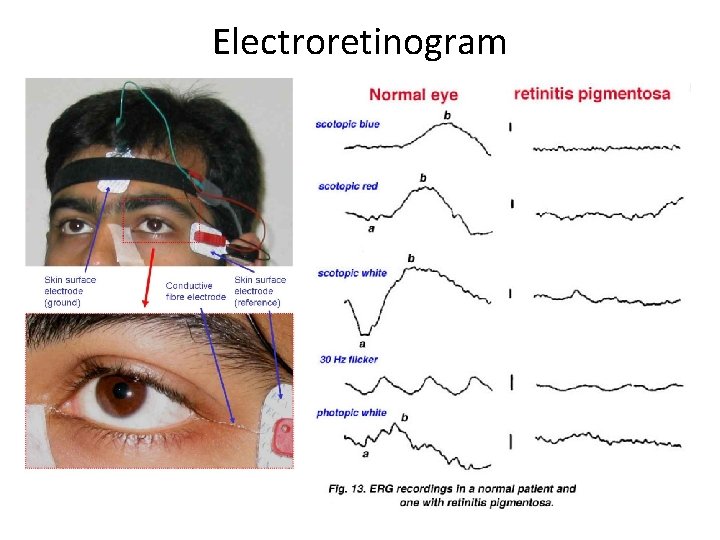
Ophthalmic investigations • • • Ultrasound –B & A scans Ocular coherence tomography (OCT) Angiography Electroretinogram Electro-oculogram
OCT
Angiography
Electroretinogram