
REVIEW Natural Selection Process of change in populations
- Slides: 13
REVIEW: Natural Selection • Process of change in populations over many generations • Individuals with certain traits survive local environmental conditions • Pass on favourable alleles to offspring • Environment exerts ‘selective pressure’ Assumptions of Natural Selection • Variation • Competition • Fitness • Adaptation
Mechanisms of Evolution
Allele Frequencies • When populations change in response to the environment or through predation, we see frequencies of alleles change, too. • Eg. More dark coloured pepper moths, fewer tall animals in colder climates, more redheads when they selectively breed and begin to take over the world…
FACTORS THAT CHANGE ALLELE FREQUENCIES: 1. Mutation 2. Gene Flow (Migration) 3. Non-Random Mating 4. Genetic Drift 5. Natural Selection
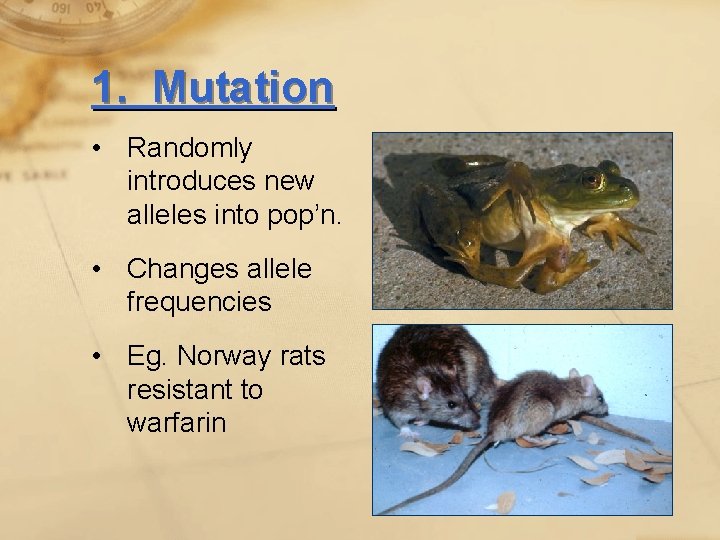
1. Mutation • Randomly introduces new alleles into pop’n. • Changes allele frequencies • Eg. Norway rats resistant to warfarin
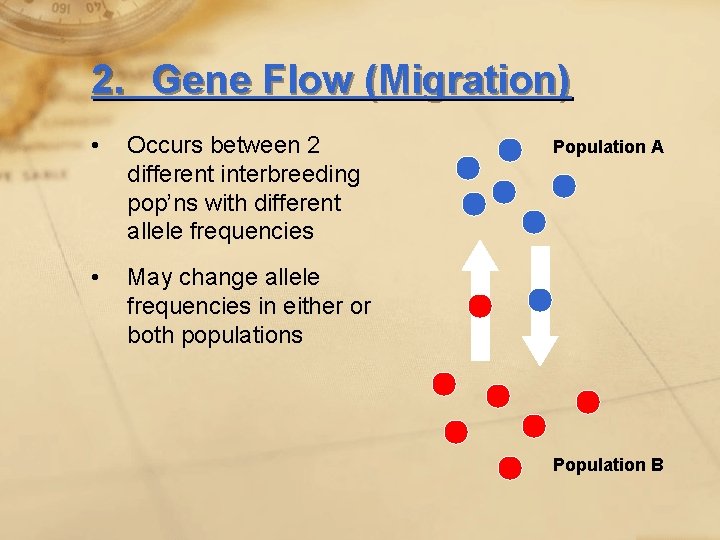
2. Gene Flow (Migration) • Occurs between 2 different interbreeding pop’ns with different allele frequencies • May change allele frequencies in either or both populations Population A Population B
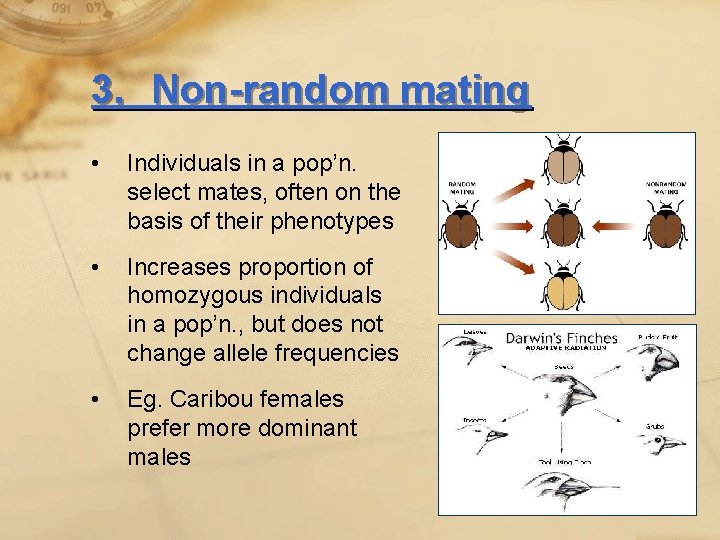
3. Non-random mating • Individuals in a pop’n. select mates, often on the basis of their phenotypes • Increases proportion of homozygous individuals in a pop’n. , but does not change allele frequencies • Eg. Caribou females prefer more dominant males
Non-Random Mating: Inbreeding • When homozygous is more common harmful recessive alleles more likely to be expressed • Pure bred = higher incidence of deformities and health problems • Eg. Shar-pei dogs’ wrinkles enhanced through inbreeding
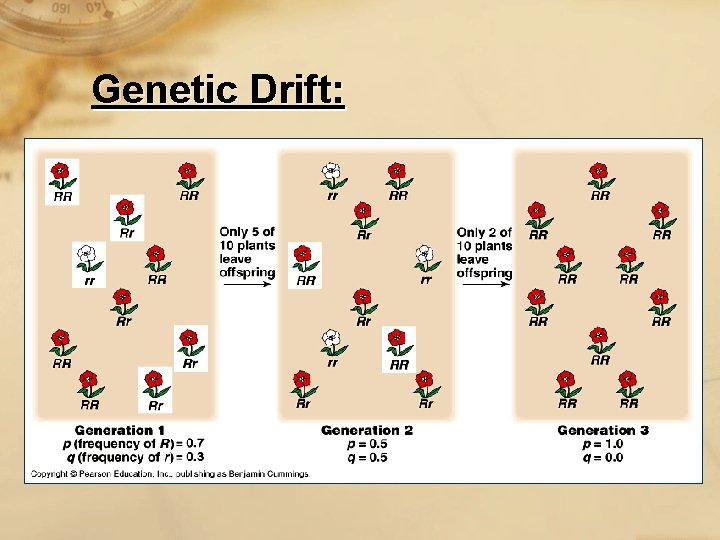
4. Genetic drift • Random change in genetic variation from generation to generation due to chance • More common in smaller populations • Changes frequency of alleles • Ex. Flip coin 10 times instead of 1000
Genetic Drift:
The Bottleneck Effect • Starvation, disease, natural disasters and severe weather can quickly reduce sizes of large pop’ns. • Survivors likely have a fraction of the alleles that were present before the reduction • Gene pool loses diversity • Eg. 1775 typhoon devastated tiny island of Pingelap (Pacific Ocean)
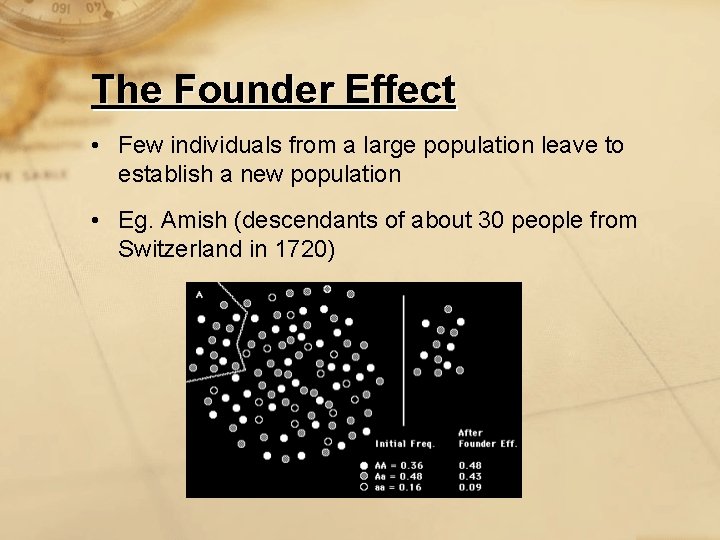
The Founder Effect • Few individuals from a large population leave to establish a new population • Eg. Amish (descendants of about 30 people from Switzerland in 1720)
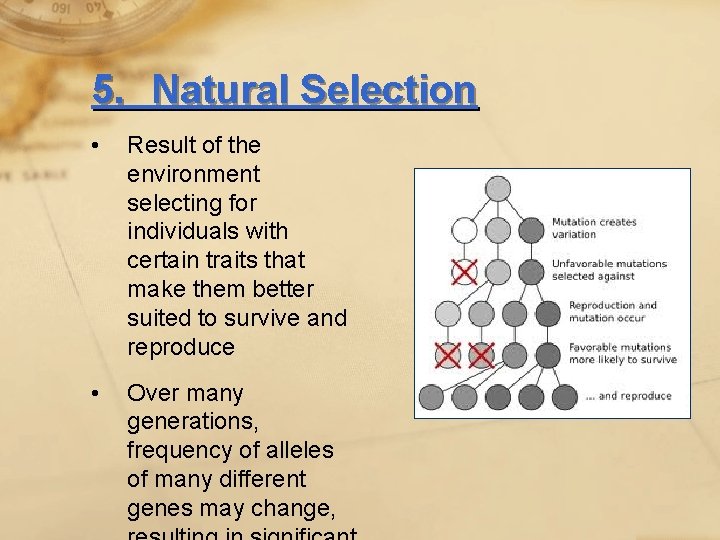
5. Natural Selection • Result of the environment selecting for individuals with certain traits that make them better suited to survive and reproduce • Over many generations, frequency of alleles of many different genes may change,