
Review n Turn in any work that you
- Slides: 32
Review n Turn in any work that you need to (those of you with the Academic Action Plans – you have until next Tues to get those in!) n Take out your notebook and open to a new page. – WITHOUT looking back in your notes – write down the 3 main ideas of the Cell Theory.
Prokaryote vs. Eukaryote n Take out your notebook and open to the prokaryote and eukaryote classification activity. n Correct your responses as we discuss – this is all information that you will need to have to prepare for your next quiz!
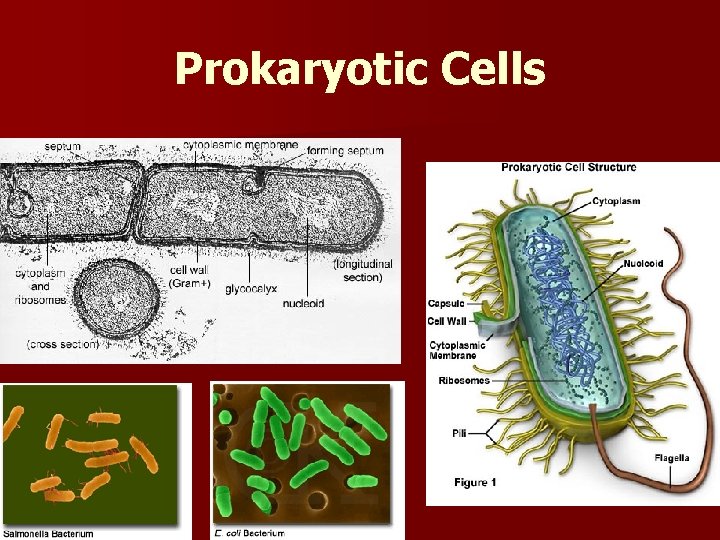
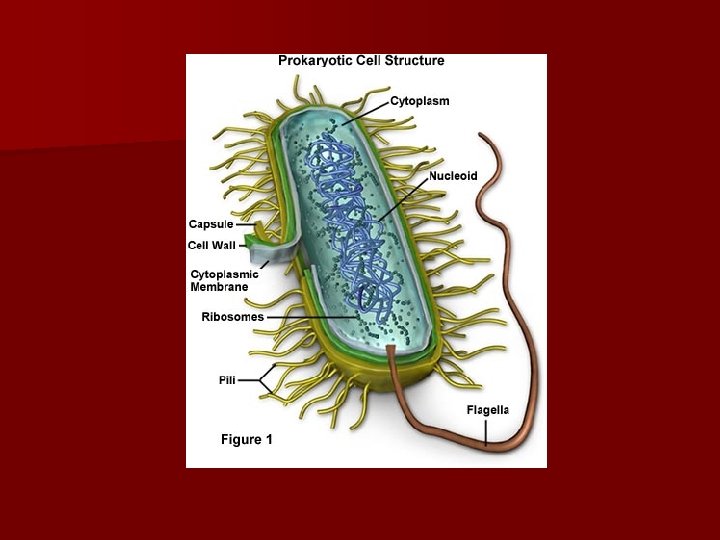
Prokaryotic Cells
Prokaryotic cells Check your classification! n n n n Cells reproduce by binary fission (asexual reproduction where 1 cell divides into 2 identical cells) Cells size is typically small (0. 2 – 2. 0 um) Smaller in size (1 -10 um) Contain no membrane-bound organelles Has cell walls Cells of most unicellular organisms Thought to be the earliest living organisms on Earth Bacteria Contains DNA
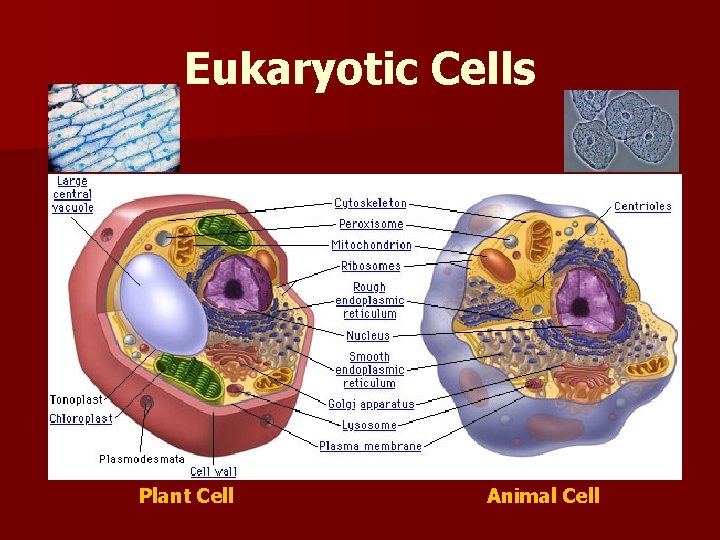
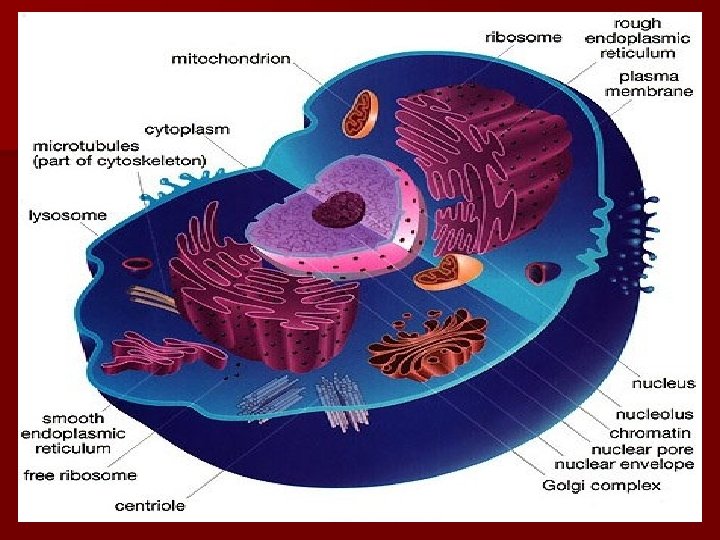
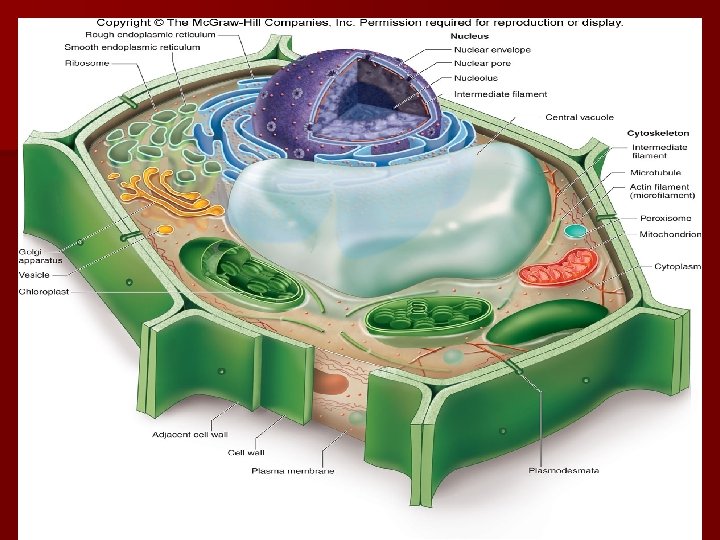
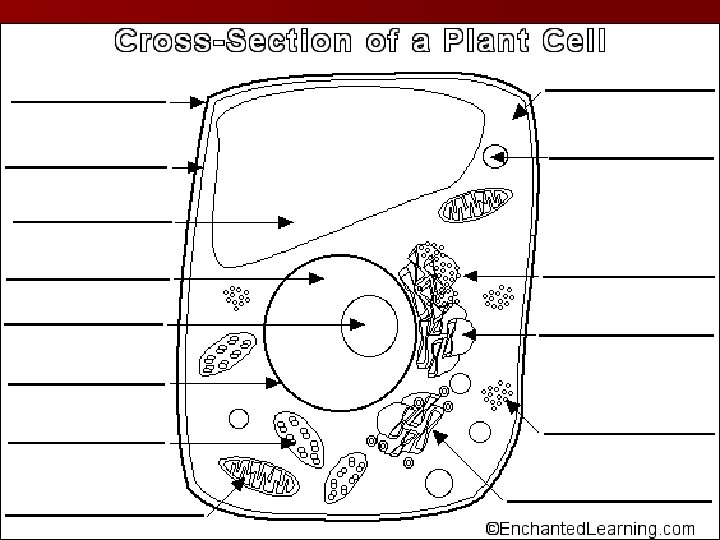
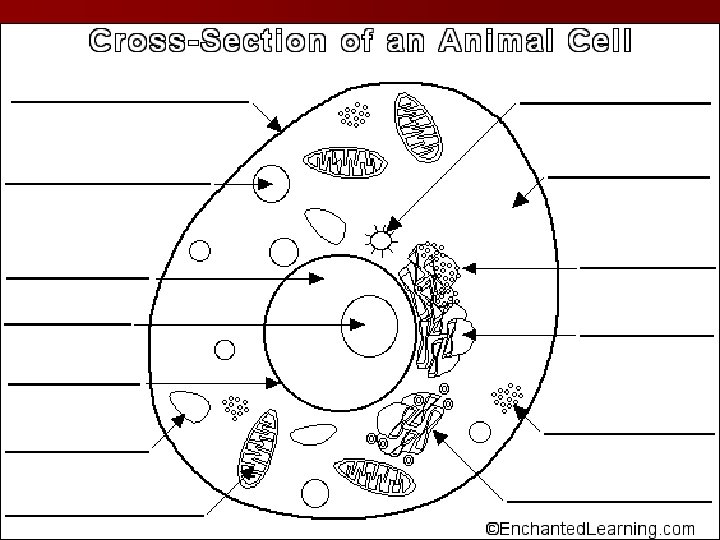
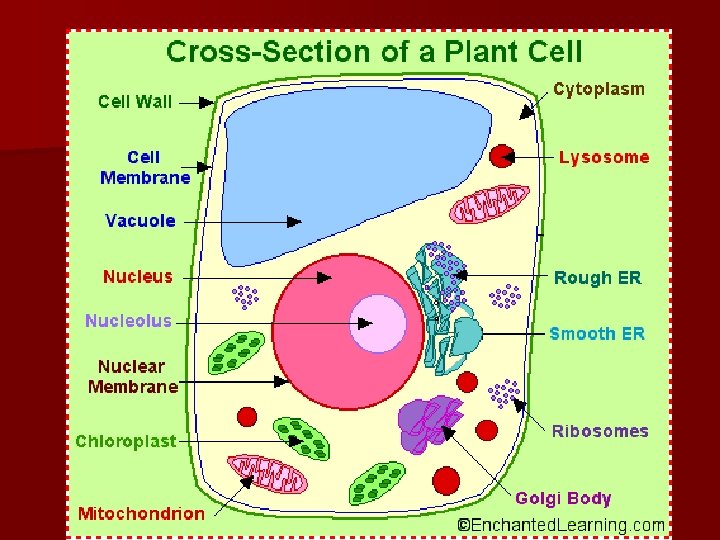
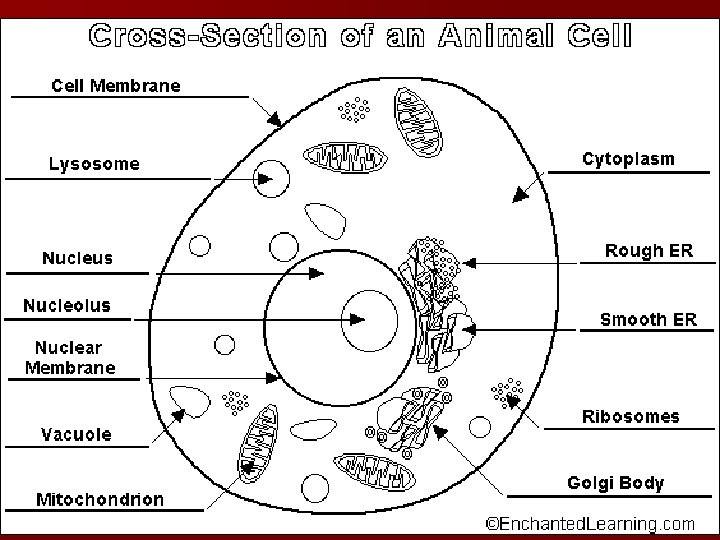
Eukaryotic Cells Plant Cell Animal Cell
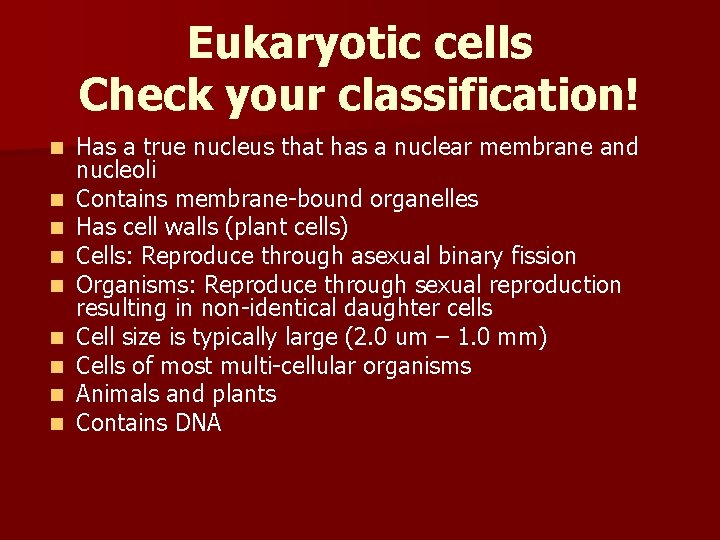
Eukaryotic cells Check your classification! n n n n n Has a true nucleus that has a nuclear membrane and nucleoli Contains membrane-bound organelles Has cell walls (plant cells) Cells: Reproduce through asexual binary fission Organisms: Reproduce through sexual reproduction resulting in non-identical daughter cells Cell size is typically large (2. 0 um – 1. 0 mm) Cells of most multi-cellular organisms Animals and plants Contains DNA
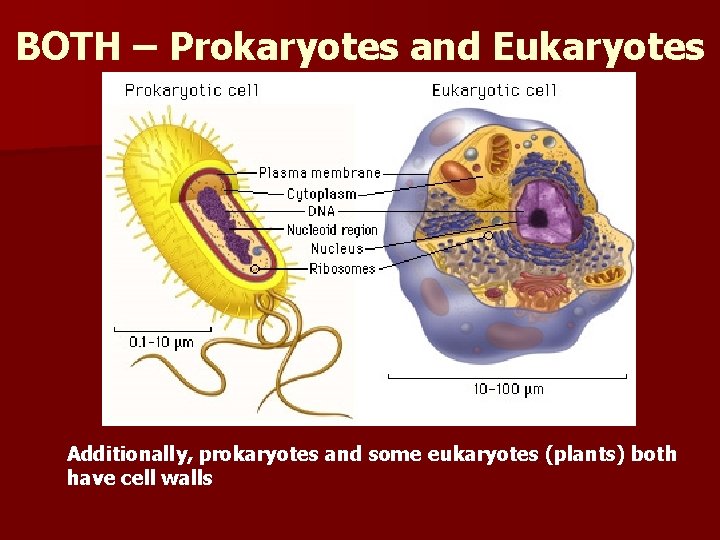
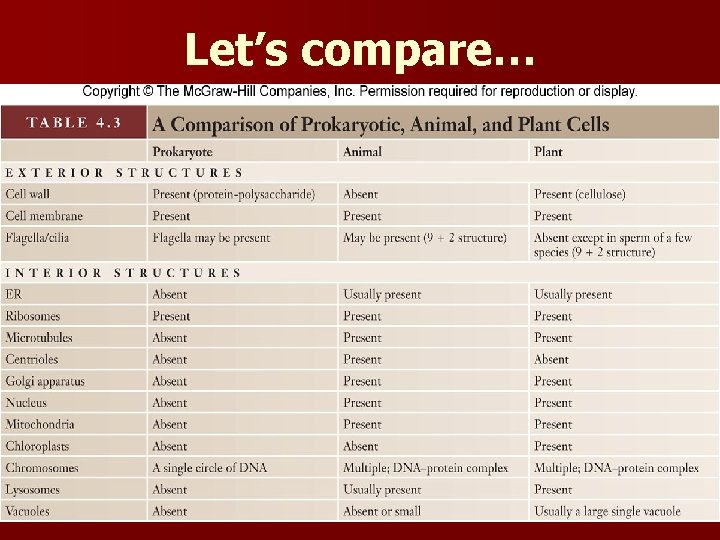
BOTH – Prokaryotes and Eukaryotes Additionally, prokaryotes and some eukaryotes (plants) both have cell walls
Organelles -Are (typically) membrane-bound structures with particular functions within eukaryotic cells. -Are on the surface of cells as well as inside the cell membrane.
Surrounding the Cell
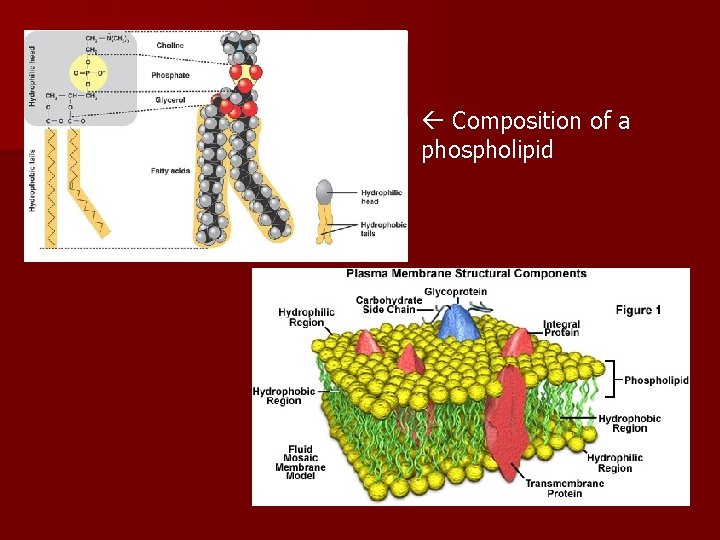
Cell Membrane (Animal and Plant) n Job: – Boundary between the inside and the outside of a cell – Is selectively permeable: (think Mr. Warren!) Location: Outside of the cell n Composed of: n – Phospholipid bilayer – Transport proteins The model of the cell membrane is called the Fluid-Mosaic Model. (fluid – phospholipids move w/in the membrane, mosaic – patters created proteins on membrane surface)
Composition of a phospholipid
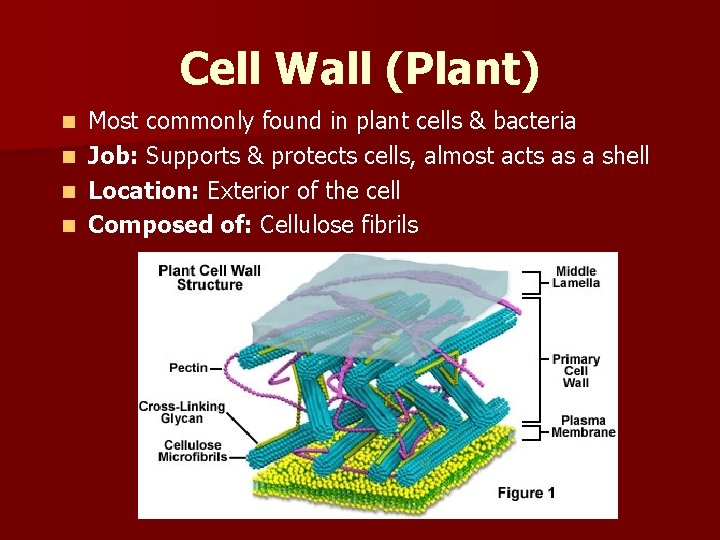
Cell Wall (Plant) Most commonly found in plant cells & bacteria n Job: Supports & protects cells, almost acts as a shell n Location: Exterior of the cell n Composed of: Cellulose fibrils n
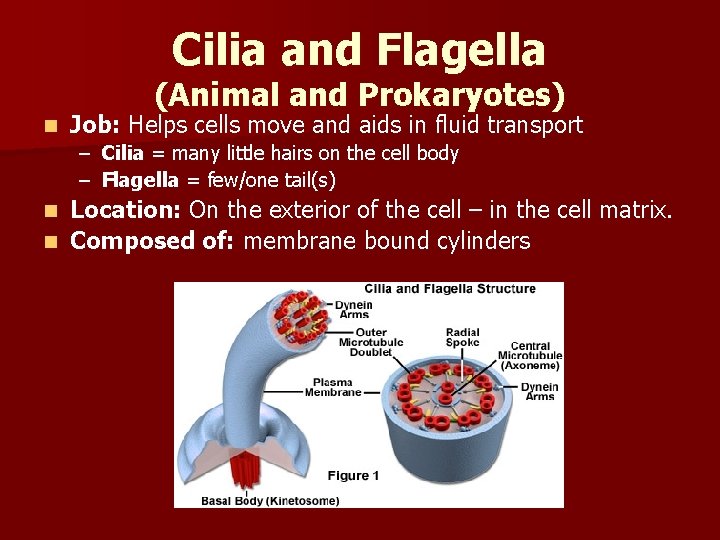
Cilia and Flagella (Animal and Prokaryotes) n Job: Helps cells move and aids in fluid transport – Cilia = many little hairs on the cell body – Flagella = few/one tail(s) Location: On the exterior of the cell – in the cell matrix. n Composed of: membrane bound cylinders n
Inside the Cell
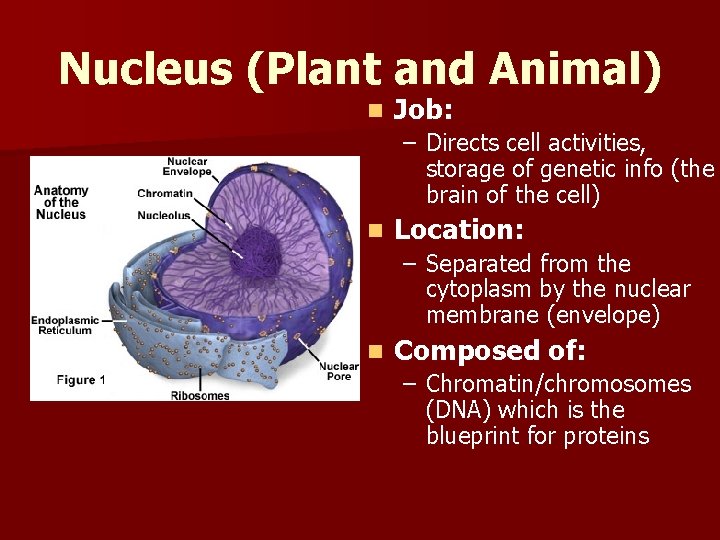
Nucleus (Plant and Animal) n Job: – Directs cell activities, storage of genetic info (the brain of the cell) n Location: – Separated from the cytoplasm by the nuclear membrane (envelope) n Composed of: – Chromatin/chromosomes (DNA) which is the blueprint for proteins
Cytoplasm (Plant and Animal) n Job: – Suspension of eukaryotic organelles – Site of numerous chemical reactions (in cytosol or organelles) n Location: – Inside the cell membrane, inside individual organelles n Composed of: Cytosol and Organelles – Water, salts, protein filaments, and organic compounds – ~ 70% of a cell’s volume
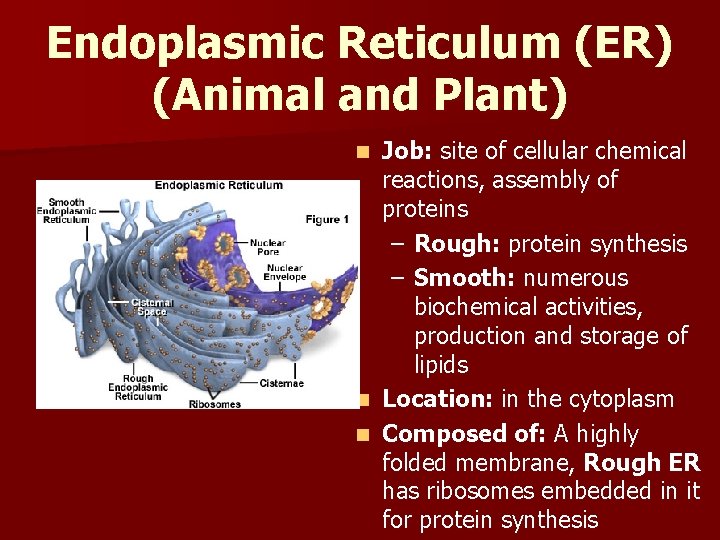
Endoplasmic Reticulum (ER) (Animal and Plant) Job: site of cellular chemical reactions, assembly of proteins – Rough: protein synthesis – Smooth: numerous biochemical activities, production and storage of lipids n Location: in the cytoplasm n Composed of: A highly folded membrane, Rough ER has ribosomes embedded in it for protein synthesis n
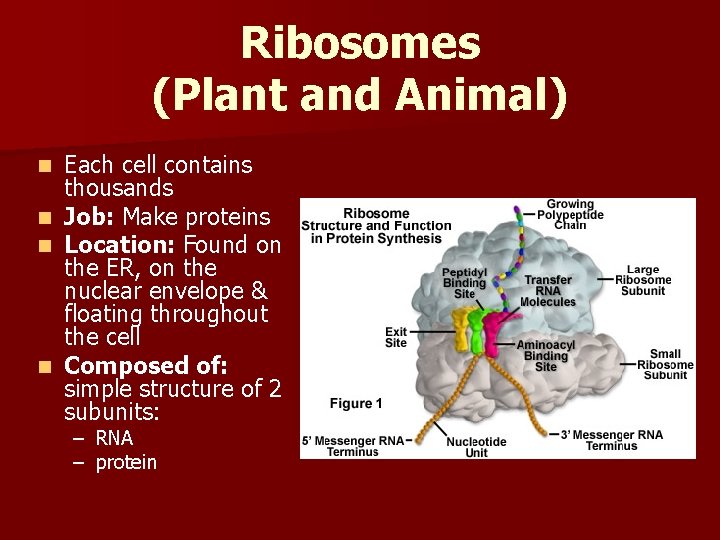
Ribosomes (Plant and Animal) Each cell contains thousands n Job: Make proteins n Location: Found on the ER, on the nuclear envelope & floating throughout the cell n Composed of: simple structure of 2 subunits: n – RNA – protein
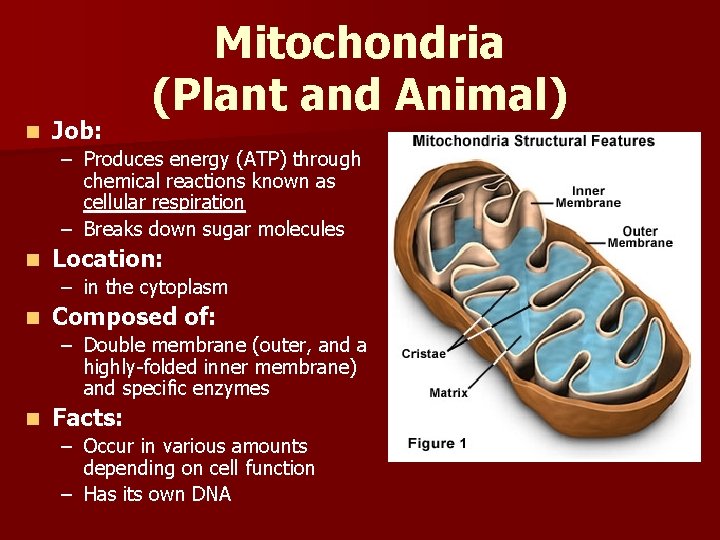
n Job: Mitochondria (Plant and Animal) – Produces energy (ATP) through chemical reactions known as cellular respiration – Breaks down sugar molecules n Location: – in the cytoplasm n Composed of: – Double membrane (outer, and a highly-folded inner membrane) and specific enzymes n Facts: – Occur in various amounts depending on cell function – Has its own DNA
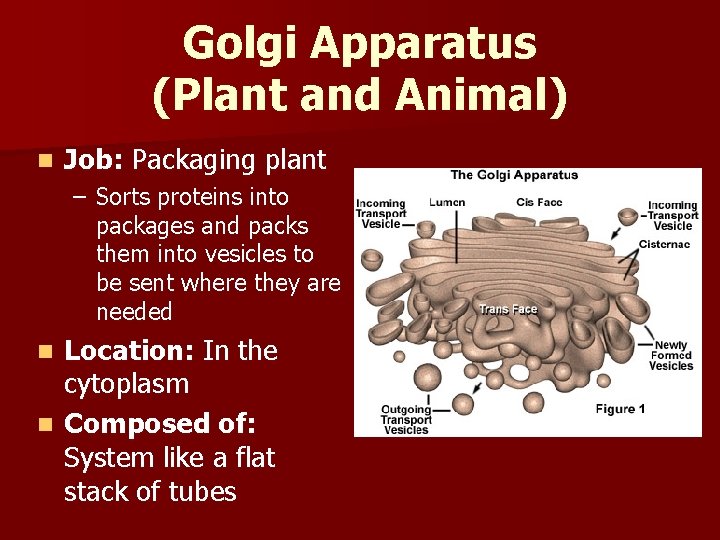
Golgi Apparatus (Plant and Animal) n Job: Packaging plant – Sorts proteins into packages and packs them into vesicles to be sent where they are needed Location: In the cytoplasm n Composed of: System like a flat stack of tubes n
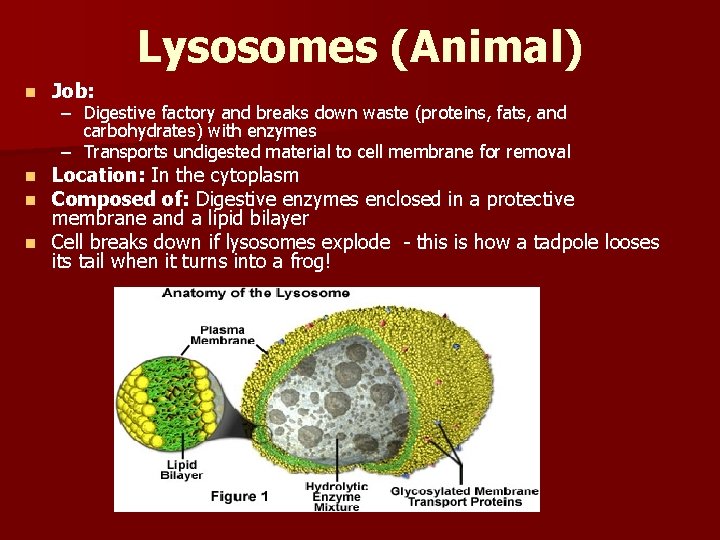
Lysosomes (Animal) n Job: – Digestive factory and breaks down waste (proteins, fats, and carbohydrates) with enzymes – Transports undigested material to cell membrane for removal Location: In the cytoplasm Composed of: Digestive enzymes enclosed in a protective membrane and a lipid bilayer n Cell breaks down if lysosomes explode - this is how a tadpole looses its tail when it turns into a frog! n n
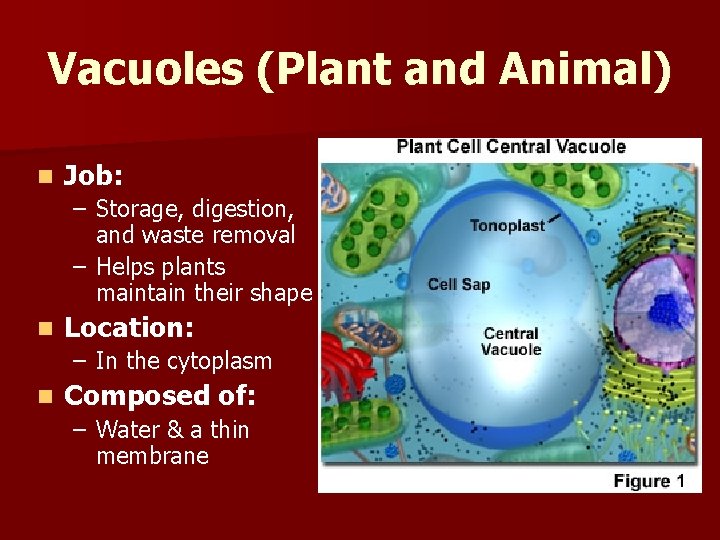
Vacuoles (Plant and Animal) n Job: – Storage, digestion, and waste removal – Helps plants maintain their shape n Location: – In the cytoplasm n Composed of: – Water & a thin membrane
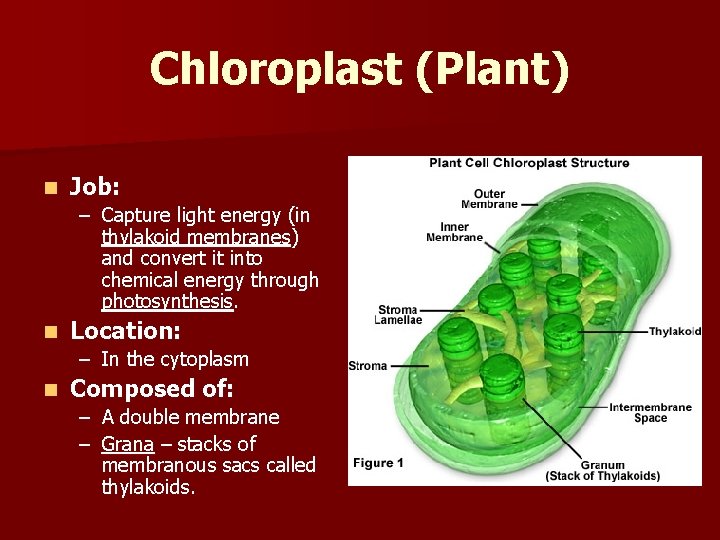
Chloroplast (Plant) n Job: – Capture light energy (in thylakoid membranes) and convert it into chemical energy through photosynthesis. n Location: – In the cytoplasm n Composed of: – A double membrane – Grana – stacks of membranous sacs called thylakoids.
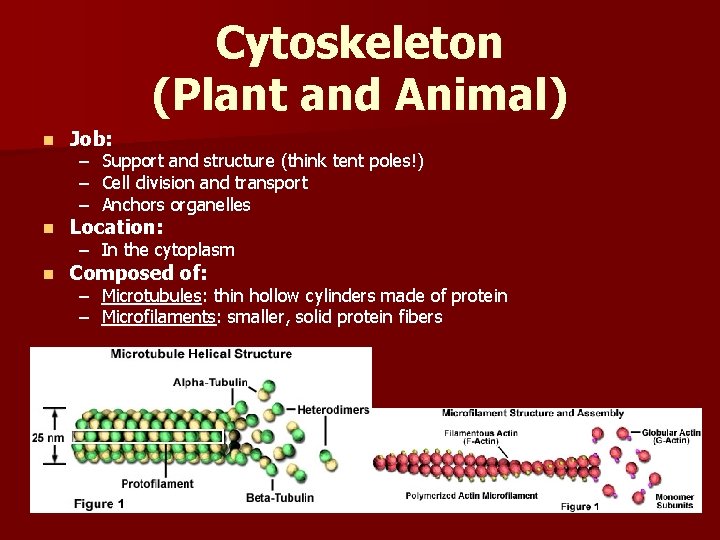
Cytoskeleton (Plant and Animal) n Job: n Location: n Composed of: – – – Support and structure (think tent poles!) Cell division and transport Anchors organelles – In the cytoplasm – Microtubules: thin hollow cylinders made of protein – Microfilaments: smaller, solid protein fibers
Let’s compare…