
REVIEW Muscular System What are the 3 types
- Slides: 48
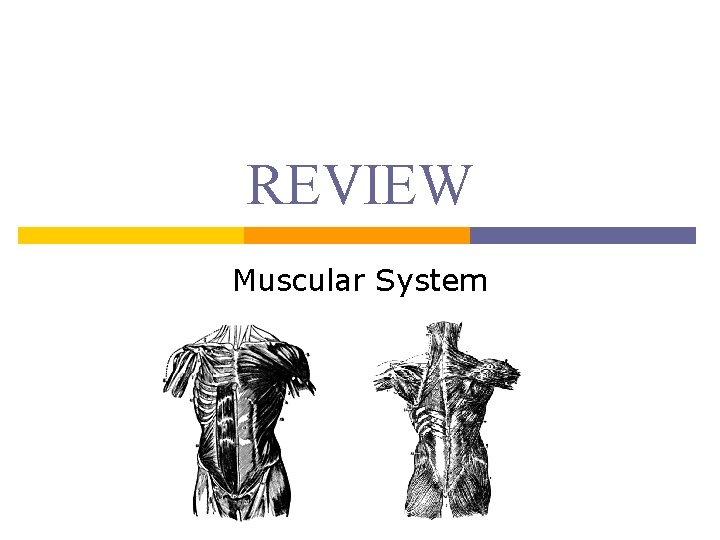
REVIEW Muscular System
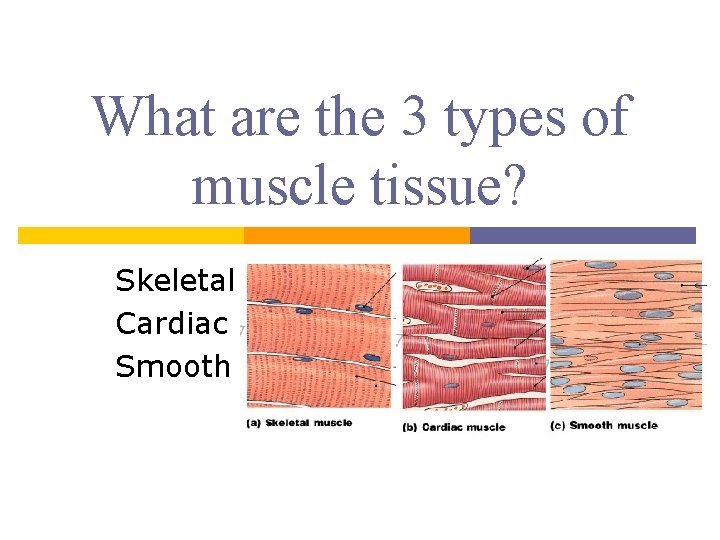
What are the 3 types of muscle tissue? Skeletal Cardiac Smooth
On which type of muscle tissue would you observe striations? Skeletal muscle tissue Cardiac muscle tissue
What type of tissue is specialized for the conduction of electrical impulses? Neural (nervous) tissue
surrounds individual skeletal muscles. Epimysium
surrounds individual muscle cells (fibers)? Endomysium
surrounds muscle fascicles. Perimysium
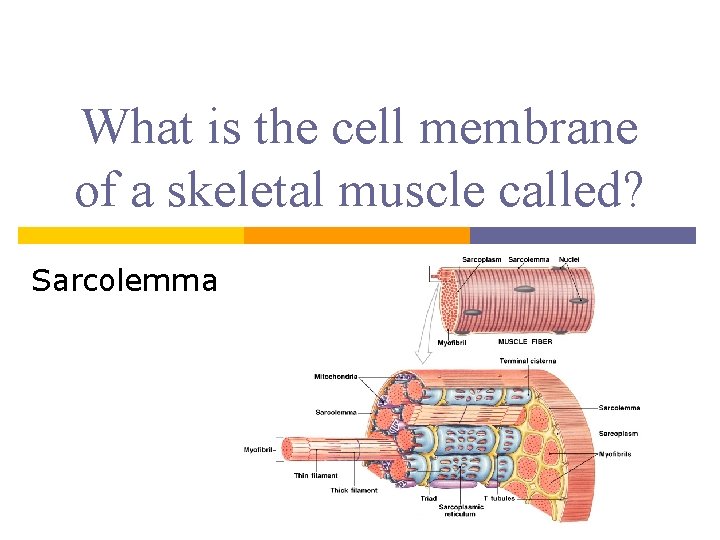
What is the cell membrane of a skeletal muscle called? Sarcolemma
What structure is the 2+ storage site for Ca ? Terminal cisternae
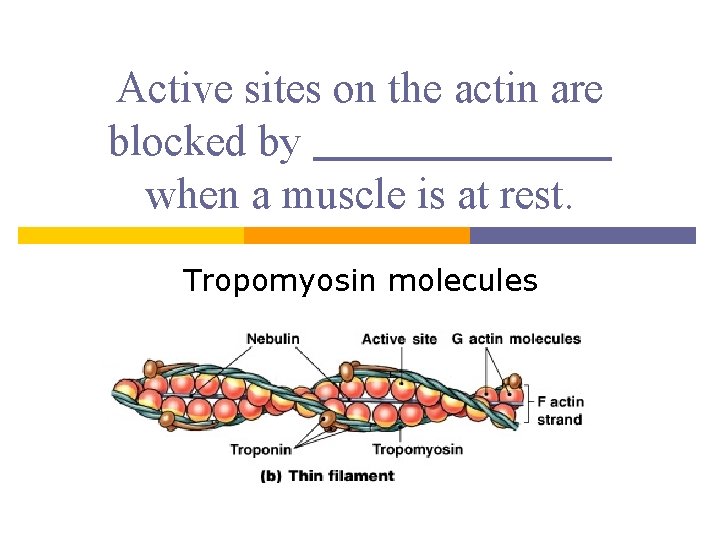
Active sites on the actin are blocked by when a muscle is at rest. Tropomyosin molecules
What are the contractile units of a skeletal muscle? Sarcomeres
In response to the arrival of an from the transverse tubules, Ca 2+ is released from the. Action potential Sarcoplasmic reticulum
= a single contraction? Twitch
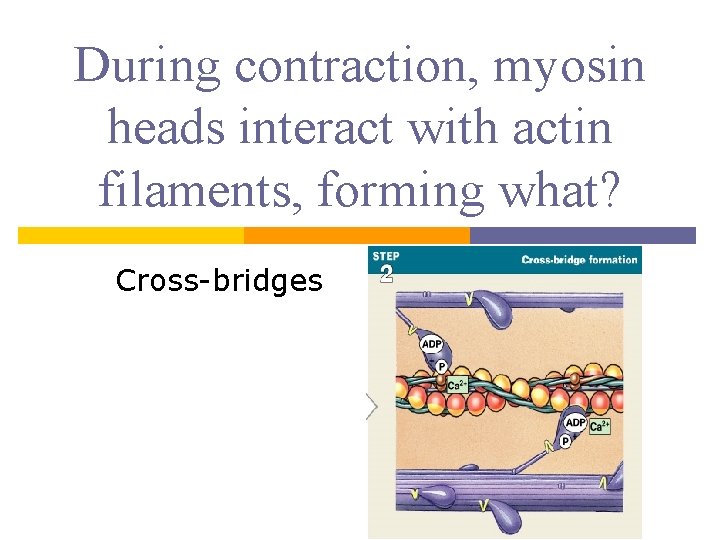
During contraction, myosin heads interact with actin filaments, forming what? Cross-bridges
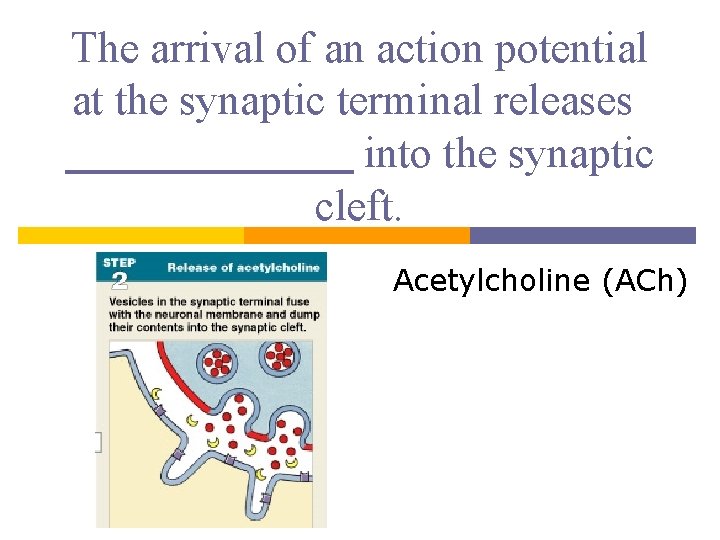
The arrival of an action potential at the synaptic terminal releases into the synaptic cleft. Acetylcholine (ACh)
Put the following steps of muscle contraction in order from first to last: 1. 2. 3. 4. 5. 6. Myosin cross-bridges bind to the actin Calcium ion is released from the SR The free myosin head splits ATP The myosin head pivots toward the center of the sarcomere The myosin head binds an ATP molecule and detaches from actin Calcium ion binds to troponin
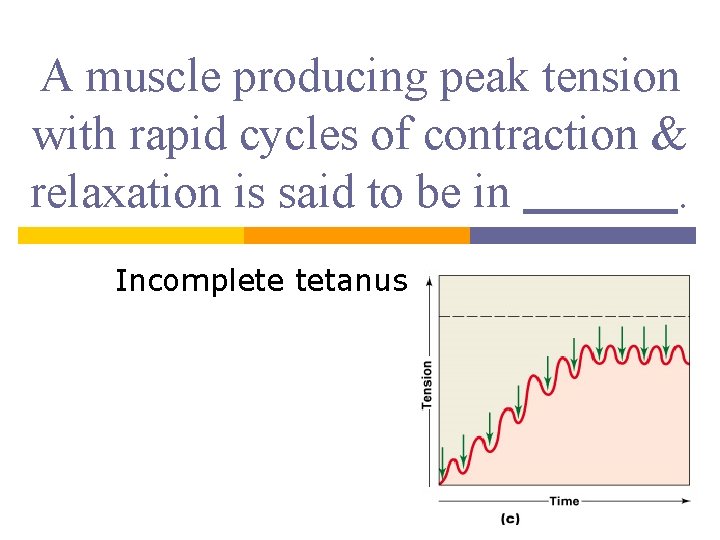
A muscle producing peak tension with rapid cycles of contraction & relaxation is said to be in. Incomplete tetanus
What are the 3 phases of a twitch? Latent period Contraction period Relaxation operiod
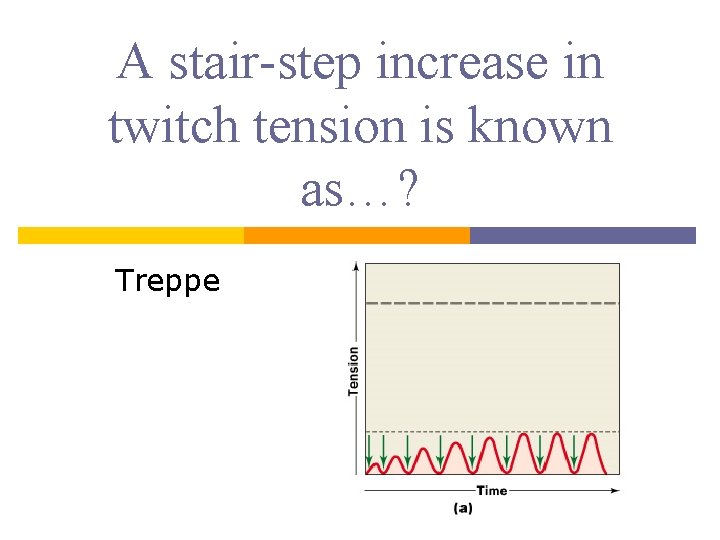
A stair-step increase in twitch tension is known as…? Treppe
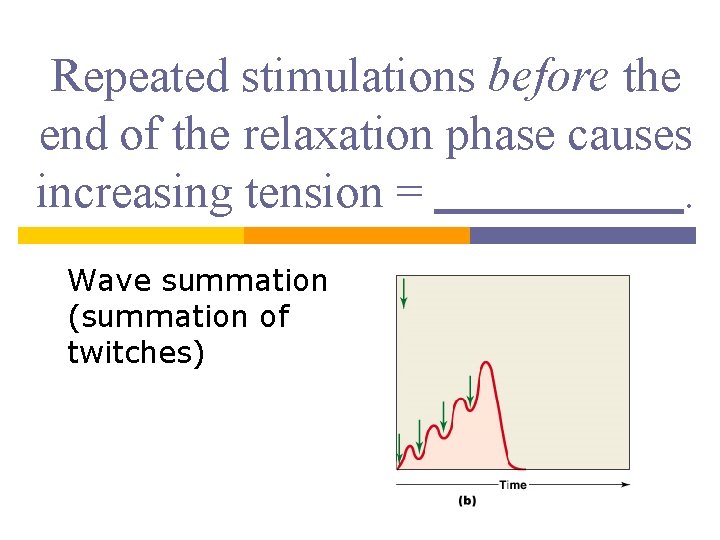
Repeated stimulations before the end of the relaxation phase causes increasing tension =. Wave summation (summation of twitches)
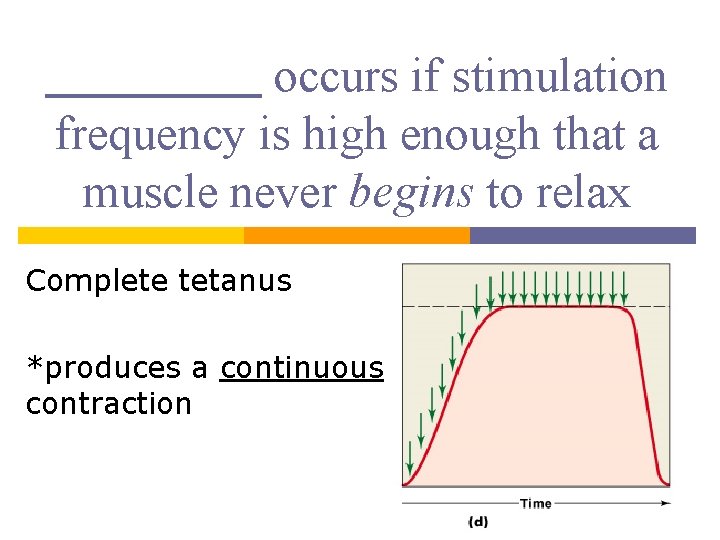
occurs if stimulation frequency is high enough that a muscle never begins to relax Complete tetanus *produces a continuous contraction
Increasing tension that is produced by increasing the number of motor units =. Recruitment
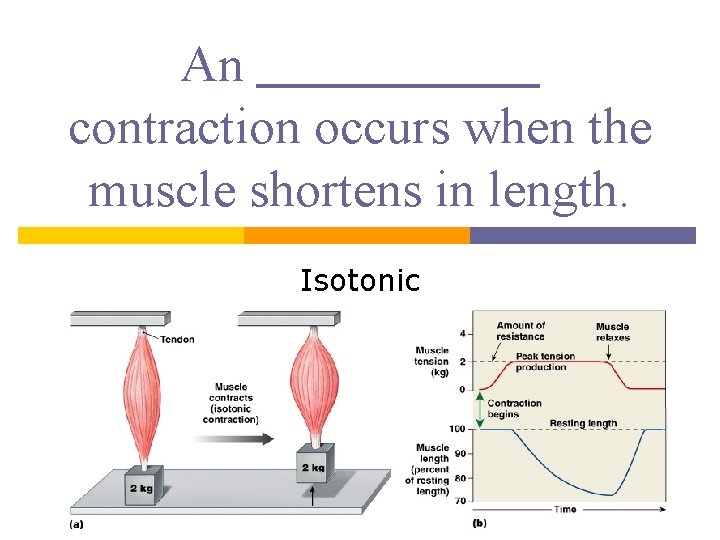
An contraction occurs when the muscle shortens in length. Isotonic
A muscle fiber returns to resting length by what 3 mechanisms? Opposing muscle contractions Elastic Gravity
What is the storage molecule for excess ATP? Creatine phosphate CP + ADP C + ATP
contract quickly, have a large diameter & glycogen reserves, & few mitochondria. Fast fibers
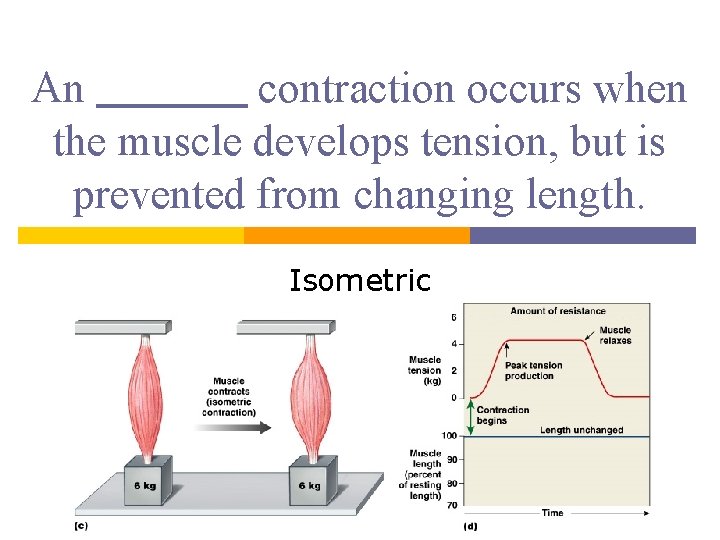
An contraction occurs when the muscle develops tension, but is prevented from changing length. Isometric
What is the primary energy source of resting muscles? Aerobic metabolism *breaks down fatty acids; produces 34 ATP molecules
A helps to start motion or stabilize the origin of the agonist. Fixator
What can happen to muscles as lactic acid builds up and they become exhausted? Fatigue
contract slowly, have a small diameter, contain myoglobin, & have more mitochondria Slow fibers
What is the primary energy source for peak muscular activity? Anaerobic glycolysis *breaks down glucose from glycogen by-product = lactic acid (forms due to accumulation of pyruvic acid)
Name 4 of the effects of aging on the muscular system. 1. 2. 3. 4. Skeletal muscle fibers become smaller in diameter Skeletal muscles become less elastic Tolerance for exercise decreases The ability to recover from muscular injuries decreases
Center resistance between applied force and fulcrum Second-class lever
In which type of muscle would you expect to find slow fibers? Red muscle
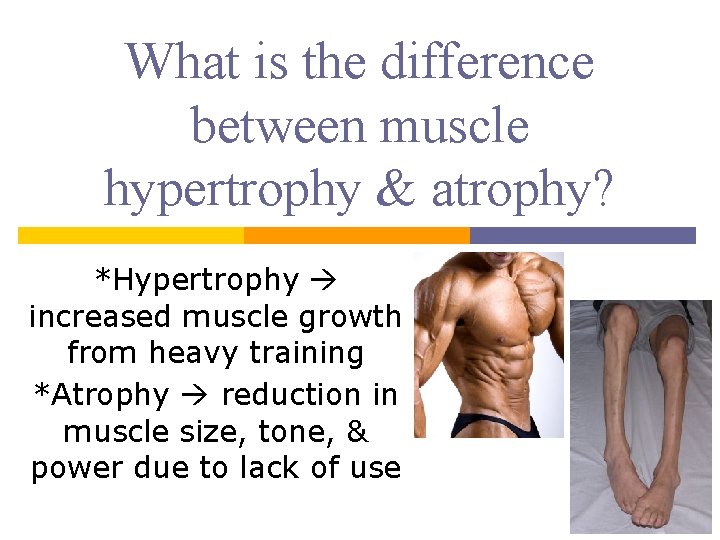
What is the difference between muscle hypertrophy & atrophy? *Hypertrophy increased muscle growth from heavy training *Atrophy reduction in muscle size, tone, & power due to lack of use
Center applied force between resistance and fulcrum Third-class lever
Moving point of attachment = Insertion .
A(n) 1 produces a particular movment, while a(n) 2 opposes that movement. 1: Agonist (prime mover) 2: Antagonist
Center fulcrum between applied force and resistance First-class lever *example: see-saw
Fixed point of attachment =. Origin
What is a smaller muscle that assists a larger muscle called? Synergist
What two points does myosin attach to in a sarcomere? M-line and titin
What does actin attach to in the sarcomere? Z-line
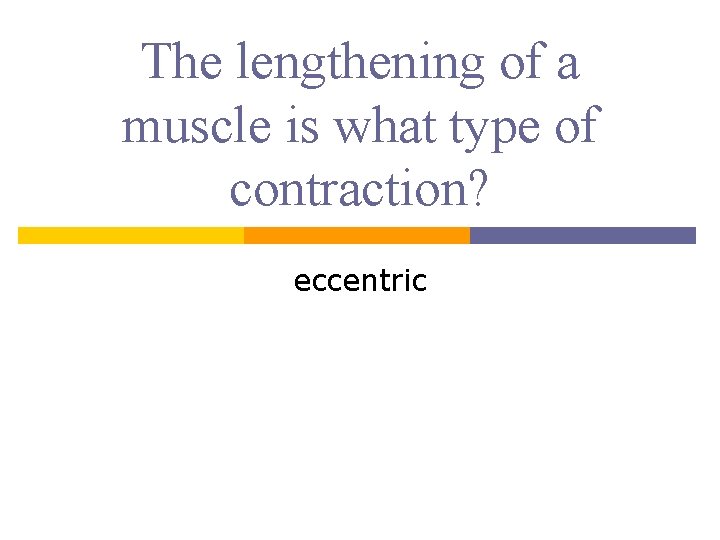
The lengthening of a muscle is what type of contraction? eccentric
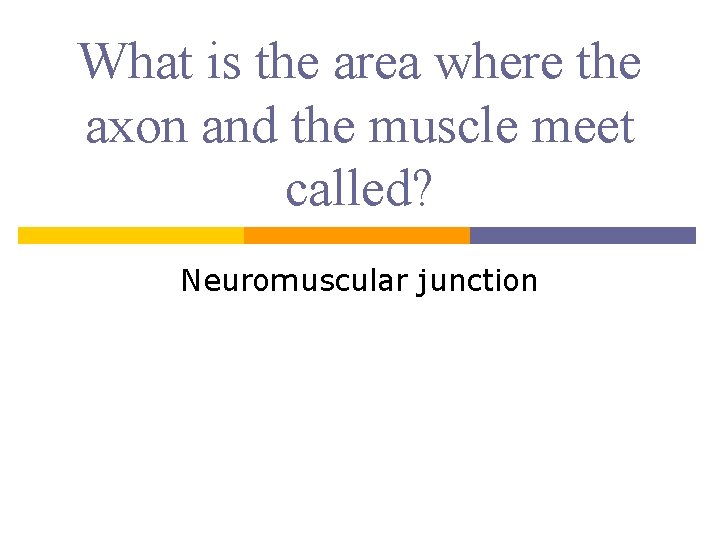
What is the area where the axon and the muscle meet called? Neuromuscular junction
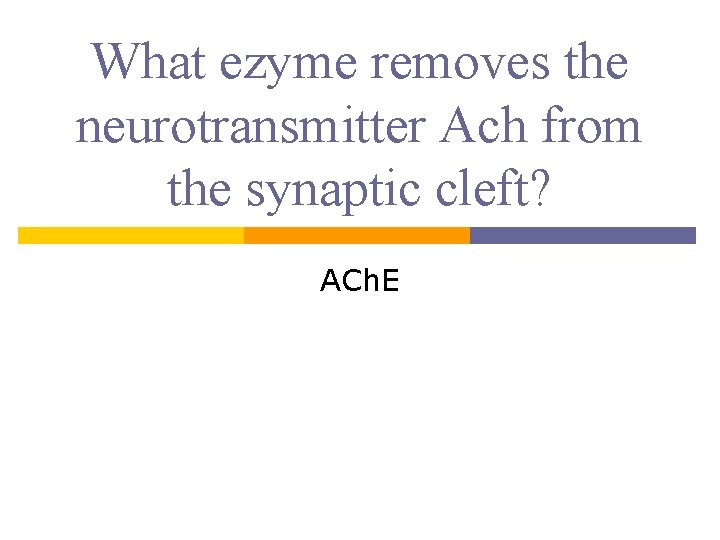
What ezyme removes the neurotransmitter Ach from the synaptic cleft? ACh. E
GOOD LUCK! UNIT 3 TEST TOMORROW! OVER CHAPTERS 4 and 10 STUDY, STUDY!!!