
Review Level 1 A Para Empezar Subject Pronouns
Review Level 1 A - Para Empezar-
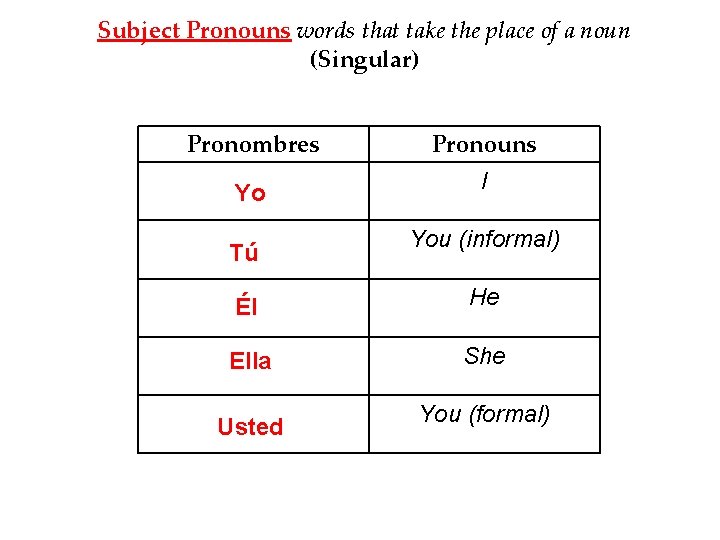
Subject Pronouns words that take the place of a noun (Singular) Pronombres Yo Tú Pronouns I You (informal) Él He Ella She Usted You (formal)
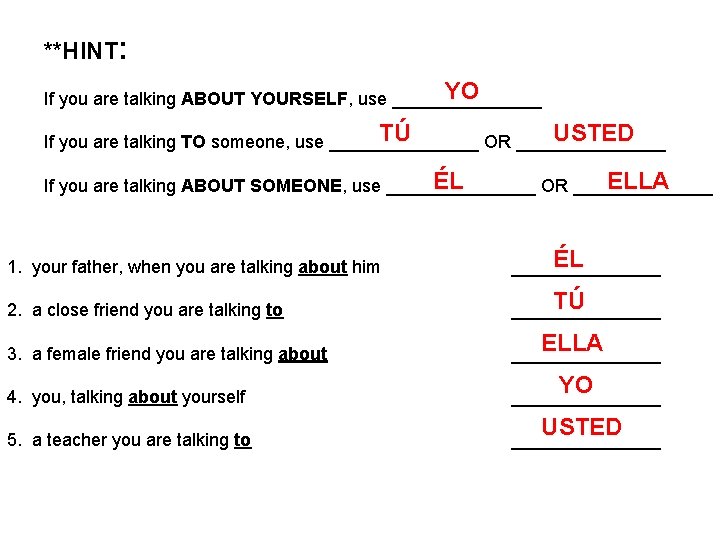
**HINT: YO If you are talking ABOUT YOURSELF, use ________ TÚ USTED If you are talking TO someone, use ________ OR ________ ÉL ELLA If you are talking ABOUT SOMEONE, use ________ OR _______ 1. your father, when you are talking about him ÉL ________ 2. a close friend you are talking to TÚ ________ 3. a female friend you are talking about ELLA ________ 4. you, talking about yourself ________ 5. a teacher you are talking to ________ YO USTED
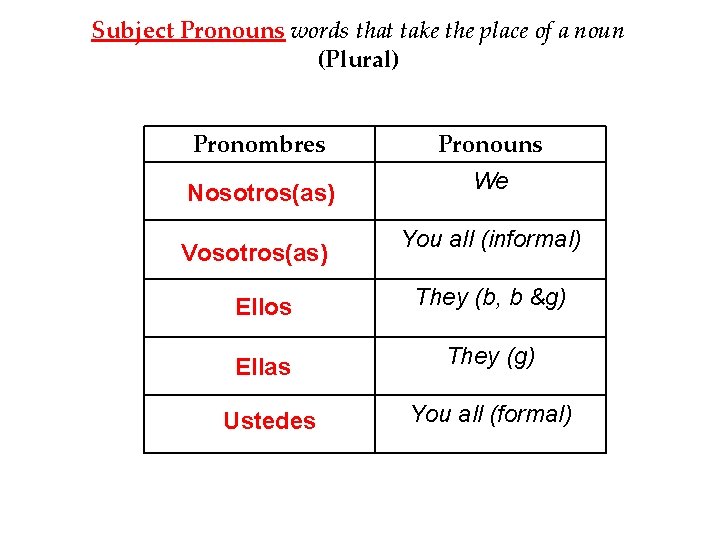
Subject Pronouns words that take the place of a noun (Plural) Pronombres Nosotros(as) Vosotros(as) Pronouns We You all (informal) Ellos They (b, b &g) Ellas They (g) Ustedes You all (formal)
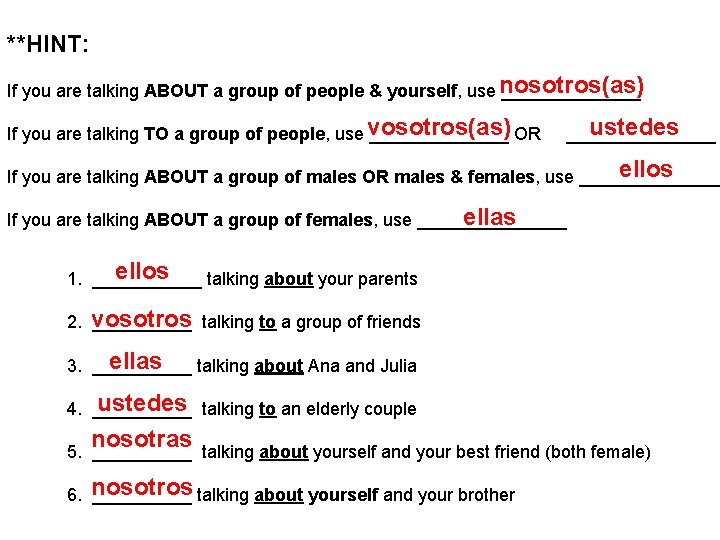
**HINT: If you are talking ABOUT a group of people & yourself, use nosotros(as) _______ If you are talking TO a group of people, use vosotros(as) _______ OR ustedes ________ ellos If you are talking ABOUT a group of males OR males & females, use ________ ellas If you are talking ABOUT a group of females, use ________ ellos 1. ______ talking about your parents 2. vosotros _____ talking to a group of friends ellas talking about Ana and Julia 3. _____ ustedes talking to an elderly couple 4. _____ nosotras 5. _____ talking about yourself and your best friend (both female) 6. nosotros _____ talking about yourself and your brother
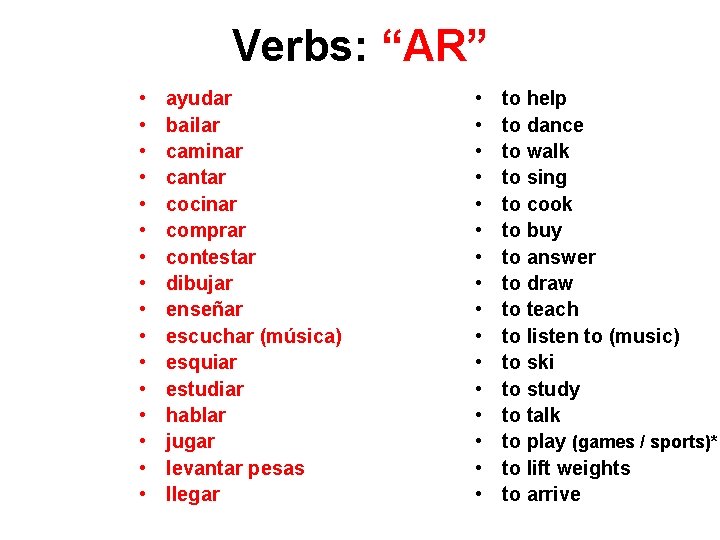
Verbs: “AR” • • • • ayudar bailar caminar cantar cocinar comprar contestar dibujar enseñar escuchar (música) esquiar estudiar hablar jugar levantar pesas llegar • • • • to help to dance to walk to sing to cook to buy to answer to draw to teach to listen to (music) to ski to study to talk to play (games / sports)* to lift weights to arrive

Verbs: “AR” • • • • llevar mirar (la televisión) montar en bicicleta montar en monopatín nadar necesitar pasar tiempo con amigos patinar practicar deportes preguntar preparar terminar tocar trabajar usar (la computadora) • • • • to carry, wear to watch (television) to ride a bike to skateboard to swim to need to pass, hand in to hang out with friends to skate to play / practice sports to ask to prepare to finish, to end to play (an instrument) to work to use (computer)
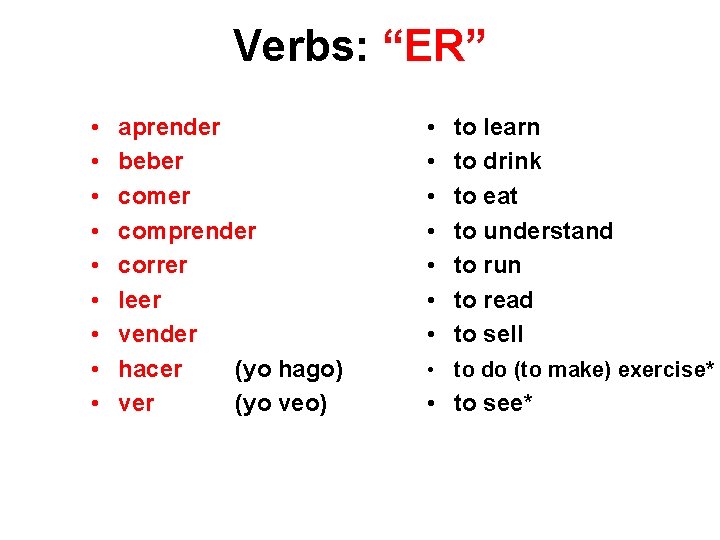
Verbs: “ER” • • • aprender beber comprender correr leer vender hacer (yo hago) ver (yo veo) • • to learn to drink to eat to understand to run to read to sell • to do (to make) exercise* • to see*
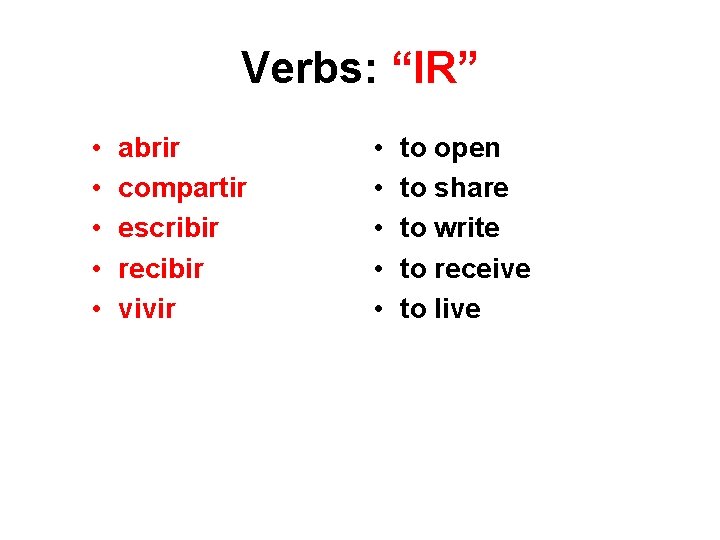
Verbs: “IR” • • • abrir compartir escribir recibir vivir • • • to open to share to write to receive to live
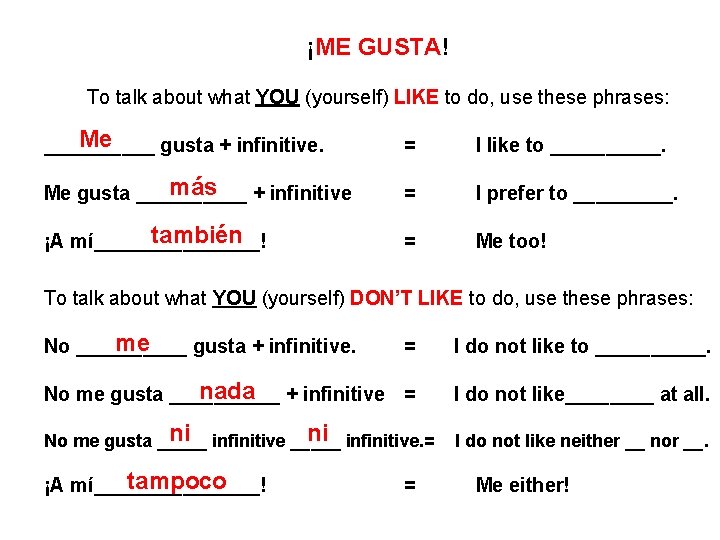
¡ME GUSTA! To talk about what YOU (yourself) LIKE to do, use these phrases: Me _____ gusta + infinitive. = I like to _____. más + infinitive Me gusta _____ = I prefer to _____. también ¡A mí________! = Me too! To talk about what YOU (yourself) DON’T LIKE to do, use these phrases: me No _____ gusta + infinitive. = I do not like to _____. nada + infinitive = No me gusta _____ I do not like____ at all. ni infinitive _____ ni infinitive. = No me gusta _____ I do not like neither __ nor __. tampoco ¡A mí________! = Me either!
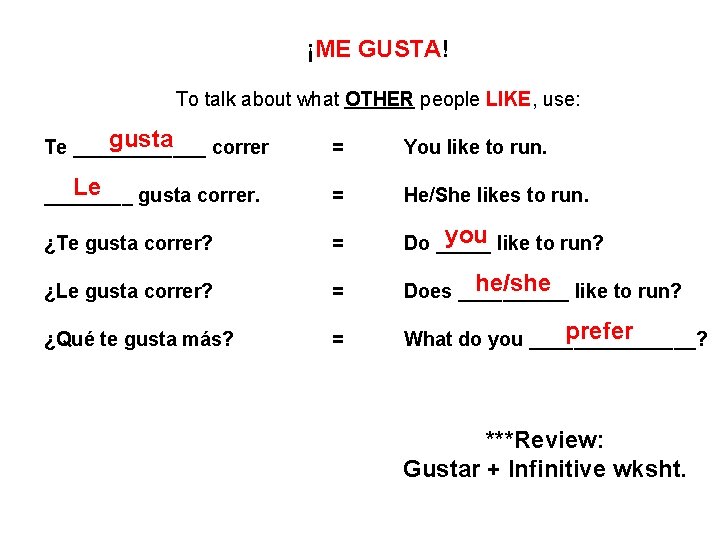
¡ME GUSTA! To talk about what OTHER people LIKE, use: gusta Te ______ correr = You like to run. Le ____ gusta correr. = He/She likes to run. ¿Te gusta correr? = you like to run? Do _____ ¿Le gusta correr? = he/she like to run? Does _____ ¿Qué te gusta más? = prefer What do you ________? ***Review: Gustar + Infinitive wksht.
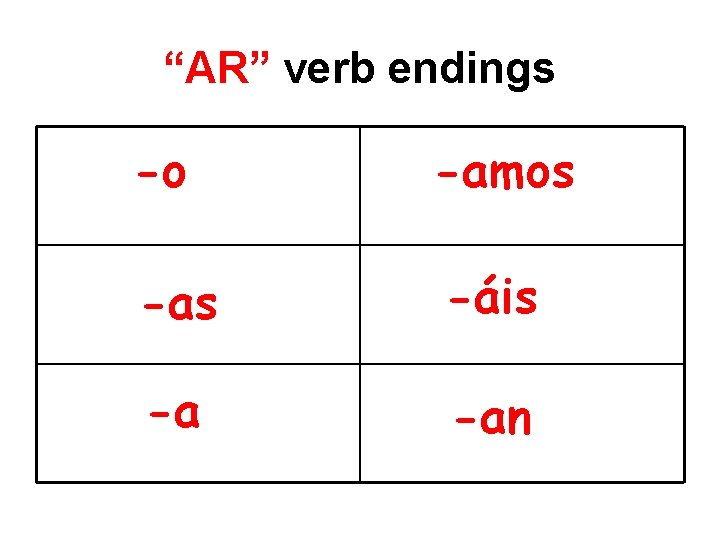
“AR” verb endings -o -amos -as -áis -a -an
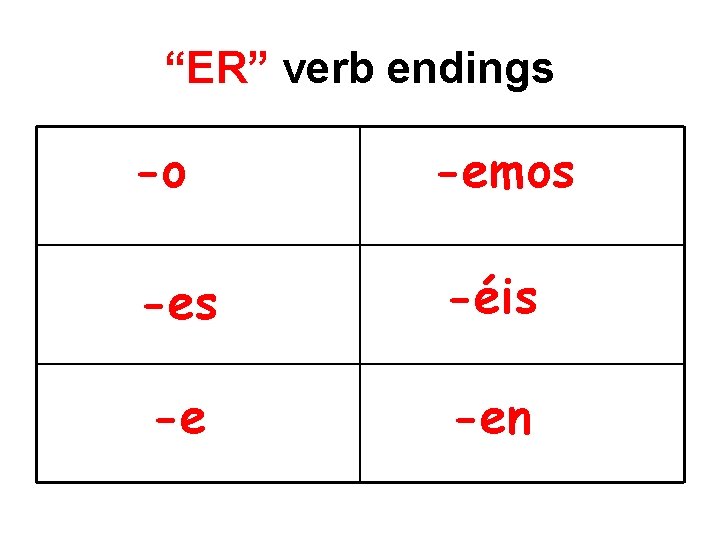
“ER” verb endings -o -emos -es -éis -e -en
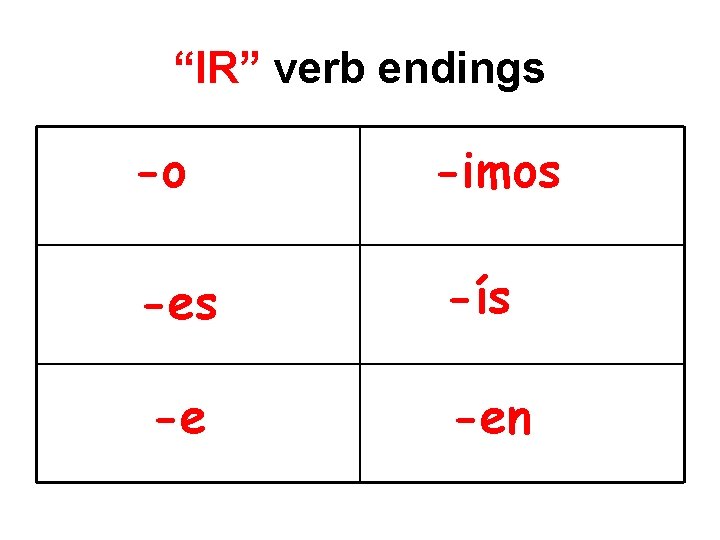
“IR” verb endings -o -imos -es -ís -e -en
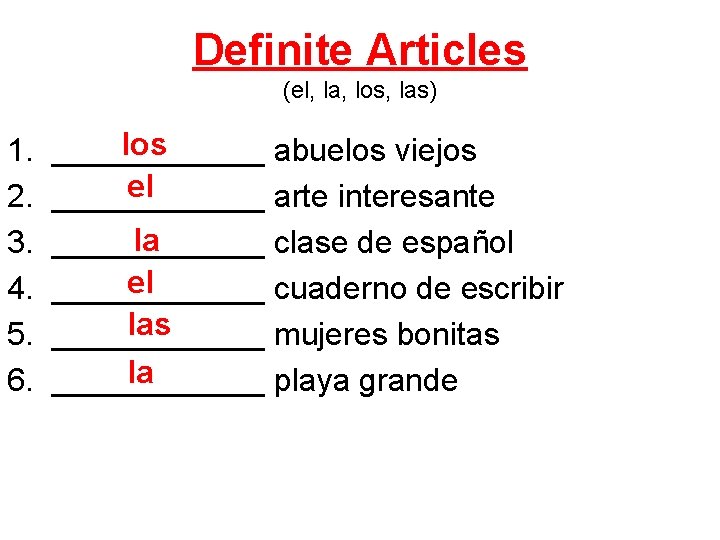
Definite Articles (el, la, los, las) 1. 2. 3. 4. 5. 6. los ______ abuelos viejos el ______ arte interesante la ______ clase de español el ______ cuaderno de escribir las ______ mujeres bonitas la ______ playa grande
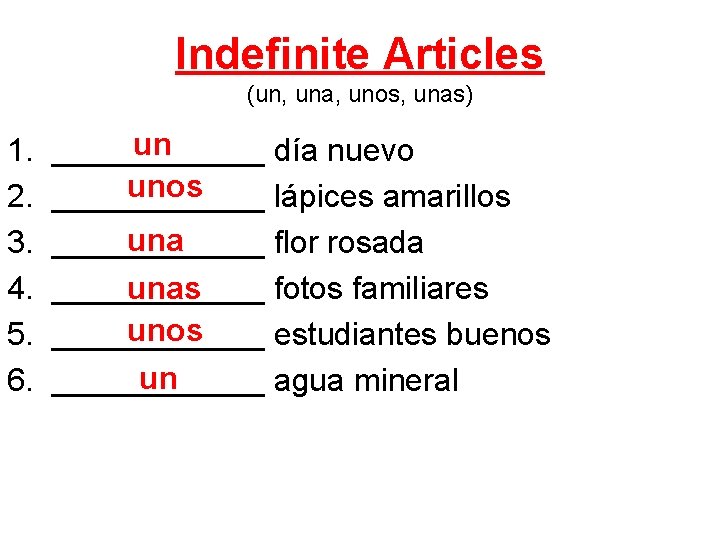
Indefinite Articles (un, una, unos, unas) 1. 2. 3. 4. 5. 6. un ______ día nuevo unos ______ lápices amarillos una ______ flor rosada unas ______ fotos familiares unos ______ estudiantes buenos un ______ agua mineral
Irregular Verbs
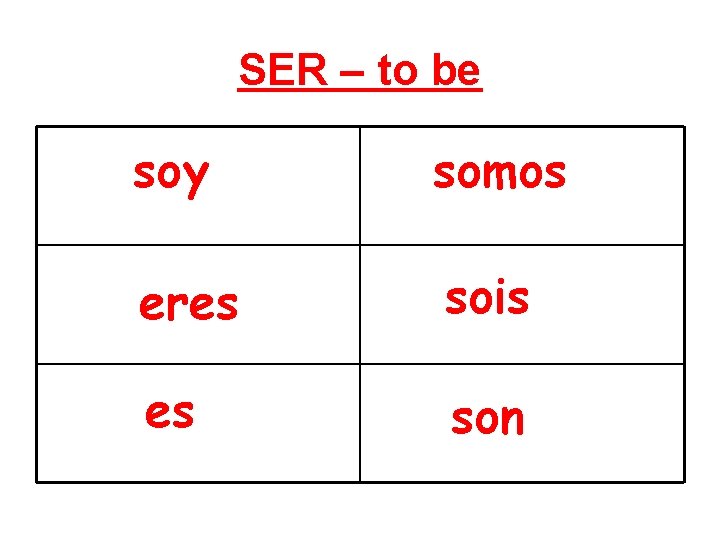
SER – to be soy somos eres sois es son
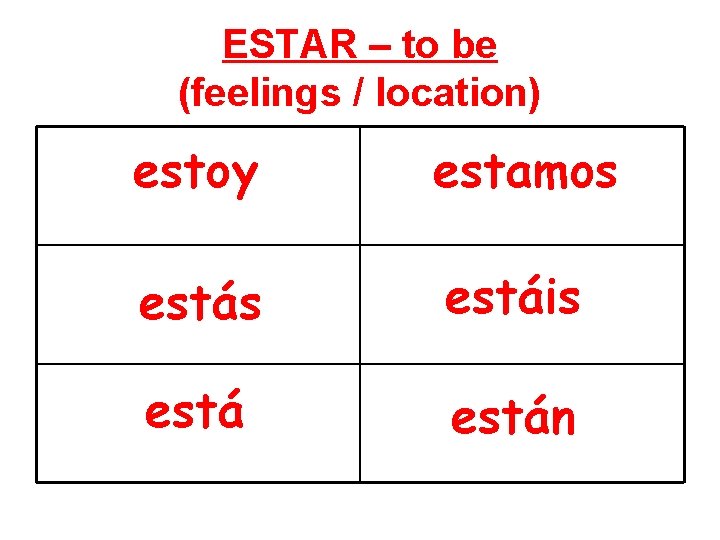
ESTAR – to be (feelings / location) estoy estamos estáis están
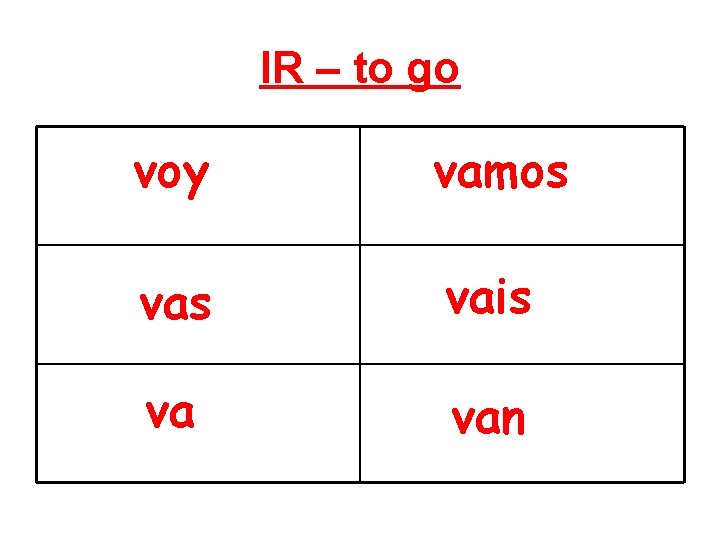
IR – to go voy vamos vais va van
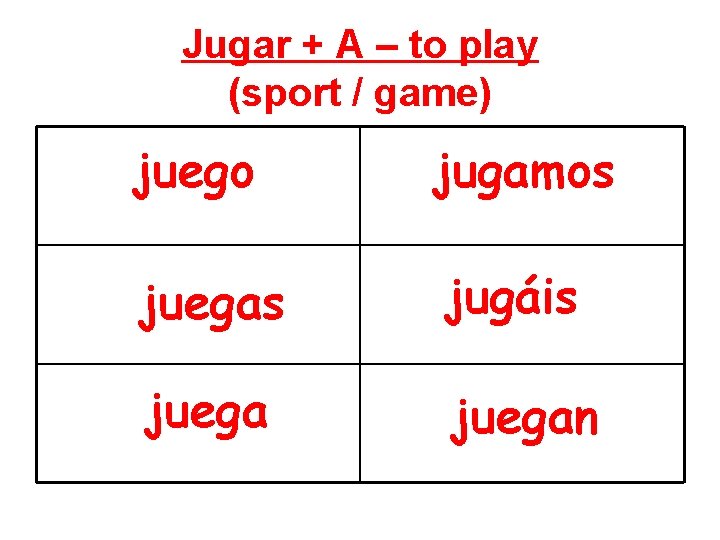
Jugar + A – to play (sport / game) juego jugamos juegas jugáis juegan
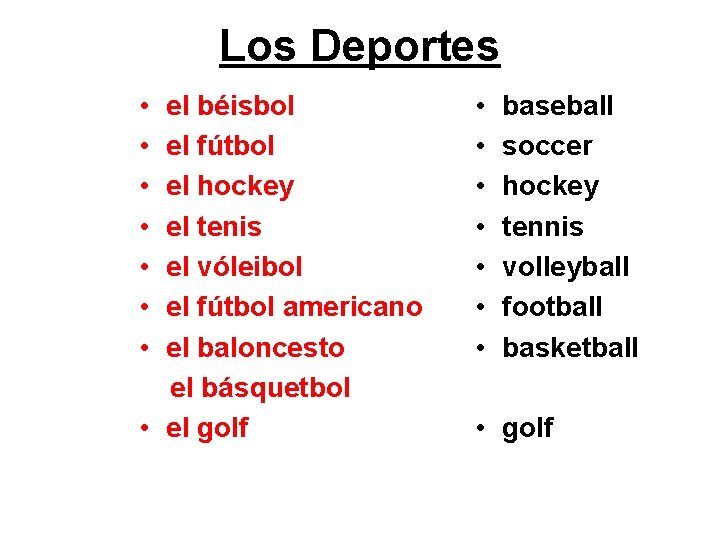
Los Deportes • • el béisbol el fútbol el hockey el tenis el vóleibol el fútbol americano el baloncesto el básquetbol • el golf • • baseball soccer hockey tennis volleyball football basketball • golf
Adjectives
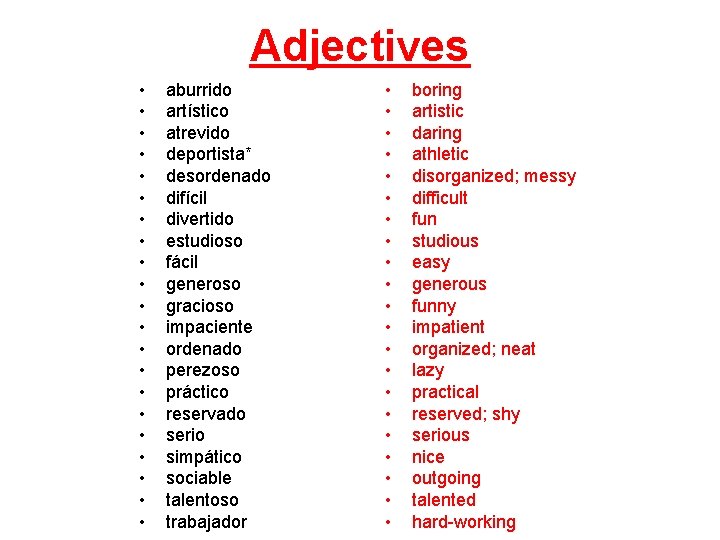
Adjectives • • • • • • aburrido artístico atrevido deportista* desordenado difícil divertido estudioso fácil generoso gracioso impaciente ordenado perezoso práctico reservado serio simpático sociable talentoso trabajador • • • • • • boring artistic daring athletic disorganized; messy difficult fun studious easy generous funny impatient organized; neat lazy practical reserved; shy serious nice outgoing talented hard-working
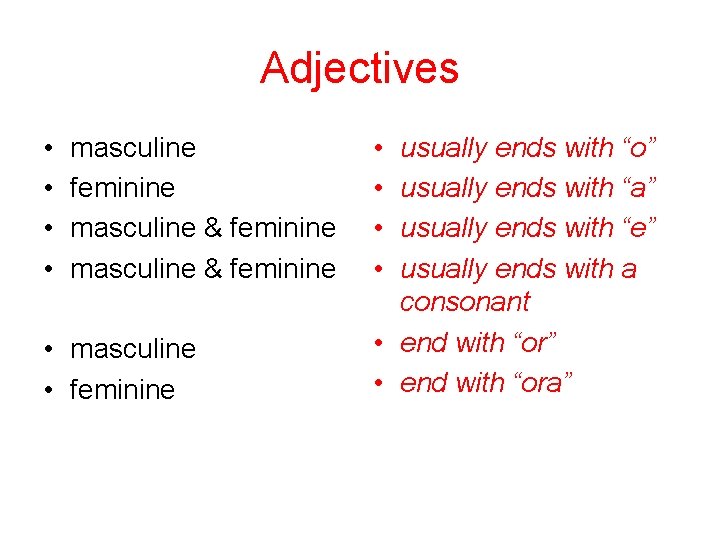
Adjectives • • masculine feminine masculine & feminine • masculine • feminine • • usually ends with “o” usually ends with “a” usually ends with “e” usually ends with a consonant • end with “or” • end with “ora”
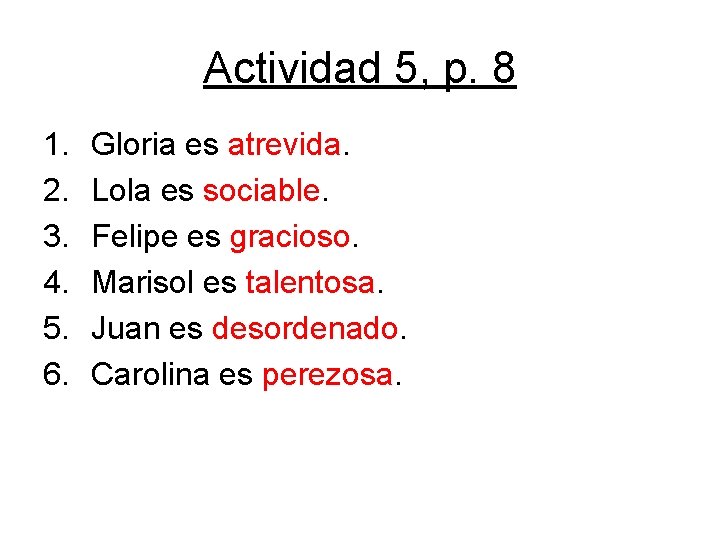
Actividad 5, p. 8 1. 2. 3. 4. 5. 6. Gloria es atrevida. Lola es sociable. Felipe es gracioso. Marisol es talentosa. Juan es desordenado. Carolina es perezosa.
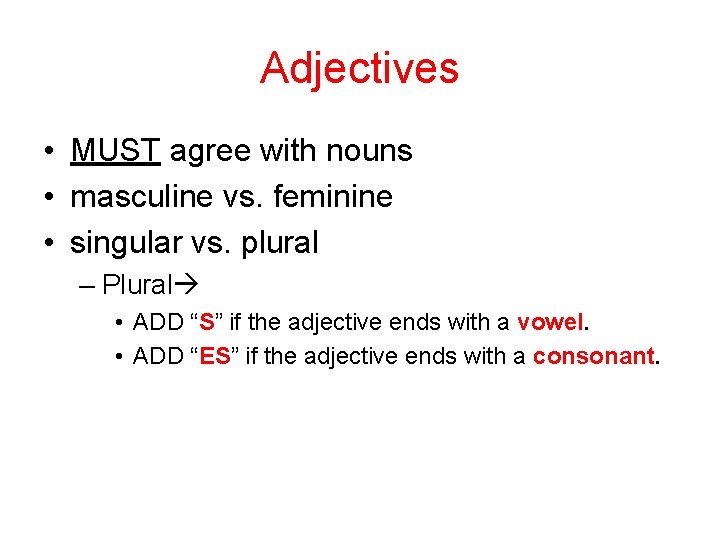
Adjectives • MUST agree with nouns • masculine vs. feminine • singular vs. plural – Plural • ADD “S” if the adjective ends with a vowel. • ADD “ES” if the adjective ends with a consonant.
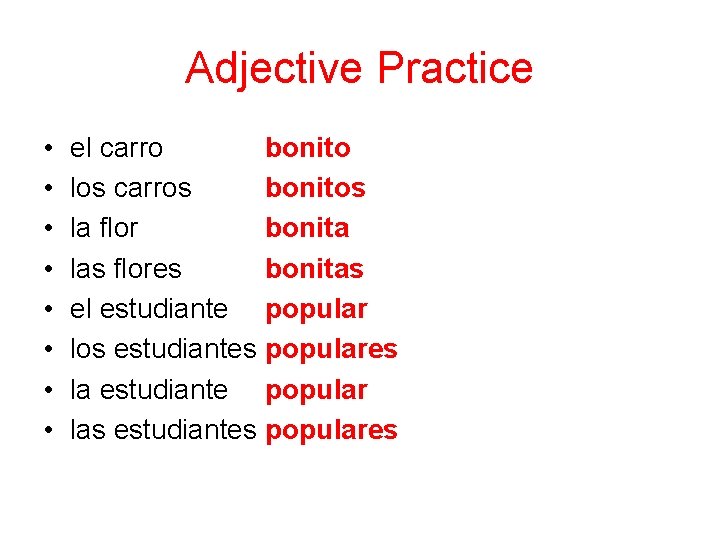
Adjective Practice • • el carro bonito los carros bonitos la flor bonita las flores bonitas el estudiante popular los estudiantes populares la estudiante popular las estudiantes populares
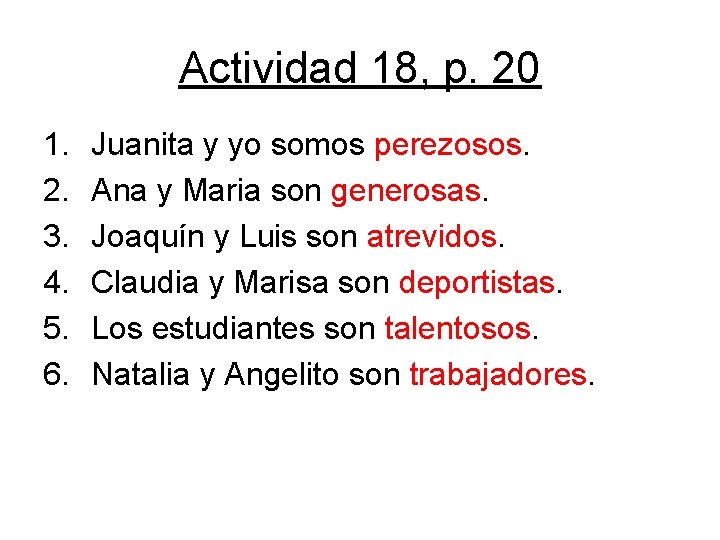
Actividad 18, p. 20 1. 2. 3. 4. 5. 6. Juanita y yo somos perezosos. Ana y Maria son generosas. Joaquín y Luis son atrevidos. Claudia y Marisa son deportistas. Los estudiantes son talentosos. Natalia y Angelito son trabajadores.
Question Words
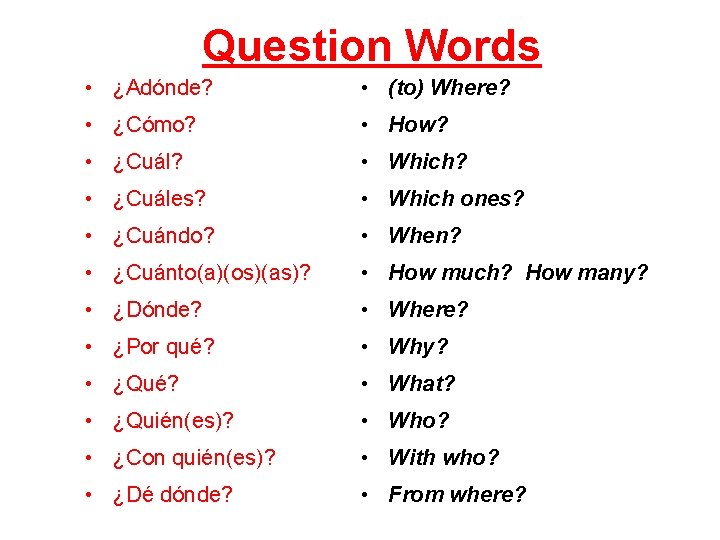
• Question Words Question • (to) Words ¿Adónde? Where? • ¿Cómo? • How? • ¿Cuál? • Which? • ¿Cuáles? • Which ones? • ¿Cuándo? • When? • ¿Cuánto(a)(os)(as)? • How much? How many? • ¿Dónde? • Where? • ¿Por qué? • Why? • ¿Qué? • What? • ¿Quién(es)? • Who? • ¿Con quién(es)? • With who? • ¿Dé dónde? • From where?
- Slides: 31