
Review Lamarck V Darwin Theories of Evolution Differences

- Slides: 26
Review Lamarck V. Darwin Theories of Evolution
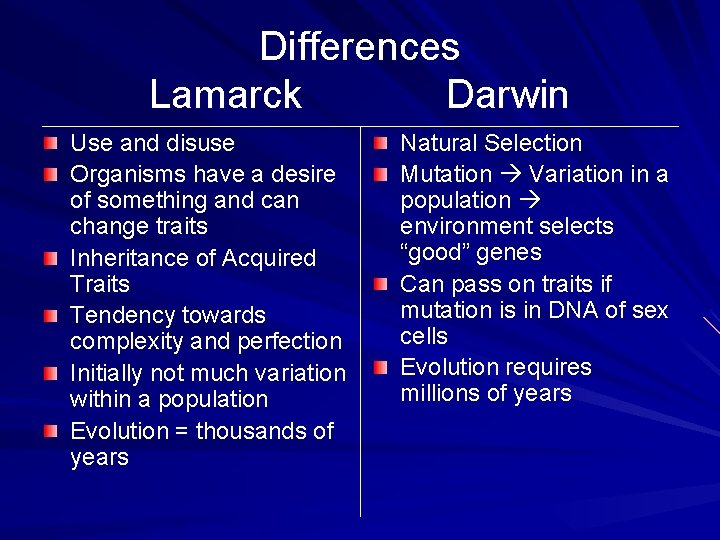
Differences Lamarck Darwin Use and disuse Organisms have a desire of something and can change traits Inheritance of Acquired Traits Tendency towards complexity and perfection Initially not much variation within a population Evolution = thousands of years Natural Selection Mutation Variation in a population environment selects “good” genes Can pass on traits if mutation is in DNA of sex cells Evolution requires millions of years
Use and Disuse Theory: if an organism wants something badly enough (desire), it can acquire a new trait by use or disuse. Inheritability of Acquired Traits = if an organism acquires (gets) a trait it did not have before, it can then pass the trait on to its offspring
Similarities Lamarck and Darwin Trying to answer the same question: How do populations change over time? Agree that organisms change over time Environment drives evolution of traits Common descent
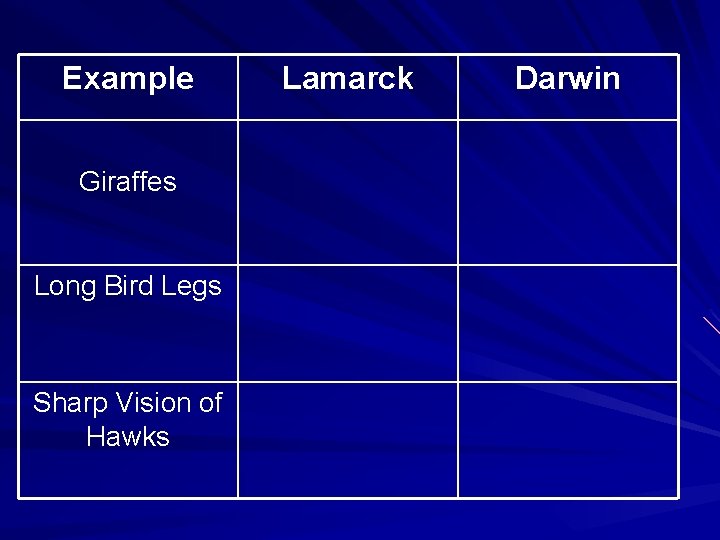
Example Giraffes Long Bird Legs Sharp Vision of Hawks Lamarck Darwin
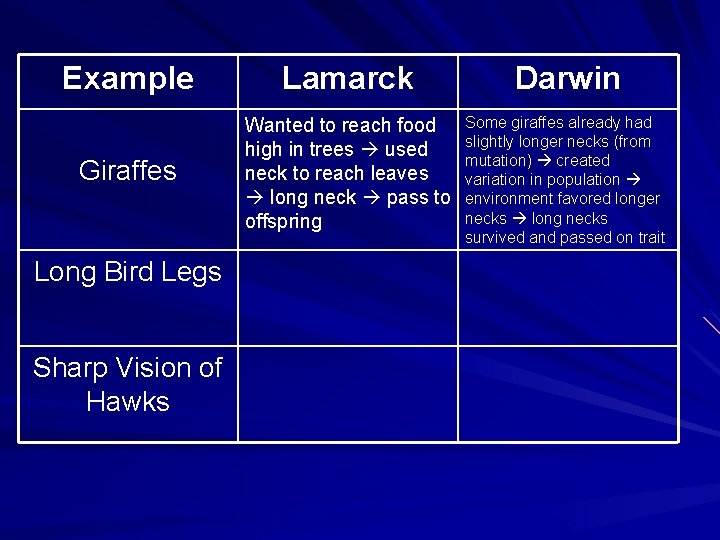
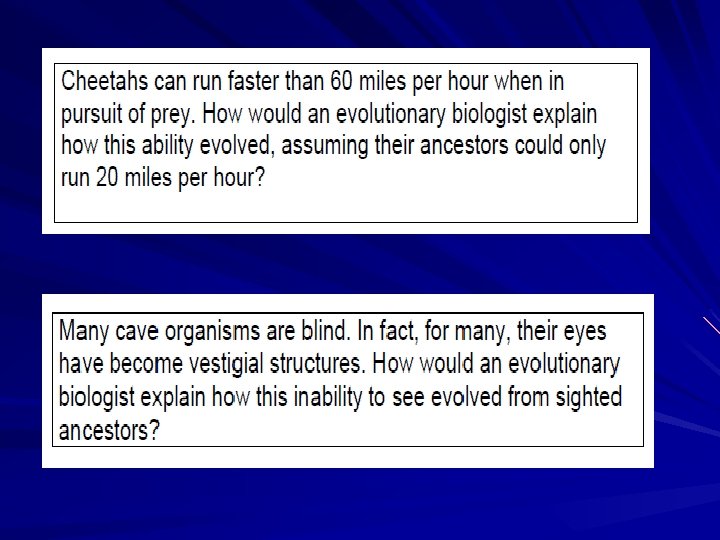
Example Lamarck Darwin Giraffes Wanted to reach food high in trees used neck to reach leaves long neck pass to offspring Some giraffes already had slightly longer necks (from mutation) created variation in population environment favored longer necks long necks survived and passed on trait Long Bird Legs Sharp Vision of Hawks
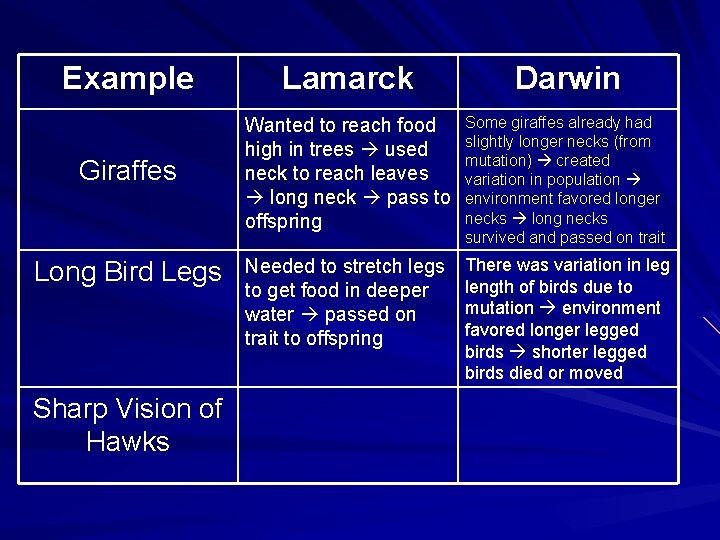
Example Lamarck Darwin Giraffes Wanted to reach food high in trees used neck to reach leaves long neck pass to offspring Some giraffes already had slightly longer necks (from mutation) created variation in population environment favored longer necks long necks survived and passed on trait Needed to stretch legs to get food in deeper water passed on trait to offspring There was variation in leg length of birds due to mutation environment favored longer legged birds shorter legged birds died or moved Long Bird Legs Sharp Vision of Hawks
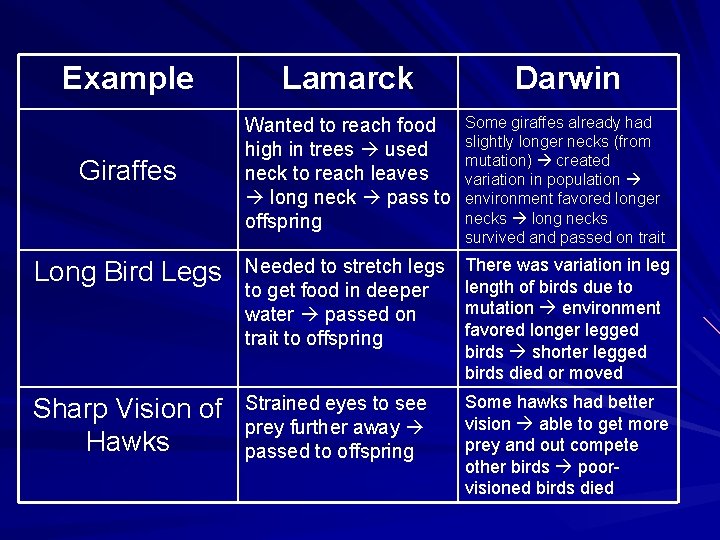
Example Lamarck Darwin Giraffes Wanted to reach food high in trees used neck to reach leaves long neck pass to offspring Some giraffes already had slightly longer necks (from mutation) created variation in population environment favored longer necks long necks survived and passed on trait Long Bird Legs Needed to stretch legs to get food in deeper water passed on trait to offspring There was variation in leg length of birds due to mutation environment favored longer legged birds shorter legged birds died or moved Sharp Vision of Hawks Strained eyes to see prey further away passed to offspring Some hawks had better vision able to get more prey and out compete other birds poorvisioned birds died
Questions Why was Lamarck incorrect? – Changing the phenotype does not change the genotype. – Variation already exists in populations from mutation How can you pass on a trait caused from mutation? – Only if the mutation is in the DNA of the sex cells (sperm or eggs)
HUMAN EVOLUTION
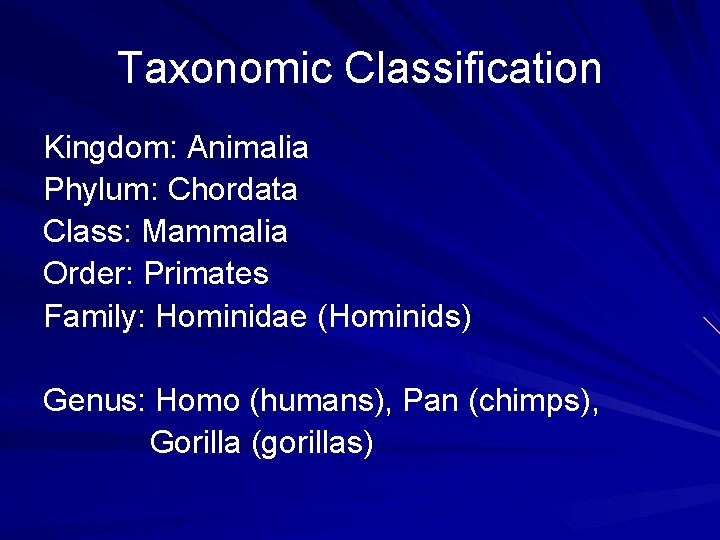
Taxonomic Classification Kingdom: Animalia Phylum: Chordata Class: Mammalia Order: Primates Family: Hominidae (Hominids) Genus: Homo (humans), Pan (chimps), Gorilla (gorillas)
Primates
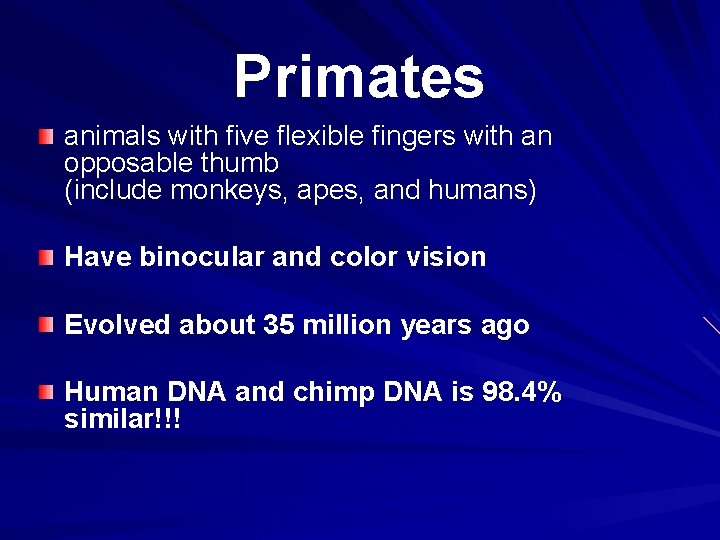
Primates animals with five flexible fingers with an opposable thumb (include monkeys, apes, and humans) Have binocular and color vision Evolved about 35 million years ago Human DNA and chimp DNA is 98. 4% similar!!!
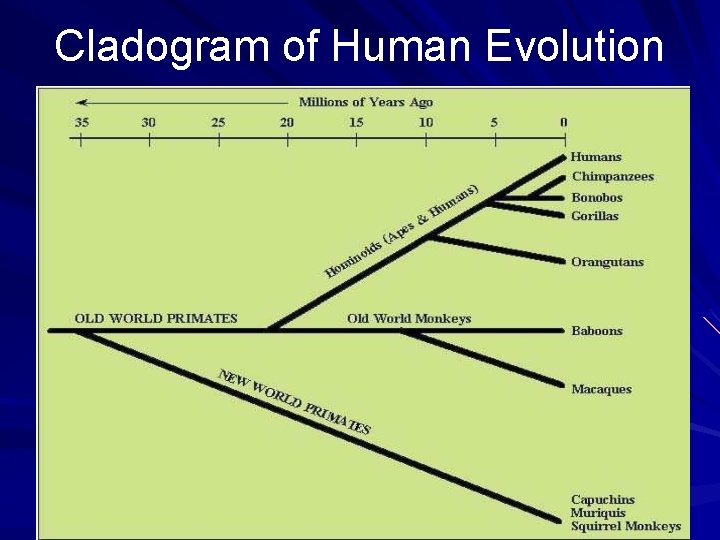
Cladogram of Human Evolution
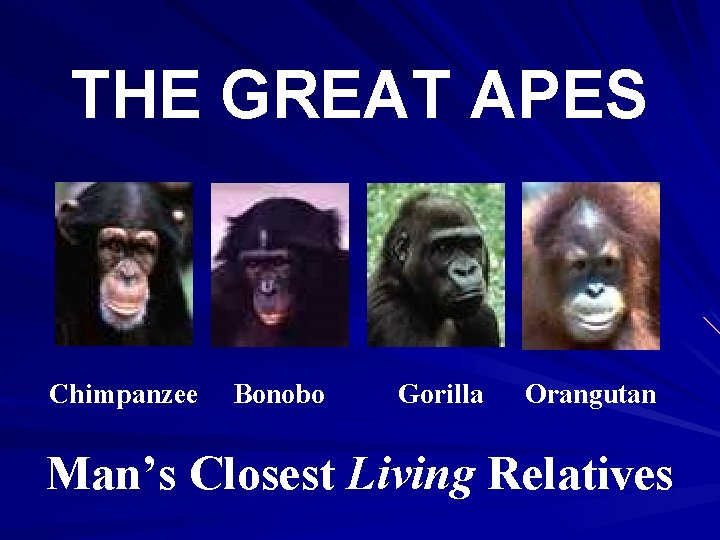
THE GREAT APES Chimpanzee Bonobo Gorilla Orangutan Man’s Closest Living Relatives
Evolutionary Origins of Humans
HOMINIDS humans and their closest fossil relatives
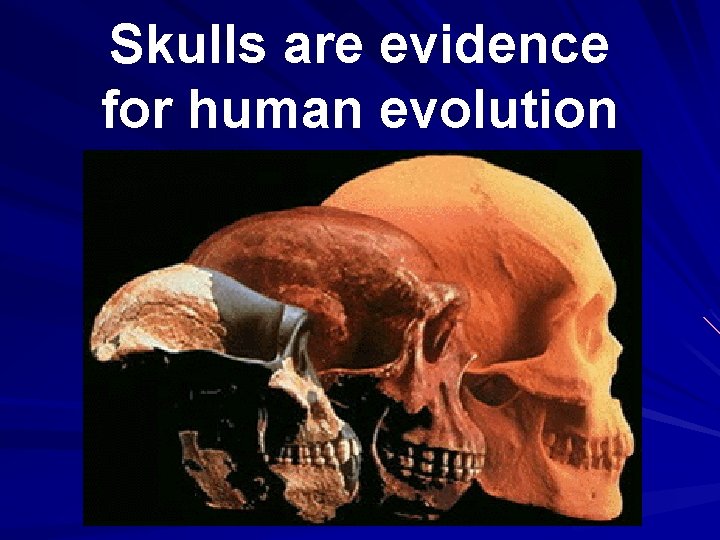
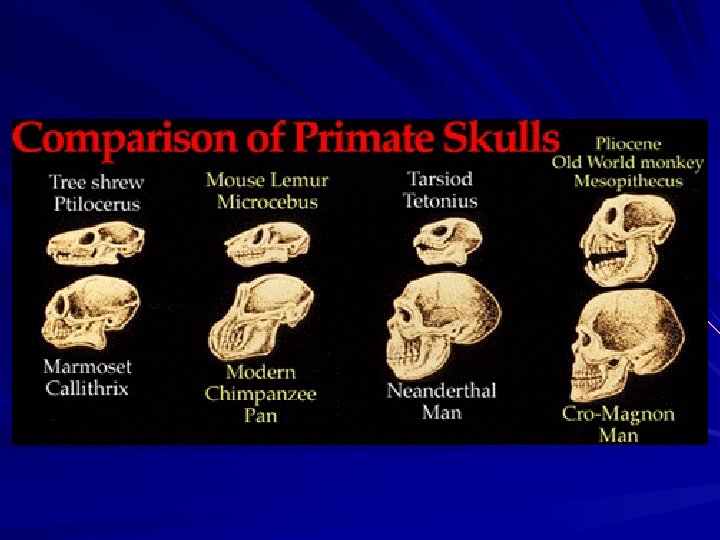
Skulls are evidence for human evolution
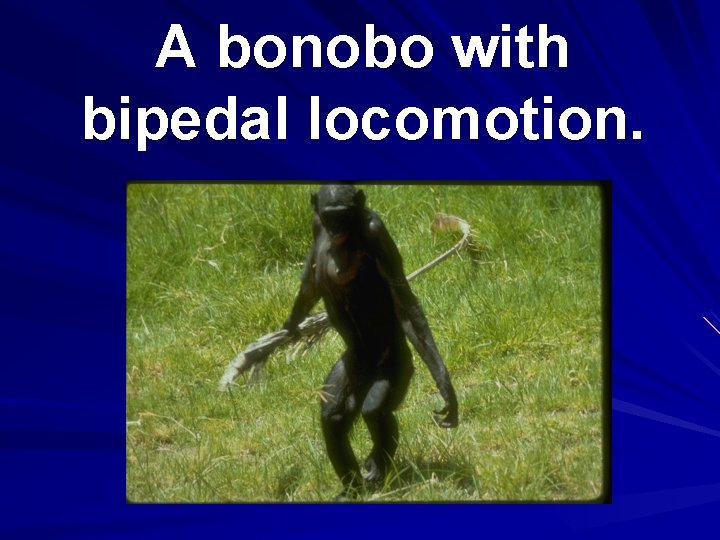
A bonobo with bipedal locomotion.
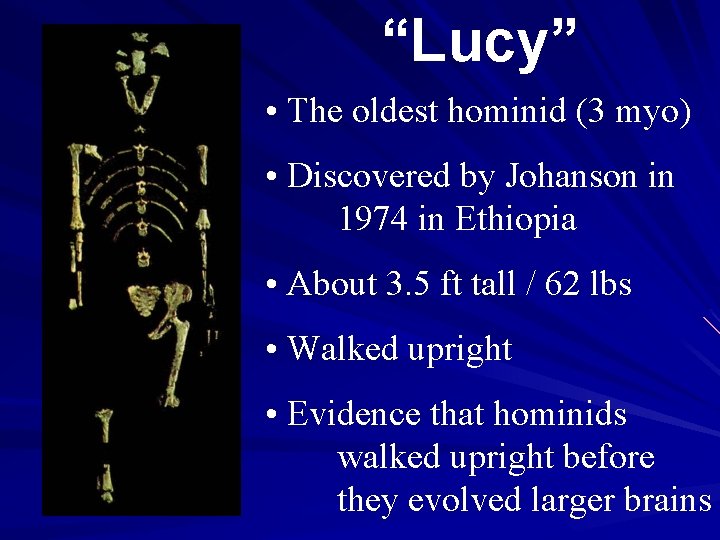
“Lucy” • The oldest hominid (3 myo) • Discovered by Johanson in 1974 in Ethiopia • About 3. 5 ft tall / 62 lbs • Walked upright • Evidence that hominids walked upright before they evolved larger brains
The First Humans
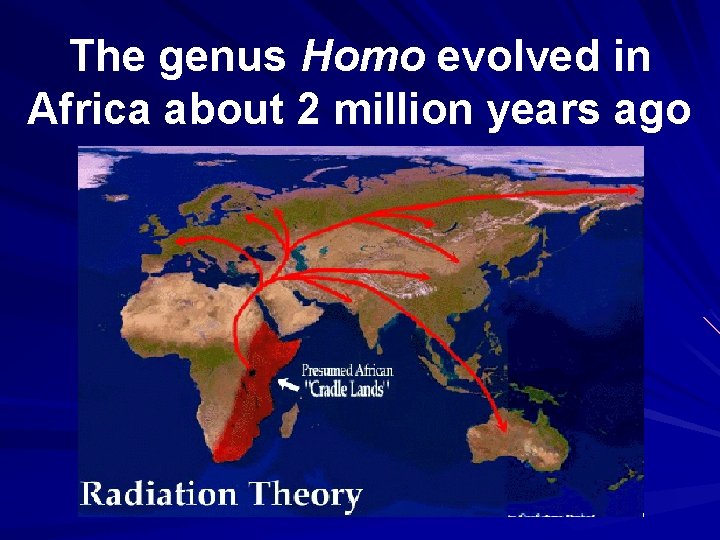
The genus Homo evolved in Africa about 2 million years ago
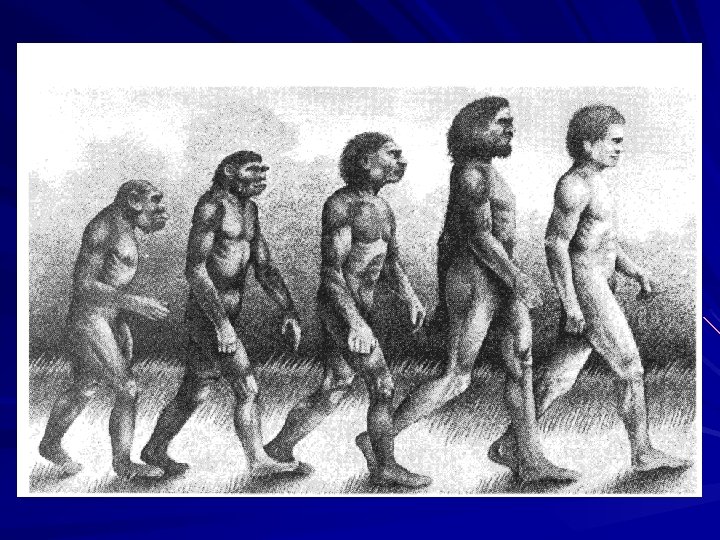
Darwin’s Explanation How would Darwin explain the evolution of humans from a monkey ancestor? – Mutations produced variability in monkey populations the environment selected those organisms that were best adapted (high fitness) over millions of years and much change in the environment, humans evolved because they were the best adapted to the environment.