
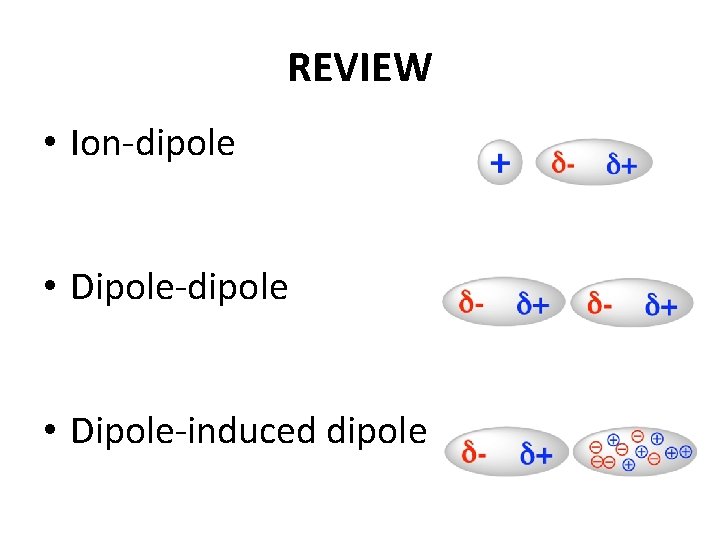
Review Intermolecular Forces REVIEW Iondipole Dipoleinduced dipole Which

- Slides: 24
Review Intermolecular Forces
REVIEW • Ion-dipole • Dipole-induced dipole
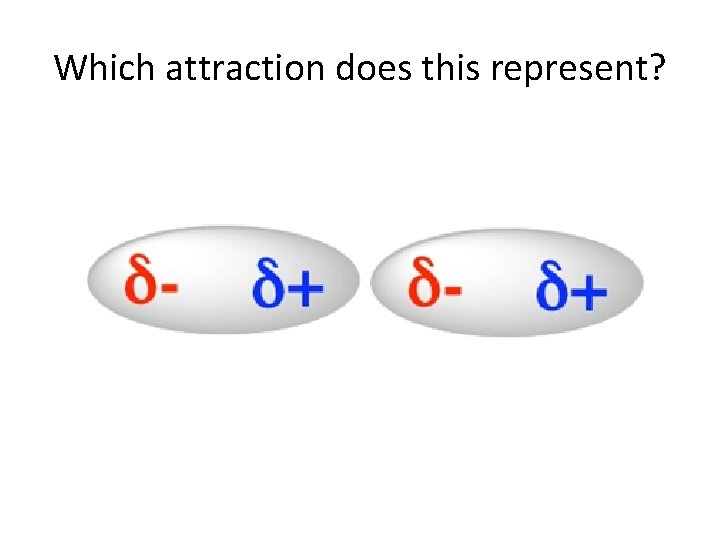
Which attraction does this represent?
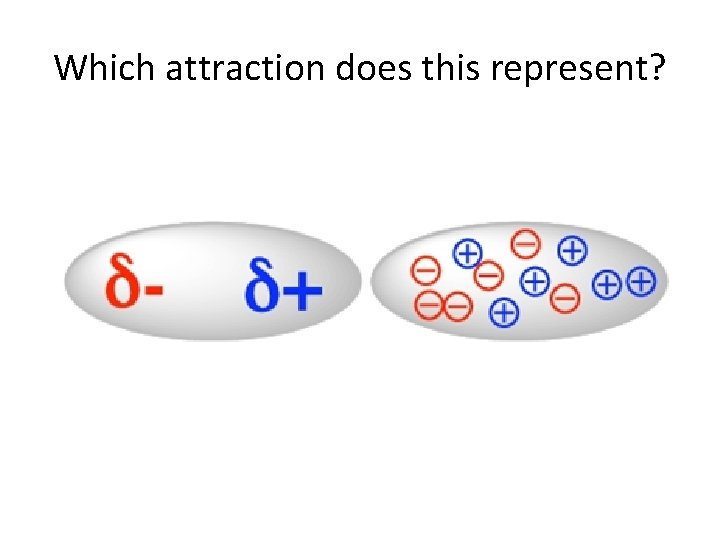
Which attraction does this represent?
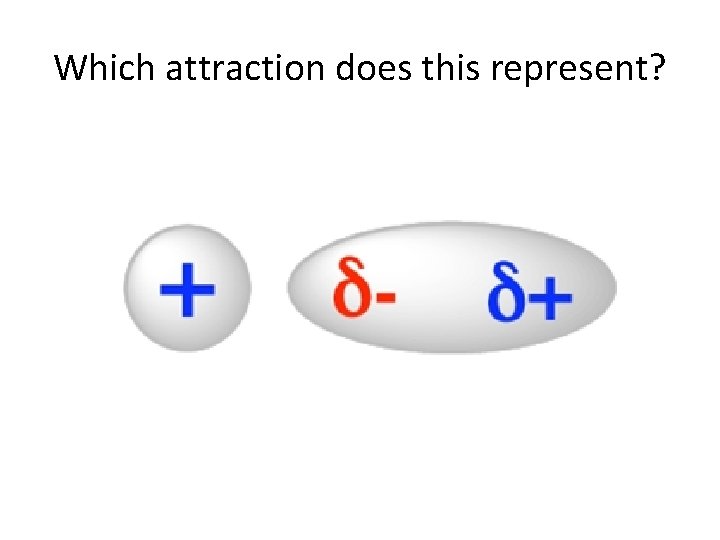
Which attraction does this represent?
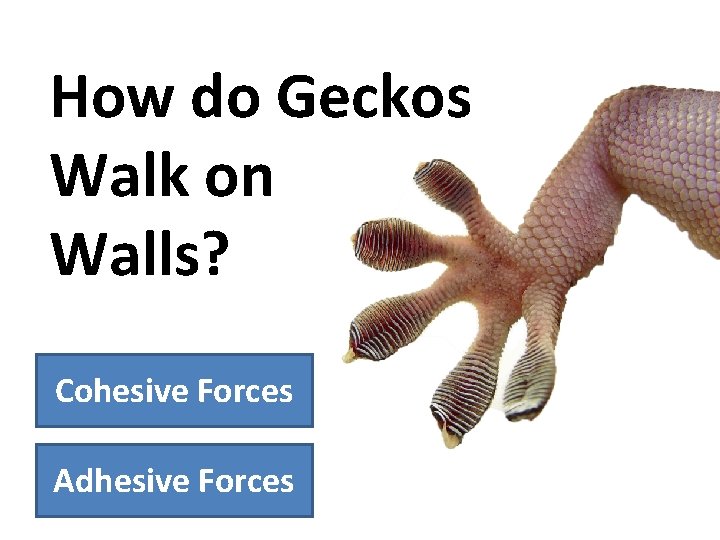
How do Geckos Walk on Walls? Cohesive Forces Adhesive Forces
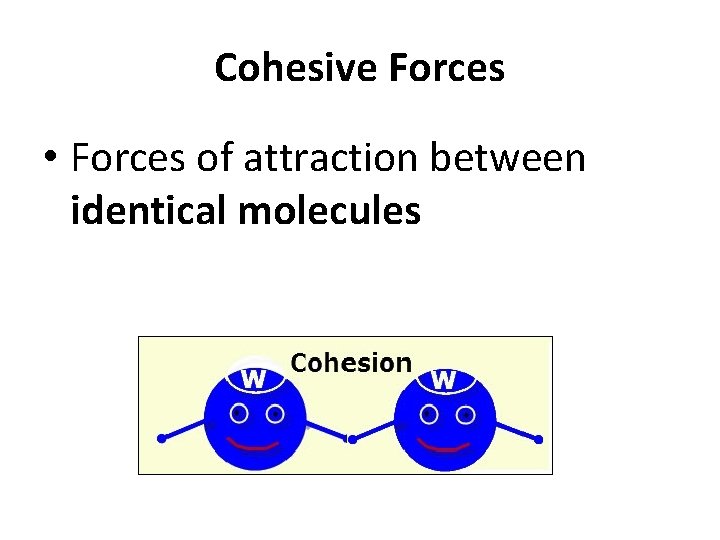
Cohesive Forces • Forces of attraction between identical molecules
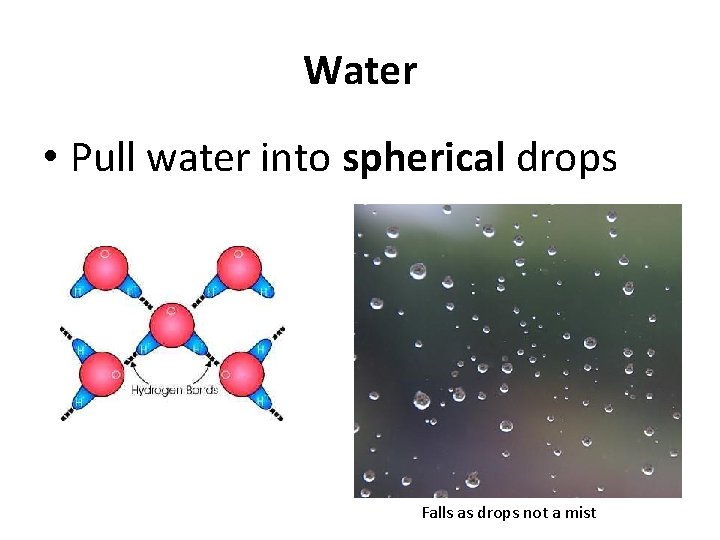
Water • Pull water into spherical drops Falls as drops not a mist
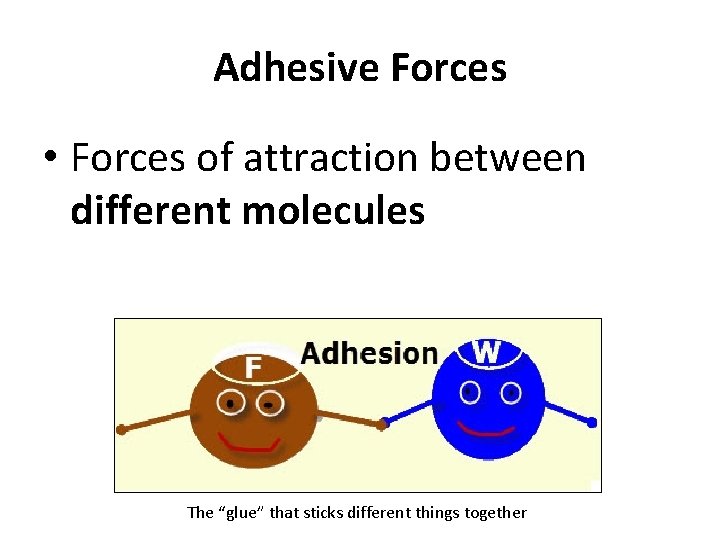
Adhesive Forces • Forces of attraction between different molecules The “glue” that sticks different things together
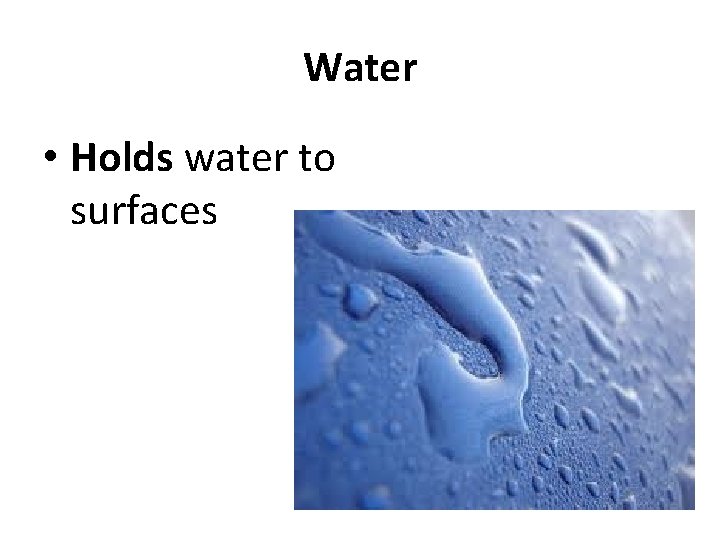
Water • Holds water to surfaces
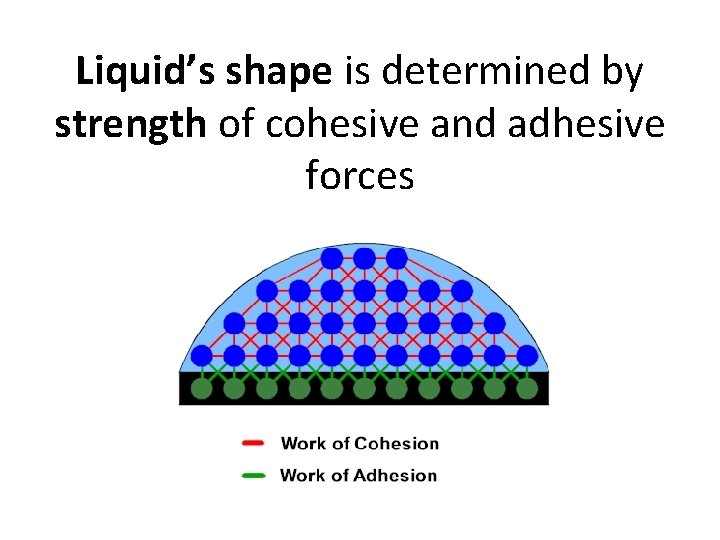
Liquid’s shape is determined by strength of cohesive and adhesive forces
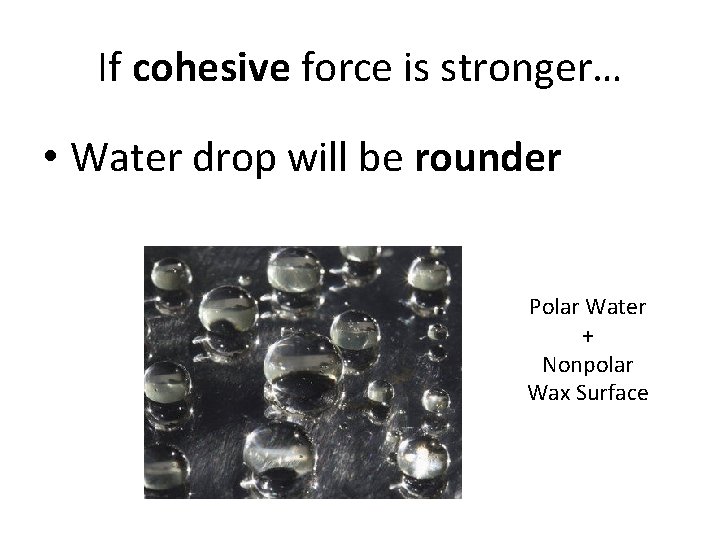
If cohesive force is stronger… • Water drop will be rounder Polar Water + Nonpolar Wax Surface
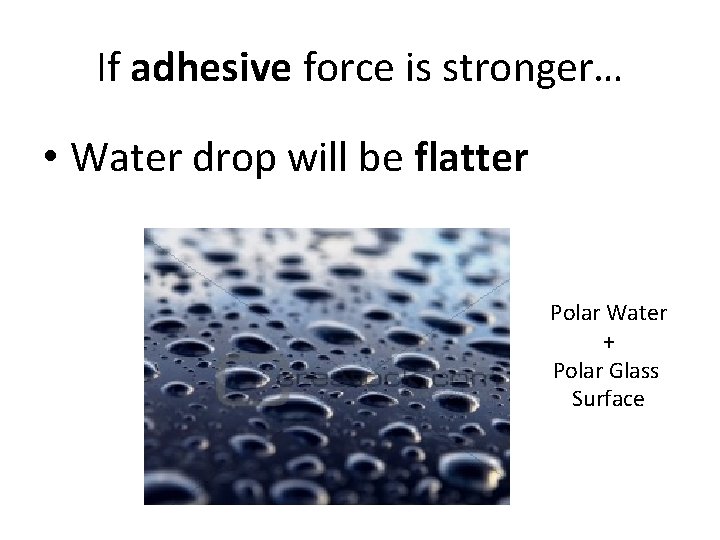
If adhesive force is stronger… • Water drop will be flatter Polar Water + Polar Glass Surface
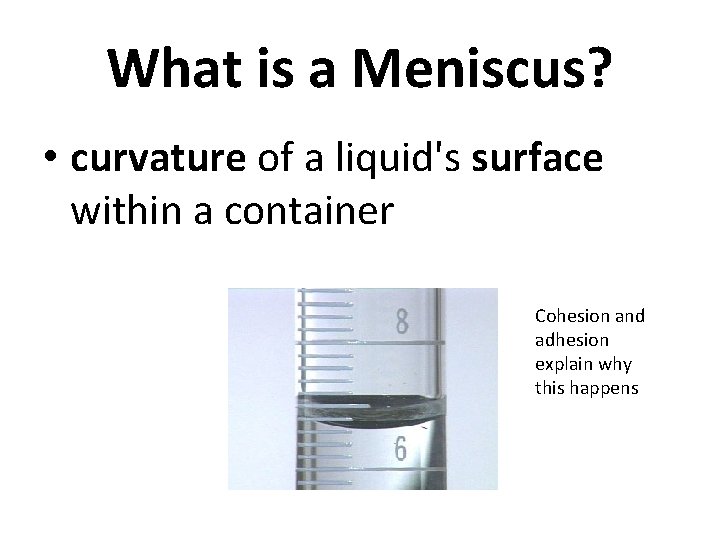
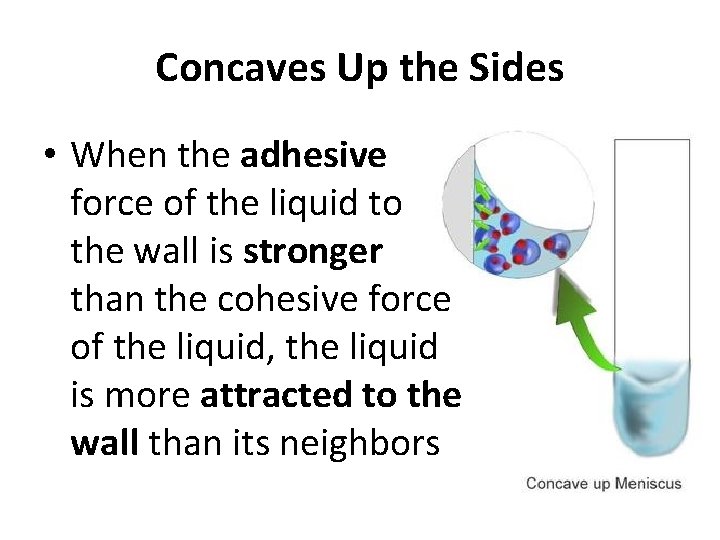
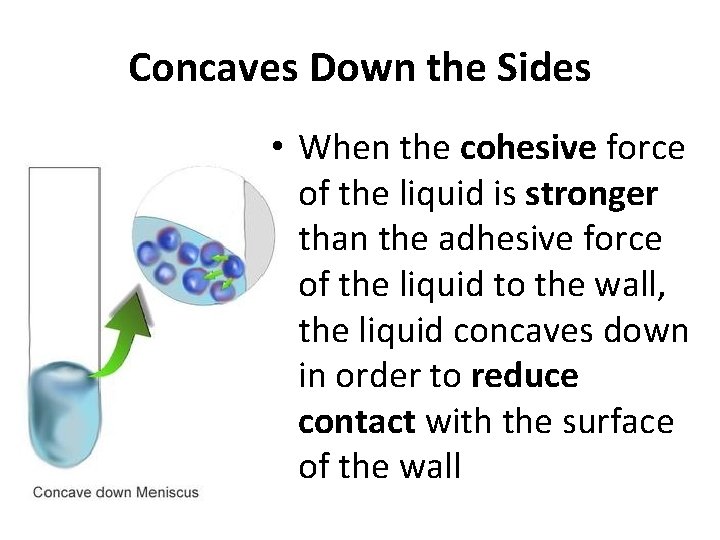
What is a Meniscus? • curvature of a liquid's surface within a container Cohesion and adhesion explain why this happens
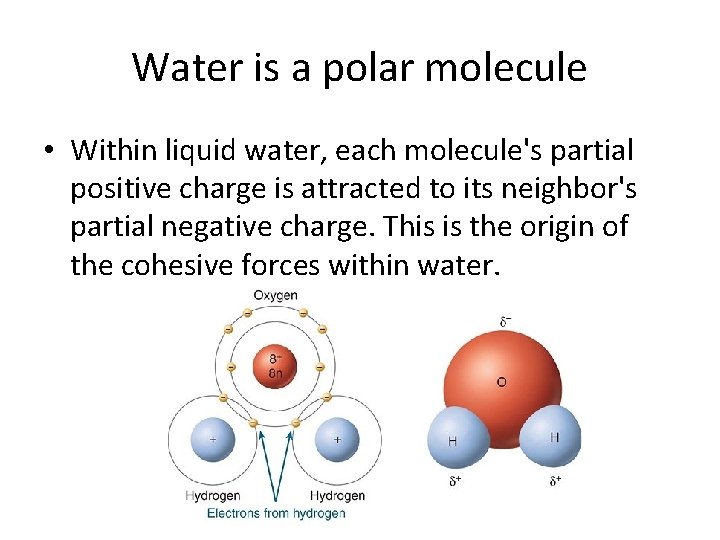
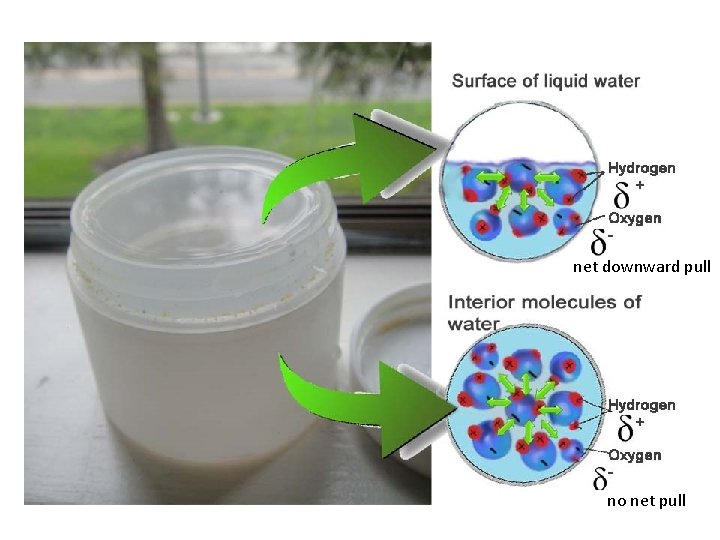
Water is a polar molecule • Within liquid water, each molecule's partial positive charge is attracted to its neighbor's partial negative charge. This is the origin of the cohesive forces within water.
net downward pull no net pull
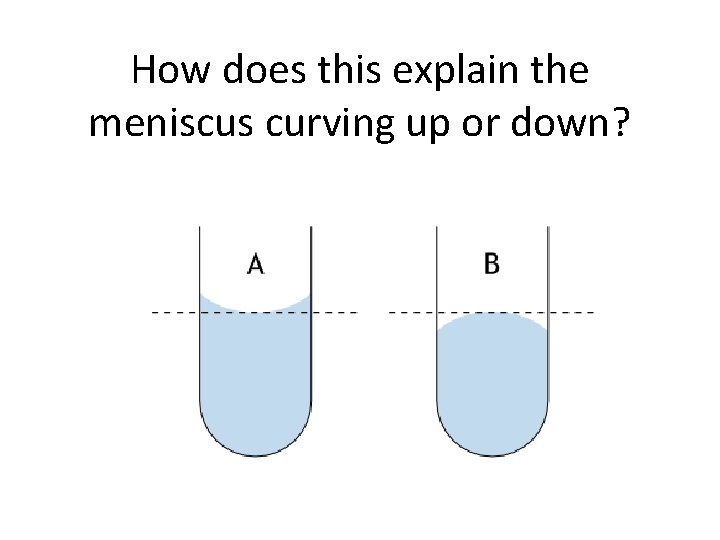
How does this explain the meniscus curving up or down?
Concaves Up the Sides • When the adhesive force of the liquid to the wall is stronger than the cohesive force of the liquid, the liquid is more attracted to the wall than its neighbors
Concaves Down the Sides • When the cohesive force of the liquid is stronger than the adhesive force of the liquid to the wall, the liquid concaves down in order to reduce contact with the surface of the wall
A little water fun!
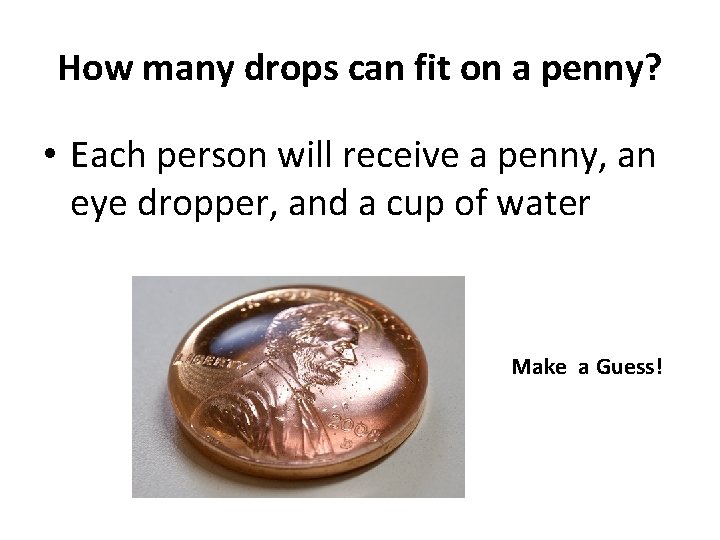
How many drops can fit on a penny? • Each person will receive a penny, an eye dropper, and a cup of water Make a Guess!
Results • Did you guess too high, too low, or right on? • Why is this able to happen?
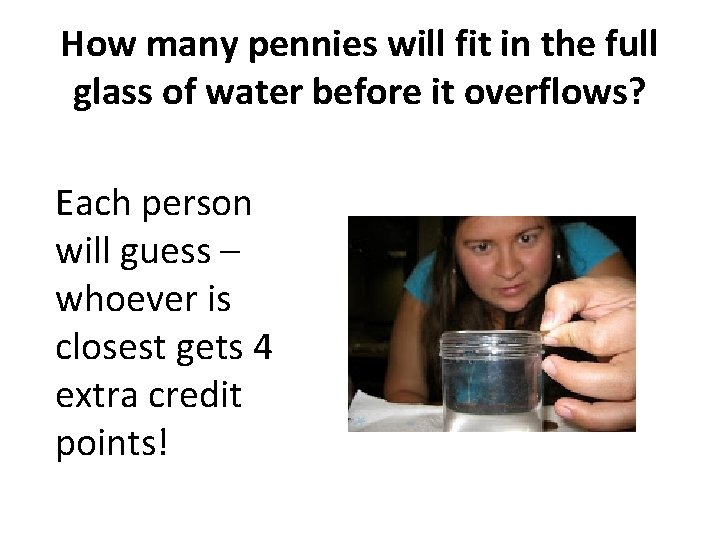
How many pennies will fit in the full glass of water before it overflows? Each person will guess – whoever is closest gets 4 extra credit points!
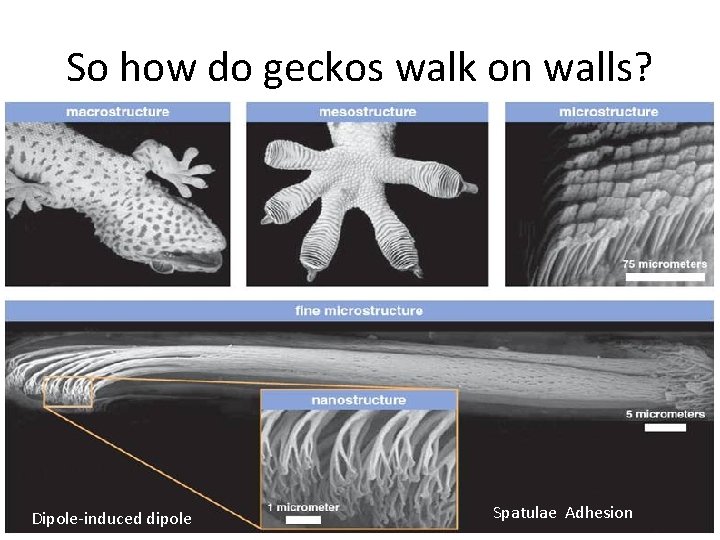
So how do geckos walk on walls? Dipole-induced dipole Spatulae Adhesion