
Review for test on SSUSH 3 SSUSH 4
- Slides: 34
Review for test on SSUSH 3 & SSUSH 4
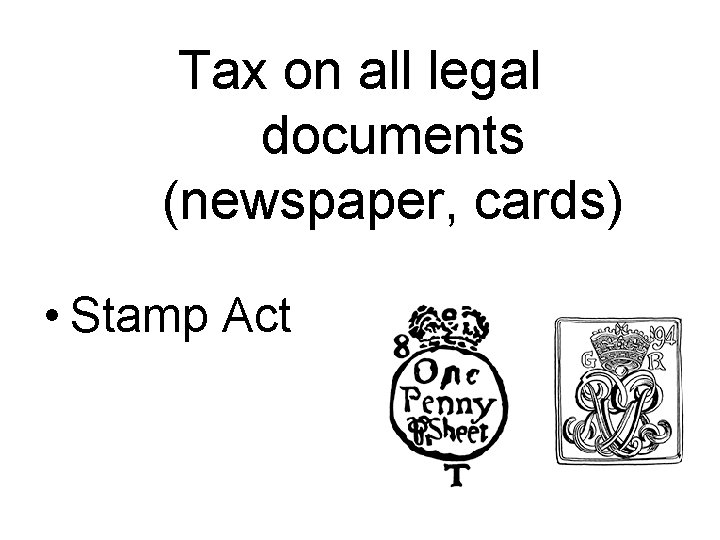
Tax on all legal documents (newspaper, cards) • Stamp Act
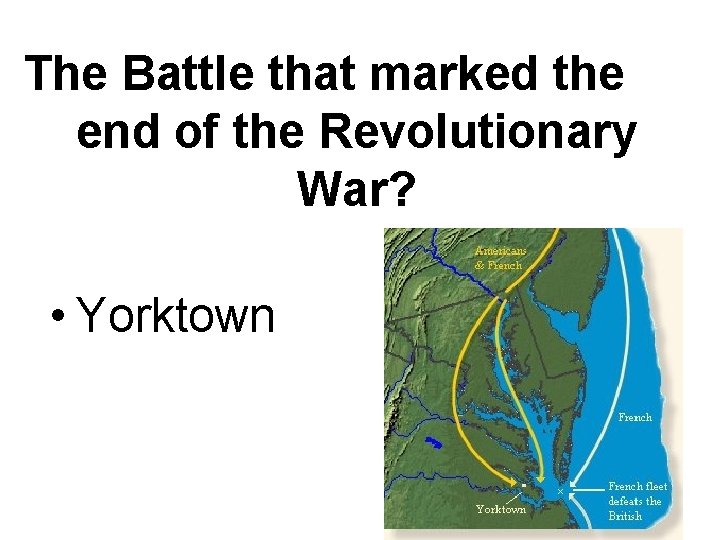
The Battle that marked the end of the Revolutionary War? • Yorktown
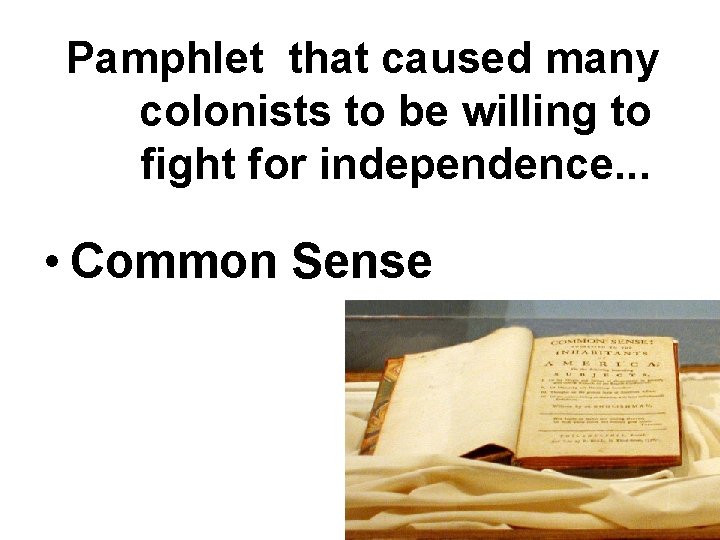
Wrote Common Sense. . • Thomas Paine
The site where George Washington and his troops endured a harsh winter without proper food, shelter, or clothing. • Valley Forge
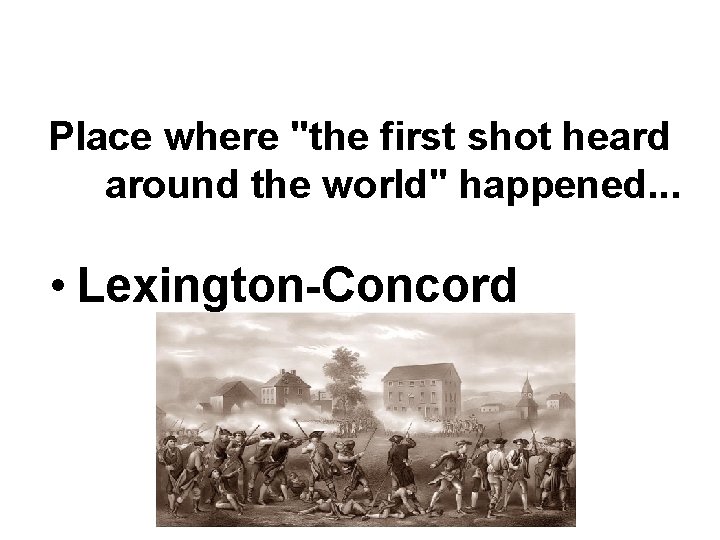
Place where "the first shot heard around the world" happened. . . • Lexington-Concord
German Mercenaries. . . • Hessians
Group that had a monopoly on the tea (were exempt from the tax) • British East India company
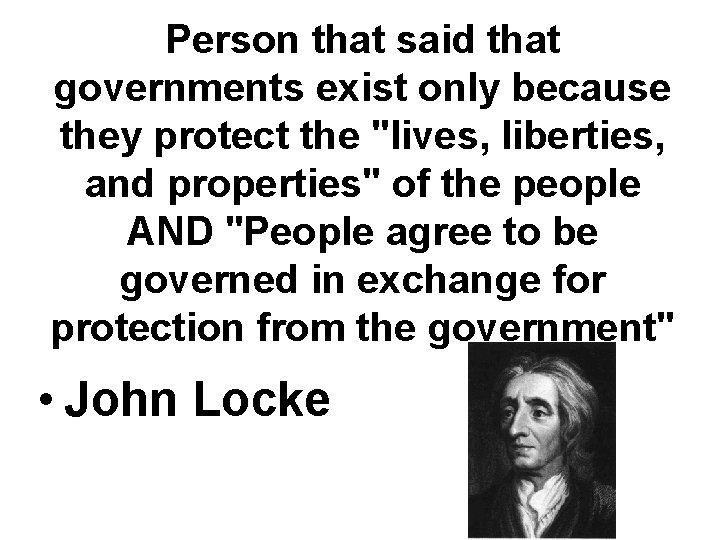
Person that said that governments exist only because they protect the "lives, liberties, and properties" of the people AND "People agree to be governed in exchange for protection from the government" • John Locke
Turning Point of the Revolutionary War (the French came out and openly supported the Colonists). . • Saratoga, NY
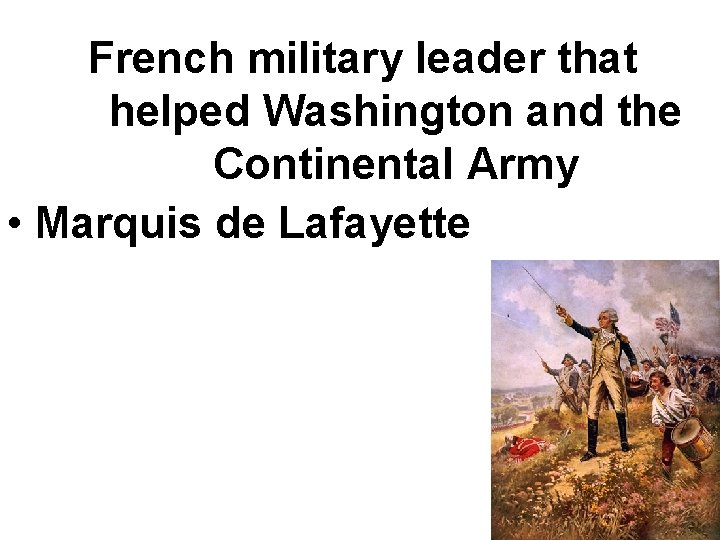
French military leader that helped Washington and the Continental Army • Marquis de Lafayette
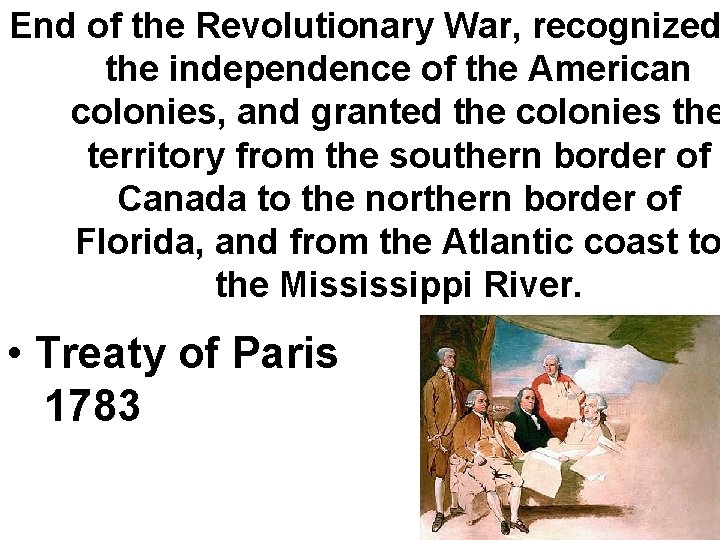
End of the Revolutionary War, recognized the independence of the American colonies, and granted the colonies the territory from the southern border of Canada to the northern border of Florida, and from the Atlantic coast to the Mississippi River. • Treaty of Paris 1783
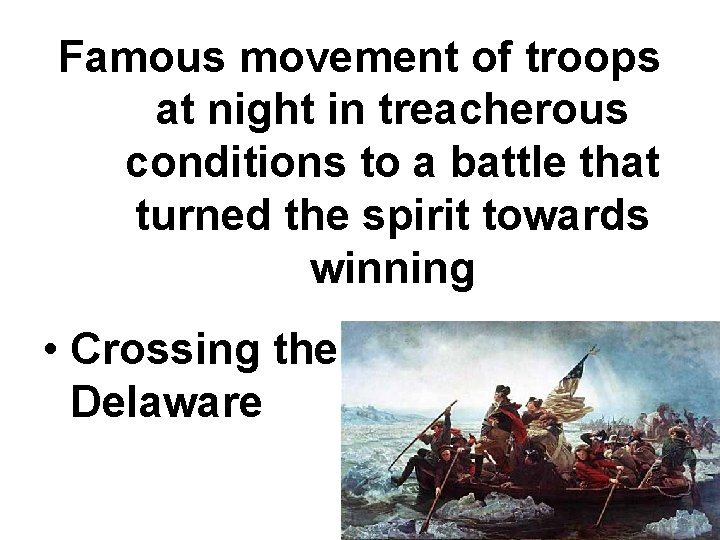
Famous movement of troops at night in treacherous conditions to a battle that turned the spirit towards winning • Crossing the Delaware
Pamphlet that caused many colonists to be willing to fight for independence. . . • Common Sense
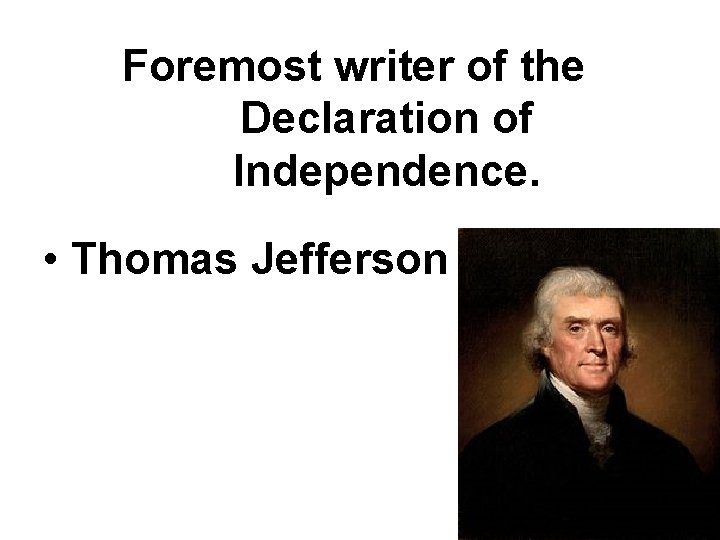
Foremost writer of the Declaration of Independence. • Thomas Jefferson
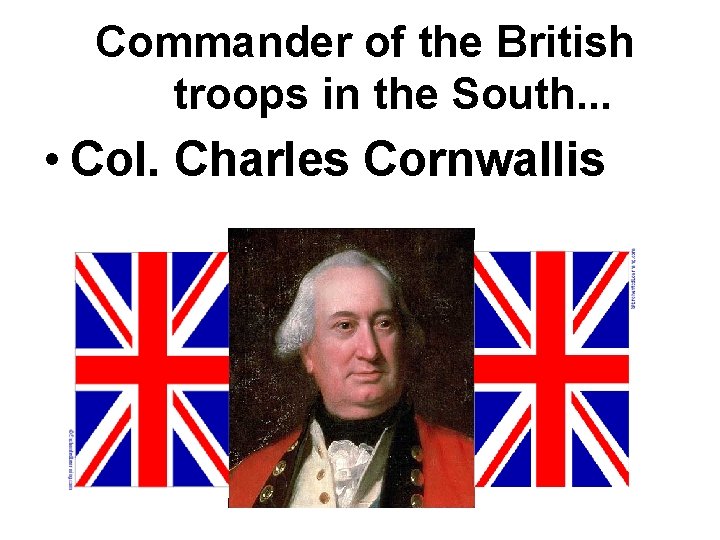
Commander of the British troops in the South. . . • Col. Charles Cornwallis
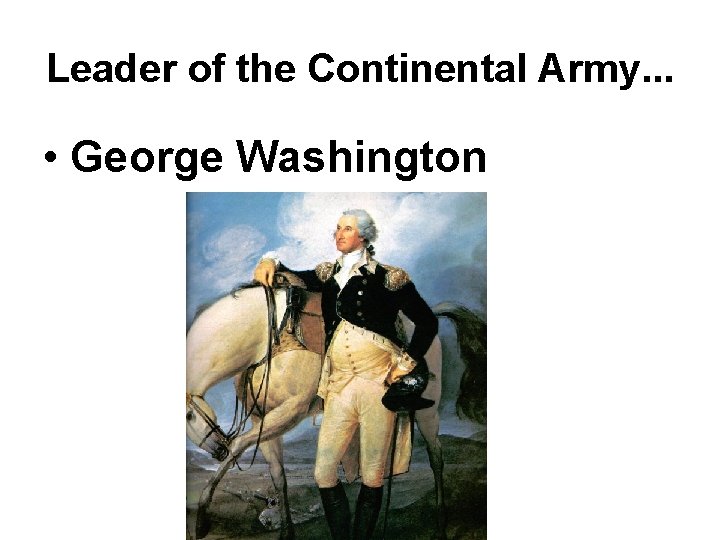
Leader of the Continental Army. . . • George Washington
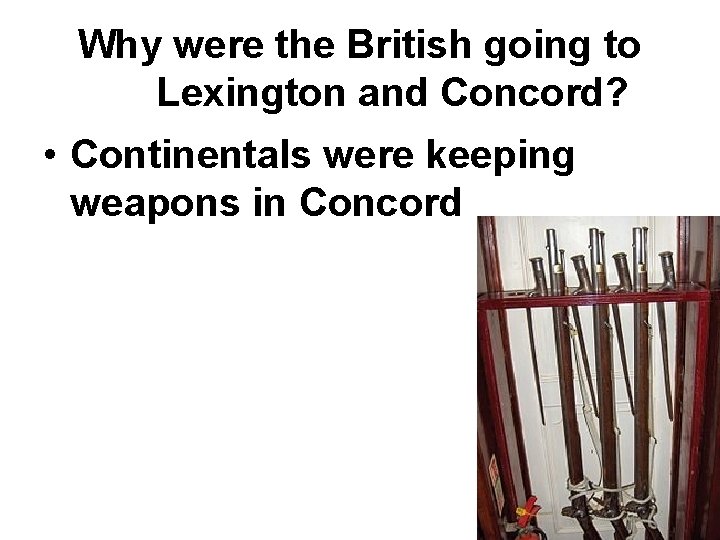
Why were the British going to Lexington and Concord? • Continentals were keeping weapons in Concord
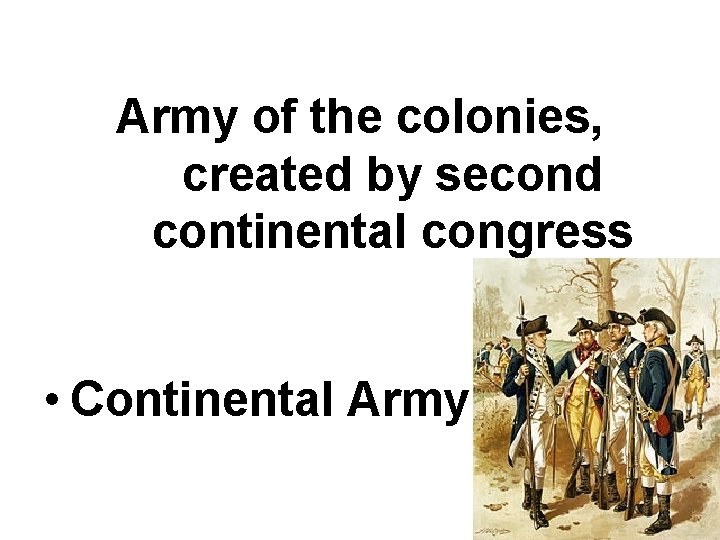
Army of the colonies, created by second continental congress • Continental Army
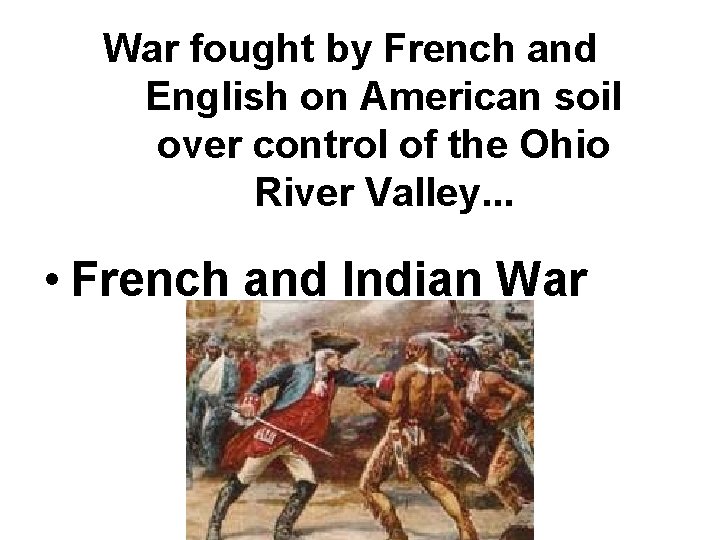
War fought by French and English on American soil over control of the Ohio River Valley. . . • French and Indian War
What are taxes on goods entering the country? • Duty
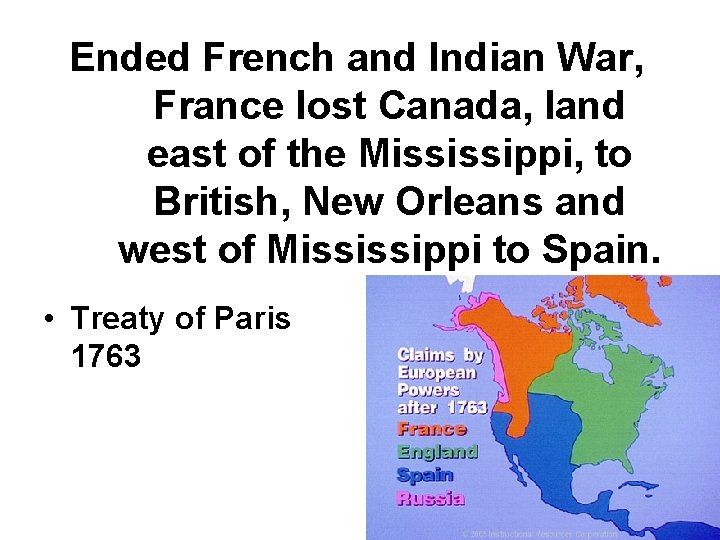
Ended French and Indian War, France lost Canada, land east of the Mississippi, to British, New Orleans and west of Mississippi to Spain. • Treaty of Paris 1763
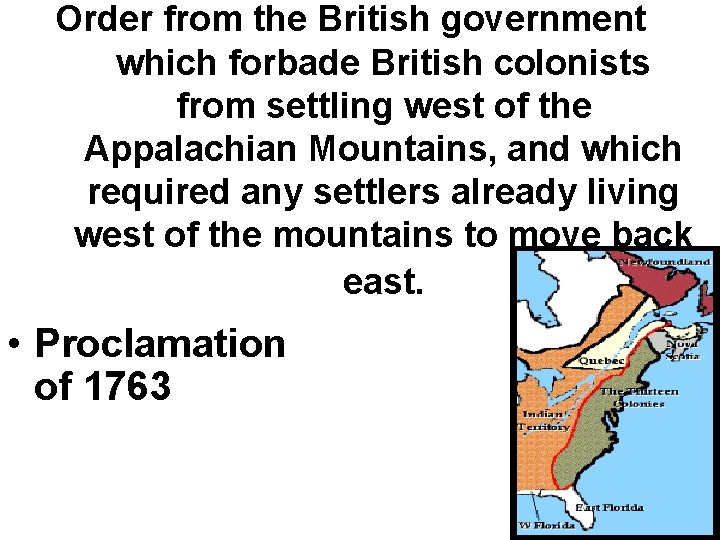
Order from the British government which forbade British colonists from settling west of the Appalachian Mountains, and which required any settlers already living west of the mountains to move back east. • Proclamation of 1763
Laws that governed trade between England its colonies. Colonists were required to ship certain products exclusively to England. These acts made colonists very angry because they were forbidden from trading with other countries. • Navigation Acts
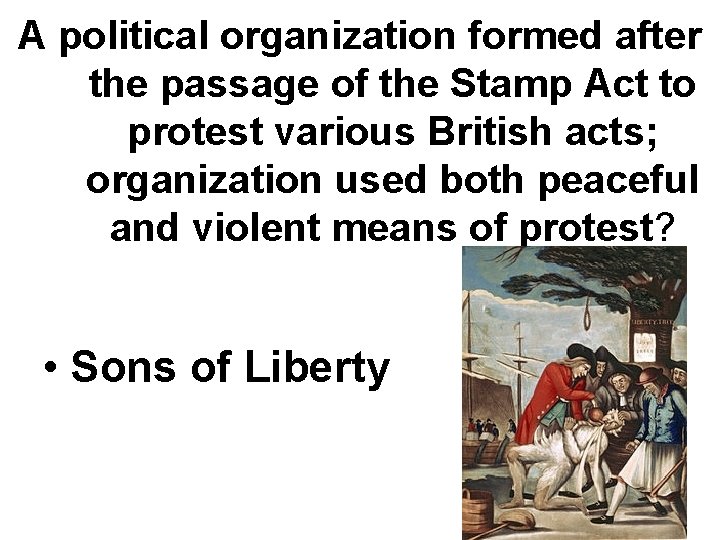
A political organization formed after the passage of the Stamp Act to protest various British acts; organization used both peaceful and violent means of protest? • Sons of Liberty
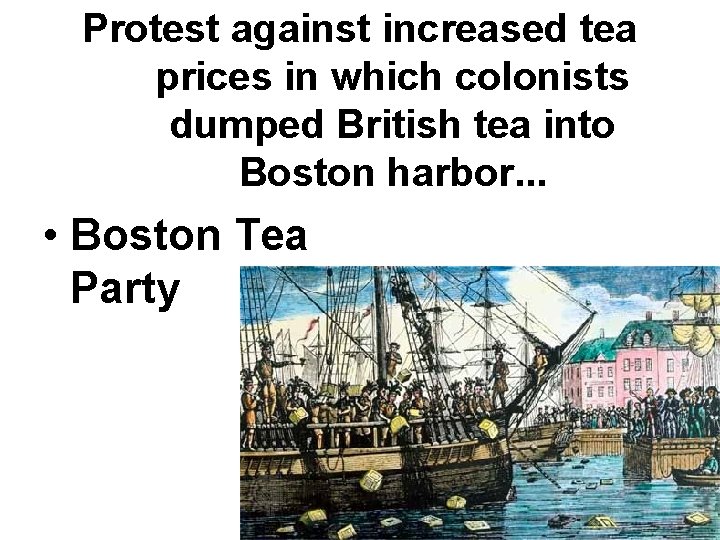
Protest against increased tea prices in which colonists dumped British tea into Boston harbor. . . • Boston Tea Party
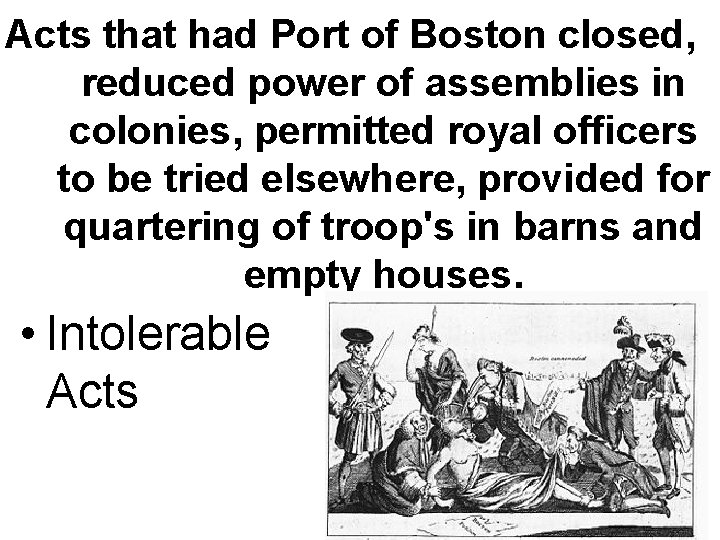
Acts that had Port of Boston closed, reduced power of assemblies in colonies, permitted royal officers to be tried elsewhere, provided for quartering of troop's in barns and empty houses. • Intolerable Acts
British soldiers fired into a crowd of colonists who were teasing and taunting them. Five colonists were killed. The colonists blamed the British and the Sons of Liberty and used this incident as an excuse to promote the Revolution. • Boston Massacre
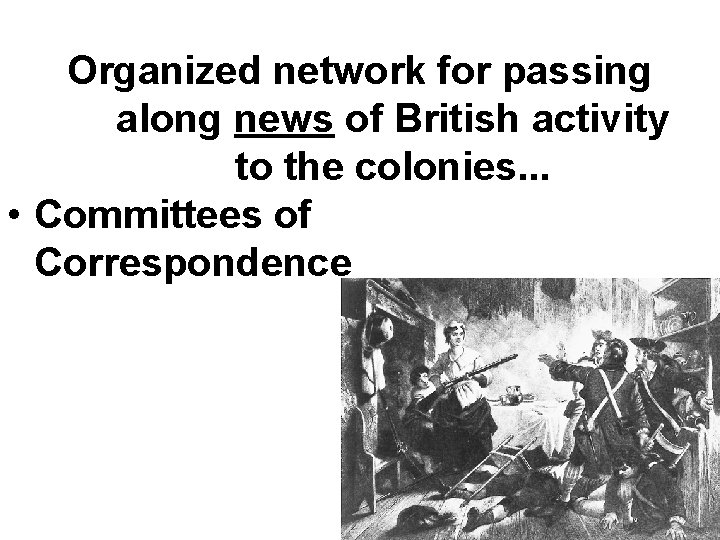
Organized network for passing along news of British activity to the colonies. . . • Committees of Correspondence
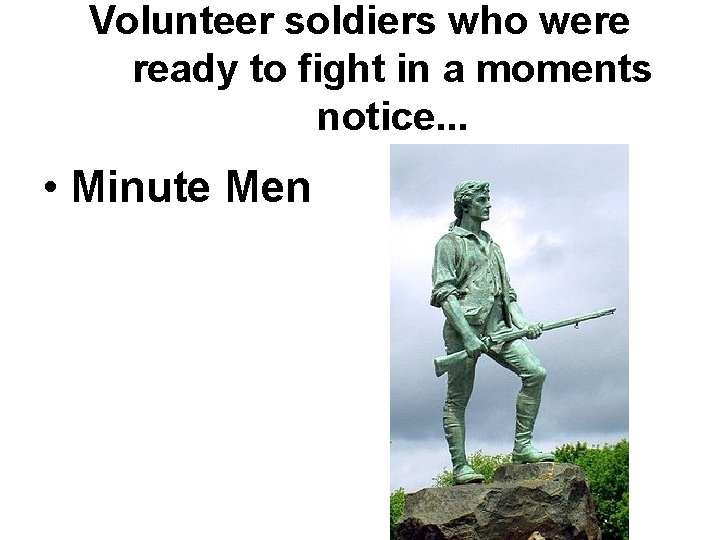
Volunteer soldiers who were ready to fight in a moments notice. . . • Minute Men
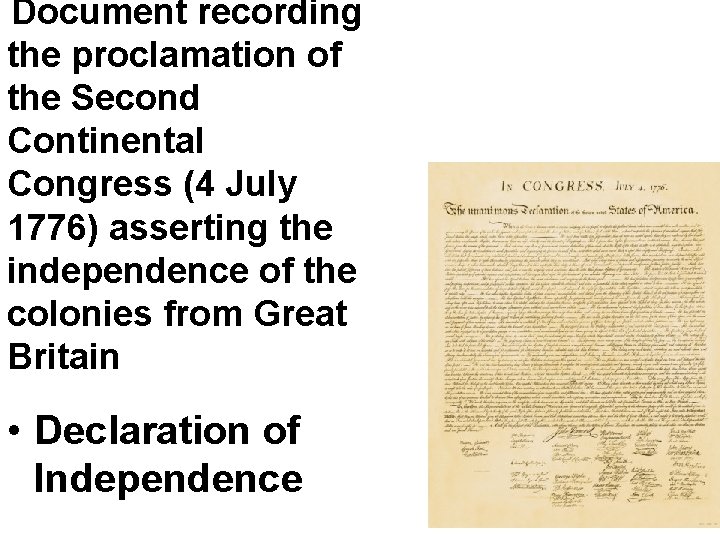
Document recording the proclamation of the Second Continental Congress (4 July 1776) asserting the independence of the colonies from Great Britain • Declaration of Independence
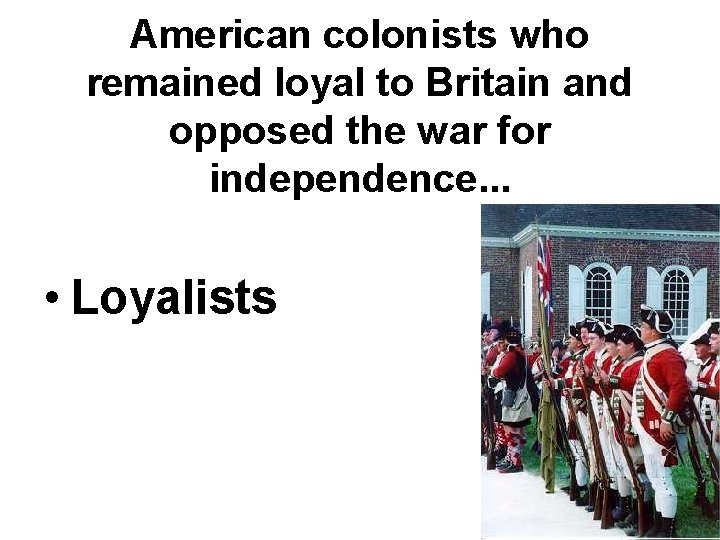
American colonists who remained loyal to Britain and opposed the war for independence. . . • Loyalists
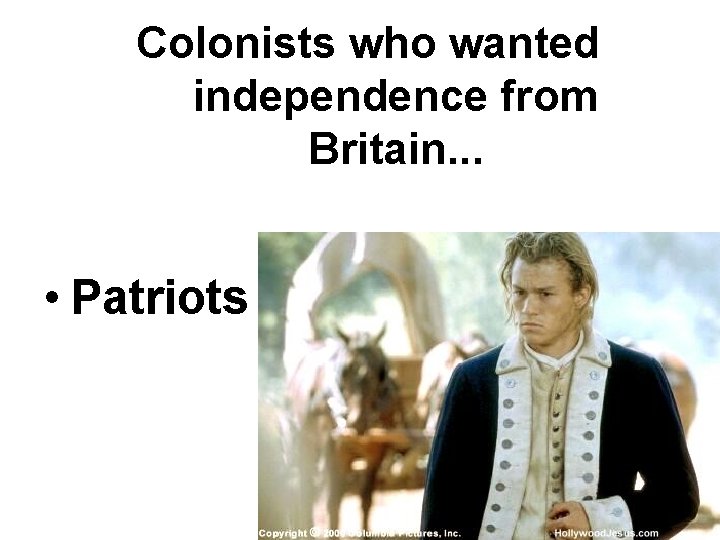
Colonists who wanted independence from Britain. . . • Patriots
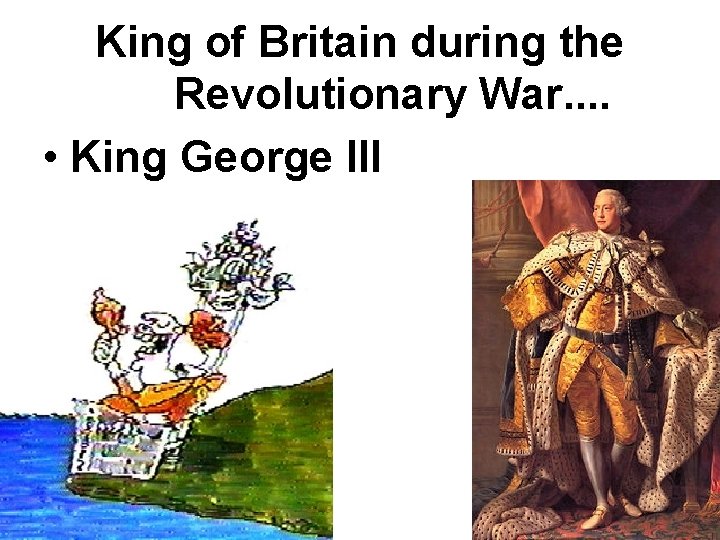
King of Britain during the Revolutionary War. . • King George III