
Review Food Webs L 2 Decay and Recycling

Review: Food Webs
L 2 Decay and Recycling Organic Waste Learning Objectives: 1. Describe the process of decay and what organisms are responsible. 2. Explain the conditions needed for decay to happen. 3. Analyse why the process of decay is so important.
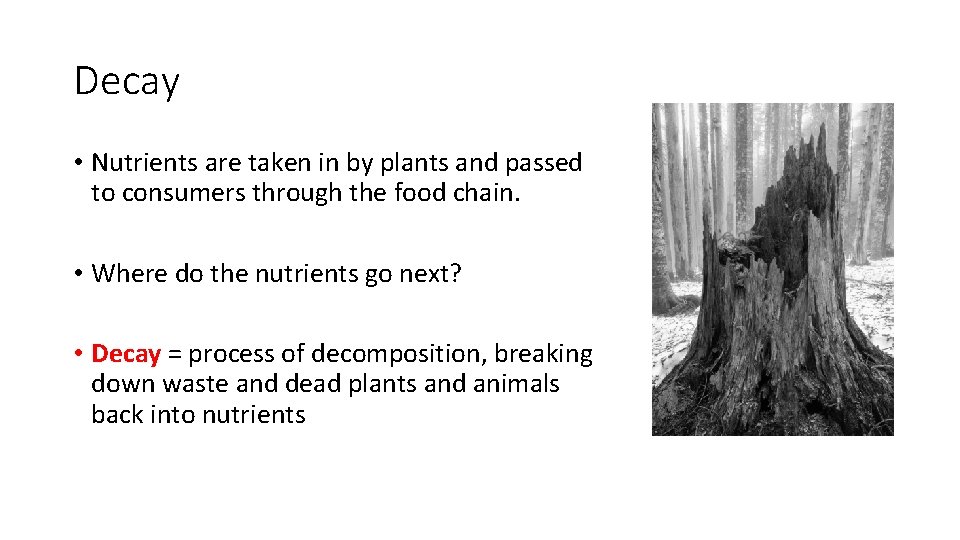
Decay • Nutrients are taken in by plants and passed to consumers through the food chain. • Where do the nutrients go next? • Decay = process of decomposition, breaking down waste and dead plants and animals back into nutrients
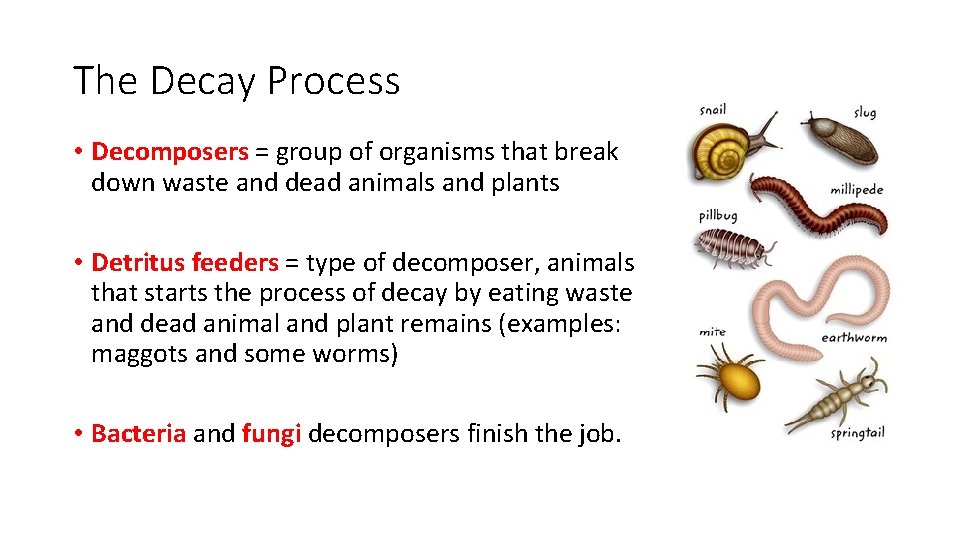
The Decay Process • Decomposers = group of organisms that break down waste and dead animals and plants • Detritus feeders = type of decomposer, animals that starts the process of decay by eating waste and dead animal and plant remains (examples: maggots and some worms) • Bacteria and fungi decomposers finish the job.
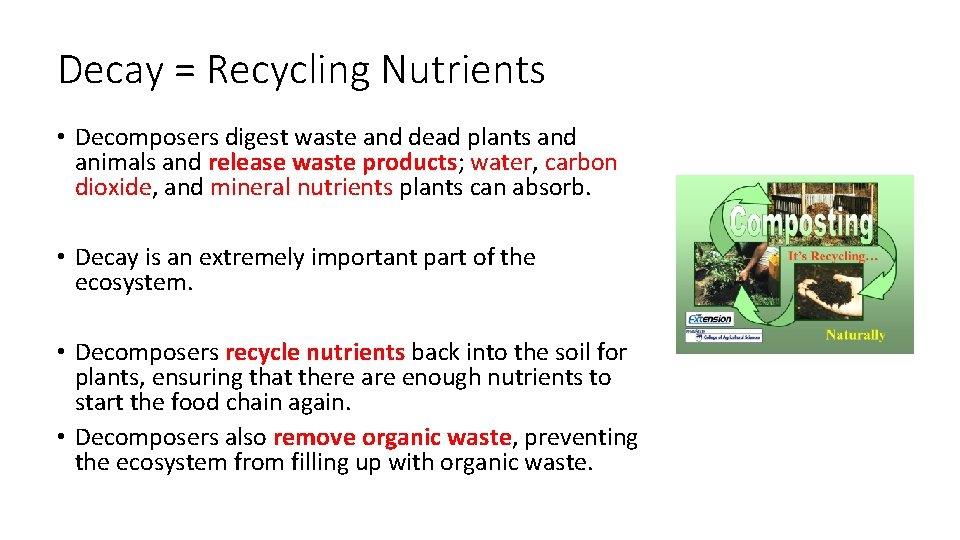
Decay = Recycling Nutrients • Decomposers digest waste and dead plants and animals and release waste products; water, carbon dioxide, and mineral nutrients plants can absorb. • Decay is an extremely important part of the ecosystem. • Decomposers recycle nutrients back into the soil for plants, ensuring that there are enough nutrients to start the food chain again. • Decomposers also remove organic waste, preventing the ecosystem from filling up with organic waste.
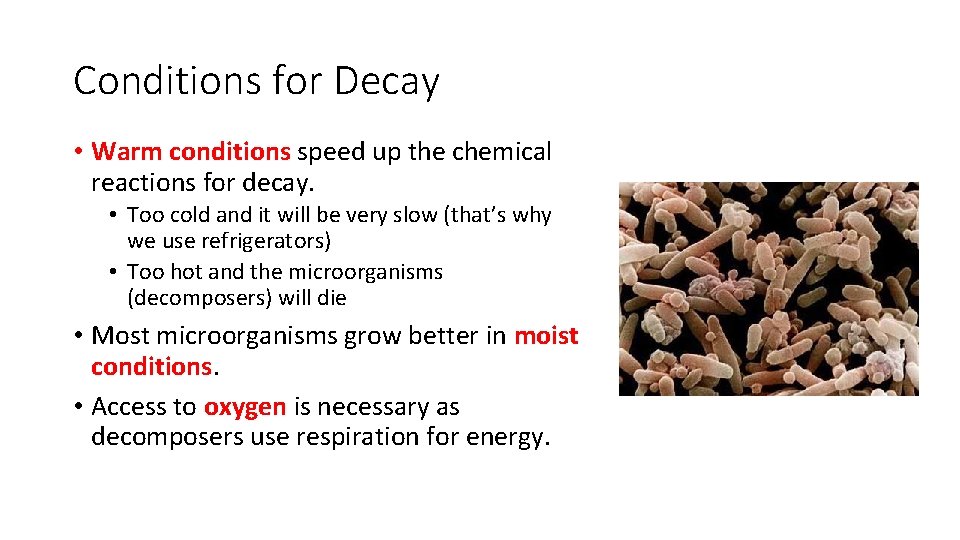
Conditions for Decay • Warm conditions speed up the chemical reactions for decay. • Too cold and it will be very slow (that’s why we use refrigerators) • Too hot and the microorganisms (decomposers) will die • Most microorganisms grow better in moist conditions. • Access to oxygen is necessary as decomposers use respiration for energy.
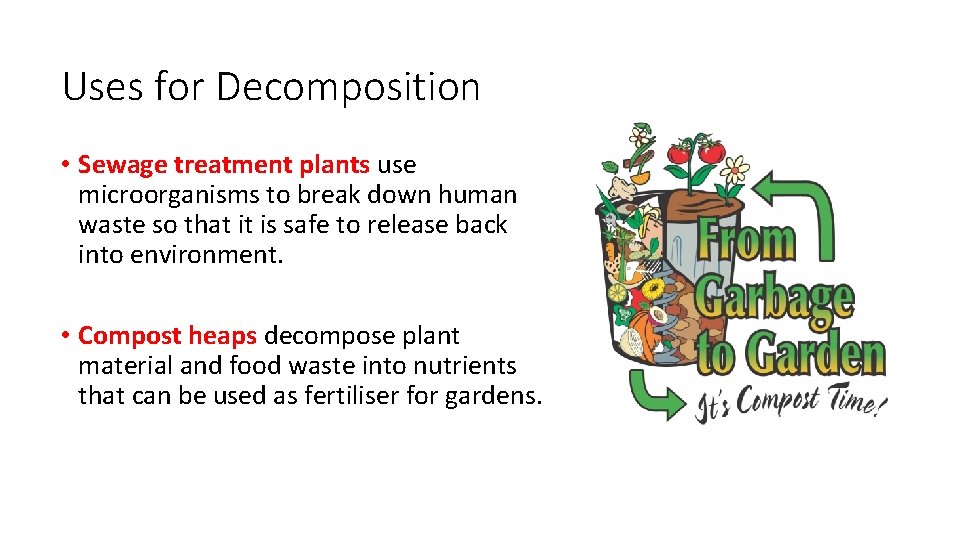
Uses for Decomposition • Sewage treatment plants use microorganisms to break down human waste so that it is safe to release back into environment. • Compost heaps decompose plant material and food waste into nutrients that can be used as fertiliser for gardens.

Review: Carbon Cycle
- Slides: 8