
Review DNA What are the four major classes
- Slides: 30
Review DNA
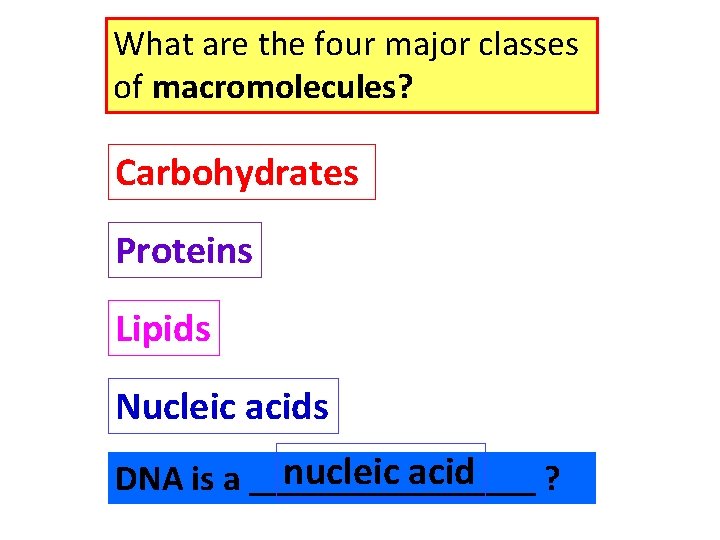
What are the four major classes of macromolecules? Carbohydrates Proteins Lipids Nucleic acids nucleic acid DNA is a ________ ?
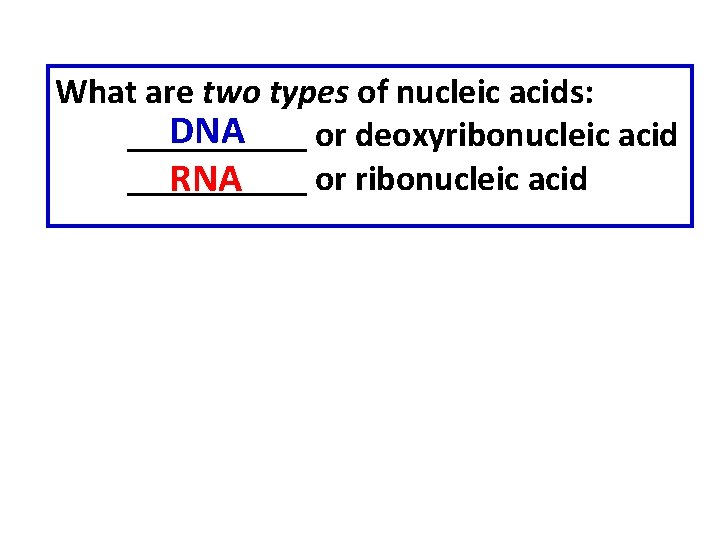
What are two types of nucleic acids: DNA _____ or deoxyribonucleic acid _____ or ribonucleic acid RNA
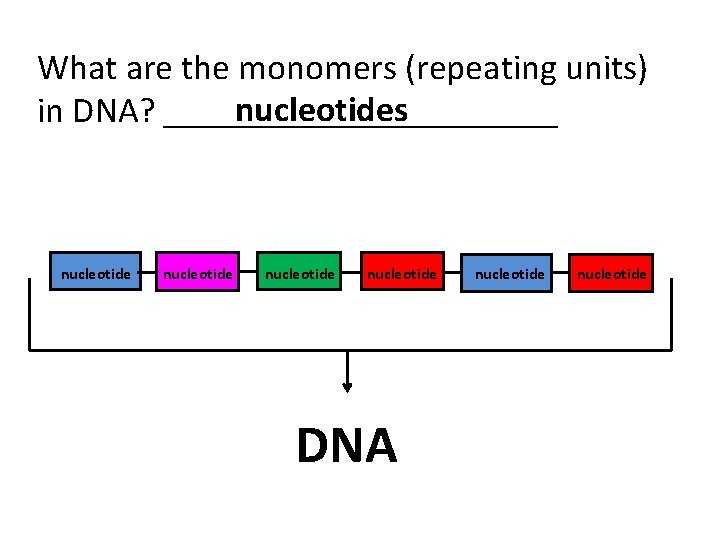
What are the monomers (repeating units) nucleotides in DNA? ___________ nucleotide DNA nucleotide
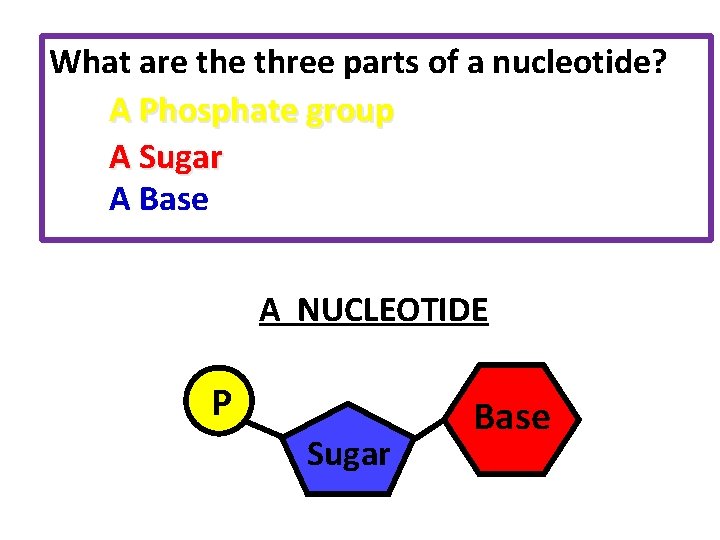
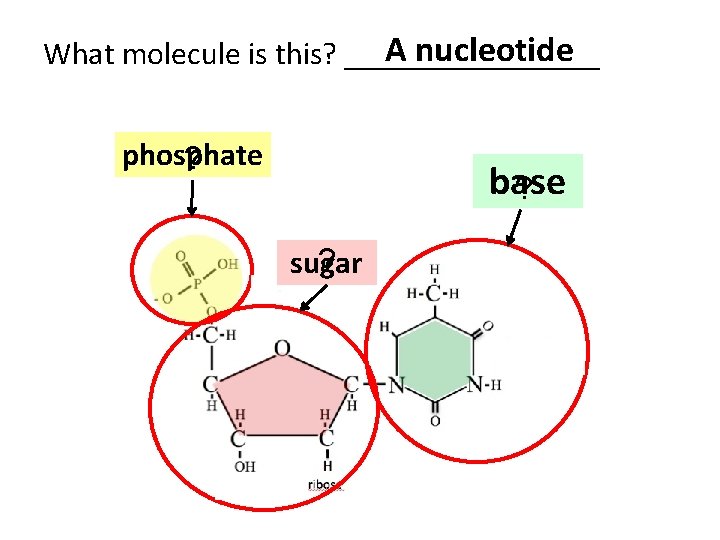
What are three parts of a nucleotide? A Phosphate group A Sugar A Base A NUCLEOTIDE P Sugar Base
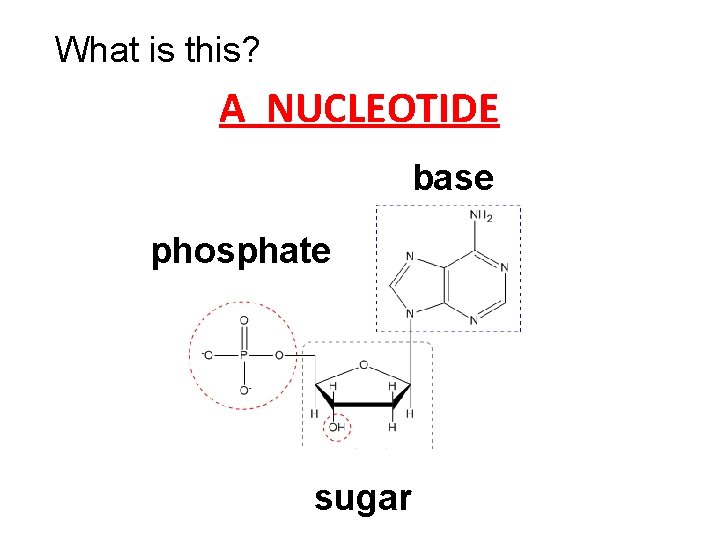
What is this? A NUCLEOTIDE ? base phosphate ? ? sugar
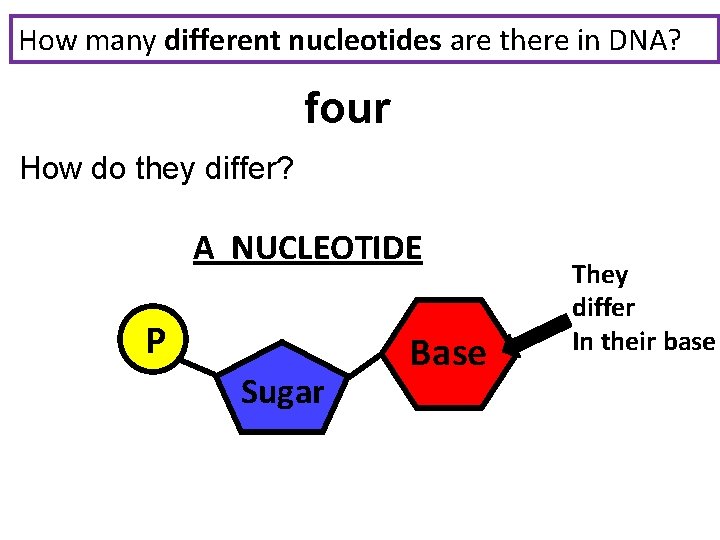
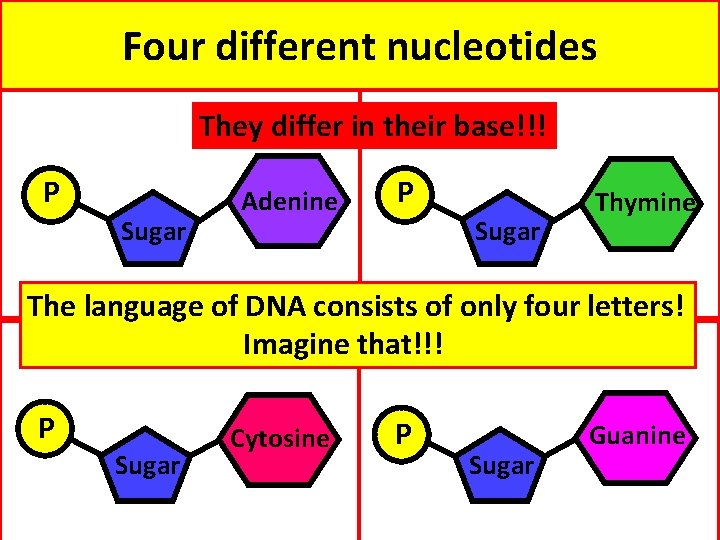
How many different nucleotides are there in DNA? four How do they differ? A NUCLEOTIDE P Sugar Base They differ In their base
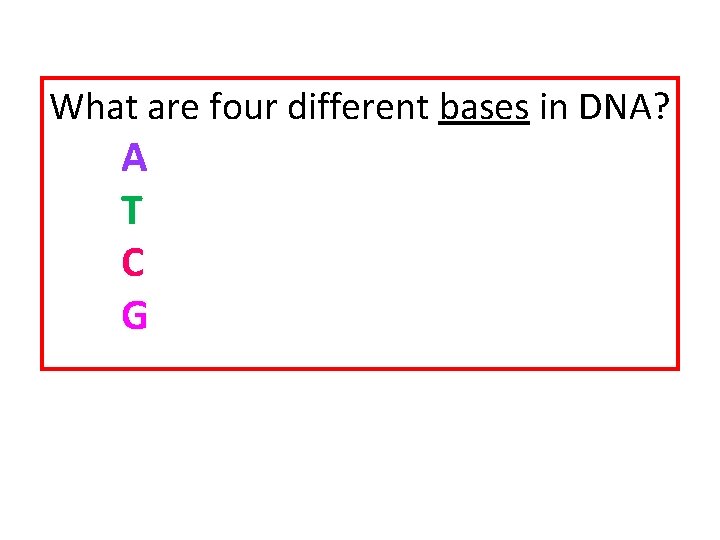
What are four different bases in DNA? A T C G
Four different nucleotides They differ in their base!!! P Sugar Adenine P Sugar Thymine The language of DNA consists of only four letters! Imagine that!!! P Sugar Cytosine P Sugar Guanine
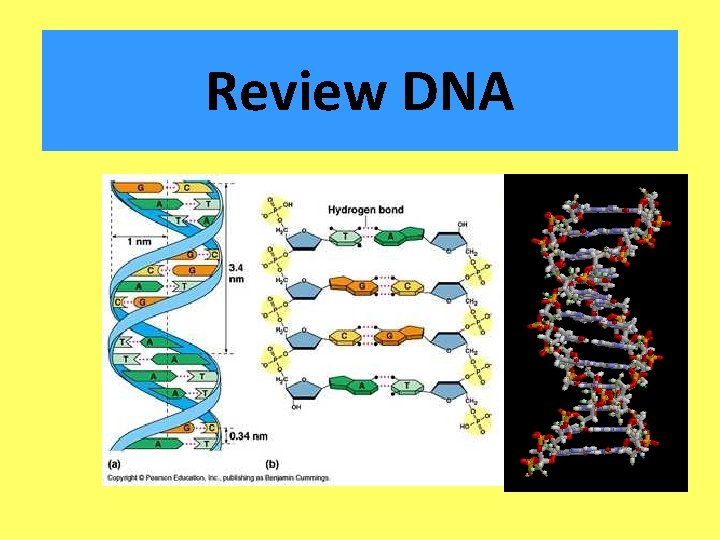
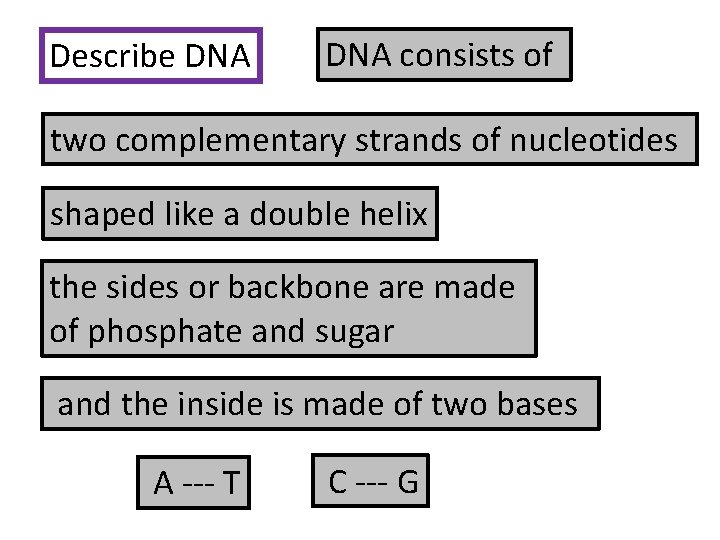
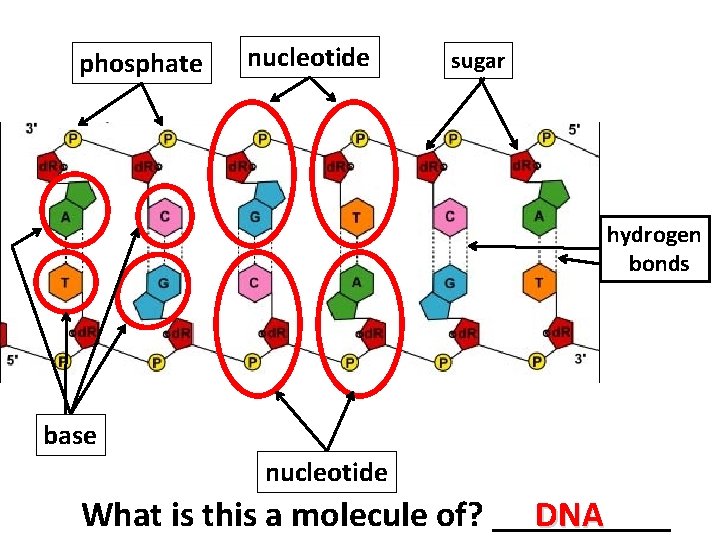
Describe DNA consists of two complementary strands of nucleotides shaped like a double helix the sides or backbone are made of phosphate and sugar and the inside is made of two bases A --- T C --- G
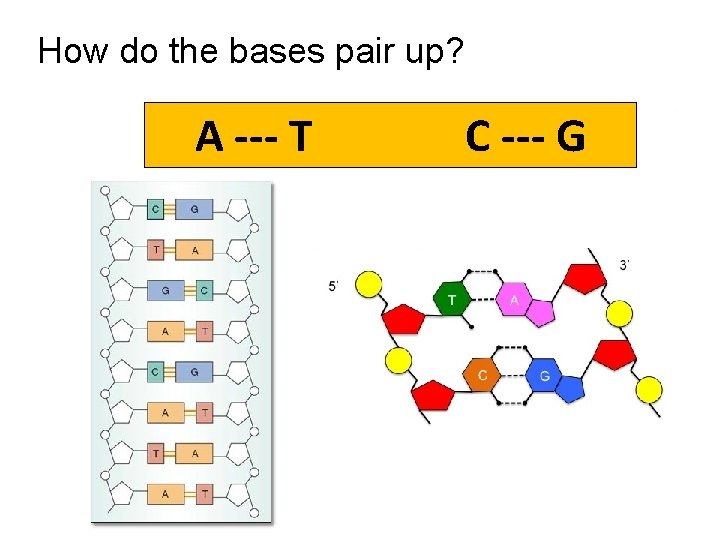
How do the bases pair up? A --- T C --- G
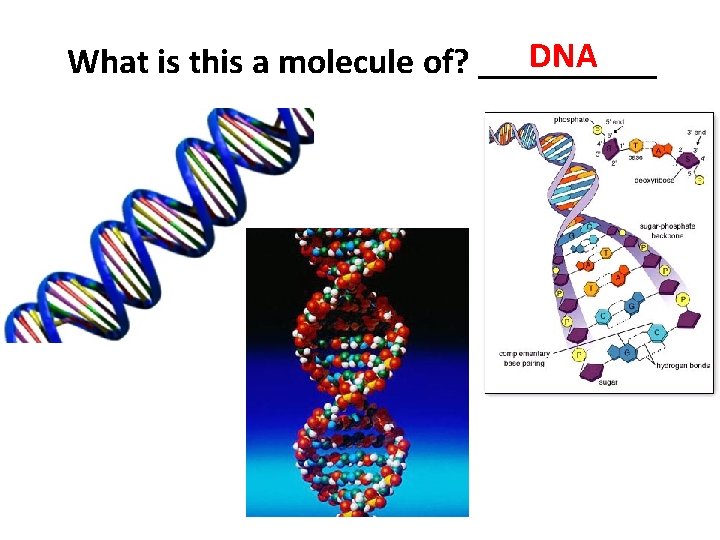
DNA What is this a molecule of? _____
A nucleotide What molecule is this? ________ phosphate ? base ? ? sugar
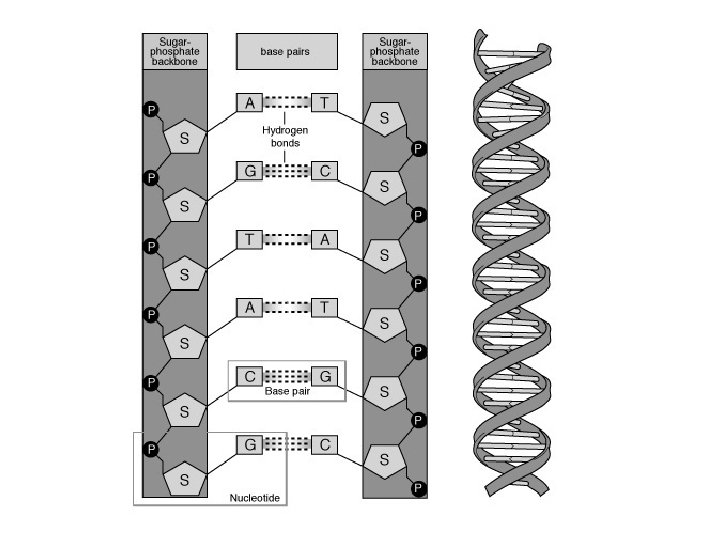
phosphate nucleotide sugar hydrogen bonds base nucleotide What is this a molecule of? _____ DNA
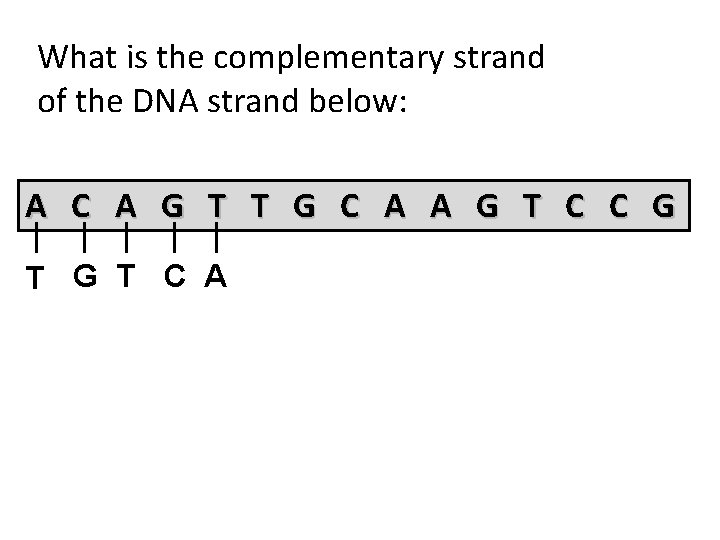
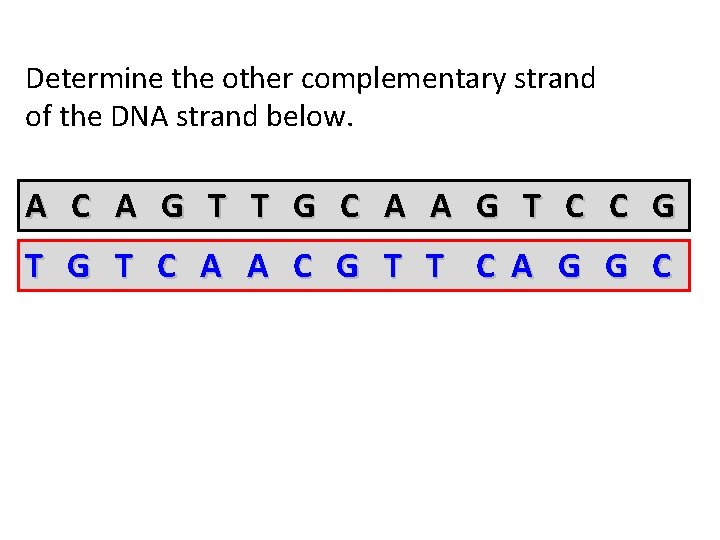
What is the complementary strand of the DNA strand below: A C A G T T G C A A G T C C G T C A
Determine the other complementary strand of the DNA strand below. A C A G T T G C A A G T C C G T C A A C G T T C A G G C
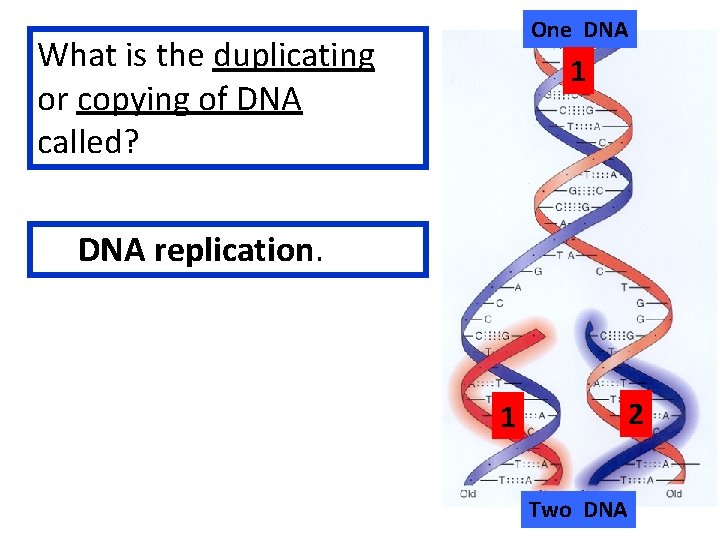
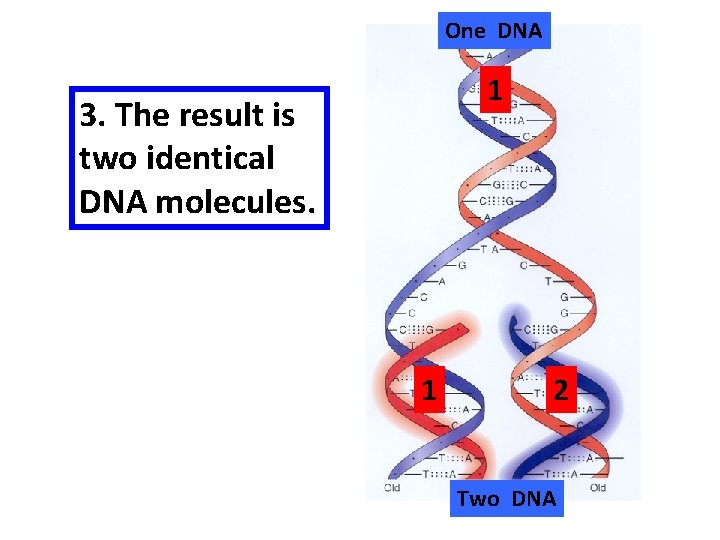
One DNA What is the duplicating or copying of DNA called? 1 DNA replication. 2 1 Two DNA
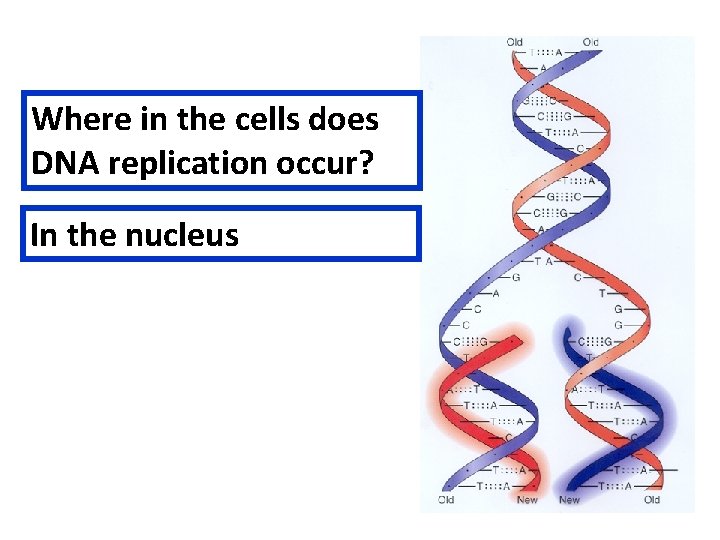
Where in the cells does DNA replication occur? In the nucleus
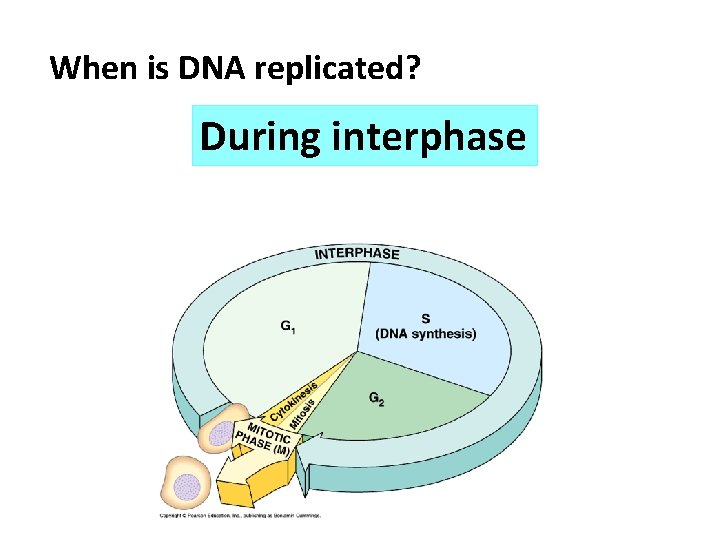
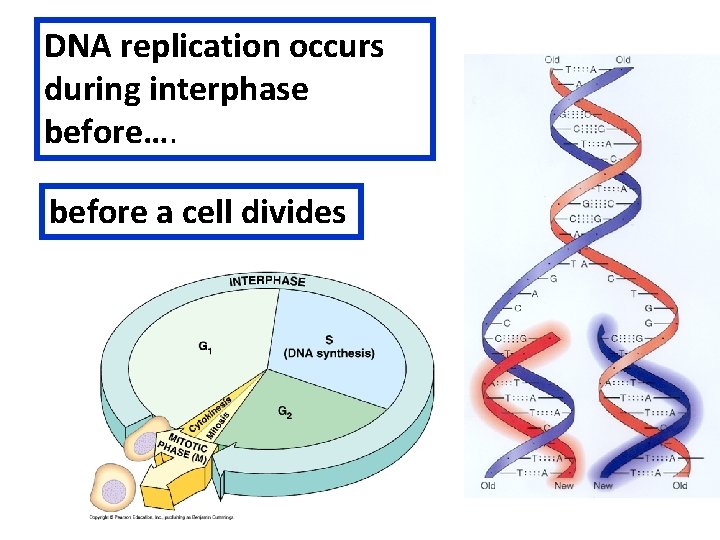
When is DNA replicated? During interphase
DNA replication occurs during interphase before…. before a cell divides
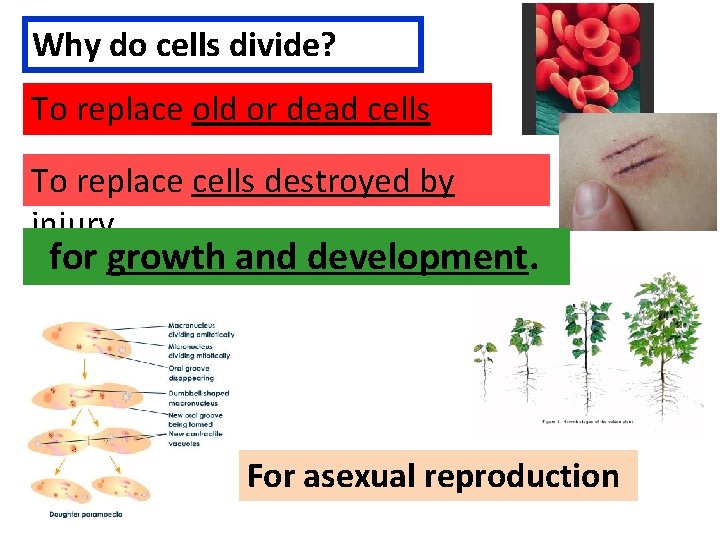
Why do cells divide? To replace old or dead cells To replace cells destroyed by injury for growth and development. For asexual reproduction
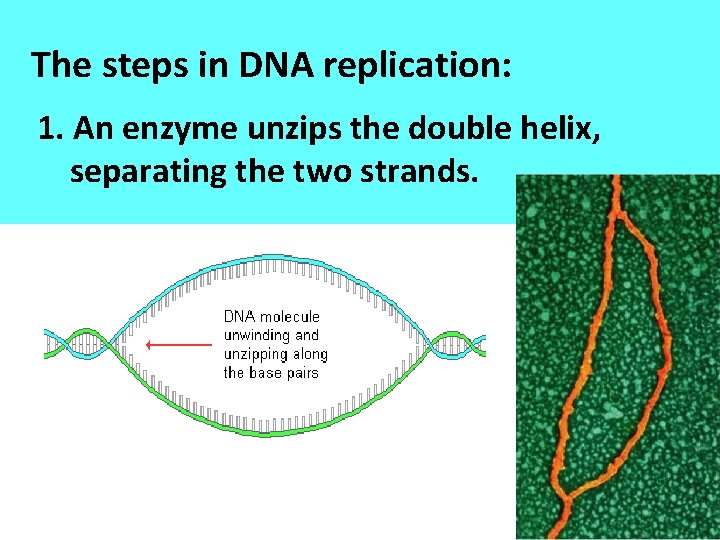
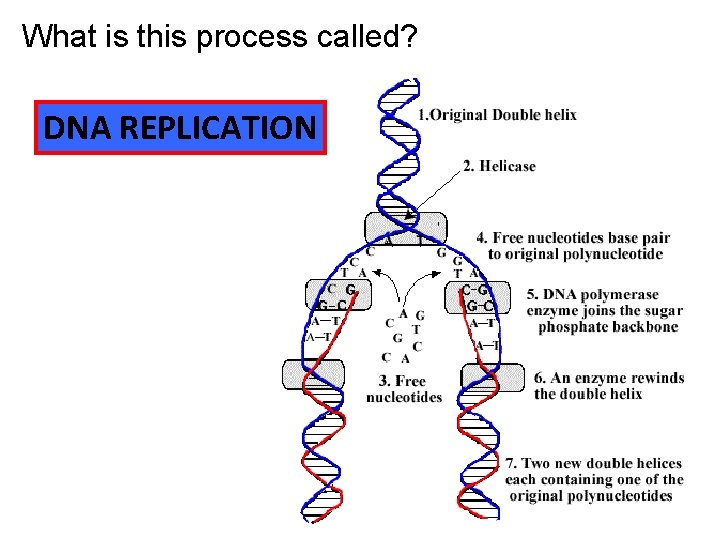
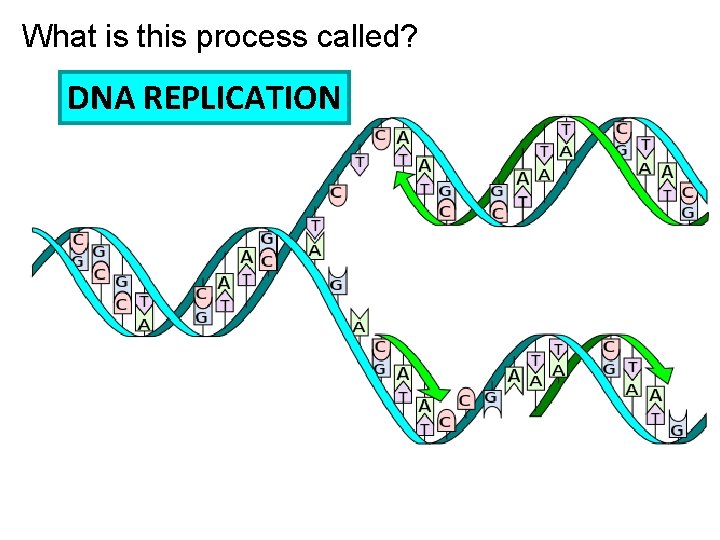
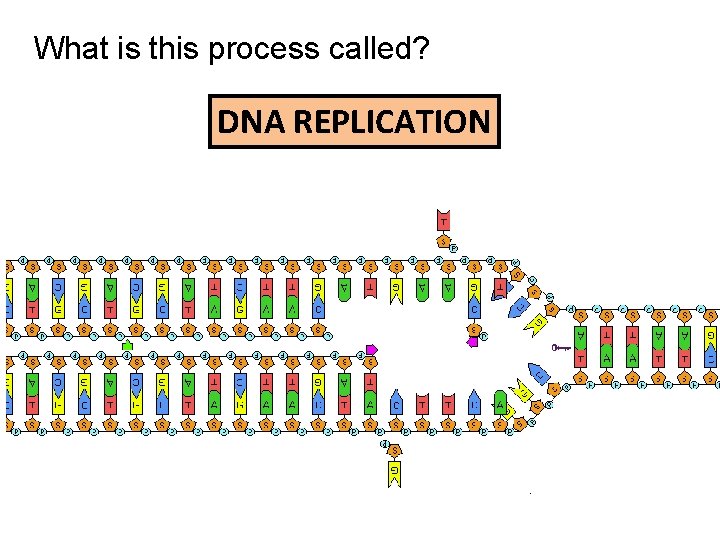
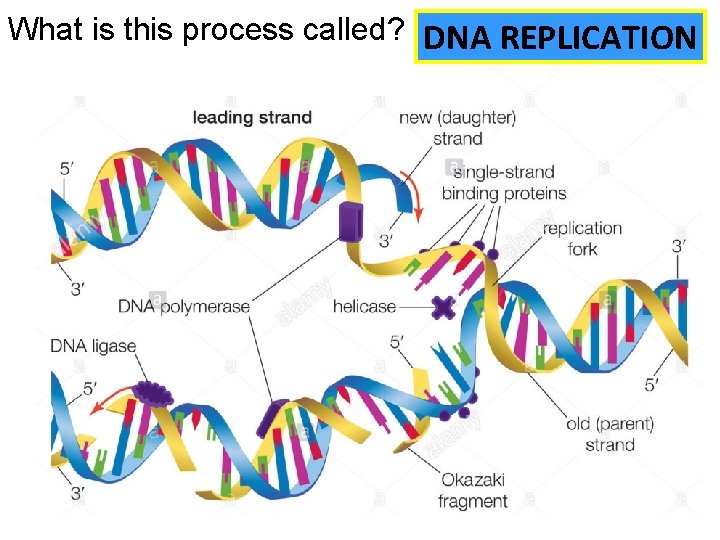
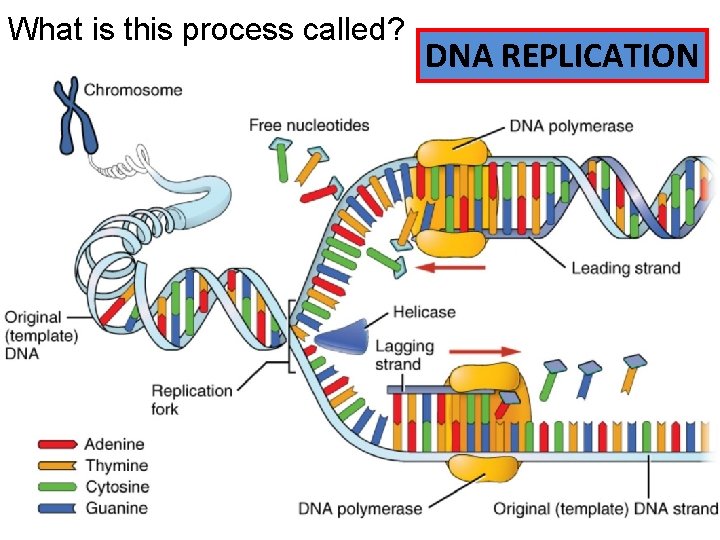
The steps in DNA replication: 1. An enzyme unzips the double helix, separating the two strands.
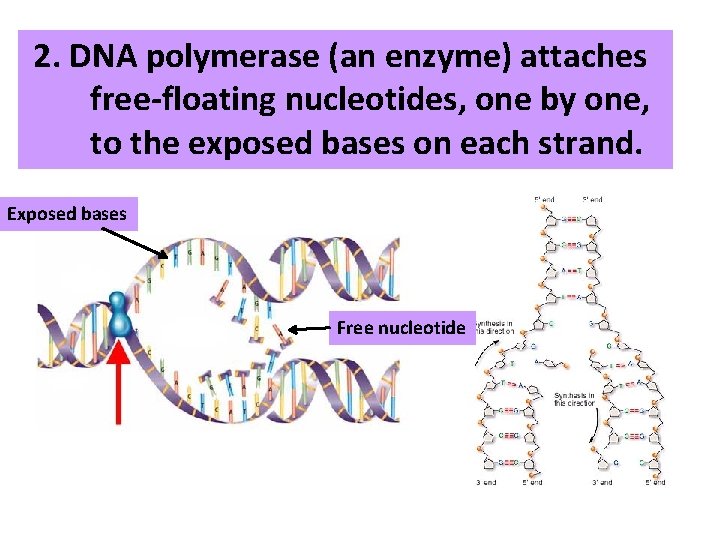
2. DNA polymerase (an enzyme) attaches free-floating nucleotides, one by one, to the exposed bases on each strand. Exposed bases Free nucleotide
One DNA 1 3. The result is two identical DNA molecules. 1 2 Two DNA
What is this process called? DNA REPLICATION
What is this process called? DNA REPLICATION
What is this process called? DNA REPLICATION
What is this process called? DNA REPLICATION
What is this process called? DNA REPLICATION