
Review Day 3 Friday May 6 th Unit

- Slides: 10
Review Day #3: Friday May 6 th Unit- #2 & #5 Macro Review Unemployment, CPI, Foreign Exchange & Balance of Payments
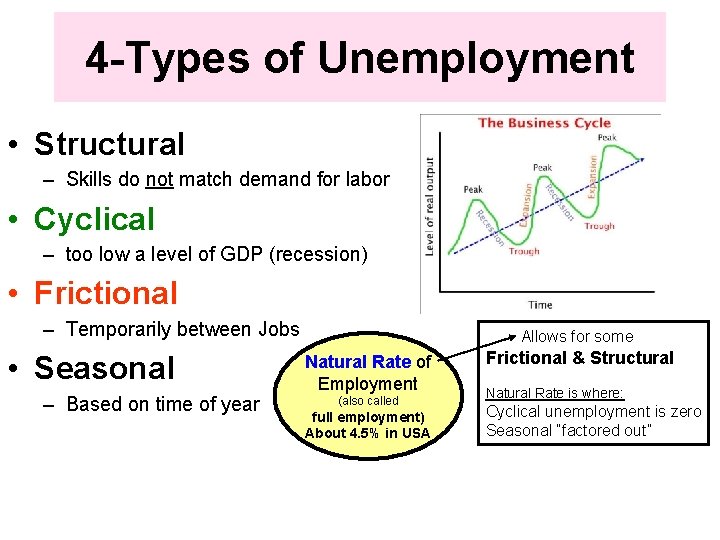
4 -Types of Unemployment • Structural – Skills do not match demand for labor • Cyclical – too low a level of GDP (recession) • Frictional – Temporarily between Jobs • Seasonal – Based on time of year Allows for some Natural Rate of Employment (also called full employment) About 4. 5% in USA Frictional & Structural Natural Rate is where: Cyclical unemployment is zero Seasonal “factored out”
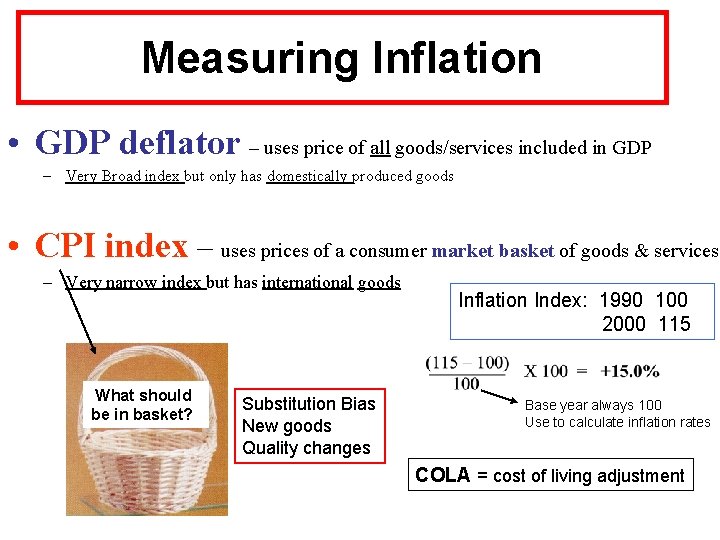
Measuring Inflation • GDP deflator – uses price of all goods/services included in GDP – Very Broad index but only has domestically produced goods • CPI index – uses prices of a consumer market basket of goods & services – Very narrow index but has international goods What should be in basket? Substitution Bias New goods Quality changes Inflation Index: 1990 100 2000 115 Base year always 100 Use to calculate inflation rates COLA = cost of living adjustment
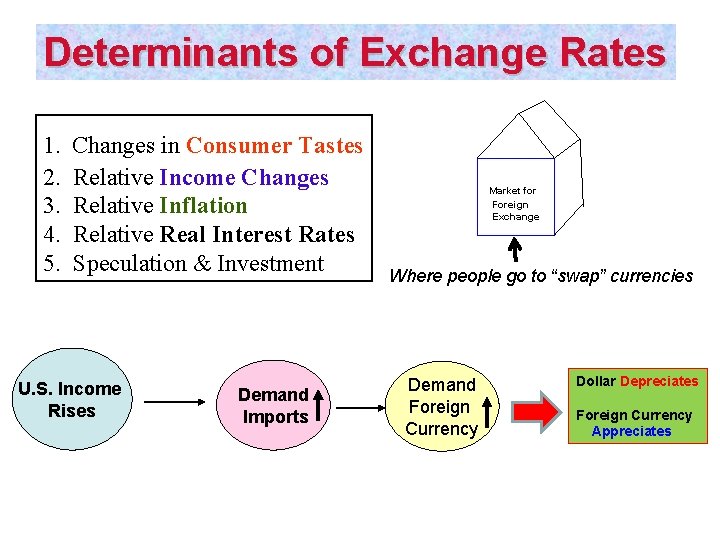
Determinants of Exchange Rates 1. 2. 3. 4. 5. Changes in Consumer Tastes Relative Income Changes Relative Inflation Relative Real Interest Rates Speculation & Investment U. S. Income Rises Demand Imports Market for Foreign Exchange Where people go to “swap” currencies Demand Foreign Currency Dollar Depreciates Foreign Currency Appreciates
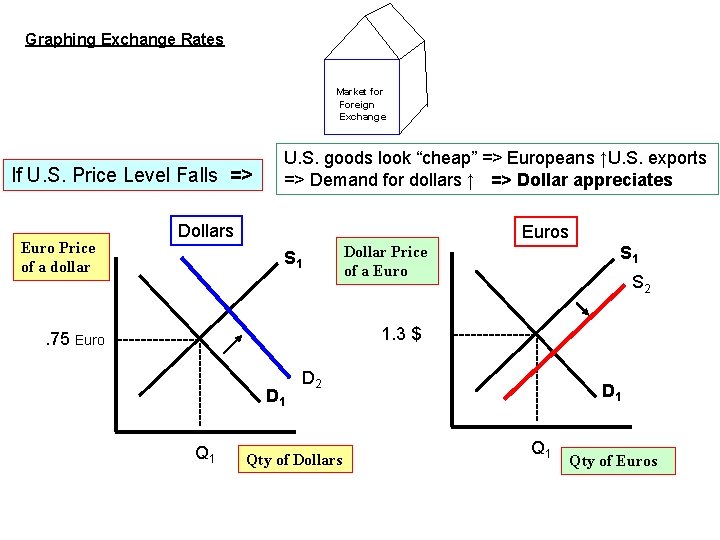
Graphing Exchange Rates Market for Foreign Exchange If U. S. Price Level Falls => Euro Price of a dollar U. S. goods look “cheap” => Europeans ↑U. S. exports => Demand for dollars ↑ => Dollar appreciates Dollars Euros S 1 ------- D 1 D 2 Qty of Dollars S 1 S 2 -------------- 1. 3 $ . 75 Euro ------- Q 1 Dollar Price of a Euro Q 1 D 1 Qty of Euros
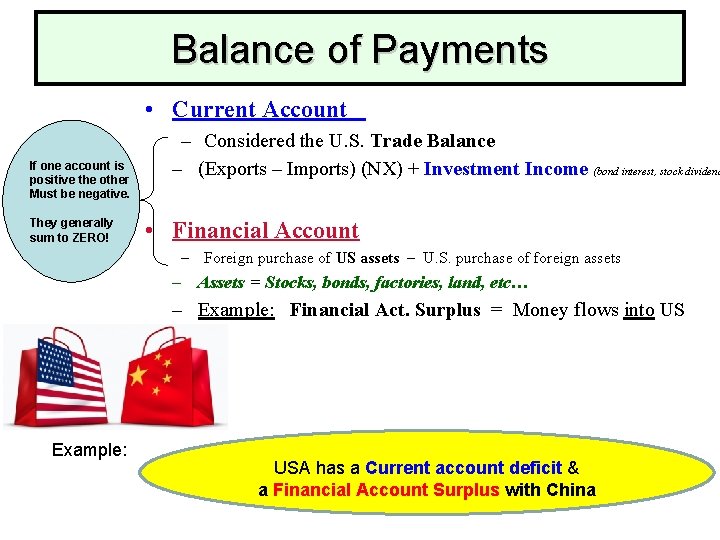
Balance of Payments • Current Account If one account is positive the other Must be negative. They generally sum to ZERO! – Considered the U. S. Trade Balance – (Exports – Imports) (NX) + Investment Income (bond interest, stock dividend • Financial Account – Foreign purchase of US assets – U. S. purchase of foreign assets – Assets = Stocks, bonds, factories, land, etc… – Example: Financial Act. Surplus = Money flows into US Example: USA has a Current account deficit & a Financial Account Surplus with China
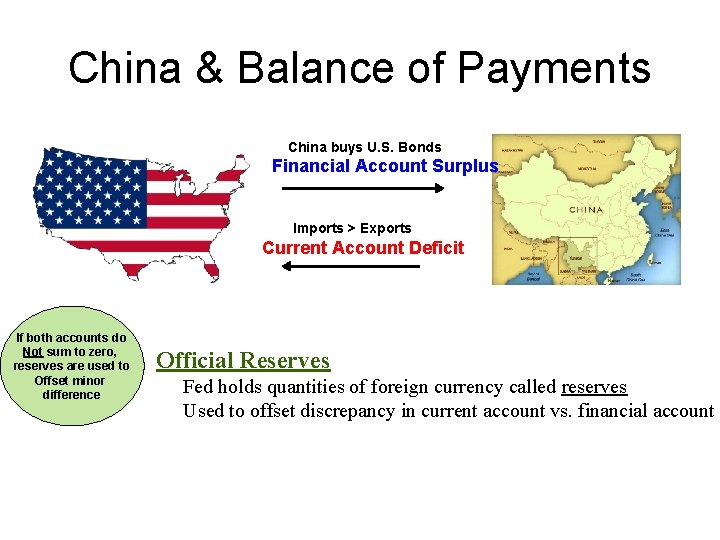
China & Balance of Payments China buys U. S. Bonds Financial Account Surplus Imports > Exports Current Account Deficit If both accounts do Not sum to zero, reserves are used to Offset minor difference Official Reserves Fed holds quantities of foreign currency called reserves Used to offset discrepancy in current account vs. financial account
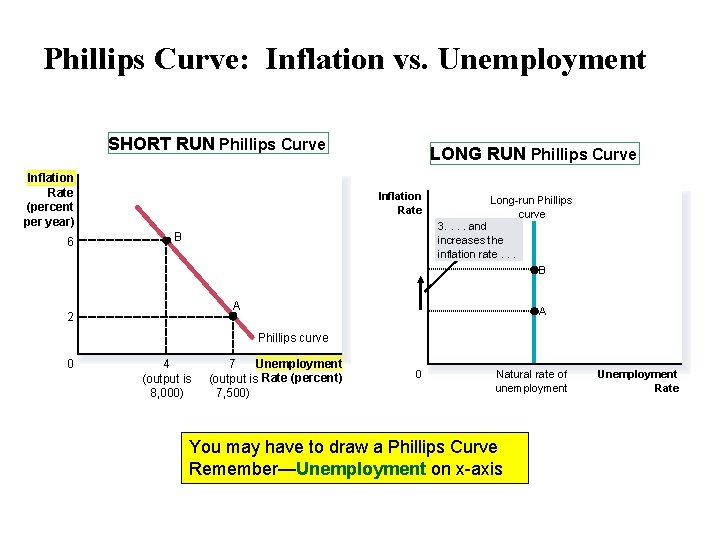
Phillips Curve: Inflation vs. Unemployment SHORT RUN Phillips Curve Inflation Rate (percent per year) 6 LONG RUN Phillips Curve Inflation Rate Long-run Phillips curve 3. . and increases the inflation rate. . . B B A 2 A Phillips curve 0 4 (output is 8, 000) Unemployment 7 (output is Rate (percent) 7, 500) 0 Natural rate of unemployment You may have to draw a Phillips Curve Remember—Unemployment on x-axis Unemployment Rate
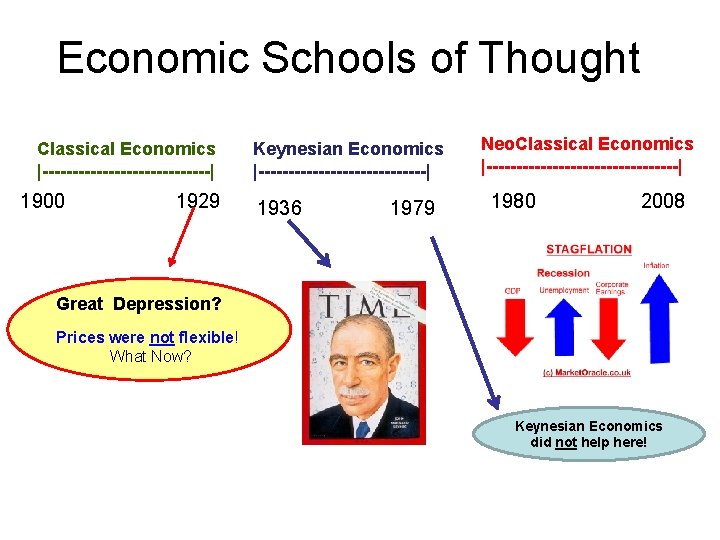
Economic Schools of Thought Classical Economics |--------------| 1900 1929 Keynesian Economics |--------------| 1936 1979 Neo. Classical Economics |----------------| 1980 2008 Great Depression? Prices were not flexible! What Now? Keynesian Economics did not help here!
Practice Test