
Review Chapter 5 The Multicultural History of American
- Slides: 5
Review - Chapter 5 The Multicultural History of American Education
Chapter 5 The Multicultural History of American Education From the Textbook (pp. 137 -180) • Central figures, major events, terms, and purposes of education for each of the 6 time periods. • History of education for Native Americans, African Americans, and women. • Laws related to the education of minorities and women.
Chapter 5 The Multicultural History of American Education From Classes (3 -7) • Cultural competence • Stereotypes Maslow’s Hierarchy of Needs • Stereotype threat (Aronson) • Multiculturalism Nieto’s definition Shallow versus deep • Horace Mann • John Dewey and Progressivism • Paulo Freire • Other important figures
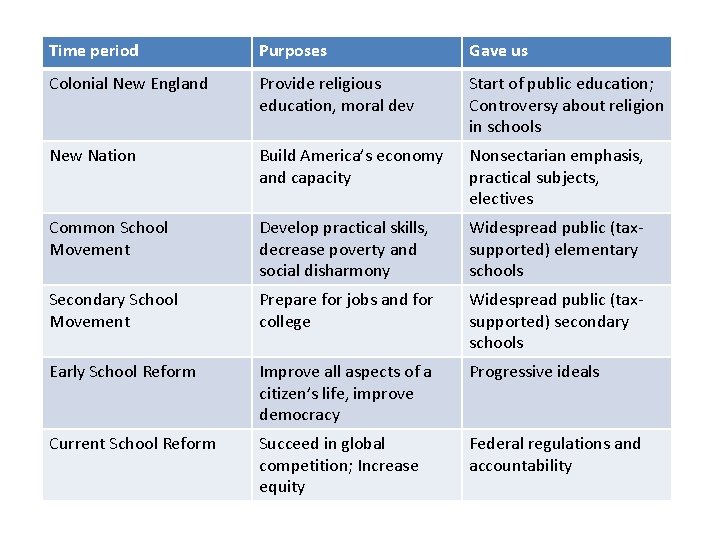
Chapter 5 History Visualization Research suggests that many students – particularly those from poverty – remember information better when it is visualized. Work with a partner to create a visual timeline showing the way in which the purposes of American education have changed over time and what educational legacies have handed down to us. A summary is on the next slide.
Time period Purposes Gave us Colonial New England Provide religious education, moral dev Start of public education; Controversy about religion in schools New Nation Build America’s economy and capacity Nonsectarian emphasis, practical subjects, electives Common School Movement Develop practical skills, decrease poverty and social disharmony Widespread public (taxsupported) elementary schools Secondary School Movement Prepare for jobs and for college Widespread public (taxsupported) secondary schools Early School Reform Improve all aspects of a citizen’s life, improve democracy Progressive ideals Current School Reform Succeed in global competition; Increase equity Federal regulations and accountability