
Review 2 Cellular Structure Review 2 Cellular Structure
- Slides: 31
Review #2 - Cellular Structure
Review #2 - Cellular Structure • Eukaryotic vs. Prokaryotic – Membrane bound organelles – Size • Plant vs. Animal – Shape – cell wall – Plastids • chloroplasts – centrioles
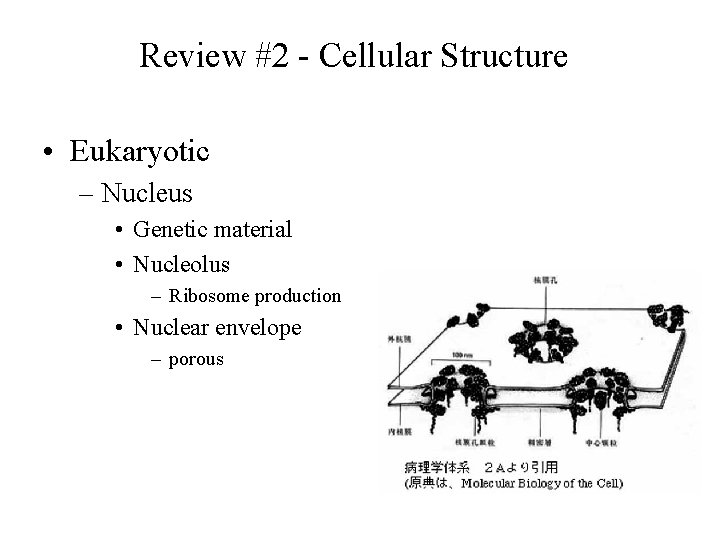
Review #2 - Cellular Structure • Eukaryotic – Nucleus • Genetic material • Nucleolus – Ribosome production • Nuclear envelope – porous
Review #2 - Cellular Structure • Cytoplasm – cell’s “interstitial” fluid – Endomembrane system • Smooth endoplasmic reticulum – Lipid production, detoxification, carb metabolism (glycolysis) • Rough endoplasmic reticulum – Protein production, membrane production • Golgi apparatus – Protein export (cis/trans) • Specialized membranes – sarcoplasmic reticulum – Calcium storage in muscle
Review #2 - Cellular Structure • Cytoplasm – cells “interstitial” fluid – Cytoskeleton • Microtubules – Tubulin, dynein – movement of organelles, structure, cilia, flagella • Micro filaments – Actin – cellular movement, streaming, cytokinesis • Intermediate filaments – Keratin – structure (cell shape)/strength
Review #2 - Cellular Structure • Cytoplasm – cells “interstitial” fluid – Other Organelles • Ribosome – Free…. – Bound …. • Lysozome – Tay Sacchs – Contains…. • Mitochondria (most in. . ) • Chloroplast (most in. . ) • Vacuole – Central vacuole in… – Contractile vacuole in …
Review #2 - Cellular Structure • Membrane Structure – Orientation of phospholipids – fluid mosaic model – Membrane proteins – function/AA composition • Peripheral - functions • Integral (Integrins) - functions – Glycoproteins - oligosaccharide/proteins • MHC function to… – Junctions • • Gap junctions Desmosomes Tight junctions Plasmodesmata
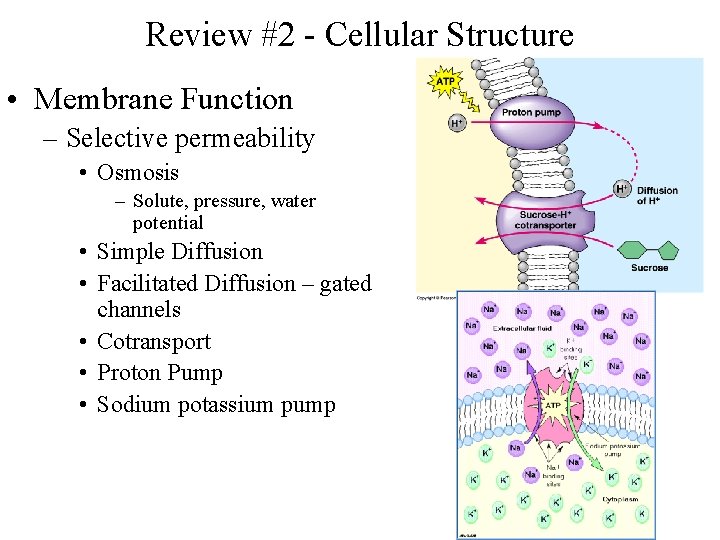
Review #2 - Cellular Structure • Membrane Function – Selective permeability • Osmosis – Solute, pressure, water potential • Simple Diffusion • Facilitated Diffusion – gated channels • Cotransport • Proton Pump • Sodium potassium pump
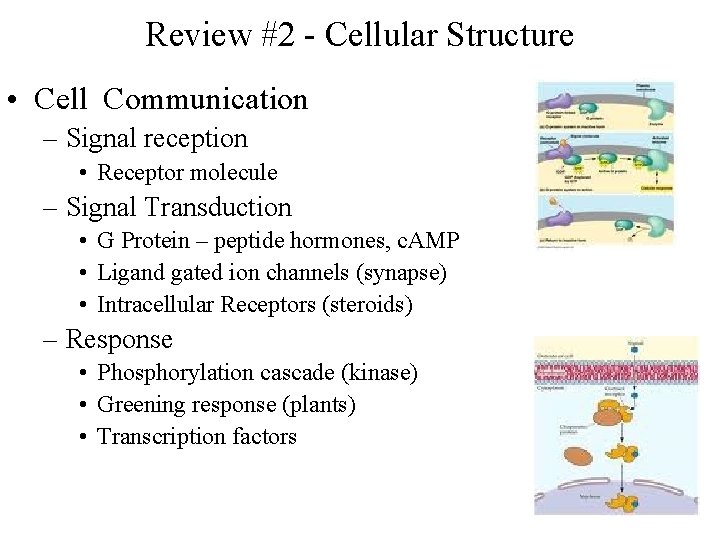
Review #2 - Cellular Structure • Cell Communication – Signal reception • Receptor molecule – Signal Transduction • G Protein – peptide hormones, c. AMP • Ligand gated ion channels (synapse) • Intracellular Receptors (steroids) – Response • Phosphorylation cascade (kinase) • Greening response (plants) • Transcription factors
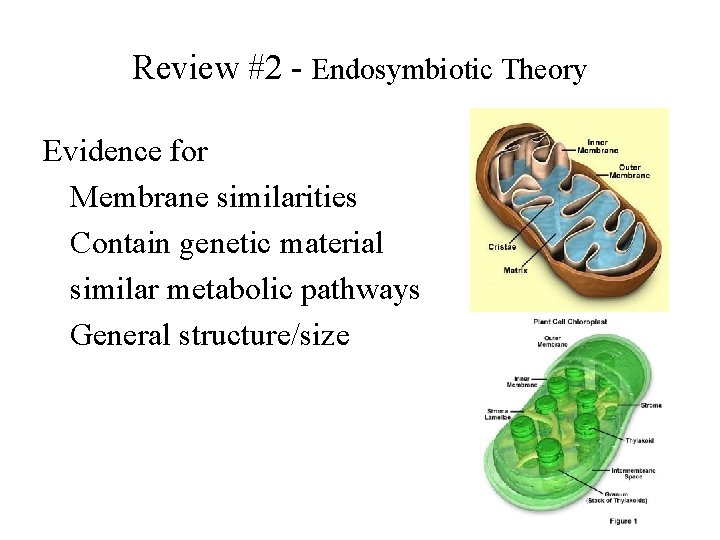
Review #2 - Endosymbiotic Theory Evidence for Membrane similarities Contain genetic material similar metabolic pathways General structure/size
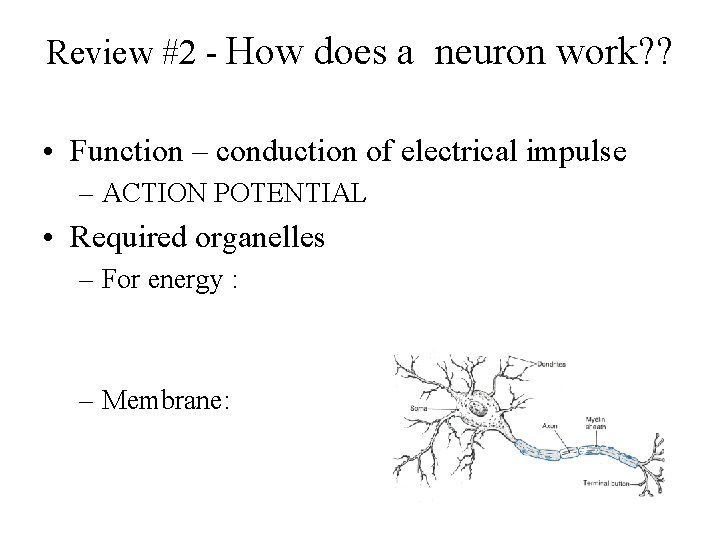
Review #2 - How does a neuron work? ? • Function – conduction of electrical impulse – ACTION POTENTIAL • Required organelles – For energy : – Membrane:
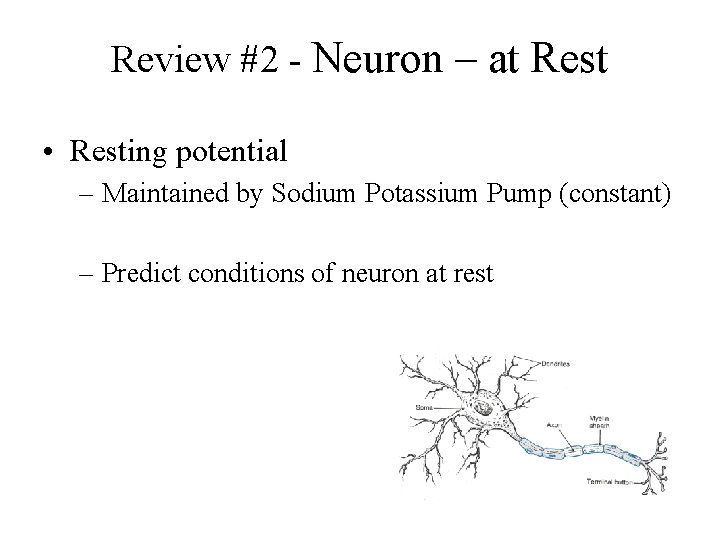
Review #2 - Neuron – at Rest • Resting potential – Maintained by Sodium Potassium Pump (constant) – Predict conditions of neuron at rest
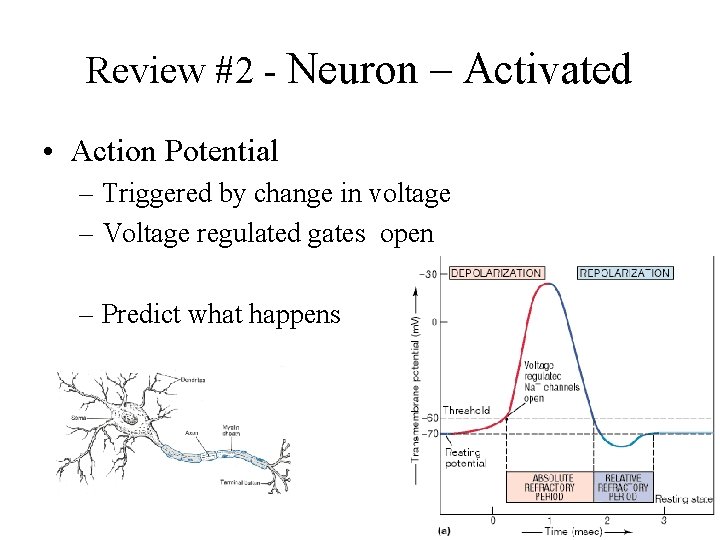
Review #2 - Neuron – Activated • Action Potential – Triggered by change in voltage – Voltage regulated gates open – Predict what happens
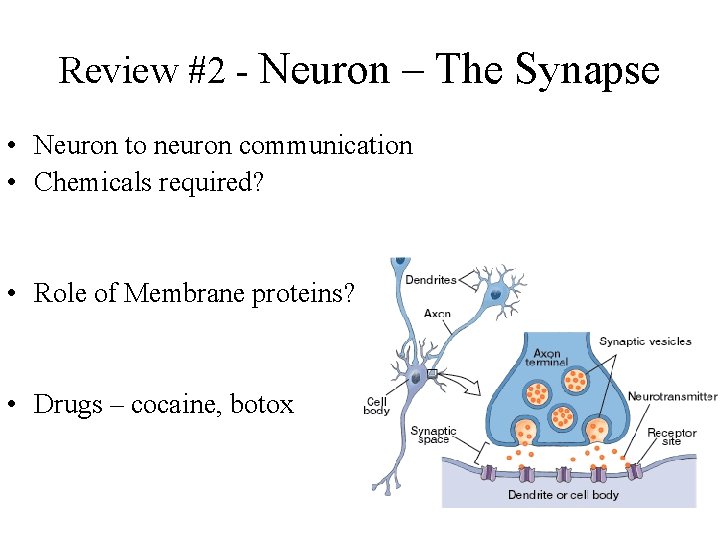
Review #2 - Neuron – The Synapse • Neuron to neuron communication • Chemicals required? • Role of Membrane proteins? • Drugs – cocaine, botox
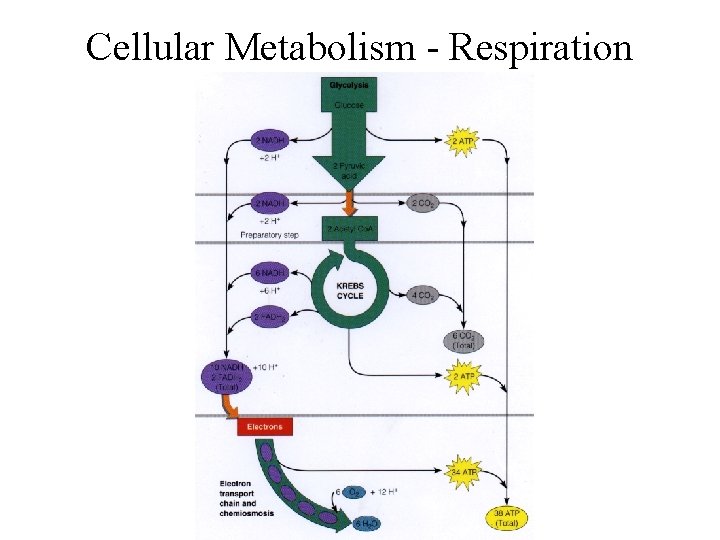
Cellular Metabolism - Respiration
Cellular Metabolism - Respiration • Random, electrically stimulating Info; – Oxidation reduction reactions • Oxidation loose electrons • Reduction gain electrons • If hard to recognize follow the H atom (reduction) NAD+ NADH • Realize electrons moving to more electrongative atom releases energy… – Substrate Level Phosphorylation – Oxidative Phosphorylation
Cellular Metabolism - Respiration • Catabolic pathways – exergonic, hydrolysis • Anabolic pathways – endergonic, condensation • Respiration – catabolic – Aerobic – most eukaryotes, some prokaryotes • Krebs cycle • Electron transport chain – Anaerobic – most prokaryotes, some eukaryotes • Glycolysis • Fermentation – Alcoholic – Lactic acid
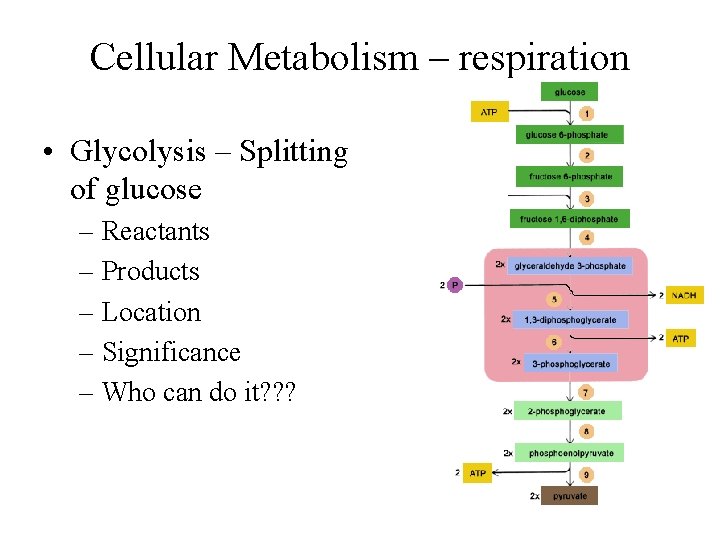
Cellular Metabolism – respiration • Glycolysis – Splitting of glucose – Reactants – Products – Location – Significance – Who can do it? ? ?
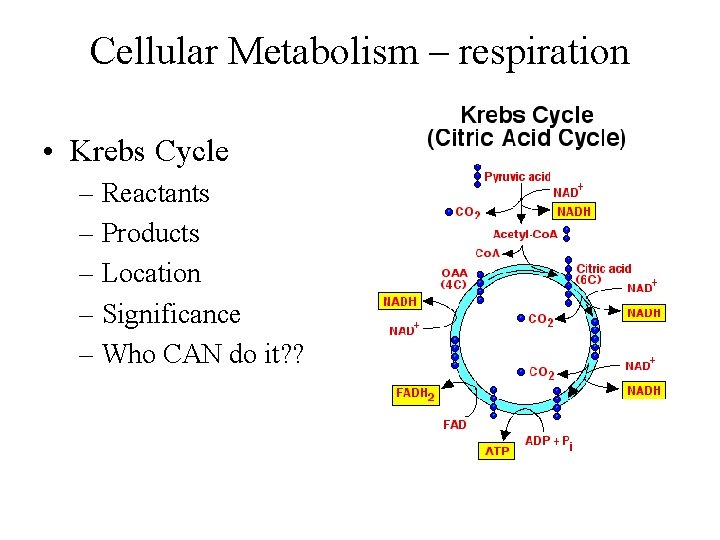
Cellular Metabolism – respiration • Krebs Cycle – Reactants – Products – Location – Significance – Who CAN do it? ?
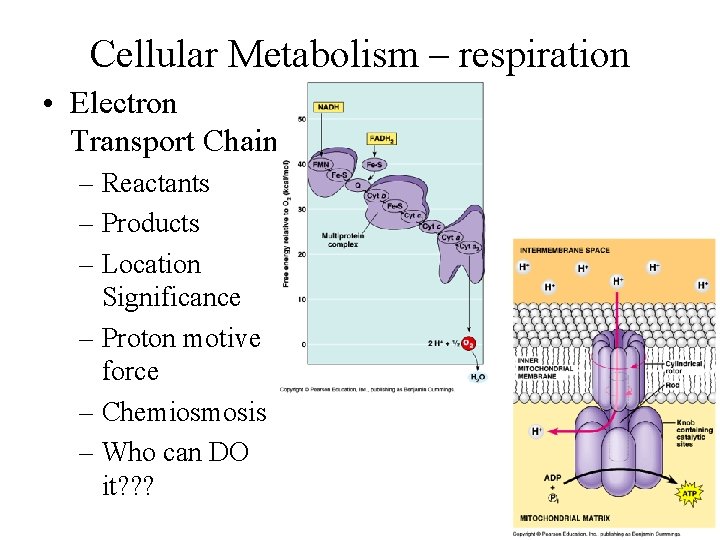
Cellular Metabolism – respiration • Electron Transport Chain – Reactants – Products – Location Significance – Proton motive force – Chemiosmosis – Who can DO it? ? ?
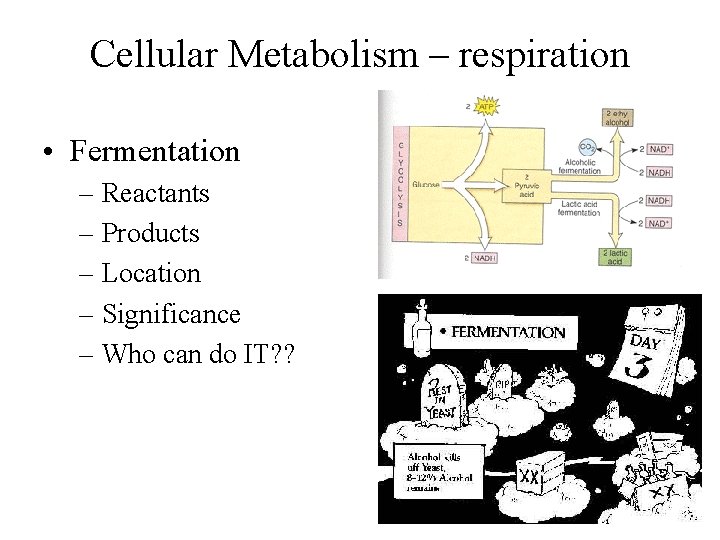
Cellular Metabolism – respiration • Fermentation – Reactants – Products – Location – Significance – Who can do IT? ?
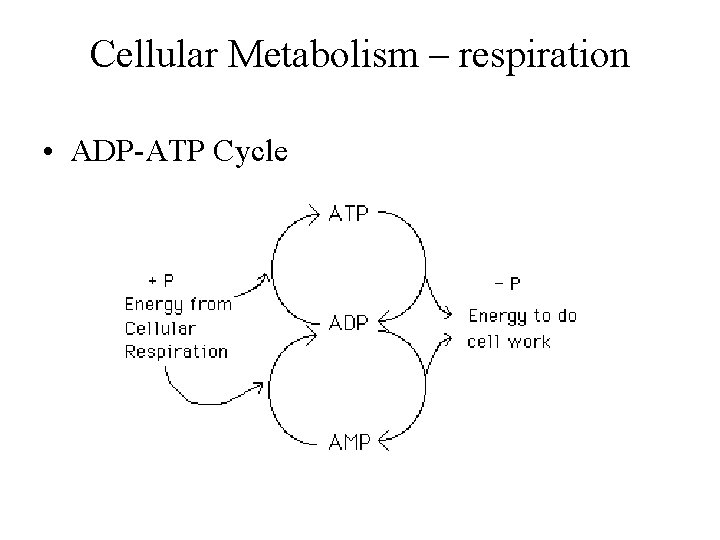
Cellular Metabolism – respiration • ADP-ATP Cycle
Cellular Metabolism – respiration • Regulation of Metabolic Rate – Phosphofructokinase (PPK) • ATP, Citrate inhibit • AMP stimulates – Insulin – Uptake of blood glucose by liver/muscles – Fatty acid production (adipose cells) – Glucagon – Liberation of glycogen glucose from liver/muscle – Increased beta oxidation
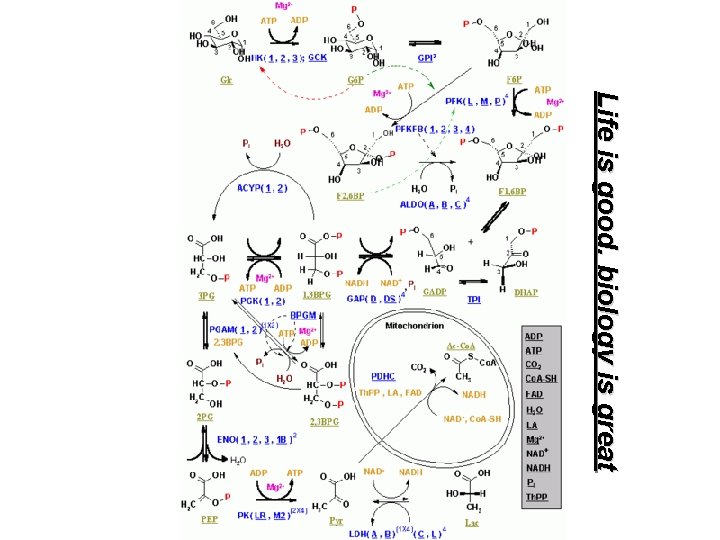
Life is good, biology is great
Cellular Metabolism – respiration • Beta Oxidation – Realize…TONS of ATP • Ex; 18 carbon chain – Every two carbons = 1 NADH, 1 FADH 2, 1 ATP, 1 Acetylco. A » 1 Acetylco. A=3 NADH, 1 FADH 2, 1 ATP » 1 NADH=3 ATP » 1 FADH 2=2 ATP » Yikes!, its tough to “burn” off fat!
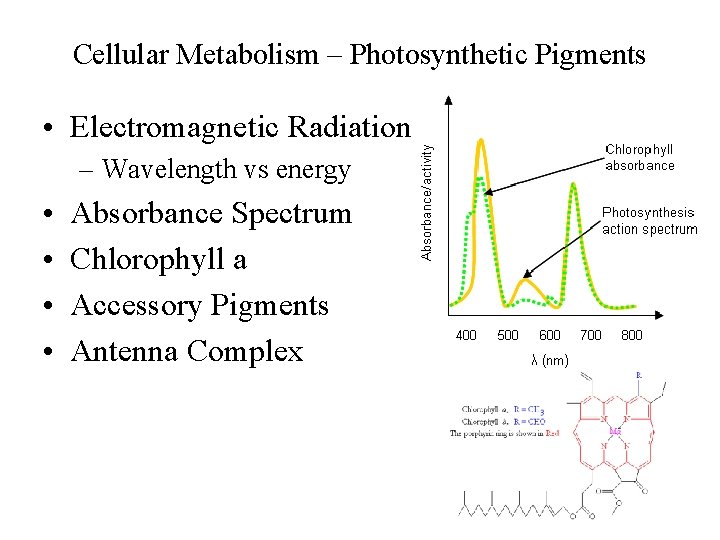
Cellular Metabolism – Photosynthetic Pigments • Electromagnetic Radiation – Wavelength vs energy • • Absorbance Spectrum Chlorophyll a Accessory Pigments Antenna Complex
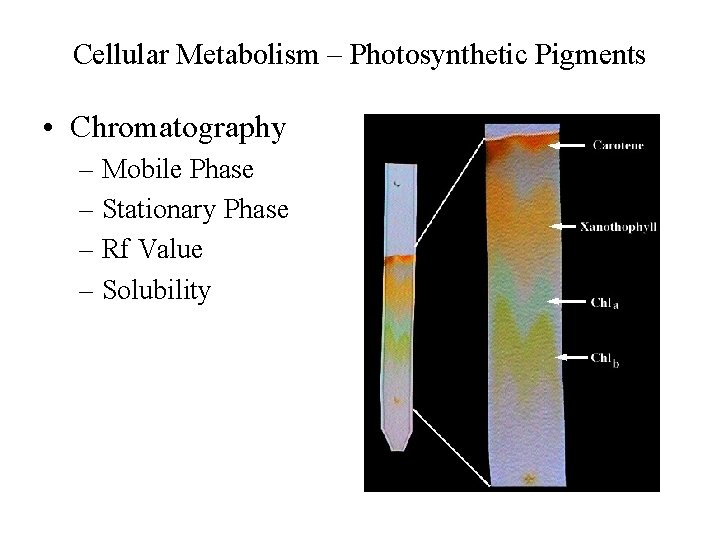
Cellular Metabolism – Photosynthetic Pigments • Chromatography – Mobile Phase – Stationary Phase – Rf Value – Solubility
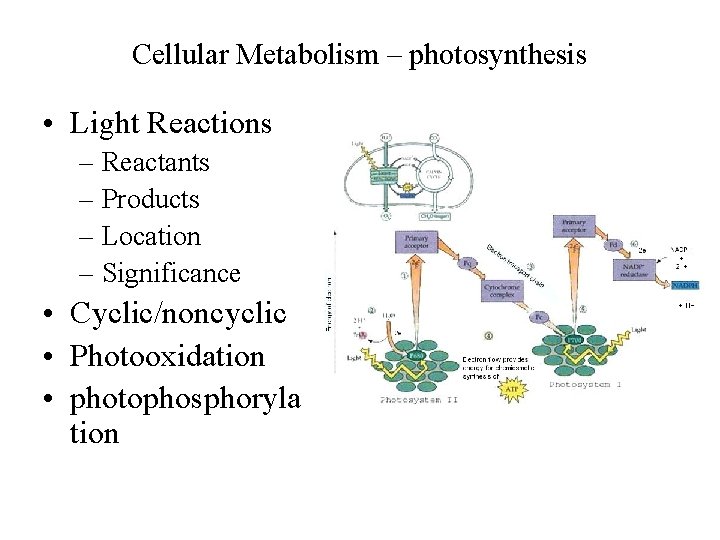
Cellular Metabolism – photosynthesis • Light Reactions – Reactants – Products – Location – Significance • Cyclic/noncyclic • Photooxidation • photophosphoryla tion
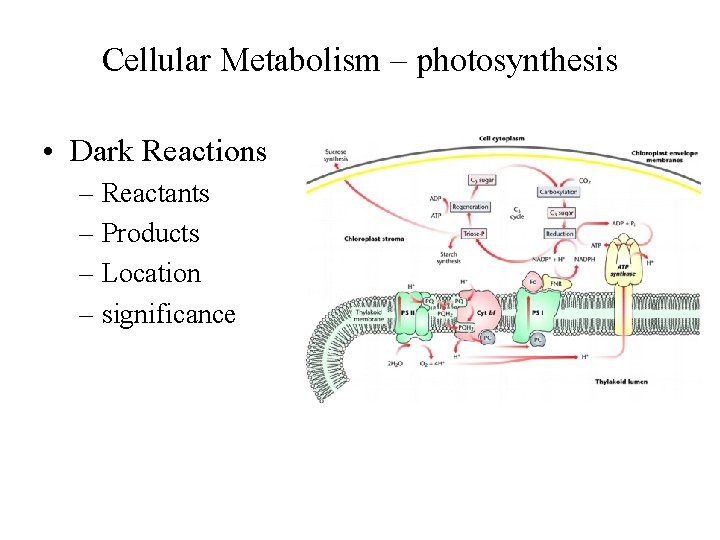
Cellular Metabolism – photosynthesis • Dark Reactions – Reactants – Products – Location – significance
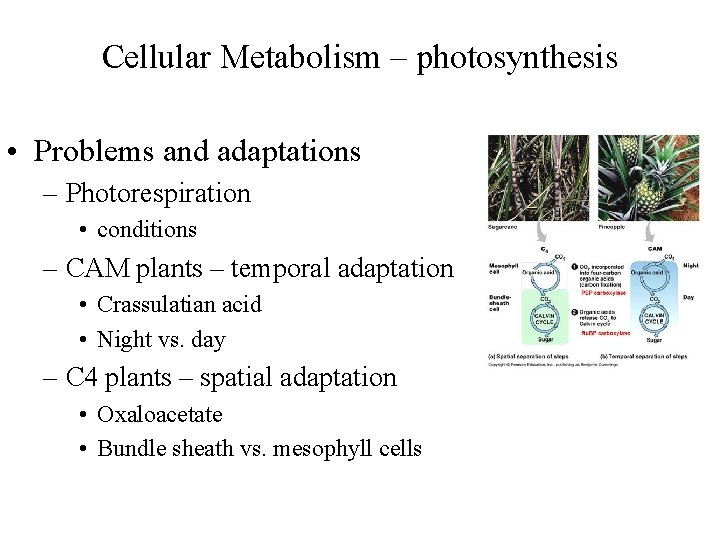
Cellular Metabolism – photosynthesis • Problems and adaptations – Photorespiration • conditions – CAM plants – temporal adaptation • Crassulatian acid • Night vs. day – C 4 plants – spatial adaptation • Oxaloacetate • Bundle sheath vs. mesophyll cells
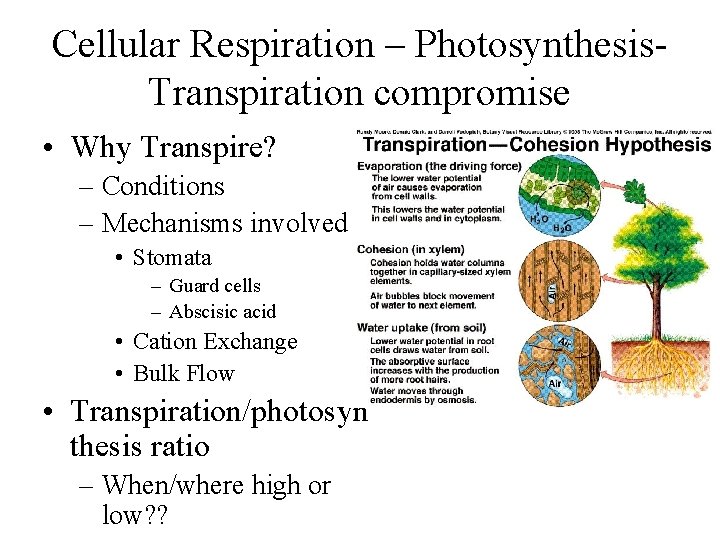
Cellular Respiration – Photosynthesis. Transpiration compromise • Why Transpire? – Conditions – Mechanisms involved • Stomata – Guard cells – Abscisic acid • Cation Exchange • Bulk Flow • Transpiration/photosyn thesis ratio – When/where high or low? ?