
Reversing Species Extinction By Mammalian Cloning HALEY KUHN
Reversing Species Extinction By Mammalian Cloning HALEY KUHN PBIO 4500 SEPTEMBER 30 TH, 2017

The Loss of Biodiversity 801 extinct species 3, 879 critically endangered species Click to add text 5, 689 endangered species Graph adapted from IUCN data presented in Coballos et. al. 2015
Animal cloning can increase biodiversity Interspecies Somatic Cell Nuclear Transfer (i. SCNT) Cloning Closely related domestic animal species Example studies: v Domestic cat oocyte cytoplasm supports development of African wild cat (2004) v Domestic cattle oocyte cytoplasm supported proliferation of a gaur (2012) v Canine oocyte cytoplasm supports development of endangered wolves (2007) v Mouflon was produced using a goat as a surrogate mother (2001)

Cloning of the Bactrian Camel Credit: Nisar Ahmad Wany, Binoy S. Vettical, Seung B. Hong Reproductive Biotechnology Center, Dubai, UAE Camelus dromedarius Camelus bactrianus 8 th most endangered mammal Donated skin fibroblast cells Was successfully cloned Oocyte donor / surrogate mother
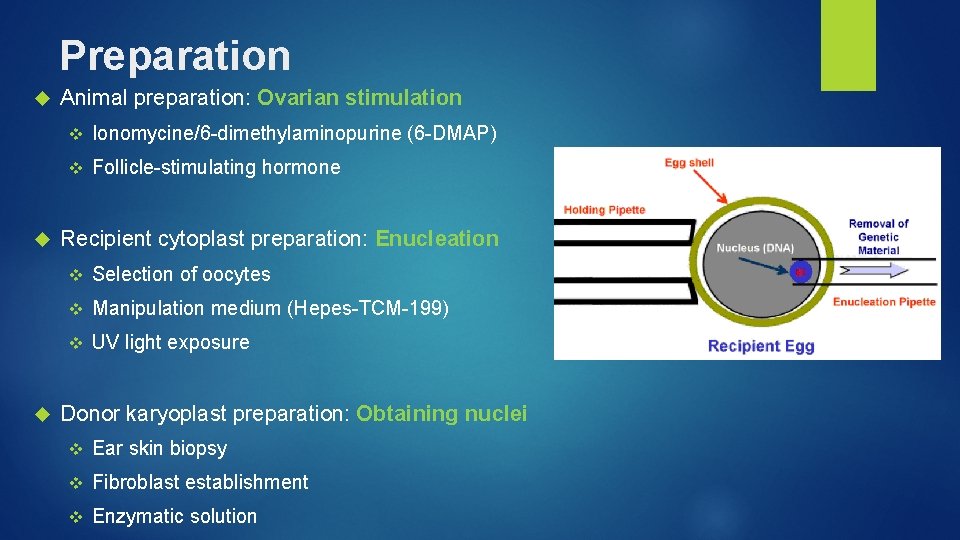
Preparation Animal preparation: Ovarian stimulation v Ionomycine/6 -dimethylaminopurine (6 -DMAP) v Follicle-stimulating hormone Recipient cytoplast preparation: Enucleation v Selection of oocytes v Manipulation medium (Hepes-TCM-199) v UV light exposure Donor karyoplast preparation: Obtaining nuclei v Ear skin biopsy v Fibroblast establishment v Enzymatic solution
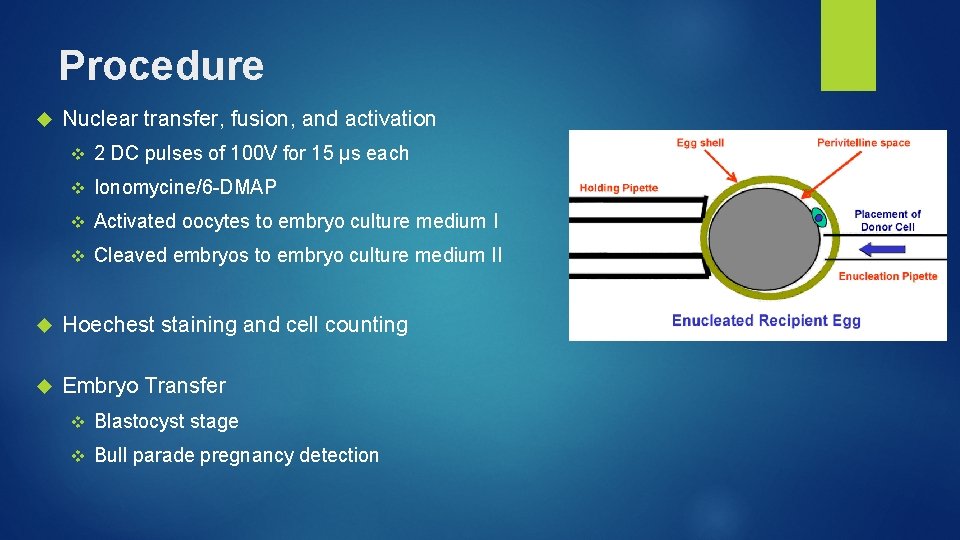
Procedure Nuclear transfer, fusion, and activation v 2 DC pulses of 100 V for 15 μs each v Ionomycine/6 -DMAP v Activated oocytes to embryo culture medium I v Cleaved embryos to embryo culture medium II Hoechest staining and cell counting Embryo Transfer v Blastocyst stage v Bull parade pregnancy detection
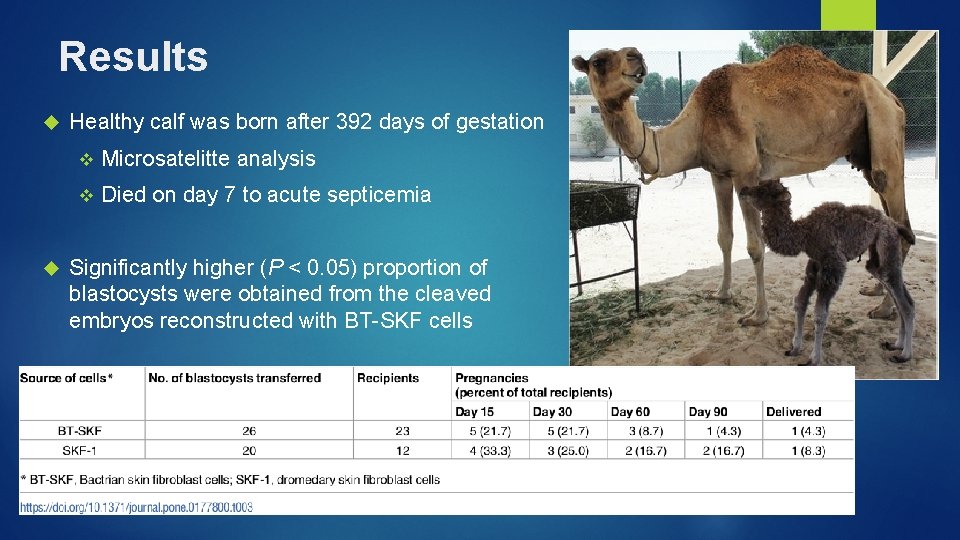
Results Healthy calf was born after 392 days of gestation v Microsatelitte analysis v Died on day 7 to acute septicemia Significantly higher (P < 0. 05) proportion of blastocysts were obtained from the cleaved embryos reconstructed with BT-SKF cells

Cloning of the Bucardo Capra pyrenaica Capra aegagrus hircus 1 of 4 subspecies of the Spanish ibex Last bucardo died in 2000 Cells were obtained by skin biopsy, multiplied, and kept frozen in liquid nitrogen First extinct subspecies to be successfully cloned
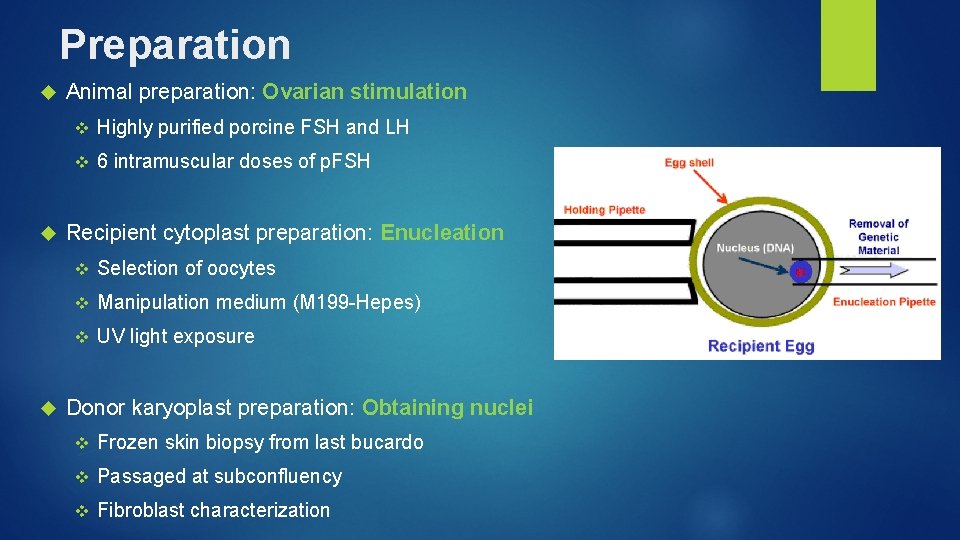
Preparation Animal preparation: Ovarian stimulation v Highly purified porcine FSH and LH v 6 intramuscular doses of p. FSH Recipient cytoplast preparation: Enucleation v Selection of oocytes v Manipulation medium (M 199 -Hepes) v UV light exposure Donor karyoplast preparation: Obtaining nuclei v Frozen skin biopsy from last bucardo v Passaged at subconfluency v Fibroblast characterization
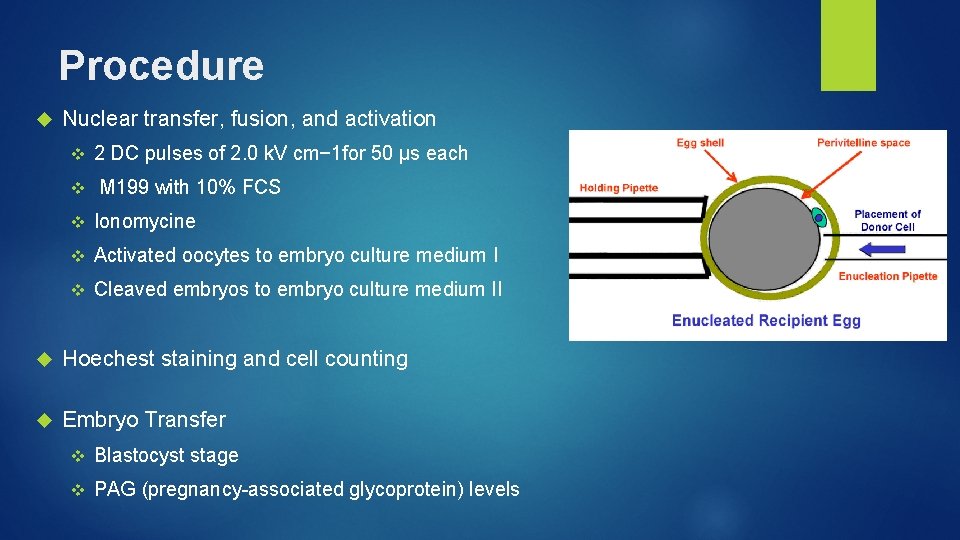
Procedure Nuclear transfer, fusion, and activation v 2 DC pulses of 2. 0 k. V cm− 1 for 50 μs each v M 199 with 10% FCS v Ionomycine v Activated oocytes to embryo culture medium I v Cleaved embryos to embryo culture medium II Hoechest staining and cell counting Embryo Transfer v Blastocyst stage v PAG (pregnancy-associated glycoprotein) levels
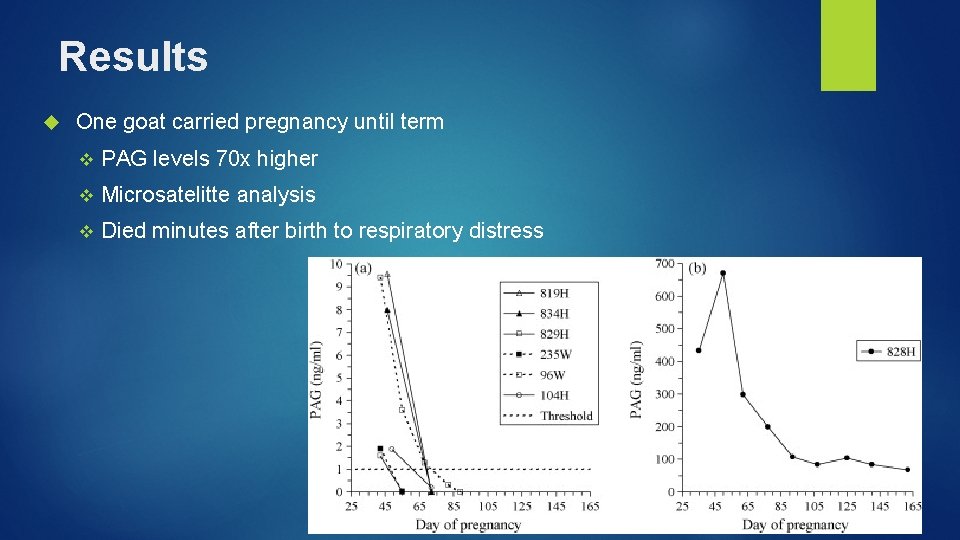
Results One goat carried pregnancy until term v PAG levels 70 x higher v Microsatelitte analysis v Died minutes after birth to respiratory distress
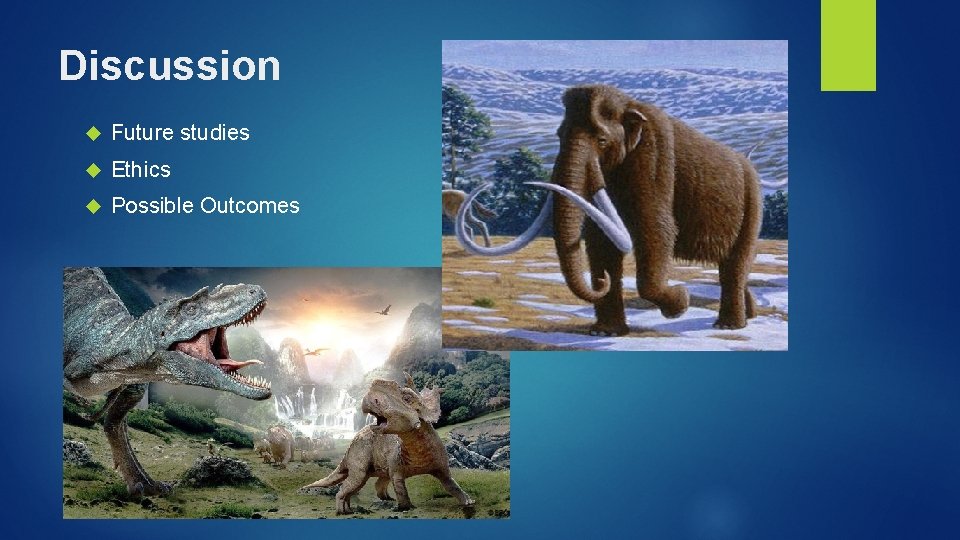
Discussion Future studies Ethics Possible Outcomes
Cited Sources Folch, J. et al. 2009. "First birth of an animal from an extinct subspecies (Capra pyrenaica) by cloning. " Theriogenology, Volume 71, Issue 6, pp. 1026 – 1034. Wani, Nisar Ahmad, et al. 2017. "First Cloned Bactrian Camel (Camelus Bactrianus) Calf Produced by Interspecies Somatic Cell Nuclear Transfer: A Step Towards Preserving the Critically Endangered Wild Bactrian Camels. " Plos ONE, Volume 12, Issue 5, pp. 1 -11. Manske, Jennifer. “Cloning Endangered Species. ” Good For 8, 2001, webphysics. iupui. edu/webscience/bio_archive/goodfor 8. html. (Slides 5, 6, 9, 10 Pictures)
- Slides: 13