
Reversible datahiding in encrypted images by redundant space
Reversible data-hiding in encrypted images by redundant space transfer Source: Information Sciences, Volumes 433– 434, April 2018, Pages 188 -203 Authors: Zi-Long Liu, Chi-Man Pun Speaker: Guanlong Li Date: 6/6/2019 1
Outline • Introduction • Related Works • Arnold transform • Proposed Scheme • Experimental Results • Conclusions 2
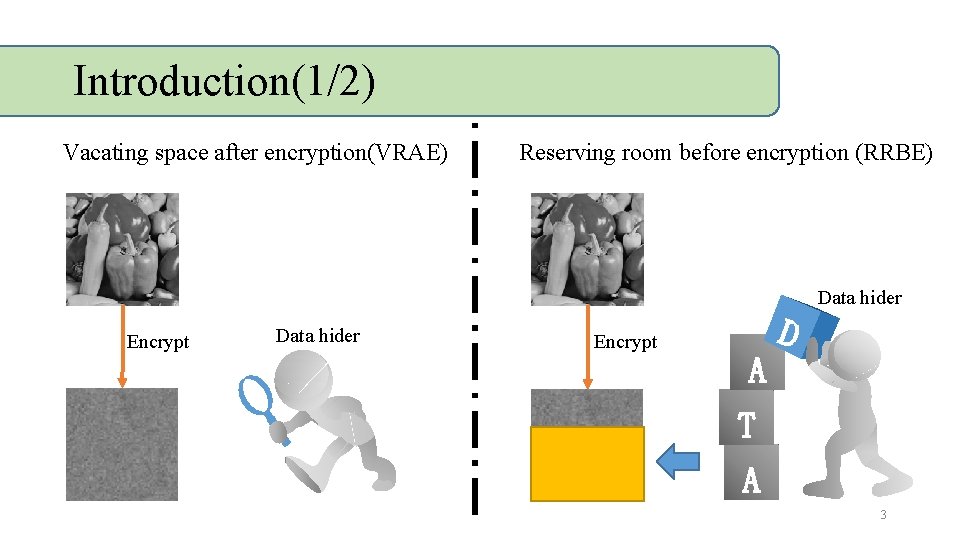
Introduction(1/2) Vacating space after encryption(VRAE) Reserving room before encryption (RRBE) Data hider Encrypt D A T A 3
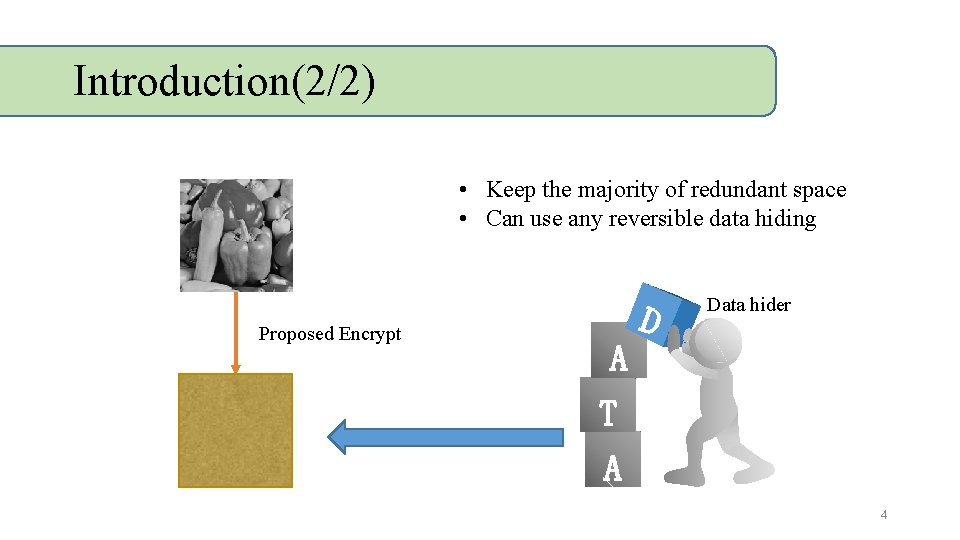
Introduction(2/2) • Keep the majority of redundant space • Can use any reversible data hiding Proposed Encrypt D Data hider A T A 4
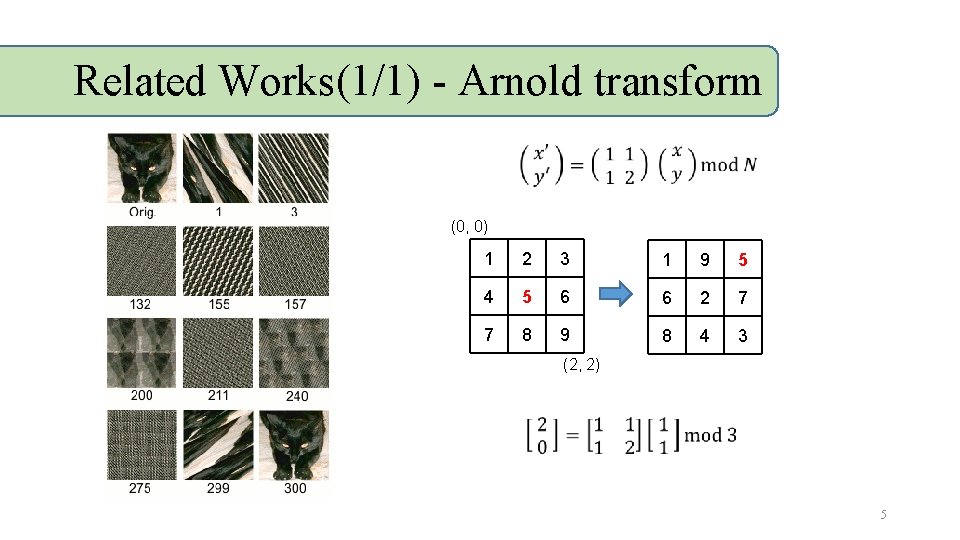
Related Works(1/1) - Arnold transform (0, 0) 1 2 3 1 9 5 4 5 6 6 2 7 7 8 9 8 4 3 (2, 2) 5
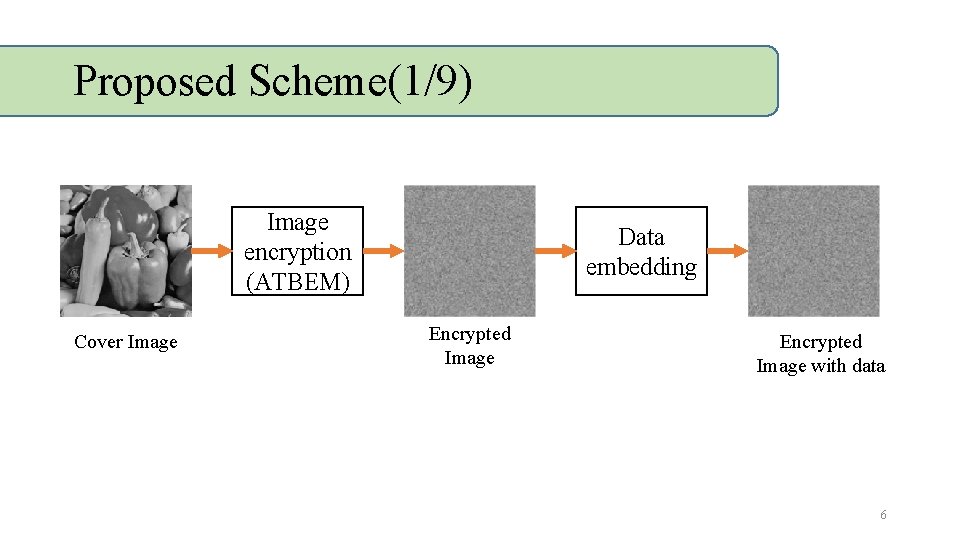
Proposed Scheme(1/9) Image encryption (ATBEM) Cover Image Data embedding Encrypted Image with data 6
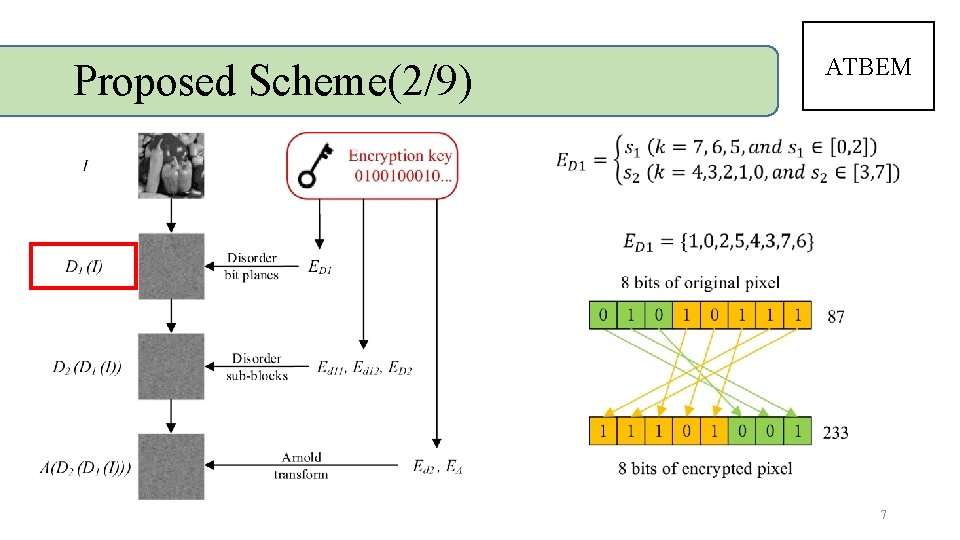
Proposed Scheme(2/9) ATBEM 7
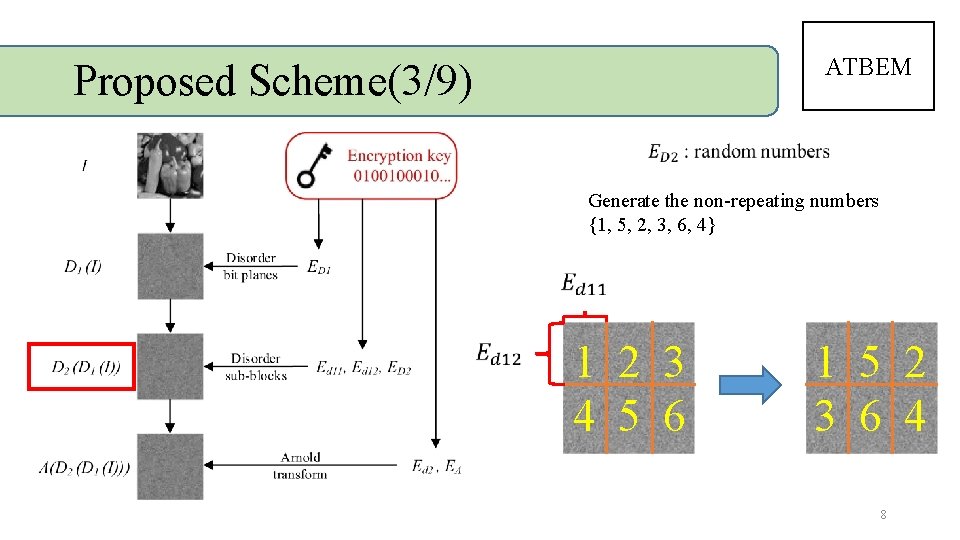
ATBEM Proposed Scheme(3/9) Generate the non-repeating numbers {1, 5, 2, 3, 6, 4} 1 2 3 4 5 6 1 5 2 3 6 4 8
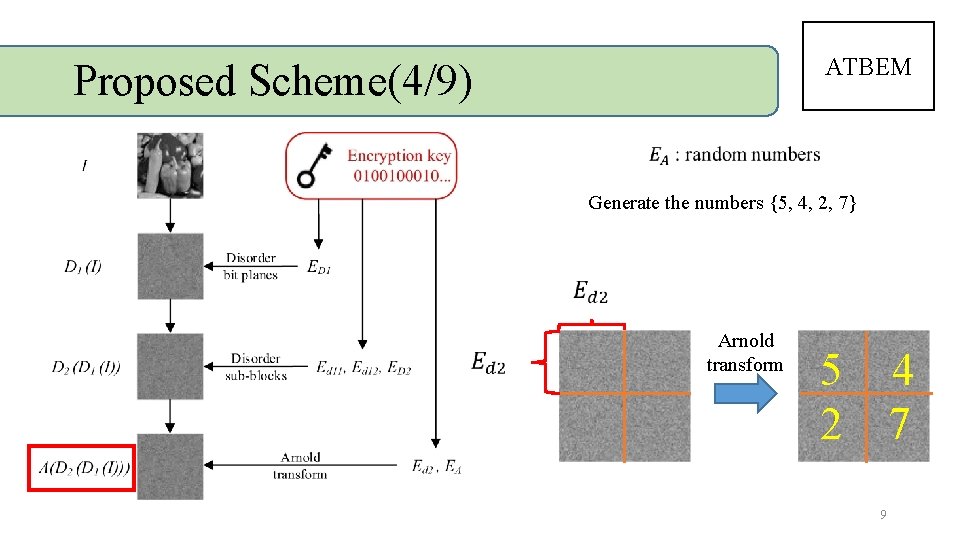
ATBEM Proposed Scheme(4/9) Generate the numbers {5, 4, 2, 7} Arnold transform 5 4 2 7 9
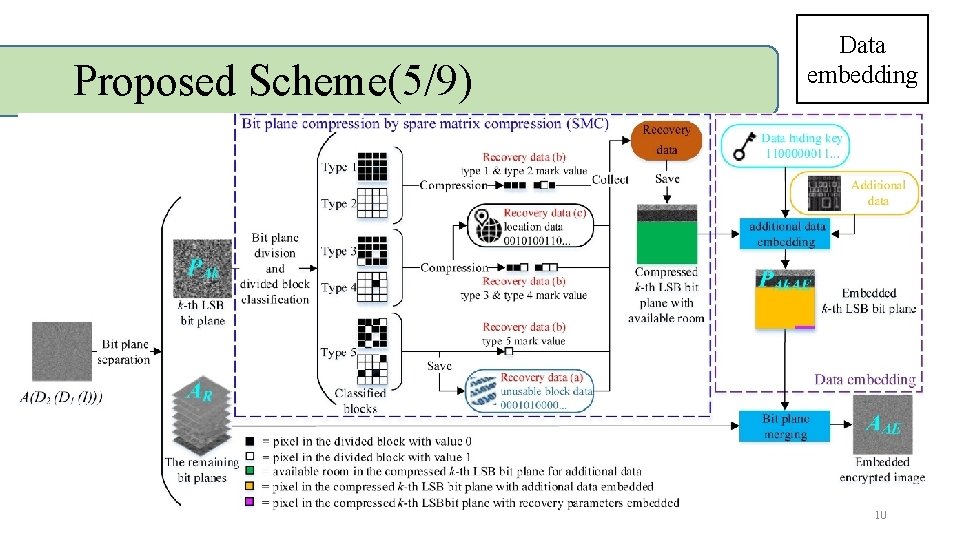
Proposed Scheme(5/9) Data embedding 10
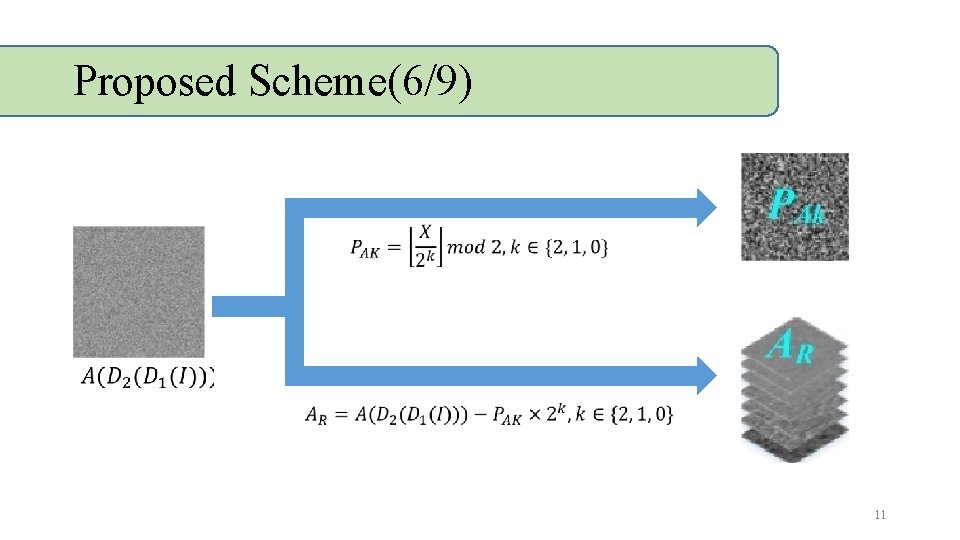
Proposed Scheme(6/9) 11
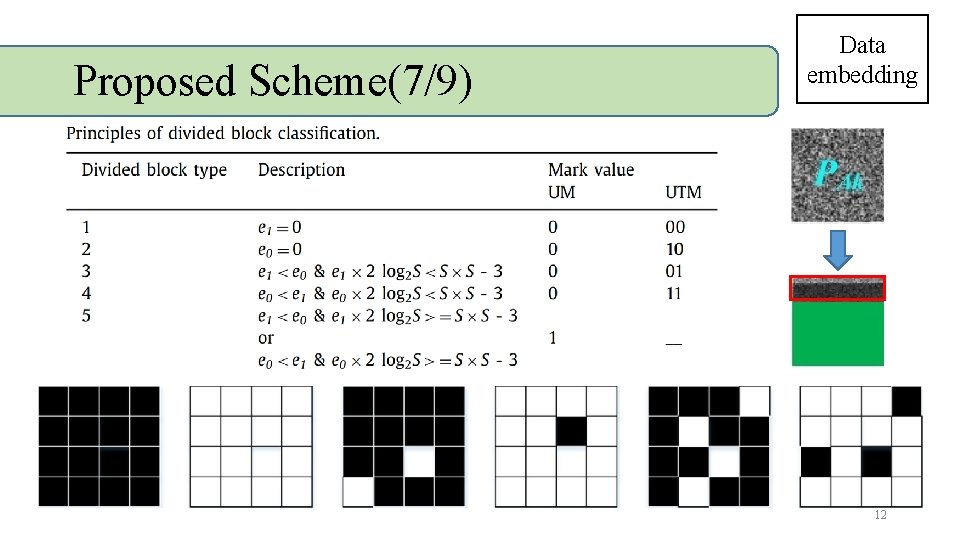
Proposed Scheme(7/9) Data embedding 12
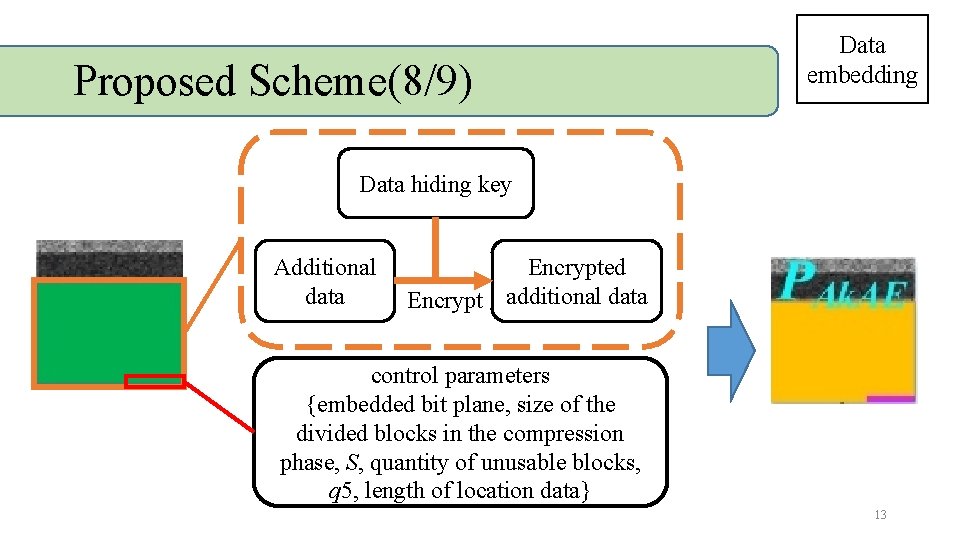
Proposed Scheme(8/9) Data embedding Data hiding key Additional data Encrypted Encrypt additional data control parameters {embedded bit plane, size of the divided blocks in the compression phase, S, quantity of unusable blocks, q 5, length of location data} 13
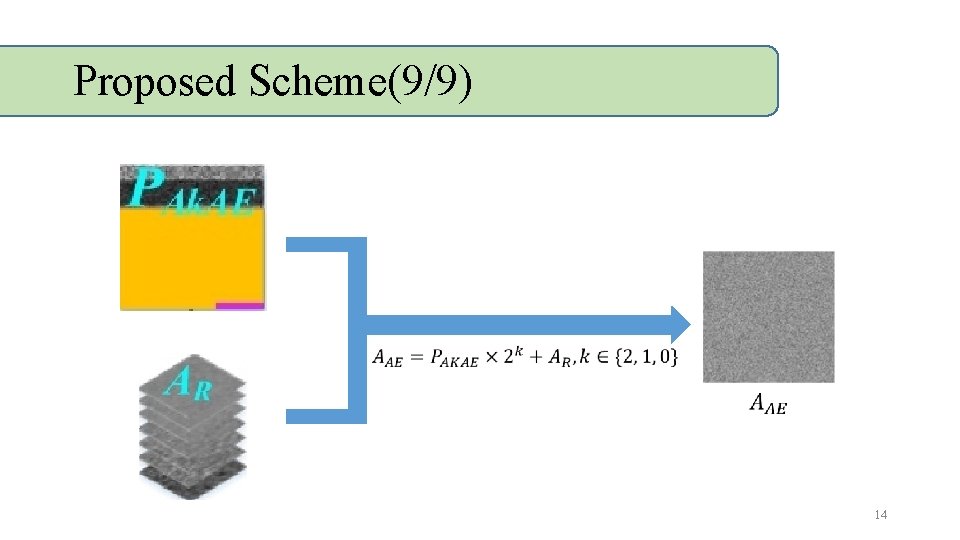
Proposed Scheme(9/9) 14
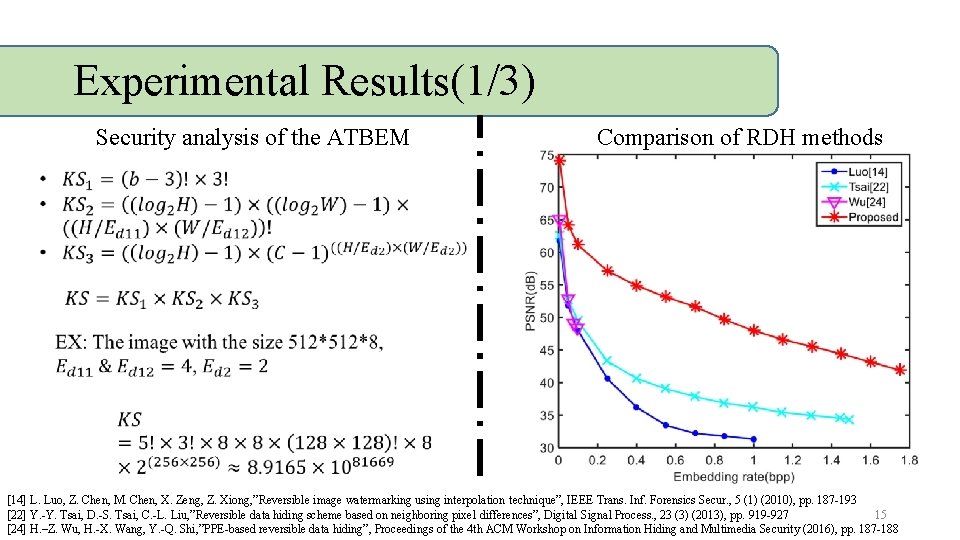
Experimental Results(1/3) Security analysis of the ATBEM Comparison of RDH methods [14] L. Luo, Z. Chen, M. Chen, X. Zeng, Z. Xiong, ”Reversible image watermarking using interpolation technique”, IEEE Trans. Inf. Forensics Secur. , 5 (1) (2010), pp. 187 -193 [22] Y. -Y. Tsai, D. -S. Tsai, C. -L. Liu, ”Reversible data hiding scheme based on neighboring pixel differences”, Digital Signal Process. , 23 (3) (2013), pp. 919 -927 15 [24] H. –Z. Wu, H. -X. Wang, Y. -Q. Shi, ”PPE-based reversible data hiding”, Proceedings of the 4 th ACM Workshop on Information Hiding and Multimedia Security (2016), pp. 187 -188
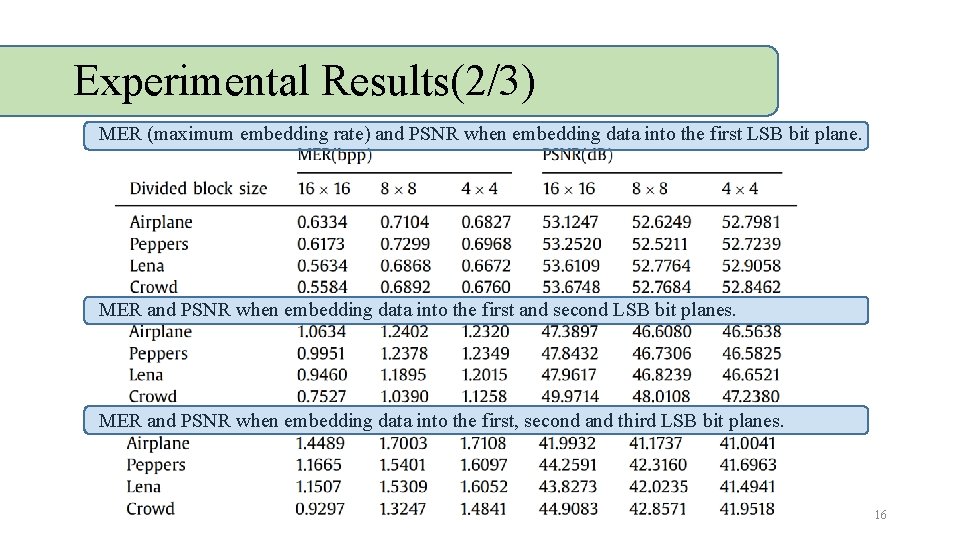
Experimental Results(2/3) MER (maximum embedding rate) and PSNR when embedding data into the first LSB bit plane. MER and PSNR when embedding data into the first and second LSB bit planes. MER and PSNR when embedding data into the first, second and third LSB bit planes. 16
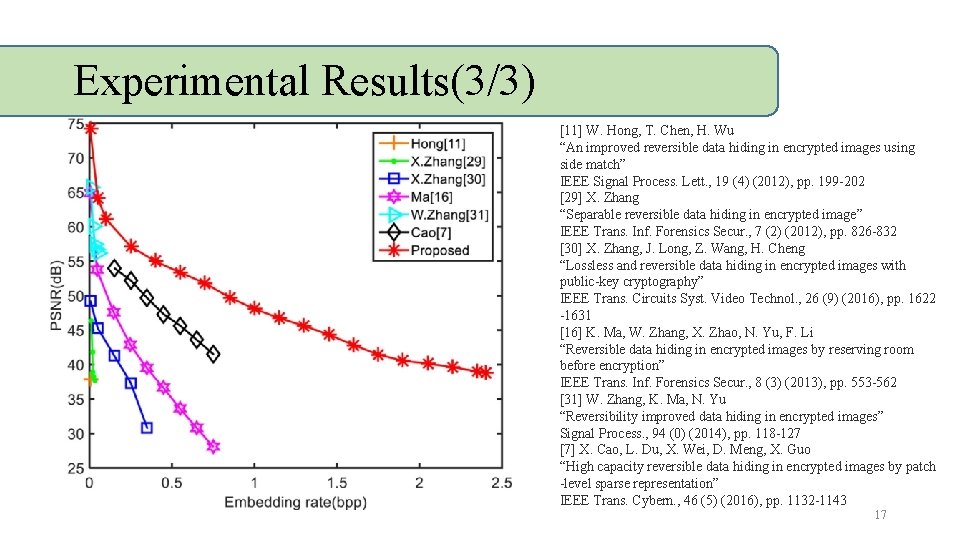
Experimental Results(3/3) [11] W. Hong, T. Chen, H. Wu “An improved reversible data hiding in encrypted images using side match” IEEE Signal Process. Lett. , 19 (4) (2012), pp. 199 -202 [29] X. Zhang “Separable reversible data hiding in encrypted image” IEEE Trans. Inf. Forensics Secur. , 7 (2) (2012), pp. 826 -832 [30] X. Zhang, J. Long, Z. Wang, H. Cheng “Lossless and reversible data hiding in encrypted images with public-key cryptography” IEEE Trans. Circuits Syst. Video Technol. , 26 (9) (2016), pp. 1622 -1631 [16] K. Ma, W. Zhang, X. Zhao, N. Yu, F. Li “Reversible data hiding in encrypted images by reserving room before encryption” IEEE Trans. Inf. Forensics Secur. , 8 (3) (2013), pp. 553 -562 [31] W. Zhang, K. Ma, N. Yu “Reversibility improved data hiding in encrypted images” Signal Process. , 94 (0) (2014), pp. 118 -127 [7] X. Cao, L. Du, X. Wei, D. Meng, X. Guo “High capacity reversible data hiding in encrypted images by patch -level sparse representation” IEEE Trans. Cybern. , 46 (5) (2016), pp. 1132 -1143 17
Conclusions • It uses redundant space transfer to transfer the redundant space in the original image to the encrypted image. • Existing general RDH algorithms can be employed to embed additional data into these encrypted images. • The proposed scheme is highly secure in protecting the privacy of the original image, achieves a high embedding rate. 18
- Slides: 18