
Reverse Shoulder Replacement Normal Joint Anatomy Anatomy Rotator
- Slides: 28
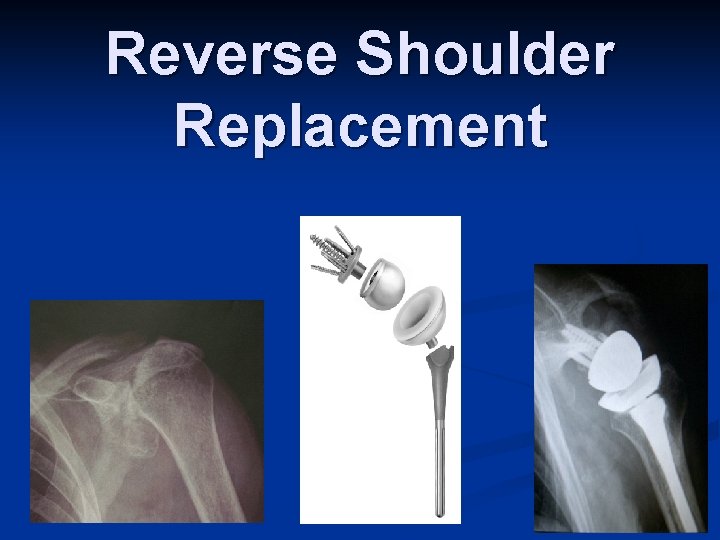
Reverse Shoulder Replacement
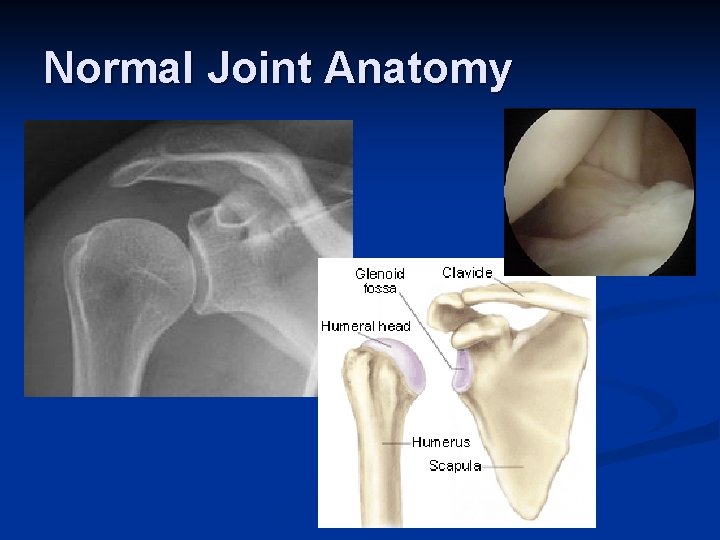
Normal Joint Anatomy
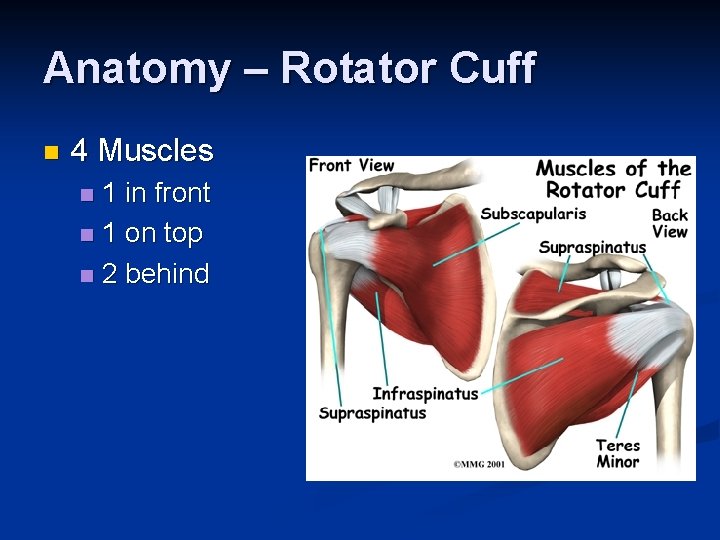
Anatomy – Rotator Cuff n 4 Muscles 1 in front n 1 on top n 2 behind n
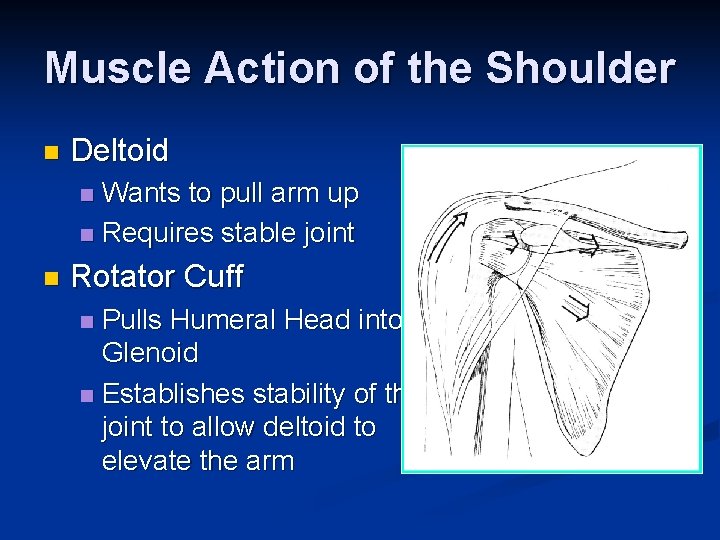
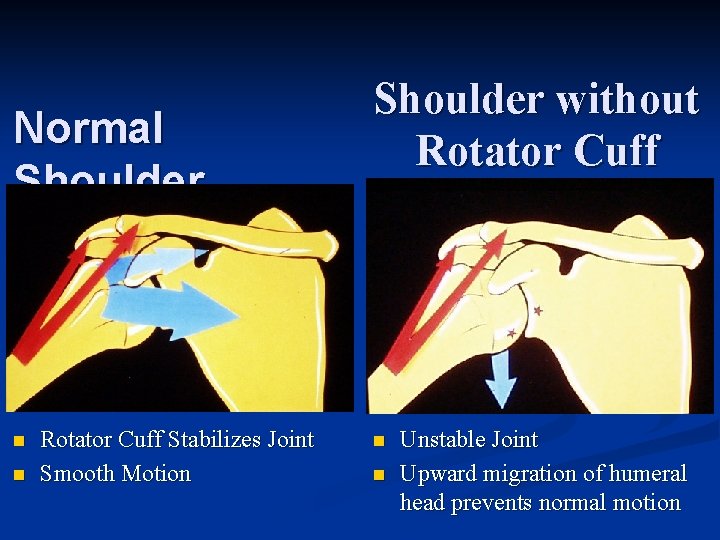
Muscle Action of the Shoulder n Deltoid Wants to pull arm up n Requires stable joint n n Rotator Cuff Pulls Humeral Head into Glenoid n Establishes stability of the joint to allow deltoid to elevate the arm n
Normal Shoulder n n Rotator Cuff Stabilizes Joint Smooth Motion Shoulder without Rotator Cuff n n Unstable Joint Upward migration of humeral head prevents normal motion
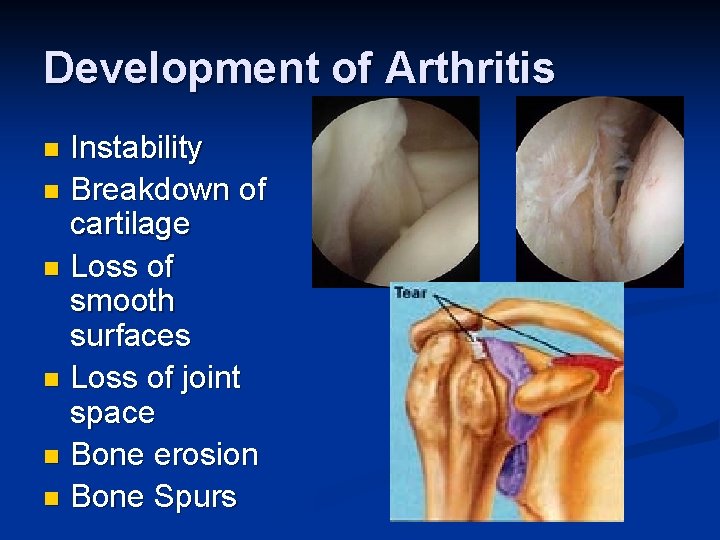
Development of Arthritis Instability n Breakdown of cartilage n Loss of smooth surfaces n Loss of joint space n Bone erosion n Bone Spurs n
Symptoms n Pain n n n n Progress over time Worse with activity Interferes with sleep Instability Loss of Motion Atrophy (wasting) of muscles Swelling Crepitus (clicking, popping or crunching sound) Tenderness to touch
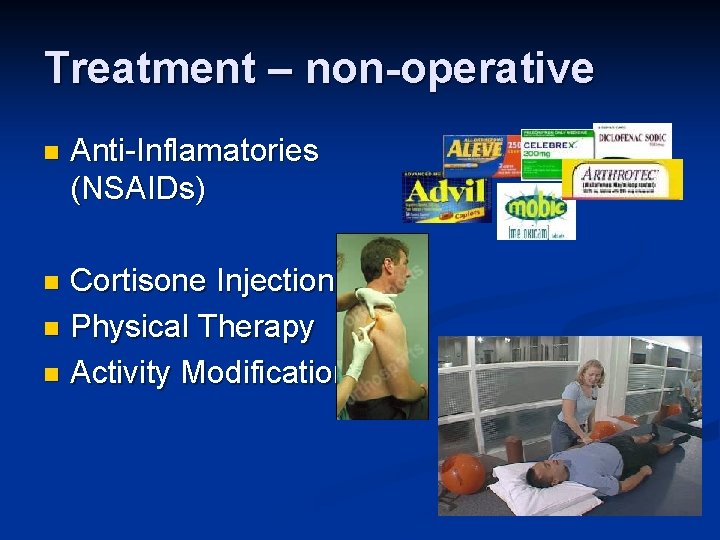
Treatment – non-operative n Anti-Inflamatories (NSAIDs) Cortisone Injection n Physical Therapy n Activity Modifications n
When to consider surgery n Quality of Life Decision Interferes with activities n Loss of independence n n Grooming n Bathing n Dressing Interferes with sleep n Interferes with work n
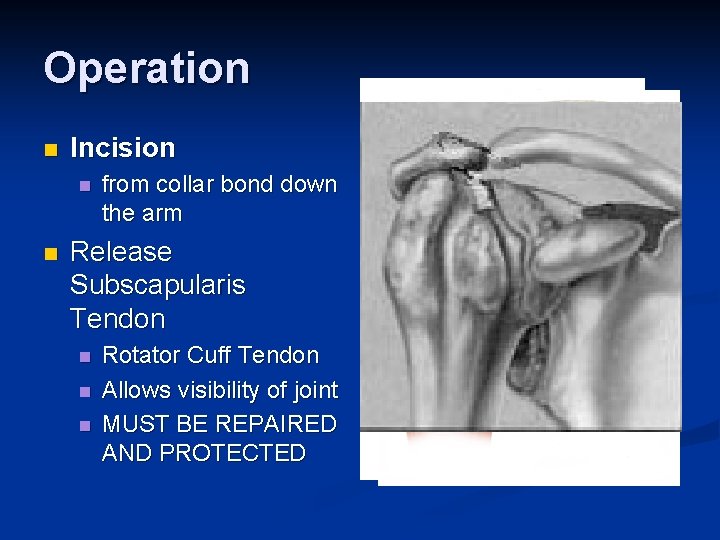
Operation n Incision n n from collar bond down the arm Release Subscapularis Tendon n Rotator Cuff Tendon Allows visibility of joint MUST BE REPAIRED AND PROTECTED
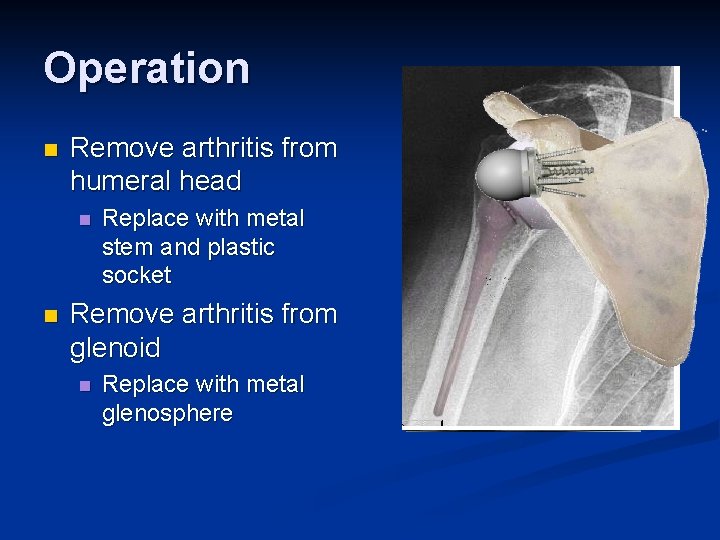
Operation n Remove arthritis from humeral head n n Replace with metal stem and plastic socket Remove arthritis from glenoid n Replace with metal glenosphere
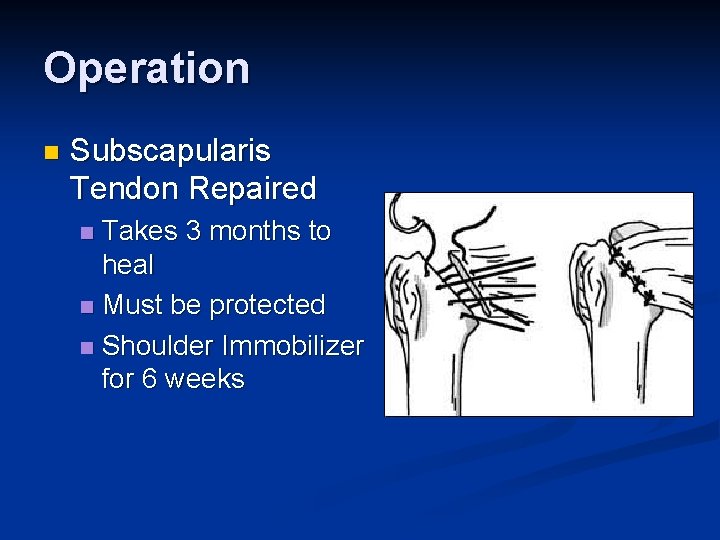
Operation n Subscapularis Tendon Repaired Takes 3 months to heal n Must be protected n Shoulder Immobilizer for 6 weeks n
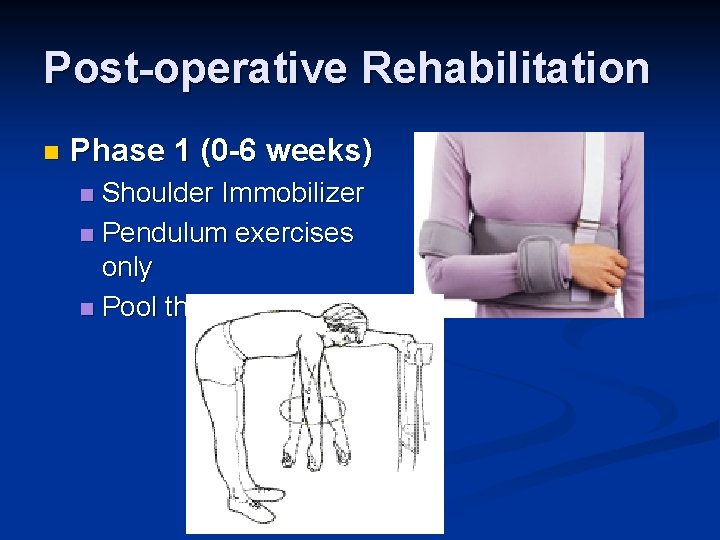
Post-operative Rehabilitation n Phase 1 (0 -6 weeks) Shoulder Immobilizer n Pendulum exercises only n Pool therapy n
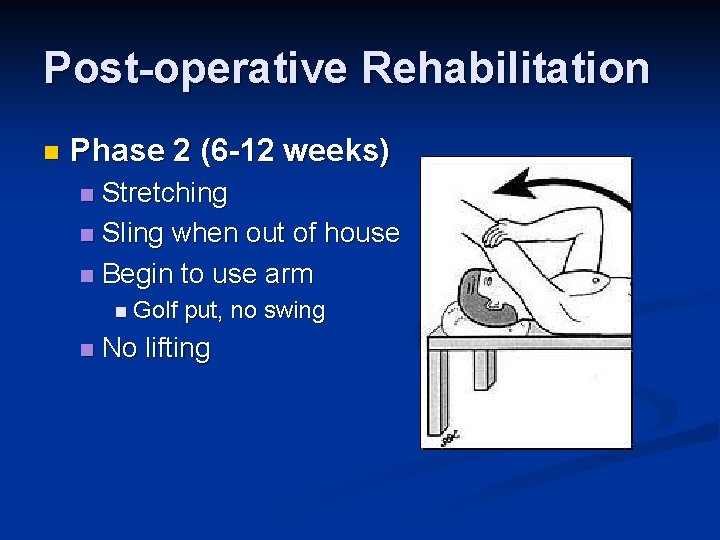
Post-operative Rehabilitation n Phase 2 (6 -12 weeks) Stretching n Sling when out of house n Begin to use arm n n Golf n put, no swing No lifting
Post-operative Rehabilitation n Phase 3 (3 months+) Strengthening n Activities as tolerated at 6 months n
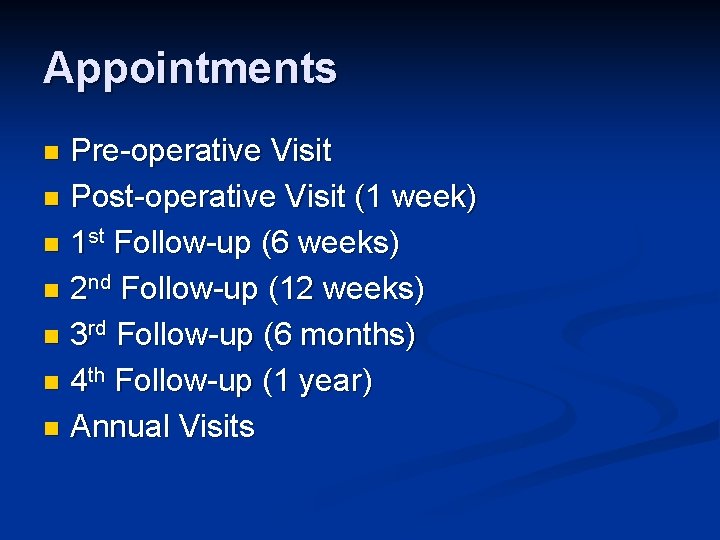
Appointments Pre-operative Visit n Post-operative Visit (1 week) n 1 st Follow-up (6 weeks) n 2 nd Follow-up (12 weeks) n 3 rd Follow-up (6 months) n 4 th Follow-up (1 year) n Annual Visits n
What to expect Pain Relief n Improvement in function n Increased range of motion n Increased ability to perform activities n Improved quality of life n n Return of Independence
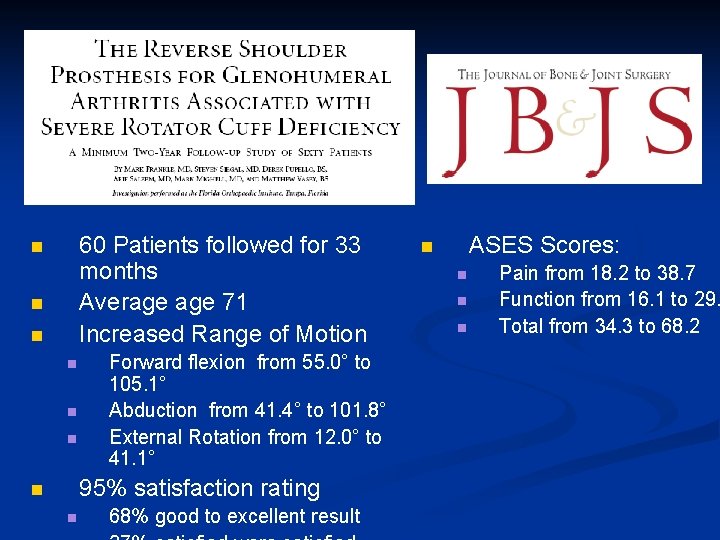
60 Patients followed for 33 months Average 71 Increased Range of Motion n n n Forward flexion from 55. 0° to 105. 1° Abduction from 41. 4° to 101. 8° External Rotation from 12. 0° to 41. 1° 95% satisfaction rating n n 68% good to excellent result ASES Scores: n n Pain from 18. 2 to 38. 7 Function from 16. 1 to 29. Total from 34. 3 to 68. 2
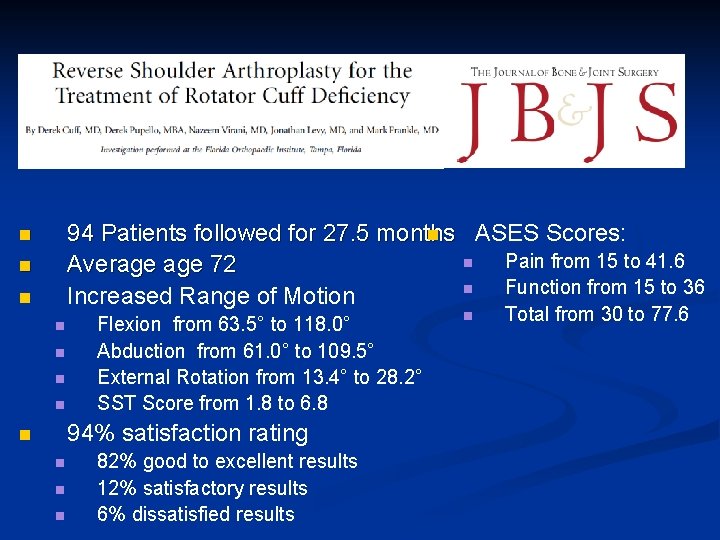
94 Patients followed for 27. 5 months n ASES Scores: n Pain from 15 to 41. 6 Average 72 n Function from 15 to 36 Increased Range of Motion n n n Flexion from 63. 5° to 118. 0° Abduction from 61. 0° to 109. 5° External Rotation from 13. 4° to 28. 2° SST Score from 1. 8 to 6. 8 94% satisfaction rating n n 82% good to excellent results 12% satisfactory results 6% dissatisfied results n Total from 30 to 77. 6
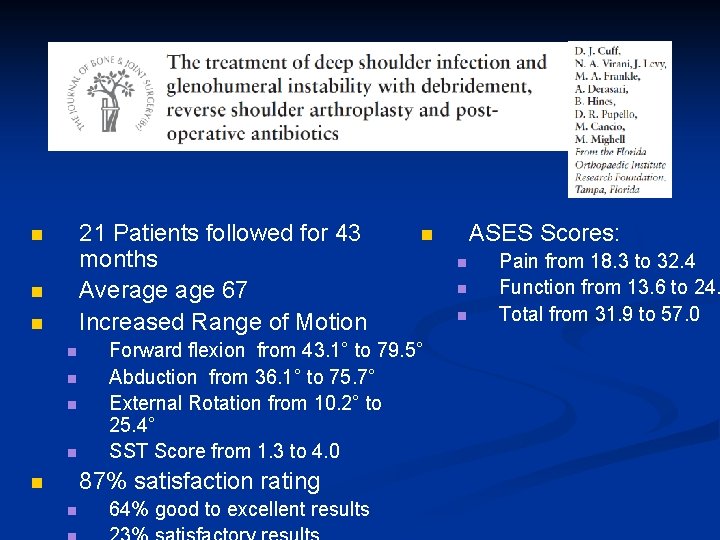
21 Patients followed for 43 months Average 67 Increased Range of Motion n n n Forward flexion from 43. 1° to 79. 5° Abduction from 36. 1° to 75. 7° External Rotation from 10. 2° to 25. 4° SST Score from 1. 3 to 4. 0 87% satisfaction rating n n 64% good to excellent results ASES Scores: n n Pain from 18. 3 to 32. 4 Function from 13. 6 to 24. Total from 31. 9 to 57. 0
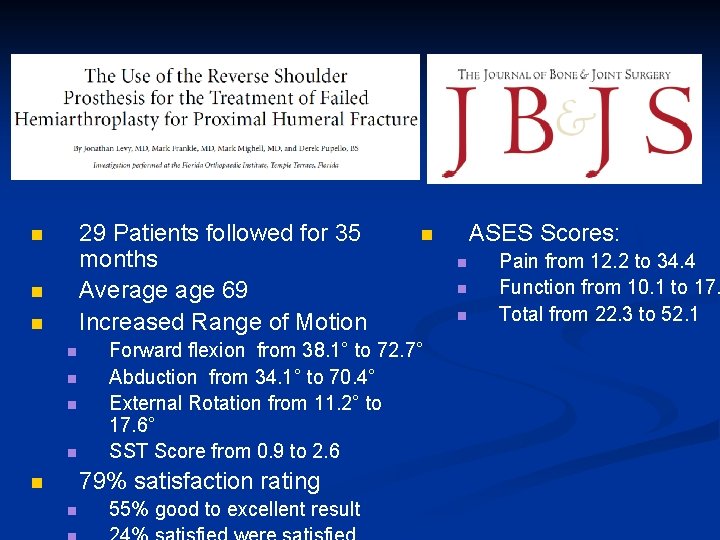
29 Patients followed for 35 months Average 69 Increased Range of Motion n n n Forward flexion from 38. 1° to 72. 7° Abduction from 34. 1° to 70. 4° External Rotation from 11. 2° to 17. 6° SST Score from 0. 9 to 2. 6 79% satisfaction rating n n 55% good to excellent result ASES Scores: n n Pain from 12. 2 to 34. 4 Function from 10. 1 to 17. Total from 22. 3 to 52. 1
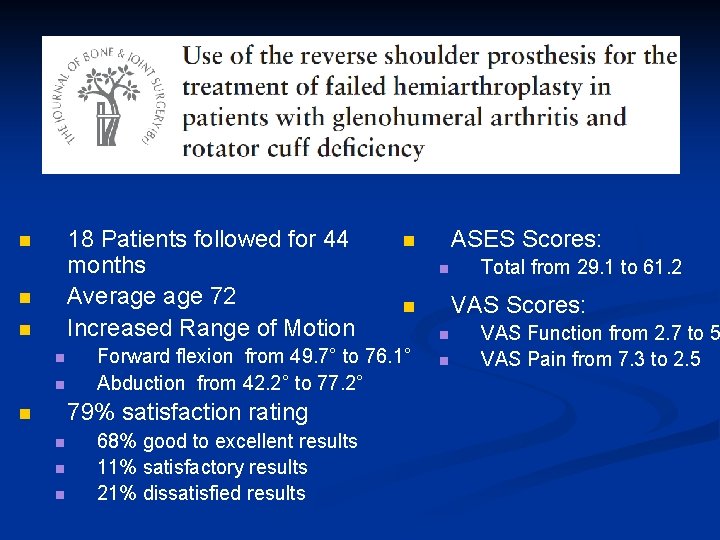
18 Patients followed for 44 months Average 72 Increased Range of Motion n n n n 68% good to excellent results 11% satisfactory results 21% dissatisfied results Total from 29. 1 to 61. 2 VAS Scores: n Forward flexion from 49. 7° to 76. 1° Abduction from 42. 2° to 77. 2° 79% satisfaction rating n ASES Scores: n n n VAS Function from 2. 7 to 5 VAS Pain from 7. 3 to 2. 5
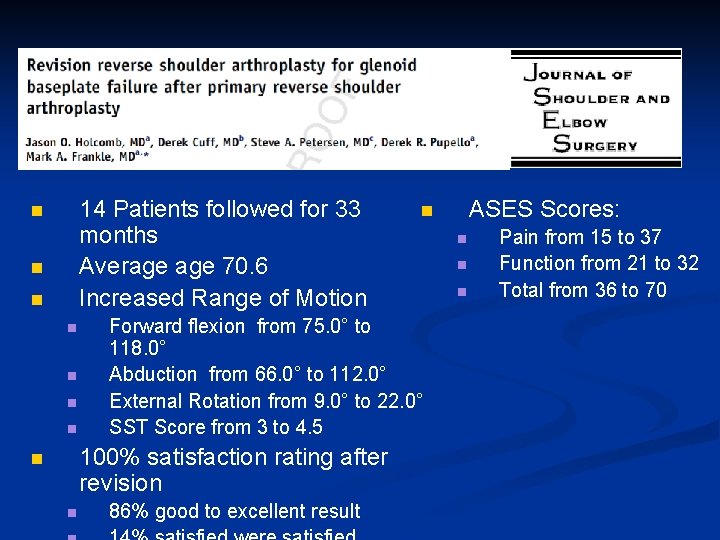
14 Patients followed for 33 months Average 70. 6 Increased Range of Motion n n n Forward flexion from 75. 0° to 118. 0° Abduction from 66. 0° to 112. 0° External Rotation from 9. 0° to 22. 0° SST Score from 3 to 4. 5 100% satisfaction rating after revision n n 86% good to excellent result ASES Scores: n n Pain from 15 to 37 Function from 21 to 32 Total from 36 to 70
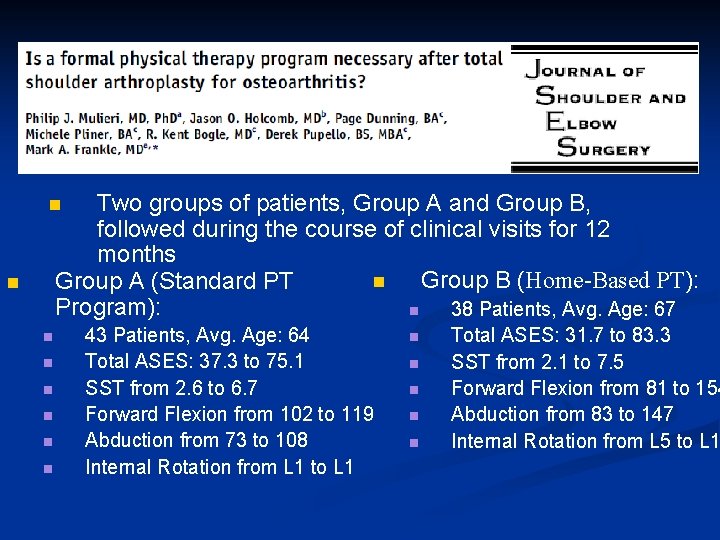
Two groups of patients, Group A and Group B, followed during the course of clinical visits for 12 months n Group B (Home-Based PT): Group A (Standard PT Program): n 38 Patients, Avg. Age: 67 n n n n 43 Patients, Avg. Age: 64 Total ASES: 37. 3 to 75. 1 SST from 2. 6 to 6. 7 Forward Flexion from 102 to 119 Abduction from 73 to 108 Internal Rotation from L 1 to L 1 n n n Total ASES: 31. 7 to 83. 3 SST from 2. 1 to 7. 5 Forward Flexion from 81 to 154 Abduction from 83 to 147 Internal Rotation from L 5 to L 1
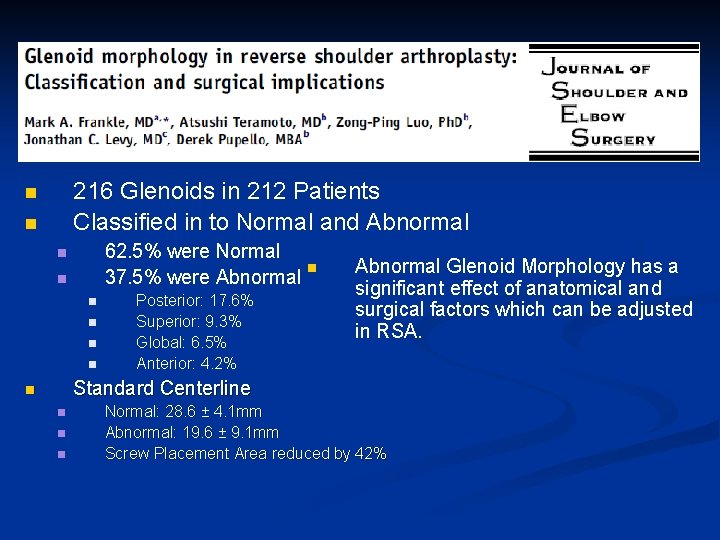
216 Glenoids in 212 Patients Classified in to Normal and Abnormal n n 62. 5% were Normal n 37. 5% were Abnormal n n n Posterior: 17. 6% Superior: 9. 3% Global: 6. 5% Anterior: 4. 2% Abnormal Glenoid Morphology has a significant effect of anatomical and surgical factors which can be adjusted in RSA. Standard Centerline n n Normal: 28. 6 ± 4. 1 mm Abnormal: 19. 6 ± 9. 1 mm Screw Placement Area reduced by 42%
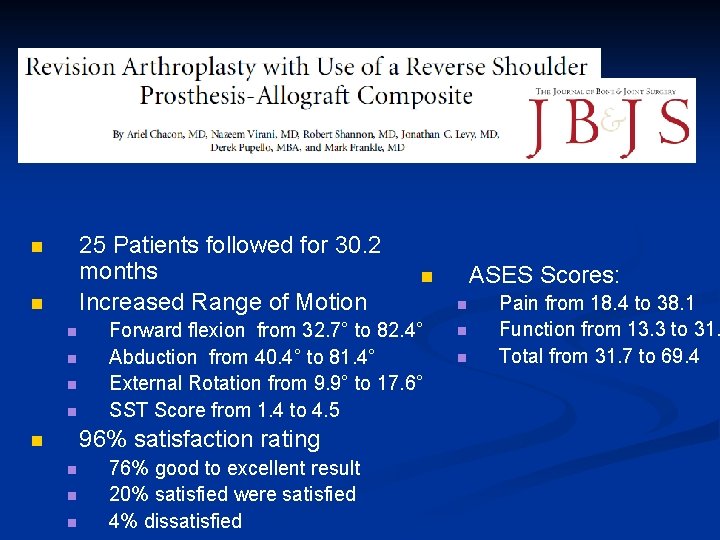
25 Patients followed for 30. 2 months Increased Range of Motion n n n Forward flexion from 32. 7° to 82. 4° Abduction from 40. 4° to 81. 4° External Rotation from 9. 9° to 17. 6° SST Score from 1. 4 to 4. 5 96% satisfaction rating n n 76% good to excellent result 20% satisfied were satisfied 4% dissatisfied ASES Scores: n n Pain from 18. 4 to 38. 1 Function from 13. 3 to 31. Total from 31. 7 to 69. 4
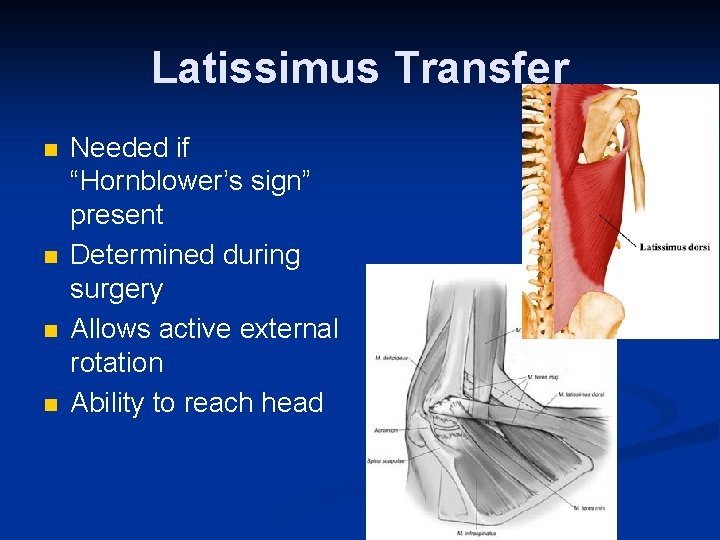
Latissimus Transfer n n Needed if “Hornblower’s sign” present Determined during surgery Allows active external rotation Ability to reach head
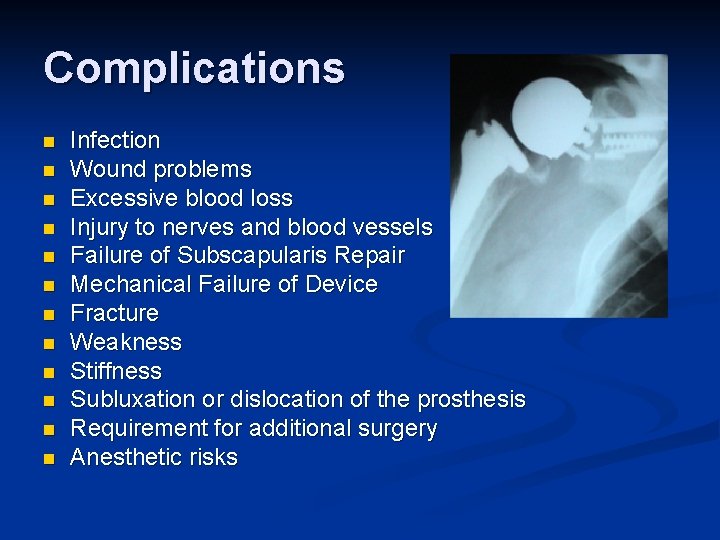
Complications n n n Infection Wound problems Excessive blood loss Injury to nerves and blood vessels Failure of Subscapularis Repair Mechanical Failure of Device Fracture Weakness Stiffness Subluxation or dislocation of the prosthesis Requirement for additional surgery Anesthetic risks