
Reverse oblique fracture Case for small group discussion
Reverse oblique fracture Case for small group discussion: Fractures of the femur AO Trauma Advanced Principles Course
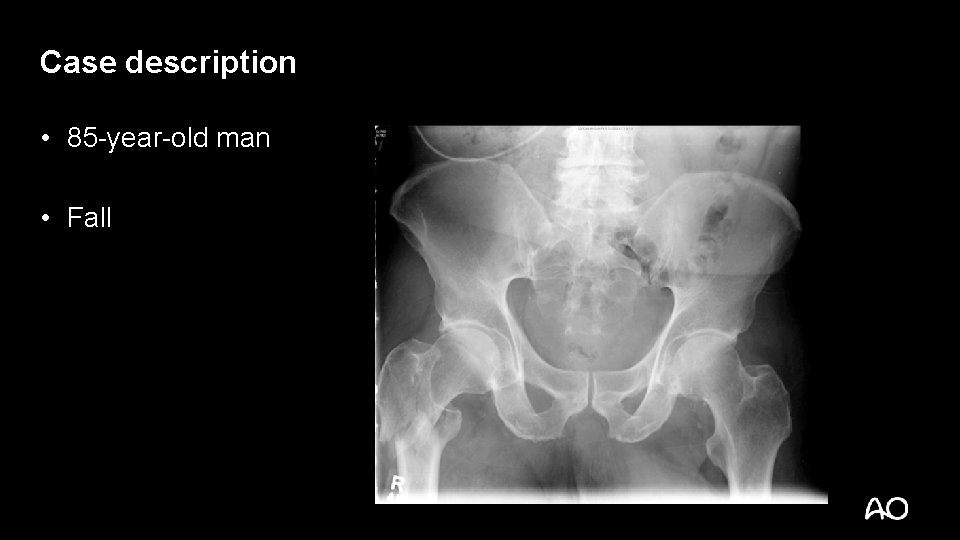
Case description • 85 -year-old man • Fall
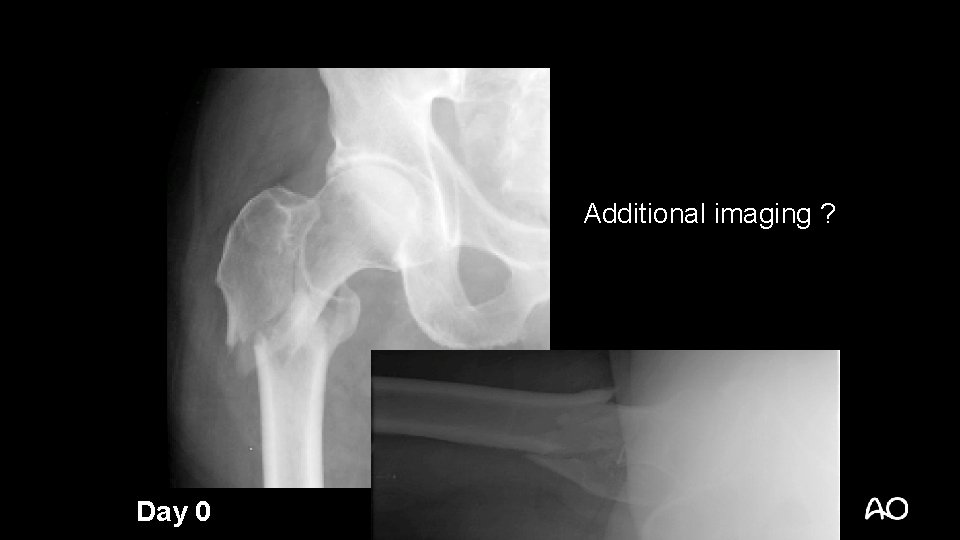
Additional imaging ? Day 0
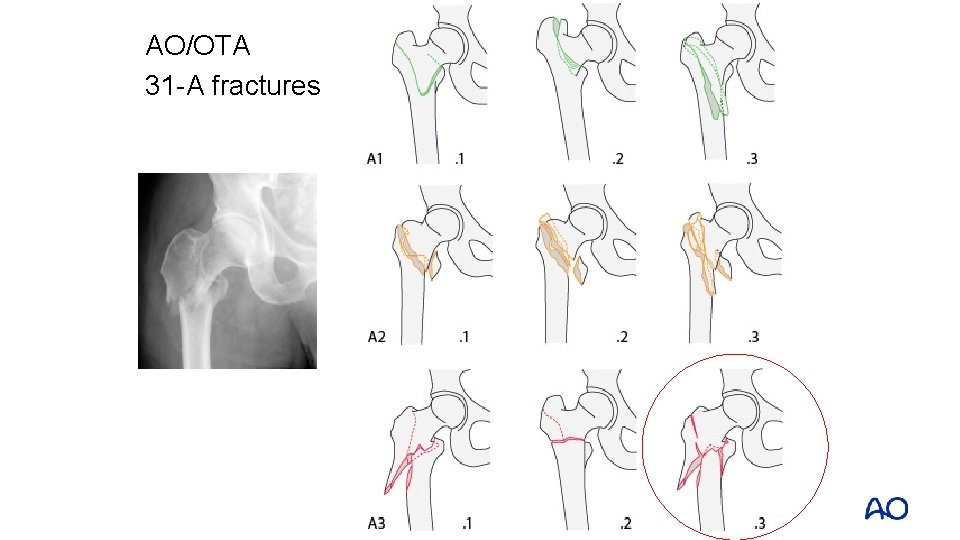
AO/OTA 31 -A fractures
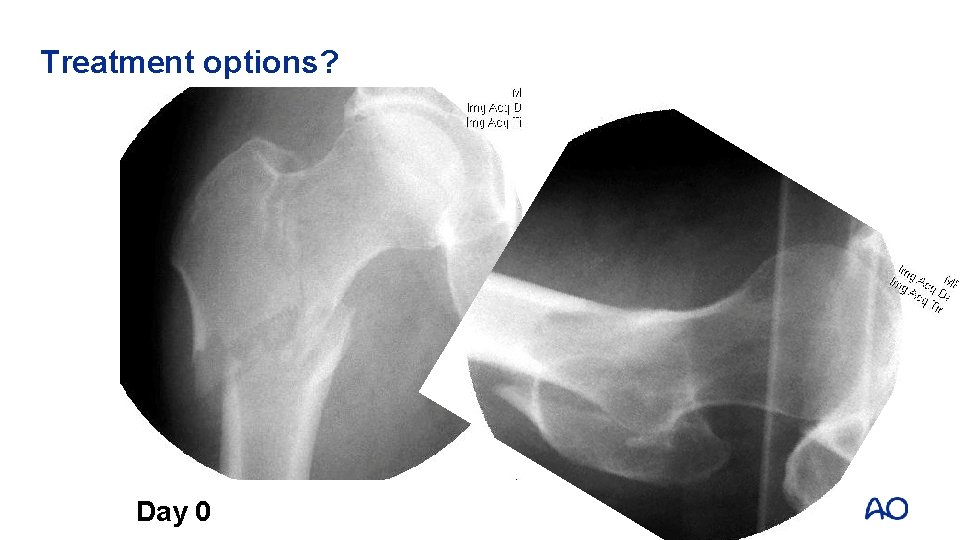
Treatment options? Day 0
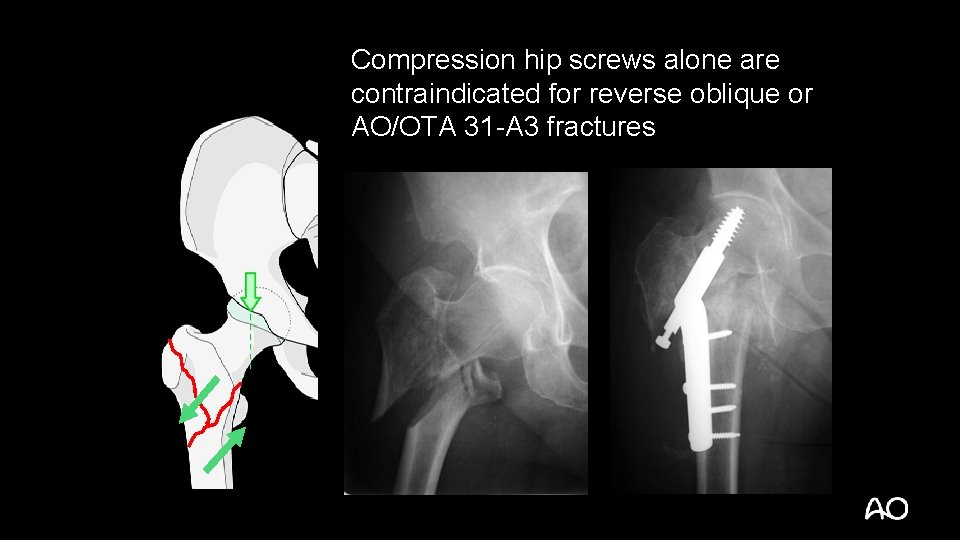
Compression hip screws alone are contraindicated for reverse oblique or AO/OTA 31 -A 3 fractures
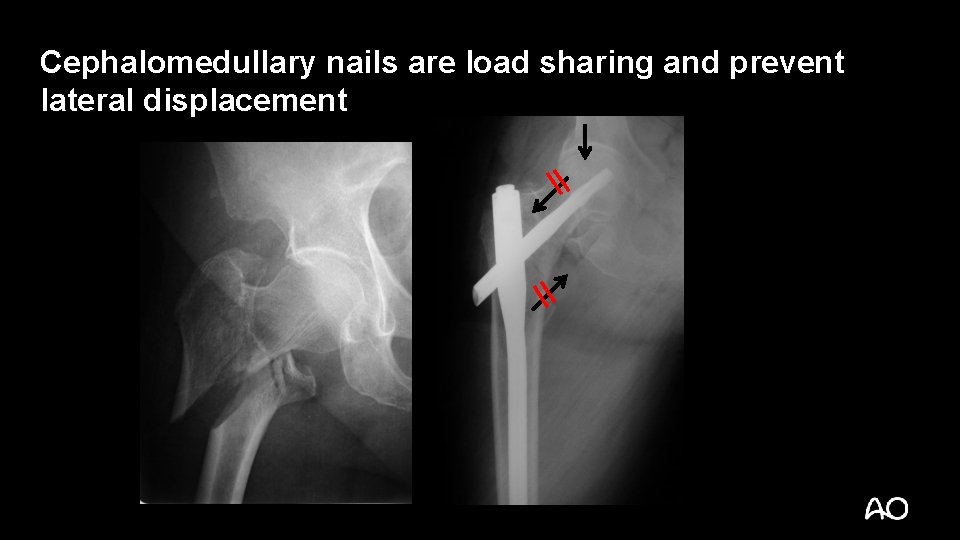
Cephalomedullary nails are load sharing and prevent lateral displacement
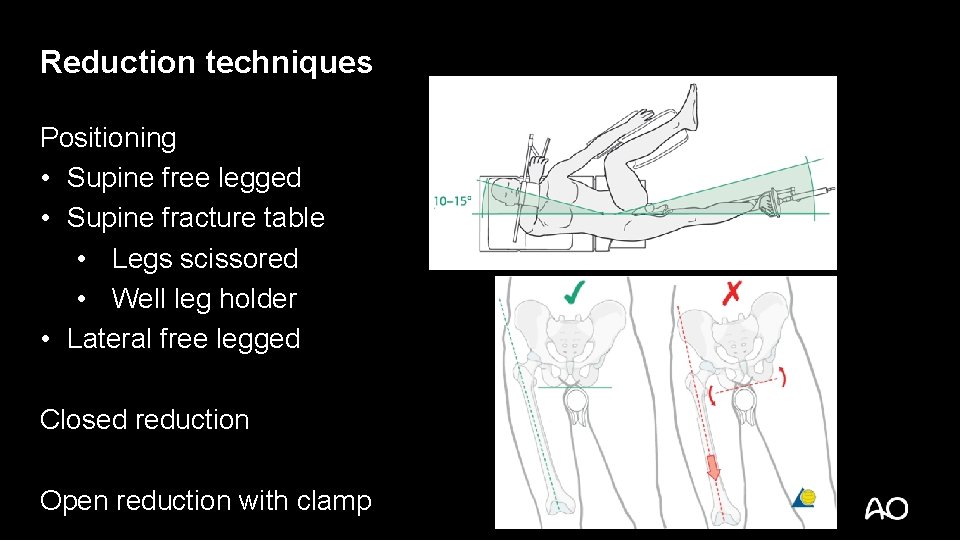
Reduction techniques Positioning • Supine free legged • Supine fracture table • Legs scissored • Well leg holder • Lateral free legged Closed reduction Open reduction with clamp
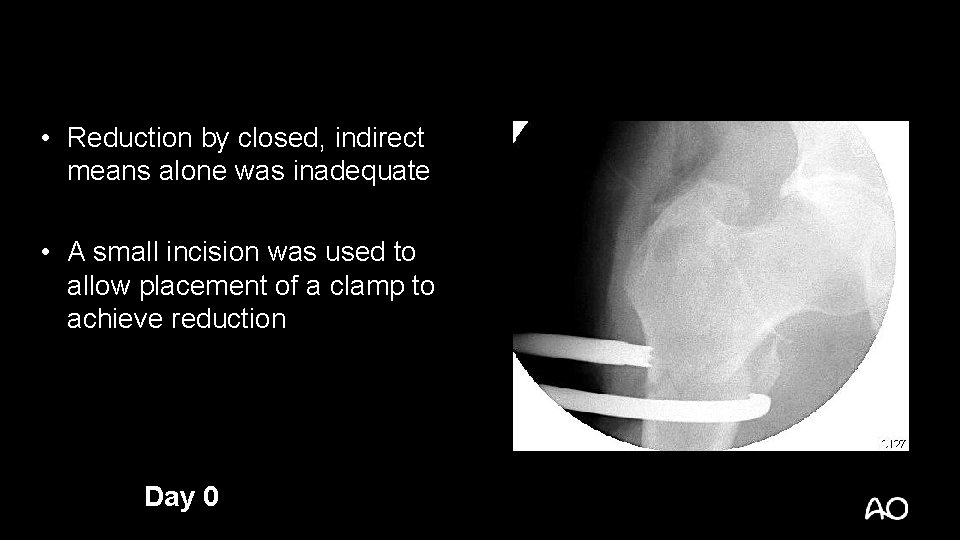
• Reduction by closed, indirect means alone was inadequate • A small incision was used to allow placement of a clamp to achieve reduction Day 0
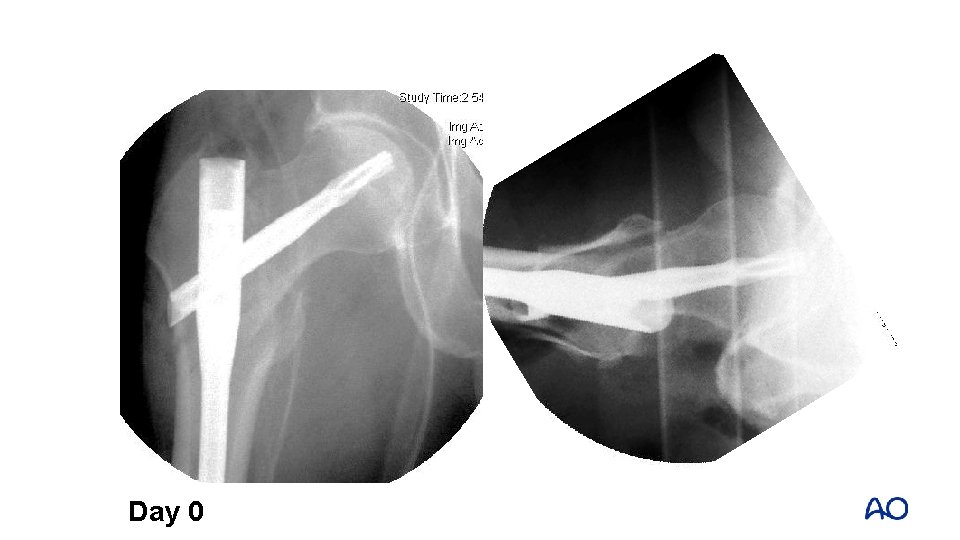
Day 0
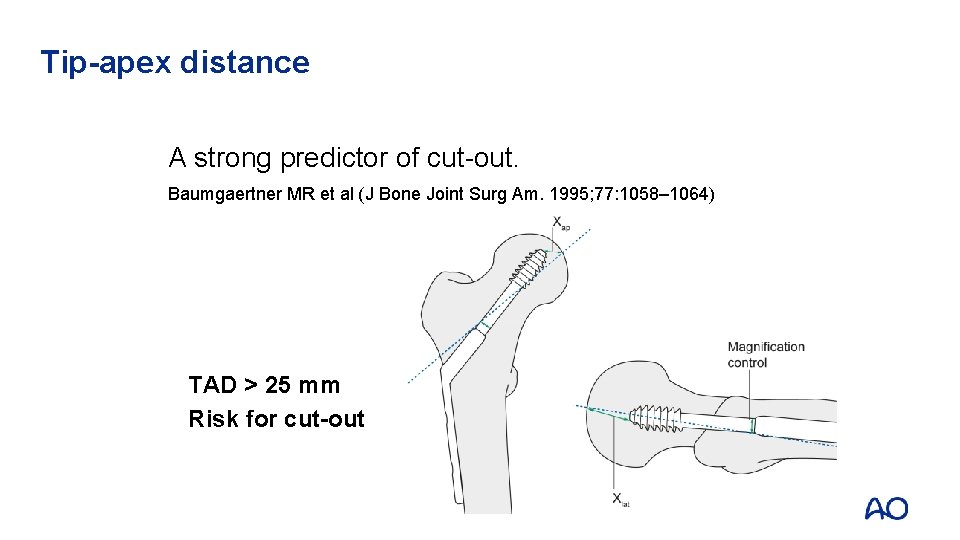
Tip-apex distance A strong predictor of cut-out. Baumgaertner MR et al (J Bone Joint Surg Am. 1995; 77: 1058– 1064) TAD > 25 mm Risk for cut-out
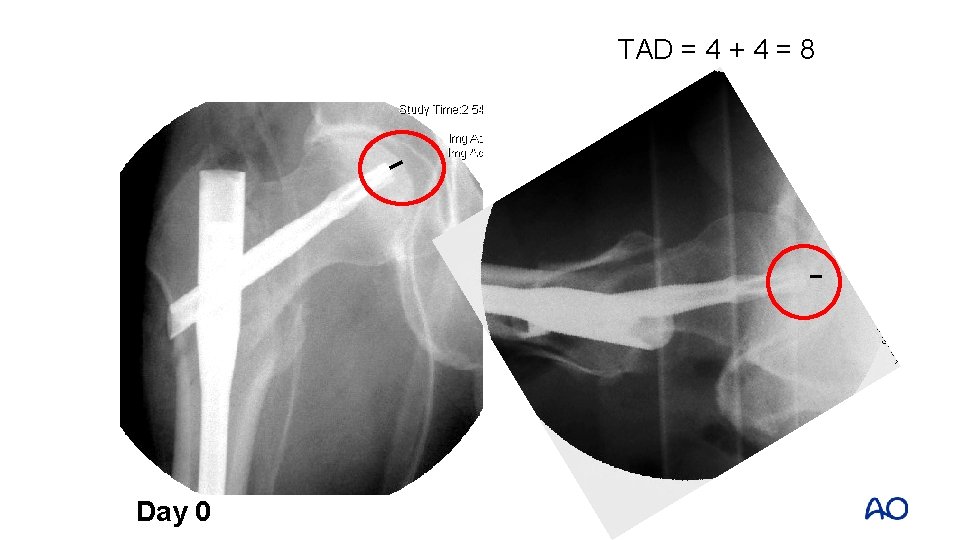
TAD = 4 + 4 = 8 Day 0
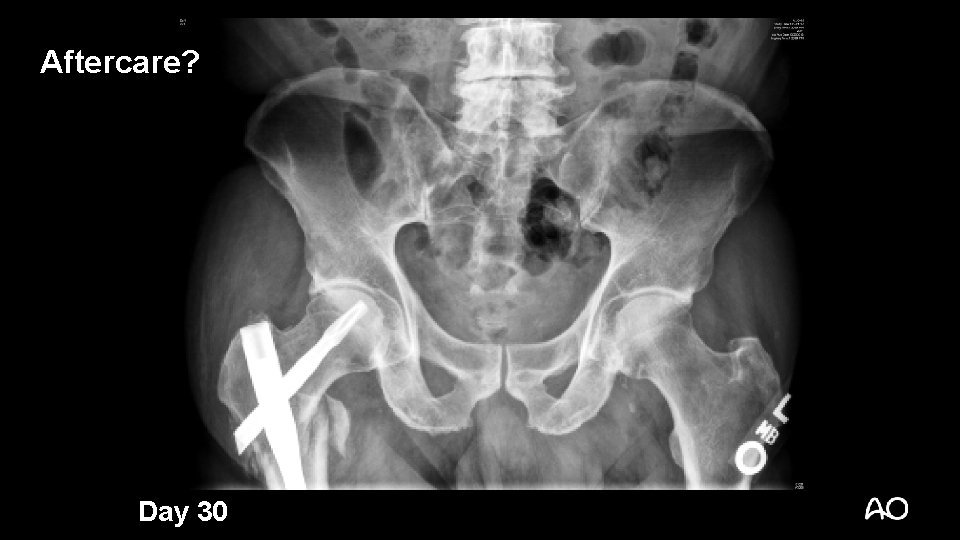
Aftercare? Day 30
Summary and take-home message • 31 -A 3. 3 fractures do not have a lateral wall to compress against • Sliding hip screws (unless used with a trochanter stabilization plate) cannot resist the lateralization of the proximal fragment which is caused by the deforming forces acting on the hip. • A cephalomedullary nail inserted through the greater trochanter or the piriformis fossa provides an effective mechanical block that resists lateralization of the proximal segment. • Placing the lag screw or helical blade deep and center (TAD <25) in the head will decrease the risk of cut out. • Open reduction with a clamp or Lambotte hook are frequently necessary to achieve anatomical reduction.
- Slides: 14