
Reversal Designs Overview One of the most important
- Slides: 20
Reversal Designs
Overview • One of the most important designs you can use • Can be used in a variety of settings • Can be very powerful in detecting changes
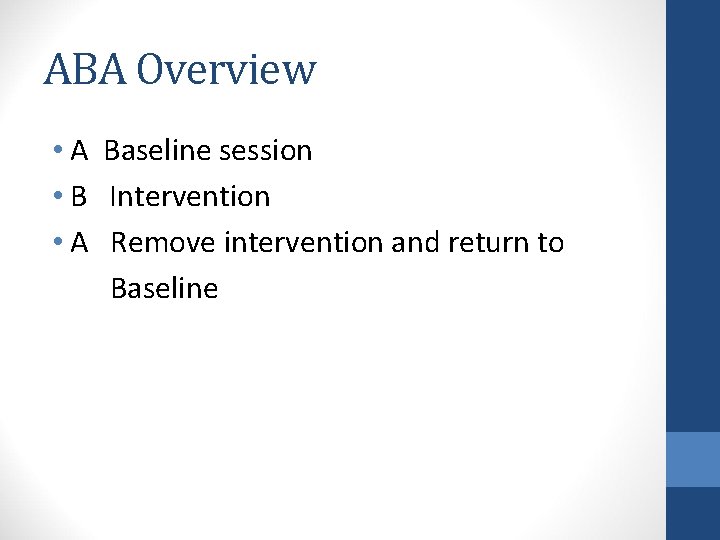
Reversal (ABA) Designs • Repeated measures of behavior occur in a given setting • Requires at least 3 consecutive phases: • Initial baseline (A) • Intervention (B) • Return to baseline (A)
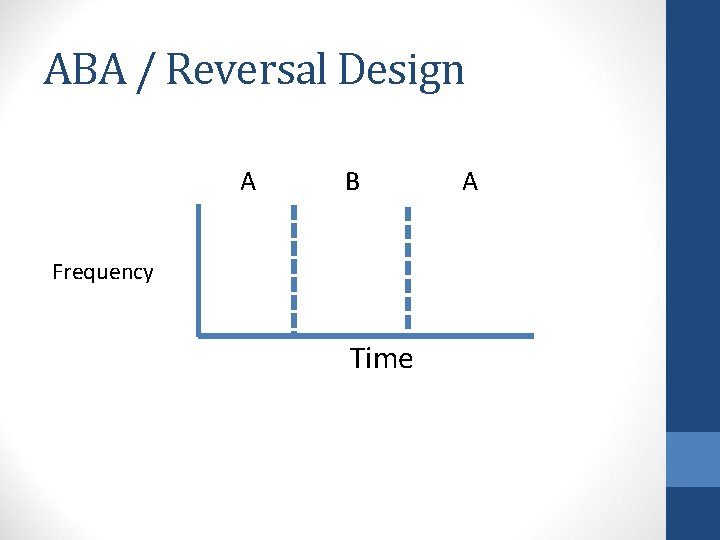
ABA / Reversal Design A B Frequency Time A
ABA Overview • A Baseline session • B Intervention • A Remove intervention and return to Baseline
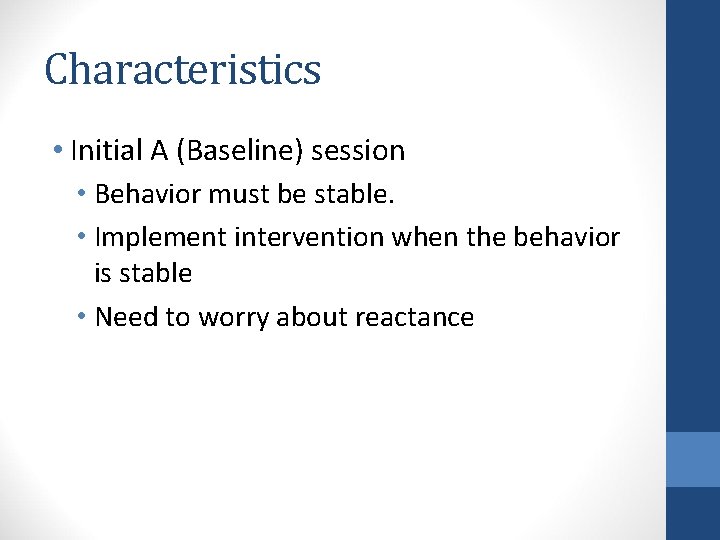
Characteristics • Initial A (Baseline) session • Behavior must be stable. • Implement intervention when the behavior is stable • Need to worry about reactance
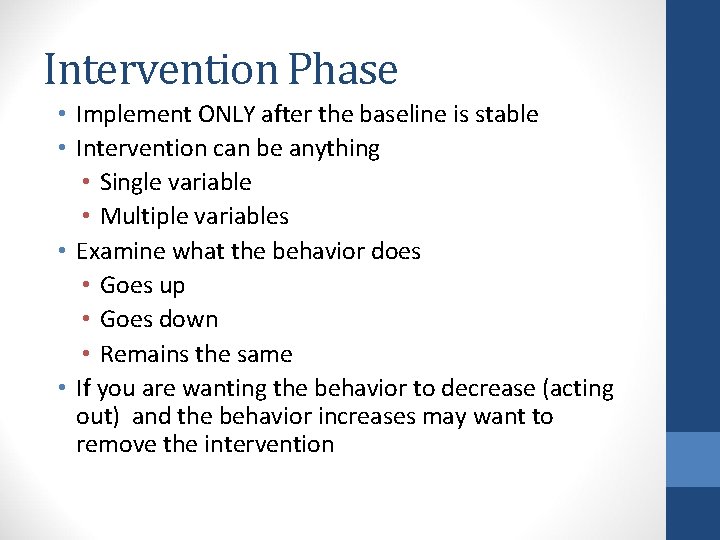
Intervention Phase • Implement ONLY after the baseline is stable • Intervention can be anything • Single variable • Multiple variables • Examine what the behavior does • Goes up • Goes down • Remains the same • If you are wanting the behavior to decrease (acting out) and the behavior increases may want to remove the intervention
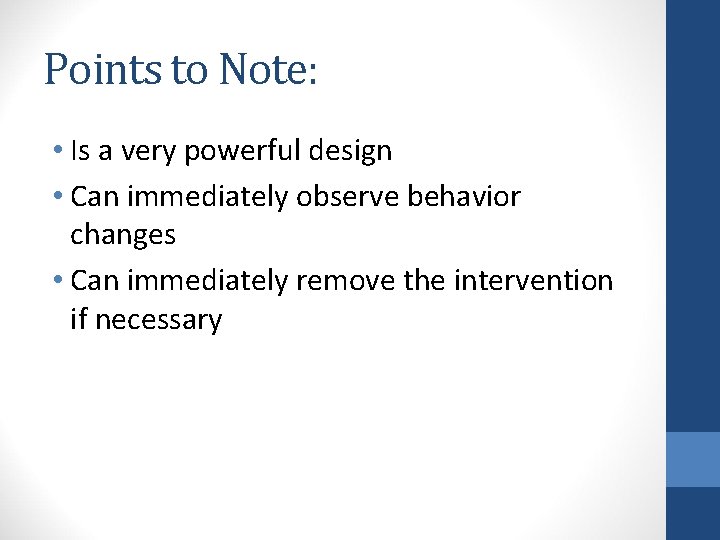
Points to Note: • Is a very powerful design • Can immediately observe behavior changes • Can immediately remove the intervention if necessary
A-B-A-B Reversal Design • Is preferred over A-B-A as stronger demonstration • Very powerful non-experimental within-subject design • Can strongly demonstrate a functional relation between an environmental manipulation and a behavior
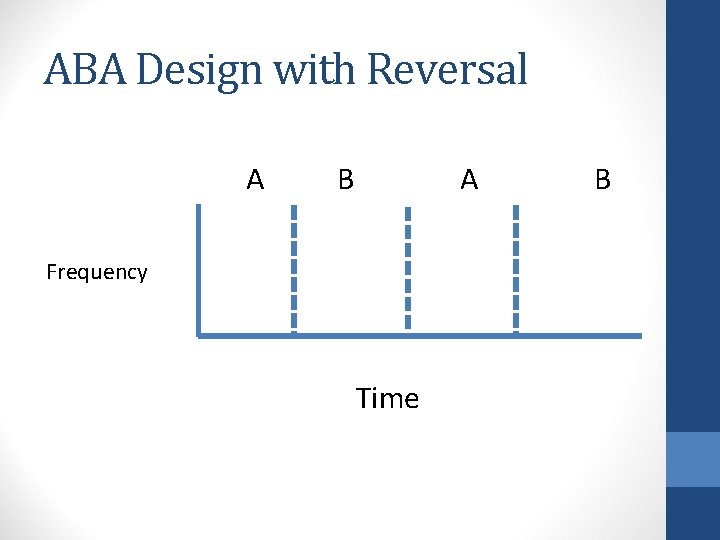
ABA Design with Reversal A B A Frequency Time B
Logic of Reversal Design • Involves replication • Independent variable is responsible for behavior change if repetition of baseline and treatment phases approximate the original phases
Variations of the A-B-A-B Design • • • Repeated reversals B-A-B reversal design Multiple treatment reversal designs NCR reversal technique DRO reversal technique DRI/DRA reversal technique
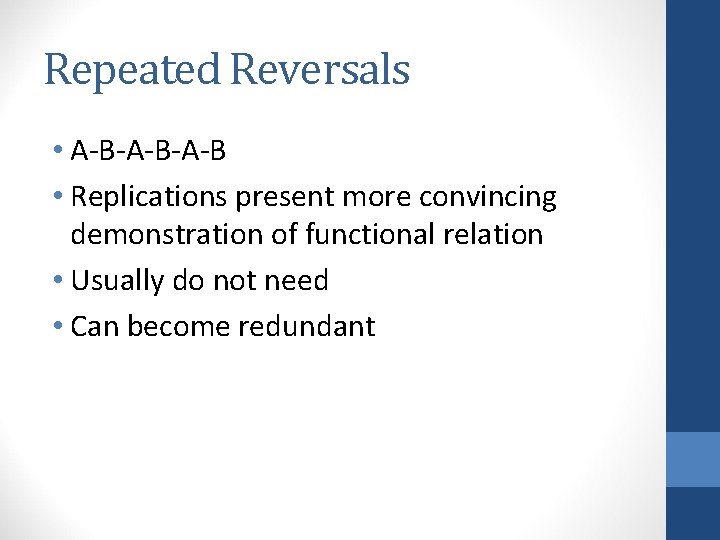
Repeated Reversals • A-B-A-B • Replications present more convincing demonstration of functional relation • Usually do not need • Can become redundant
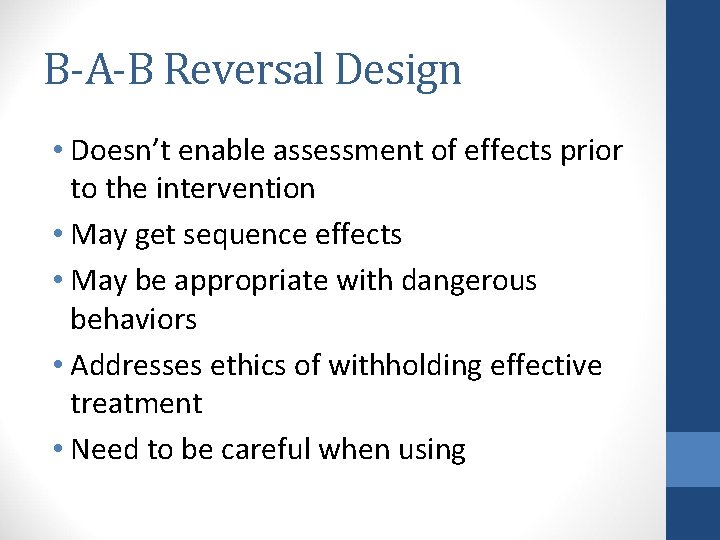
B-A-B Reversal Design • Doesn’t enable assessment of effects prior to the intervention • May get sequence effects • May be appropriate with dangerous behaviors • Addresses ethics of withholding effective treatment • Need to be careful when using
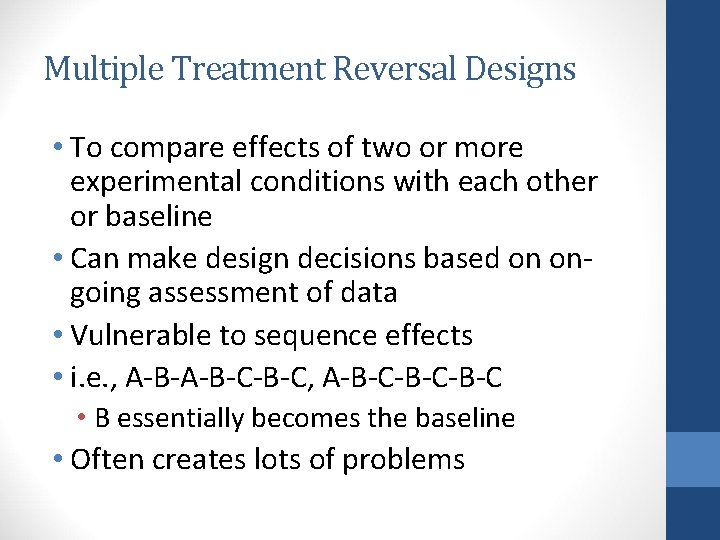
Multiple Treatment Reversal Designs • To compare effects of two or more experimental conditions with each other or baseline • Can make design decisions based on ongoing assessment of data • Vulnerable to sequence effects • i. e. , A-B-C-B-C, A-B-C-B-C • B essentially becomes the baseline • Often creates lots of problems
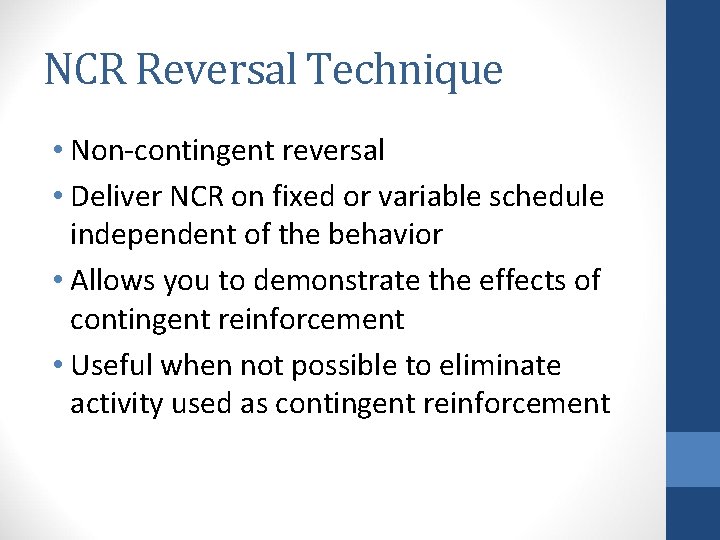
NCR Reversal Technique • Non-contingent reversal • Deliver NCR on fixed or variable schedule independent of the behavior • Allows you to demonstrate the effects of contingent reinforcement • Useful when not possible to eliminate activity used as contingent reinforcement
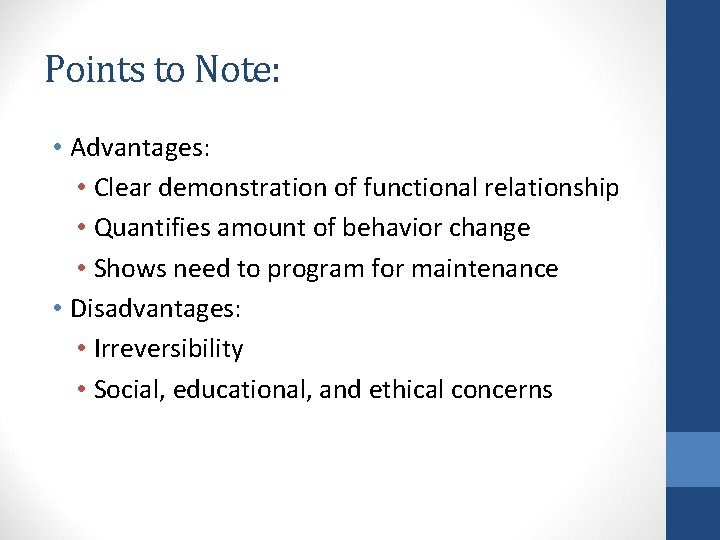
Points to Note: • Advantages: • Clear demonstration of functional relationship • Quantifies amount of behavior change • Shows need to program for maintenance • Disadvantages: • Irreversibility • Social, educational, and ethical concerns
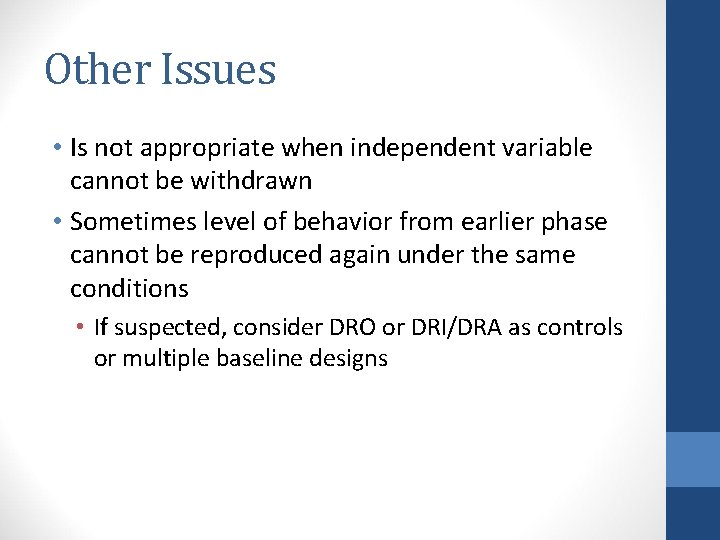
Other Issues • Is not appropriate when independent variable cannot be withdrawn • Sometimes level of behavior from earlier phase cannot be reproduced again under the same conditions • If suspected, consider DRO or DRI/DRA as controls or multiple baseline designs
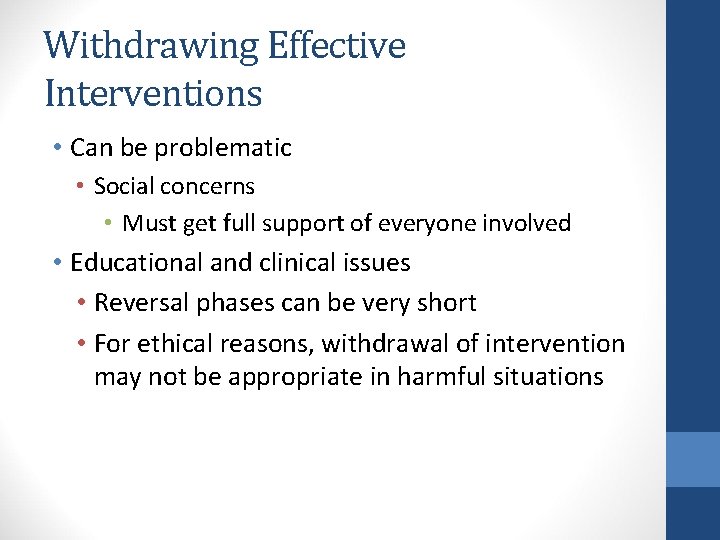
Withdrawing Effective Interventions • Can be problematic • Social concerns • Must get full support of everyone involved • Educational and clinical issues • Reversal phases can be very short • For ethical reasons, withdrawal of intervention may not be appropriate in harmful situations
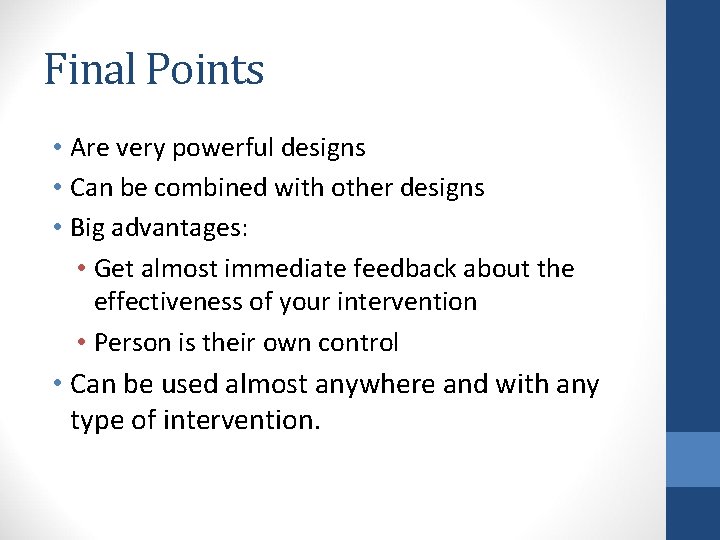
Final Points • Are very powerful designs • Can be combined with other designs • Big advantages: • Get almost immediate feedback about the effectiveness of your intervention • Person is their own control • Can be used almost anywhere and with any type of intervention.