
Revascularization of a Specific Angiosome for Limb Salvage
Revascularization of a Specific Angiosome for Limb Salvage: Does the target artery matter? Richard F. Neville, MD Professor, Department of Surgery Chief, Division of Vascular Surgery George Washington University MFA
Richard F. Neville, MD I have no real or apparent conflicts of interest to report.
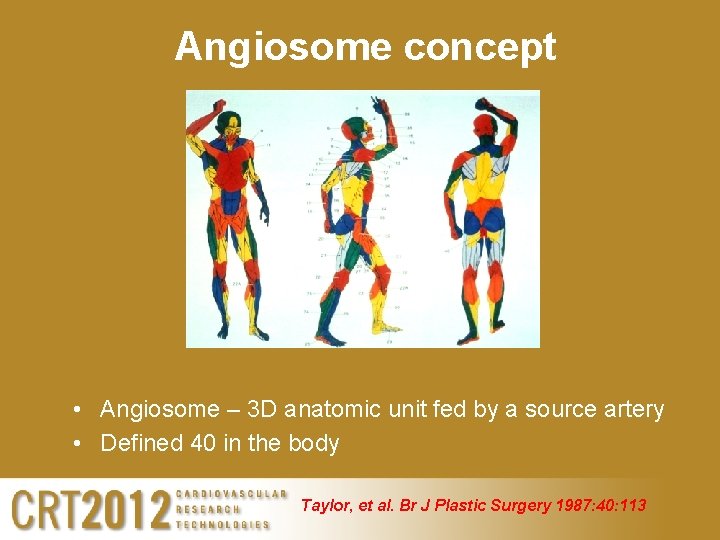
Angiosome concept • Angiosome – 3 D anatomic unit fed by a source artery • Defined 40 in the body Taylor, et al. Br J Plastic Surgery 1987: 40: 113
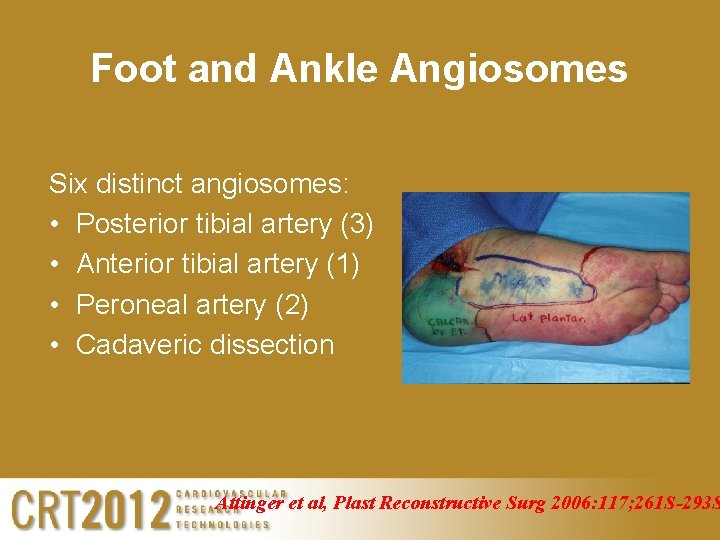
Foot and Ankle Angiosomes Six distinct angiosomes: • Posterior tibial artery (3) • Anterior tibial artery (1) • Peroneal artery (2) • Cadaveric dissection Attinger et al, Plast Reconstructive Surg 2006: 117; 261 S-293 S
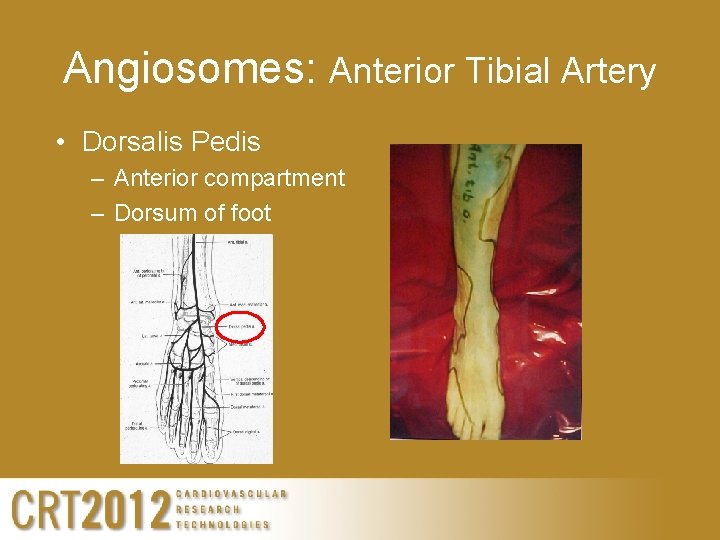
Angiosomes: Anterior Tibial Artery • Dorsalis Pedis – Anterior compartment – Dorsum of foot
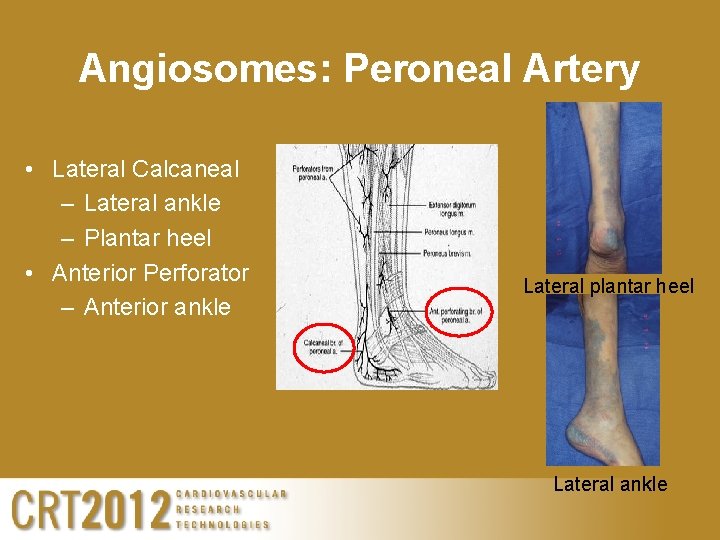
Angiosomes: Peroneal Artery • Lateral Calcaneal – Lateral ankle – Plantar heel • Anterior Perforator – Anterior ankle Lateral plantar heel Lateral ankle
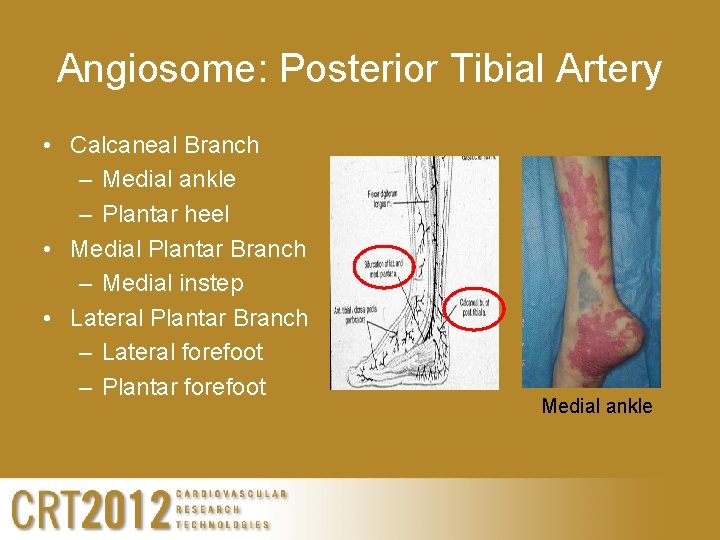
Angiosome: Posterior Tibial Artery • Calcaneal Branch – Medial ankle – Plantar heel • Medial Plantar Branch – Medial instep • Lateral Plantar Branch – Lateral forefoot – Plantar forefoot Medial ankle
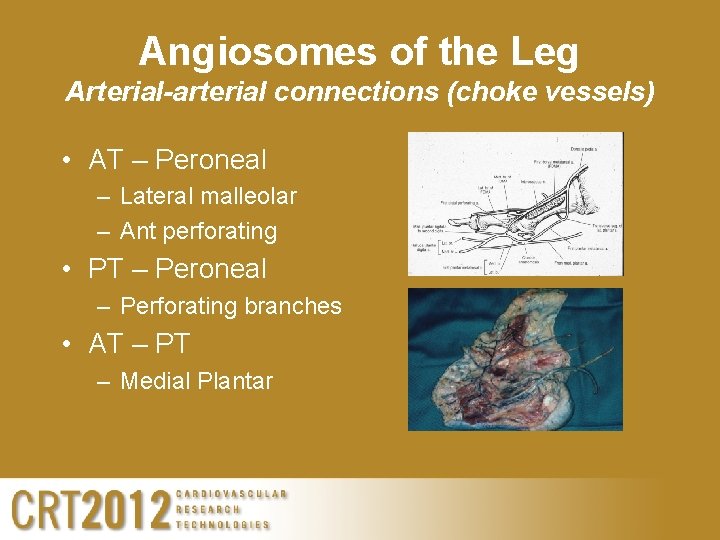
Angiosomes of the Leg Arterial-arterial connections (choke vessels) • AT – Peroneal – Lateral malleolar – Ant perforating • PT – Peroneal – Perforating branches • AT – PT – Medial Plantar
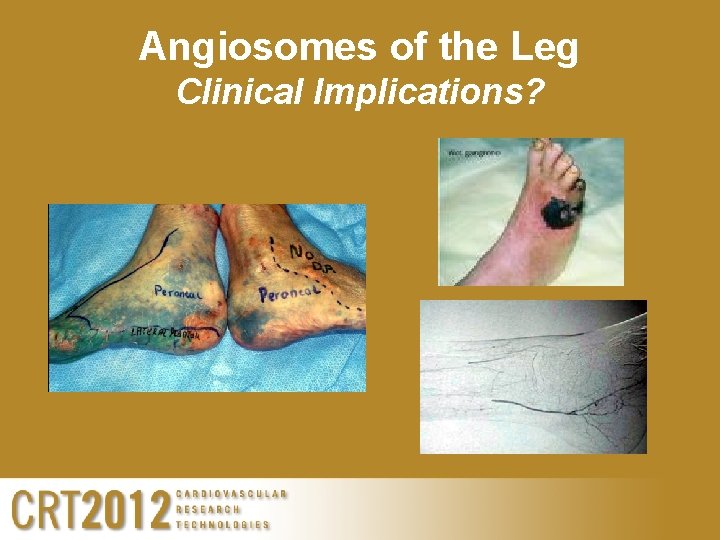
Angiosomes of the Leg Clinical Implications?
Study Methods • • Retrospective analysis 60 consecutive non-healing lower extremity wounds 56 patients Preoperative arteriograms – Arterial anatomy relative to each wound’s angiosome • Lower extremity bypass – Bypass anatomy relative to each wound’s angiosome • Wound care per protocol – Serial debridement and closure – Primary closure / STSG – Local amputation, Local flap, Free flap
Methods Wounds divided into two groups • Direct Revascularization (Direct) Bypass performed to the artery supplying the angiosome in which the wound was located • Indirect Revascularization (Indirect) Bypass performed to an artery not directly supplying the angiosome in which the wound was located
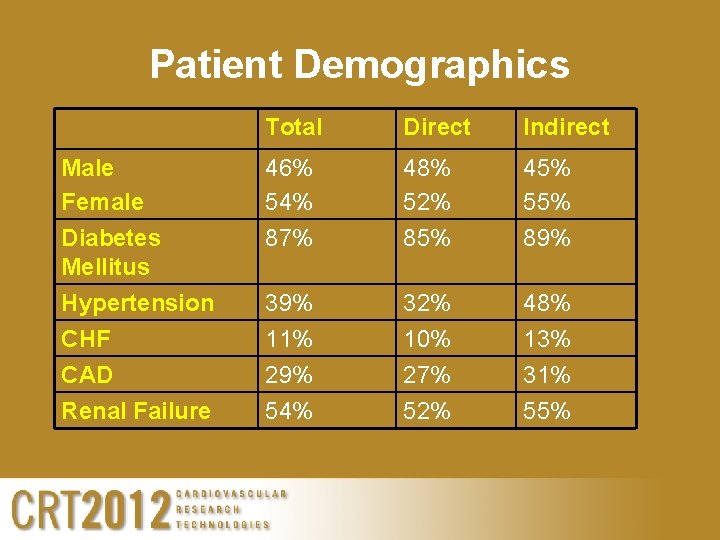
Patient Demographics Total Direct Indirect Male Female Diabetes Mellitus Hypertension CHF CAD 46% 54% 87% 48% 52% 85% 45% 55% 89% 39% 11% 29% 32% 10% 27% 48% 13% 31% Renal Failure 54% 52% 55%
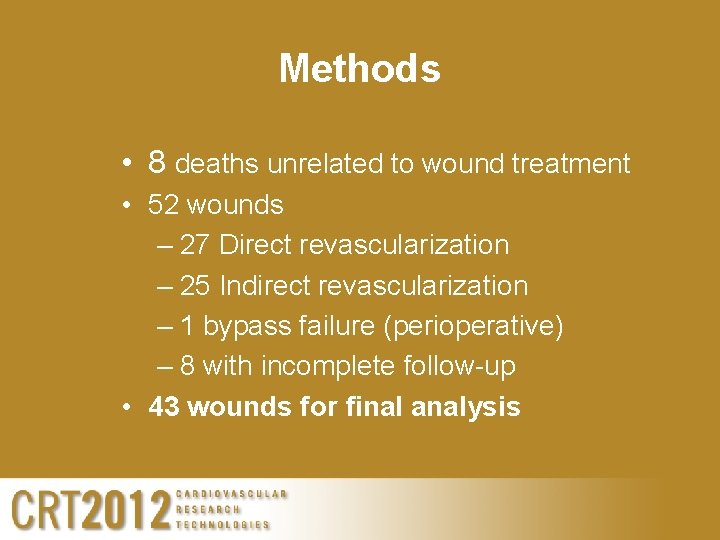
Methods • 8 deaths unrelated to wound treatment • 52 wounds – 27 Direct revascularization – 25 Indirect revascularization – 1 bypass failure (perioperative) – 8 with incomplete follow-up • 43 wounds for final analysis
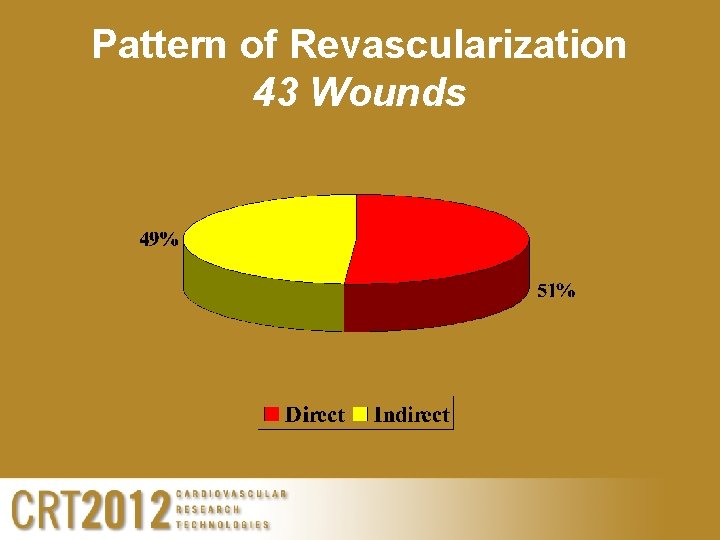
Pattern of Revascularization 43 Wounds
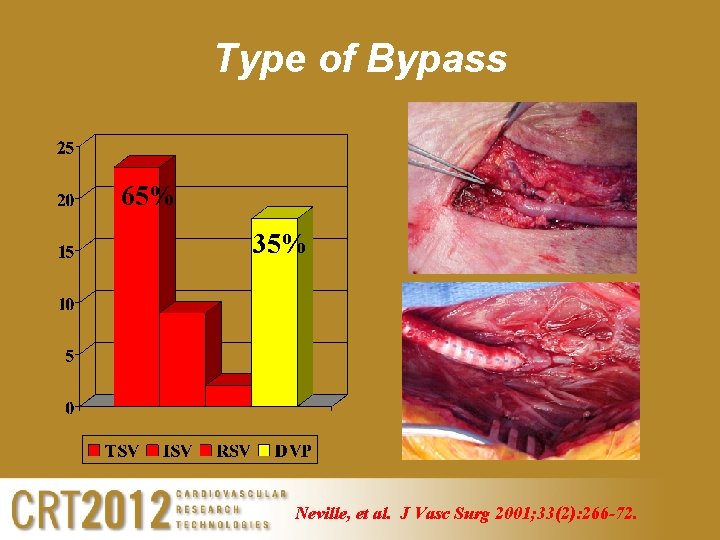
Type of Bypass 65% 35% Neville, et al. J Vasc Surg 2001; 33(2): 266 -72.
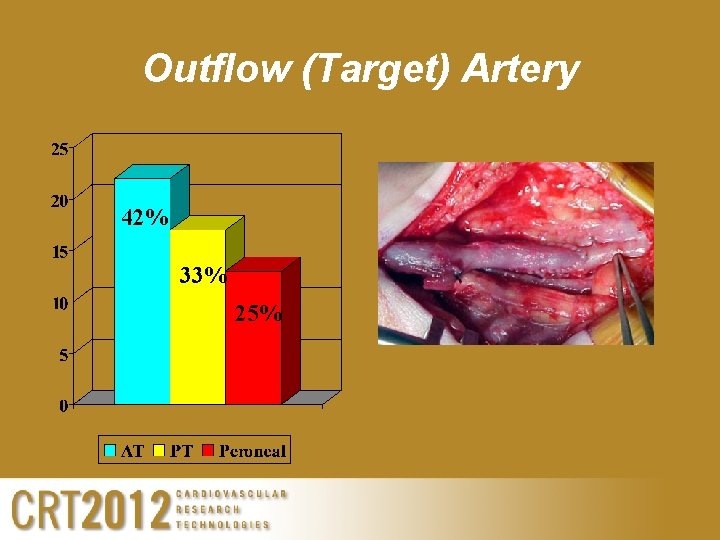
Outflow (Target) Artery 42% 33% 25%
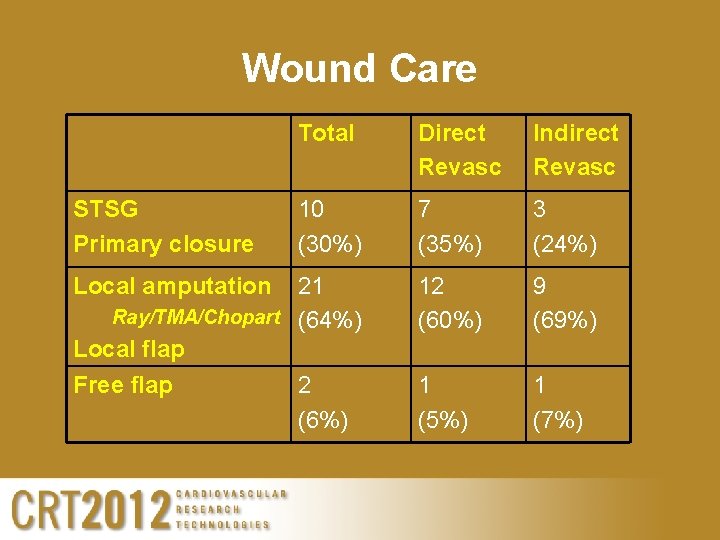
Wound Care Total Direct Revasc Indirect Revasc 10 (30%) 7 (35%) 3 (24%) 21 Ray/TMA/Chopart (64%) Local flap 12 (60%) 9 (69%) Free flap 1 (5%) 1 (7%) STSG Primary closure Local amputation 2 (6%)
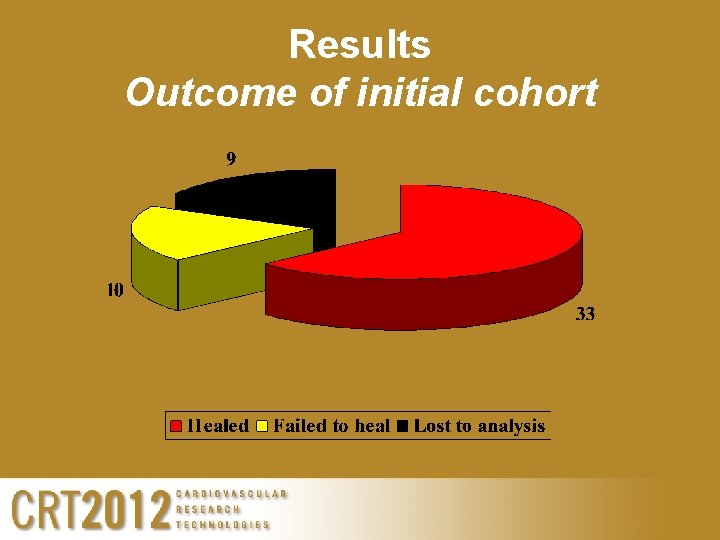
Results Outcome of initial cohort
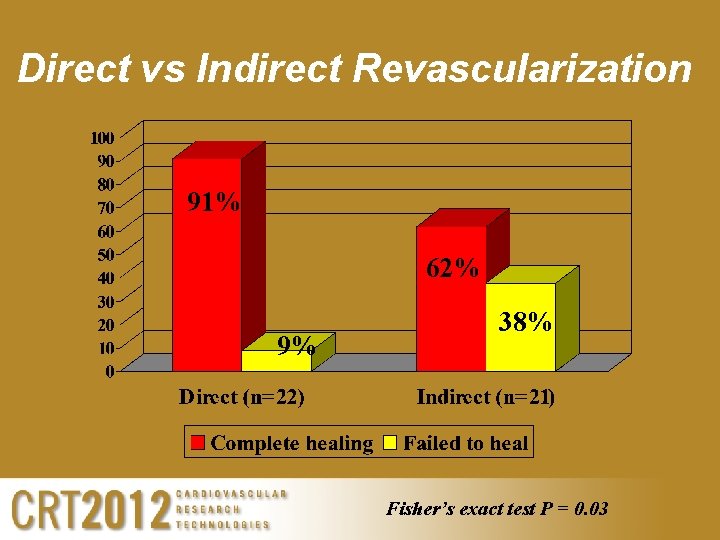
Direct vs Indirect Revascularization 91% 62% 9% 38% Fisher’s exact test P = 0. 03
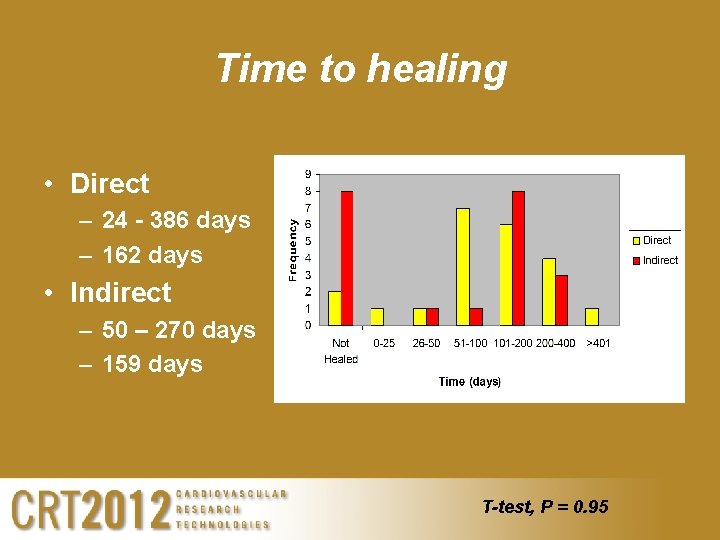
Time to healing • Direct – 24 - 386 days – 162 days • Indirect – 50 – 270 days – 159 days T-test, P = 0. 95
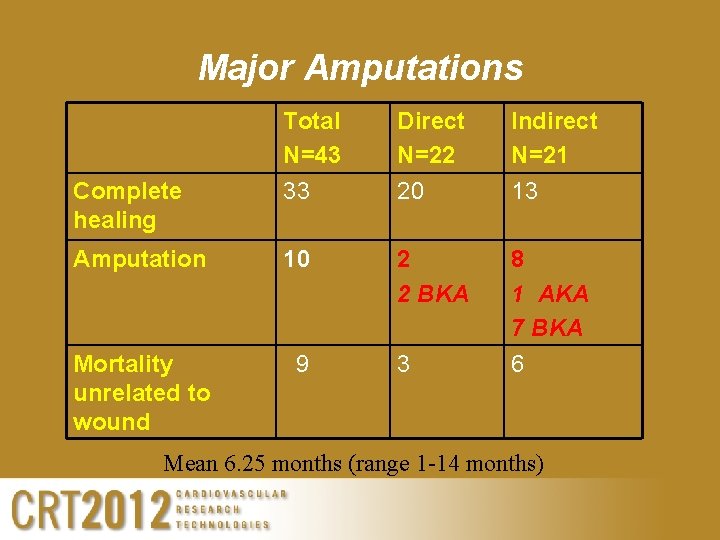
Major Amputations Total N=43 33 Direct N=22 20 Indirect N=21 13 Amputation 10 2 2 BKA 8 1 AKA 7 BKA Mortality unrelated to wound 9 3 6 Complete healing Mean 6. 25 months (range 1 -14 months)
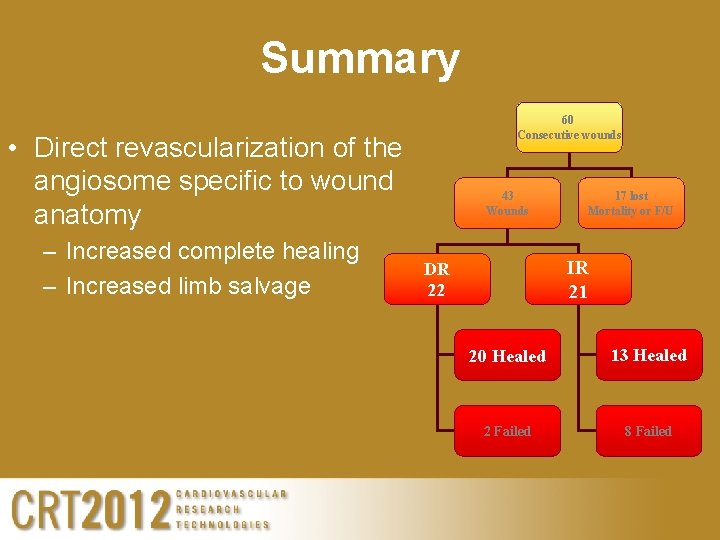
Summary 60 Consecutive wounds • Direct revascularization of the angiosome specific to wound anatomy – Increased complete healing – Increased limb salvage 43 Wounds 17 lost Mortality or F/U IR 21 DR 22 20 Healed 13 Healed 2 Failed 8 Failed
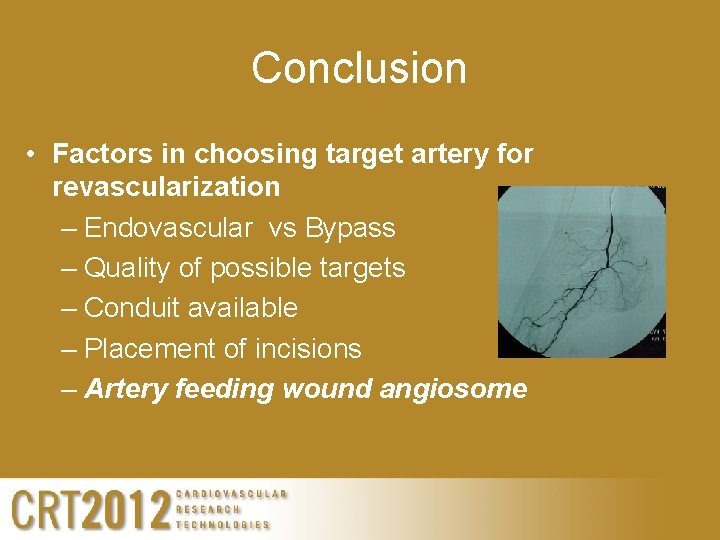
Conclusion • Factors in choosing target artery for revascularization – Endovascular vs Bypass – Quality of possible targets – Conduit available – Placement of incisions – Artery feeding wound angiosome

Thank you
- Slides: 24