
Return to work after longterm sickness conference on





- Slides: 24
Return to work after long-term sickness conference on Labor Activation in Times of High Unemployment OECD, Paris, 14 -15 November 2011 Philip de Jong (Uv. A, APE) 1
overview • Dutch benefit schemes (safety-netters) • survey design • return-to-work (rtw) trajectories • relaxing some assumptions • conclusions 2
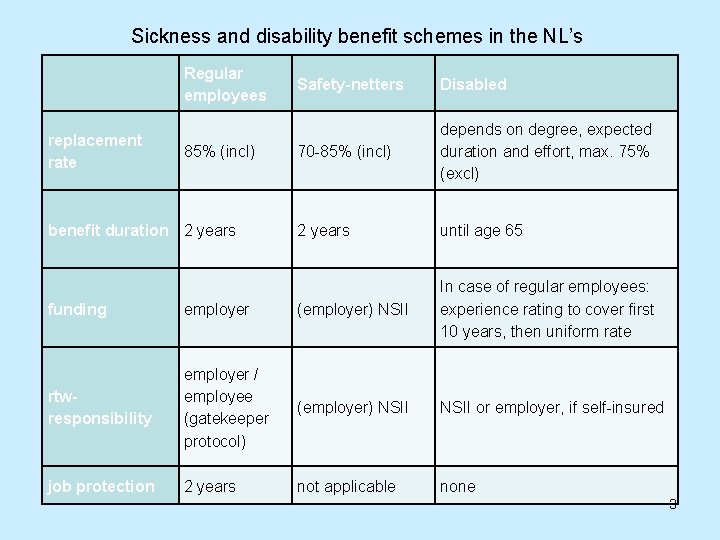
Sickness and disability benefit schemes in the NL’s Regular employees replacement rate 85% (incl) benefit duration 2 years Safety-netters Disabled 70 -85% (incl) depends on degree, expected duration and effort, max. 75% (excl) 2 years until age 65 funding employer (employer) NSII In case of regular employees: experience rating to cover first 10 years, then uniform rate rtwresponsibility employer / employee (gatekeeper protocol) (employer) NSII or employer, if self-insured job protection 2 years not applicable none 3
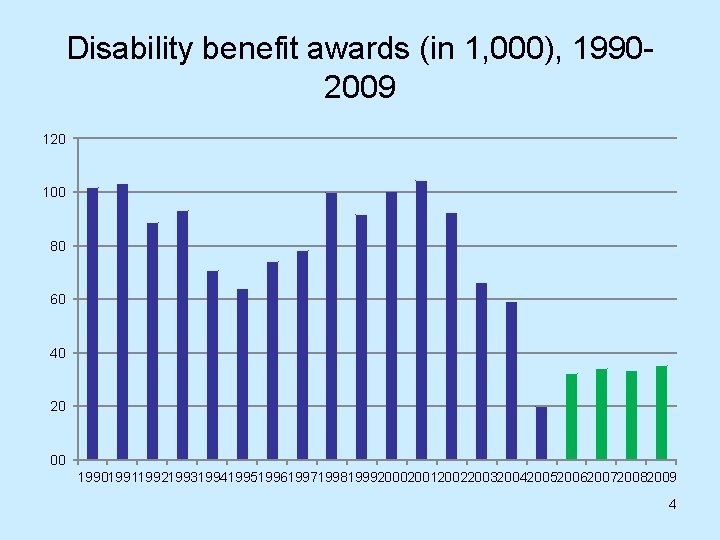
Disability benefit awards (in 1, 000), 19902009 120 100 80 60 40 20 00 19901991199219931994199519961997199819992000200120022003200420052006200720082009 4
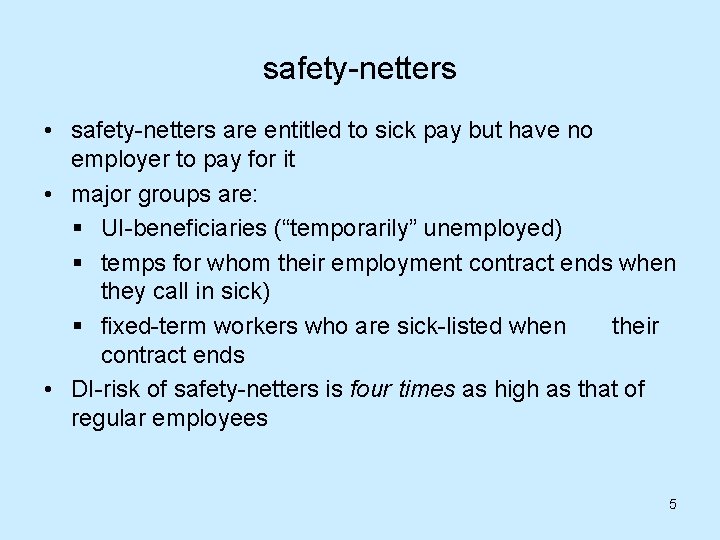
safety-netters • safety-netters are entitled to sick pay but have no employer to pay for it • major groups are: § UI-beneficiaries (“temporarily” unemployed) § temps for whom their employment contract ends when they call in sick) § fixed-term workers who are sick-listed when their contract ends • DI-risk of safety-netters is four times as high as that of regular employees 5
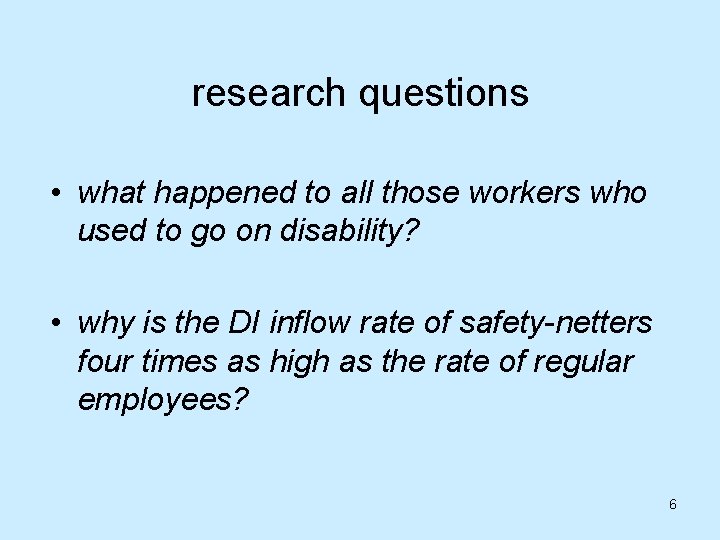
research questions • what happened to all those workers who used to go on disability? • why is the DI inflow rate of safety-netters four times as high as the rate of regular employees? 6
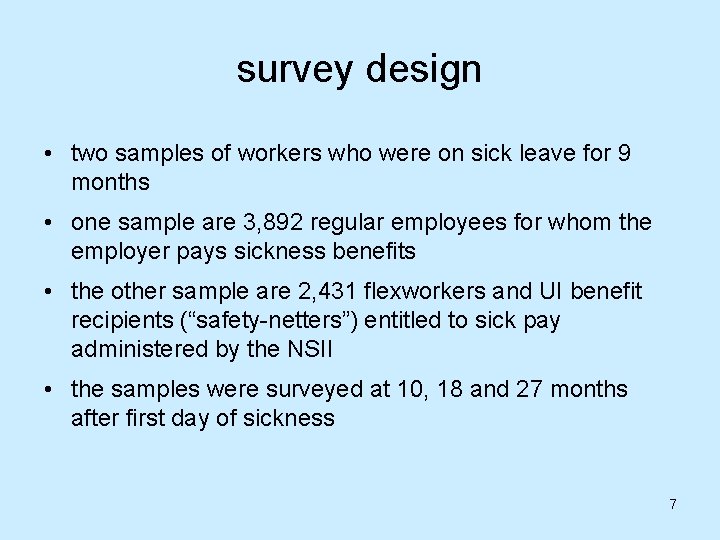
survey design • two samples of workers who were on sick leave for 9 months • one sample are 3, 892 regular employees for whom the employer pays sickness benefits • the other sample are 2, 431 flexworkers and UI benefit recipients (“safety-netters”) entitled to sick pay administered by the NSII • the samples were surveyed at 10, 18 and 27 months after first day of sickness 7
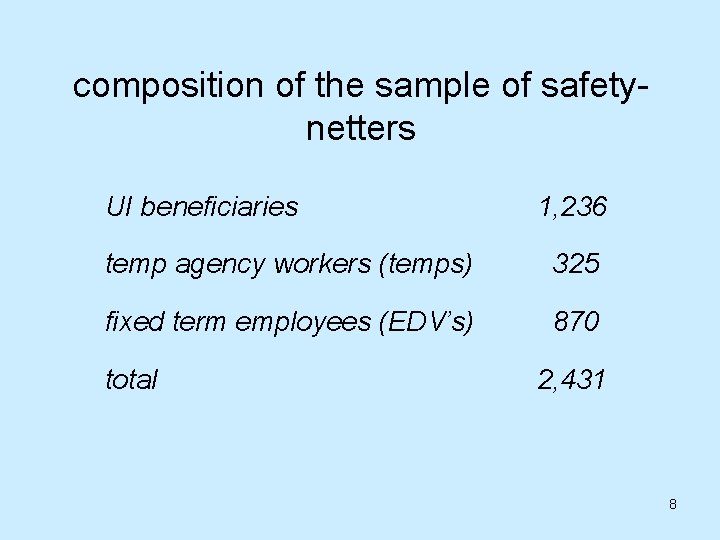
composition of the sample of safetynetters UI beneficiaries 1, 236 temp agency workers (temps) 325 fixed term employees (EDV’s) 870 total 2, 431 8
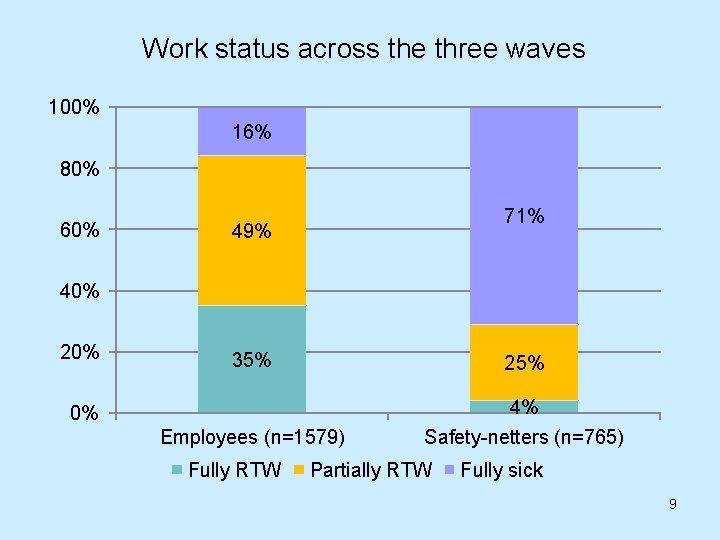
Work status across the three waves 100% 16% 80% 60% 71% 49% 40% 20% 35% 25% Employees (n=1579) 4% Safety-netters (n=765) 0% Fully RTW Partially RTW Fully sick 9
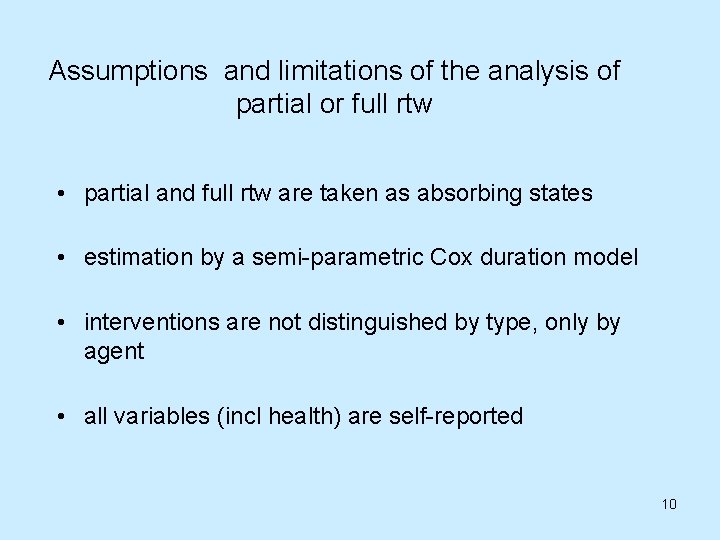
Assumptions and limitations of the analysis of partial or full rtw • partial and full rtw are taken as absorbing states • estimation by a semi-parametric Cox duration model • interventions are not distinguished by type, only by agent • all variables (incl health) are self-reported 10
determinants of (partial or full) rtw 11
Smoothed baseline hazard function with vertical lines at 12 and 24 months after reporting sick (regular employees) 12
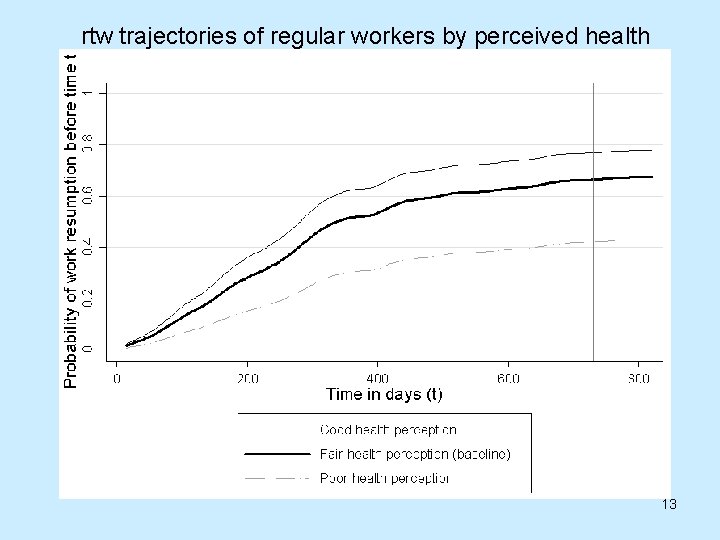
rtw trajectories of regular workers by perceived health 13
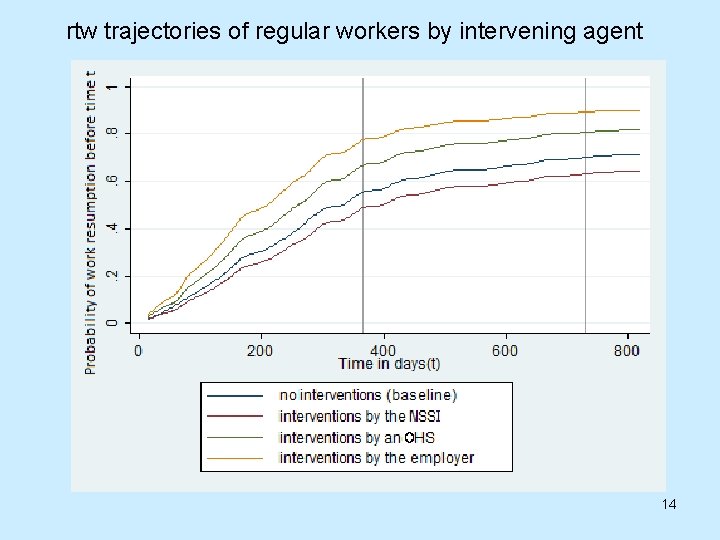
rtw trajectories of regular workers by intervening agent 14
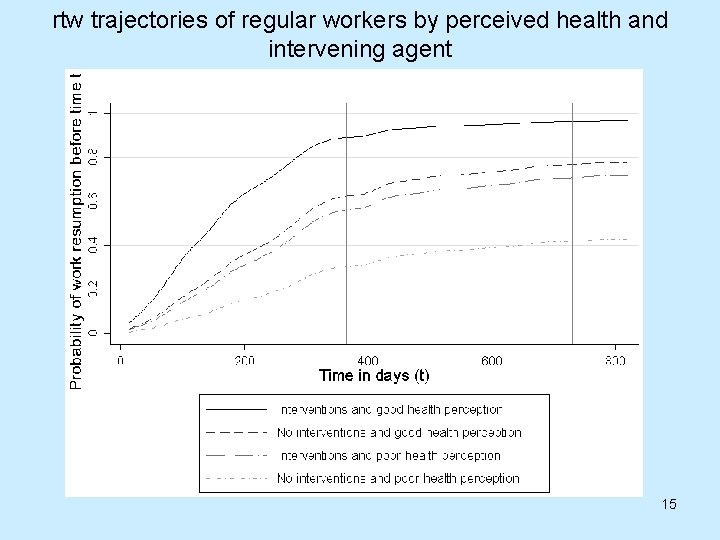
rtw trajectories of regular workers by perceived health and intervening agent 15
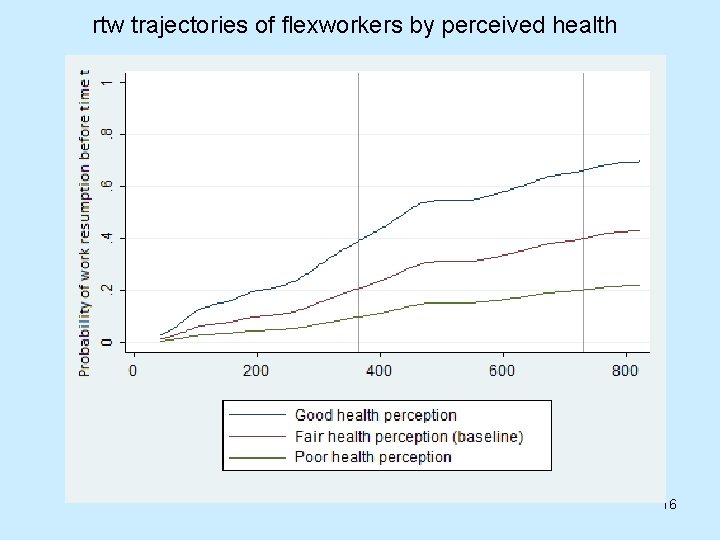
rtw trajectories of flexworkers by perceived health 16
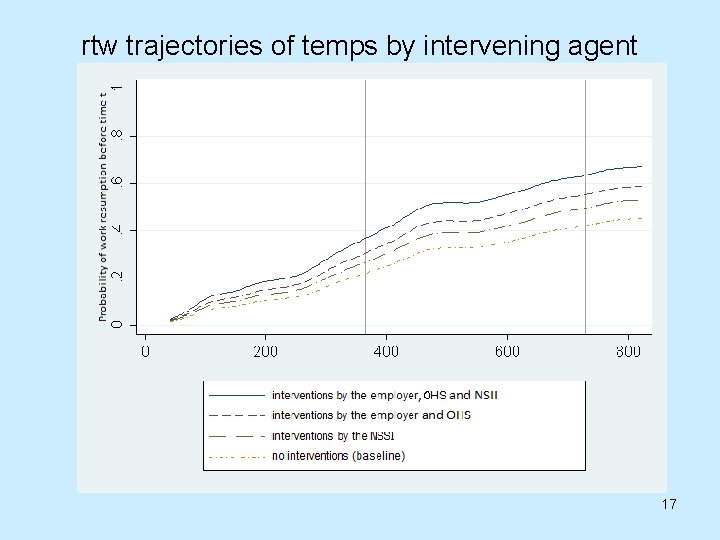
rtw trajectories of temps by intervening agent 17
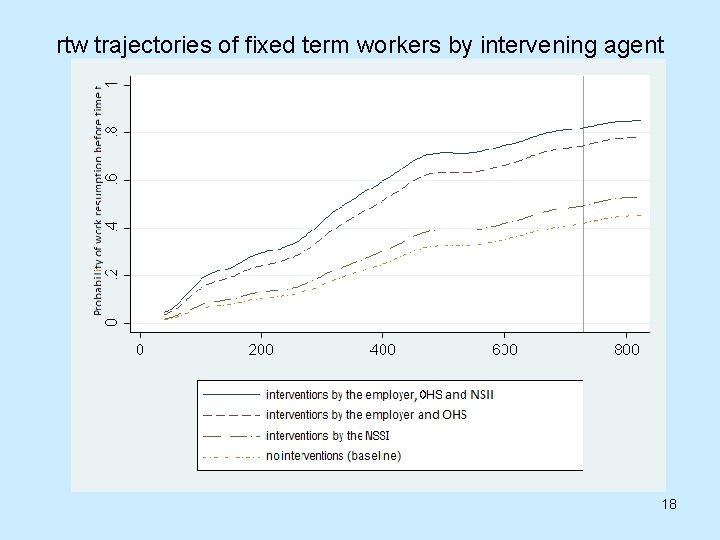
rtw trajectories of fixed term workers by intervening agent 18
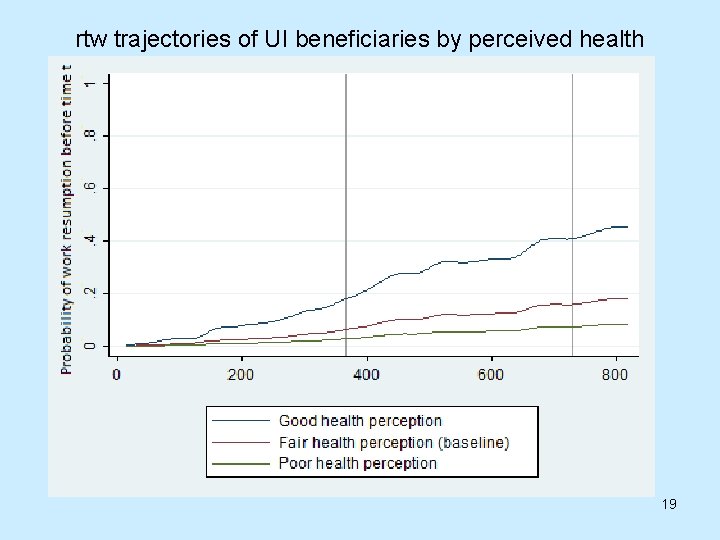
rtw trajectories of UI beneficiaries by perceived health 19
rtw trajectory of UI beneficiaries by intervention 20
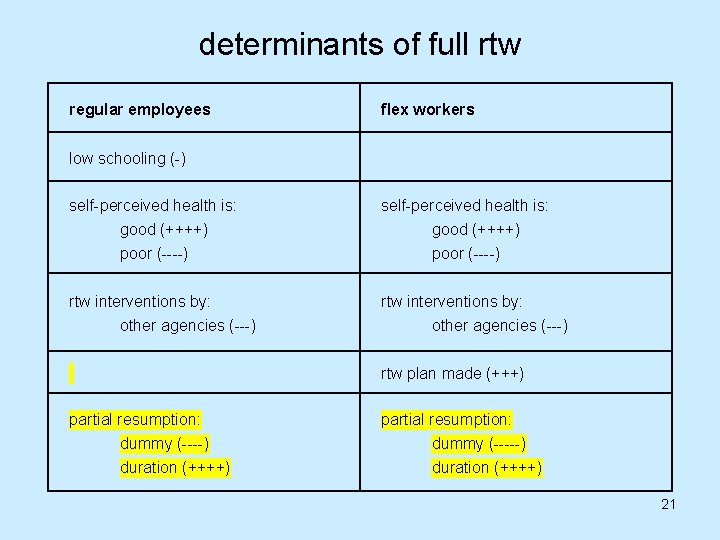
determinants of full rtw regular employees flex workers low schooling (-) self-perceived health is: good (++++) poor (----) rtw interventions by: other agencies (---) rtw plan made (+++) partial resumption: dummy (----) duration (++++) partial resumption: dummy (-----) duration (++++) 21
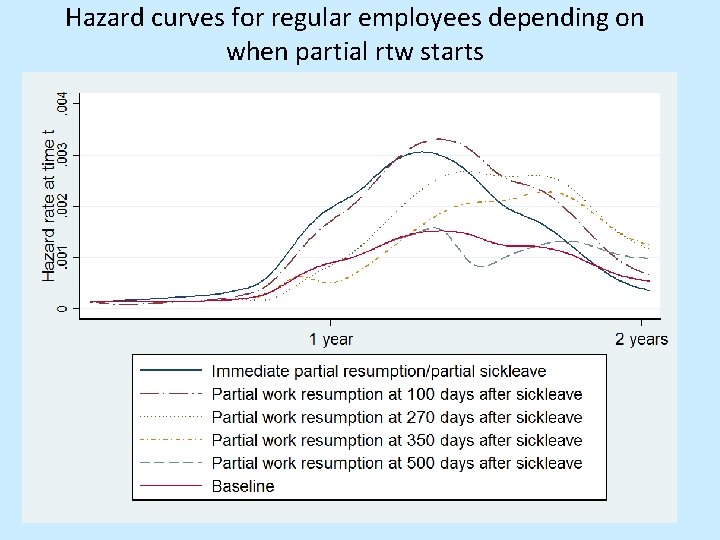
Hazard curves for regular employees depending on when partial rtw starts 22
conclusions 1 • rtw interventions for regular employees are substantially more effective than for flexworkers and UI beneficiaries • more effective because of an early start with gradual work resumption and other interventions • more effective because subjective complaints are much less of an rtw impediment than they used to be • rtw interventions by employers have a strong effect on partial rtw • partial rtw is an effective step towards full rtw 23
conclusions 2 (and policy questions) safety-netters have lower rtw rates because: • (eventually) they have no employer to return to • NSII is not subject to financial and other incentives • no job means no job protection while sick • safety-netters are outsiders on the labor market • are higher sickness and disability risks the price of increased flexibility? • what incentives can be put in place for workers without an employer? 24