
Return to Play Guidelines Critera Unit One Tissue



- Slides: 28
Return to Play Guidelines & Critera Unit One: Tissue Response to Injury
Intro n A study has indicated the re-injury rate for high school athletes who don’t have a Certified Athletic Trainer is 70%. n The re-injury rate for high school athletes who do have an Athletic Trainer is only 3%. n Why do you think there is such a big difference?
Objectives 1. Define Return to Play Terminology. 2. Identify Return to Play Steps.
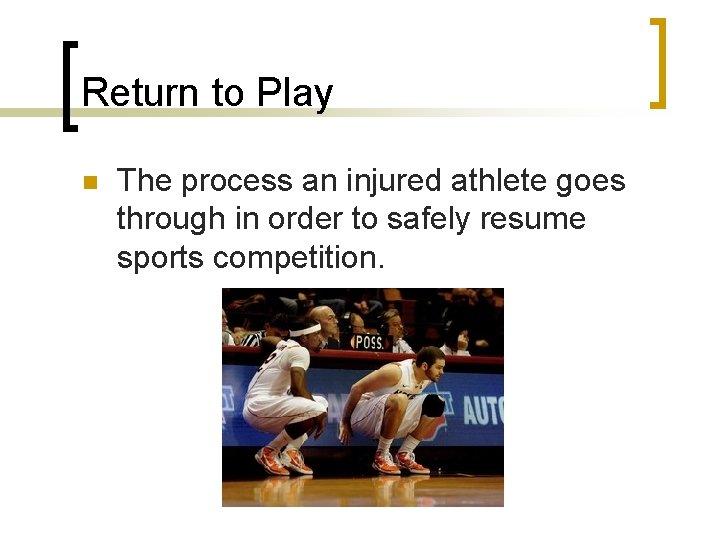
Return to Play n The process an injured athlete goes through in order to safely resume sports competition.
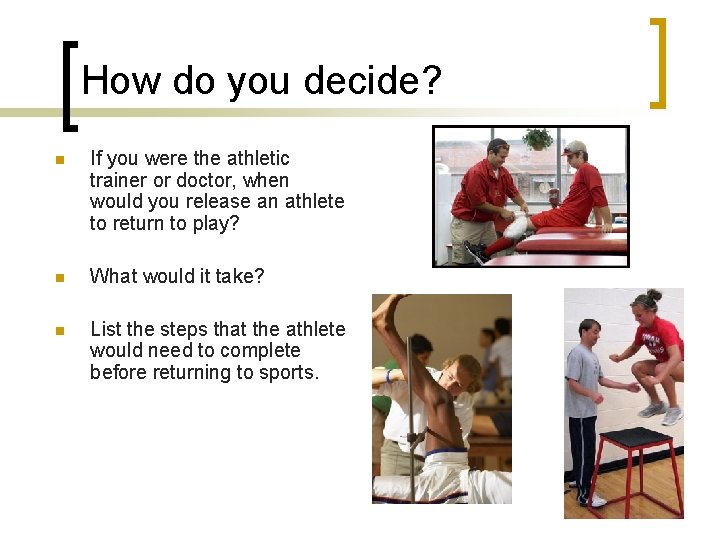
How do you decide? n If you were the athletic trainer or doctor, when would you release an athlete to return to play? n What would it take? n List the steps that the athlete would need to complete before returning to sports.
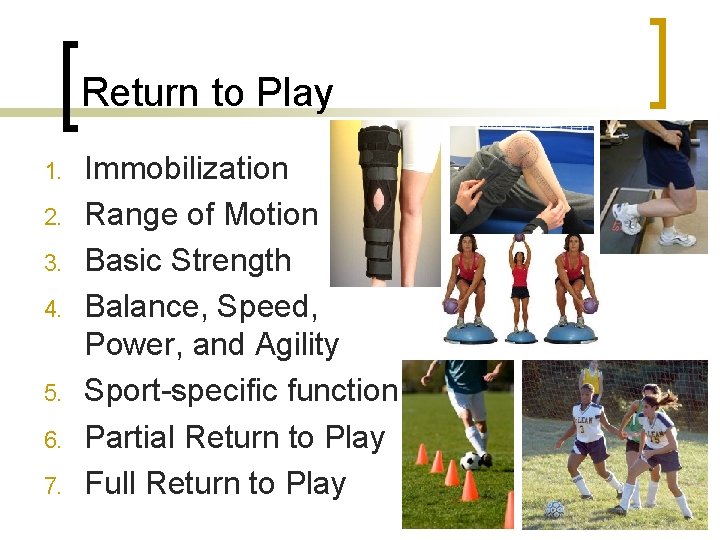
Return to Play 1. 2. 3. 4. 5. 6. 7. Immobilization Range of Motion Basic Strength Balance, Speed, Power, and Agility Sport-specific function Partial Return to Play Full Return to Play
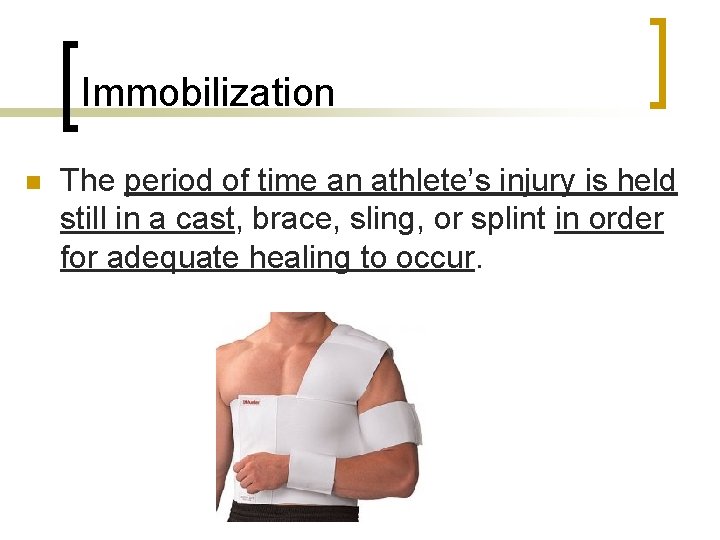
Immobilization n The period of time an athlete’s injury is held still in a cast, brace, sling, or splint in order for adequate healing to occur.
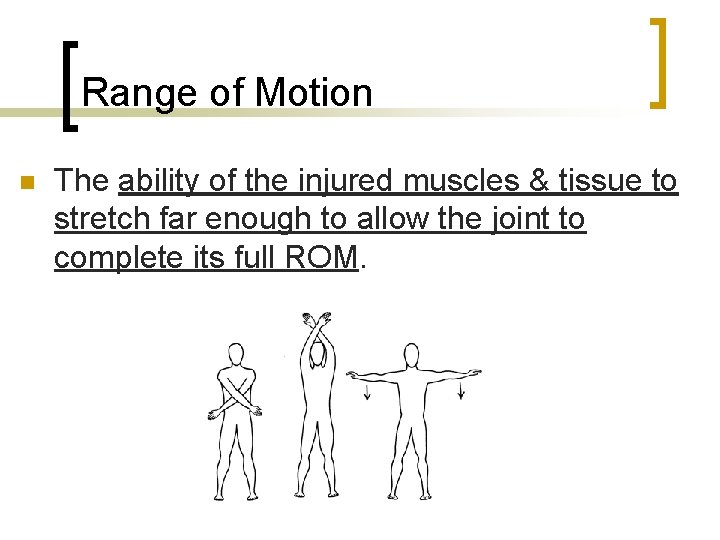
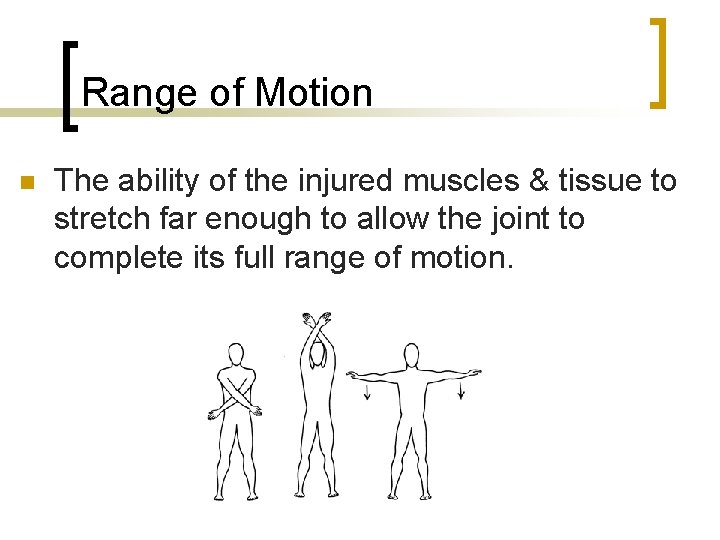
Range of Motion n The ability of the injured muscles & tissue to stretch far enough to allow the joint to complete its full ROM.
Basic Strength Muscles with an injury must be able to produce force equivalent to at least 95% their pre-injured state. n Why would this matter? n
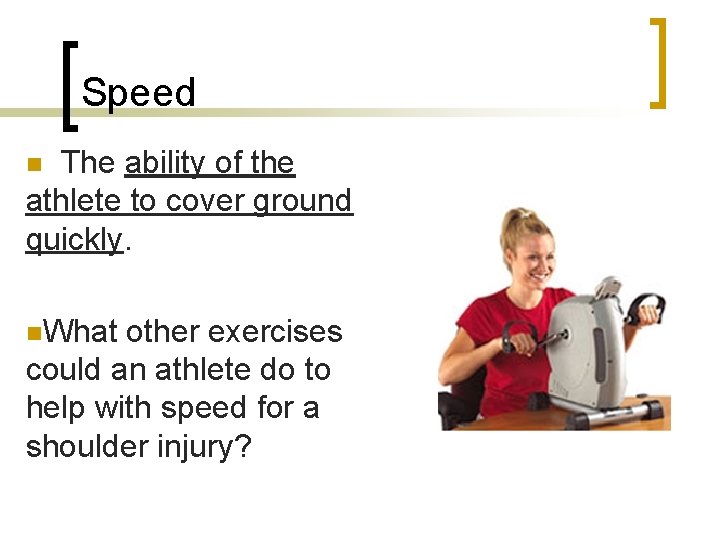
Speed The ability of the athlete to cover ground quickly. n n. What other exercises could an athlete do to help with speed for a shoulder injury?
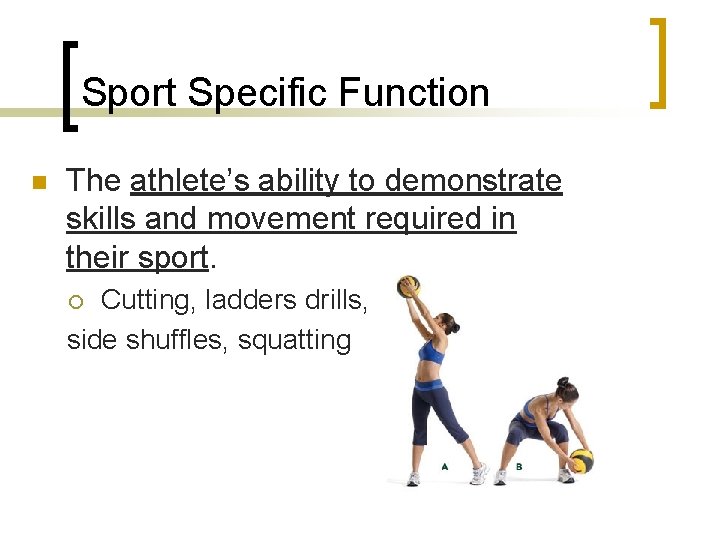
Sport Specific Function n The athlete’s ability to demonstrate skills and movement required in their sport. Cutting, ladders drills, side shuffles, squatting ¡
Partial Return to Play The injured athlete is released to participate in some, but not all practice activities. n Restrictions might include contact drills, abrupt changes in direction, over-exertion, etc. n Restrictions are dependent on the type and nature of the athlete’s injury and the level of rehabilitation progress. n
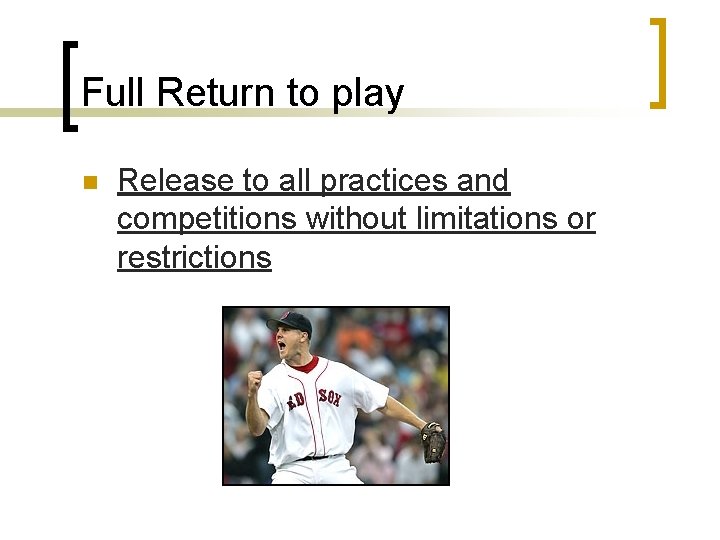
Full Return to play n Release to all practices and competitions without limitations or restrictions
Recall the steps n 1. 2. 3. 4. 5. 6. What are the 6 steps to return an athlete back to play? Immobilization Range of Motion Basic Strength Balance, Speed, Power, and Agility Partial Return to Play Full Return to Play
Criteria n What does “criteria” mean to you? n The specific level of the injured athlete must attain & demonstrate in order to progress to the next return to play step.
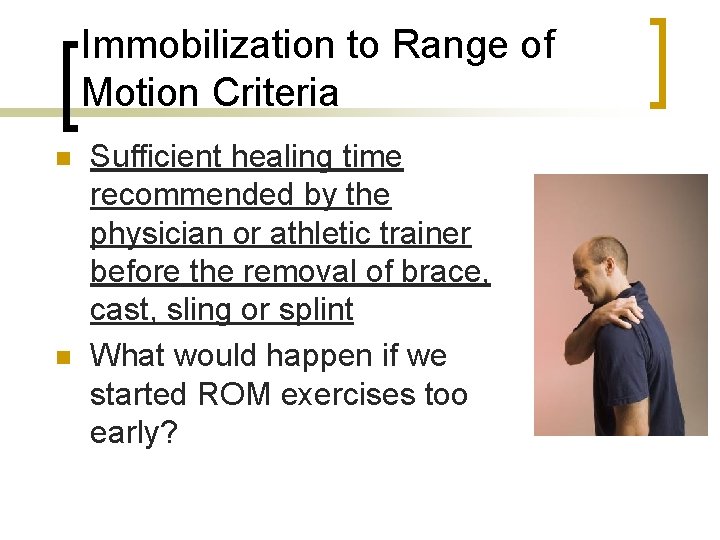
Immobilization to Range of Motion Criteria n n Sufficient healing time recommended by the physician or athletic trainer before the removal of brace, cast, sling or splint What would happen if we started ROM exercises too early?
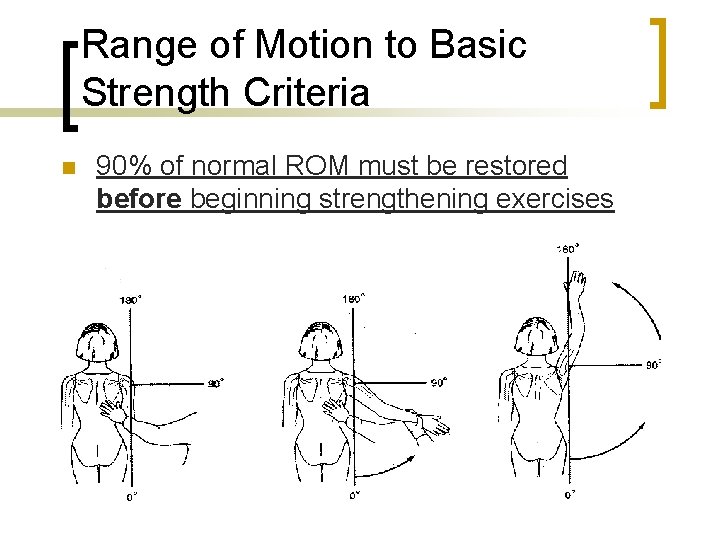
Range of Motion to Basic Strength Criteria n 90% of normal ROM must be restored before beginning strengthening exercises
Range of Motion n The ability of the injured muscles & tissue to stretch far enough to allow the joint to complete its full range of motion.
Basic Strength to Agility, Balance, Power, & Speed Criteria n Must have 90% of basic strength before beginning Agility, Speed and Power exercises
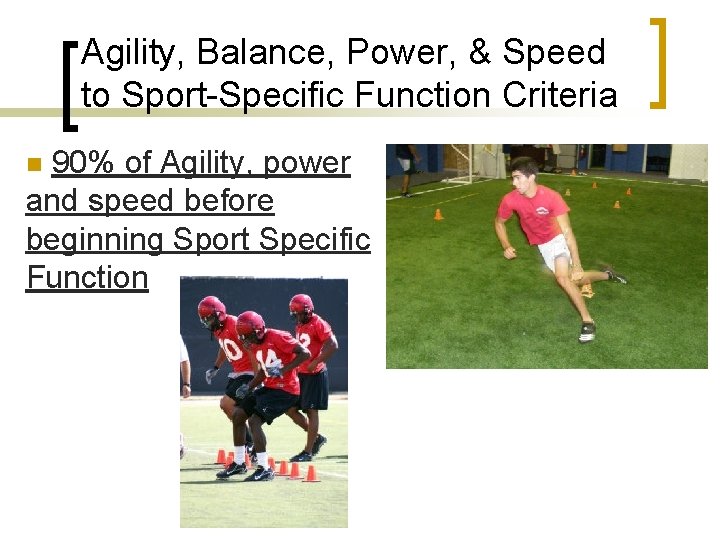
Agility, Balance, Power, & Speed to Sport-Specific Function Criteria 90% of Agility, power and speed before beginning Sport Specific Function n
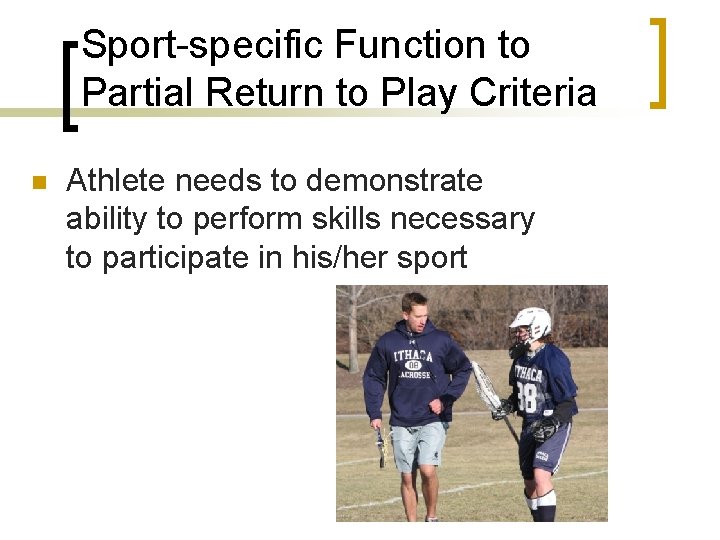
Sport-specific Function to Partial Return to Play Criteria n Athlete needs to demonstrate ability to perform skills necessary to participate in his/her sport
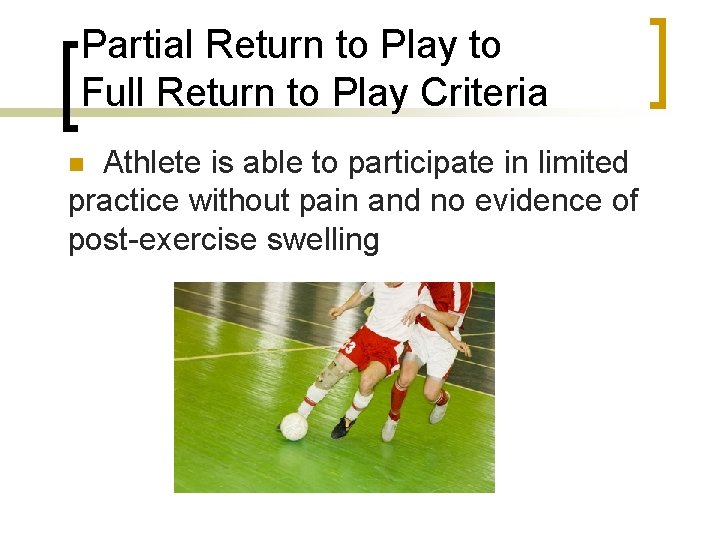
Partial Return to Play to Full Return to Play Criteria Athlete is able to participate in limited practice without pain and no evidence of post-exercise swelling n
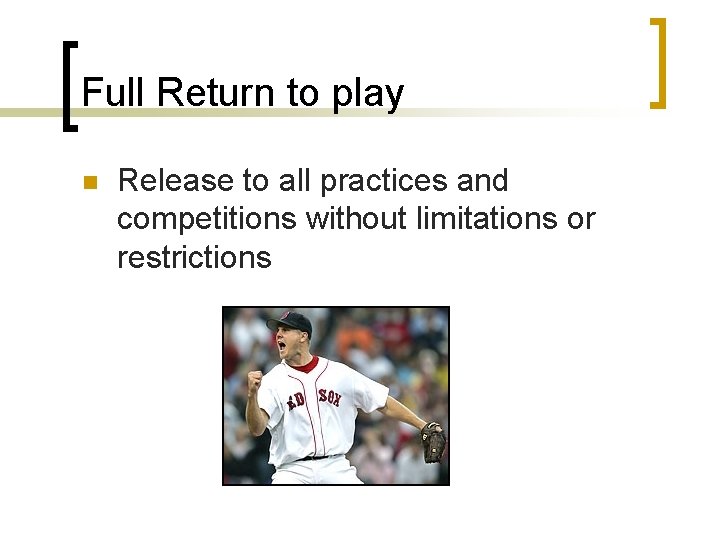
Full Return to play n Release to all practices and competitions without limitations or restrictions
What’s the criteria? n The athlete has 90% pre-injury strength. What can he progress to? n Strength speed Agility, power, balance &
What’s the Criteria? n The athlete can now demonstrate full function with sport specific drills. n Sport specific function Partial Return
What’s the criteria? n The cast has been removed by the physician. n Immobilization Range of Motion
What’s the Criteria? n The athlete has shown no swelling, pain or problems in practice. n Partial return to play Full Return
Exit Card n On a small sheet of paper: ¡ List the steps to Return to Play IN ORDER.