
Return on Invested Capital and Profitability Analysis 8
Return on Invested Capital and Profitability Analysis 8 CHAPTER 8 -1
8 -2 Return on Invested Capital Importance of Joint Analysis • Joint analysis is where one measure is assessed relative to another • Return on invested capital (ROIC) or Return on Investment (ROI) is an important joint analysis
8 -3 Return on Invested Capital ROI Relation • ROI relates income, or other performance measure, to a company’s level and source of financing • ROI allows comparisons with alternative investment opportunities • Riskier investments expected to yield a higher ROI • ROI impacts a company’s ability to succeed, attract financing, repay creditors, and reward owners
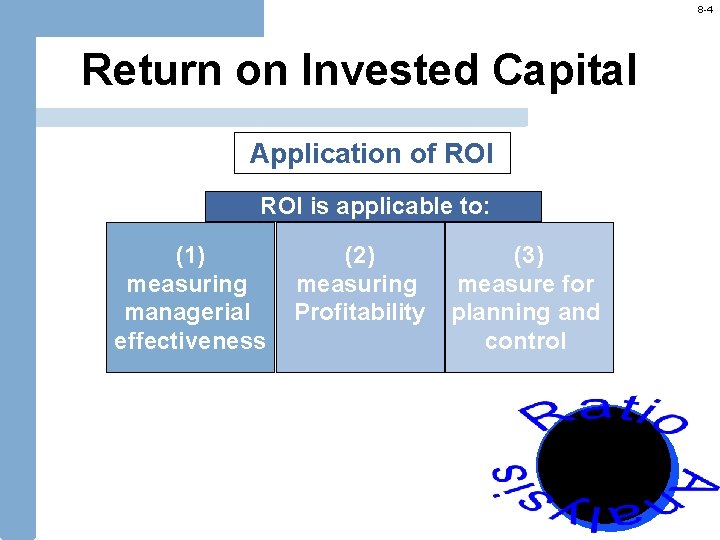
8 -4 Return on Invested Capital Application of ROI is applicable to: (1) (2) (3) measuring Measure measure for managerial profitability Profitabilityplanning andand effectiveness control
8 -5 Return on Invested Capital Measuring Managerial Effectiveness • Management is responsible for all company activities • ROI is a measure of managerial effectiveness in business activities • ROI depends on the skill, resourcefulness, ingenuity, and motivation of management
8 -6 Return on Invested Capital Measuring Profitability • ROI is an indicator of company profitability • ROI relates key summary measures: profits with financing • ROI conveys return on invested capital from different financing perspectives
8 -7 Return on Invested Capital Measuring for Planning and Control ROI assists managers with: • • • Planning Budgeting Coordinating activities Evaluating opportunities Control
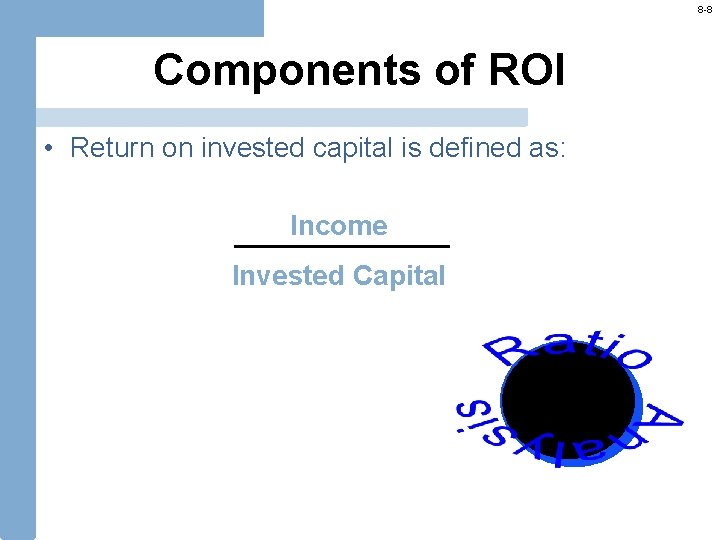
8 -8 Components of ROI • Return on invested capital is defined as: Income Invested Capital
8 -9 Components of ROI Invested Capital Defined • No universal measure of invested capital • Different measures of invested capital reflect user’s different perspectives
8 -10 Components of ROI Alternative Measures of Invested Capital Common Measures: • Net Operating Assets • Stockholders’ Equity
8 -11 Components of ROI Net Operating Assets • Perspective is that of the company as a whole • Called return on net operating assets (RNOA) RNOA: measures operating efficiency/ performance reflects return on net operating assets (excluding financial assets/liabilities)
8 -12 Components of ROI Common Equity Capital • Perspective is that of common equity holders • Captures the effect of leverage (debt) capital on equity holder return • Excludes all debt financing and preferred equity net income less preferred dividends average common equity
8 -13 Components of ROI Computing Invested Capital • Usually computed using average capital available for the period • Typically add beginning and ending invested capital amounts and divide by 2 • More accurate computation is to average interim amounts — quarterly or monthly
8 -14 Components of ROI Adjustments to Invested Capital and Income Numbers Ø Many accounting numbers require analytical adjustment—see prior chapters Ø Some numbers not reported in financial statements need to be included Ø Such adjustments are necessary for effective analysis of return on invested capital
8 -15 Components of ROI Return on Net Operating Assets -- RNOA NOPAT (Beginning NOA + Ending NOA) / 2 Where • NOPAT = Operating income x (1 - tax rate) • NOA = net operating assets
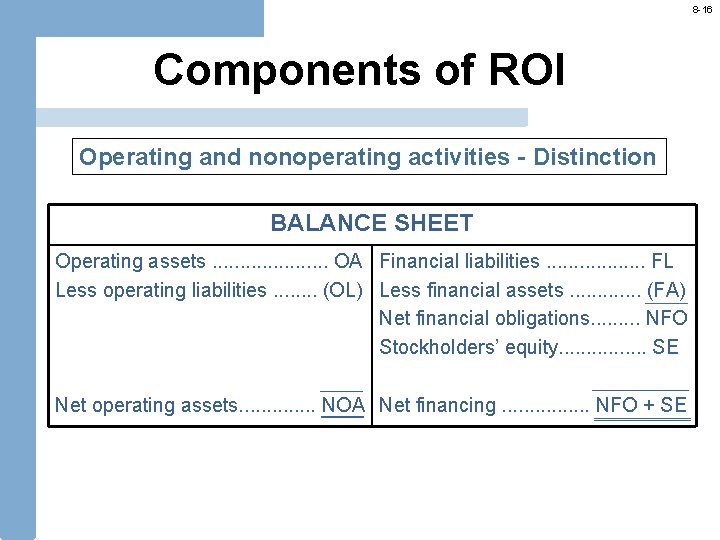
8 -16 Components of ROI Operating and nonoperating activities - Distinction BALANCE SHEET Operating assets. . . . . OA Financial liabilities. . . . FL Less operating liabilities. . . . (OL) Less financial assets. . . (FA) Net financial obligations. . NFO Stockholders’ equity. . . . SE Net operating assets. . . NOA Net financing. . . . NFO + SE
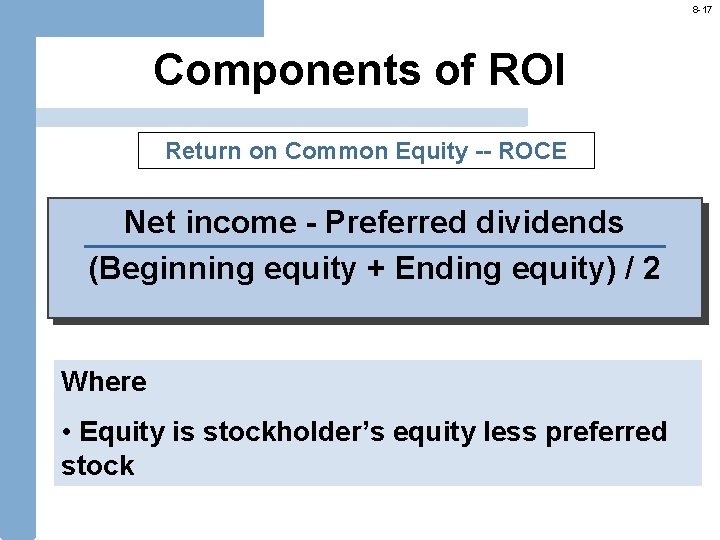
8 -17 Components of ROI Return on Common Equity -- ROCE Net income - Preferred dividends (Beginning equity + Ending equity) / 2 Where • Equity is stockholder’s equity less preferred stock
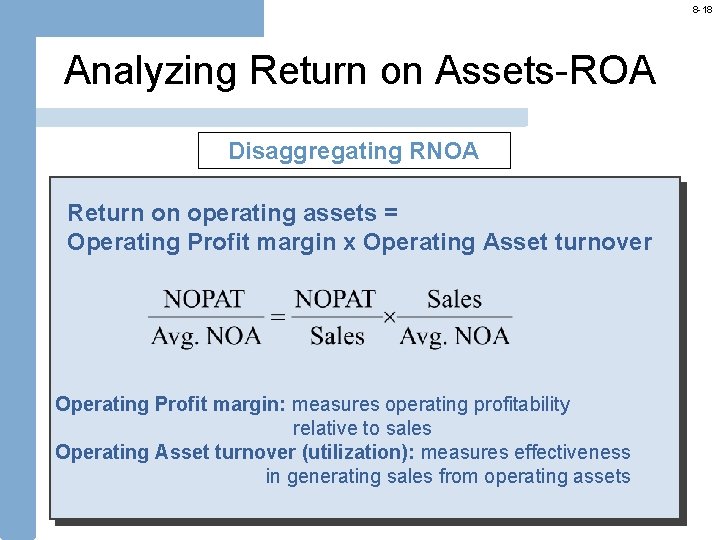
8 -18 Analyzing Return on Assets-ROA Disaggregating RNOA Return on operating assets = Operating Profit margin x Operating Asset turnover Operating Profit margin: measures operating profitability relative to sales Operating Asset turnover (utilization): measures effectiveness in generating sales from operating assets
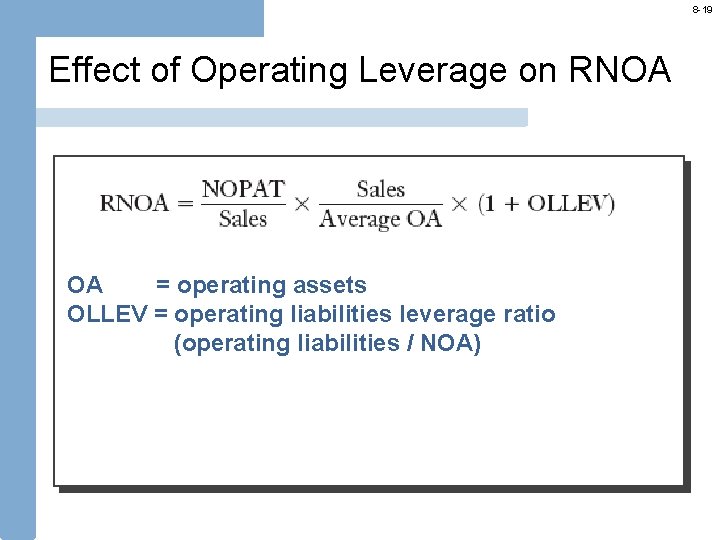
8 -19 Effect of Operating Leverage on RNOA OA = operating assets OLLEV = operating liabilities leverage ratio (operating liabilities / NOA)
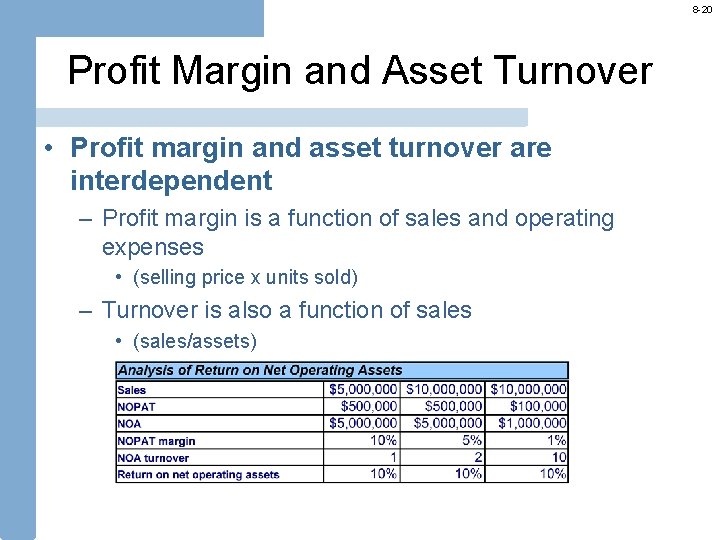
8 -20 Profit Margin and Asset Turnover • Profit margin and asset turnover are interdependent – Profit margin is a function of sales and operating expenses • (selling price x units sold) – Turnover is also a function of sales • (sales/assets)
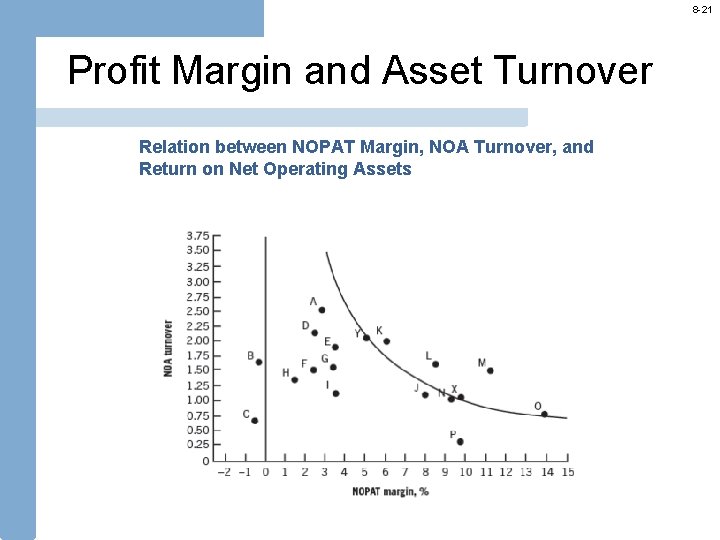
8 -21 Profit Margin and Asset Turnover Relation between NOPAT Margin, NOA Turnover, and Return on Net Operating Assets
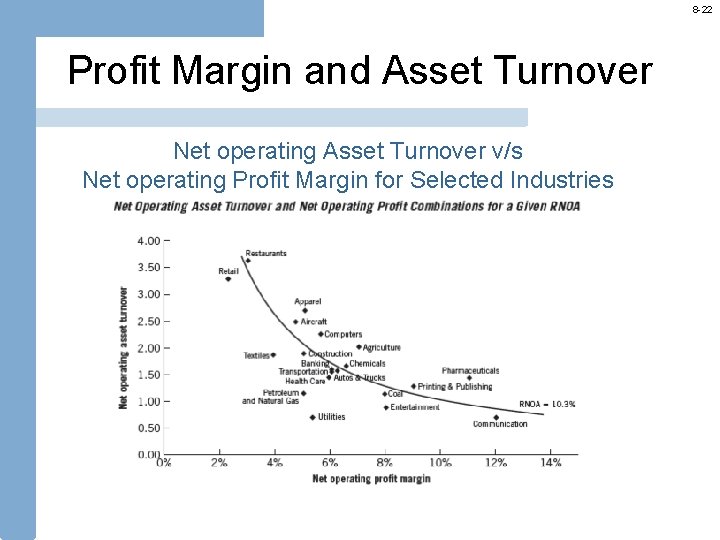
8 -22 Profit Margin and Asset Turnover Net operating Asset Turnover v/s Net operating Profit Margin for Selected Industries
8 -23 Analyzing Return on Assets-ROA
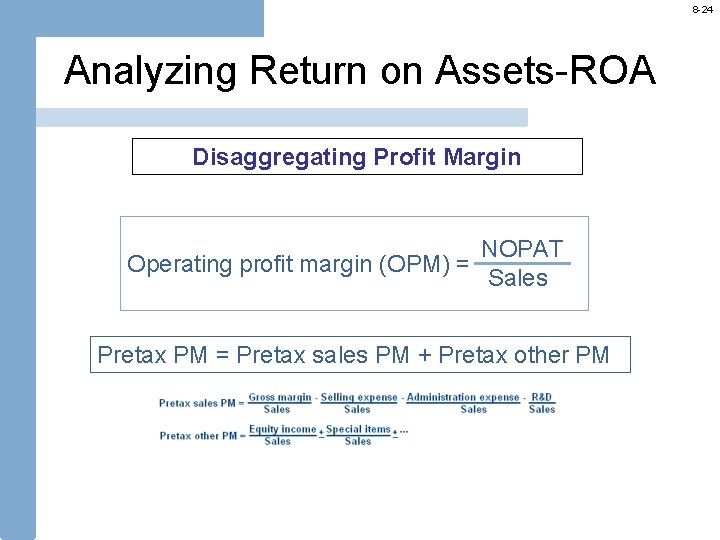
8 -24 Analyzing Return on Assets-ROA Disaggregating Profit Margin Operating profit margin (OPM) = NOPAT Sales Pretax PM = Pretax sales PM + Pretax other PM
8 -25 Analyzing Return on Assets-ROA Disaggregating Profit Margin • Gross Profit Margin: Reflects the gross profit as a percent of sales – Reflects company’s ability to increase or maintain selling price – Declining margins may indicate that competition has increased or that the company’s products have become less competitive, or both • Selling Expenses • General and Administrative Expenses
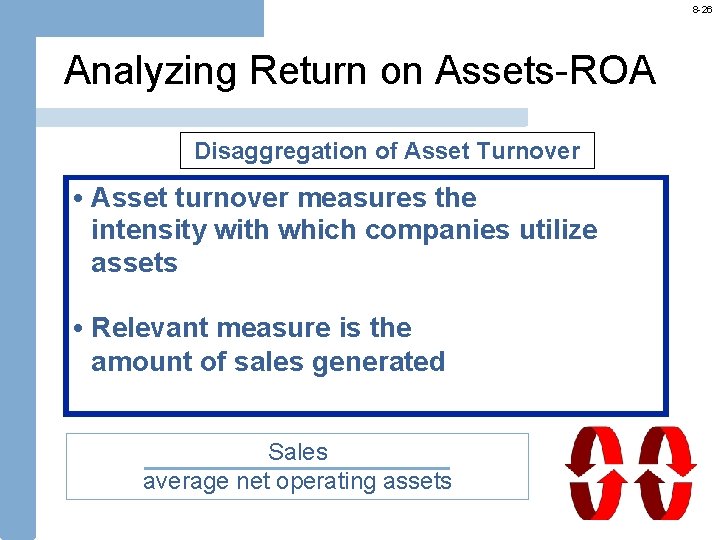
8 -26 Analyzing Return on Assets-ROA Disaggregation of Asset Turnover • Asset turnover measures the intensity with which companies utilize assets • Relevant measure is the amount of sales generated Sales average net operating assets
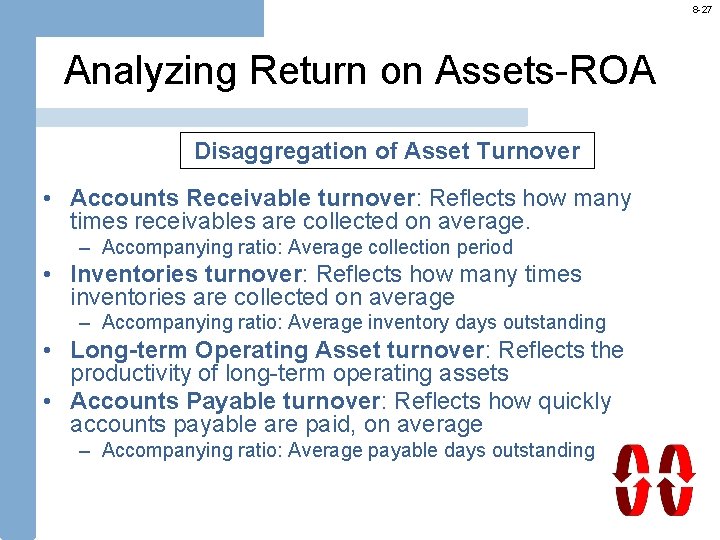
8 -27 Analyzing Return on Assets-ROA Disaggregation of Asset Turnover • Accounts Receivable turnover: Reflects how many times receivables are collected on average. – Accompanying ratio: Average collection period • Inventories turnover: Reflects how many times inventories are collected on average – Accompanying ratio: Average inventory days outstanding • Long-term Operating Asset turnover: Reflects the productivity of long-term operating assets • Accounts Payable turnover: Reflects how quickly accounts payable are paid, on average – Accompanying ratio: Average payable days outstanding
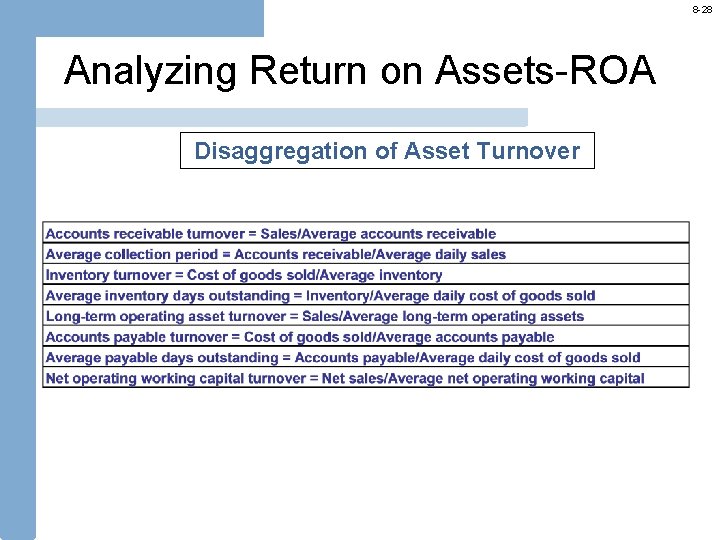
8 -28 Analyzing Return on Assets-ROA Disaggregation of Asset Turnover
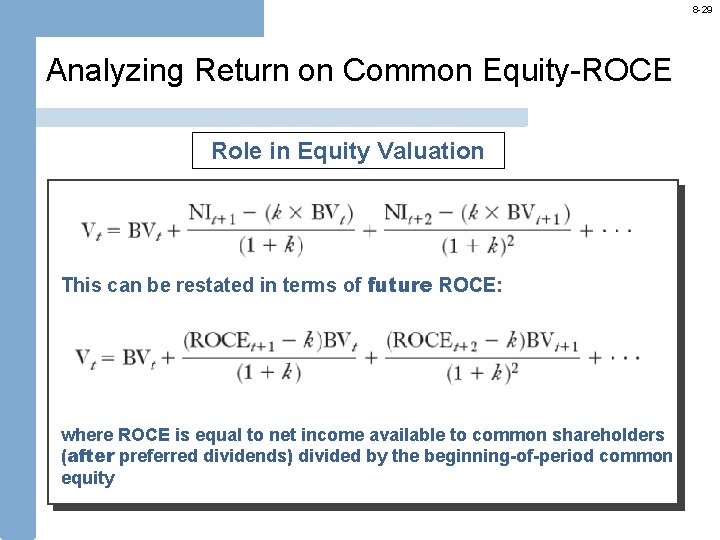
8 -29 Analyzing Return on Common Equity-ROCE Role in Equity Valuation This can be restated in terms of future ROCE: where ROCE is equal to net income available to common shareholders (after preferred dividends) divided by the beginning-of-period common equity
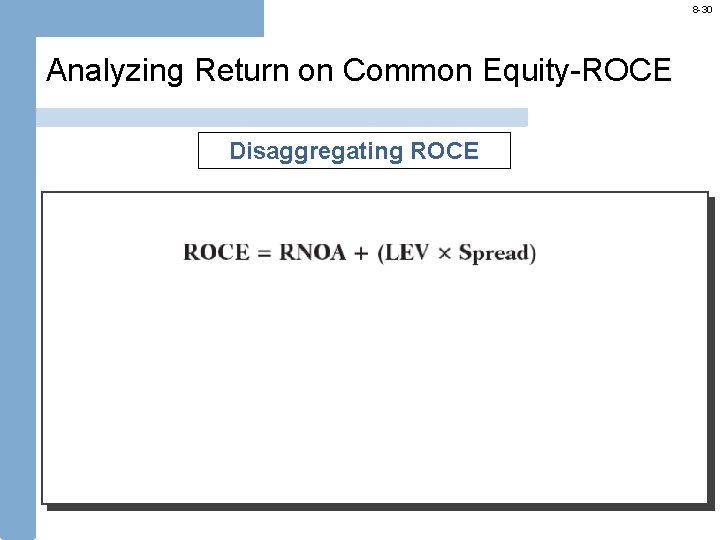
8 -30 Analyzing Return on Common Equity-ROCE Disaggregating ROCE
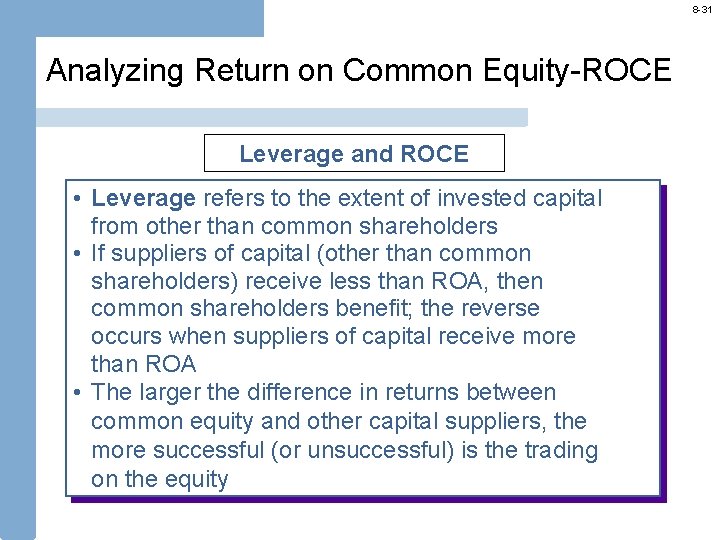
8 -31 Analyzing Return on Common Equity-ROCE Leverage and ROCE • Leverage refers to the extent of invested capital from other than common shareholders • If suppliers of capital (other than common shareholders) receive less than ROA, then common shareholders benefit; the reverse occurs when suppliers of capital receive more than ROA • The larger the difference in returns between common equity and other capital suppliers, the more successful (or unsuccessful) is the trading on the equity
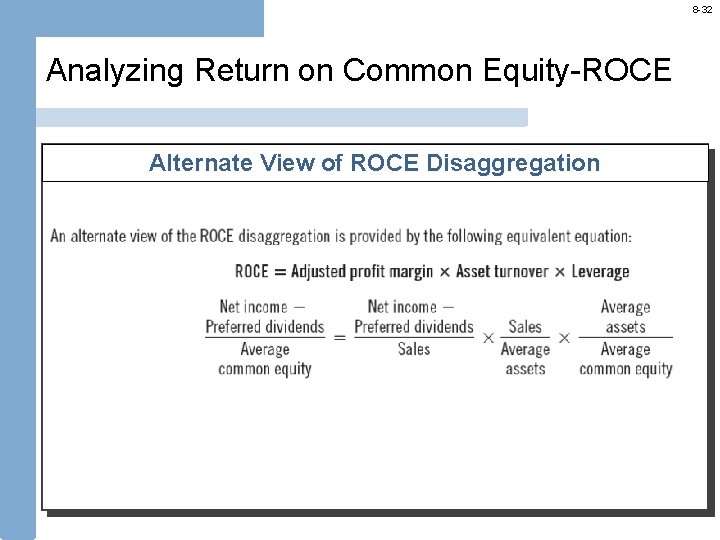
8 -32 Analyzing Return on Common Equity-ROCE Alternate View of ROCE Disaggregation
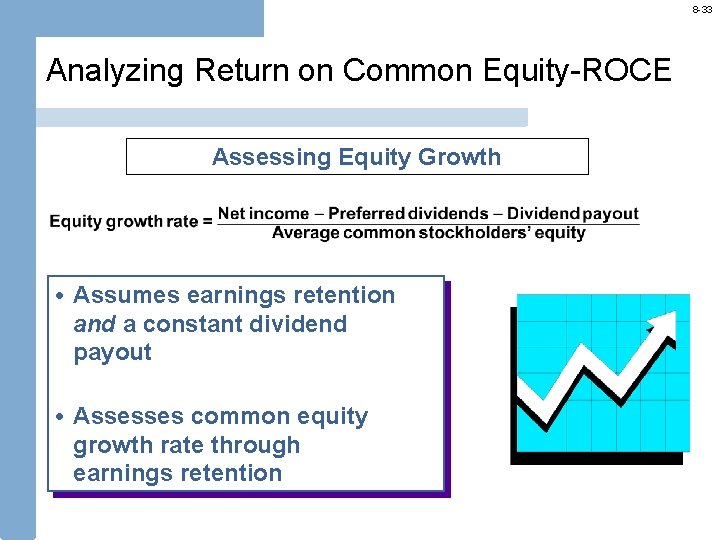
8 -33 Analyzing Return on Common Equity-ROCE Assessing Equity Growth • Assumes earnings retention and a constant dividend payout • Assesses common equity growth rate through earnings retention
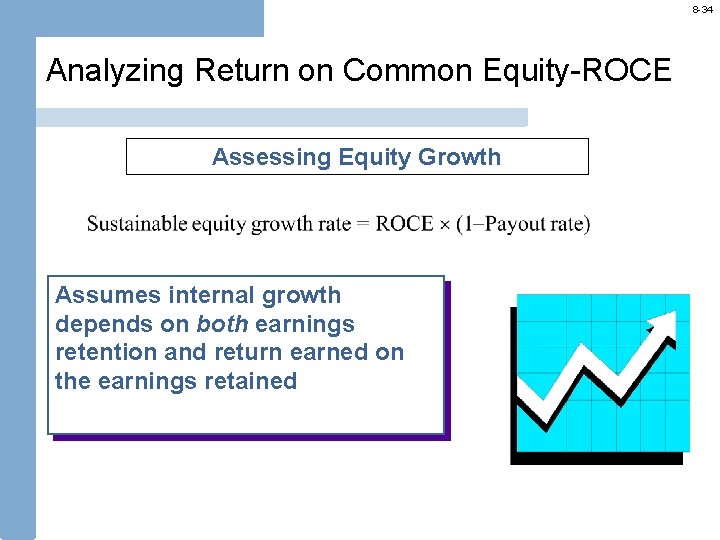
8 -34 Analyzing Return on Common Equity-ROCE Assessing Equity Growth Assumes internal growth depends on both earnings retention and return earned on the earnings retained
- Slides: 34