
Retroviridae 1 Classification The retroviruses were originally classified


- Slides: 26
Retroviridae 1
Classification The retroviruses were originally classified by the morphology of the virion core and genome structure. 1. Alpharetroviruses Avian leukosis sarcoma virus (ALV) 2. Betaretroviruses Mouse mammary tumor virus (MMTV) 3. Gammaretroviruses Murine leukemia viruses (Mu. LV) Feline leukemia virus (Fe. LV, cats) 4. Deltaretroviruses HTLV-1, -2 (Human T-lymphotropic virus Type I, 2, known to cause a type of cancer, referred to as adult T-cell leukemia ) 5. Epsilonretroviruses (fish) 6. Lentiviruses HIV-1, 2 7. Spumaviruses ( or foamyviruses) Human foamy virus (HFV has been isolated from patients with various neoplastic and degenerative diseases e. g MS ) 2
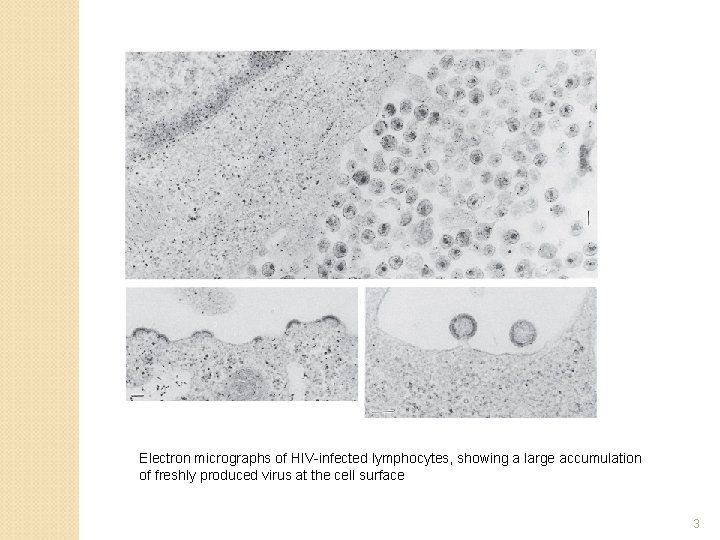
Electron micrographs of HIV-infected lymphocytes, showing a large accumulation of freshly produced virus at the cell surface 3
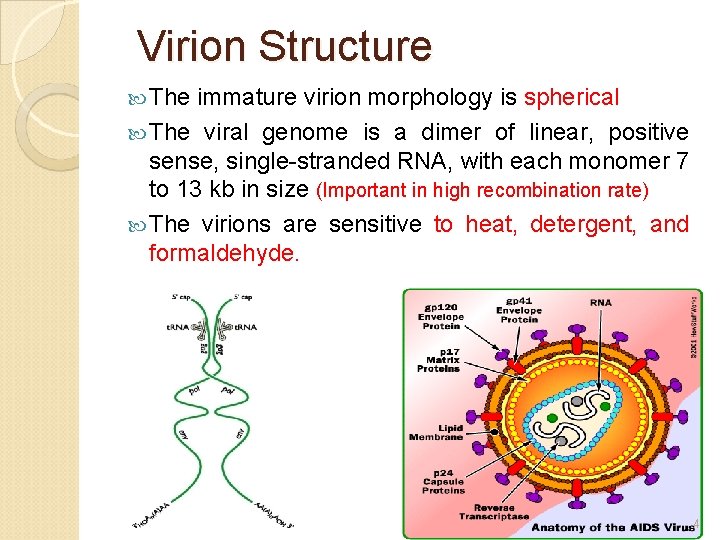
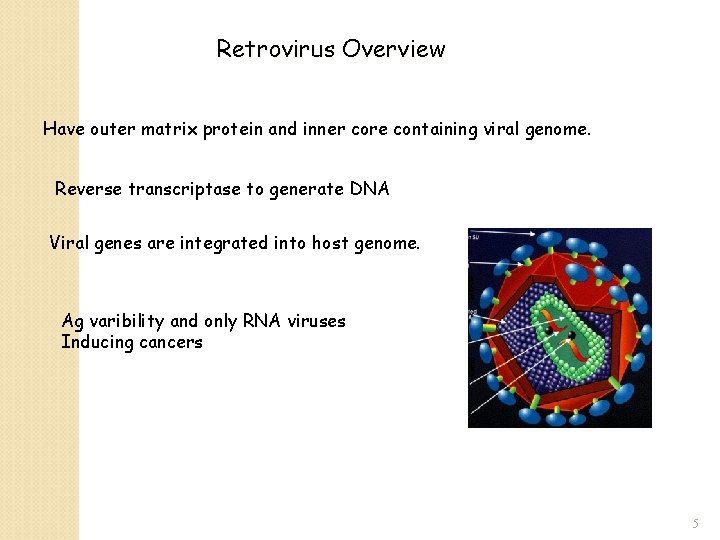
Virion Structure The immature virion morphology is spherical The viral genome is a dimer of linear, positive sense, single-stranded RNA, with each monomer 7 to 13 kb in size (Important in high recombination rate) The virions are sensitive to heat, detergent, and formaldehyde. 4
Retrovirus Overview Have outer matrix protein and inner core containing viral genome. Reverse transcriptase to generate DNA Viral genes are integrated into host genome. Ag varibility and only RNA viruses Inducing cancers 5
Virion proteins Gag ◦ MA: Matrix (p 17 in HIV) ◦ CA: Capsid (p 24 in HIV) ◦ NC: Nucleocapsid (p 7 in HIV) Pro-pol ◦ Protease ◦ Reverse transcriptase (RT & RNase H) ◦ Integrase Env ◦ TM (gp 41 in HIV) ◦ SU (gp 120 in HIV) 6
Human Immunodeficiency Virus (HIV) 7
Origin of AIDS HIV in humans originated from simian viruses in rural Africa, probably due to direct human contact with infected primate blood. 8
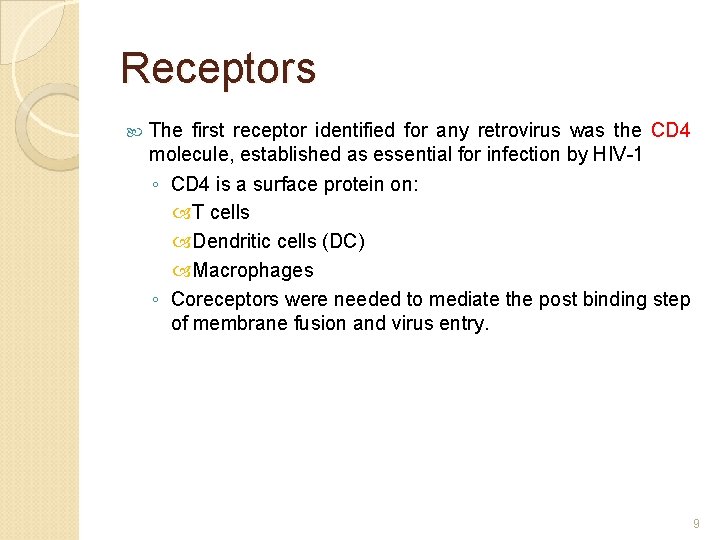
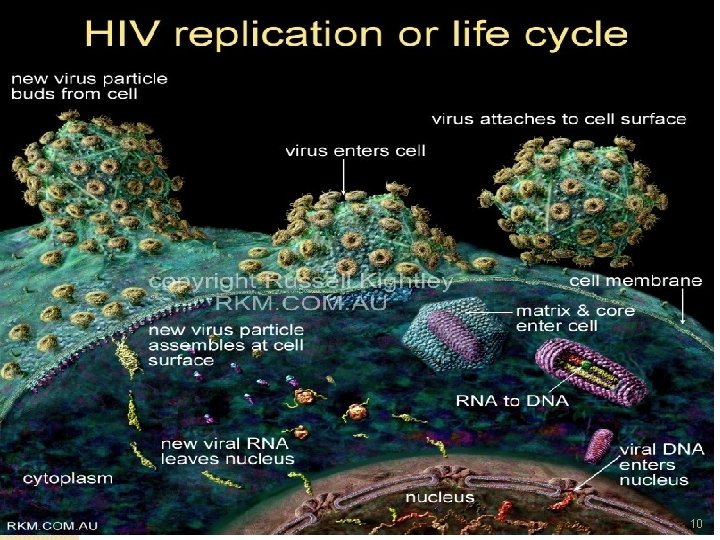
Receptors The first receptor identified for any retrovirus was the CD 4 molecule, established as essential for infection by HIV-1 ◦ CD 4 is a surface protein on: T cells Dendritic cells (DC) Macrophages ◦ Coreceptors were needed to mediate the post binding step of membrane fusion and virus entry. 9
10
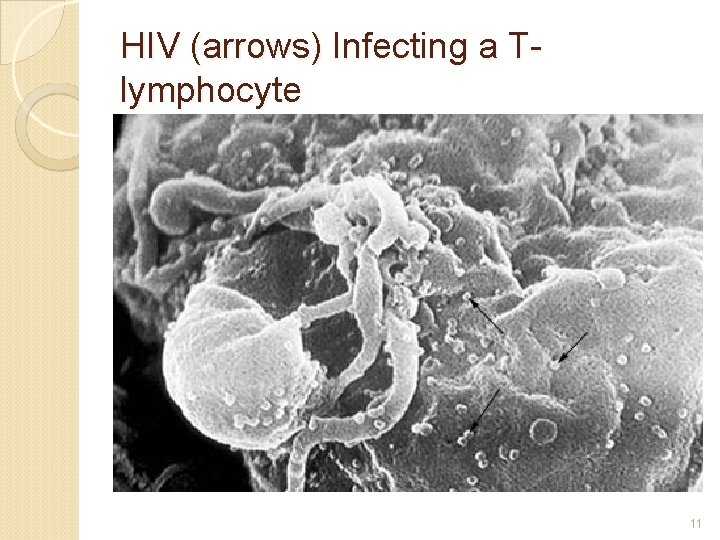
HIV (arrows) Infecting a Tlymphocyte 11
1 - Primary HIV Syndrome Cold or flu-like symptoms may occur 6 to 12 weeks after infection. ◦ ◦ ◦ ◦ ◦ lymphadenopathy fever rash headache Fatigue diarrhea sore throat neurologic manifestations. no symptoms may be present 12
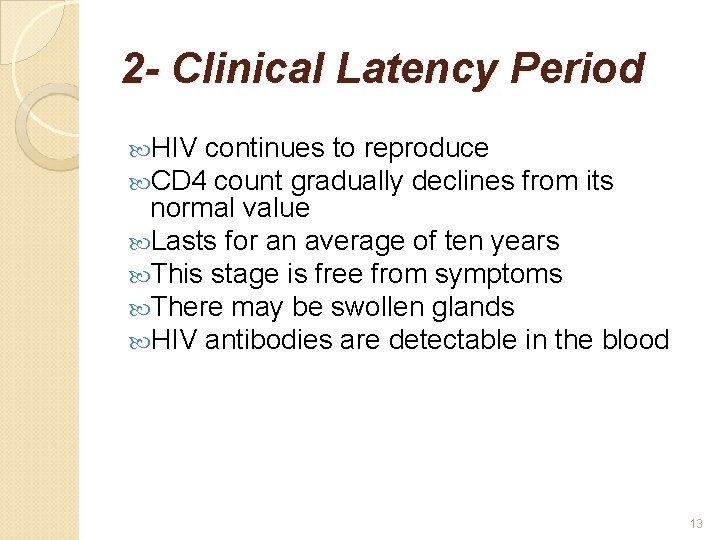
2 - Clinical Latency Period HIV continues to reproduce CD 4 count gradually declines from its normal value Lasts for an average of ten years This stage is free from symptoms There may be swollen glands HIV antibodies are detectable in the blood 13
3 - Opportunistic Infections associated with AIDS Once CD 4 count drops below 500, HIV infected person at risk for opportunistic infections. The following diseases are predictive of the progression to AIDS: Bacterial ◦ Tuberculosis (TB) ◦ Strep pneumonia Viral ◦ ◦ Kaposi Sarcoma persistent herpes-zoster infection (shingles) Influenza (flu) EBV (Burkitt’s lymphoma) 14
3 - Opportunistic Infections associated with AIDS Parasitic ◦ Pneumocystis carinii Fungal Oral Candidiasis (thrush) ◦ Candida ◦ Cryptococcus 15
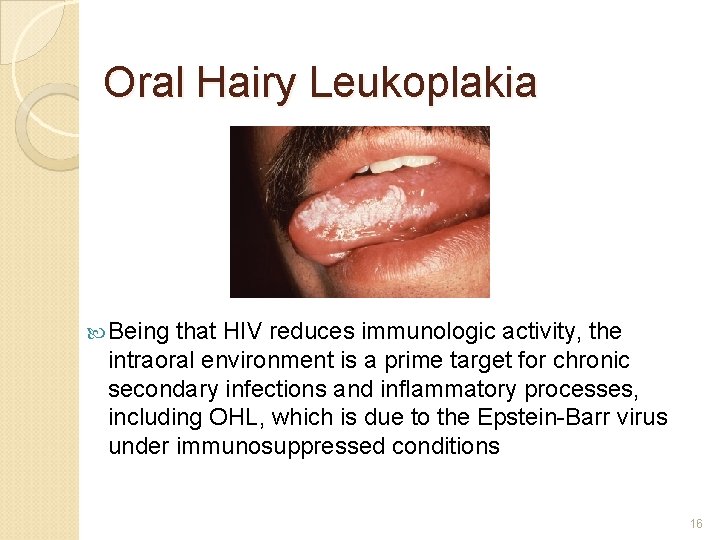
Oral Hairy Leukoplakia Being that HIV reduces immunologic activity, the intraoral environment is a prime target for chronic secondary infections and inflammatory processes, including OHL, which is due to the Epstein-Barr virus under immunosuppressed conditions 16
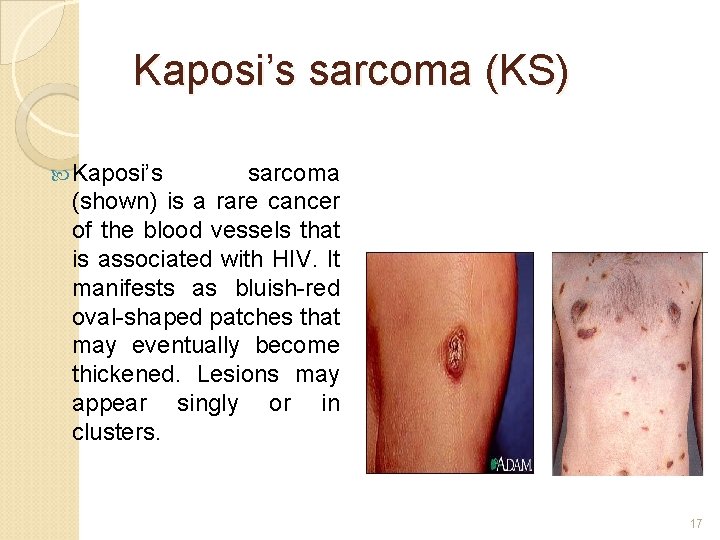
Kaposi’s sarcoma (KS) Kaposi’s sarcoma (shown) is a rare cancer of the blood vessels that is associated with HIV. It manifests as bluish-red oval-shaped patches that may eventually become thickened. Lesions may appear singly or in clusters. 17
4 - AIDS CD 4 count drops below 200 person is considered to have advanced HIV disease If preventative medications not started the HIV infected person is now at risk for: ◦ Pneumocystis carinii pneumonia (PCP) ◦ cryptococcal meningitis ◦ toxoplasmosis If ◦ ◦ ◦ CD 4 count drops below 50: Mycobacterium avium Cytomegalovirus infections lymphoma dementia Most deaths occur with CD 4 counts below 50. 18
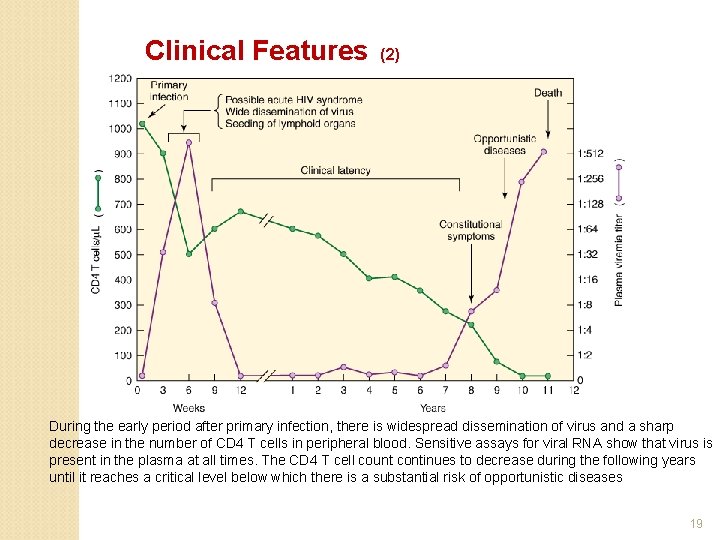
Clinical Features (2) During the early period after primary infection, there is widespread dissemination of virus and a sharp decrease in the number of CD 4 T cells in peripheral blood. Sensitive assays for viral RNA show that virus is present in the plasma at all times. The CD 4 T cell count continues to decrease during the following years until it reaches a critical level below which there is a substantial risk of opportunistic diseases 19
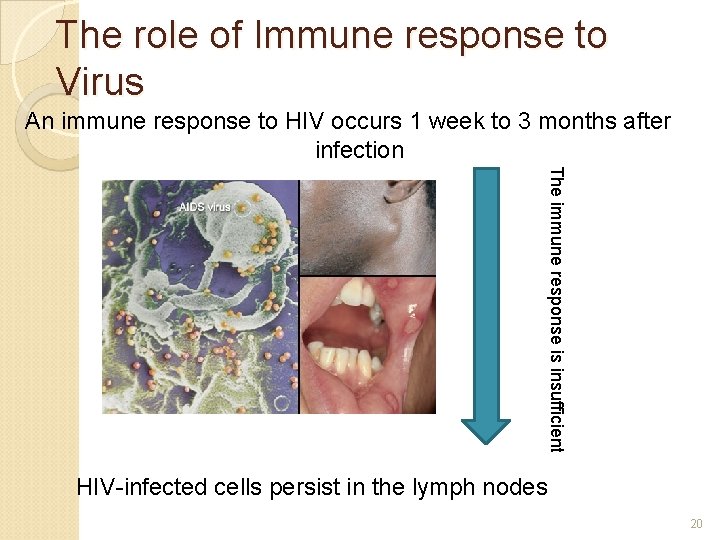
The role of Immune response to Virus An immune response to HIV occurs 1 week to 3 months after infection The immune response is insufficient HIV-infected cells persist in the lymph nodes 20
Risk of transmission Sexual Transmission Female-to-male transmission Male-to-female transmission Male-to-male transmission Parenteral transmission Transfusion of infected blood Needle sharing Transmission from mother to infant 21
Host Immunity Innate Immune Responses Humeral Immune Responses Cellular Immune Responses 22
Treatment FDA-approved antiretrovirals ◦ Nucleoside Reverse Transcriptase Inhibitors (NRTI) ◦ Non-nucleoside RT inhibitors (NNRTI) ◦ Protease Inhibitors (PI) ◦ Fusion inhibitor Integrase inhibitors (in phase III clinical trials) Drugs against viral accessory proteins (Nef, Rev, Tat, Vif, and Vpr) 23
Laboratory Diagnosis of HIV Infection Methods utilized to detect: ◦ Antibody ◦ Antigen ◦ Viral nucleic acid ◦ Virus in culture Antibodies detected in ELISA include those directed against: p 24, gp 120, gp 160 and gp 41, detected first in infection and appear in most individuals 24
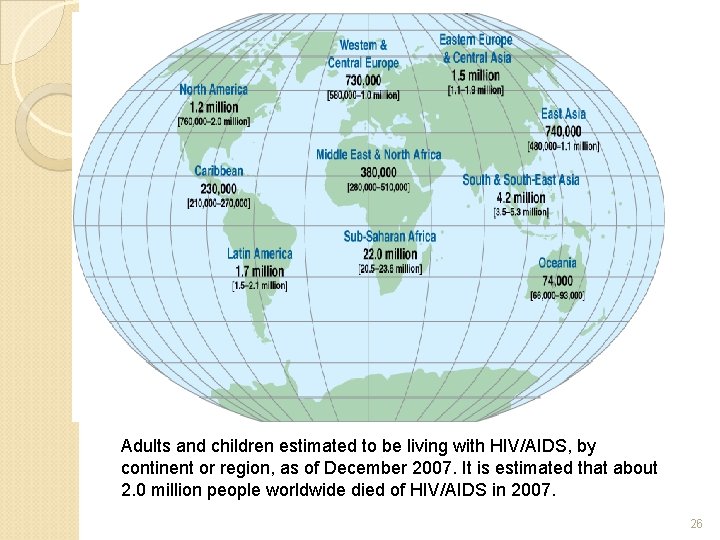
Worldwide Spread of AIDS It was estimated by the end of 2007, a total of 33 million people worldwide were living with HIV/AIDS, the majority having been infected by heterosexual contact. 2. 0 million people died of AIDS and 2. 7 million new infections with HIV occurred, including 370, 000 children, many of whom were babies infected perinatally. By the year 2005, the World Health Organization estimated that more than 25 million people worldwide had died of AIDS and that over 15 million children had been orphaned, 12 million of whom were living in sub. Saharan Africa 25
Adults and children estimated to be living with HIV/AIDS, by continent or region, as of December 2007. It is estimated that about 2. 0 million people worldwide died of HIV/AIDS in 2007. 26