
Retroperitoneal Hemorrhage After Percutaneous Coronary Intervention Chun Shing



- Slides: 13
Retroperitoneal Hemorrhage After Percutaneous Coronary Intervention Chun Shing Kwok Clinical Lecturer in Cardiology shingkwok@doctors. org. uk
Hello from England
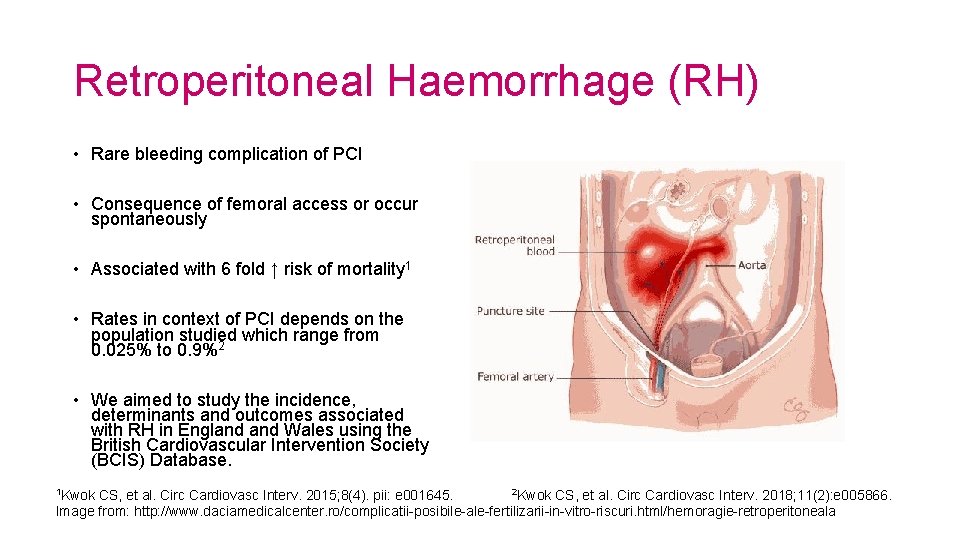
Retroperitoneal Haemorrhage (RH) • Rare bleeding complication of PCI • Consequence of femoral access or occur spontaneously • Associated with 6 fold ↑ risk of mortality 1 • Rates in context of PCI depends on the population studied which range from 0. 025% to 0. 9%2 • We aimed to study the incidence, determinants and outcomes associated with RH in England Wales using the British Cardiovascular Intervention Society (BCIS) Database. 1 Kwok 2 Kwok CS, et al. Circ Cardiovasc Interv. 2018; 11(2): e 005866. CS, et al. Circ Cardiovasc Interv. 2015; 8(4). pii: e 001645. Image from: http: //www. daciamedicalcenter. ro/complicatii-posibile-ale-fertilizarii-in-vitro-riscuri. html/hemoragie-retroperitoneala
Methods • BCIS database records 99% of all PCI procedures in England Wales 3 • Collects data on patient demographics, comorbidities, medications, stents/PCI equipment used, lesions treated and outcomes in-hospital • Population: all patients who underwent PCI between 2007 to 2014 • Exposure: in-hospital RH • Outcomes: • In-hospital MACE (in-hospital death, myocardial infarction and re-infarction) • 30 -day and 1 -year mortality 3 BCIS. Current PCI database. https: //www. bcis. org. uk/resources/pci-databases/ Image from: http: //www. picturesofengland. com/England. Facts
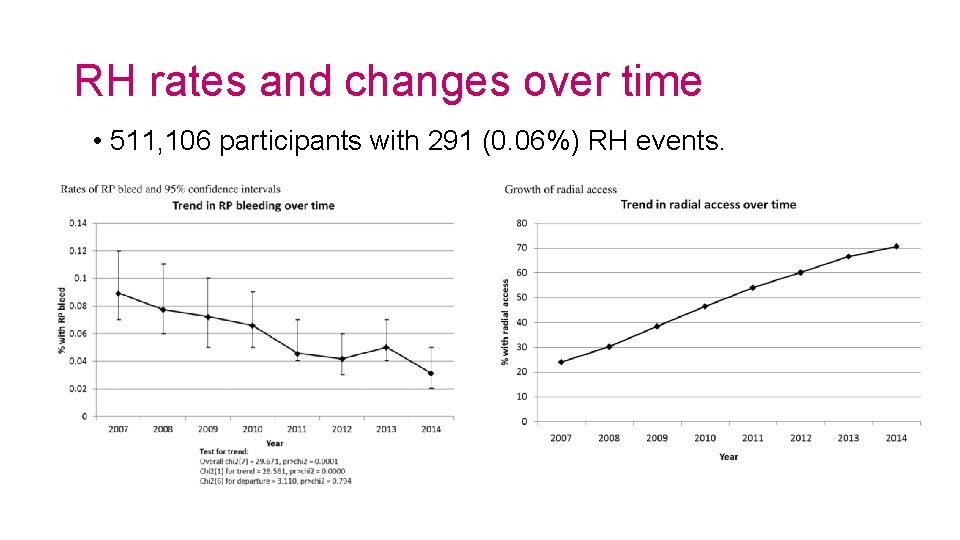
RH rates and changes over time • 511, 106 participants with 291 (0. 06%) RH events.
Which groups have reduced in RH events?
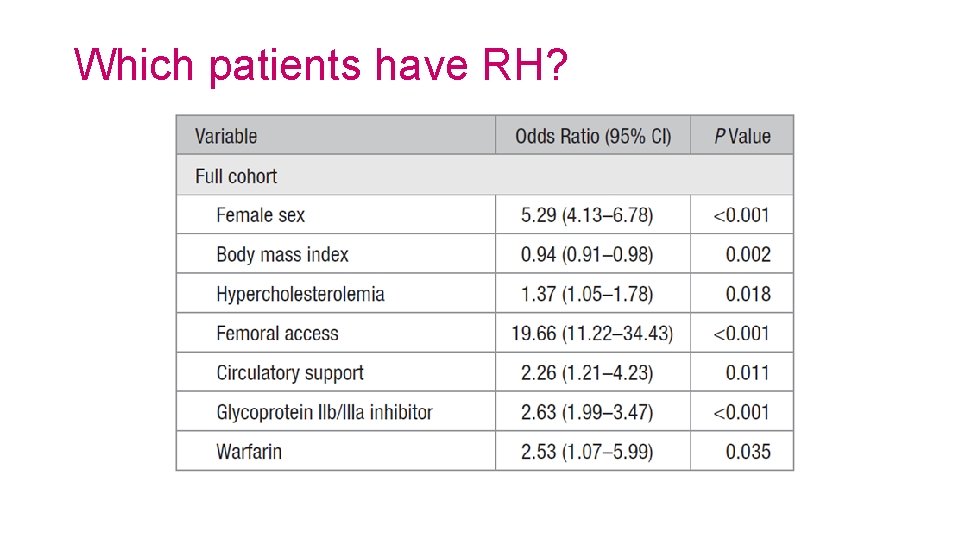
Which patients have RH?
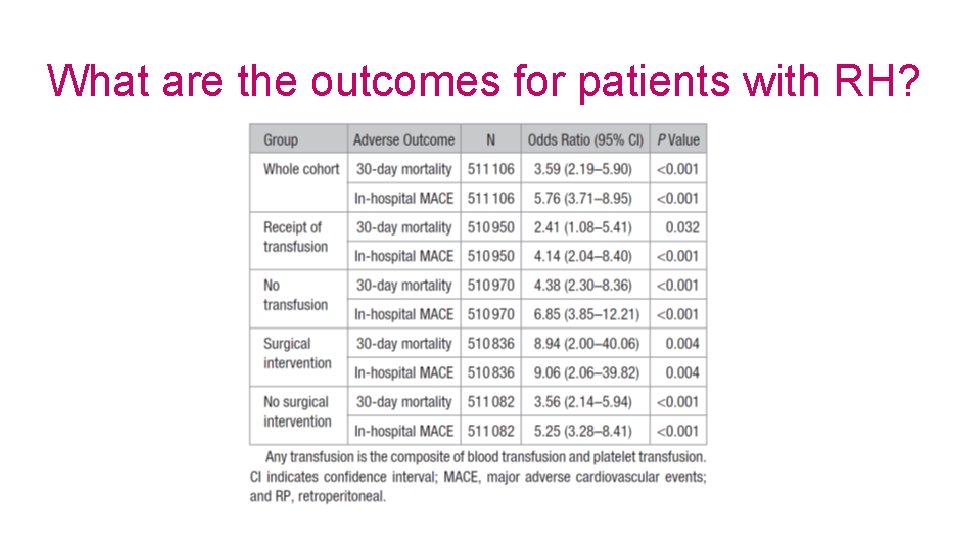
What are the outcomes for patients with RH?
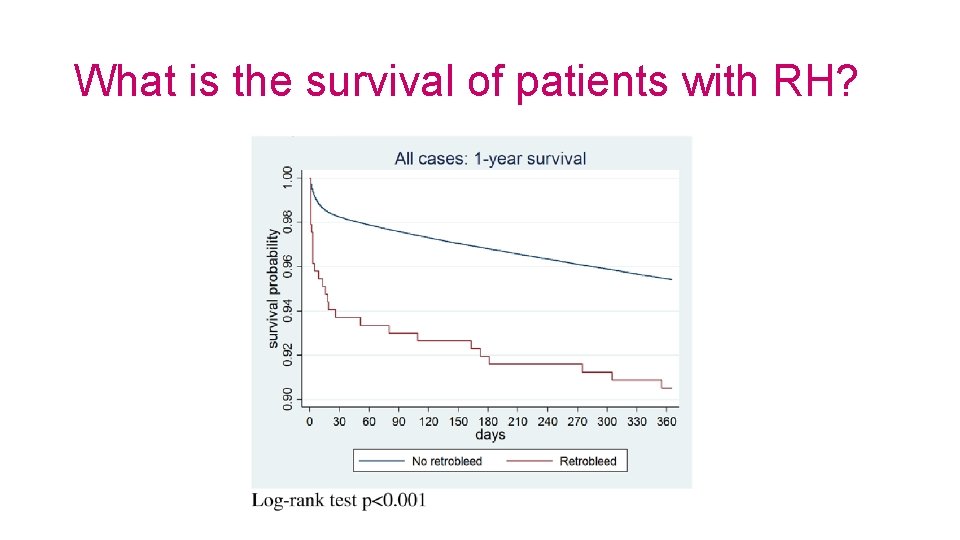
What is the survival of patients with RH?
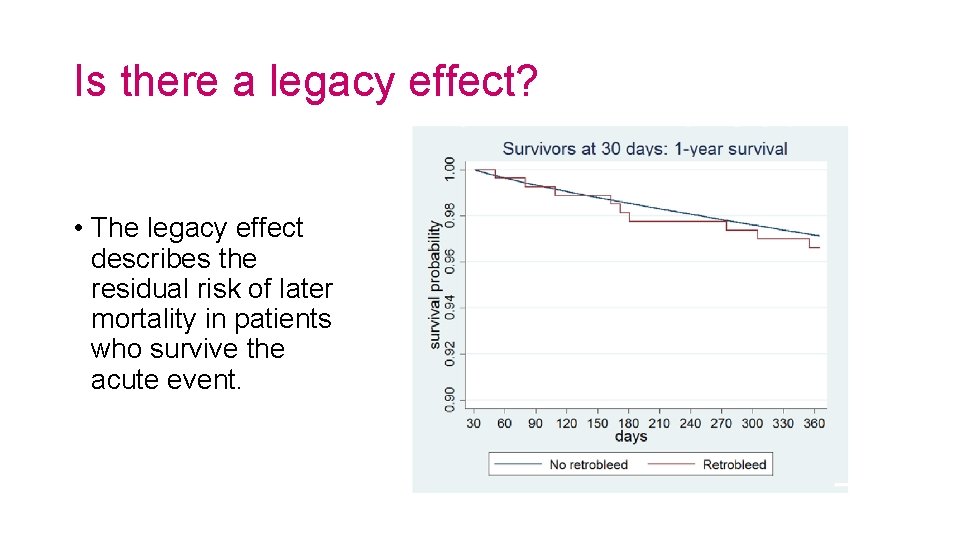
Is there a legacy effect? • The legacy effect describes the residual risk of later mortality in patients who survive the acute event.
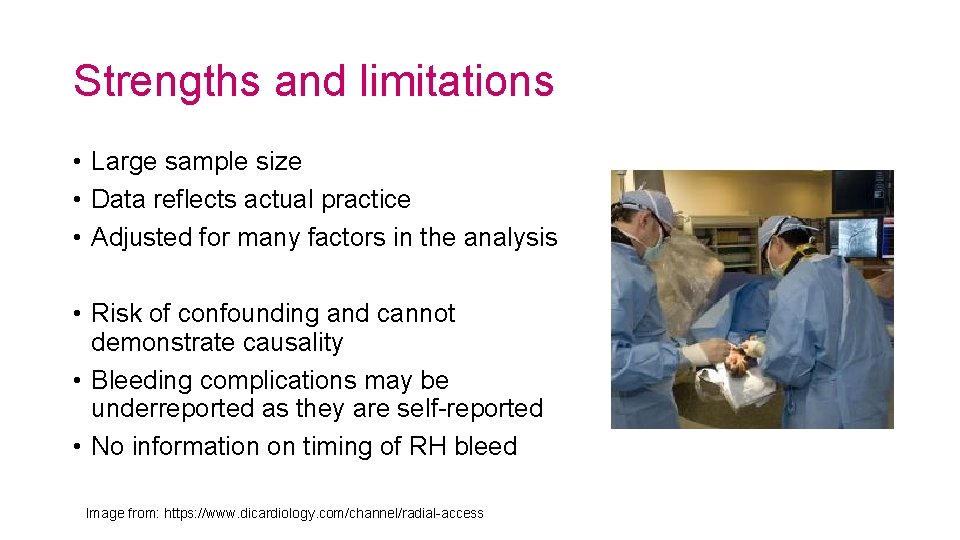
Strengths and limitations • Large sample size • Data reflects actual practice • Adjusted for many factors in the analysis • Risk of confounding and cannot demonstrate causality • Bleeding complications may be underreported as they are self-reported • No information on timing of RH bleed Image from: https: //www. dicardiology. com/channel/radial-access
Summary • We observed a decline in rate of RH after PCI in the UK which was most marked in the group of patients >80 years, female and with STEMI diagnosis. • Femoral access was the strongest predictor of RH. • Mortality and in-hospital MACE is higher in patients with RH but patients who survive the acute event do not have increased risk of later mortality.
Thank you Clinically relevant research question Systematic reviews to understand the literature Statistical analysis using routinely collected data • Acknowledgements: • Prof. Mamas • Dr. Evangelos Kontopantelis • Dr. Peter Ludman • E-mail: shingkwok@doctors. org. uk • Website: shingkwok. com