
Retrograde Urethrogram Zi Jun Wu Jennifer Xiao Purpose


- Slides: 16
Retrograde Urethrogram Zi Jun Wu Jennifer Xiao
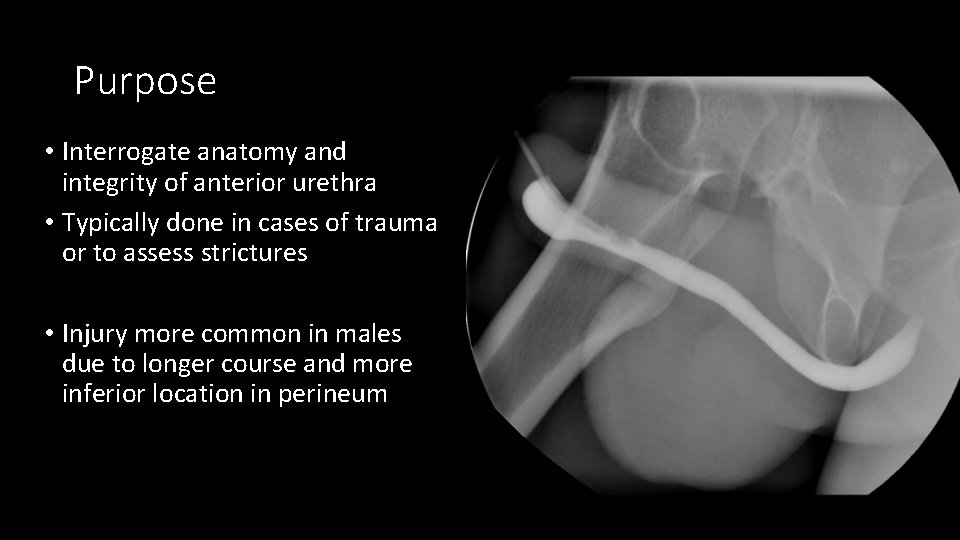
Purpose • Interrogate anatomy and integrity of anterior urethra • Typically done in cases of trauma or to assess strictures • Injury more common in males due to longer course and more inferior location in perineum
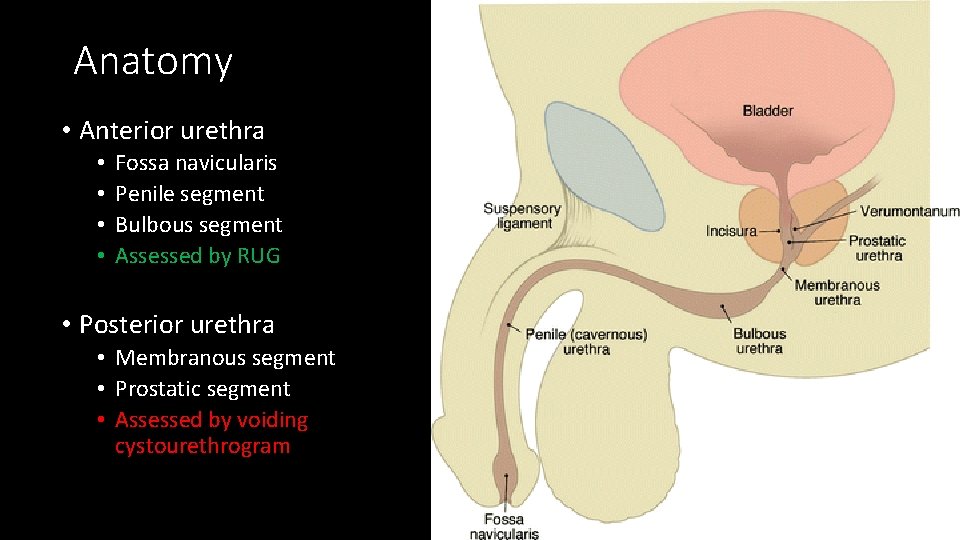
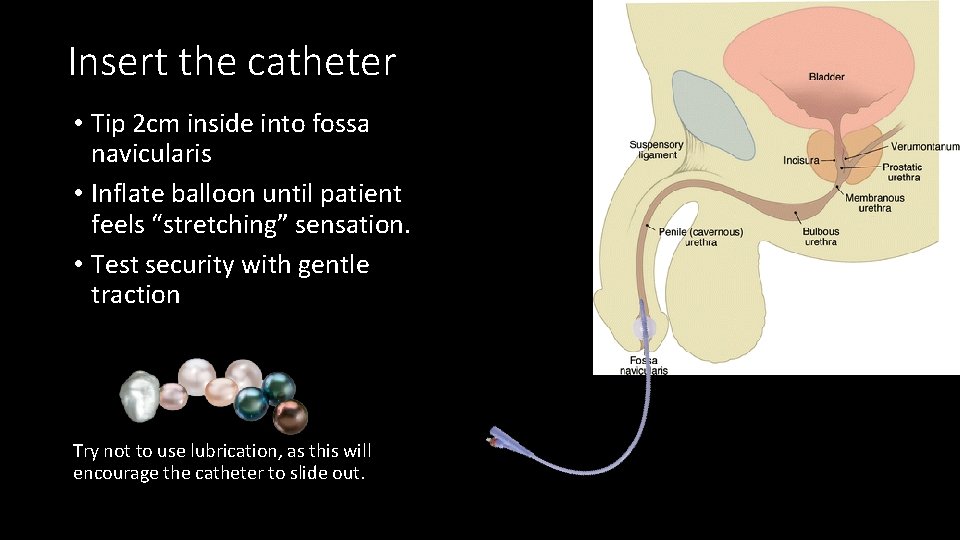
Anatomy • Anterior urethra • • Fossa navicularis Penile segment Bulbous segment Assessed by RUG • Posterior urethra • Membranous segment • Prostatic segment • Assessed by voiding cystourethrogram
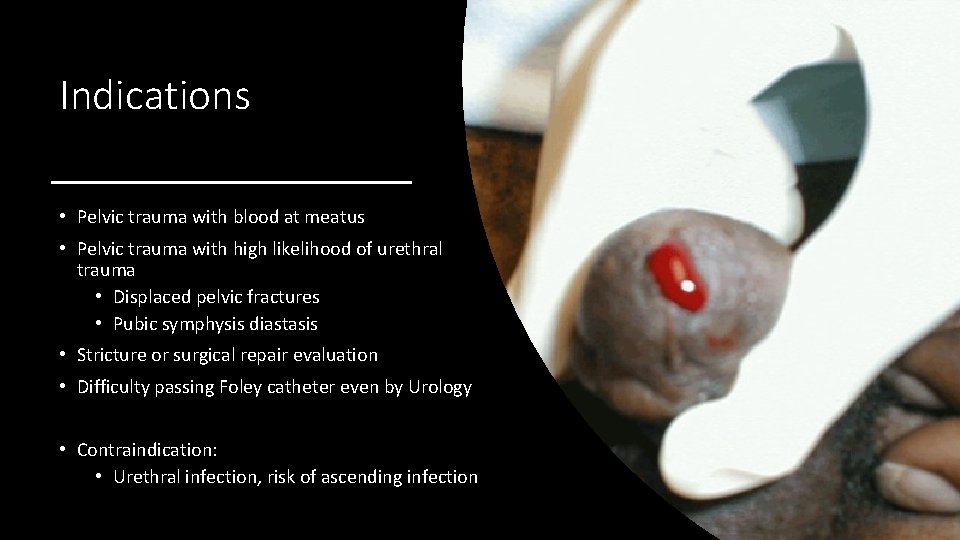
Indications • Pelvic trauma with blood at meatus • Pelvic trauma with high likelihood of urethral trauma • Displaced pelvic fractures • Pubic symphysis diastasis • Stricture or surgical repair evaluation • Difficulty passing Foley catheter even by Urology • Contraindication: • Urethral infection, risk of ascending infection
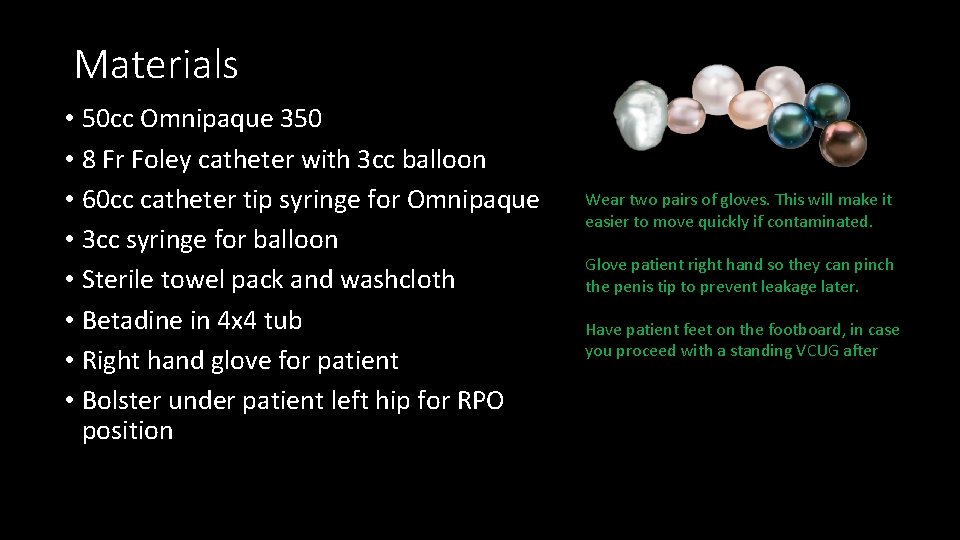
Materials • 50 cc Omnipaque 350 • 8 Fr Foley catheter with 3 cc balloon • 60 cc catheter tip syringe for Omnipaque • 3 cc syringe for balloon • Sterile towel pack and washcloth • Betadine in 4 x 4 tub • Right hand glove for patient • Bolster under patient left hip for RPO position Wear two pairs of gloves. This will make it easier to move quickly if contaminated. Glove patient right hand so they can pinch the penis tip to prevent leakage later. Have patient feet on the footboard, in case you proceed with a standing VCUG after
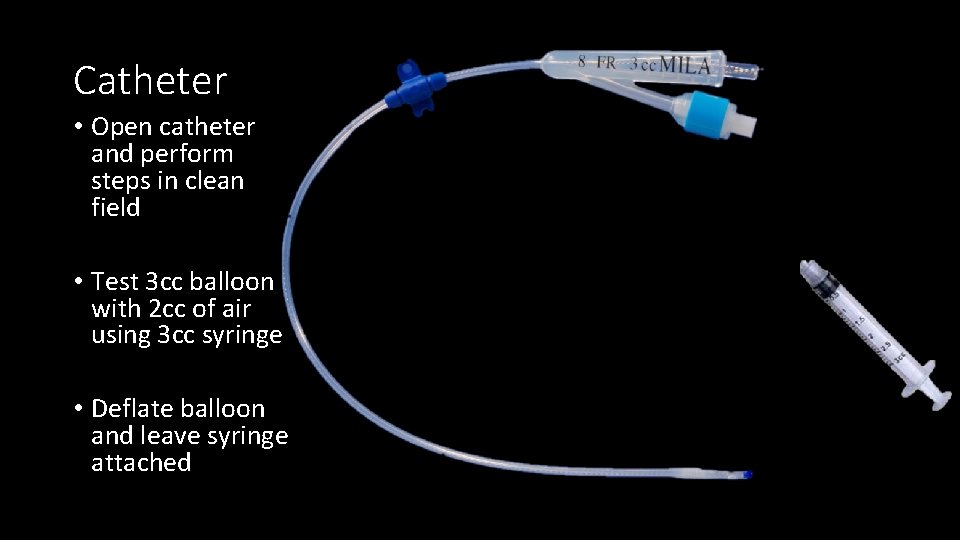
Catheter • Open catheter and perform steps in clean field • Test 3 cc balloon with 2 cc of air using 3 cc syringe • Deflate balloon and leave syringe attached
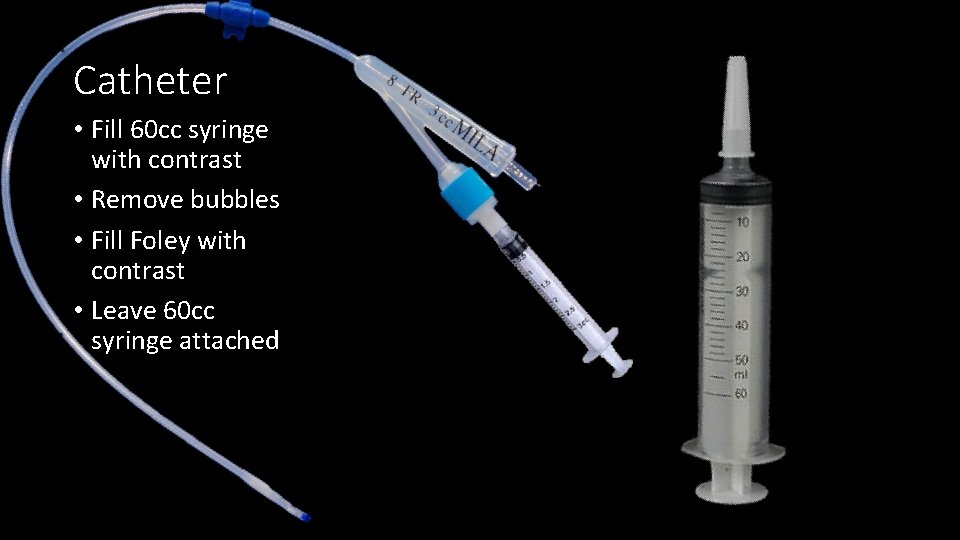
Catheter • Fill 60 cc syringe with contrast • Remove bubbles • Fill Foley with contrast • Leave 60 cc syringe attached
Contrast Air Balloon
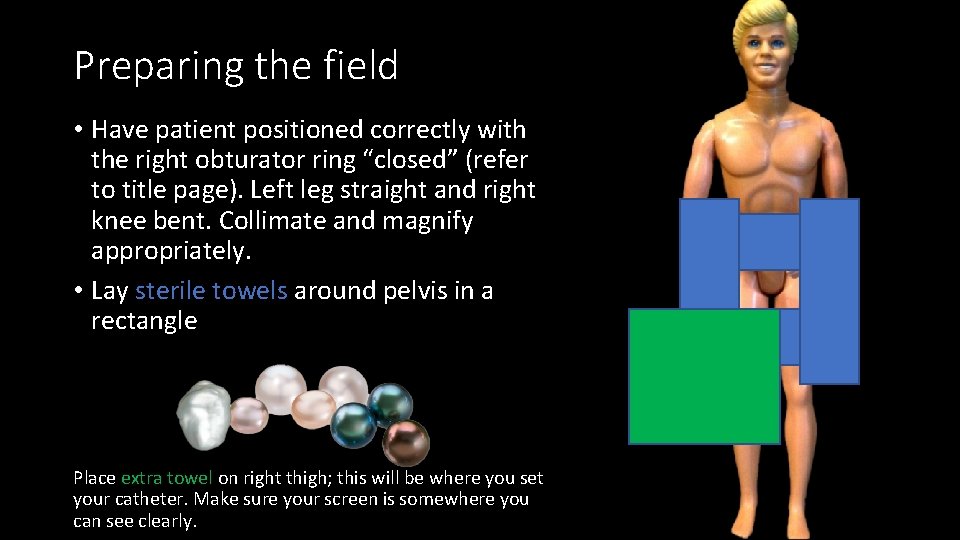
Preparing the field • Have patient positioned correctly with the right obturator ring “closed” (refer to title page). Left leg straight and right knee bent. Collimate and magnify appropriately. • Lay sterile towels around pelvis in a rectangle Place extra towel on right thigh; this will be where you set your catheter. Make sure your screen is somewhere you can see clearly.
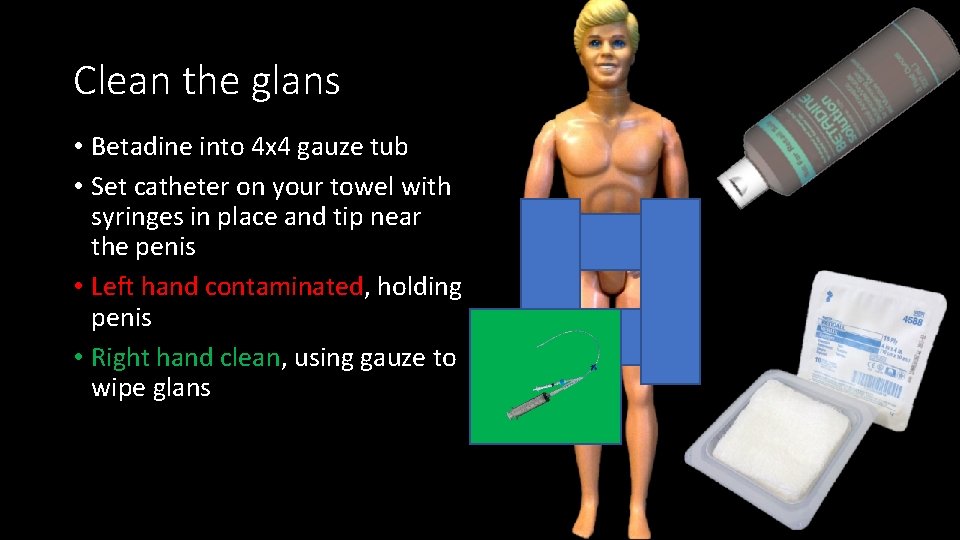
Clean the glans • Betadine into 4 x 4 gauze tub • Set catheter on your towel with syringes in place and tip near the penis • Left hand contaminated, holding penis • Right hand clean, using gauze to wipe glans
Insert the catheter • Tip 2 cm inside into fossa navicularis • Inflate balloon until patient feels “stretching” sensation. • Test security with gentle traction Try not to use lubrication, as this will encourage the catheter to slide out.
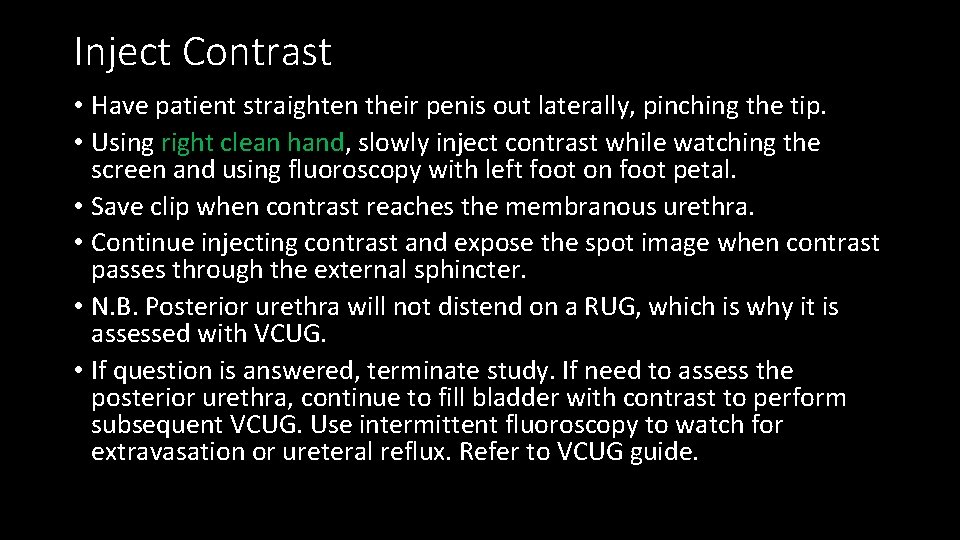
Inject Contrast • Have patient straighten their penis out laterally, pinching the tip. • Using right clean hand, slowly inject contrast while watching the screen and using fluoroscopy with left foot on foot petal. • Save clip when contrast reaches the membranous urethra. • Continue injecting contrast and expose the spot image when contrast passes through the external sphincter. • N. B. Posterior urethra will not distend on a RUG, which is why it is assessed with VCUG. • If question is answered, terminate study. If need to assess the posterior urethra, continue to fill bladder with contrast to perform subsequent VCUG. Use intermittent fluoroscopy to watch for extravasation or ureteral reflux. Refer to VCUG guide.
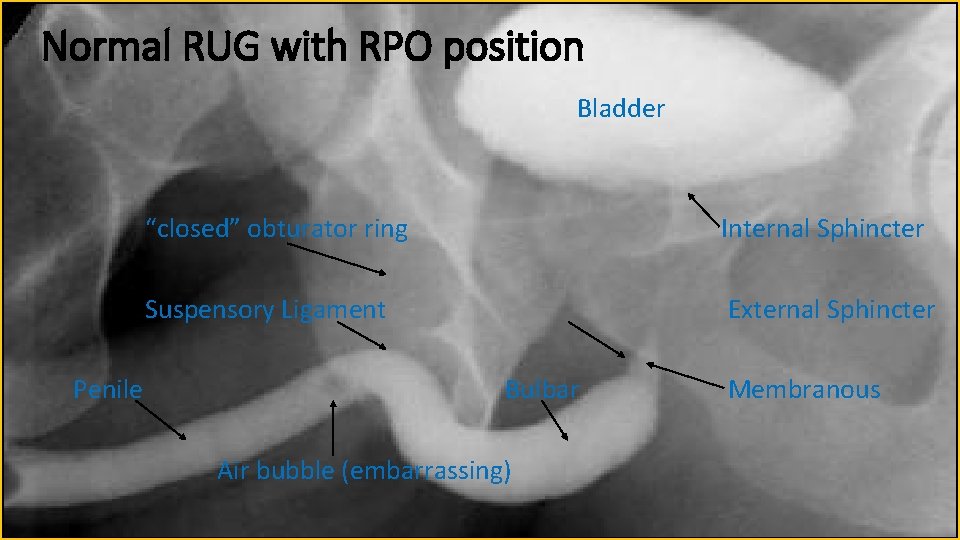
Normal RUG with RPO position Bladder Penile “closed” obturator ring Internal Sphincter Suspensory Ligament External Sphincter Bulbar Air bubble (embarrassing) Membranous
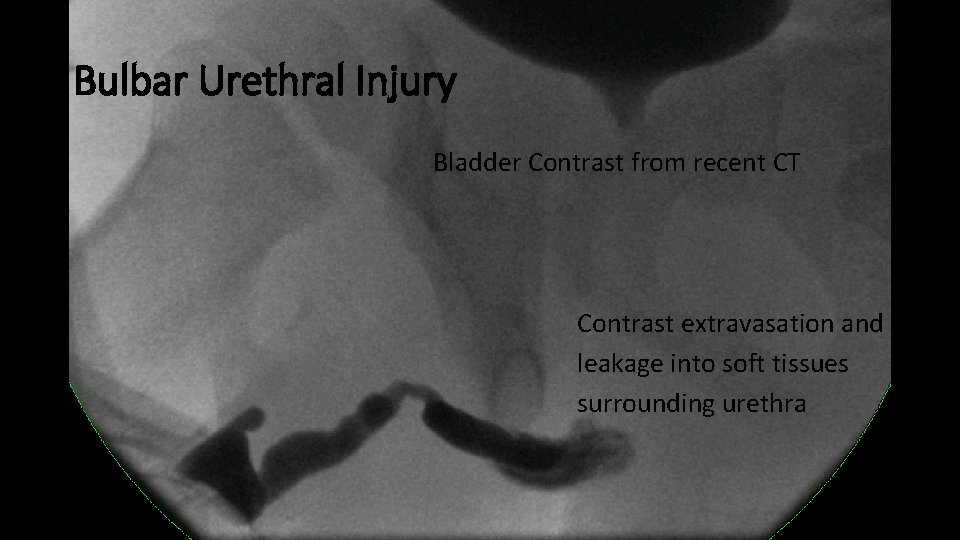
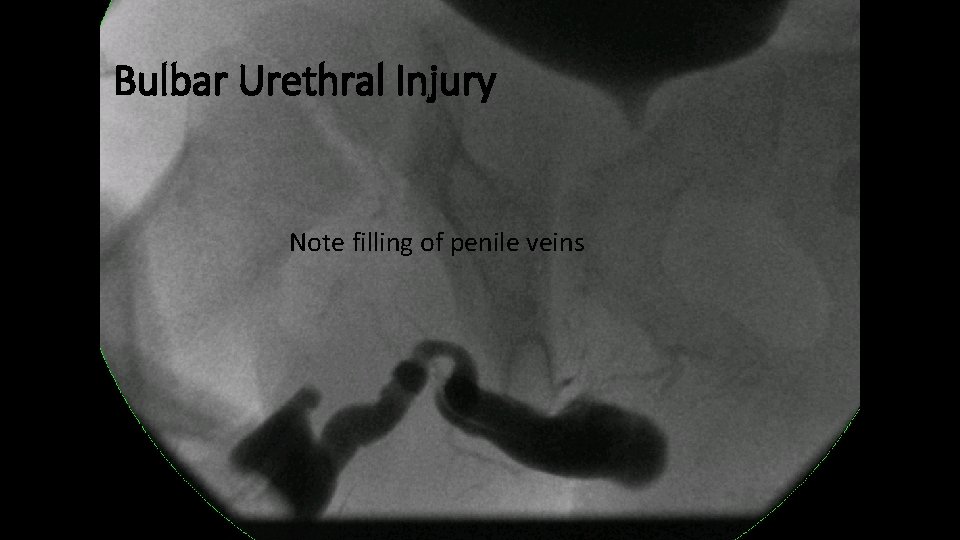
Bulbar Urethral Injury Bladder Contrast from recent CT Contrast extravasation and leakage into soft tissues surrounding urethra
Bulbar Urethral Injury Note filling of penile veins
Other tips • Terminate exam if contrast refluxes into penile veins, as this indicates chronic inflammation, stricture, or trauma. • In cases of trauma or impassable stricture, patient will eventually have suprapubic catheter. Important to image urethra retrograde and anterograde to determine length of stricture/injury. Refer to Dr. Rohrmann’s manual for further details. • For patients who cannot cooperate (pediatric, obtunded, psych), radiologist will have to often pinch penis tip. • For children, have 6 Fr catheter available. Usually child will be medicated. Having parent at child head, nurse in room, and technologist holding feet still will be useful.