
RETROGRADE STENTS AS AN ALTERNATIVE TO NEPHROSTOMY IN




- Slides: 13
RETROGRADE STENTS AS AN ALTERNATIVE TO NEPHROSTOMY IN URETERAL OBSTRUCTION IN CANCER PATIENTS: A SYSTEMATIC REVIEW AND META-ANALYSIS AHMAD MU 1, SIDDIQUI S 2, ASHRAF FA 3, SIDDIQUI MRS 4, CORNFORD P 5. 1 Department of Surgery, Scunthorpe General Hospital, Scunthorpe, UK. 2 Department of Urology, Leicester General Hospital, Leicester, UK. 3 Department of Surgery, Wycombe General Hospital, High Wycombe, UK. 4 Department of Colorectal Surgery, Croydon University Hospital, Surrey, UK. 5 Department of Urology, Royal Liverpool and Broadgreen University Hospitals NHS Trust, Liverpool, UK
INTRODUCTION Ureteral obstruction caused by neoplasia can lead to difficult management decisions for clinicians. Main aims of managing neoplastic ureteral obstruction is to 1. Relieve the patient of upper urinary tract symptoms, with 2. Improve or preserve of renal function 3. Improve or maintain Quality of Life Urological intervention enables any systemic treatment to begin
INTRODUCTION Choice of 2 main management options used relieve ureteral obstruction 1. Percutaneous Nephrostomy 2. Retrograde ureteric Stent Optimal procedure for management is still undetermined as there is no clear consensus.
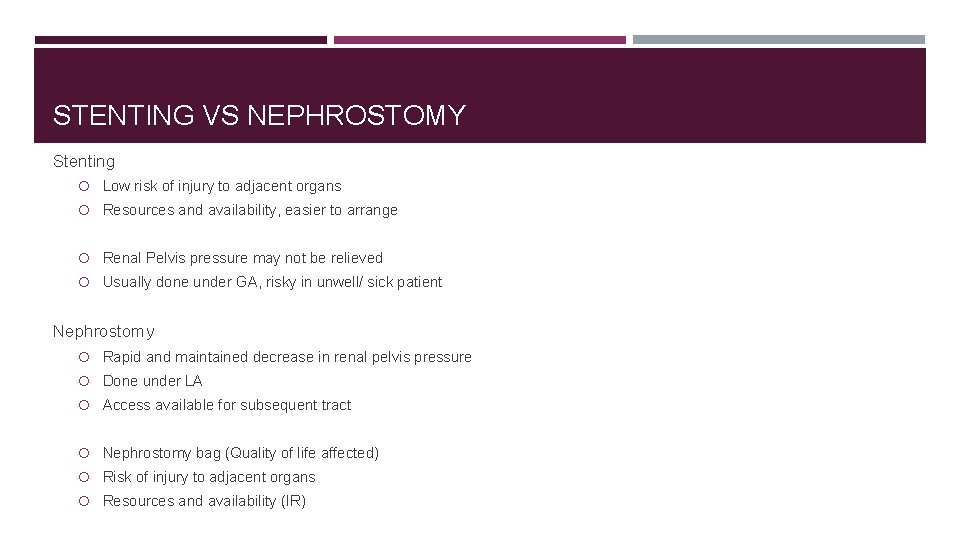
STENTING VS NEPHROSTOMY Stenting Low risk of injury to adjacent organs Resources and availability, easier to arrange Renal Pelvis pressure may not be relieved Usually done under GA, risky in unwell/ sick patient Nephrostomy Rapid and maintained decrease in renal pelvis pressure Done under LA Access available for subsequent tract Nephrostomy bag (Quality of life affected) Risk of injury to adjacent organs Resources and availability (IR)
OBJECTIVE This study evaluates the post procedure outcomes in ureteral obstruction in cancer patients by comparison of retrograde ureteral stenting and nephrostomy techniques.
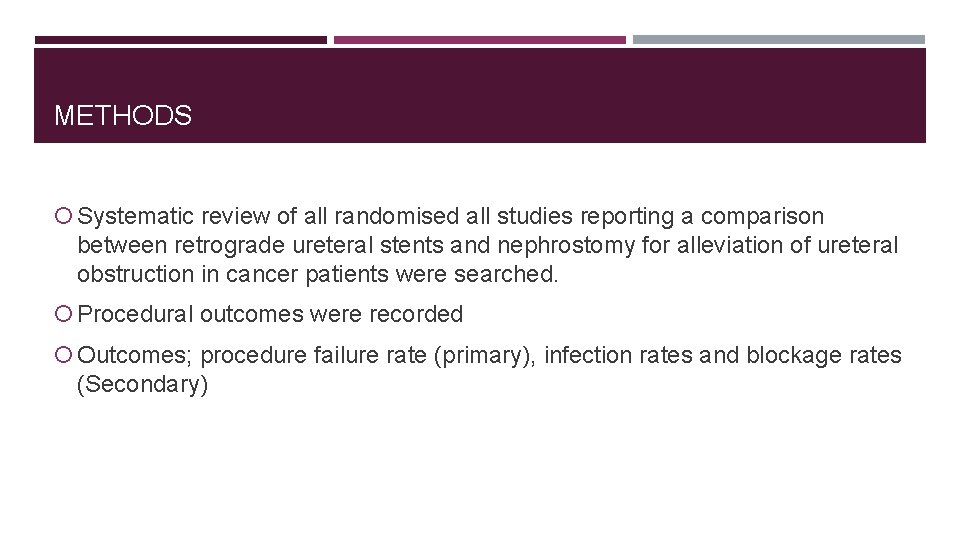
METHODS Systematic review of all randomised all studies reporting a comparison between retrograde ureteral stents and nephrostomy for alleviation of ureteral obstruction in cancer patients were searched. Procedural outcomes were recorded Outcomes; procedure failure rate (primary), infection rates and blockage rates (Secondary)
RESULTS – SYSTEMATIC REVIEW 3209 articles identified 2330 records screened 37 full text articles reviewed 7 articles included in meta-analysis
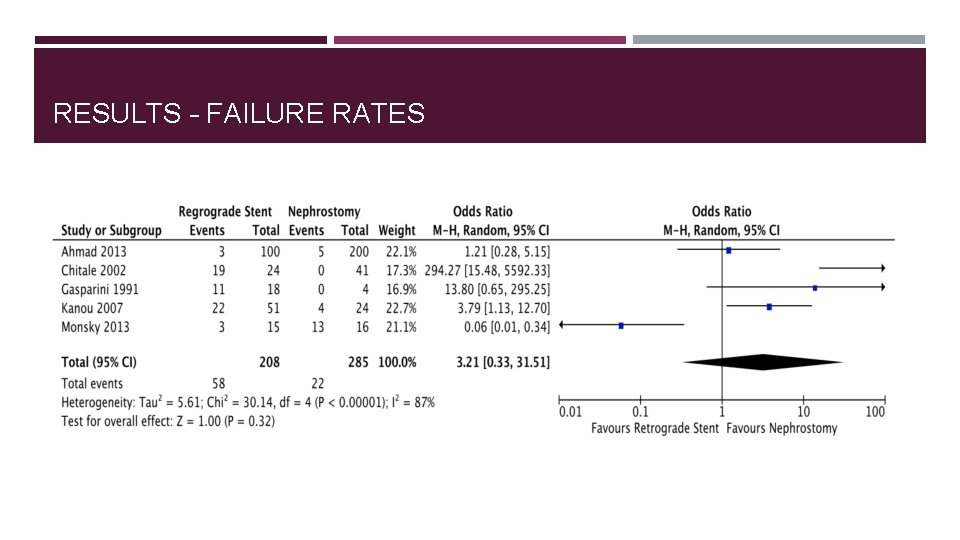
RESULTS – FAILURE RATES
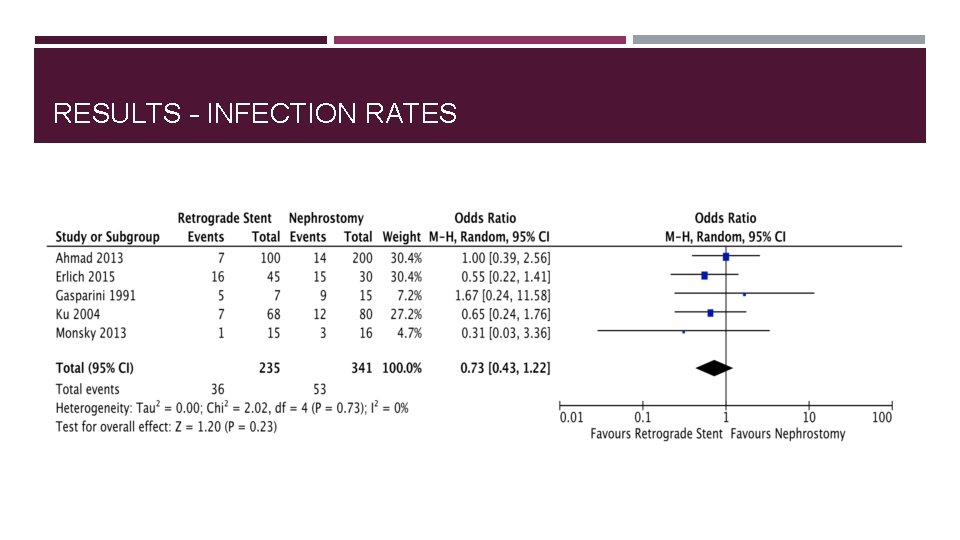
RESULTS – INFECTION RATES
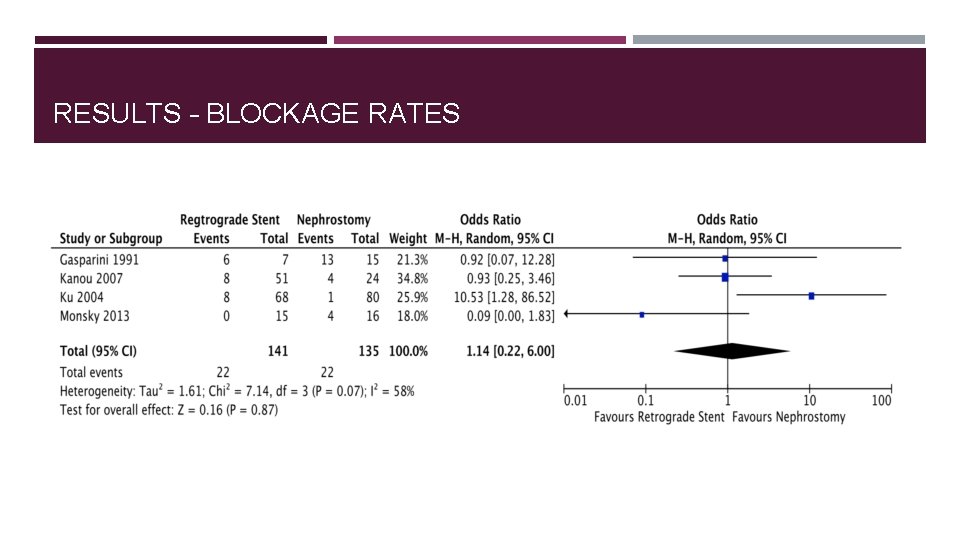
RESULTS – BLOCKAGE RATES
CONCLUSION Retrograde stents similar procedural outcomes when compared to nephrostomy in urinary diversion for ureteral obstruction in cancer patients based on outcomes evaluated. However, considerations of quality of life need to be taken into account when considering management options A large multi-centre randomised controlled trial is needed to confirm the findings. Patient Factors also need to be considered when deciding between procedures, such as age, Co-morbidities, anaesthetic risk, ASA status etc.
THANK YOU Competing interests: the authors report no conflict of interest for this study