
Retrograde Amnesia Is Memory Gone For Good Or
- Slides: 25
Retrograde Amnesia: Is Memory Gone For Good Or Just Hiding Out? Gretchen Hanson Gotthard, Ph. D. Randolph-Macon Woman’s College Lynchburg, VA
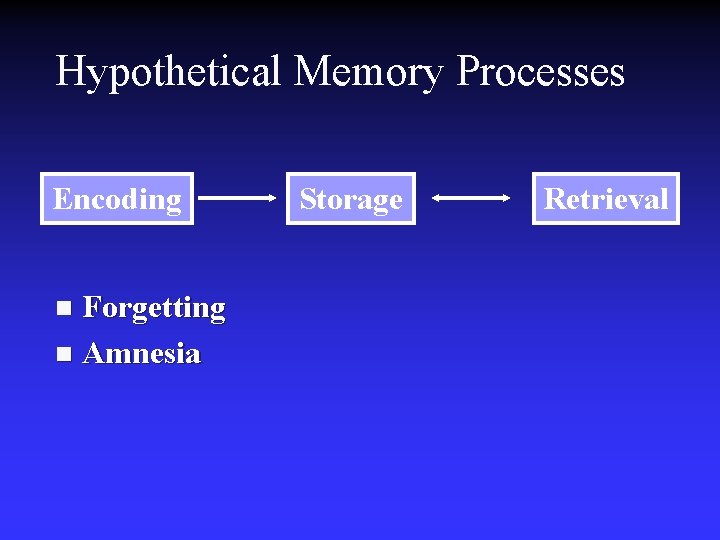
Hypothetical Memory Processes Encoding Forgetting n Amnesia n Storage Retrieval
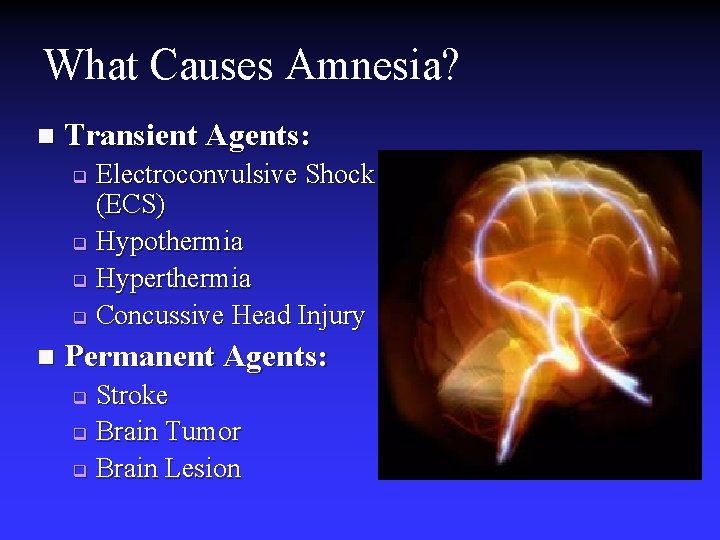
What Causes Amnesia? n Transient Agents: Electroconvulsive Shock (ECS) q Hypothermia q Hyperthermia q Concussive Head Injury q n Permanent Agents: Stroke q Brain Tumor q Brain Lesion q
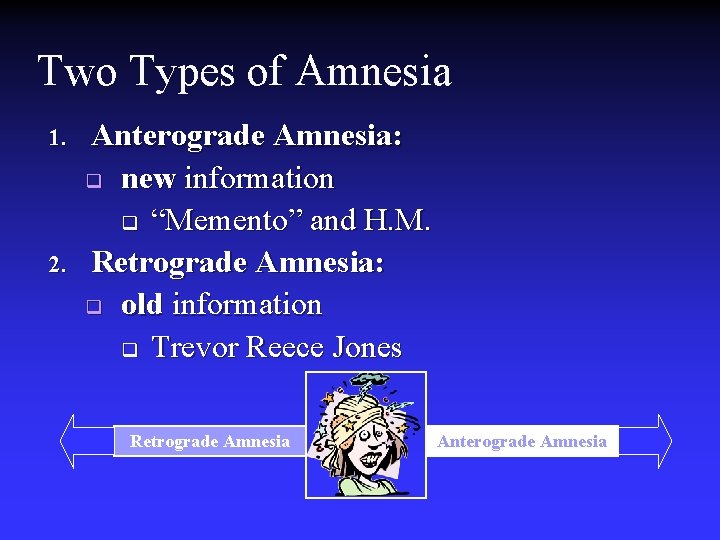
Two Types of Amnesia 1. 2. Anterograde Amnesia: q new information q “Memento” and H. M. Retrograde Amnesia: q old information q Trevor Reece Jones Retrograde Amnesia Anterograde Amnesia
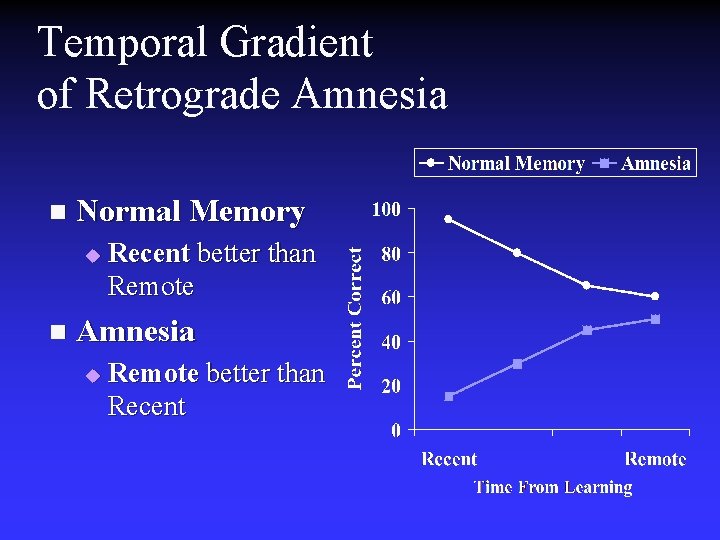
Temporal Gradient of Retrograde Amnesia n Normal Memory u n Recent better than Remote Amnesia u Remote better than Recent
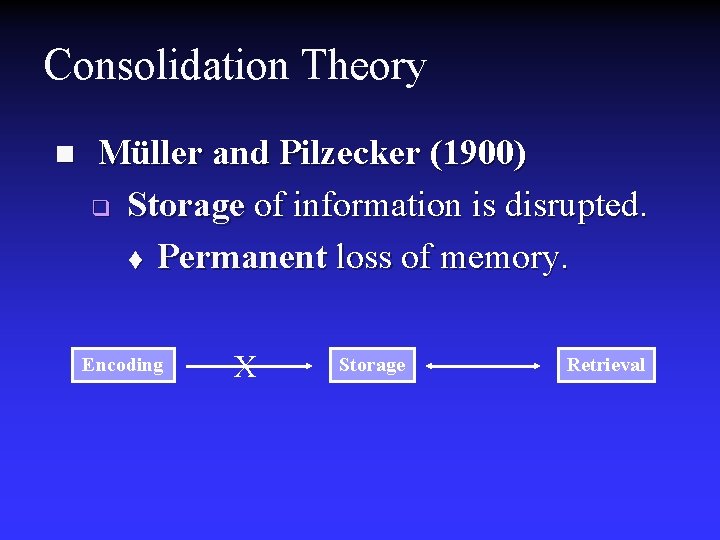
Consolidation Theory n Müller and Pilzecker (1900) q Storage of information is disrupted. t Permanent loss of memory. Encoding X Storage Retrieval
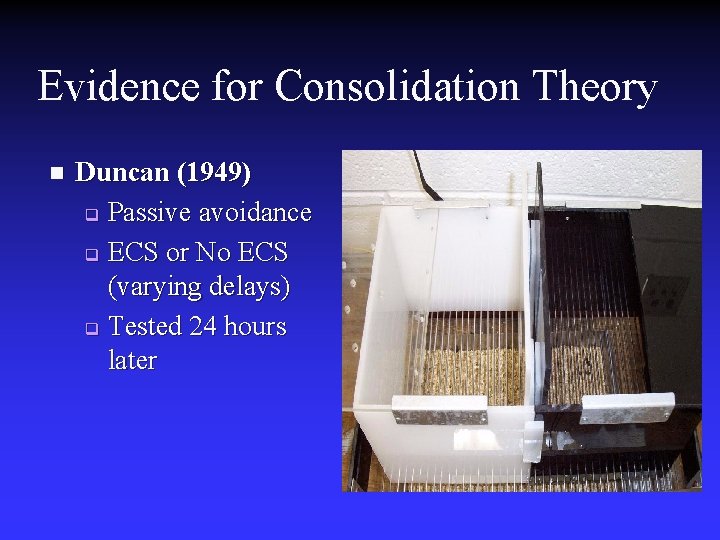
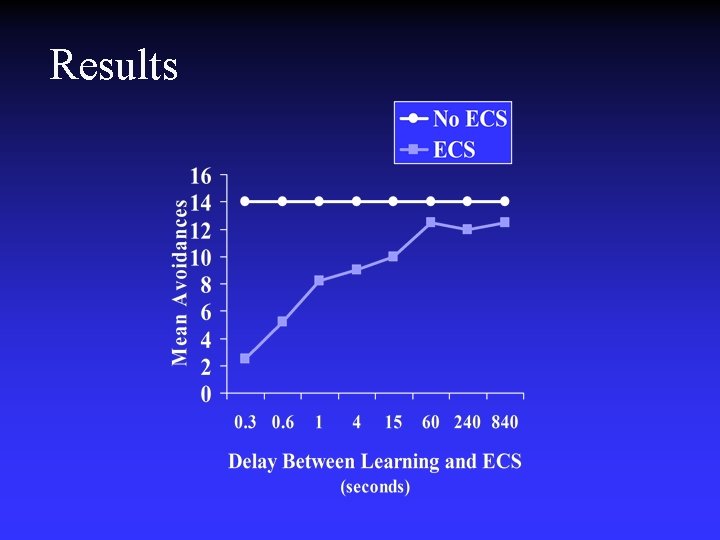
Evidence for Consolidation Theory n Duncan (1949) q Passive avoidance q ECS or No ECS (varying delays) q Tested 24 hours later
Results
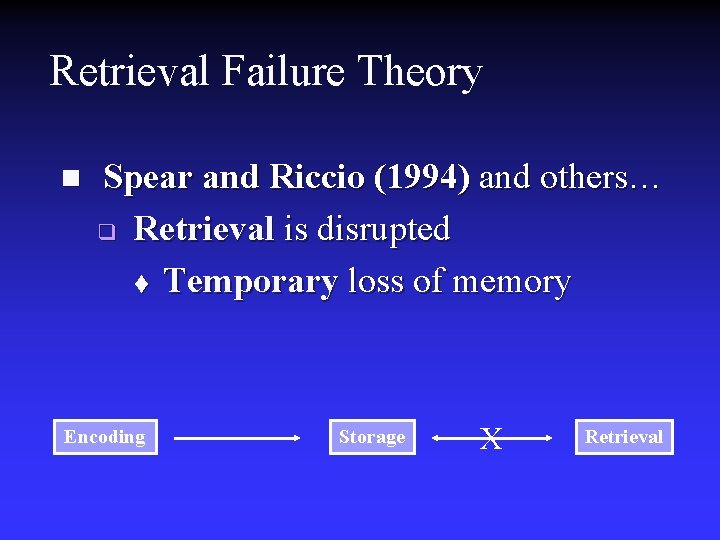
Retrieval Failure Theory n Spear and Riccio (1994) and others… q Retrieval is disrupted t Temporary loss of memory Encoding Storage X Retrieval
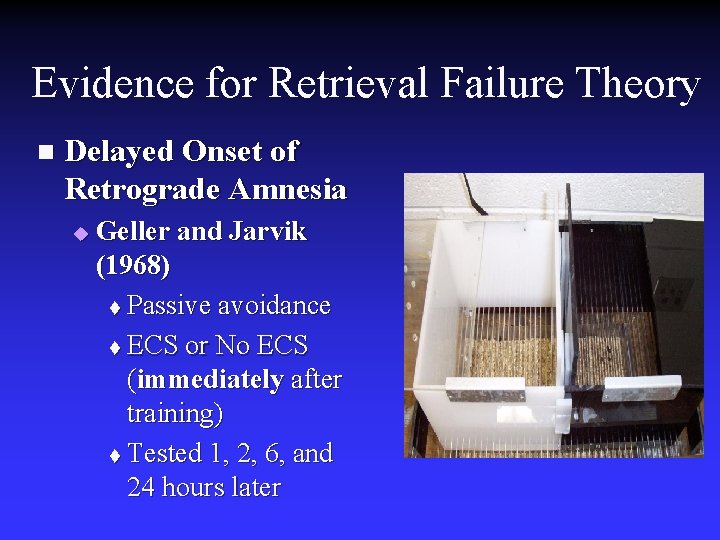
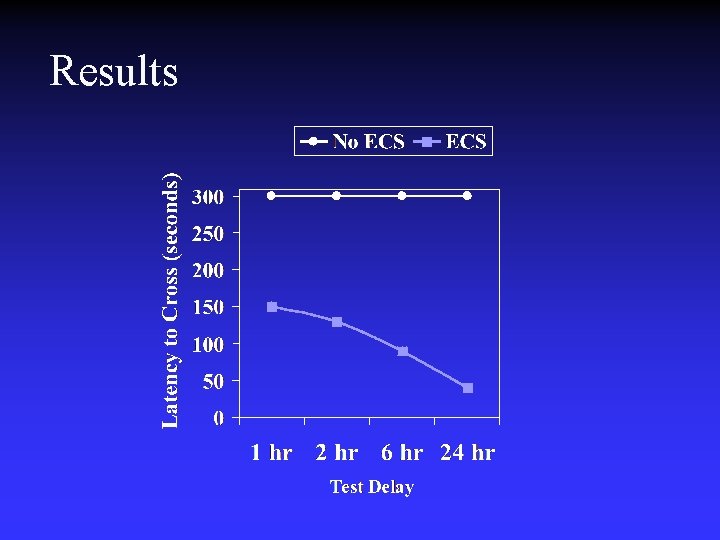
Evidence for Retrieval Failure Theory n Delayed Onset of Retrograde Amnesia u Geller and Jarvik (1968) t Passive avoidance t ECS or No ECS (immediately after training) t Tested 1, 2, 6, and 24 hours later
Results
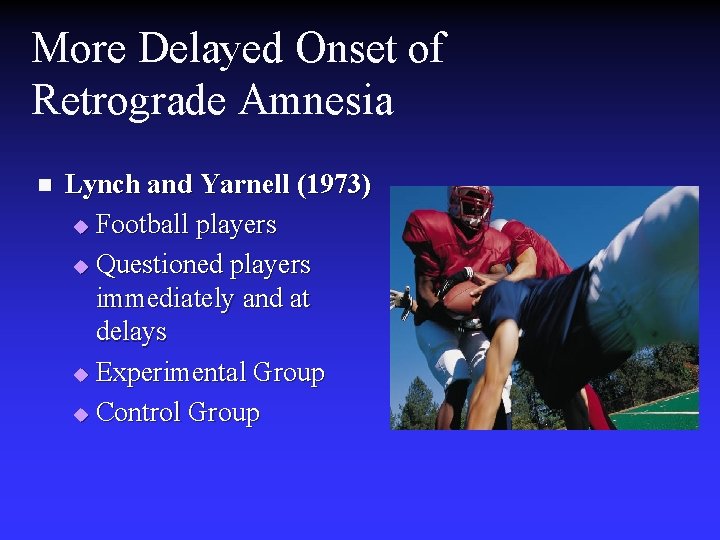
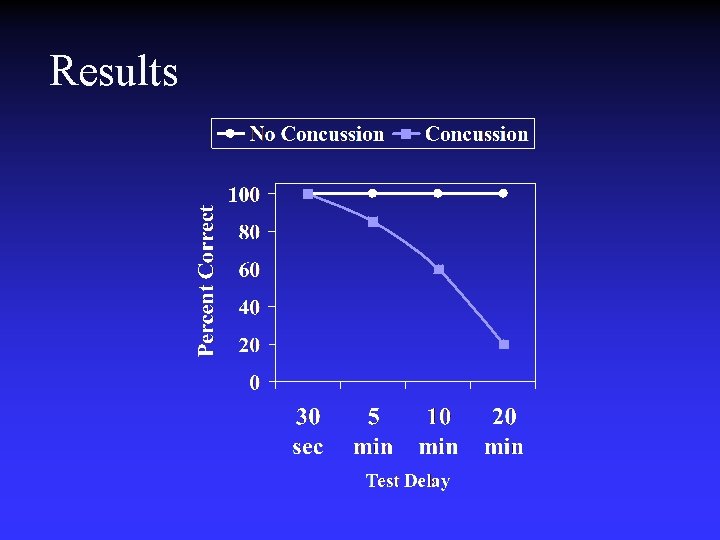
More Delayed Onset of Retrograde Amnesia n Lynch and Yarnell (1973) u Football players u Questioned players immediately and at delays u Experimental Group u Control Group
Results
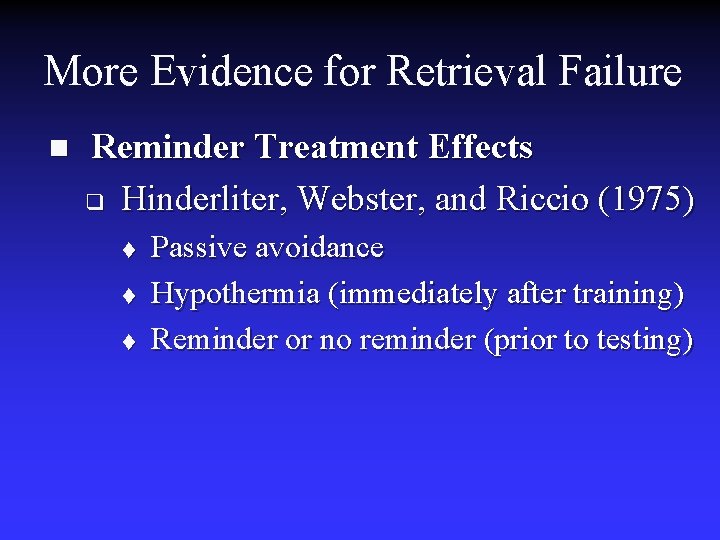
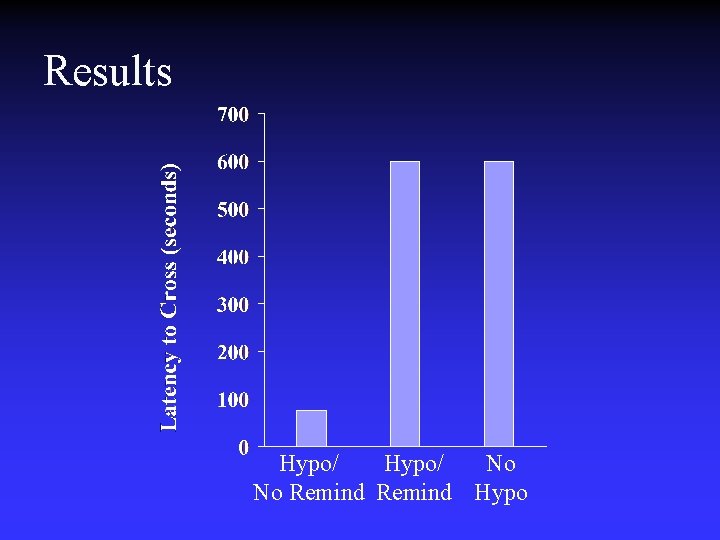
More Evidence for Retrieval Failure n Reminder Treatment Effects q Hinderliter, Webster, and Riccio (1975) t t t Passive avoidance Hypothermia (immediately after training) Reminder or no reminder (prior to testing)
Results Hypo/ No No Remind Hypo
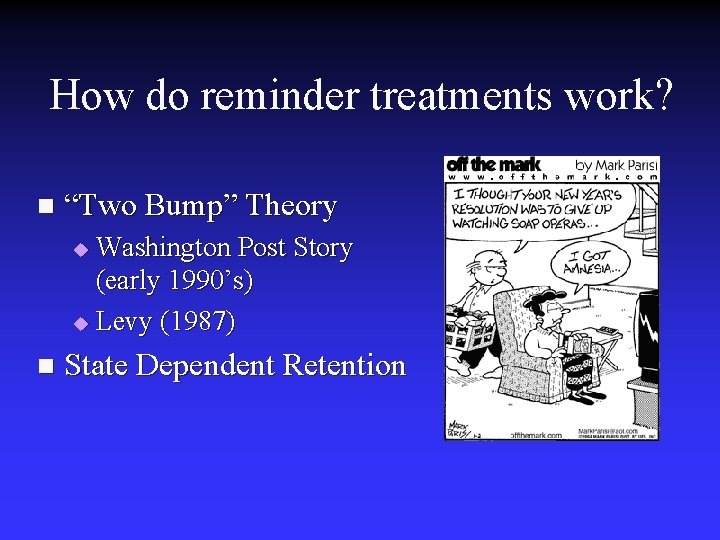
How do reminder treatments work? n “Two Bump” Theory Washington Post Story (early 1990’s) u Levy (1987) u n State Dependent Retention
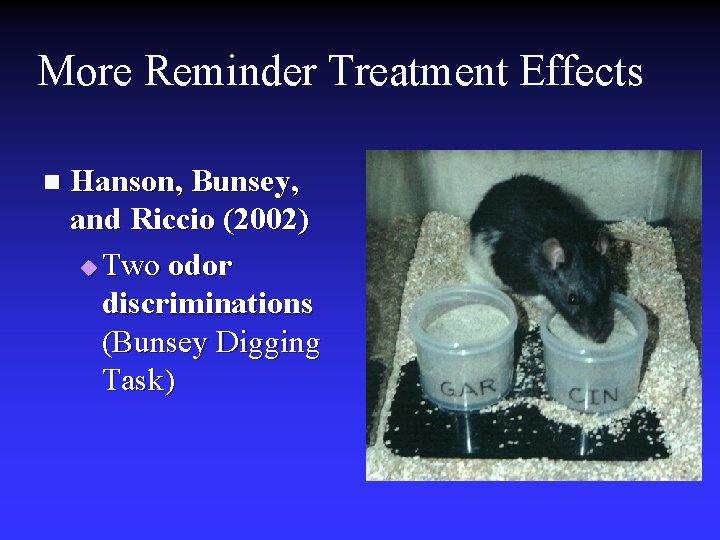
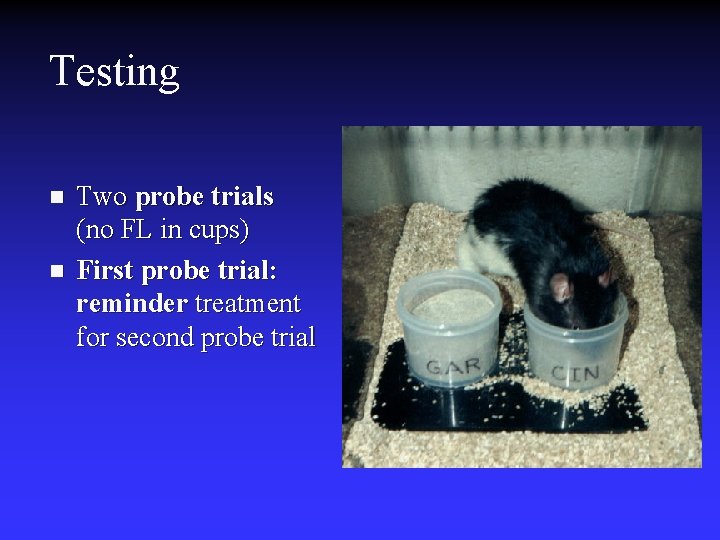
More Reminder Treatment Effects n Hanson, Bunsey, and Riccio (2002) u Two odor discriminations (Bunsey Digging Task)
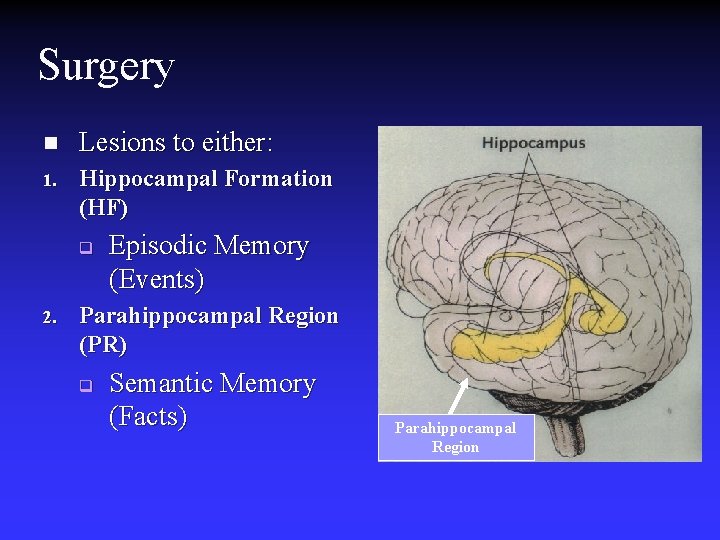
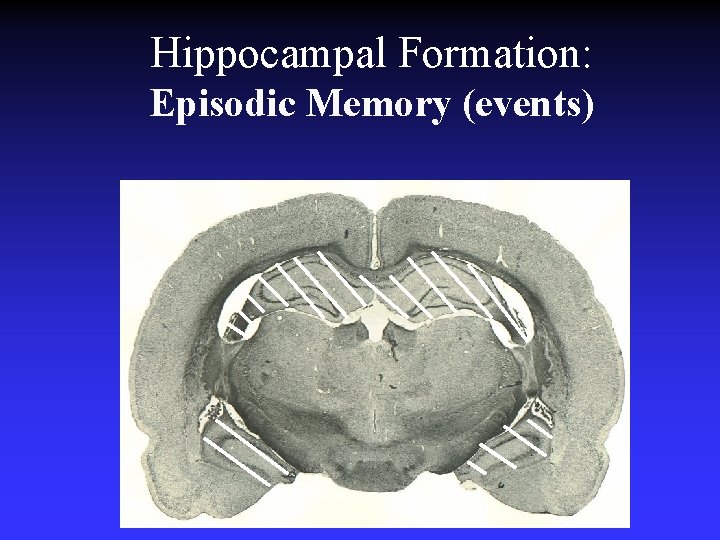
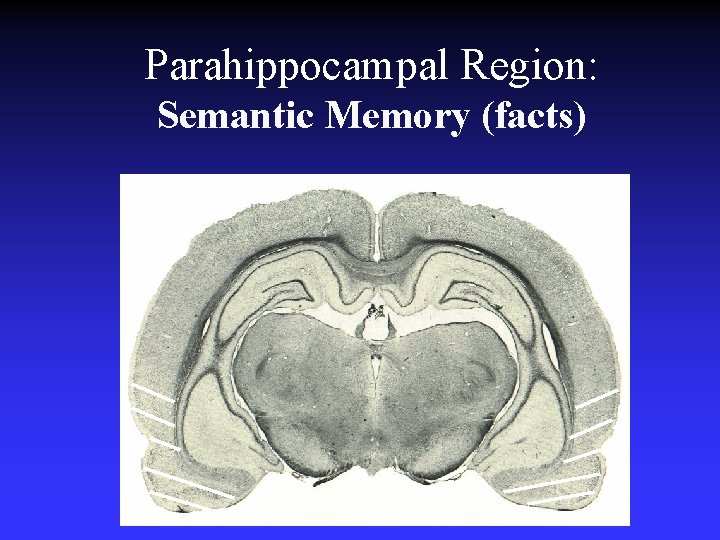
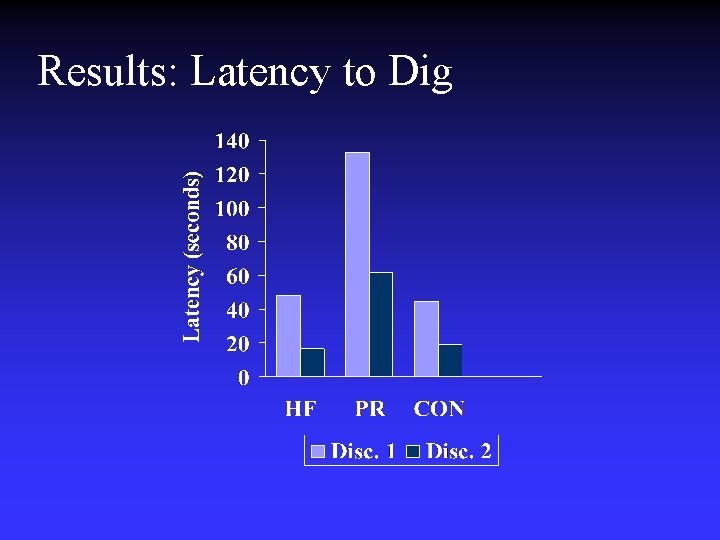
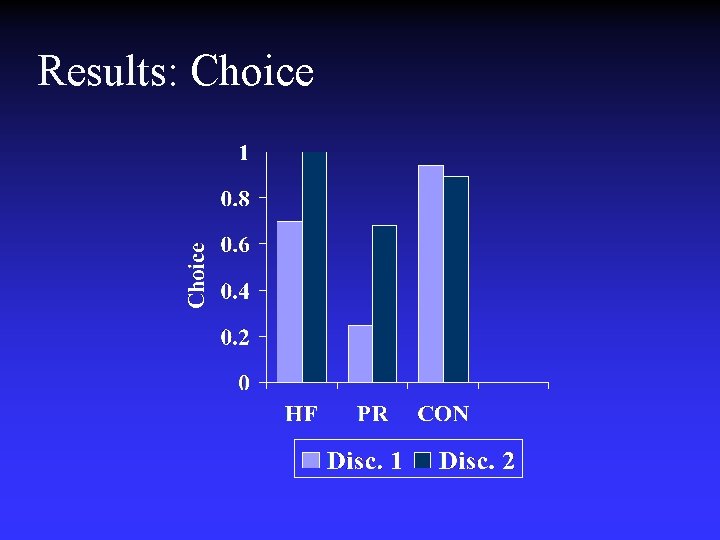
Surgery n Lesions to either: 1. Hippocampal Formation (HF) q 2. Episodic Memory (Events) Parahippocampal Region (PR) q Semantic Memory (Facts) Parahippocampal Region
Hippocampal Formation: Episodic Memory (events)
Parahippocampal Region: Semantic Memory (facts)
Testing n n Two probe trials (no FL in cups) First probe trial: reminder treatment for second probe trial
Results: Latency to Dig
Results: Choice
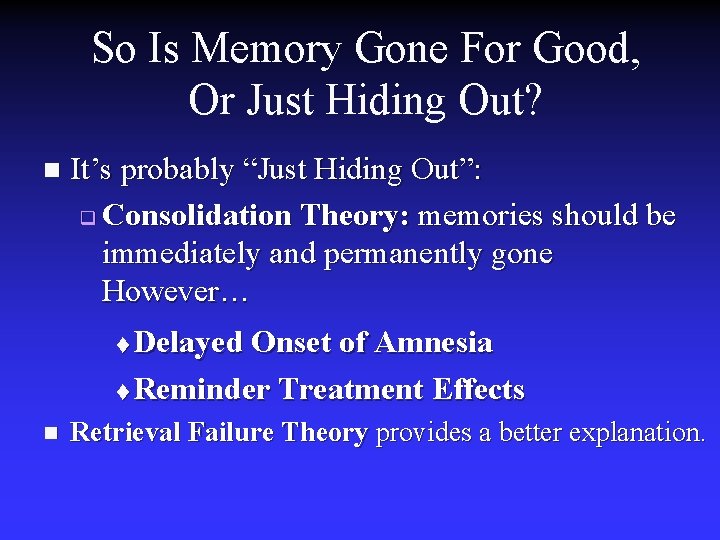
So Is Memory Gone For Good, Or Just Hiding Out? n It’s probably “Just Hiding Out”: q Consolidation Theory: memories should be immediately and permanently gone However… Delayed Onset of Amnesia t Reminder Treatment Effects t n Retrieval Failure Theory provides a better explanation.
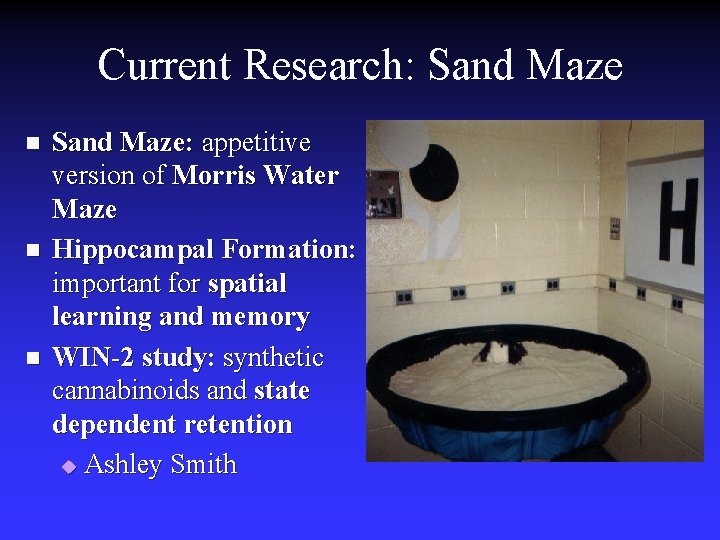
Current Research: Sand Maze n n n Sand Maze: appetitive version of Morris Water Maze Hippocampal Formation: important for spatial learning and memory WIN-2 study: synthetic cannabinoids and state dependent retention u Ashley Smith