
Retrieval AP Psychology Commune How do we recall






- Slides: 26
Retrieval AP Psychology Commune How do we recall the information we thought we remembered? Let’s Jog Our Memory!!!!!!!
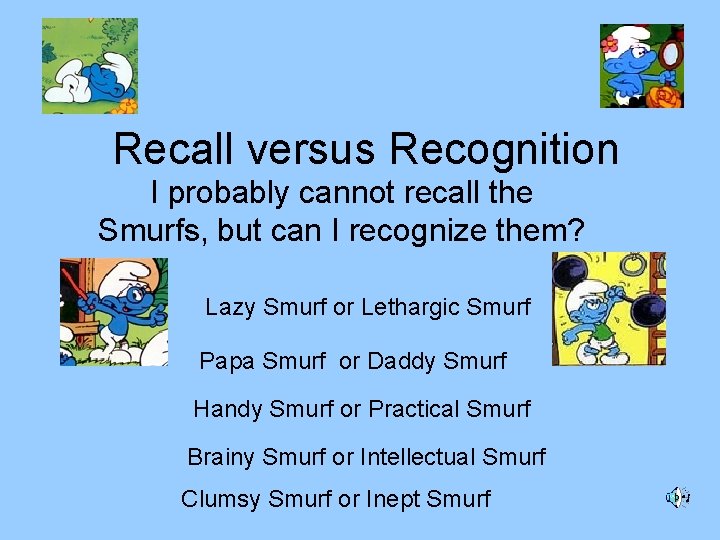
Recall versus Recognition I probably cannot recall the Smurfs, but can I recognize them? Lazy Smurf or Lethargic Smurf Papa Smurf or Daddy Smurf Handy Smurf or Practical Smurf Brainy Smurf or Intellectual Smurf Clumsy Smurf or Inept Smurf
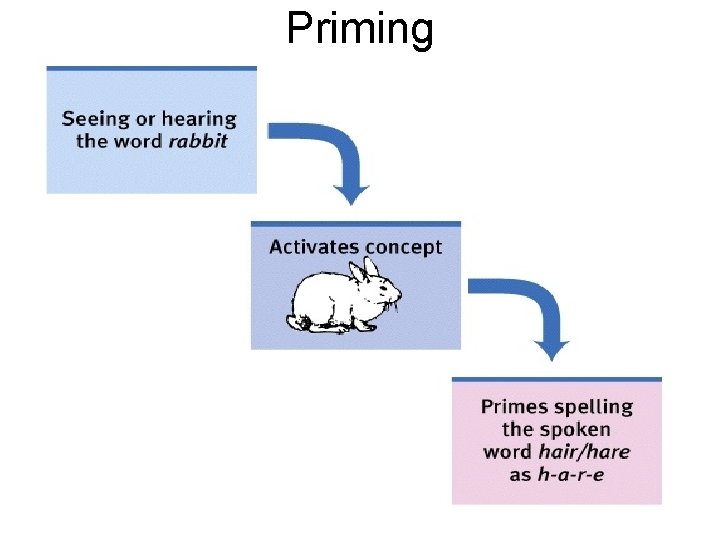
Retrieval Cues • Things that help us remember. • We often use a process called priming (the activation of associations in our memory) to help us retrieve information.
PRIMING EFFECT The priming effect occurs when people respond faster or better to an item if a similar item preceded it. • For the most part, the priming effect is considered involuntary and is most likely an unconscious phenomenon. The priming effect basically consists of repetition priming and semantic priming.
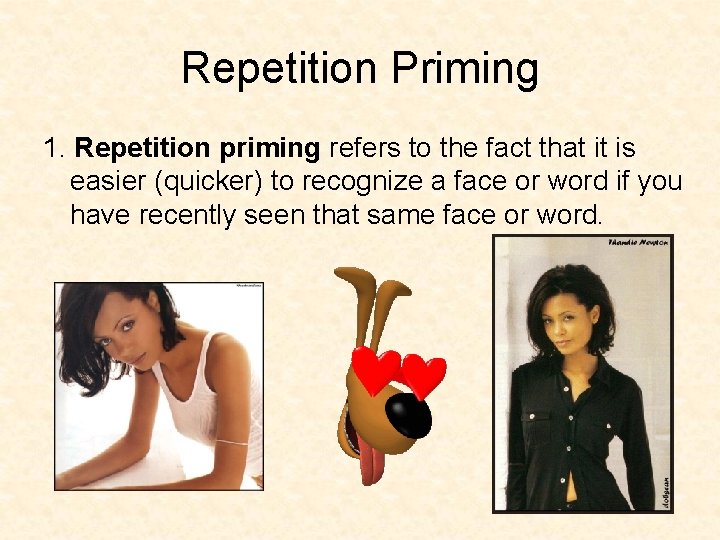
Repetition Priming 1. Repetition priming refers to the fact that it is easier (quicker) to recognize a face or word if you have recently seen that same face or word.
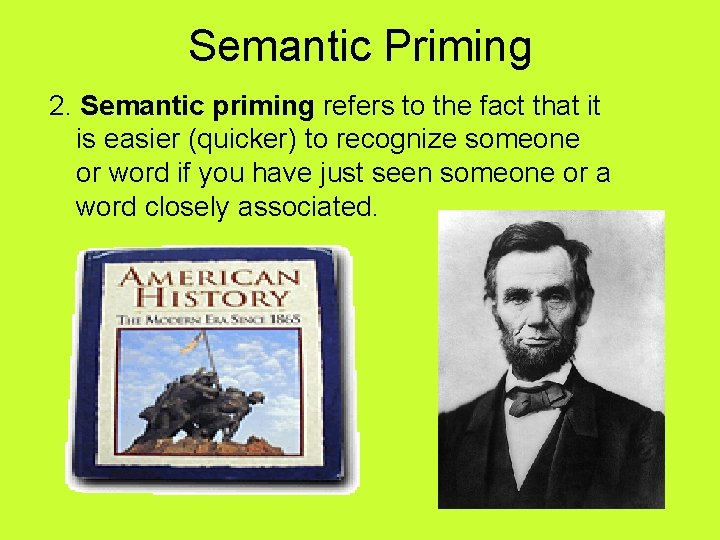
Semantic Priming 2. Semantic priming refers to the fact that it is easier (quicker) to recognize someone or word if you have just seen someone or a word closely associated.
Priming
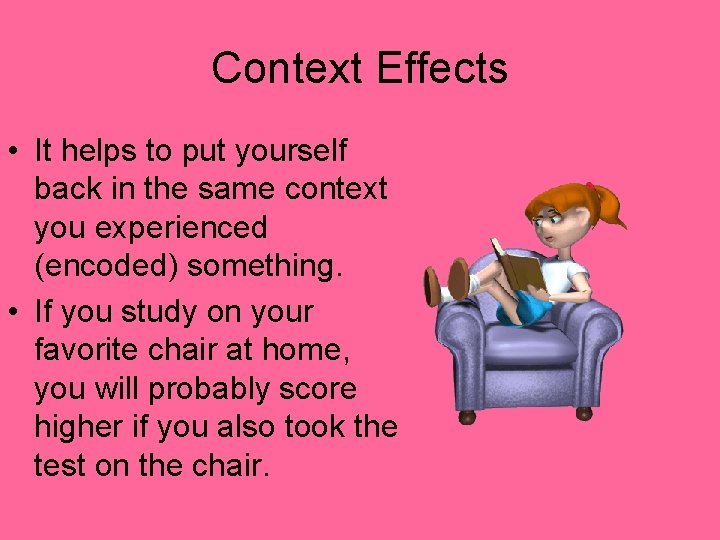
Context Effects • It helps to put yourself back in the same context you experienced (encoded) something. • If you study on your favorite chair at home, you will probably score higher if you also took the test on the chair.
Let’s try an experiment, shall we?
Rest
Snore
Sound
Tired
Bed
Comfort
Awake
Eat
Wake
Dream
Slumber
Night
How many of you saw the word Aardvark?
How many of you saw the word Sleep?
Guess what? Neither Aardvark nor Sleep were part of the list. So why did more people think they saw Sleep?
Déjà Vu • That eerie sense that you have experienced something before. • What is occurring is that the current situation cues past experiences that are Is déjà vu really a very similar to the present glitch in the Matrix? one - your mind gets confused.
Mood-Congruent Memory • The tendency to recall experiences that are consistent with one's current good or bad mood. • If you are depressed, you will more likely recall sad memories from your past. • Moods also effect that way you interpret other people’s behavior.