
Rethinking the Safety Net Pamela Loprest Urban Institute
Rethinking the Safety Net Pamela Loprest Urban Institute Poverty and Social Policy Conference Lansing, MI 1

What is the Safety Net?

Federal Means-Tested Expenditures (as percentage of GDP) Source: Congressional Budget Office
Goals of Safety Net Meet Basic Needs Greater Self-sufficiency
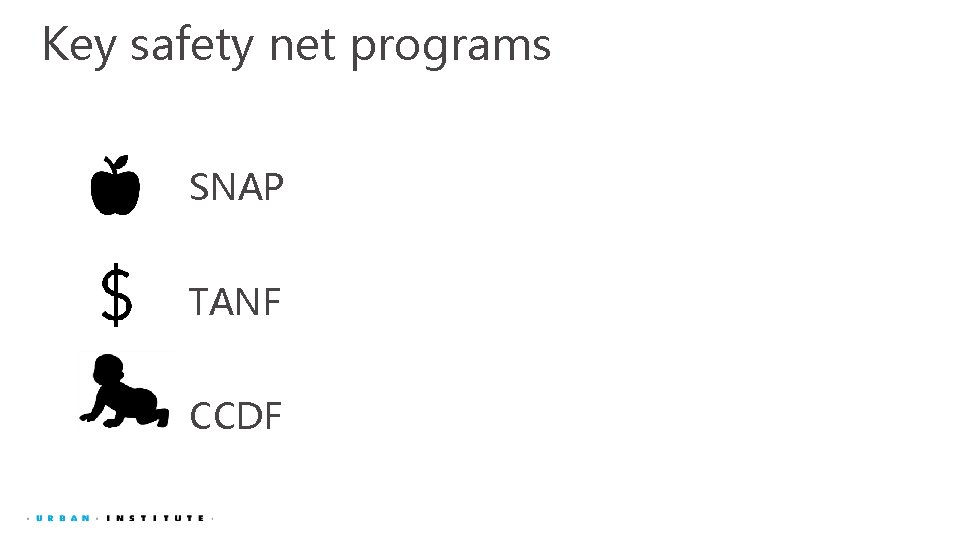
Key safety net programs SNAP TANF CCDF

Supplemental Nutritional Assistance Program (SNAP) • Provides food-purchasing assistance for households • Gross household income at or below 130% (some states increase to 200%) • Adults who are able are required to work • Program operation varies across states
Temporary Assistance for Needy Families (TANF) • Provides direct cash assistance, as well as other services like child care or transportation assistance • Available only to families with children • Eligibility and benefits largely determined on a state-by-state basis, with some federal restrictions • Recipients are required to work in some way
Child Care and Development Fund (CCDF) • Provides financial assistance to low-income families to access child care so they can work or attend training/education • State-federal partnership with eligibility and benefits largely determined on a state-by-state basis • Invests in quality of care through building teacher skills, supporting achievement of higher program standards, and providing consumer education
![[VALUE] SNAP Number of Participants TANF CCDF (children) 3 235 000 1 316 900](http://slidetodoc.com/presentation_image_h2/a6e3f49a59d21e17a967c616d252e002/image-9.jpg "[VALUE] SNAP Number of Participants TANF CCDF (children) 3 235 000 1 316 900")
[VALUE] SNAP Number of Participants TANF CCDF (children) 3 235 000 1 316 900 2017/2018
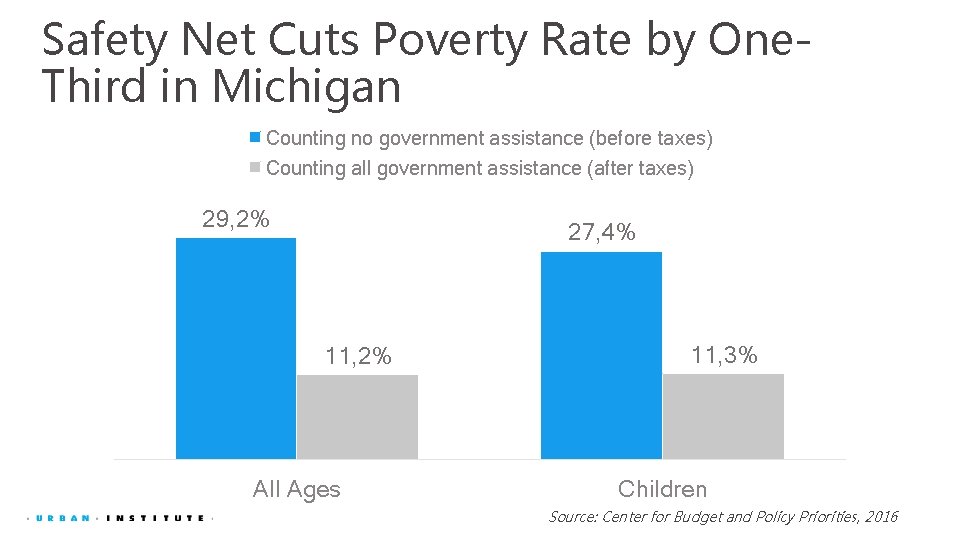
Safety Net Cuts Poverty Rate by One. Third in Michigan Counting no government assistance (before taxes) Counting all government assistance (after taxes) 29, 2% 27, 4% 11, 2% All Ages 11, 3% Children Source: Center for Budget and Policy Priorities, 2016
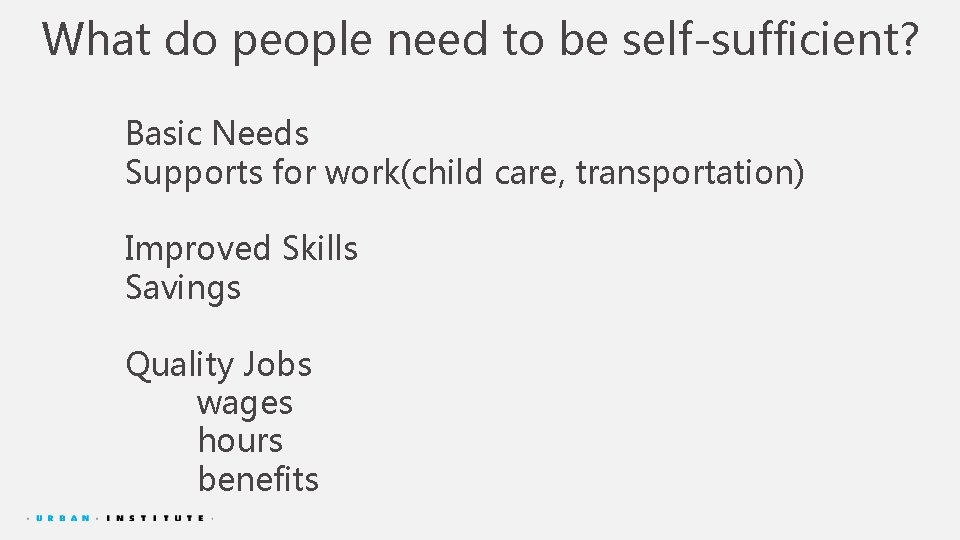
What do people need to be self-sufficient? Basic Needs Supports for work(child care, transportation) Improved Skills Savings Quality Jobs wages hours benefits

Safety Net Considerations
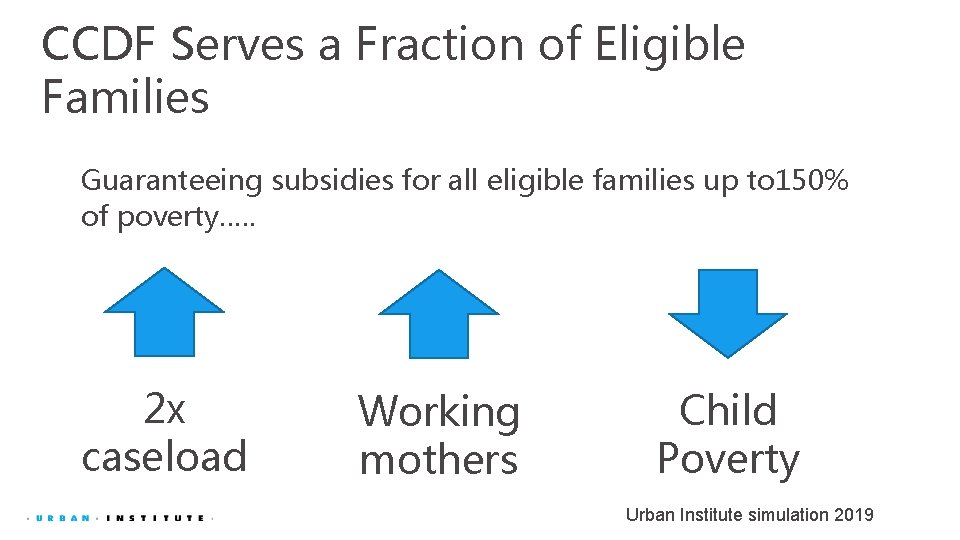
CCDF Serves a Fraction of Eligible Families Guaranteeing subsidies for all eligible families up to 150% of poverty…. . 2 x caseload Working mothers Child Poverty Urban Institute simulation 2019
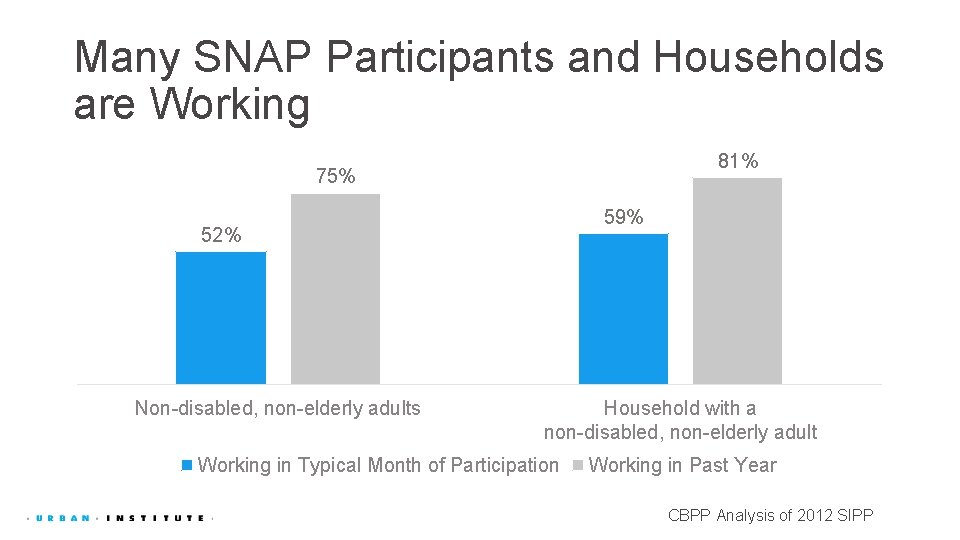
Many SNAP Participants and Households are Working 81% 75% 59% 52% Non-disabled, non-elderly adults Household with a non-disabled, non-elderly adult Working in Typical Month of Participation Working in Past Year CBPP Analysis of 2012 SIPP
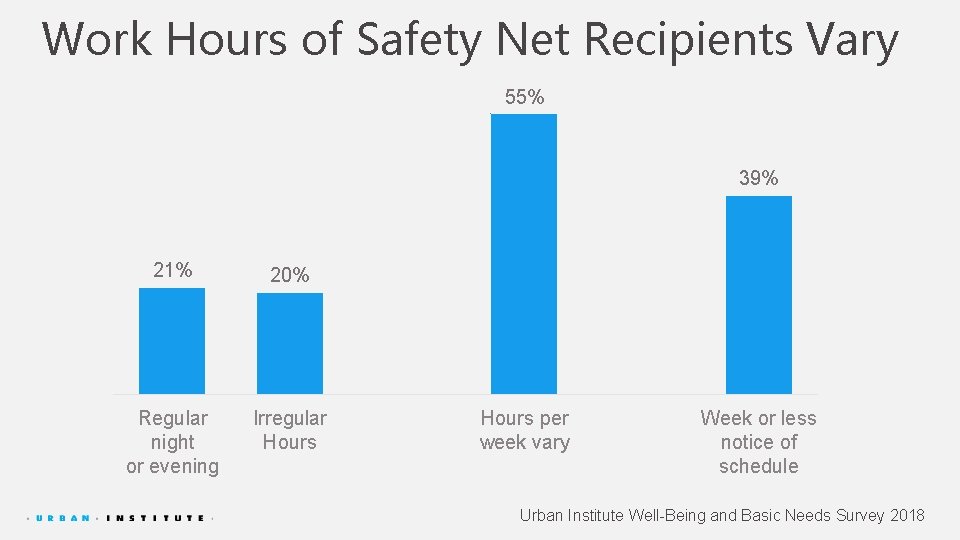
Work Hours of Safety Net Recipients Vary 55% 39% 21% 20% Regular night or evening Irregular Hours per week vary Week or less notice of schedule Urban Institute Well-Being and Basic Needs Survey 2018
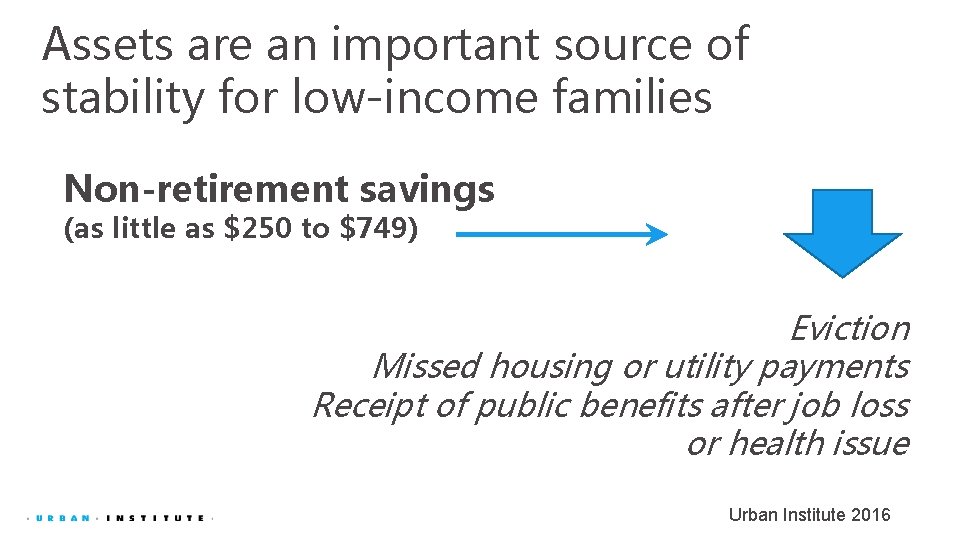
Assets are an important source of stability for low-income families Non-retirement savings (as little as $250 to $749) Eviction Missed housing or utility payments Receipt of public benefits after job loss or health issue Urban Institute 2016
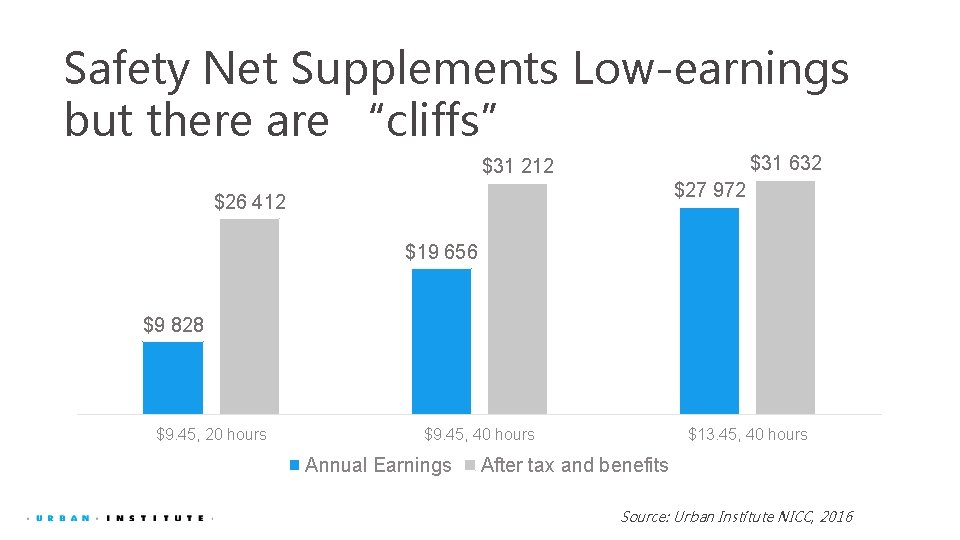
Safety Net Supplements Low-earnings but there are “cliffs” $31 632 $31 212 $27 972 $26 412 $19 656 $9 828 $9. 45, 20 hours $9. 45, 40 hours Annual Earnings $13. 45, 40 hours After tax and benefits Source: Urban Institute NICC, 2016
Labor Market Trends
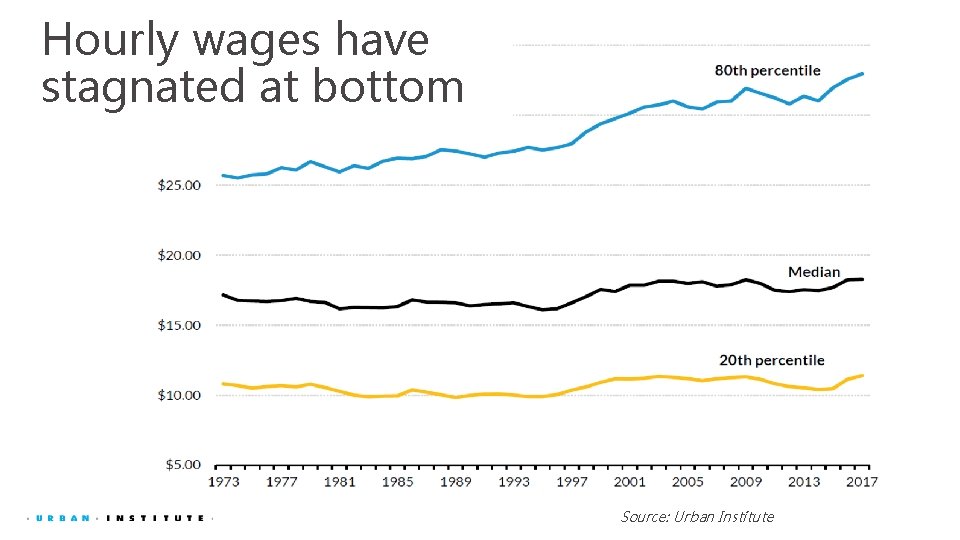
Hourly wages have stagnated at bottom Source: Urban Institute
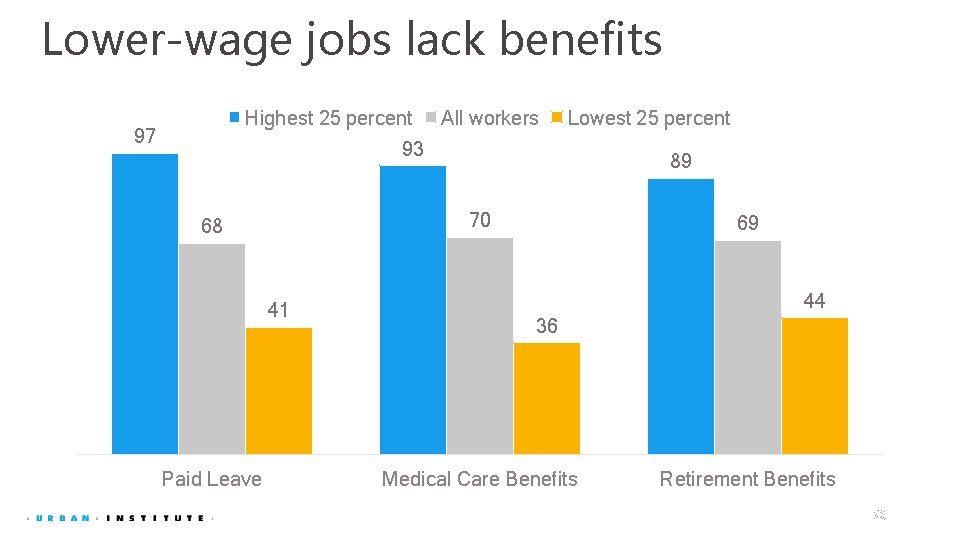
Lower-wage jobs lack benefits Highest 25 percent 97 All workers Lowest 25 percent 93 70 68 41 Paid Leave 89 69 44 36 Medical Care Benefits Retirement Benefits 20
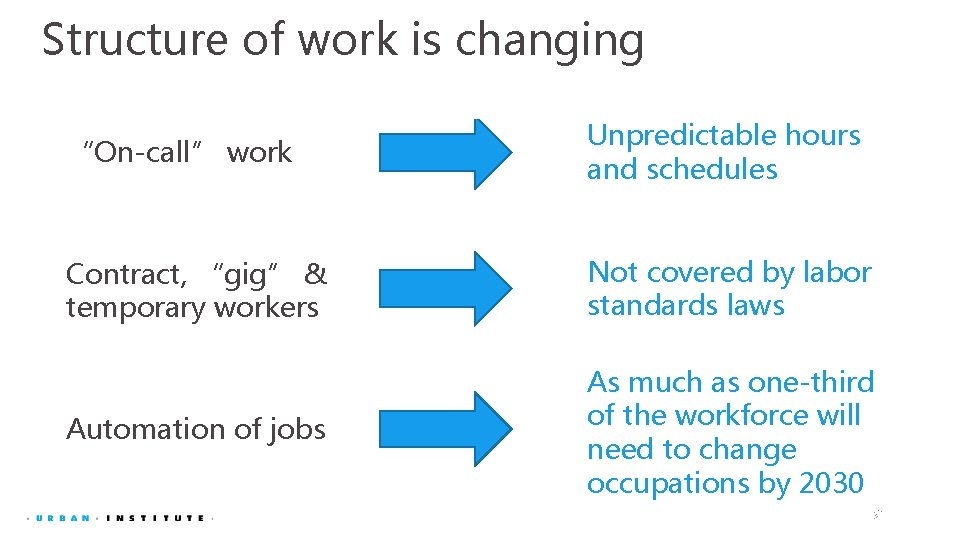
Structure of work is changing “On-call” work Unpredictable hours and schedules Contract, “gig” & temporary workers Not covered by labor standards laws Automation of jobs As much as one-third of the workforce will need to change occupations by 2030 21
Questions to consider
• Are safety net programs meeting families’ basic needs? • How can safety net programs better support working families? • How can economic opportunity initiatives complement safety net program structure? • How can job quality be improved to reduce need for public assistance?
Contact Information: Pamela Loprest Urban Institute ploprest@urban. org 24
- Slides: 24