
Rethinking the Homelessness Response Framework Presented by Matt

Rethinking the Homelessness Response Framework Presented by Matt Simmonds, Simtech Solutions Inc. 1
A bit of background… • • President and founder of Simtech Solutions Developer of the first HMIS data warehouse in the US Author of HUD CSV Data Exchange Format (V 3) and the HUD Annual Performance Report (APR) Programming Specifications Developer of the HUD HMIS Report Generation Tool Oversee the ongoing development and management of a HMIS data warehouse that currently supports over 3100 projects that serve the homeless. Oversee the ongoing development and management of a mobile app to automate the point in time count that was used by 47 regions in 2019. Family guy who loves snowboarding, craft beer, coaching sports, golf, fishing, and attempting to solve complex problems. 2
What are we trying to accomplish? • • • Help people by connecting them to services they need Measure our progress Demonstrate results Improve our case management practices Better understand the people we are serving Improve how we allocate limited resources Increase our efficiency End homelessness Other thoughts? ? 3
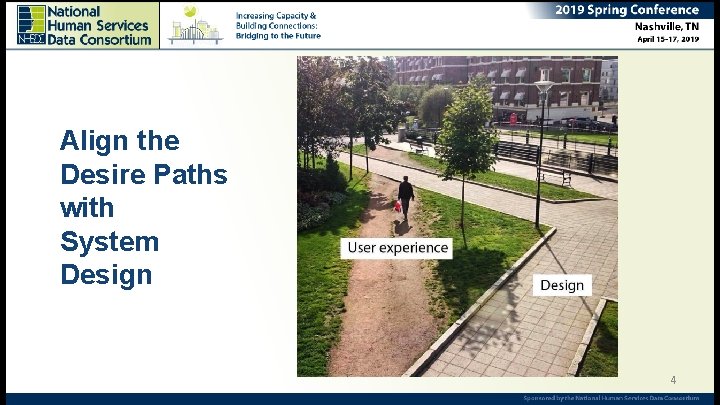
Align the Desire Paths with System Design 4
Align System Design to Operations Examples of misalignment… • High turnover emergency shelters cannot keep up with enrollments and exits (so staff never exit anyone) • Street outreach workers constantly lag in their data entry (so they don’t enter everything) • Projects with multiple locations or multiple grantees are split into multiple projects • Admin locations are used as the operating location for scattered site projects • Jane and John Doe are used for holding names of people who don’t want to share info • Project names in HMIS often don’t match with the project name used in the grant from HUD. • Finance is another system. Projects either spend their $ too fast or leave it on the table. 5
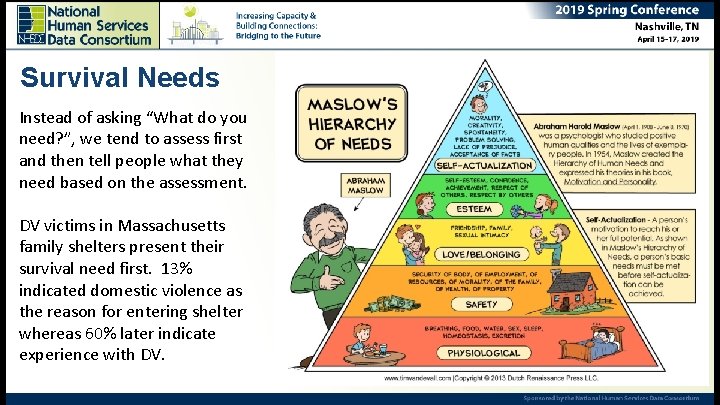
Survival Needs Instead of asking “What do you need? ”, we tend to assess first and then tell people what they need based on the assessment. DV victims in Massachusetts family shelters present their survival need first. 13% indicated domestic violence as the reason for entering shelter whereas 60% later indicate experience with DV. 6
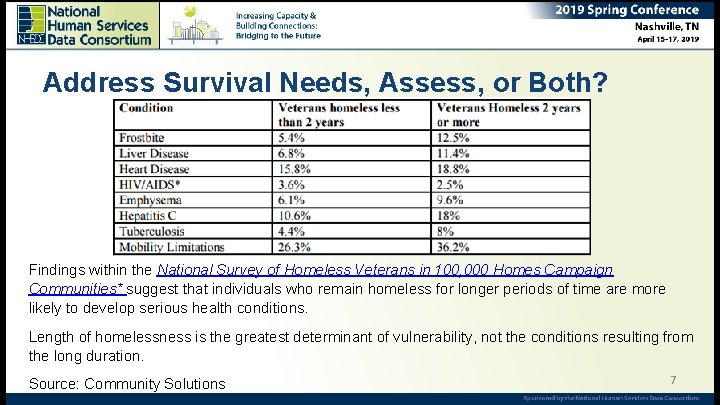
Address Survival Needs, Assess, or Both? Findings within the National Survey of Homeless Veterans in 100, 000 Homes Campaign Communities* suggest that individuals who remain homeless for longer periods of time are more likely to develop serious health conditions. Length of homelessness is the greatest determinant of vulnerability, not the conditions resulting from the long duration. Source: Community Solutions 7

“Every System is Perfectly Designed for the Outcome it Gets” - Dr. W. Edwards Deming 8
9
Common Challenges faced by HMIS-Centric Regions • • • Not all homeless providers receive HUD funding; Different funding providers have different requirements; Systems, and the standards they are being built to adhere to, are often too focused on mandated reporting rather than the work of helping people; Some providers operate in multiple regions that use different HMIS systems; Different organizations have different operational needs. Systems face scope creep and try do everything, which impede their ability to do a discreet set of functions well; Finding and accessing services is a cumbersome process; Data is fragmented between providers, systems, and regions; Coordinated Entry Systems tend to exclude the most vulnerable and service-resistant; First responders, such as police and medical personnel, are disconnected from coordinated entry systems; Data entry is overly burdensome on staff; and Different Federal partners have different geographic boundaries for the regions they support 10

Limitations of the Current HUD HMIS Standards • • • Heavy reliance on self-reported information; Clients are enrolled into a project, not into a project at a location; Consent is not tracked in a consistent manner; Vulnerability is not assessed in a consistent manner; Intake and exit assessment data needs to be repeated for each enrollment, even if there are no changes, and can conflict with data from other overlapping enrollments at the same time. 11
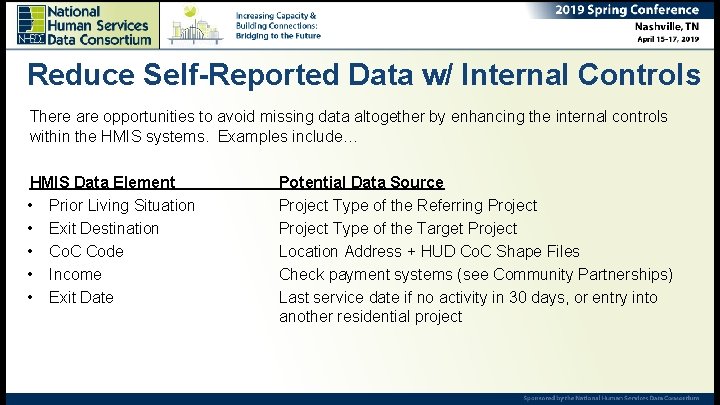
Reduce Self-Reported Data w/ Internal Controls There are opportunities to avoid missing data altogether by enhancing the internal controls within the HMIS systems. Examples include… HMIS Data Element • Prior Living Situation • Exit Destination • Co. C Code • Income • Exit Date Potential Data Source Project Type of the Referring Project Type of the Target Project Location Address + HUD Co. C Shape Files Check payment systems (see Community Partnerships) Last service date if no activity in 30 days, or entry into another residential project
Service-oriented architecture (SOA) is a style of software design where services are provided to the other components by application components, through a communication protocol. Each service provides a discrete function. 13

14
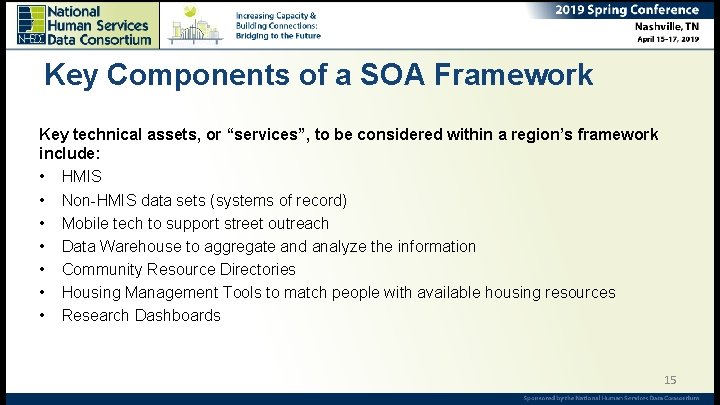
Key Components of a SOA Framework Key technical assets, or “services”, to be considered within a region’s framework include: • HMIS • Non-HMIS data sets (systems of record) • Mobile tech to support street outreach • Data Warehouse to aggregate and analyze the information • Community Resource Directories • Housing Management Tools to match people with available housing resources • Research Dashboards 15

Key Service: Mobile Tech for Outreach • • Address the survival needs first; Build up a relationship, and the HMIS record, over time; Track the service encounters to support chronic homeless determination; Alert outreach workers if someone is trying to reach the person. 16
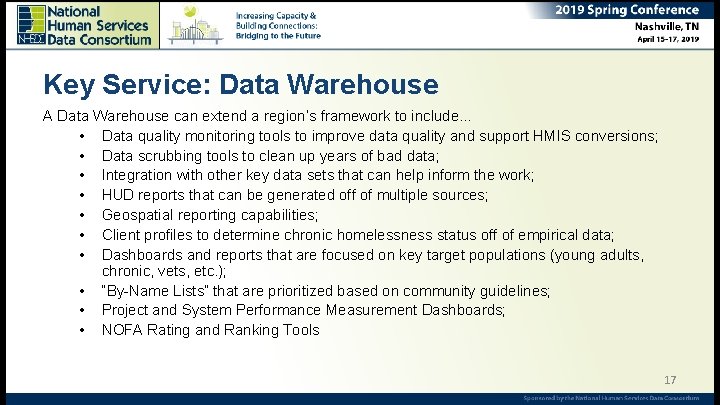
Key Service: Data Warehouse A Data Warehouse can extend a region’s framework to include… • Data quality monitoring tools to improve data quality and support HMIS conversions; • Data scrubbing tools to clean up years of bad data; • Integration with other key data sets that can help inform the work; • HUD reports that can be generated off of multiple sources; • Geospatial reporting capabilities; • Client profiles to determine chronic homelessness status off of empirical data; • Dashboards and reports that are focused on key target populations (young adults, chronic, vets, etc. ); • “By-Name Lists” that are prioritized based on community guidelines; • Project and System Performance Measurement Dashboards; • NOFA Rating and Ranking Tools 17
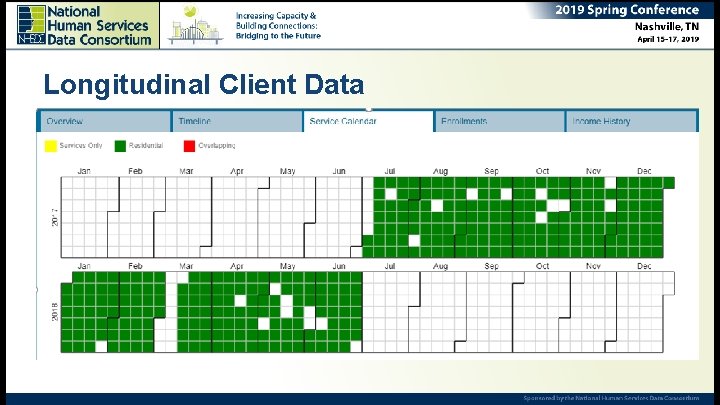
Longitudinal Client Data
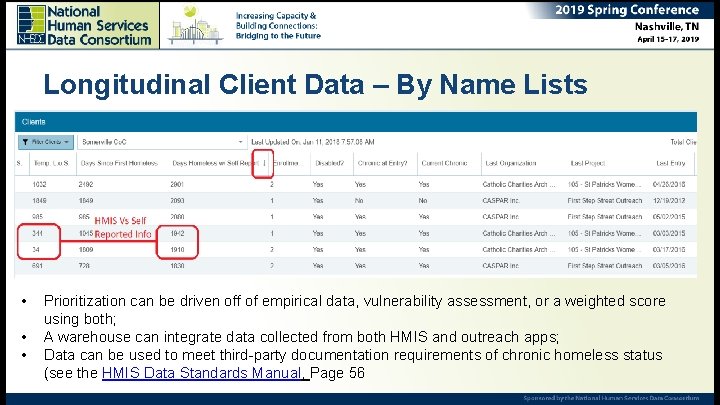
Longitudinal Client Data – By Name Lists • • • Prioritization can be driven off of empirical data, vulnerability assessment, or a weighted score using both; A warehouse can integrate data collected from both HMIS and outreach apps; Data can be used to meet third-party documentation requirements of chronic homeless status (see the HMIS Data Standards Manual, Page 56
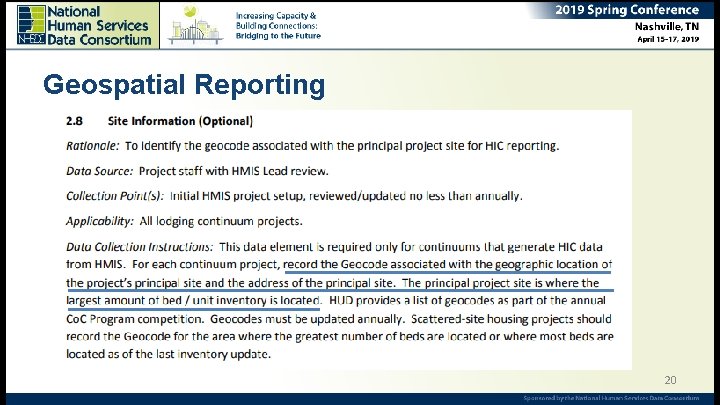
Geospatial Reporting 20
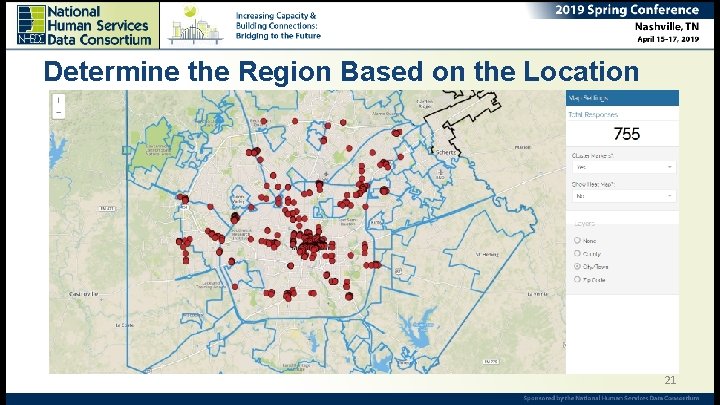
Determine the Region Based on the Location 21
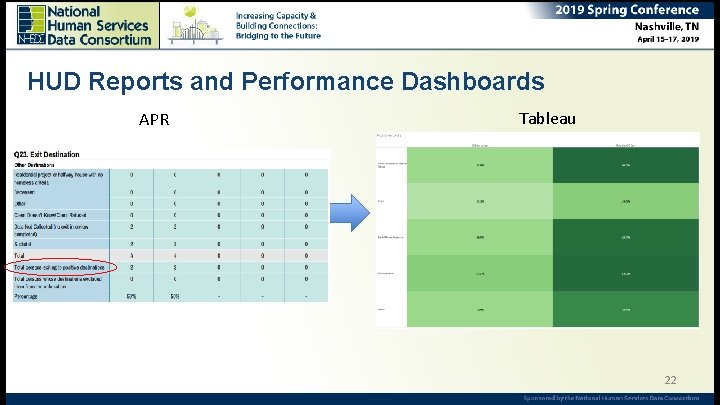
HUD Reports and Performance Dashboards APR Tableau 22
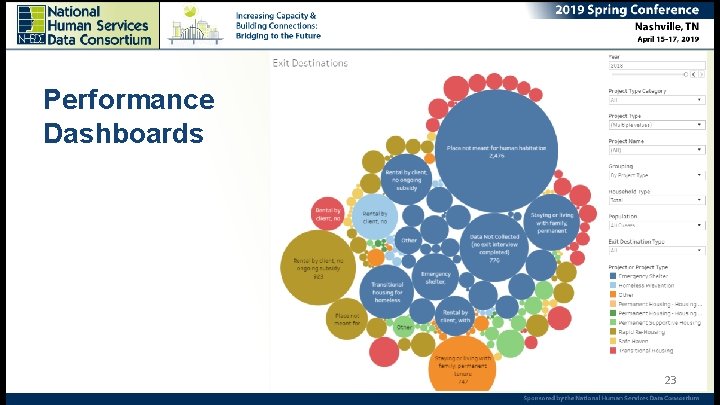
Performance Dashboards 23
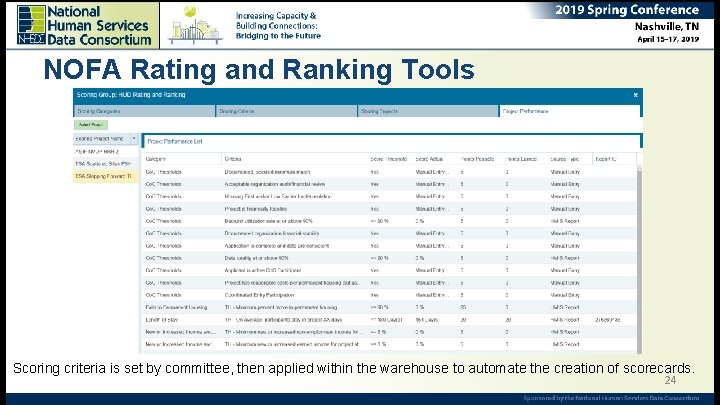
NOFA Rating and Ranking Tools Scoring criteria is set by committee, then applied within the warehouse to automate the creation of scorecards. 24
“We must accept that human error is inevitable – and design around that fact” Paul Batalden, MD 25
Key Service: Non-HMIS Data Sets The Social Security Administration conducted a study of homeless people, and their self-reported SSI/SSDI status, and found that "Fully 41 percent (934/2257) of clients who reported receiving SSI/DI benefits did not receive them according to SSA. "
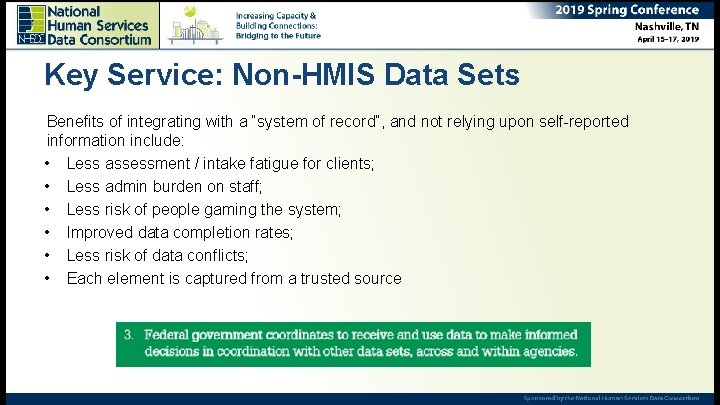
Key Service: Non-HMIS Data Sets Benefits of integrating with a “system of record”, and not relying upon self-reported information include: • Less assessment / intake fatigue for clients; • Less admin burden on staff; • Less risk of people gaming the system; • Improved data completion rates; • Less risk of data conflicts; • Each element is captured from a trusted source
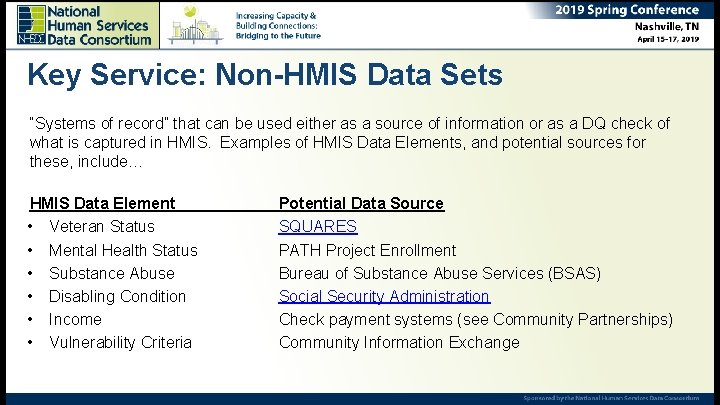
Key Service: Non-HMIS Data Sets “Systems of record” that can be used either as a source of information or as a DQ check of what is captured in HMIS. Examples of HMIS Data Elements, and potential sources for these, include… HMIS Data Element • Veteran Status • Mental Health Status • Substance Abuse • Disabling Condition • Income • Vulnerability Criteria Potential Data Source SQUARES PATH Project Enrollment Bureau of Substance Abuse Services (BSAS) Social Security Administration Check payment systems (see Community Partnerships) Community Information Exchange
Key Service: Non-HMIS Data Sets
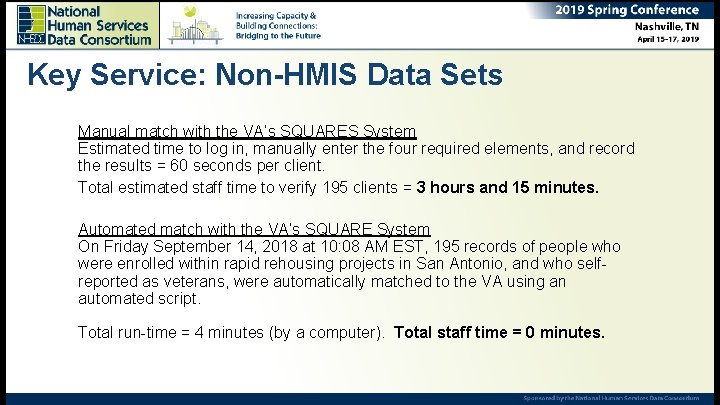
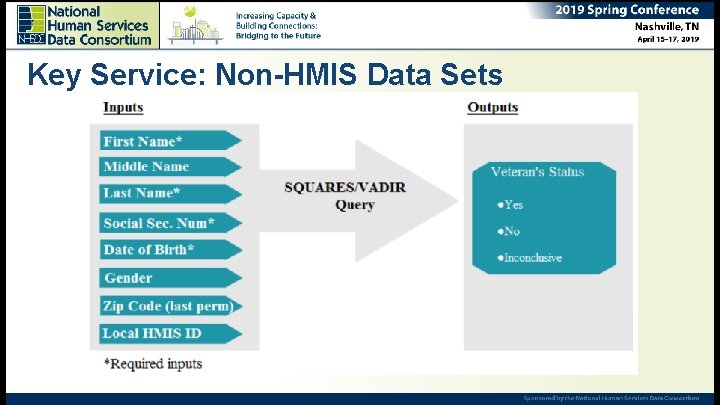
Key Service: Non-HMIS Data Sets Manual match with the VA’s SQUARES System Estimated time to log in, manually enter the four required elements, and record the results = 60 seconds per client. Total estimated staff time to verify 195 clients = 3 hours and 15 minutes. Automated match with the VA’s SQUARE System On Friday September 14, 2018 at 10: 08 AM EST, 195 records of people who were enrolled within rapid rehousing projects in San Antonio, and who selfreported as veterans, were automatically matched to the VA using an automated script. Total run-time = 4 minutes (by a computer). Total staff time = 0 minutes.

Reduce Self-Reported Data w/ Data Integration AUTOMATED SQUARES RESULTS Matched Records = 177 Unmatched Records = 18
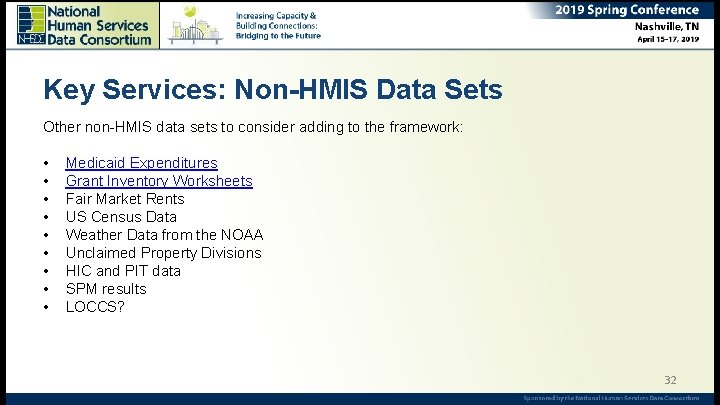
Key Services: Non-HMIS Data Sets Other non-HMIS data sets to consider adding to the framework: • • • Medicaid Expenditures Grant Inventory Worksheets Fair Market Rents US Census Data Weather Data from the NOAA Unclaimed Property Divisions HIC and PIT data SPM results LOCCS? 32
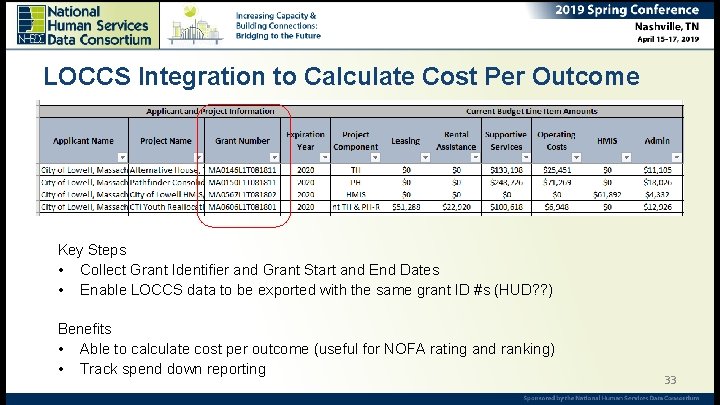
LOCCS Integration to Calculate Cost Per Outcome Key Steps • Collect Grant Identifier and Grant Start and End Dates • Enable LOCCS data to be exported with the same grant ID #s (HUD? ? ) Benefits • Able to calculate cost per outcome (useful for NOFA rating and ranking) • Track spend down reporting 33
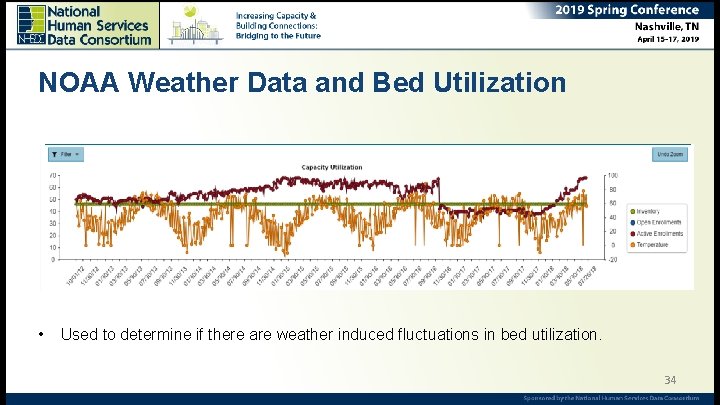
NOAA Weather Data and Bed Utilization • Used to determine if there are weather induced fluctuations in bed utilization. 34
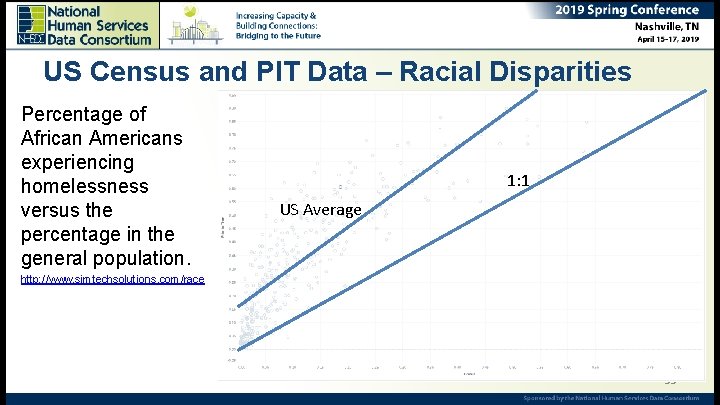
US Census and PIT Data – Racial Disparities Percentage of African Americans experiencing homelessness versus the percentage in the general population. 1: 1 US Average http: //www. simtechsolutions. com/race 35
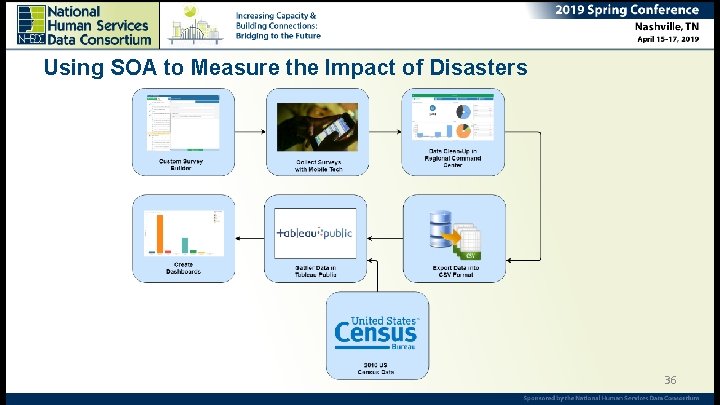
Using SOA to Measure the Impact of Disasters 36

Measuring the Impact Questions added for the PIT: • Are you homeless as a result of natural disaster? If yes, which one? • Where were you living when you became homeless this time? 37
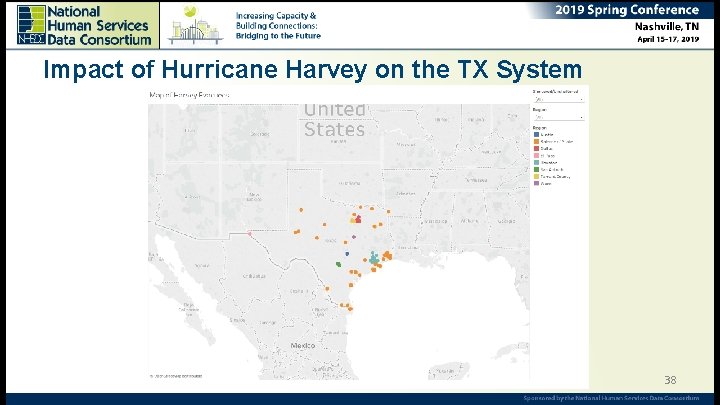
Impact of Hurricane Harvey on the TX System 38
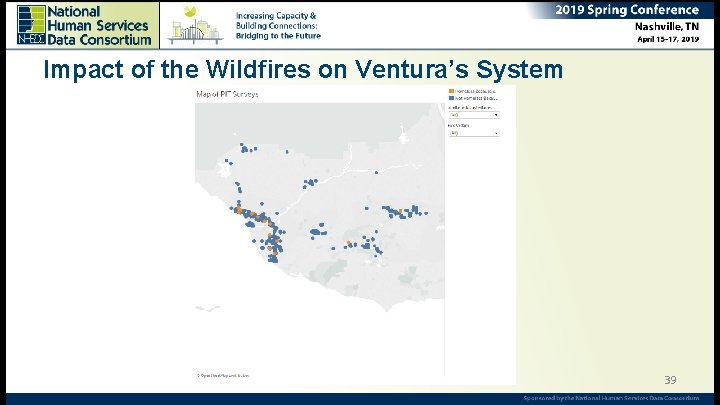
Impact of the Wildfires on Ventura’s System 39
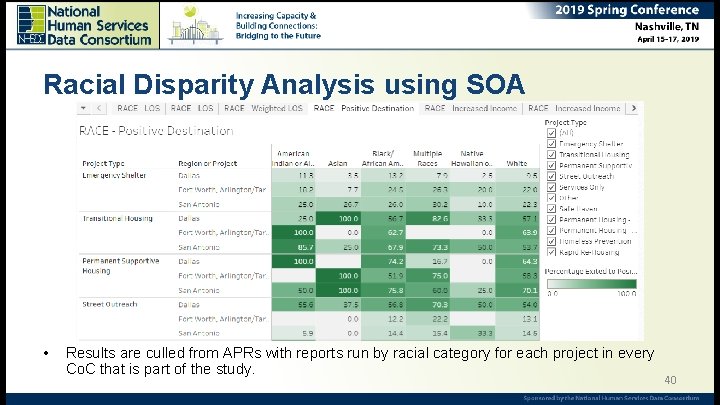
Racial Disparity Analysis using SOA • Results are culled from APRs with reports run by racial category for each project in every Co. C that is part of the study. 40
Other SOA Objects to Consider • • • • Consumer-Facing Tools that enable people to help themselves Landlord Management and Support Tools Accounts Payable Artificial Intelligence services to support predictive modeling & prioritization Biometrics and/or bar coding services to uniquely identify clients Volunteer Recruitment and Management Tools Donation / Supply Management Roommate Match Systems Affordable Housing Locators (requires a client choice assessment) Family Reunification Matching Engines (requires permission) Unclaimed Property Divisions Client / Case Manager Messaging (requires client contact info in HMIS) Document Management systems (see blockchain work in Austin) 41
Questions? Thoughts? Contact Info: Email: More Info: Matt Simmonds Matt@Simtech. Solutions. com http: //www. simtechsolutions. com/framework 42
- Slides: 42