
Retail Meat Identification Purpose To educate and expose

- Slides: 29
Retail Meat Identification
Purpose ►To educate and expose you, the consumer, to factors that will enable you to identify cuts of meat at the retail store or restaurant. ►Knowing cuts of meat and the area of the carcass in which the cuts come from will allow you to better prepare the meat for a more enjoyable meal. ►Knowing cuts of meat will allow you to determine the value of the cuts you are buying ($$$$).
What are Retail Cuts? ► Individual retail sale. portioned meat cuts packaged for § Steaks and chops ►Usually thin cuts less than 1 ½ inches in thickness § Roasts ►Usually larger cuts more than 1 ½ inches in thickness
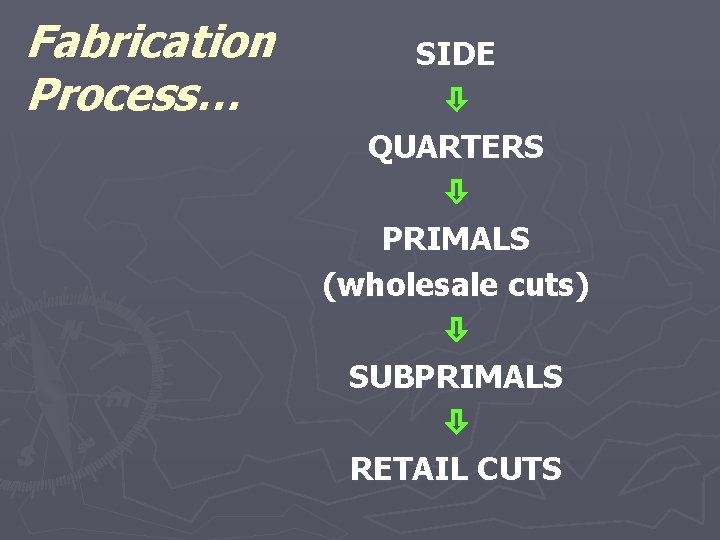
Fabrication Process… SIDE QUARTERS PRIMALS (wholesale cuts) SUBPRIMALS RETAIL CUTS
Retail Cut Nomenclature ► ► Over 1, 000 different cuts are available throughout the U. S. Names may be different due to geographic location. ► Names may have been developed by a retailer/restaurant. ► § Iowa Chop § Husker Chop § Pikes Peak Roast § § Steamship Roast Chicken Steak Delmonico Steak Swiss Steak § § § Pot Roast London Broil Chicken Fried Steak Names may be related to cooking method.
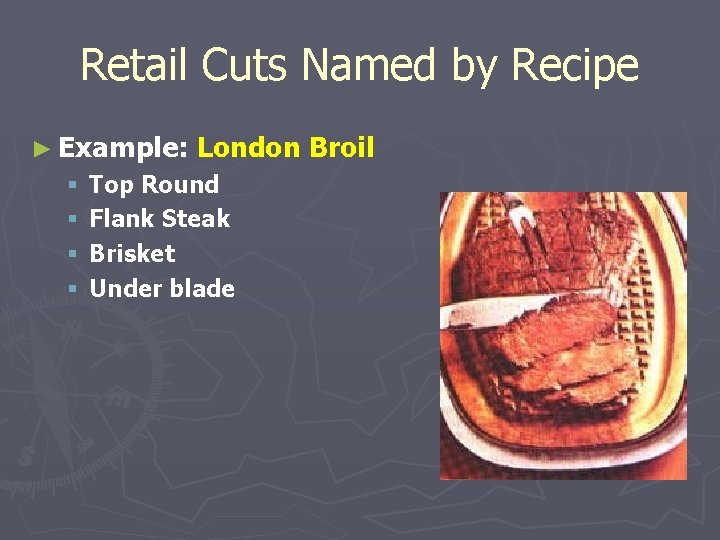
Retail Cuts Named by Recipe ► Example: § § London Broil Top Round Flank Steak Brisket Under blade
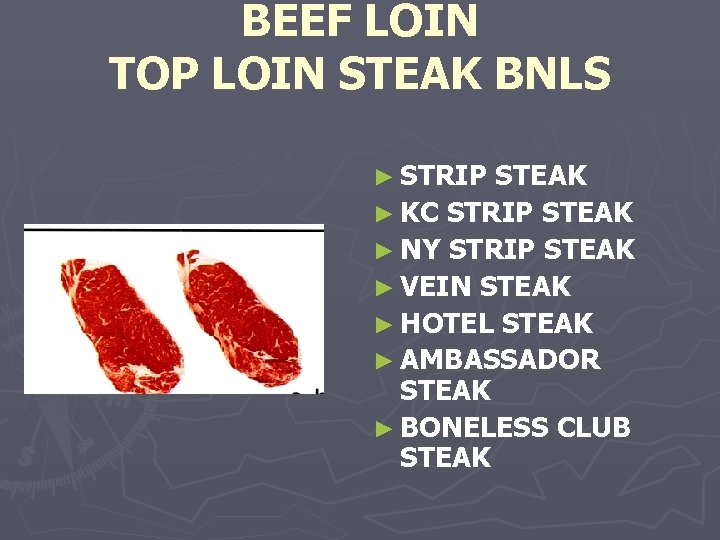
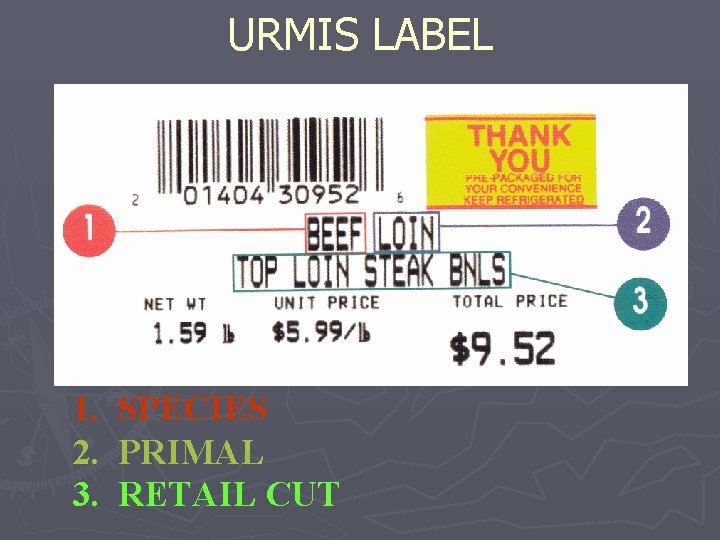
BEEF LOIN TOP LOIN STEAK BNLS ► STRIP STEAK ► KC STRIP STEAK ► NY STRIP STEAK ► VEIN STEAK ► HOTEL STEAK ► AMBASSADOR STEAK ► BONELESS CLUB STEAK
UNIFORM RETAIL MEAT IDENTITY STANDARDS ► U. R. M. I. S. ► Harmonizes retail cut name variation ► Developed by the Industrial Cooperative Meat Identification Standards Committee in 1972 ► Not mandated by law except at local levels ► Most chains use to some extent (Dillons, Hy. Vee, and Rays Apple Market)
U. R. M. I. S. ► Nomenclature consists of three parts. § Species of the cut: Beef, Pork or lamb § Primal Cut: One of the Seven cuts per species Loin, Rib, Leg, Arm, Hip, or Belly/Side § Retail Cut: ►Name (Common, Geographic, Trade, or Cooking Method) ►Steak/Chop ►Roast ►Boneless or Bone-in
URMIS LABEL 1. SPECIES 2. PRIMAL 3. RETAIL CUT
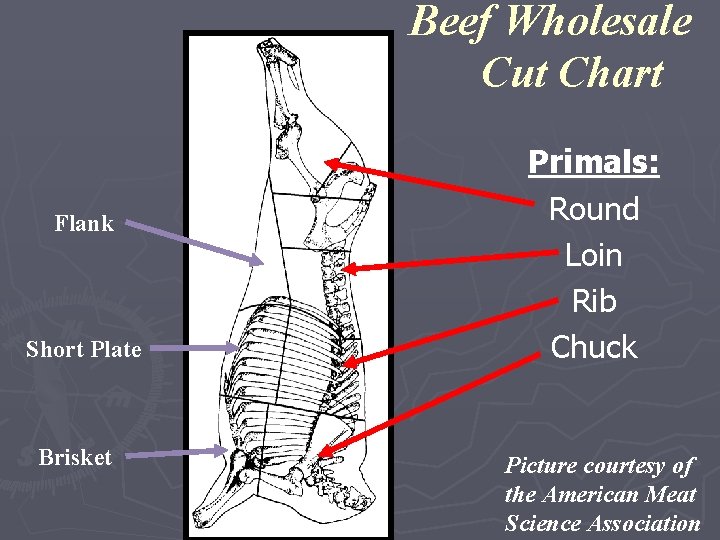
Beef Wholesale Cut Chart Flank Short Plate Brisket Primals: Round Loin Rib Chuck Picture courtesy of the American Meat Science Association
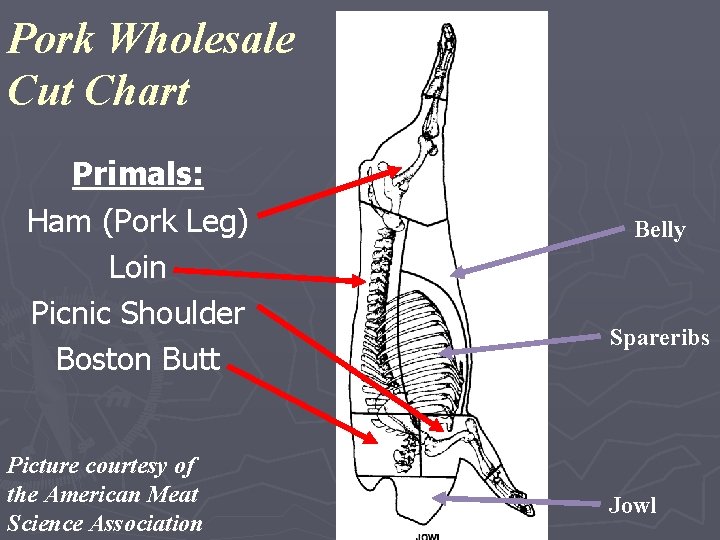
Pork Wholesale Cut Chart Primals: Ham (Pork Leg) Loin Picnic Shoulder Boston Butt Picture courtesy of the American Meat Science Association Belly Spareribs Jowl
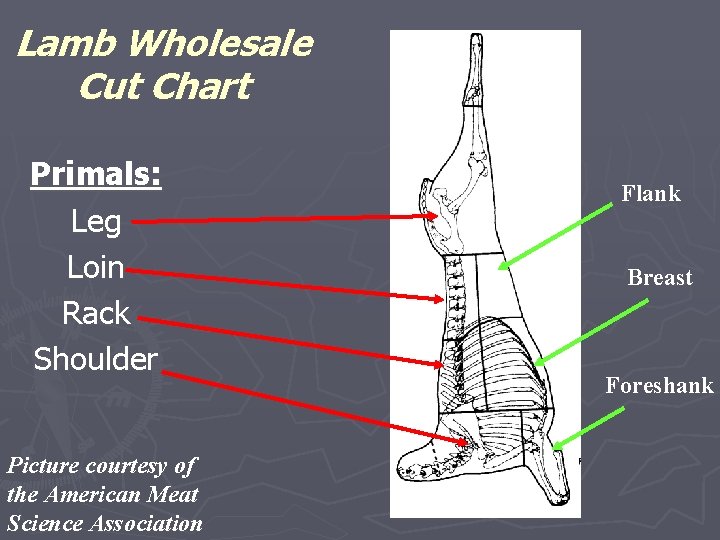
Lamb Wholesale Cut Chart Primals: Leg Loin Rack Shoulder Picture courtesy of the American Meat Science Association Flank Breast Foreshank
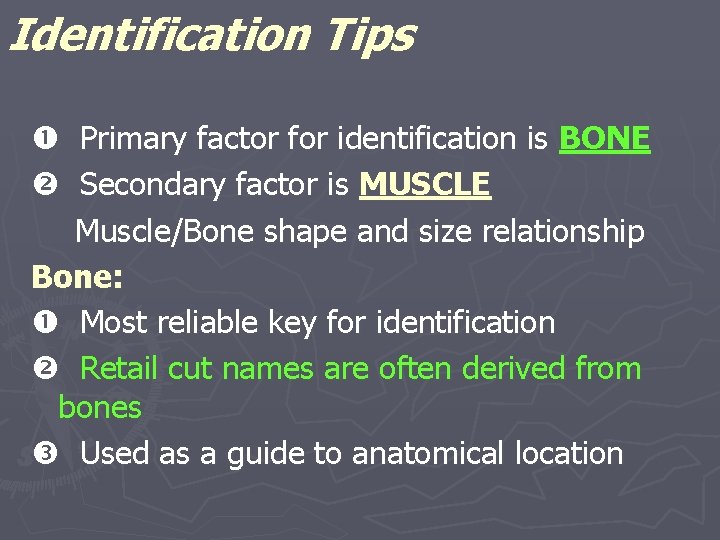
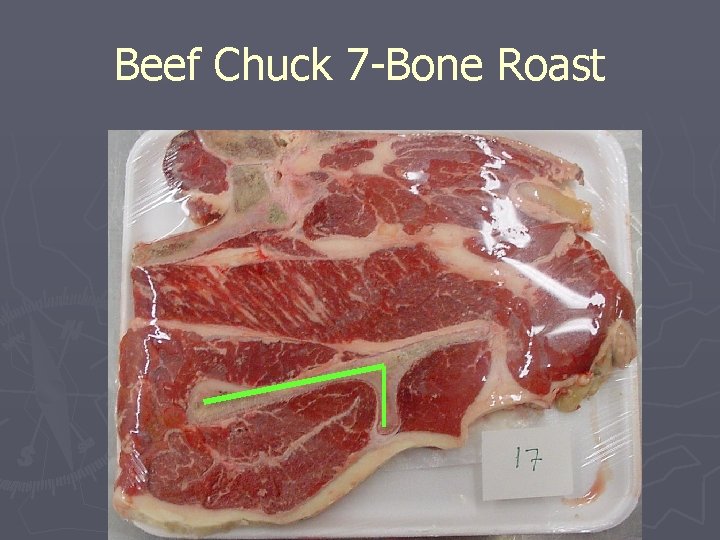
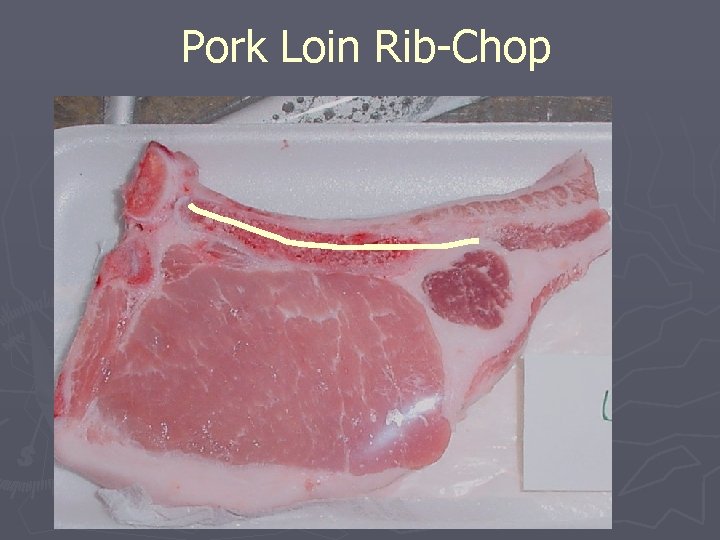
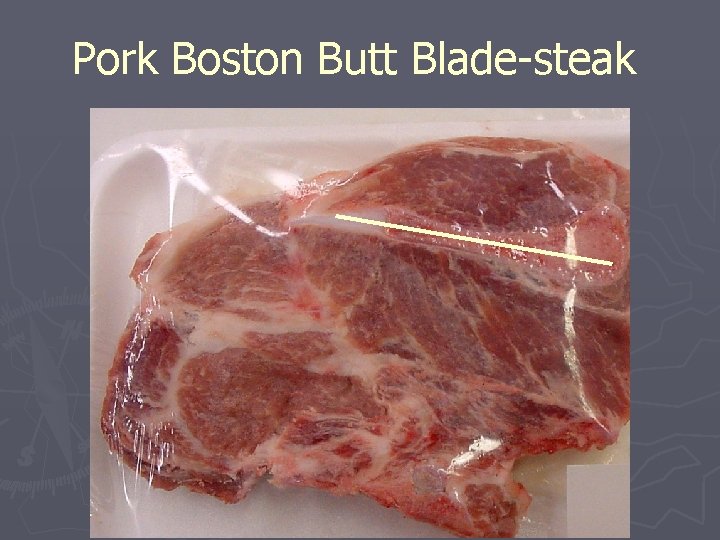
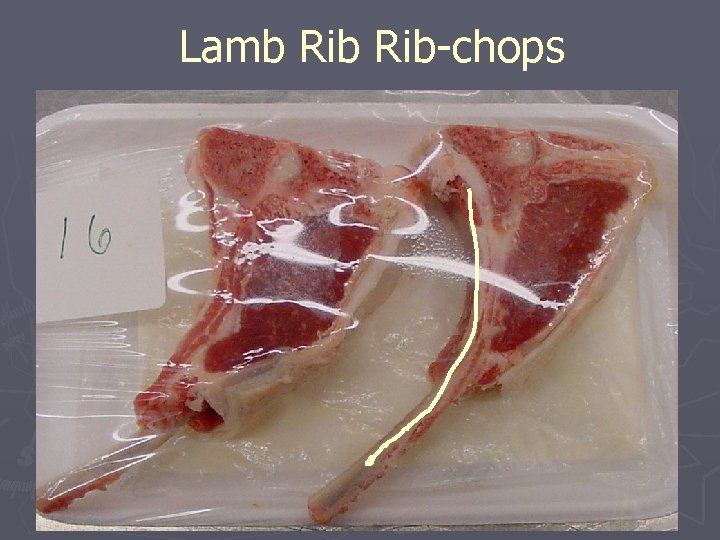
Identification Tips Primary factor for identification is BONE Secondary factor is MUSCLE Muscle/Bone shape and size relationship Bone: Most reliable key for identification Retail cut names are often derived from bones Used as a guide to anatomical location
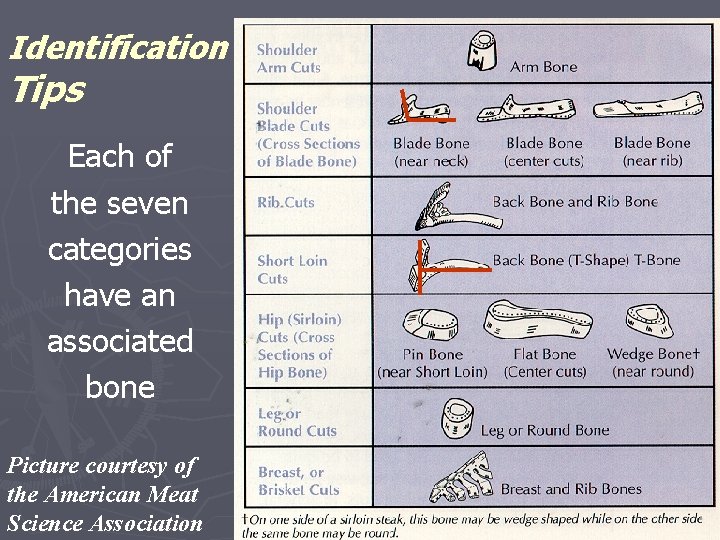
Identification Tips Each of the seven categories have an associated bone Picture courtesy of the American Meat Science Association
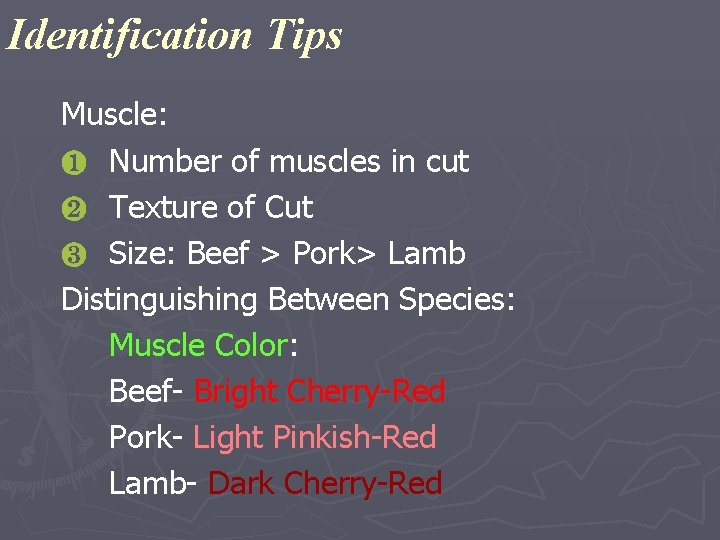
Identification Tips Muscle: ❶ Number of muscles in cut ❷ Texture of Cut ❸ Size: Beef > Pork> Lamb Distinguishing Between Species: Muscle Color: Beef- Bright Cherry-Red Pork- Light Pinkish-Red Lamb- Dark Cherry-Red
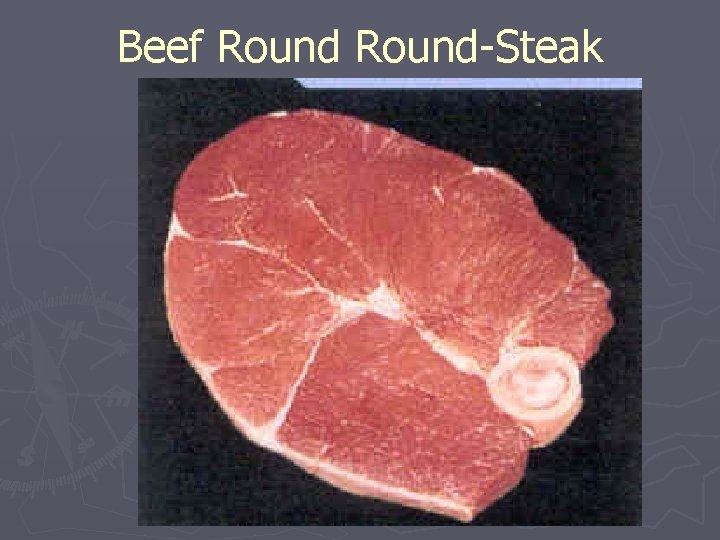
Beef Round-Steak
Beef Chuck 7 -Bone Roast
Pork Loin Rib-Chop
Pork Boston Butt Blade-steak
Lamb Rib-chops
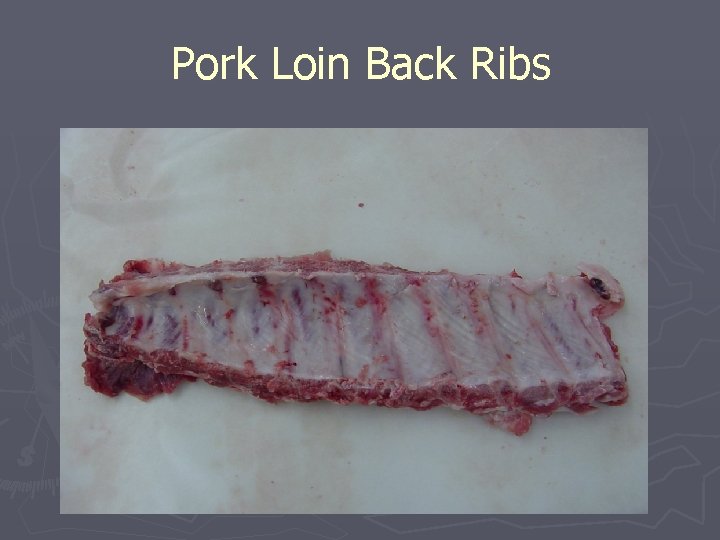
Pork Loin Back Ribs
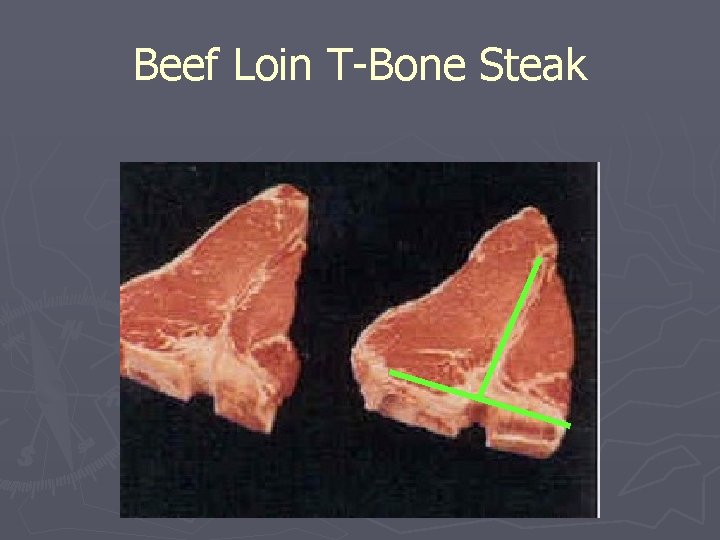
Beef Loin T-Bone Steak
Meat Cookery ► Locomotion muscles of all species are generally Moist Heat or Moist/Dry § Chuck, Round, Boston Butt, Picnic Shoulder, and Fresh Ham § Exception is Leg of lamb which is Dry Heat and cured products ► Support muscles of all species are generally Dry Heat § Rib, Loin, and Sirloin
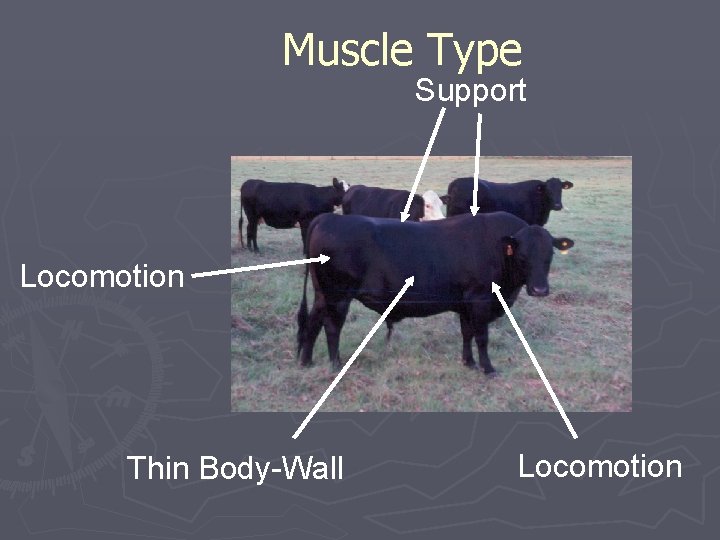
Muscle Type Support Locomotion Thin Body-Wall Locomotion
Composition of Muscles ► Deals primarily with muscle function ► Locomotion Muscles § Higher in connective tissue § Help hold tissues together as vigorous exercise commences § Muscle must contract many times ► Support Muscles § Lower in connective tissue § Do not contract as frequently
Methods of Cooking ► Dry Heat Methods § Tender cuts of meat that are low in connective tissue amount and can withstand fast, high heat cooking § Direct or indirect heat without moisture § Roasting, Broiling, Panfrying, Stirfrying, Grilling, Deep fat frying, and Panbroiling
Methods of Cooking ► Moist Heat Methods § Less tender cuts of meat with a high amount of connective tissue which needs a low temperature and § long cooking time to turn the connective tissue to gelatin § Indirect heat and the addition of liquid for retained moisture § Braising and cooking in liquid
Identification Websites ► Texas ► A&M University: http: //aggiemeat. tamu. edu/meat-identification-pictures/ ► University of Nebraska : § http: //food. unl. edu/meat-cuts-identification ► Texas Tech University : § https: //www. depts. ttu. edu/meatscience/retailid. php